Tag: Barroso

  • Savannah Resources Advances Barroso Lithium Project with Definitive Feasibility Study Completion

    Savannah Resources Advances Barroso Lithium Project with Definitive Feasibility Study Completion

    On 15 July 2026, Savannah Resources announced the completion of the Definitive Feasibility Study (DFS) for its Barroso lithium project located in Boticas, northern Portugal. This study confirms an initial mine life of 14 years, with a probable ore reserve of 20 million tonnes and an anticipated production of 2.56 million tonnes of spodumene concentrate. Spodumene concentrate is a crucial hard-rock lithium feedstock that battery chemical processors convert into lithium hydroxide for electric vehicle (EV) cells. The Barroso project is notable for holding Europe’s largest battery-grade spodumene resource, which was classified as a strategic project under the EU’s Critical Raw Materials Act in March 2025. This classification grants the project an accelerated 27-month permitting process, a significant advantage over potential new entrants.

    Emanuel Proença, CEO of Savannah Resources, expressed his satisfaction with the publication of the DFS findings, highlighting it as a critical milestone in the project’s development. The DFS serves as the essential technical dossier required by banks and offtake partners before they commit capital to the project. Savannah Resources anticipates receiving a final environmental licence in the fourth quarter of 2026, with a final investment decision expected by the end of the year and first production slated for 2028. However, the timeline faces challenges, as the environmental licence decision has been delayed, with a ruling now not expected until late February 2027. This delay could push back the first production date and compress Portugal’s opportunity to emerge as the EU’s second large-scale lithium producer, following Finland’s Keliber.

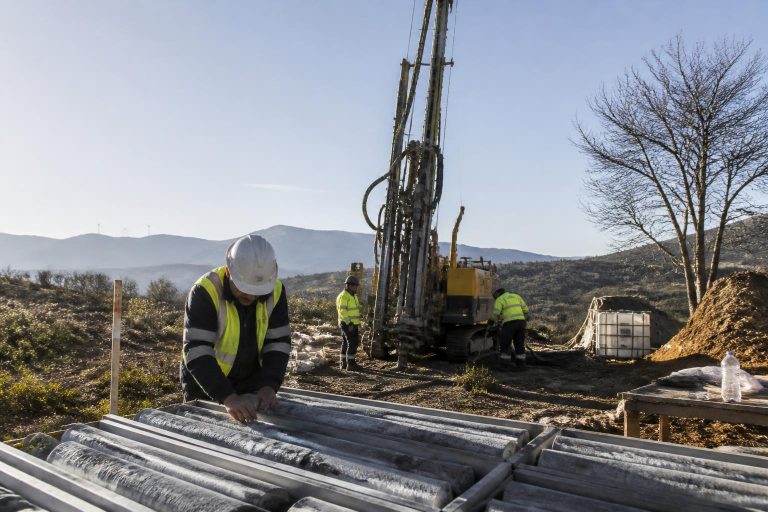
    The regulatory landscape adds further complexity to the project. A precautionary injunction had previously halted geotechnical fieldwork in June 2026, but this was lifted on 30 June 2026 after the Portuguese government declared the project of national and European strategic importance. Nevertheless, a separate legal challenge from community groups MiningWatch Portugal and ClientEarth is currently before the European Court of Justice, contesting the European Commission’s decision to keep Barroso on the strategic list. As Europe currently sources approximately 81% of its extracted lithium and 100% of its refined lithium from outside the continent, the Barroso project’s strategic location—less than 300 kilometres from five deep-water ports—positions it as a key player in reshaping the continent’s lithium supply chain. The success of the permitting timeline will be crucial in determining whether Portugal can secure its place in the upcoming cycle of EU battery-factory investment decisions.


  • Savannah Resources Highlights Barroso Community as Heart of Europe’s Energy Transition

    Savannah Resources Highlights Barroso Community as Heart of Europe’s Energy Transition

    Savannah Resources has launched a new public messaging initiative framing Portugal’s Barroso region as central to Europe’s clean-energy future, emphasising cultural heritage and community participation as the company advances its controversial lithium project.

    In the campaign titled “The EU’s Energy Independence Starts in Barroso,” the company positions the region not just as a mining location, but as a living cultural landscape shaped by generations of agricultural tradition and collective resilience. Savannah says it aims to integrate the Barroso Lithium Project into this heritage by developing it “responsibly” and ensuring local communities see tangible long-term benefits.

    The company argues that Barroso’s identity, communal strength and deep connection to the land form the foundation of what it calls “The Energy of Barroso.” This concept draws on shared values — mutual support, tradition, and the hope of retaining younger generations — which Savannah says align with Europe’s push toward a more sustainable and independent energy system.

    According to the company, lithium produced in Barroso will contribute to the EU’s ambition of reducing dependence on imported critical minerals and speeding up the green transition. Savannah stresses that the project, once operational, will supply material for millions of European electric vehicles and support regional development.

    The initiative invites the public to follow upcoming stories and updates that showcase community voices and outline how the project is intended to blend cultural preservation with modern industrial progress.

  • EU Criticised for Backing Portugal’s Barroso Lithium Mine Despite “Grave Environmental and Safety Risks”

    EU Criticised for Backing Portugal’s Barroso Lithium Mine Despite “Grave Environmental and Safety Risks”

    Environmental lawyers and community groups have sharply condemned the European Commission for refusing to remove the controversial Barroso lithium mine in northern Portugal from its list of strategic projects under the Critical Raw Materials Act (CRMA). The mine, located in Boticas, has become a flashpoint in national and international debates over the social and environmental costs of Europe’s push for domestic critical minerals.

    The Commission on Thursday rejected a joint request by Associação Unidos em Defesa de Covas do Barroso (UDCB), MiningWatch Portugal and ClientEarth to revoke the mine’s strategic designation. Critics argue that the label sidesteps mounting evidence that the project poses severe environmental, safety and social risks — and provides political cover for fast-tracking a project that local communities have opposed for nearly eight years.

    According to NGOs, the Commission largely dismissed concerns related to water scarcity, biodiversity loss and tailings safety, insisting these fall under Portuguese national responsibility. In a statement, the Commission stressed that its role under the CRMA “does not include verifying full compliance with EU environmental law,” prompting accusations that the Act is being used to override normal scrutiny through a “legal presumption” that the mine serves the public interest.

    ClientEarth lawyer Ilze Tralmaka warned that the CRMA should not be used to accelerate projects “that science shows are unsafe, environmentally destructive and unnecessary,” stressing that the green transition “cannot come at the cost of community safety.” She added that independent evidence suggests lithium demand should be reduced wherever possible, with a stronger emphasis on recycling to limit new mining.

    NGOs cite expert studies showing that Barroso’s waste storage and water management systems could fail during heavy rainfall, potentially contaminating farmland, local water sources and even affecting the Douro Valley’s world-famous Port wine region downstream. Another analysis highlighted major flaws in the project’s air-quality assessment.

    MiningWatch Portugal’s Nik Völker said the Commission’s decision “shows that the EU is willing to trade rural lives and irreplaceable landscapes for a political headline,” adding that calling the mine “strategic” does not make it safe or sustainable. “The Mina do Barroso offers minimal benefits and enormous risks: a textbook example of how not to do a green transition,” he said.

    Local opposition to the mine has been exceptionally strong, with farmers and residents warning the project threatens their land, water and livelihoods. Their activism has gained global attention, including a Cannes-premiered documentary about the community’s efforts to resist the development.

    Aida Fernandes of UDCB said the mine’s approval prioritises Europe’s interests at the expense of the people who live in Covas do Barroso. “Our springs, our soil and our farms are what keeps this community alive. Once they are gone, they are gone forever,” she said. “Europe cannot build a green future by destroying the places that are already living sustainably.”

    NGOs caution that while securing critical mineral supplies is a legitimate objective, the CRMA and the strategic project label are being misused to gain access to financing and expedited permitting for projects with major unanswered environmental and social questions.

  • Savannah Resources Delays Portugal Lithium Project Start to 2027 Due to Government Changes

    Savannah Resources Delays Portugal Lithium Project Start to 2027 Due to Government Changes

    London-based Savannah Resources has postponed the expected start of its lithium production in northern Portugal to 2027, citing delays caused by recent government changes. The company, which aims to develop four open-pit lithium mines in the Barroso region, had initially planned to begin production in 2026. The mines are projected to supply enough lithium annually to power around half a million electric vehicle batteries.

    The delay follows the ascension of Portugal’s centre-right government in March, replacing the administration of former Prime Minister António Costa, who resigned amid an investigation into the handling of lithium and hydrogen projects. Savannah noted that the change in government has delayed the project by over six months, with access to land becoming a key obstacle.

    Savannah now expects to complete its definitive feasibility study by the second half of 2025, alongside environmental licensing confirmation. The company anticipates commissioning and first production to begin in 2027.

    Legal proceedings have been initiated to grant Savannah temporary access to land within its 840-hectare concession area, necessary for further fieldwork. While the company has acquired over 100 plots, only 93 hectares had been secured as of September 2023. Savannah has reiterated its intent to request compulsory land purchases from the government if necessary.

    The lithium project has faced strong opposition from local residents and environmentalists. The outcome of this project is seen as critical for the European Union’s goal to reduce reliance on countries like China for essential raw materials.