Region: Poland

  • Fatal Rock Collapse at KGHM’s Polkowice-Sieroszowice Copper Mine in Poland

    Fatal Rock Collapse at KGHM’s Polkowice-Sieroszowice Copper Mine in Poland

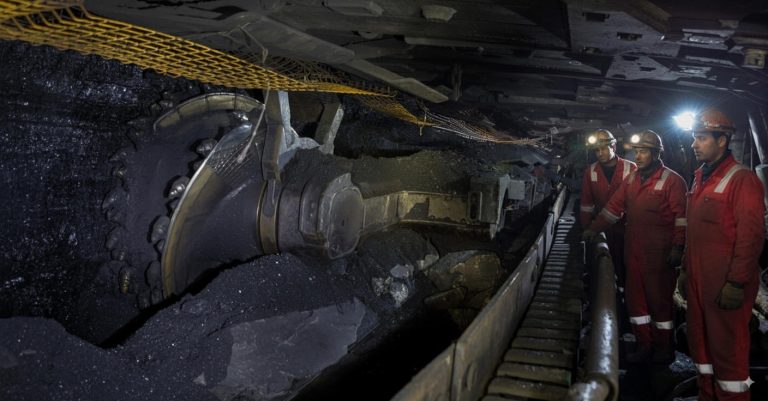
    A tragic rock collapse at the Polkowice-Sieroszowice copper mine in Poland’s Lower Silesia region has claimed the life of a 37-year-old miner and left two others injured, mine operator KGHM confirmed on Sunday.

    The incident occurred just after 9 p.m. on Saturday evening near a water retention basin within the underground mine. Three miners were working in the affected area when the collapse happened. While two of them were promptly rescued and transported to hospital with minor injuries, the third miner was initially unaccounted for.

    Following an overnight search and rescue operation, the man’s body was found early Sunday morning. “Unfortunately, it turned out that there was a fatal accident,” a KGHM spokesperson stated, extending condolences to the miner’s family. The company has declared three days of mourning.

    A special commission will be formed to investigate the cause of the collapse and determine any necessary safety or procedural changes. The Polkowice-Sieroszowice mine is one of Poland’s major copper producers, extracting approximately 12 million tonnes of ore annually.

  • JSW Declares Force Majeure After Fire Disrupts Budryk Mine Operations

    JSW Declares Force Majeure After Fire Disrupts Budryk Mine Operations

    Jastrzębska Spółka Węglowa (JSW), Poland’s leading producer of coking coal, has declared force majeure following a fire at its Budryk mine on May 7, 2025. The fire, attributed to endogenous ignition, forced a temporary suspension of operations in the affected mining area.

    JSW estimates that the disruption could result in a loss of approximately 345,000 tons of coal output in 2025. This incident compounds earlier challenges the company faced at its Szczygłowice mine in January, prompting JSW to revise its full-year production forecast downward from 14.5 million tons to about 12 million tons.

    In response to the mounting operational difficulties, trade unions are calling for swift strategic action, including the potential acquisition of additional mines and voluntary staff departure programs to help stabilize the company’s long-term outlook.

  • Cracks Appear in Europe’s Lithium Dreams as Global Market Shifts

    Cracks Appear in Europe’s Lithium Dreams as Global Market Shifts

    The once-optimistic projections for lithium mining in Europe, particularly at Portugal’s Covas do Barroso site, are facing new scrutiny amid global market disruptions and plummeting investor confidence.

    Recent developments in Ghana may offer some perspective for local opponents of the Covas do Barroso mine. In October 2023, Ghana awarded a 15-year lease to Atlantic Lithium Limited to mine its Ewoyaa site, one of the top ten largest lithium deposits globally with an estimated 35 million metric tonnes of potential output. However, the company—partly owned by U.S.-based Piedmont Lithium and Cleantech Group—has now announced that the project is on hold. The reason? A dramatic drop in the internal rate of return, from 105% to just 14%, leading Atlantic to declare it unviable under current conditions.

    The company had already invested $70 million, but the lithium market has slumped significantly since its November 2022 peak. Factors contributing to the downturn include major lithium discoveries in the U.S. and China, and the slower-than-expected adoption of electric vehicles. Compounding the issue is China’s fast-developing research and application of sodium-based battery alternatives, which are already entering commercial production for short-range vehicles.

    These global shifts call into question the long-term viability of other lithium projects, such as those pursued by Savannah Resources in Portugal. Savannah, which has secured fiscal concessions from the Portuguese state and projects a 25-million-tonne output from Covas do Barroso, could face similar economic pressures.

    While the Barroso project benefits from geographic proximity to EU refineries and markets—potentially cushioning it from the full brunt of market fallout—it is increasingly likely that operations will proceed on a smaller scale and with diminished returns. This could lead to more balanced decisions that account for both economic realities and the environmental and social concerns of local communities.

  • JSW Seeks to Delay $345M in Social Security Payments Amid Deepening Cash Crunch

    JSW Seeks to Delay $345M in Social Security Payments Amid Deepening Cash Crunch

    JSW SA, the European Union’s largest producer of coking coal, has requested permission from Poland’s social security office to defer this year’s payments as it struggles with declining coal prices and rising operational costs. The company is asking to postpone the payment of 1.3 billion zloty ($345 million), proposing to settle the amount in installments starting January 2026.

    This marks the second plea for financial relief from the state by the state-controlled miner in a single week. On Monday, JSW also announced plans to seek a 1.6 billion zloty refund from Poland’s power price subsidy fund in a bid to stabilize its finances.

    JSW’s Deputy CEO Remigiusz Krzyzanowski stated during an earnings call that the board is “closely monitoring the financial and liquidity situation” and actively taking steps to prevent a cash shortfall. Despite initiating a cost-cutting and investment-trimming strategy in late 2024, the company has had to draw 2.2 billion zloty from its financial reserve fund this year alone to support cash flow.

    Analysts remain concerned. Erste Group’s Jakub Szkopek warned that JSW’s measures to reduce spending are “definitely too small,” forecasting that the miner will continue consuming significant reserves. He cautioned that if trends continue, JSW may deplete its cash reserves within two to three quarters.

    JSW, which employs over 32,000 people, is due to release its Q1 earnings report on May 20. On Friday, its shares rebounded slightly after an initial 3.6% dip, ending the week with a modest 2.1% gain.

  • Poland’s JSW Reports Record €1.7 Billion Loss Amid Falling Coal Prices and One-Time Write-Off

    Poland’s JSW Reports Record €1.7 Billion Loss Amid Falling Coal Prices and One-Time Write-Off

    Jastrzębska Spółka Węglowa (JSW), the EU’s largest coking coal producer and a Polish state-owned firm, has posted a staggering net loss of nearly 7.3 billion zloty (€1.7 billion) for 2024 — its worst result since going public in 2011. The company’s revenue plunged by 26.2% year-on-year to 11.3 billion zloty, marking a sharp reversal from a profit of nearly 1 billion zloty in 2023.

    JSW attributed the record loss largely to a 6.4 billion zloty non-financial asset write-off, alongside lower coal production and declining global coal prices. Coal output dropped 9.3% to 12 million tonnes, while coke production fell 8.6% to 3 million tonnes, driven by geological challenges and operational setbacks.

    The average price for JSW’s coal fell 20%, with hard coking coal prices down 19% and thermal coal prices plummeting over 30%. JSW plans to cover 6.33 billion zloty of its 2024 loss using reserve capital and seeks to reclaim a 1.6 billion zloty “solidarity contribution” imposed under a 2023 windfall tax.

    With extraction costs in Poland averaging 820 zloty per tonne—over five times higher than in the US—the country’s coal mining industry remains heavily subsidised. Government support for the sector is set to increase from 7 billion zloty in 2024 to 9 billion zloty in 2025.

    Despite pledges to accelerate its coal phase-out, Poland’s new ruling coalition has made limited progress. Coal still powers roughly 57% of the country’s electricity and remains a key heating source in many homes.

  • Mkango Resources Signs Revised Land Lease for Polish Rare Earths Plant

    Mkango Resources Signs Revised Land Lease for Polish Rare Earths Plant

    Mkango Resources Ltd has announced that its wholly owned subsidiary, Mkango Polska Sp. Z.o.o, has signed a revised exclusive land lease agreement with Grupa Azoty Pulawy for the development of a strategic rare earths separation plant in Poland. This agreement builds on their collaboration that began in 2021.

    The agreement covers an 8-hectare site adjacent to Grupa Azoty Pulawy’s fertilizer and chemicals complex in Pulawy, Poland. The location offers strong infrastructure, access to essential reagents and utilities, and significant expansion potential. Situated within a Polish Special Economic Zone, the site ensures direct access to European and global markets.

    The planned rare earths separation plant aims to enhance Europe’s supply chain security for critical materials used in electric vehicles, wind turbines, and green technologies. The project aligns with EU regulations on critical raw materials, supporting sustainable and diversified supply chains.

    Alexander Lemon, President of Mkango, expressed enthusiasm about the deal, emphasizing its role in facilitating the plant’s expansion and development. He highlighted Mkango’s strong partnership with Grupa Azoty and the upcoming definitive feasibility study leading to construction.

    Hubert Kamola, Vice-President of Grupa Azoty S.A, described the project as innovative, bringing job creation, technology transfer, and supply chain development for Europe and North America. He noted the synergies between both companies, including land availability, utilities, and chemical expertise.

    Mkango Resources continues its strategic expansion in the rare earths sector, leveraging its ownership in Maginito Limited to become a leader in rare earth magnet recycling and sustainable materials production. The company also holds an extensive exploration portfolio in Malawi and is progressing with the Songwe Hill rare earths project. Additionally, Mkango is pursuing a NASDAQ listing through a SPAC merger with Crown PropTech Acquisitions.

  • Poland May Extend Copper Output Tax Reduction Beyond 2027

    Poland May Extend Copper Output Tax Reduction Beyond 2027

    Poland’s Finance Minister, Andrzej Domański, announced on Monday that a planned reduction in the copper output tax could be extended beyond 2027. The government is considering prolonging tax relief measures to support the industry amid economic challenges.

    Earlier in the day, Domański confirmed that the tax cuts would lower government revenues by approximately 500 million zlotys ($123.4 million) in 2026 and 700 million zlotys in 2027. The move aims to provide financial relief to copper producers, ensuring competitiveness in the global market.

    The Polish government’s decision on whether to extend the tax reduction beyond 2027 will depend on economic conditions and industry performance in the coming years.

  • KGHM Launches Cost Optimisation Plan to Boost Profitability

    KGHM Launches Cost Optimisation Plan to Boost Profitability

    KGHM Polska Miedź SA, Europe’s leading copper producer, is launching a comprehensive Cost Optimisation Plan aimed at strengthening its investment capabilities for future growth. The initiative focuses on enhancing operational efficiency across the company’s core business processes.

    “As the Management Board, we are obliged to constantly seek opportunities for both efficiency and cost optimization. Current macroeconomic conditions, copper price levels and ongoing talks on a possible change to the copper tax formula create favorable conditions for intensifying investment activities. Our goal is to increase the resource base of domestic assets, which are the future of KGHM, in the long term,” said Andrzej Szydło, President of the Management Board of KGHM Polska Miedź SA. “In terms of employment, we will focus primarily on increasing work efficiency, and not on cost issues that are currently resolved,” he added.

    The optimisation program will initially target several key areas including procurement, technological processes, waste management, and water systems, with additional focus areas to be identified during the review process.

    As Europe’s largest copper producer, KGHM plays a vital role in both Poland’s economy and the European Union’s strategic raw materials sector, contributing approximately half of the EU’s copper mining output.

  • KGHM Polska Miedź SA, Ministry of Finance, and Ministry of State Assets Discuss Changes to Copper Tax Formula

    KGHM Polska Miedź SA, Ministry of Finance, and Ministry of State Assets Discuss Changes to Copper Tax Formula

    In a significant development for the Polish mining industry and the country’s economy, KGHM Polska Miedź SA, the Ministry of Finance, and the Ministry of State Assets held talks on January 27, 2025, in Warsaw to discuss proposed changes to the formula of the so-called copper tax and the long-term development of KGHM’s domestic assets through strategic investments in Poland.

    As a key entity for the Polish economy and the largest producer of copper in Europe, KGHM Polska Miedź SA is responsible for almost 50% of the production of mined copper in the European Union, making it a strategic raw material for the European Union. With a strong focus on sustainable growth and responsible mining practices, KGHM continues to strengthen its position as a leading global copper producer.

    The meeting was attended by KGHM Polska Miedź SA’s Management Board, Minister of Finance Andrzej Domański, Deputy Minister Jarosław Neneman, and Deputy Minister of State Assets Robert Kropiwnicki. The primary objective of the meeting was to address the proposed changes to the formula of the copper tax and the possibilities of enhancing KGHM’s long-term development in Poland with strategic investments.

    The copper tax, introduced in 2012, is a significant factor in the profitability of KGHM’s operations, and the proposed changes may impact the company’s financial health. The talks aim to strike a balance between the government’s fiscal objectives and KGHM’s need for a sustainable business environment to ensure the company’s continued growth and success.

    Further details regarding the outcomes of the meeting and the proposed changes to the copper tax have not been disclosed at this time. However, both KGHM and the respective governmental bodies remain committed to fostering a positive and mutually beneficial relationship that supports Poland’s economic growth and strengthens its strategic position within the European Union.

  • From Black Gold to Black Diamonds: Upper Silesia’s Coal Legacy

    From Black Gold to Black Diamonds: Upper Silesia’s Coal Legacy

    Situated in Southern Poland, Upper Silesia is steeped in hundreds of years of mining tradition. The region’s old workers’ neighbourhoods, through their architecture and use of local motifs, serve as a reminder to locals and visitors alike of a time when men worked arm in arm with machines, and when Upper Silesia functioned as the industrial heartland of Europe.

    More than 300 years ago, people travelled from across the country and beyond to access the so-called “black gold” found in Upper Silesia. Beneath this rugged exterior, however, lies a rich cultural history with roots stretching back centuries. The region boasts its own dialect, which was banned for many years in Poland but survives to this day. It also has a tangible material dimension in coal, which is being repurposed in modern times.

    As folklore revival gains popularity in Poland, coal has become a commodity of a different quality. Mined in Upper Silesia since the 17th century, coal played a crucial role not only in the Polish economy but also for the entire European continent. Today, it is being transformed into jewellery as a symbolic tribute to the land from which it came.

    In Katowice, the capital of Upper Silesia, several workshops are turning coal into a new type of precious commodity: delicate, hand-crafted jewellery. One such brand is I Coal You, owned and operated by Katarzyna Depa, who has deep ties to the region. Depa explains that coal jewellery symbolises mining hardships and carries significant sentimental value. Her clients include not only visitors seeking unique souvenirs but also locals who view the crafts as a way to represent their culture.

    While the trend of making jewellery from coal is relatively modern, it has deeper roots in Upper Silesian tradition. The first coal beads appeared in the region in the 19th century, made by miners as gifts for their wives and girlfriends. These simple decorative forms were quick but thoughtful presents.

    Coal jewellery has become a symbol of the region’s ties to its mining heritage. It represents the work ethic and respect associated with the industry that sustained Upper Silesia for generations. As Depa notes, “This respect for this raw material, which Upper Silesia fed itself and all of Poland with, is what it’s all about.”

    The transformation of coal into jewellery also serves as a reminder of the physical and cultural landscape shaped by the mining industry. Each piece of coal jewellery is unique, reflecting the distinctiveness of the material itself. This artform brings respect to work that is often undervalued and allows people to appreciate the region’s industrial heritage.

    In recent years, Upper Silesia has seen a resurgence of local pride and cultural expression. The once-banned Silesian dialect now appears on tote bags and shop signs. Statues of local folkloric figures adorn streets, and artists depict the mining landscape in their work. Even as coal extraction has diminished, the material remains a permanent feature of the Silesian identity.

    As Depa poignantly states, “Polish highlanders wear coral beads from Italy, there are pieces of turquoise from Turkish wars in the Wawel treasury, and amber comes from the sea. But we have coal here and now, we can dig it up. And that’s probably the most beautiful thing about it. Besides, coal is simply beautiful as a stone.”

    This transformation of coal into jewellery symbolises Upper Silesia’s ability to honour its past while embracing new forms of cultural expression and economic activity. It represents a unique way of preserving the region’s heritage and identity in a changing world.