Region: Poland

  • KGHM Confirmed as World’s Second-Largest Silver Producer With 1,347 Tonnes Output as Polish Miner Expands Rudna Mine

    KGHM Confirmed as World’s Second-Largest Silver Producer With 1,347 Tonnes Output as Polish Miner Expands Rudna Mine

    Polish state-controlled mining giant KGHM has been ranked the world’s second-largest silver producer, generating 1,347 tonnes of the metal in 2025 — placing it behind only Mexico’s Fresnillo, which produced approximately 1,517 tonnes, according to the World Silver Survey, the industry’s longest-running annual market report now in its 36th year.

    Global silver production exceeded 26,000 tonnes in 2025, the survey found, with KGHM’s output reflecting the scale of its integrated mining complex in southwestern Poland. Silver is produced as a by-product of copper extraction at the company’s Lubin, Rudna and Polkowice-Sieroszowice operations and refined at the Głogów smelter, which has been processing precious metals from copper ore since 1993. The company sells silver in granulated form for industrial customers and as bullion bars primarily supplied to financial institutions, with smaller bars for private investors introduced last year.

    KGHM chief executive Remigiusz Paszkiewicz said the ranking reflected sustained effort rather than a single strong year. “This is not a one-time success, but the result of consistently building operational and technological advantage,” he said.

    Silver’s industrial importance continues to grow, with applications in electronics, renewable energy, medicine and jewellery accounting for nearly 60% of global demand — a figure that underpins the metal’s long-term strategic value alongside its role as a financial asset.

    Beyond silver, KGHM ranks among the world’s top ten copper producers and operates assets across Europe and the Americas, including in the United States and Canada. The Polish state holds just under a third of the company’s shares, making it the largest single shareholder.

    On the capital investment front, KGHM is expanding the Rudna mine in Lower Silesia — one of the world’s largest copper operations — with plans to sink a new shaft that could take up to 12 years to complete. The project carries a price tag of several billion zloty, with the final cost dependent on depth, eventual use and other technical factors.

  • Poland’s KGHM Sits at the Heart of Europe’s Copper and Silver Supply as Global Demand Surges Toward a Critical Shortfall

    Poland’s KGHM Sits at the Heart of Europe’s Copper and Silver Supply as Global Demand Surges Toward a Critical Shortfall

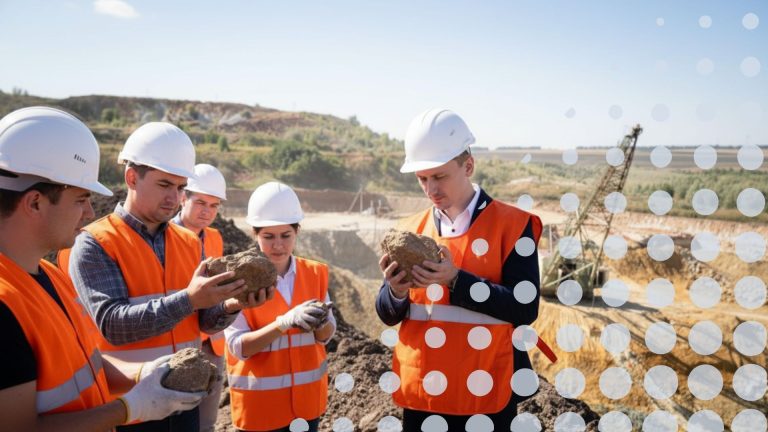
    Thousands of metres below the flat plains of western Poland, in tunnels stretching for hundreds of kilometres under suffocating heat, workers at KGHM’s Polkowice-Sieroszowice mine are extracting what geologists increasingly describe as the metals of the future — copper and silver whose strategic importance to the global economy has never been greater.

    Poland supplies between 40% and 50% of Europe’s copper, making it the continent’s dominant producer. KGHM, the state-backed metals giant that operates three underground mines alongside local smelters and operations in the Americas, ranked eighth globally in copper extraction volume last year, behind BHP, Glencore and Rio Tinto. It is also the world’s second-largest silver producer. In 2025, the group generated more than 36 billion zlotys ($9.7 billion) in revenue, producing 710,000 tonnes of copper and 1,347 tonnes of silver.

    The timing of that output matters enormously. Global copper demand is forecast to rise by more than 40% by 2040, according to a 2025 UN report, driven by the accelerating electrification of transport, the buildout of renewable energy infrastructure and surging demand from artificial intelligence data centres and defence industries. An electric vehicle contains around 80 kilograms of copper compared with 20 kilograms in a conventional car, while a single wind turbine requires between four and ten tonnes per megawatt of installed capacity. The International Energy Agency projects that supply will lag 30% behind demand as early as 2035, a gap that could require 80 new mines and $250 billion in investment by 2030.

    At KGHM’s Glogow smelter, ore is melted in furnaces at 1,200 degrees Celsius before emerging as 99.99% pure copper plates, each weighing more than 100 kilograms, which are then shipped to buyers around the world. The process underscores the vertically integrated nature of Poland’s copper industry — from extraction through refining to export — a model that gives KGHM and Poland unusual strategic weight within the European supply chain.

    That weight is being felt at the geopolitical level. Copper now appears on the strategic critical metals lists of the European Union, the United States and China simultaneously. In July, US President Donald Trump announced a 50% tariff on copper, citing national security grounds and the metal’s centrality to Pentagon procurement. Prices surged 41.7% in 2025, hitting a record $14,527.50 per tonne in January of this year, and remain elevated at around $12,000 per tonne despite the Middle East conflict and global economic headwinds.

    KGHM vice president for finance Piotr Krzyzewski framed Poland’s position in explicitly continental terms: “It’s no longer about the security of our country alone, but the security of all of Europe.” The group’s known resources are estimated to sustain operations for at least 40 years, independent of new exploration and concession activity. Water consumption at the scale required for deep mining remains a vulnerability as climate change intensifies drought risk across Central Europe.

  • Poland Weighs New Mining Pact to Balance Coal Profitability and Energy Transition

    Poland Weighs New Mining Pact to Balance Coal Profitability and Energy Transition

    Poland’s government is preparing new policy measures for the coal mining sector as it seeks to balance economic viability with the country’s ongoing energy transition, according to Deputy Minister of State Assets Grzegorz Wrona.

    In an interview with PAP Biznes, Wrona said the Ministry of State Assets and the Ministry of Energy are working on a draft “social agreement” aimed at defining a broader pact between society and the mining industry, rather than a traditional agreement between employers and trade unions.

    The initiative is intended to ensure that coal mining operations remain profitable and sustainable while continuing to support Poland’s electricity generation and industrial development. Wrona emphasised that coal still plays a key role in the country’s energy mix, even as Poland faces growing pressure to meet European climate and regulatory requirements.

    Government officials are examining options that could improve the profitability of the sector, including initiatives focused on coal processing and value-added uses of the resource. According to Wrona, such approaches could allow the industry to remain economically viable without driving up electricity prices.

    The deputy minister acknowledged the complexity of managing the transition, noting that Poland must simultaneously address decarbonisation goals and maintain energy security.

    Industry representatives have also raised concerns about current support mechanisms. Bogdanka CEO Zbigniew Stopa recently stated that some domestically produced thermal coal is being sold below extraction cost due to subsidy programmes, placing companies that do not receive state support at a competitive disadvantage.

    Wrona echoed criticism of the subsidy system, arguing that policies should prioritise mining operations that are economically viable, safe and capable of meeting market demand. He highlighted Bogdanka, along with certain mines in Lesser Poland and Silesia, as examples of operations with strong long-term potential.

    Under Poland’s existing legislation governing hard coal mining, certain companies receive state subsidies to reduce production capacity as part of restructuring efforts. These include major mining groups PGG and PKW, as well as Weglokoks Kraj, whose last mine ceased production at the end of 2025.

    The government’s ongoing policy discussions aim to identify a sustainable framework for the sector while addressing concerns about economic competitiveness, employment and regional development in mining areas.

  • Satellite Data Suggest Polish Coal Mines Continued Methane Venting Despite EU Ban

    Satellite Data Suggest Polish Coal Mines Continued Methane Venting Despite EU Ban

    New satellite analysis indicates that several Polish coal mines may have continued venting methane in 2025 despite a ban under the EU Methane Regulation that took effect in January of that year. The findings raise concerns about enforcement gaps and the absence of penalty frameworks in Poland, the EU’s largest coal methane emitter.

    According to analysis cited in the report, 96% of methane plumes detected over onshore European energy infrastructure in 2025 were traced to Polish coal mines, making them the most frequent fossil fuel methane super-emitters in the bloc. Out of 22 coal mine drainage systems examined in Poland, five were observed venting methane during the year, even though routine venting from drainage systems has been prohibited since January 2025.

    The EU Methane Regulation requires operators to either utilize captured methane or flare it with at least 99% destruction efficiency. Venting is permitted only in cases of emergency, malfunction, or unavoidable maintenance, and operators must notify competent authorities within 48 hours. However, no national penalty framework has yet been adopted in Poland, despite a deadline of 5 August 2025 for Member States to define sanctions.

    Methane is a potent greenhouse gas, and coal remains the largest source of fossil methane emissions in the EU energy sector. According to UNFCCC data, EU coal mining emitted 783.6 thousand tonnes of methane in 2023, accounting for around 60% of energy-sector methane emissions. The International Energy Agency estimates that 62% of the EU’s coal mine methane emissions could be technically abated by 2030, with the vast majority originating in Poland.

    Satellite observations detected emission rates ranging from roughly 120 kg per hour to 7,560 kg per hour, with 19 plumes exceeding 2,000 kg per hour. Coking coal mines were responsible for most of the detected events, despite representing a smaller share of overall hard coal production. Analysts argue this highlights the need for stricter methane reduction targets for coking coal operations.

    The report also estimates that methane reportedly vented from Polish drainage systems in 2024, if captured and used, could have provided enough energy to meet roughly one week of heating demand for approximately 14.5 million Polish households. Polish coal mines reportedly utilized 70% of captured drainage methane in 2024, while 57,000 tonnes went unused and were emitted into the atmosphere.

    Experts stress that the effectiveness of the EU Methane Regulation depends on enforcement, independent emissions verification, and the introduction of dissuasive penalties. Recommendations include harmonized verification standards, combining satellite monitoring with on-site inspections, and setting meaningful penalty levels to incentivize compliance.

    Without these measures, observers warn, the regulation risks falling short of delivering the significant methane reductions required to meet EU climate objectives.

  • Poland Set to Remain EU’s Last Coal Producer Until 2049 Despite Losses

    Poland Set to Remain EU’s Last Coal Producer Until 2049 Despite Losses

    Poland will continue mining coal until at least 2049, despite the sector’s chronic unprofitability, due to a binding agreement signed between the government and labor unions in 2021, according to Interia Biznes. The agreement legally fixes the coal phase-out date, making any earlier shutdown politically and socially difficult.

    The issue has gained renewed attention after the Czech Republic closed its last coal mines at the end of January. From February 1, Poland effectively becomes the only European Union member state still extracting coal, highlighting its exceptional position within the bloc’s energy transition.

    Coal output in Poland has been declining for decades. Production peaked at around 180 million tons in 1989, before falling to 102 million tons in 2000, 76.5 million tons in 2013, and approximately 44 million tons in 2025. Despite this sharp contraction, the industry remains heavily subsidized.

    Domestic coal production is currently loss-making and sustained through state budget support. Coal sells on the Polish market for about 458 zloty (roughly $114) per ton, while production costs are estimated at 944 zloty (around $236) per ton, underscoring the scale of ongoing financial support required to keep the sector operating.

  • Poland’s central bank plans to boost gold reserves by 150 tonnes amid geopolitical risks

    Poland’s central bank plans to boost gold reserves by 150 tonnes amid geopolitical risks

    National Bank of Poland (NBP), the world’s largest reported buyer of gold, plans to increase its bullion holdings by a further 150 tonnes, lifting total reserves to 700 tonnes as it prepares for prolonged geopolitical instability.

    Management board member Artur Sobon told Bloomberg that the central bank recently approved the higher target, stressing that record-high gold prices would not deter purchases. Gold has surged to historic highs as investors seek safe havens amid rising tensions between the United States and Europe, including disputes over Greenland.

    “Our primary goal is to build an appropriate portfolio for these unstable geopolitical times, one that will guarantee Poland stability, security, and credibility,” Sobon said, adding that price considerations are secondary.

    At current market prices, acquiring 150 tonnes of gold would cost more than $23 billion. Central bank demand has been a major driver of gold’s rally, with prices doubling over the past 18 months. Buying accelerated globally after Russia’s reserves were frozen following its invasion of Ukraine, highlighting gold’s appeal as an asset that cannot be easily sanctioned.

    NBP purchased 100 tonnes of gold last year, the largest amount officially reported by any central bank. Analysts note that some countries, particularly China, may also be buying gold without fully disclosing their activity.

    Poland’s push to expand gold holdings has been led by central bank governor Adam Glapinski, with reserves standing at about 550 tonnes at the end of 2025. Until now, gold allocations were capped at 30% of total reserves, a threshold that soaring prices have brought close to being reached.

    Sobon said the timing and pace of future purchases would be determined by NBP traders and could vary month to month. Poland’s growing foreign-exchange reserves, bolstered by inflows of EU funds, give the country room to finance the expanded gold strategy. Total official reserves now stand at roughly $271 billion, compared with $36 billion when Poland joined the EU in 2004.

  • Poland’s Silesia seeks a “just transition” as coal industry enters irreversible decline

    Poland’s Silesia seeks a “just transition” as coal industry enters irreversible decline

    Poland’s coal heartland of Silesia is confronting the end of an industry that has shaped its economy and identity for centuries, as regional authorities, economists and labor unions work to manage a gradual transition away from coal. The region remains the European Union’s largest coal-mining area, but mine closures are accelerating as climate targets tighten and alternative energy sources expand.

    At the center of the transition effort is a long-term plan designed to phase out coal while cushioning the social and economic impact on workers and communities. Developed over the past five years by economists, trade unions and government officials, the strategy sets 2049 as the final deadline for coal operations in Poland, significantly later than in many other EU states. The plan includes retraining programs, severance payments and early retirement options aimed at preventing mass unemployment and social collapse in mining towns.

    The stakes are particularly high in cities such as Bytom, where coal remains deeply embedded in the local economy and poverty and depopulation have intensified as mines close. By contrast, Katowice, the regional capital, has attracted new industries in manufacturing, technology and services, highlighting a widening economic divide within Silesia. Since 2005, the region has lost about 55,000 mining jobs, but gained roughly 160,000 positions in other sectors, underscoring the uneven nature of the transformation.

    Poland’s cautious approach reflects both historical experience and energy security concerns. Reliance on coal has long been seen as a buffer against dependence on foreign fuel supplies, particularly from Russia. However, rising electricity demand, EU emissions rules and the rapid growth of renewables, nuclear and alternative heating technologies are making the coal phaseout unavoidable.

    Regional planners argue that slowing the transition allows the broader economy to absorb displaced workers and generate new employment. Proposals under discussion include deeper integration of Silesia’s cities into a single metropolitan area to reduce inequality and attract investment, rather than allowing struggling towns to hollow out.

    While resistance remains among miners and local communities, many acknowledge that the debate has shifted from whether coal will end to how the region can exit the industry with the least social damage. Silesia’s transition is now being closely watched as a potential model for other coal-dependent regions in Central and Eastern Europe.

  • JSW Completes Deepening of Shaft III at Pniówek Mine, Enhancing Safety and Efficiency

    JSW Completes Deepening of Shaft III at Pniówek Mine, Enhancing Safety and Efficiency

    Jastrzębska Spółka Węglowa (JSW), the European Union’s largest producer of coking coal, has completed a major investment project at its Pniówek mine, finalizing the deepening of shaft III to a depth of 1053 meters and commissioning a new operational horizon at the 1000-meter level. The company announced the milestone in a press release issued in December.

    The project involved extending shaft III from its previous depth of 856 meters and modernizing the hoisting installations in both the eastern and western sections to service the new horizon. Work on the project began in 2020 and was carried out under full operating conditions by a consortium comprising PBSz SA and PPG ROW-JAS.

    According to mine officials, the deepening significantly improves occupational safety, transport logistics, and working conditions for miners. Shaft III, with a diameter of 7.5 meters, performs key ventilation and transport functions, including air extraction, personnel transport, and material handling. Following completion of the project, the shaft now serves three operational levels: 705, 830, and the newly commissioned 1000 level, which has become the mine’s primary horizon. Around 60% of employees now begin their shifts at this level.

    The launch of the 1000 level has allowed the mine to discontinue material transport from the 830 level, directly improving safety and productivity. A new three-deck cage capable of carrying up to 78 people has been installed, while upgraded hoisting machines and new ropes enable the handling of heavier loads. The ventilation system has also been enhanced as part of the investment.

    Mine representatives described the project as a critical step for long-term operations. Management noted that deepening the shaft while maintaining production at the 705 and 830 levels was particularly challenging, requiring the use of an artificial bottom to ensure uninterrupted and safe operations.

    The completion of shaft III comes as JSW moves forward with broader strategic measures. In October 2025, the company announced the start of preparatory work for a large-scale business restructuring aimed at improving liquidity and securing financial stability in the short and medium term.

  • Poland’s Parliament Approves Bill Facilitating Coal Mine Closures and Compensation for Miners

    Poland’s Parliament Approves Bill Facilitating Coal Mine Closures and Compensation for Miners

    Poland’s parliament has approved a landmark government bill aimed at easing the country’s transition away from coal. The new legislation facilitates the closure of coal mines, introduces financial support for displaced miners, and promotes the redevelopment of former mining areas. The measure, which gained strong backing from Prime Minister Donald Tusk’s ruling coalition, is designed to support the country’s shift to cleaner energy sources while mitigating the impact on coal-mining communities.

    The bill, which will allow mining companies to close operations with state-backed financial support, is part of Poland’s broader energy transition plan. Under the legislation, coal mines can transfer their assets to local authorities or state entities for redevelopment projects, creating new opportunities for investment, revitalization, and infrastructure construction in former mining regions. In addition to mine closures, the bill provides protective benefits for workers, including severance payments of up to 170,000 zloty (€40,000) for those losing their jobs.

    The government aims to phase out thermal coal mining entirely by 2049, with an initial target of closing five mines within the next decade. The bill received broad support from MPs within the ruling coalition, with 241 votes in favor and just six against. However, the far-right opposition parties abstained from voting, with some critics arguing that the bill does not adequately provide alternatives to coal for affected communities.

    Poland remains Europe’s most coal-dependent nation, with coal accounting for 57% of its power generation in 2024. The transition away from coal has raised concerns, particularly in the Silesian-Dąbrowa region, home to many of the country’s coal mines. Despite this, the government has emphasised that the bill will help ensure a “just transition” for miners and stimulate new investment in coal regions.

    The legislation now heads to Poland’s Senate for approval before reaching President Karol Nawrocki’s desk for signing into law. While Nawrocki has previously voiced strong support for the coal industry, it remains to be seen whether he will sign the bill or veto it.

  • Poland Approves Bill to Support Coal Phaseout and Protect Mining Communities

    Poland Approves Bill to Support Coal Phaseout and Protect Mining Communities

    Poland’s government has approved a new bill to accelerate the country’s transition away from coal, aiming to make mine closures easier, provide financial support to affected workers, and promote the redevelopment of mining regions.

    “This is a specific response to the challenges of the energy transition and provides real support for thousands of miners,” said Energy Minister Miłosz Motyka. “We want the process of change to be carried out responsibly, with respect for local communities.”

    Under the proposed legislation, which still requires approval from parliament and President Karol Nawrocki, mining companies would be allowed to decommission mines independently with state financial assistance. They could also transfer decommissioned assets to local authorities or state entities to be repurposed for investment, revitalization, or infrastructure projects.

    The bill introduces a severance package of 170,000 zloty (€40,000) for miners losing their jobs, along with measures to ensure that state subsidies for reducing production are not misused to cover operational expenses.

    Minister Motyka described the initiative as paving “the way for a just transition in mining regions,” fostering investment, job creation, and economic renewal. The government maintains a parliamentary majority, but the bill could face a presidential veto — President Nawrocki, who previously called coal Poland’s “black gold,” has pledged to preserve domestic coal production.

    Poland remains Europe’s most coal-dependent country, with coal accounting for 57% of its electricity generation in 2024. The mining sector, however, is under growing economic strain: domestic coal extraction is among the most expensive in the world, and its high emissions increase costs under the EU Emissions Trading System (ETS).

    Recent data from Eurostat show that Polish households pay the third-highest electricity prices in the EU when adjusted for purchasing power. Meanwhile, state subsidies to the coal sector are expected to total 9 billion zloty this year and 5.5 billion zloty in 2026, highlighting the industry’s dependence on government support.

    According to the energy ministry’s impact assessment, the total cost of closing hard coal mines over the next decade will reach 11.3 billion zloty (€2.6 billion).

    Financial pressures are already mounting for major producers. Jastrzębska Spółka Węglowa (JSW), the EU’s largest coking coal producer, reported a 2 billion zloty loss in the first half of 2025 following a record 7.3 billion zloty loss in 2024, raising questions about its long-term viability and potential need for further state aid.

    Some state-owned utilities are also accelerating the shift away from coal. Last week, a subsidiary of PGE, Poland’s largest electricity provider, reached an agreement with trade unions to close one of its coal-fired power plants, offering a €59 million compensation package to affected workers.