Poland has no proven primary deposits of rare earth elements, yet researchers at the Polish Academy of Sciences argue the country may be sitting on millions of tonnes of material that could prove just as valuable: the vast coal mine waste heaps scattered across its industrial landscape, which contain germanium, gallium, cobalt, dysprosium and other critical elements essential for semiconductors, wind turbines and defence electronics.
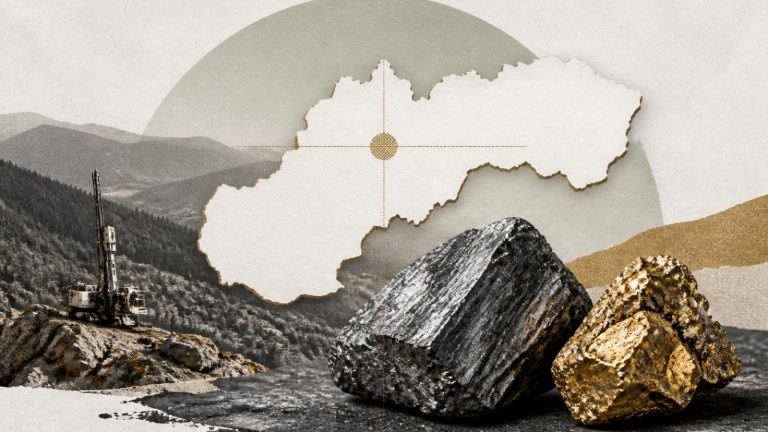
Dr Łukasz Kruszewski of the Institute of Geological Sciences makes a striking claim: Poland’s greatest potential for rare earths and associated critical elements lies not in new mines but in existing coal seams and the waste left behind by decades of extraction. Lublin coal co-occurs with germanium and gallium — both critical for semiconductors — alongside cobalt. Other promising sites include the Tajno massif, copper-polymetallic deposits near Legnica in Lower Silesia, and historic uranium fields around Kowary enriched in rare earths, particularly yttrium.
The most significant opportunity may be the hałdy — the iconic black spoil heaps of Upper Silesia. More than 200 exist, some containing tens of millions of tonnes of material. Small concentrations do not necessarily preclude economic extraction at that scale, Kruszewski argues. Methods adapted from gold leaching — using carbonate solutions that rare earths readily bind to — could extract materials with minimal disturbance. Biological extraction using bacteria is also under study at the University of Warsaw. A US example from Virginia, where researchers developed a viable recovery process for rare earths and cobalt from coal waste within two years, demonstrates how quickly innovation can close the viability gap.
Poland is transposing the EU’s Critical Raw Materials Act through draft national legislation and operates a National Critical Raw Materials Exploration Programme funded at 180 million zloty through 2032 — though rare earths sit in the programme’s third-tier priority group. By comparison, Spain’s equivalent programme is funded at over €180 million. A planned rare earth processing facility in Puławy, developed by Grupo Mkango with Grupa Azoty and designated as an EU strategic project, has operations targeted for 2027 to 2028.
Systemic obstacles remain. Mining companies have shown limited interest in cooperation with researchers. Regional coordination within the Visegrad Group — essential given shared geological realities across borders — remains aspirational. And the window is narrowing as Western governments race to secure critical mineral supply chains and China maintains dominance across production and processing.