Region: Kazakhstan

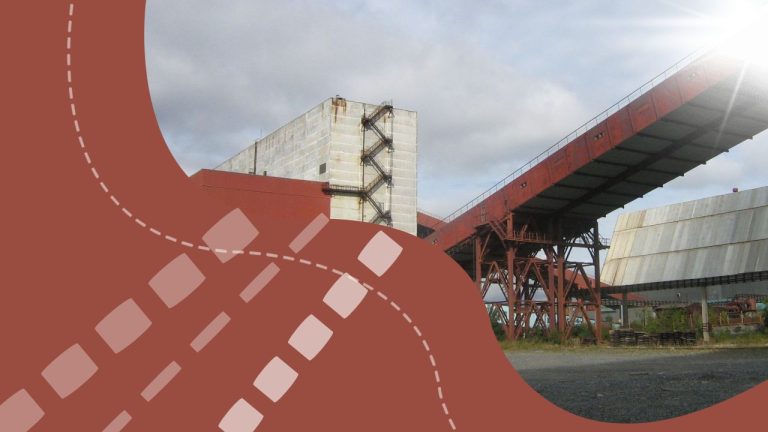
  • Shubarkol Premium may lose its subsoil license

    Shubarkol Premium may lose its subsoil license

    The coal mining company Shubarkol Premium received a notice from the Ministry of Industry about the possible termination of the contract. The reason why the key shareholder of the company, Timur Kulibayev, may lose his license is systematic violations of the rules for the use of subsoil. 

    If after a month Mr. Kulibayev does not eliminate the violations and does not pay the penalty, the contract will be terminated unilaterally. The total amount of fines amounted to about 55.6 million tenge, Kursiv reports .

    The Shubarkol Premium company did not fulfill the financing plan that was agreed upon when concluding the contract. Thus, in 2020, the company invested 7.8 billion tenge in the project instead of 23.2 billion tenge. The liquidation fund received less than 103 million tenge: about 45% of the total amount was transferred. 

    In addition, at that time Shubarkol Premium JSC did not allocate adequate funds for training, retraining of Kazakh employees (the plan was fulfilled only by 37.6%) and research work (65.6%). At the end of 2020, almost 1.3 million tons of coal were produced, which is 43.03% of the plan. 

    In 2021, the situation repeated itself: the Shubarkol Premium enterprise did not fulfill the plan for financing production, training workers and retraining personnel. Capital expenditures turned out to be insufficient, and indirect costs were completely zero. 

    Coal production in 2021 amounted to 1.655 million tons (47.3% of the plan). In 2022, not even 1 ton was produced. In January-August last year, coal production decreased by 52%.

    In connection with the violation of the contract, the Shubarkol Premium company must compensate 50.8 million tenge for violations in 2020 and 4.8 million tenge for 2021. 

  • The Republic of Kazakhstan will ban the export of ferrous scrap metal and petroleum products

    The Republic of Kazakhstan will ban the export of ferrous scrap metal and petroleum products

    The Kazakh authorities have decided to limit the export of ferrous metal waste and a number of petroleum products. The bill is being developed exclusively in the interests of local entrepreneurs, reports the press center of the Prime Minister of the Republic of Kazakhstan. 

    Now it will be impossible to export Kazakh waste of ferrous metals and alloys. In particular, transportation through the Zhaisan, Aksu and Auyl railway checkpoints will be abolished. These measures were taken to support Kazakhstani processing enterprises, which now themselves need raw materials.

    The Ministry of Industry reported that over the past year, about 1.9 million tons of ferrous scrap metal were collected in the Republic of Kazakhstan, while processing enterprises needed 3.9 million tons to fully load. Thus, the plants did not operate at full capacity, using on average only 35% from all capacities.  

    The export of certain petroleum products is already prohibited in the Republic of Kazakhstan. The authorities plan to extend the restrictions for another six months. The list of “restricted” petroleum products includes fuels such as gasoline and diesel. According to the competent authorities, this decision was made as part of ensuring national security in the energy sector.

  • C5+1 Dialogue on Critical Minerals with Kazakhstan, Kyrgyzstan, Tajikistan, Turkmenistan and Uzbekistan

    C5+1 Dialogue on Critical Minerals with Kazakhstan, Kyrgyzstan, Tajikistan, Turkmenistan and Uzbekistan

    Following the largest mining conference in Africa, Mining Indaba, where Under Secretary for Economic Growth, Energy, and the Environment Jose W. Fernandez advanced cooperation on securing and strengthening critical mineral supply chains, he chaired the C5+1 discussion on goals and objectives of the CMD, which will seek to increase the region’s involvement in global critical minerals supply chains, strengthen economic cooperation, and advance the clean energy transition, while also protecting Central Asia’s unique ecosystems.

    Assistant Secretary of State for Energy Resources Geoffrey Pyatt moderated the event, accompanied by Deputy Assistant Secretary of State for Central Asian Affairs John Mark Pommersheim and colleagues from across the U.S. government who work on critical minerals. Senior officials from each of the Central Asian governments shared their interest in developing investment opportunities in critical minerals that meet the highest environmental, and social standards, and governance.

    In the spirit of C5+1 collaboration, each country underscored the benefit of working together to advance our shared critical minerals objectives including diversification of markets and development of technologies in a manner that will benefit all our citizens. Among the initiatives discussed, the United States emphasized opportunities through the Minerals Security Partnership and Partnership for Global Infrastructure and Investment. In the lead-up to the mining and exploration convention in Toronto, Canada, called Prospectors & Developers Association of Canada (PDAC), the United States welcomed input from the C5 countries to promote new partnerships and investment opportunities and efforts to continue the dialogue through national coordinators within the C5+1 framework.

    Learn more about C5+1 collaboration at: https://www.whitehouse.gov/briefing-room/statements-releases/2023/09/21/c51-leaders-joint-statement/ .

    Learn more about the Minerals Security Partnership at: https://www.state.gov/minerals-securit-partnership/.  

    To stay up to date, follow Under Secretary Fernandez on X: @State_E, LinkedIn: @State-E, and Facebook: @StateDeptE.

    For press inquiries, please contact E_Communications@state.gov.


    In March, as part of a working trip, Kanat Sharlapayev, the Minister of Industry and Infrastructure Development of the Republic of Kazakhstan will visit the PDAC (Prospectors & Developers Association of Canada) in Toronto, where meetings focused on the development of critical minerals will take place.

  • The new government of the Republic of Kazakhstan sets tasks for the development of high value-added production

    The new government of the Republic of Kazakhstan sets tasks for the development of high value-added production

    Large Kazakh industrial enterprises will need to develop roadmaps for establishing new high-value production facilities. The new Prime Minister of the Republic of Kazakhstan, Olzhas Bektenov, issued this instruction during an extended government meeting.

    According to the press service of the Cabinet of Ministers, in the near future, First Deputy Prime Minister Roman Sklyar will conduct negotiations with the heads of significant production facilities in the republic. Primarily, mining companies will be confronted with the challenge of producing high-value-added products.

    This directive aligns with the message of the head of state, “Economic Course of a Fair Kazakhstan.” Last fall, the president emphasized that the country should establish distinct industrial clusters. Kassym-Jomart Tokayev proposed giving priority to the deep processing of metals, coal, oil and gas chemistry, uranium conversion and enrichment, heavy engineering, and so on.

    Another directive from the Prime Minister concerns the utilization of domestic raw materials in the manufacturing industry. According to Mr Bektenov, industrial giants must significantly increase the procurement of domestic goods, services, and works.

    In 2024, the manufacturing industry of the Republic of Kazakhstan intends to implement a total of 180 investment projects worth 1.5 trillion tenge.

  • Polymetal takes part in the Syrymbet tin project

    Polymetal takes part in the Syrymbet tin project

    Polymetal is exploring the reserves of the Syrymbet tin deposit together with Tin One Mining, which holds the subsoil license for this site. The publication on inbusiness.kz reported that mining companies are strengthening cooperation.

    Tin One Mining and Polymetal specialists need to select options on how to optimize the existing technological scheme for processing the deposit’s tin ores. According to representatives of the gold mining company in response to a media request, the parties have been cooperating in this direction for more than one year.

    Polymetal may potentially acquire a share in the project in the future. Incidentally, it was precisely the issue of studying the properties of ore, the lack of suitable competencies and solutions, that at one time slowed down the development of Syrymbet.

    Proposals to develop the site first came in the late 1990s, and tin mining began only in 2021. The mining and metallurgical plant at Kazakhstan’s largest tin deposit was planned to be launched by 2025, according to Tin One Mining’s management.

    During a recent conference call with investors, held, the head of Polymetal, Vitaly Nesis, said that in the future the company may be interested in Kazakh deposits of copper, tin, lead, and zinc.

  • The Lomonosovskoye iron ore deposit will be launched in 2025

    The Lomonosovskoye iron ore deposit will be launched in 2025

    “Lomonosovskoye”, which owns the license for the similarly named iron ore deposit in the Kostanay region, will start its industrial operation in 2025. The company’s mining plan is published on the Unified Environmental Portal of Kazakhstan. Public hearings on the project will take place in early March 2024.

    The mining area belongs to a large mining region of the republic. Sarbay and Sokolovskoye deposits, Sokolovsky underground mine are located 10-20 km southeast of Lomonosovskoye, and 30 km north of it is the Kacharsky quarry.

    The company plans to conduct open-pit mining at Lomonosovskoye for 22 years. During the first five years of quarry operation, work will only be carried out in the central area. Due to the fact that the deposit is located at significant depth, in 2025-2026, the subsoil user will only engage in overburden operations without concurrent extraction.

    By the fourth year of operation, the enterprise will reach an annual ore extraction volume of 7 million tons. After the north-western part of the quarry is put into operation, the project capacity will increase to 16 million tons of iron ore per year. It is planned to maintain production at this level from the eighth to the 21st year of Lomonosovskoye’s operation.

    The project documentation of  “Lomonosovskoye” does not indicate the reserves of the deposit. Most likely, the raw materials will be processed at the company’s own ore processing plant.

  • Qarmet must return to the status of one of the leaders in metallurgy in the CIS

    Qarmet must return to the status of one of the leaders in metallurgy in the CIS

    President Kassym-Jomart Tokayev ordered the production of high-tech steel grades for the automotive industry and other industries, LS reports.

    The head of state recalled that the Karaganda plant (Qarmet) was transferred to the national investor on the terms of a comprehensive modernization of the enterprise. And to ensure uninterrupted operation of the plant and prevent accidents, it is necessary to restore the mines as soon as possible, strengthen industrial safety, and update the material and technical base. The president also added that large-scale investments are needed in the creation of new industries and the production of goods with high added value.

    “It is necessary to establish the production of high-tech steel grades for the automotive industry and other industries. Over the next five years, the enterprise must significantly increase production and regain the status of one of the leaders in metallurgy in the CIS,” Tokayev instructed.

    During his speech, the head of state also listed a list of promising areas that should be paid attention to: road and construction equipment, equipment for the energy sector, reclamation systems, finished metal products.

    “If such production is not created in Kazakhstan now, then the total import of equipment will become chronic. Therefore, it is important that industrial policy is consistent with plans to modernize infrastructure and develop the mineral resources complex. The domestic automotive industry has made some progress here,” the president noted.

    Tokayev emphasized that now it is necessary to consistently move to a more complex level of car assembly. He noted that it is necessary to strengthen other promising sectors of the manufacturing industry.

    “At the same time, business should be oriented towards the fact that after our market is saturated, it will have to export. This will be an indicator of the high competitiveness of domestic entrepreneurs,” Tokayev added.

    He noted that in general it is necessary to give a new impetus to the industrial development of the country. And for this, the head of state recalled, a separate ministry was created last year.

    “Enough time has passed; it’s time to show concrete results. The ministry should develop guidelines for the industry and investors. Specific measures and approaches that would stimulate investment in new high-tech production have not yet been developed,” the president emphasized.

    According to the head of state, a list of breakthrough projects has been prepared, but requires thorough revision. Tokayev noted that these industries should change the structure of the economy, create a strong industrial framework and points of technological growth. However, the president noted that all this has not yet happened. In particular, funding sources have not been identified for many of the projects.

    At the same time, according to the president, large-scale and innovative projects that lay the foundation for economic growth for many years to come should receive priority state support.

    “We are talking about both the modernization of existing production facilities and the development of completely new industrial sectors for our country. The government will have to intensify a constructive dialogue with international financial institutions, transnational corporations and domestic businesses. In general, there must be answers to the questions of what the industrial appearance of Kazakhstan will be, which enterprises will play an important role tomorrow. We need to act proactively, in accordance with the requirements of the time,” Tokayev emphasized.

    In addition, the president separately focused on the modernization of existing production facilities. According to him, we should start with metallurgical plants, whose condition is at a low level.

    “The reason is known – the lack of investment in modernization and expansion of production. As a result, added value of products and quality jobs are lost. Strict control over maintaining the technical condition of enterprises is also extremely important. We have before our eyes a situation where an investor siphoned off profits, ignoring issues of enterprise modernization, ecology, and labor safety,” the president noted.

    At the same time, Tokayev recalled that he had repeatedly raised the issue of establishing strong medium-sized businesses in the industrial sector. However, he added, a systematic action plan was never developed. The head of state noted that there are no answers yet to questions about what the priorities should be and what support will be provided to entrepreneurs.

    “We have opportunities for the emergence of new advanced production facilities. For example, large oil and gas and mining and metallurgical companies must introduce technological innovations when developing subsoil, changing the structure of the national economy,” the president concluded.

  • Kazakhstan: a breakneck race for Critical Raw Materials and Foreign Investment is on!

    Kazakhstan: a breakneck race for Critical Raw Materials and Foreign Investment is on!

    Kazakhstan’s untapped mineral resources are becoming increasingly important due to the global demand for critical raw materials.  On 19 January 2024, president Tokaev participated in the investment meeting in Rome and urged investors to consider Kazakhstan as the most favourable investment jurisdiction in Central Asia.

    According to the estimates, presented on the President’s administration website with over 5,000 unexplored deposits valued at over $46 trillion, Kazakhstan is poised to become a central investment hub in Central Asia.  Currently, the country produces 19 out of 34 critical raw materials. Deposits for 9 more like cobalt, tungsten, lithium, and others can be exploited with the necessary investment.

    To put these figures into perspective, as of 2020 the United States’ natural resources were estimated at $45 trillion, with a significant portion being timber and coal. Saudi Arabia has $34.4 trillion worth of natural resources — notably oil.  The value of its mineral resources has been upgraded to $2.5 trillion in January 2024. Canada’s natural resources has an estimated $33.2 trillion worth of natural resources. Metals in Canada include copper, lead, nickel, and zinc, and precious metals like gold, platinum, and silver. Australia has an estimated $19.9 trillion in natural resources including coal, timber, copper, iron ore, gold, and uranium.

    Read more about 10 Countries with the Most Natural Resources

    By 2029, Kazakhstan plans to increase mineral resource production by 40%

    On 5 February 2024, the Government published the National Development Plan of the Republic of Kazakhstan until 2029.

    Kazakhstan aims to increase mineral production by 40% by 2029 according to its new National Development Plan. However, the mining industry faces challenges like resource depletion, decreasing competitiveness due to high energy intensity, rising labour costs, and complex logistics.

    Despite having mineral deposits, there is a shortage of fields ready for development. Production of copper, chromium, and iron is expected to decline, while the potential for nickel, cobalt, lithium, and other rare metals remains untapped.

    To address these issues, Kazakhstan’s government plans to:

    • Conduct geological and geophysical exploration over 400,000 square kilometres (comparable to the size of Paraguay, Iraq, or Uzbekistan) and replace 20–50% of reserves for critical metals.
    • Encourage geological exploration through co-financing, VAT exemption, and 25% depreciation of expenses.
    • Establish infrastructure for the storage and processing of geomaterials by constructing a storage facility and core storage facilities.
    • Reconsider the tax rate for investors developing man-made mineral formations.

    These challenges and opportunities will be discussed at the upcoming MINEX Kazakhstan Forum in Astana, with the participation of national and international companies.

    For more information and registration details, participants are encouraged to visit the official website: https://2024.minexkazakhstan.com/

  • Kazakhstan, Azerbaijan agree to co-reduce bottlenecks in Middle Corridor

    Kazakhstan, Azerbaijan agree to co-reduce bottlenecks in Middle Corridor

    Kazakhstan and Azerbaijan have agreed to actualize the synchronous elimination of bottlenecks on the Trans-Caspian International Transport Route (TITR, or Middle Corridor), the deputy chairman of the Committee of Railway and Water Transport of Kazakhstan, Kasym Tlepov, said during the meeting with the Azerbaijani delegation.

    Thus, the parties considered issues within the framework of the implementation of the signed Road Map on synchronous elimination of “bottlenecks” and development of the Middle Corridor on the territories of Kazakhstan, Azerbaijan, and Türkiye for 2022–2027.

    Tlepov informed about the ongoing work to expand the capacity of the corridor. According to him, in 2023, the volume of transhipment through the seaports of Aktau and Kuryk increased by 65 percent and amounted to 2.76 million tons of cargo.

    “Within the framework of the implementation of the roadmap on synchronous elimination of bottlenecks and the development of TITR, the parties are actively working to expand the capacity of the corridor. An agreement has been reached to update this roadmap. In turn, Kazakhstan is making efforts to develop transport and transit potential in the region and modernize transport corridors,” Tlepov emphasized.

    He also shared information on railway projects, raising the status of the TITR association, digitalizing TITR, creating a single logistics operator, and building port capacity.

    To note, the Middle Corridor links the container rail freight transportation networks of China and the European Union through Central Asia, the Caucasus, Türkiye, and Eastern Europe.

    A multilateral multimodal transportation infrastructure links ferry terminals on the Caspian and Black Seas with the railway systems of China, Kazakhstan, Azerbaijan, Georgia, Türkiye, Ukraine, and Poland.

    The middle corridor facilitates increased cargo traffic from China to Türkiye, as well as to European countries and in the opposite direction.

    A route train along this corridor delivers cargo from China to Europe in an average of 20-25 days, and this is one of the main advantages of this transport corridor.

  • Kazakhstan produces 19 types of critical raw materials approved by the European Union

    Kazakhstan produces 19 types of critical raw materials approved by the European Union

    Kazakhstan, possessing rich resources, positions itself as one of the key players in this field.

    19 types of strategic raw materials:

    • The country produces and processes 19 types of essential raw materials, as approved by the European Union.
    • Exports reach the USA, China, South Korea, Great Britain, Russia, and EU countries.
    • Presently, Kazakhstani manufacturers supply the European market with metal and chemical products such as beryllium, tantalum, titanium, ammonium metavanadate and phosphorus.

    Leadership in copper production and potential in electric vehicles:

    • Kazakhstan ranks amongst the top ten countries in the world for copper production.
    • There’s a promising opportunity to establish a cluster focused on battery material production, such as nickel, cobalt, manganese, and lithium.
    • These precursors will become a primary source of raw materials for the expanding production of electric vehicles.

    Overcoming challenges:

    • A core issue within the rare metals mining industry is a reliance on imported raw materials.
    • Additionally, worn-out technologies and equipment in businesses hinder further development of the production of essential raw materials.

    Comprehensive development plan:

    • To tackle these challenges, a comprehensive plan for developing the rare earth metals sector (2024-2028) has been devised.
    • The plan was approved by a Government Resolution on the 28th of December 2023.
    • The Ministry of Industry is actively working to implement it.

    The implementation of this plan will enable Kazakhstan to become one of the leaders in the production of raw materials for electric vehicles, ensuring sustainable economic development and strengthening its position in the global market.

    Additional information:

    • Press Service of the Ministry of Industry and Construction of the Republic of Kazakhstan
    • Government Resolution of the Republic of Kazakhstan dated 28 December 2023 No. 1023