Region: Kazakhstan

  • Kazakhstan Produces Over Half of Raw Materials Critical for EU Economy

    Kazakhstan Produces Over Half of Raw Materials Critical for EU Economy

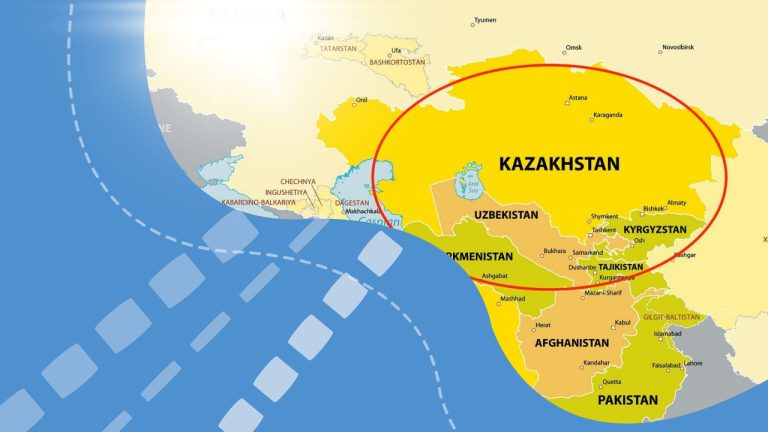
    Kazakhstan produces and processes 19 types of essential raw materials included in the list of critical raw materials for the European Union (EU), reported the Ministry of Industry and Construction on Feb. 6. The list updated by the EU in 2023 includes 34 critical raw materials.

    The raw materials from Kazakhstan are also exported to China, the EU, South Korea, the United Kingdom, the United States and Russia.

    “Kazakhstan’s producers supply the European market with metal and chemical products such as beryllium, tantalum, titanium, ammonium metavanadate, and phosphorus,” said the ministry in a statement.

    Kazakhstan is also among the world’s top 10 copper-producing countries. Kazakhstan boasts opportunities to establish a cluster for battery material production, such as nickel, cobalt, manganese, and lithium.

    Rare metals and rare earth metals are considered critical types of raw materials in demand by leading sectors of the global economy, necessary for the transition to green energy, the development of digital technologies, defense, aerospace, medical, and other high-tech areas.

    “One of the main problems in the rare metals mining industry is the dependence on imported raw materials. Additionally, the development of the production of essential raw materials is hindered by the wear and tear of technologies and equipment at enterprises,” said the ministry.

    These issues are outlined in the comprehensive plan for the development of the rare earth metals industry for 2024-2028, which was approved by the government on Dec. 28.

    According to the document, the main problems of the domestic rare metals and rare earth metals industry are low level of geological exploration, low level of assessment and commercial exploitation of technogenic mineral formations, wear and tear of the main assets of enterprises, and underdevelopment of the regulatory framework for the industry.

    The ministry noted it is working on the tasks for the next five years. Overall, 15 rare earth deposits registered in the state are spread across three regions of Kazakhstan: Turkistan, Kostanai, and Mangystau. Data from the National Geological Service also indicates Kazakhstan possesses a raw material base of rare metals, including tungsten with 2.2 million tons of reserves, molybdenum with one million tons, lithium with 75,600 tons, tantalum with 4,600 tons, niobium with 28,100 tons, beryllium with 58,000 tons, among others.

    Kazakhstan’s Minister of Industry and Construction Kanat Sharlapaev headed the Kazakh delegation at the Raw Materials Week in Brussels in November. Speaking at a panel session in Brussels, Sharlapaev said critical materials represent a blueprint for a new chapter in the Kazakhstan-EU cooperation.

    “Our country is not just rich in terms of the mineral base. It has been a reliable partner for the EU, particularly contributing to its energy security through oil supplies and to the nuclear energy sector through uranium supplies. Now, Kazakhstan is ready and committed to integrate itself with the value chain of critical materials, which was aptly named critical for our green energy transition,” he said back then.

    __________________

    Photo credit: strategy2050.kz.

  • Ecologists of East Kazakhstan region imposed a fine of over 50 million tenge on the division of Kazzinc

    Ecologists of East Kazakhstan region imposed a fine of over 50 million tenge on the division of Kazzinc

    The Department of Ecology for East Kazakhstan region, based on a letter from government agencies about high manganese pollution with a concentration of 0.234 milligrams per liter in the Ulbe River, at a site 7 kilometers below the Tishinsky mine, 8.9 kilometers below the confluence of the Gromatukha and Tikhaya rivers, conducted an unscheduled inspection in relation to RGOC LLP “Kazzinc” in the period from January 18 to 31 on the issue of compliance with environmental legislation of the Republic of Kazakhstan, Ustinka LIVE correspondent reports .

    Ecologists took samples from the wastewater discharge No. 10 of the Russian GOK for chemical analysis, the results of which revealed a 4.5-fold excess of manganese.

    Also, during an inspection of the territory, it was found that numerous outflows and overflows occur in the settling tank at the neutralization station, which flow into the Ulba River, thus, improper operation of the treatment facilities was revealed, the press service of the Department of Ecology for East Kazakhstan region reported. – Based on the results of an unscheduled inspection of the enterprise, 4 protocols were drawn up under articles 328, 358, 331, 326 of the Code of Administrative Offenses of the Republic of Kazakhstan. According to the law, the enterprise has the right to curtail production, for which fines were paid in the total amount of 3,950,440 tenge.

    However, according to Article 328 of the Code of Administrative Offenses of the Republic of Kazakhstan, a fine is provided in the amount of one thousand percent of the rate of payment for emissions into the environment for the exceeded volume of emissions, carried out by the calculation method, according to which there is no reduced production. As a result, the amount of the fine for this violation amounted to 46,131,443 tenge. The total amount of the fine is 50,081,883 tenge. The enterprise was issued an order to eliminate the identified violations and submit to the Department a developed action plan to eliminate them.


  • Key German companies are creating a consortium for lithium mining in Kazakhstan: a new round in the lithium industry

    Key German companies are creating a consortium for lithium mining in Kazakhstan: a new round in the lithium industry

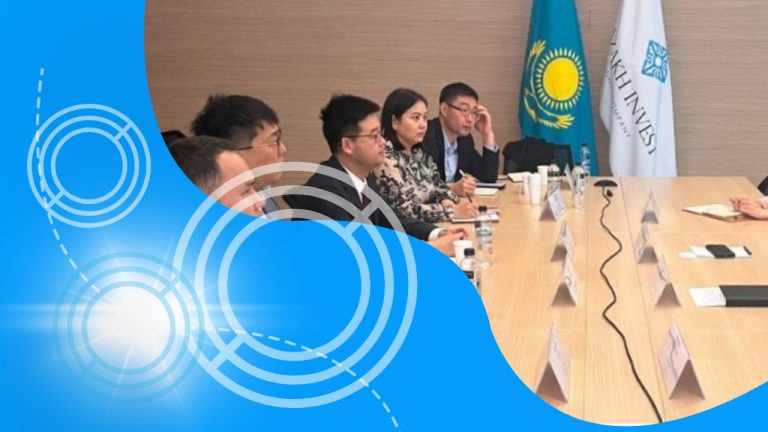
    During his working visit to Germany, Minister of Industry and Construction of the Republic of Kazakhstan Kanat Sharlapaev met with Manfred Grundke, member of the supervisory board of GP Günter Papenburg AG.

    Manfred Grundke, in addition to his role at GP Günter Papenburg AG, is also a member of the Board of Management of the Eastern Committee of the German Economy and speaker of the country group for Central Asia, which underlines his significant role in the development of economic relations between Germany and the countries of Central Asia.

    GP Günter Papenburg AG, founded in 1963, began as a construction materials trader and has grown over time to a significant size, with today 61 subsidiaries and production divisions. The company covers a wide range of activities, including the extraction of raw materials, the production of building materials, construction and logistics, which makes it a significant player in the market.

    During the meeting, the parties shared the countries’ economic performance over the past year, discussed the current economic achievements of Kazakhstan and Germany, and expressed mutual interest in deepening cooperation in the field of energy efficiency and developing supply chains for critical materials. Particular attention was paid to the possibilities of detailed cooperation, including subsoil use and the creation of joint ventures.

    A significant aspect of cooperation in the field of lithium production was also discussed. Leading companies – Knauf Gruppe, GP Gunter Papenburg AG, Roxtec, as well as the German Institute of Lithium (ITEL) have joined forces to form a consortium. This step is aimed at the development and production of lithium, using the deposits of Kazakhstan as a basis, which opens up new prospects for the development of the lithium industry in our country. 

    In addition, the parties reached an agreement to create a specialized working group aimed at exploring the potential for cooperation in the field of lithium mining and use. Additionally, we considered the prospect of developing a roadmap, which will become the basis for the successful implementation of the initiatives discussed.

  • National Bank of Kazakhstan made headlines by selling nearly 57.43 tons of gold in 2023

    National Bank of Kazakhstan made headlines by selling nearly 57.43 tons of gold in 2023

    In late 2023, the National Bank of Kazakhstan (NBK) made headlines by selling nearly 57.43 tons of gold, surpassing other national banks in terms of gold sales. This move caused the share of precious metals in the Republic of Kazakhstan’s international reserves to decrease to 54.2%, as reported by the analytical agency Halyk Finance.The year 2023 saw the highest global demand for gold in the past two decades, with developing countries particularly active in purchasing the precious metal, driving prices to relatively high levels. Since 2012, the NBK had been prioritizing the acquisition of gold, steadily increasing its reserves. By 2022, the share of gold in its reserves had risen to 70%. However, due to gold’s low liquidity as a financial instrument, the NBK opted to gradually decrease its share and reinvest the proceeds in more profitable assets. By the end of 2023, the share of precious metals in the reserves had reached 54.2%, aligning with the NBK’s plan, which allows for a range of 50–55%. This placed the NBK ahead of all other national banks globally. The National Bank of Uzbekistan followed in second place with 24.57 tons, and the National Bank of Cambodia ranked third with 10.08 tons. Despite the significant gold sales, Kazakhstan remains among the top 20 countries with the largest gold reserves, currently holding the 18th position with 294 tons.


  • Altynalmas received a license to produce and sell explosives

    Altynalmas received a license to produce and sell explosives

    The gold mining company Altynalmas announced that it had received a license for the development, production, acquisition, sale and storage of explosives and pyrotechnic substances and products using them.

    An indefinite first category permit for this work was issued by the Industrial Safety Committee of the Ministry of Emergency Situations on February 8. In addition, Altynalmas received a permit on February 9 to carry out work and provide services in the field of environmental protection. An indefinite permit of the first category was issued by the Committee for Environmental Regulation and Control of the Ministry of Ecology and Natural Resources.

    The Altynalmas press service, in a conversation with Kursiv, clarified that we are talking about updating the license issued in 2011 due to a change in the company’s legal address.

    According to the Kazakhstan Stock Exchange, as of January 1, 2024, the major shareholders of Altynalmas are: Gouden Reserves BV – 60% of shares, Vladimir Jumanbaev – 20%, Diyar Kanashev – 10.5%, Igor Vetiul – 6.5%. The market capitalization of Altynalmas is $623.66 million.

    The ultimate parent and controlling party of the company is Trustee Pte Ltd, acting on behalf of the Family Trust. Jumanbayev, with a net worth of $440 million, was ranked 17th on the Forbes list of the richest Kazakhstanis in 2023.

    According to the audited financial statements for January – September 2023, the group of companies is engaged in geological exploration, mining and processing of gold ore, sales of precious metals, design and construction of industrial facilities. At the end of September last year, Altynalmas had licenses and contracts for the exploration and production of gold deposits: Akbakay (until 2024), Aksakal-Beskempir (2029), Aksu (2029), Baktai (2024), Bestobe (2029), Dolinnoye ( 2031), Zholymbet (2029), Itkuduk (2025), Limestone (2028), Karaul-Tobe (2023), Quarry (2023), Quartzite Hills (2029), Quarry (2026), Kenzhem (2033), Mizek (2026) , Olimpiyskoye (2025), Ortasay (2025), Pustynnoye (2026), Pustynno-Baktaiskoye (2025), Sayak-4 (2029), Svetinskoye (2022. In 2020, Altynalmas decided to terminate the subsoil use contract due to low economic profitability. In 2023, permission was received to begin the procedure for terminating the contract, technogenic mineral formations (TMO) of the Aksu deposit (2024), TMO of the Bestobe deposit (2024), TMO of the Zholymbet deposit (2022). In 2023, a decision was made to begin the procedure for terminating the contract for exploration and extraction of gold from the TMO mine, Ushtogan-Caracas ore cluster (2024).

     Altynalmas has shares in a number of companies: AAEngineering Group (design and construction services, sales of goods, share – 100%), Akbakai Mining and Metallurgical Plant (96.61%), Akbakai Gold Resources (geological exploration, production and ore processing, sale of precious metals, 100%), Aksu Technology (operation of gold extraction factories, production and sale of precious metals, 100%), Aktogay Mys (geological exploration, mining and processing of ore, sale of precious metals, 100%), Altynalmas Reagents ( sales of reagents, 83%), “Altynalmas Technology” (operation of gold extraction factories, production and sale of precious metals, 100%), “Asyl Resources” (geological exploration, mining and sale of ore, 100%), “Hotel Stepnogorsk” (100%), “Kazakhaltyn Service” (repair and maintenance of machinery and equipment, 100%), “Kazakhaltyn Technology” (processing of man-made mineral formations, 100%), “Kazakhaltyn” (geological exploration, mining and sale of goods containing precious metals, 100%), “Trading House Altynalmas” (purchase and sale of goods containing precious metals, 100%).

    In turn, Kazakhaltyn has shares in the following companies: City A invest (investment in real estate, 99%, and 1% belongs to Altynalmas itself), Visart (sales of gold-containing products, 99%, and 1% belongs to ” Altynalmas”), “Kazakhaltyn Logistic” (transport and forwarding services, 99%, and 1% belongs to Altynalmas).

    AAEngineering Group owns: AA Mining (freight transportation, construction and installation works, 100%), AA Property Management (rental and operation of real estate, 100%), AAE ProService (construction and installation works, construction of residential buildings, 90%) , AAE Service” (repair and maintenance of machinery and equipment, 100%), ProMS (sale of goods and equipment, 100%), “Kazakh Santekhproekt” (design of buildings and structures, 50.09%).

    Based on the results of January – September 2023, Altynalmas’ revenue amounted to 341.6 billion tenge compared to 356.1 billion tenge for the three quarters of 2022. In 2023, a fine of 6.7 billion tenge was imposed on the Kazakhaltyn subsidiary based on the results of an audit by the environmental department. The company challenged the inspection and fine in the Supreme Court. At the end of September last year, Altynalmas had 226.6 billion tenge of loans, including 220.5 billion tenge for a loan until 2026 at 6.4% in euros to VTB Banks.

  • Kazakhstan is preparing a project to create a digital map of enterprises

    Kazakhstan is preparing a project to create a digital map of enterprises

    Kazakhstan intends to modernize the system for protecting workers’ rights by creating a digital map of companies. This project was initiated by the Ministry of Labor and Social Protection of the Population of the Republic of Kazakhstan and will be implemented by July of this year, the department’s press service reports. 

    According to the head of the Ministry of Labor Svetlana Zhakupova, despite the existing support measures, there are still negligent employers in the country who hide the facts of injuries to their employees. In addition, the rights of workers in hazardous industries are systematically violated.

    It is expected that the digital platform will make state monitoring of enterprises more effective. In addition, they plan to improve the occupational risk assessment system itself.

    Ms. Zhakupova noted that all information about companies will be automatically sent to the Ministry of Industry databases. It will be possible to promptly investigate violations, since currently some incidents are assessed after the fact, which, as a rule, does not work in favor of the injured employee.  

    Modernization of the control system involves the introduction of digital equipment that will show the presence or absence of harmful factors at a particular enterprise. This information should be fed into the department’s information systems in real time. 

    It is also planned to introduce online courses for additional training and testing the knowledge of workers who are responsible for labor safety at enterprises and state inspectors.

  • The Kazakhstan Canada Business Council will meet in Toronto to discuss the sustainable future of bileteral relations

    The Kazakhstan Canada Business Council will meet in Toronto to discuss the sustainable future of bileteral relations

    The Kazakhstan-Canada Business Council (KCBC) will be hosting a Plenary Session and Networking Reception on 3 March 2024 in Toronto.

    The session aims to promote collaboration, trade, and investment between leading Canadian and Kazakhstani businesses. The event provides an exclusive platform for companies to elevate their global presence and explore business opportunities in the region.

    The event will be attended by:

    H.E. Dauletbek Kussainov, Ambassador of the Republic of Kazakhstan to Canada

    H.E. Alan Hamson, Ambassador of Canada to Kazakhstan, the Kyrgyz Republic and Tajikistan

    Hon. Kanat Sharlapaev, Minister of Industry and Construction of the Republic of Kazakhstan

    Darren Klinck, President and Director, Arras Minerals and Honorary Consul of the Republic of Kazakhstan to British Columbia

    Tim Gitzel, President and CEO, Cameco; KCBC Co-Chair; Honorary Consul of the Republic of Kazakhstan to Saskatchewan

    Meirzhan Yussupov, CEO, Kazatomprom; KCBC Co-Chair and many others

    For further information and registration please visit the CECC website

    Kazakhstan Canada Business Council (KCBC)

    The primary aim of the KCBC is to fortify collaboration between businesses from both nations. Supported by the governments of both countries, the council convenes biennially, providing a platform for robust discussions on cooperation and trade-related matters, thereby nurturing a flourishing relationship between Canada and Kazakhstan.

    Event organiser: CECC

    The driving force behind the KCBC, the CECC, stands as the premier organization dedicated to fostering bilateral trade and business cooperation between Canada and post-Soviet nations. With a broad office network spanning Canada and emerging markets in Eurasia, the CECC delivers unparalleled services to a diverse membership base across 13 time zones.

  • The production cuts by Kazatomprom have led to a surge in uranium prices

    The production cuts by Kazatomprom have led to a surge in uranium prices

    The uranium market is witnessing a significant shift due to recent developments in production cuts by the world’s top uranium producer, Kazatomprom, and the increasing demand for nuclear power across various nations. These changes are creating a favourable environment for uranium project developers, who are now seeing a stronger outlook for prices and supply agreements.

    Kazatomprom’s Production Cuts

    Kazatomprom, the state-run miner from Kazakhstan, announced a reduction in its 2024 production guidance by up to 14%, signalling a potential shortfall in production targets into 2025. This decision is attributed to difficulties in procuring sufficient levels of sulfuric acid, a key ingredient in the company’s in-situ uranium mining process, and delays in completing construction works at newly developed uranium deposits. The company has been producing only 80% of its permitted maximum uranium output since 2018, a self-imposed limit due to the previously depressed state of the uranium market.

    Impact on Uranium Market and Project Developers

    The production cut by Kazatomprom has led to a surge in uranium prices, with spot prices more than doubling from around $48 per pound at the end of 2022 to $100 per pound by the end of January 2024. This has resulted in increased optimism among uranium project developers, such as Bannerman Energy Ltd. and Deep Yellow Ltd., who are working on projects in Namibia and Australia, respectively. Bannerman Energy’s CEO, Brandon Munro, highlighted the growing interest from utilities in diversifying their supply sources, a trend that is expected to continue. John Borshoff, CEO of Deep Yellow, also expressed a positive outlook, anticipating a sustainable period of high prices for at least a decade.

    Demand for Nuclear Power

    The demand for uranium is further bolstered by the revival and expansion of nuclear power fleets in countries such as China, Japan, South Korea, and France. This resurgence in nuclear power is driven by the global push for decarbonization and the need for reliable, low-emission energy sources to meet climate goals.

  • Kazakhstan will provide tax benefits to processors of solid minerals

    Kazakhstan will provide tax benefits to processors of solid minerals

    The government, by its resolution, will authorize the Minister of Industry and Construction to sign an agreement on the processing of solid minerals, under which the investor will be provided with tax benefits.

    “In accordance with Article 243 of the Code of the Republic of Kazakhstan “On Subsoil and Subsoil Use,” the Government of the Republic of Kazakhstan decides: 1. To approve the attached draft agreement on the processing of solid minerals in accordance with the appendix to this resolution. 2. Authorize the Minister of Industry and Construction of the Republic of Kazakhstan (Kanat Sharlapaev – “Italics”) to sign an agreement on the processing of solid minerals,” says the draft government resolution published for discussion.

    To receive preferences, the volume of investments of the subsoil user in the solid minerals processing project must be at least 70 million monthly calculation indicators, or 258.44 billion tenge for 2024.

    A project for processing solid minerals will be considered a set of measures to create new, expand or modernize existing production facilities for processing solid minerals. Investments in the processing project will be considered all types of property (except for goods intended for personal consumption), including items of financial leasing from the date of the leasing agreement, as well as the rights to them invested by the investor in the authorized capital of the investor or an increase in fixed assets used for business activities.

    After signing an agreement on the processing of solid minerals, the investor is presented with the following types of preferences: a reduction in corporate income tax by 100% on income from the implementation of an investment project; application of coefficient 0 when calculating land tax on land plots used for the implementation of an investment project; application of a 0 percent rate to the tax base when calculating property tax on objects used for the implementation of an investment project.

    Benefits for CIT and land tax are provided for a period of up to 10 years, for property tax – up to eight years, if the level of internal rate of return for the field does not exceed 15%. Upon reaching the specified rate of profitability, the enterprise will pay taxes in the generally established manner, that is, without benefits. However, if the rate of return decreases below 15%, the taxpayer will again have the right to take advantage of the benefits.

    Upon early termination of the agreement, the investor will be required to pay taxes and customs duties and/or other benefits provided under the agreement. The resolution comes into force 10 calendar days after the day of its first official publication. Public discussion of the document will last until February 26.

  • Congo’s Gecamines offers to buy some of Khazakh miner ERG’s copper assets

    Congo’s Gecamines offers to buy some of Khazakh miner ERG’s copper assets

    Congo State miner Gecamines said it has made a firm proposal to buy some of Eurasian Resources Group’s copper and cobalt assets in the country in a bid to claw back projects owned by partners and build reserves in metals key to the green transition.

    The Democratic Republic of Congo’s mining unit wants to buy three of the Khazakh miner’s assets in the country and has funds to finance the purchase, Robert Lukama, the chairperson of Gecamines told Reuters.

    Lukama declined to name the projects or mines Gecamines wants to buy but said the company is targeting three of ERG’s several assets in the world’s top cobalt supplier.

    ERG didn’t immediately respond to emailed questions.

    “We have a firm proposal and we can confirm our proposal,” Lukama said in an interview. “We showed our seriousness and we showed that we have the means to buy the assets.”

    Luxembourg-based ERG is 40% owned by the Kazakhstan government and its assets in Congo include Frontier mine, Comide, Metalkol, Boss Mining and some development and near-production assets.

    Gecamines, which ranked among the world’s top copper producers in the 1980s, is pushing for a bigger role in production and supply of critical minerals. Last year the state miner said it was leveraging its shareholding in joint ventures to secure rights to buy and trade in copper and cobalt.

    Gecamines’ offer is not conditional on the level of development or state assets are in and the miner is working hard to find common ground with ERG, Lukama said.

    “We made an offer to buy some assets of ERG in good shape or not, it doesn’t matter for us,” he said. “We are still confident that we can convince them where the best interests are for us, for them and for the country.”

    He added that Gecamines is focused on creating value and is “entitled” to claim back undeveloped assets.

    ERG has been negotiating with DRC authorities to lift the suspension of its Boss Mining operations. The government halted the operations in June last year after accusing ERG of polluting the environment.

    Lukama said the loss of production at Boss Mining is depriving both shareholders of revenue. Gecamines owns a 49% stake in Boss Mining, which targets producing about 25,000 tons of copper and more than 3,000 tons of cobalt annually.