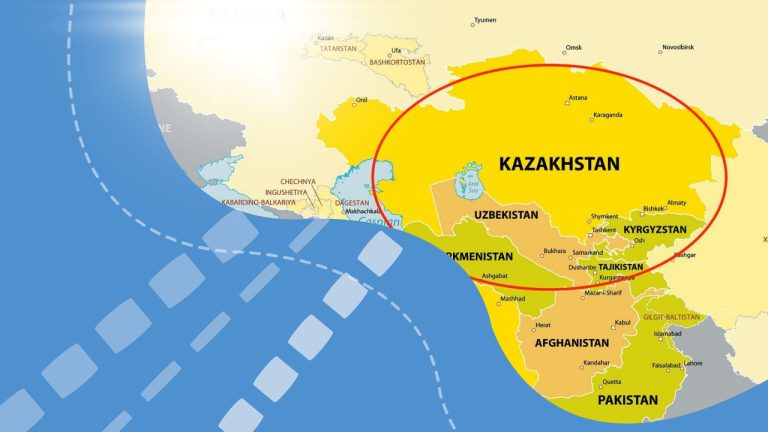
Region: Kazakhstan

  • Kazakhstan Day 2024

    Kazakhstan Day 2024

    This event combines cultural insight and information about Kazakhstan’s thriving mining and mineral exploration industry.

    📅 Date: March 4, 2024
    🕒 Time: 14:00 – 18:00
    📍 Location: Canada, Toronto, MTCC, Room 206F

    Highlights of the Event:

    🌍 Plenary Session: Introduction to Kazakhstan

    The rich mosaic of Kazakhstan’s culture, history, and investment climate paints a vivid picture of a country that seamlessly weaves together its diverse landscapes, economic potential, and strategic positioning within the global market.

    Gain valuable insights into Kazakhstan’s welcoming business environment and discover why it’s a mining friendly jurisdiction.

    The list of speakers includes the Minister of Industry and Construction of the Republic of Kazakhstan, the Ambassador of the Republic of Kazakhstan to Canada, Chairman of the National Geological Survey and CEO of Eurasian Resources Group (ERG)

    🔍 Session 1: Northern Balkhash: opportunities for new discoveries

    The session will start with a movie presentation “Northern Balkhash – the next copper elephant”.

    Explore the promising potential of Balkhash – most favorable mining province in Kazakhstan. Uncover the latest breakthroughs and exciting discoveries, learn about emerging exploration projects, geological trends, and potential resource deposits that are reshaping the region’s mining landscape.

    Professor Reimar Seltmann will present the Balkhash segment of the Kazakhstan’s orecline: commodity basket for energy transition metals. CEO of Xcalibur Multiphysics Andres Blanco will share about planned airborne geophysics program in Northern Balkhash. CEO of Lakeside Minerals Trevor Wright will present a copper porphyry cluster of Balkhash province.

    đŸ’Œ Session 2: Kazakhstan Mining Industry Review

    Learn about the dynamic world of Kazakhstan’s mining industry, key sectors, projects, and investment opportunities driving growth and innovation. Hear from industry decision makers on the current landscape and future prospects of Kazakhstan’s mining sector. The speakers in this session represent companies that have gone from exploration discoveries to mining and processing. This session includes C-level executives of RG Gold, Tau-Ken Samruk, Yer-Tai, Arras Minerals, Kazakh Invest and Aurora.

    PDF Agenda 

    Networking Opportunities:

    Forge meaningful connections with industry peers, government officials, and potential partners during dedicated networking breaks and sessions. Exchange ideas, explore collaboration opportunities, and build lasting relationships within the global mining community.

    Registration Details:

    Please register your interest pdac@aurora.kz

    #MineralExploration #Exploration #Kazakhstan #PDAC

  • In Eastern Kazakhstan, Kazzinc was punished for river pollution

    In Eastern Kazakhstan, Kazzinc was punished for river pollution

    According to a report by Almaty.tv citing the press service of the Committee for Environmental Regulation and Control of the Ministry of Ecology and Natural Resources of the Republic of Kazakhstan, Kazzinc has been fined for polluting the Ulba River in the East Kazakhstan region following an unscheduled inspection.

    The department highlighted that in January 2024, an unscheduled inspection was conducted concerning the pollution of the Ulba River attributed to the Ridder mining and processing complex of Kazzinc.

    “During the unscheduled inspection, wastewater samples collected by specialists from the Department of Ecology revealed a 4.5-fold excess of manganese. It was also found that numerous discharges into the Ulba River were occurring due to improper operation of treatment facilities. Based on the findings of the unscheduled inspection, Kazzinc was fined 50 million tenge administratively, and an order was issued to rectify the violations,” stated the press service of the Environmental Control Committee.

  • Brandt will develop two gold deposits in northern Kazakhstan

    Brandt will develop two gold deposits in northern Kazakhstan

    The Brandt company is gearing up to kick off development at the gold deposits of the Yuzhno-Akkarginskoye and Yuzhno-Leonidovskoye Akkarginsky ore field in 2024. This project, outlined in the subsoil user’s documentation, has been made public on the Unified Environmental Portal of Kazakhstan.

    Their approach involves open-pit mining for extraction. The mining schedule for the Akkarga ore field is mapped out until 2029, with an anticipated annual ore yield of 420 thousand tons.

    These deposits’ reserves were officially added to the state balance sheet as of January last year. For Yuzhno-Akkarga, the balance reserves stand at 966.95 thousand tons of oxidized gold ores and 1.385 tons of gold (with an average precious metal content of 1.43 g/t), while off-balance reserves comprise 3.075 million tons of ore and 2.274 tons of gold.

    Meanwhile, the balance reserves for the Yuzhno-Leonidovskoye deposit are recorded as 1.087 million tons of ore and 1.375 tons of gold (with an average content of 1.27 g/t), alongside off-balance reserves of 2.444 million tons of ore and 1.438 tons of precious metal.

    Brandt’s strategy involves ore processing at its own gold recovery plant, utilizing the heap leaching method.

  • German think tank ranks Kazakhstan as ‘world middle power’

    German think tank ranks Kazakhstan as ‘world middle power’

    A study by the German Institute for International and Security Affairs (SWP), focusing on the world’s ‘middle powers’ and published on 23 January, has identified twelve of them: Turkey, Israel, Egypt, Saudi Arabia, Kazakhstan, India, Indonesia, Ethiopia, Kenya, South Africa, Mexico and Brazil.

    As the authors explain, although the twelve states are very different, what they have in common is their focus on economic development, the strong emphasis on security and stability and the pursuit of strategic autonomy.

    SWP singled out Kazakhstan in particular for its balanced foreign policy, its positioning as a Central Asian key player, and its rich resources – and for being a key element of the so-called Middle Corridor.

    “Kazakhstan has a wealth of resources that attracted the interest of the USA and Europe: fossil fuels (especially petroleum), metals, minerals and rare earth. The country has potential for the production of green energy sources (Hydrogen), in which the European Union (EU) has recently shown growing interest”, SWP writes.

    The German institute also said that Kazakhstan is banking on the EU’s Global Gateway project, as an alternative to China’s Belt-and-Road initiative. “Kazakhstan presents itself as a bridge between East and West and – with the (Caspian) port of Aktau – as a hinge in the Trans-Caspian Corridor”, the paper says.

    On foreign policy, SWP said that despite the country’s close relations with Russia, President Kassym-Jomart Tokayev “unequivocally criticised the actions of his Russian counterpart” in the context of the war in Ukraine.

    “He unequivocally told publicly President Putin at the International Economic Forum in Saint Petersburg in June 2022 that the legal principle of territorial integrity of states should prevail and made it clear that Kazakhstan will not recognize the annexed territories in Ukraine”, the report reads.

    According to the German think tank, in the thirty years of its national independence, a mode of foreign policy action has developed in Kazakhstan that impairs the hegemonic claims of the major powers Russia, China, and the USA, through selective cooperation with these geopolitical antagonists.

    This policy of not taking sides, but engaging with all guarantees Kazakhstan a maximum of independence and creates space for the articulation and enforcement of state self-interests, SWP concludes.

    Euractiv asked Roman Vassilenko, deputy minister of foreign affairs of Kazakhstan, to comment on the news that his country was ranked among the world’s middle powers.

    Vassilenko emphasized multilateralism, a key feature of his country’s foreign policy.

    “If we are to find sustainable solutions to global problems, in an era characterised by increases in both polarisation and interconnectivity, we need more robust multilateralism”, he said on Wednesday (14 February).

    According to Vassilenko, this was even more important now, a time when there has been a notable shift in the balance of power.

    “Now, this responsibility does not only fall on the traditional “great powers”, but on a broader range of international players. Countries like Kazakhstan are increasingly able to make critical contributions to geopolitical issues, by leveraging their strong, multifaceted diplomatic relationships as well as their resources”, the diplomat said.

    He recognised that it was a pleasure to be mentioned by a respectable German institution in such a context, but this was obviously a recognition of the role of Kazakhstan in the global diplomatic power play and a call for a more robust and active engagement.

  • Ministry of Industry Issues Notice to Qarmet Over Significant Contract Failures

    Ministry of Industry Issues Notice to Qarmet Over Significant Contract Failures

    The Ministry of Industry and Infrastructure of Kazakhstan has sent a notice to ArcelorMittal Temirtau (now known as Qarmet) demanding a penalty of 4.6 billion tenge for violating the terms of a contract for the extraction of coal and methane in the Karaganda region.

    The notice states that the company failed to fulfill its financial obligations for 2020-2022, including:

    • 948.9 million tenge in 2020 for financing research and development;
    • 1.017 billion tenge in 2021 for financing research and development;
    • 2.587 billion tenge in 2022, including:
      • 150 million tenge for social and economic development of the region and its infrastructure;
      • 940.6 million tenge for training, upskilling and retraining of Kazakhstani employees;
      • 1.49 billion tenge for financing research and development;
      • 8.8 million tenge for in-country value of works.

    In addition, the company failed to invest in 2022, despite a plan of 157.1 billion tenge.

    The notice also lists other violations committed by the company.

    Qarmet is also required to pay a fine of 20 monthly Ń€Đ°ŃŃ‡Đ”Ń‚ĐœŃ‹Ń… ĐżĐŸĐșазатДлДĐč (73,84 thousand tenge in 2024) for failing to provide a report on the implementation of license and contract terms for 2022.

    The company is required to eliminate the identified violations of contractual obligations within a month and submit all necessary documents confirming their elimination (copies of payment orders, contracts, acts of completed works); submit documents confirming payment of the penalty.

    In case of non-fulfillment of the requirements of the notice within the established time frame, the Ministry of Industry has the right to take measures in accordance with the terms of the contract and applicable legislation, including termination of the contract in a unilateral order.

    In late December 2023, it was reported that Allur owner Andrey Lavrentiev, who bought the metallurgical companies ArcelorMittal Temirtau and ArcelorMittal Aktau, invested 28.6 billion tenge of private investments in stabilizing the operations of Qarmet (Karmetkombinat). In December, the enterprise also increased production, increased stocks of ferroalloys and coal, and resumed shipment of finished products.

    ArcelorMittal, with the mediation of the Ministry of Industry and Infrastructure, transferred control of Kazakhstani assets to the state development institute Qazaqstan Investment Corporation. QIC, in turn, transferred the enterprise to Qazaqstan Steel Group of Andrey Lavrentiev, known for his projects in mechanical engineering.

    The deal with Arcelor was announced on December 8, 2023 at a press conference in Astana, where the Minister of Industry, former head of the Baiterek holding Kanat Sharlapayev announced the terms of the asset transfer.

    The purchase was financed by the placement of bonds on the Astana stock exchange AIX, specially created for this purpose by Lavrentiev’s company QSG Holding. The volume of the first issue was $355 million, the rate was set at 15% per annum. Redemption is expected in 2027. The program is expected to operate for five years. According to the site, since the placement on November 21, no transactions have been made with the company’s securities on the secondary market.

    The total amount of the deal for the sale of ArcelorMittal assets was $286 million, and another $700 million is the debt of AMT and ArcelorMittal Aktau to the former owner.

    In late November, it became known about the intention of the ENPF to invest 1.5 trillion tenge in large-scale infrastructure projects, including those related to energy. It was expected that 500 billion tenge out of the total volume will be allocated by the end of the year.

    An analytical report by Arcelor for the third quarter of 2023 states that the current carrying value of AMT is $1.8 billion, while the company generated negative EBITDA for 9 months of the year, and the average EBITDA, excluding 2021, was $0.3 billion. Arcelor emphasizes that since 1995 the company has lost $1.3 billion on the exchange rate.

    In addition, ArcelorMittal, which is leaving Kazakhstan, will allocate 16 billion tenge to the Kazakhstan Halkyna Fund for social development of the Karaganda region.

  • Five new high-value added production projects to be launched in Pavlodar region

    Five new high-value added production projects to be launched in Pavlodar region

    Pavlodar region is expecting the launch of five projects for the production of high-value added products. The regional akimat (administration) announced the details.

    Earlier, Prime Minister Olzhas Bektenov instructed his deputy Roman Sklyar to hold talks with the owners of all large industrial enterprises and submit specific plans for the creation of new high-value added production facilities in the near future.

    In response to an inquiry from the editorial board, the akimat of Pavlodar region reported that five projects with a total cost of 130 billion tenge will be implemented in the region in such sectors as construction industry, mechanical engineering, and petrochemistry. The projects will create 905 jobs.

    In particular, the launch of two facilities with foreign participation is planned for this year. The project “Organization of mechanical processing of surfaces of products of various purposes in metallurgy, mechanical engineering and power engineering” with a cost of 7.2 billion tenge is under construction and installation works in the region. It is being implemented with the participation of a Russian company. The project is expected to produce 8.7 thousand products per year. It can create 60 jobs.

    An investor from Turkey will help to launch the production of aluminum sheet and foil. It is noted that the construction of the enterprise will start in March this year. The supply of equipment is also expected during this period. The launch of the project is estimated at 8 billion tenge. The capacity is 18 thousand tons per year, and the number of jobs is 70. Aluminum sheets are in demand in the aviation and automotive industries, construction industry, food industry, and in the global market for the production of household appliances.

    Next year, a Kazakh company plans to organize a mechanical processing site. The launch will cost 5.8 billion tenge. The capacity is 40.2 thousand units of wheel-tire products per year, or 4.02 thousand units of deformation tools.

    A forging and tire complex is under construction in the region for 78.5 billion tenge. The enterprise may start operating in 2026. It will produce 54 thousand units of rough tires and 27 thousand units of gear blanks per year.

    In the same year, it is planned to open a plant for the production of alkylate for 30.29 billion tenge. It is expected that 110 thousand tons of raw materials (butane-butylene fraction) will be processed here and 92 thousand tons of finished products will be produced per year.

    Project details

    Project Cost (billion tenge) Capacity Jobs
    Organization of mechanical processing of surfaces of products of various purposes in metallurgy, mechanical engineering and power engineering 7.2 8.7 thousand products per year 60
    Production of aluminum sheet and foil 8 18 thousand tons per year 70
    Mechanical processing site 5.8 40.2 thousand units of wheel-tire products per year, or 4.02 thousand units of deformation tools
    Forging and tire complex 78.5 54 thousand units of rough tires and 27 thousand units of gear blanks per year
    Alkylate production plant 30.29 110 thousand tons of raw materials (butane-butylene fraction) and 92 thousand tons of finished products per year
  • Kazatomprom held the 26th Corporate HSE Meeting

    Kazatomprom held the 26th Corporate HSE Meeting

    The meeting organised on 16 February focused on the achievements in the field of industrial safety in 2023 and the tasks for 2024. Kazatomprom is the first national company in Kazakhstan to join the Vision Zero international program, which aims to achieve zero injuries at work. The company is constantly improving the safety culture of its employees, guided by the principle of transparency in all aspects of HSE. Environmental responsibility remains a key aspect of Kazatomprom’s activities. The company strives to not only comply with international environmental standards, but also to be a leader in the application of best practices and innovative approaches aimed at continuous reduction of environmental impact.

    In 2023, all targets for industrial safety were met, and there were improvements in some indicators in terms of ecology and road safety. The company will continue to develop a culture of safety and environmental responsibility and intends to improve its activities in the field of industrial safety, including the use of IT technologies and a risk-oriented approach to planning and organizing work. Ensuring a high degree of involvement of both production personnel and managers of all levels in HSE issues is the most important factor for improving the corporate safety culture. During the event, an award ceremony was held for employees and enterprises of the nuclear holding company for their achievements in the field of HSE.

    Key points:

    • Vision Zero: Kazatomprom is committed to achieving zero injuries at work.
    • Safety culture: The company is constantly improving its safety culture, guided by the principle of transparency.
    • Environmental responsibility: Kazatomprom is committed to environmental responsibility and strives to be a leader in the application of best practices and innovative approaches aimed at continuous reduction of environmental impact.
    • HSE performance: In 2023, all targets for industrial safety were met, and there were improvements in some indicators in terms of ecology and road safety.
    • Future plans: The company will continue to develop a culture of safety and environmental responsibility and intends to improve its activities in the field of industrial safety.


  • Kazatomprom Achieves ‘B’ Climate Rating from CDP Amidst Global Push for Sustainability

    Kazatomprom Achieves ‘B’ Climate Rating from CDP Amidst Global Push for Sustainability

    On February 8, Kazatomprom announced that it had been assigned a ‘B’ climate rating in the ‘Climate Change’ category by the international Carbon Disclosure Project (CDP), which tracks greenhouse gas emissions data disclosure. This article explains what this rating means, why it is important, and what climate ratings other Kazakhstani companies have received.

    Kazatomprom participated in the CDP project for the first time and voluntarily disclosed its environmental data for 2022, including greenhouse gas emissions. The ‘B’ rating it received is above the average market ratings of ‘C’ for the Asia region and ‘B-‘ for the ‘Metals Processing’ sector. Other companies such as QazaqGaz, KAZ Minerals, KazMunayGas, Samruk-Energo also shared their 2022 environmental data with CDP and received climate ratings.

    The CDP sends questionnaires to major companies worldwide and assigns ratings from ‘F’ to ‘A’ across four categories: ‘Climate Change,’ ‘Water Security,’ ‘Forests,’ and ‘Plastic Use.’ Disclosure of such information is voluntary, as it is not mandated by regulation.

    Companies that do not respond to the CDP’s request are given an ‘F’ rating. For example, Freedom Holding and Tengizchevroil received this rating, but CDP clarifies that it indicates a lack of response from the company, not necessarily issues with sustainable development.

    Among Kazakhstani companies, Kazatomprom has the highest rating of ‘B’ in the ‘Climate Change’ category. KazMunayGas received ‘C’ ratings in three categories (‘Climate Change,’ ‘Water Security,’ and ‘Forests’), and KAZ Minerals received ‘C’ ratings in ‘Climate Change’ and ‘Water Security.’

    The CDP considers multiple factors when assessing a company, so the amount of carbon dioxide emissions does not directly correlate with the assigned rating. For the reporting year 2022, the most polluting Kazakhstani companies that received ratings were Samruk-Energo, KazMunayGas, and QazaqGaz, with direct carbon dioxide emissions of 33 million, 8.1 million, and 5.1 million metric tons, respectively. Although QazaqGaz had fewer emissions than KMG, it received a worse climate rating (‘C’ for KMG, ‘D’ for QazaqGaz). KAZ Minerals emitted 580,000 metric tons, and Kazatomprom emitted 97,000 metric tons of carbon dioxide, according to their CDP questionnaires.

    Kazatomprom stated that after receiving a CDP rating, the company is sent a brief confidential report, which includes information about the average ratings of peer companies in the industry and region. These average market values are not accessible to regular registered users on the CDP website.

    CDP believes that the ratings also help companies track their progress towards sustainability, as success cannot be determined without a measure.

    The CDP questionnaire is aligned with the recommendations of the Task Force on Climate-related Financial Disclosures (TCFD) and is used by companies on a voluntary basis. Other sustainability initiatives like the Global Reporting Initiative (GRI), Climate Disclosure Standards Board (CDSB), and Sustainability Accounting Standards Board (SASB) also follow TCFD recommendations but provide their separate ESG disclosure standards.

    This results in investors being unable to compare seemingly identical metrics among companies using different standards. CDP serves as a unified platform where such information is collected and structured.

    “CDP was created to standardize and centralize greenhouse gas emissions reporting so that we can keep a global account. This data is crucial for coordinating climate change mitigation efforts and increasing their effectiveness. For the organization itself (the surveyed company), it is an opportunity to confirm its achievements and show that it is ready to contribute to solving one of the main global problems,” comments Vasily Kalabin, an expert in sustainable development and ESG.

    The CDP website allows full access to companies’ responses to the CDP questions and direct analysis of the emissions data. The questionnaire also provides access to verifying documents from regulators and third-party organizations about each company’s greenhouse gas emissions (in Kazakhstan, verification is performed by Eurasian GHG Management in Shchuchinsk).

    Vasily Kalabin notes that CDP is not very popular among Kazakhstani companies. He explains that there are rating organizations that provide a comprehensive ESG assessment, which is often more in demand than CDP. These include Sustainalytics, MSCI, and S&P Global ESG Score, among others. Such ratings are highly sought after by investors, which is why many companies in Kazakhstan and abroad seek to obtain them today.

    Kalabin points out that foreign investors and regulators are the main drivers of the sustainable development agenda, and that Kazakhstani companies listed on foreign stock exchanges, such as Kaspi.kz, Halyk Bank, KazMunayGas, and Kazatomprom, have these ratings.

    Subsidiaries of the National Welfare Fund “Samruk-Kazyna” also receive such ratings by the fund’s mandate. As an example, Kalabin mentions QazaqGaz, which was rated by Sustainalytics at 19.2 points last December, indicating low risks. There is no data for Air Astana, which recently conducted an IPO, including on the London Stock Exchange, in either Sustainalytics or CDP systems.

    Kazatomprom commented that “the practice of disclosing information through CDP is welcomed in the global markets for the company’s products.” Therefore, the national atomic company plans to mention its ‘B’ CDP rating in its public materials “to enhance its investment attractiveness and stakeholder engagement.”

  • Increased Extraction of Non-Ferrous and Precious Metals in Kazakhstan in January 2024

    Increased Extraction of Non-Ferrous and Precious Metals in Kazakhstan in January 2024

    According to the National Statistics Bureau report, the extraction of gold-bearing ore increased by 8.8% compared to the previous year, reaching 2.981 million tons. Gold production also grew, with companies producing just under 10 tons of unprocessed and semi-processed gold, as well as 5 tons of refined metal.

    The extraction of copper ores increased by 14.7%, reaching 12.88 million tons, and copper-zinc ores by 6.2%, reaching 55.6 thousand tons.

    Other metals, such as aluminum, lead, zinc, and silver, also showed increased production. These data indicate a significant growth in the extraction of non-ferrous and noble metals in the country.

  • Kazakhstan Boasts 15 Rare Earth Deposits, Eyes for Deeper Exploration

    Kazakhstan Boasts 15 Rare Earth Deposits, Eyes for Deeper Exploration

    Kazakhstan has 15 rare earth deposits, strategically important components of electronics and clean energy technology, and eyes for closer cooperation with international partners in uncovering the ample opportunities these deposits present, Chairman of the National Geological Service Yerlan Galiyev told The Astana Times.

    The National Geological Service was created in 2022 with a goal to provide comprehensive service support to subsoil users.

    As the world is in the midst of a transition to clean technology, demand for rare earth metals is growing. The International Energy Agency (IEA) estimates rare earth elements may see three to seven times higher demand in 2040 than today, depending on the choice of wind turbines and the strength of policy support.

    Rare earth metals refer to a group of 17 elements in the periodic table, which include 15 lanthanides, as well as scandium and yttrium. They are used as components in high-technology devices, including smartphones, digital cameras, computer hard disks, fluorescent and light-emitting-diode (LED) lights and computer monitors. They are also used in clean energy and even defense technologies.

    “In industry, rare earth metals are used both in mixed form and individually, with metal oxides predominantly employed. They are primarily used as alloying additives in various steels and alloys, getters [gas absorbers] in electronic devices, manufacturing magnetic materials and igniter mixtures, serving as catalysts, and hydrogen storage materials in the production of special types of glass, ceramics, and in nuclear technology,” said Galiyev.

    The renewable energy sector also has a keen interest in ensuring stable supply chains for rare earth minerals and diversifying sources of reserves.

    Fifteen rare earth deposits registered in the state are spread across three regions of Kazakhstan: Turkistan, Kostanai, and Mangystau.

    Kazakhstan has a huge potential when it comes to mining rare earth metals.

    Deposits in the Turkistan Region are Budenovskoye, Akdala, Inkai, Kanzhugan, Moiynkum Central, Mynkuduk West and Central and Jamchi. In the Kostanai Region, there are Akbulak and Kundybay, and in the Mangystau Region, there are Melovoye, Taibogar, Tasmurun, Tomak and storage of technogenic mineral formations.

    Data from the National Geological Service also indicates Kazakhstan possesses a raw material base of rare metals, including tungsten with 2.2 million tons of reserves, molybdenum with one million tons, lithium with 75,600 tons, tantalum with 4,600 tons, niobium with 28,100 tons, beryllium with 58,000 tons, among others.

    Rare metals is a broader category that includes elements that are rare in the Earth’s crust or have limited commercial uses. It encompasses a variety of elements, some of which may not be classified as rare earth metals.

    Despite their name, rare earths are not particularly scarce. What makes them rare is that they are hardly found in concentrations and quantities significant enough to justify their commercial extraction.

    In terms of rare metals, Kazakhstan boasts six lithium oxide deposits. However, Galiyev noted that the prospects for the development of these deposits are not high due to the absence of efficient processing technologies and the low profitability of development.

    There are also two deposits of cupriferous sandstones containing osmium oxide in Zhezkazgan and Itauz in the Karagandy Region.

    “At these deposits, the by-product extraction of copper-containing ores with osmium is conducted by Kazakhmys. The production of osmium-187 is managed by the Zhezkazganredmet state enterprise,” he said.

    Besides this, the nation also has 17 deposits of tantalum-containing ores, including 13 deposits with associated niobium. Nearly 80% of the reserves are deposits of rare-metal pegmatites in eastern Kazakhstan and the Sarymbet deposit in northern Kazakhstan.

    Strategic importance

    In his address to the nation in September 2023, President Kassym-Jomart Tokayev said developing deposits of rare and rare-earth metals should be a priority task. He described these metals as a “new oil.”

    “Countries that succeed in this area will set the course for technological progress worldwide,” he said back then.

    Kazakh expert in geology and subsoil use Bakyt Muratov said rare and rare-earth metals are the “vitamins of metallurgical production.”

    Muratov also sees a sharp increase in global demand for rare and rare-earth metals in recent years. High-quality low-alloy niobium and rare-earth steels are important for the transport engineering sector, oil and gas extraction industries, and the associated pipeline systems worldwide.

    “For instance, it is not a secret among specialists and scientists that each ton of niobium introduced into low-carbon steels for transportation and construction products allows for saving 200-300 tons of steel and reducing the weight of the structure by 30-40%. Moreover, the service life of the corresponding products increases by 1.5-2 times,” he told The Astana Times.

    However, Muratov acknowledges that the production of rare metals, rare earths, and their compounds in Kazakhstan can be characterized as not living up to their potential. He said there has been a “three-decade stagnation.”

    He said Kazakhstan needs to focus on the development of geology, exploration of ore deposits and prospective areas, new technologies for the extraction and enrichment of rare and rare-earth metals, research and development, as well as the training of professionals.

    Geopolitical factor in rare earth metals

    According to Washington-based Benchmark Minerals Intelligence, China is the world’s top miner and processor of rare earths. China is projected to be around 71% in mined praseodymium-neodymium (PrND) and 86% in PrNd oxides in 2023, according to Benchmark data.

    China’s role in shaping global prices for rare earths and supply chains is undeniable. As an example, it announced a ban in December that covers critical technologies for extracting and separating rare earths, as well as for producing specific types of magnets, further consolidating China’s position as a virtual monopoly.

    Countries worldwide, especially those highly dependent on these minerals, including the European Union, have a vested interest in securing additional sources of rare earths to reduce reliance on China.

    In a policy brief released in June 2022, the Caspian Policy Center explains this move doesn’t stem from geopolitical reasons only, but also to avoid supply disruptions that came with the onset of the COVID-19 pandemic.

    “Seeking partnerships in resource-rich Central Asia could be a unique opportunity for the United States and others to attain new sources for rare earth minerals and thereby improve their economic and national security. For countries in the region, rare earth elements extraction represents an important commercial opportunity,” write the center’s analysts.

    But for that commercial opportunity to become a reality, it will require “important changes in policies, thinking, and ways of doing business.”

    “Good geology alone is not enough,” reads the report.

    Cooperation with international partners

    The topic of rare earth metals has become more prominent in discussions between Kazakh officials and their foreign partners. As the demand for rare metals is expected to grow in the coming years, officials assert Kazakhstan can meet this demand.

    At the Kazakh-German Business Forum in June, Kazakhstan’s Creada Corporation and Germany’s HMS Bergbau agreed on investments and the development of a project for the exploration, extraction, and processing of complex rare metal ores in eastern Kazakhstan. The planned project will cost $200 million.

    Rare earths, and more broadly critical raw minerals, are also on the agenda in the cooperation between Kazakhstan and the EU. The EU relies on China to meet 98% of its needs of supply and refining of rare earths, as well as manufacturing of permanent magnets.

    Facilitating these discussions was a strategic partnership agreement in raw materials, batteries and renewable energy signed by Kazakhstan and the EU in November 2022.

    “To diversify sources of critical raw materials, countries in need of rare metals and rare earth metals established cooperation with producer countries, including Kazakhstan. Kazakhstan has gained widespread recognition by forming partnerships with the EU, the United Kingdom, the United States, France, and Korea,” said Galiyev.

    This collaboration, he noted, aims to attract investments in the exploration of deposits and technogenic mineral formations, transfer technologies for comprehensive processing of hard-to-extract ores and develop the production of products of rare earths and rare metals.

    Expanding geological exploration

    These efforts are part of the nation’s broader efforts to expand geological exploration. It also stems from President Kassym-Jomart Tokayev’s directive to increase the area of geological and geophysical exploration to at least 2.2 million square kilometers by 2026.

    Galiyev stressed that the early stages of geological exploration activities are underway to attract private investments in subsoil use. These include in-depth studies of areas, geological and hydrogeological surveys, geological-mineralogical and deep geological mapping at 1:200,000 scale, as well as prospecting and thematic work.

    The total coverage of the country’s geological and geophysical exploration is expected to reach 2.01 million square kilometers in 2024, 2.038 million square kilometers in 2025, and 2.21 million square kilometers in 2026.

    According to Muratov, the transition to a digital format, the creation of a national geological database, is a “matter of time, financial, and staff resources.”

    “Well-known large corporations in the country are currently digitizing historical materials. The question of transferring these materials to the state remains open as of today,” he added.

    He went on to assert that Kazakhstan needs a separate ministry of geology and subsoil protection, a comprehensive reform to get rid of unscrupulous investors and develop a long-term state funding program for scientific research on rare and rare-earth metals.