Region: Europe

  • Allied Critical Metals Reports Significant Resource Increase at Borralha Tungsten Project in Portugal

    Allied Critical Metals Reports Significant Resource Increase at Borralha Tungsten Project in Portugal

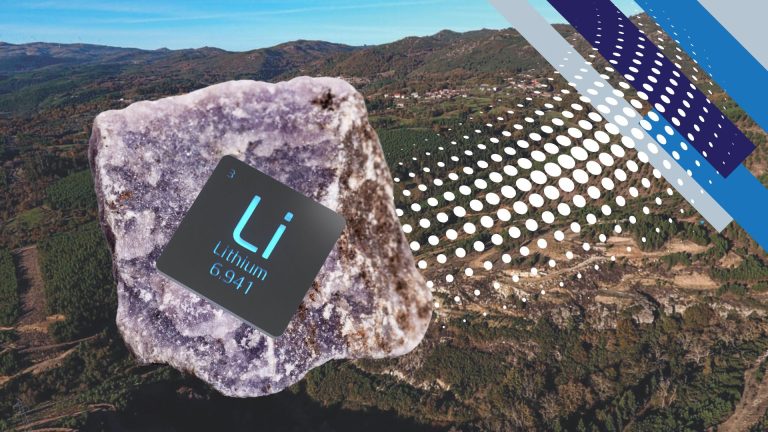
    Shares of Allied Critical Metals (CSE: ACM) surged on Thursday following the announcement of a major resource upgrade for its Borralha tungsten project in Portugal. The company revealed that the total resource at Borralha now stands at 13 million tonnes grading 0.21% WO₃ (tungsten trioxide) in the measured and indicated category, alongside 7.7 million tonnes grading 0.18% WO₃ in the inferred category. The update includes data from Phase 1 drilling conducted this year, focusing on the Santa Helena Breccia zone with 4,210 metres of drilling.

    This new estimate marks a significant improvement over the 2024 resource update, especially in the higher-confidence measured and indicated (M+I) category, which grew from just under 5 million tonnes to the current 13 million tonnes at the same grade. The inferred resource also saw an increase of 600,000 tonnes, though at a slightly lower grade.

    CEO Roy Bonnell described the updated resource as a “major milestone” for the Borralha project, calling it one of “Europe’s most compelling tungsten assets.” He highlighted the project’s continued success in producing record tungsten intercepts and expressed confidence in its future expansion. “With our next core drilling campaign set for early 2026, we are optimistic about further developments,” Bonnell stated.

    The Borralha project covers a 3.8-square-kilometre land package with a rich production history on its northern side. Between 1904 and 1985, the site produced over 10,280 tonnes of wolframite concentrate with an average grade of 66% WO₃.

    Looking ahead, Allied Critical Metals plans to complete a Preliminary Economic Assessment (PEA) for Borralha in the first quarter of 2026, coinciding with the expected completion of environmental and permitting processes. The company also holds the Vila Verde tungsten-tin project, located 45 km south of Borralha, which boasts a historical inferred resource of 7.3 million tonnes.

    Following the announcement, shares of Allied Critical Metals climbed 6.8%, bringing the company’s market capitalization to C$80.8 million ($57.3 million).

  • EU Industry Chief Urges Faster Action and Greater Recycling to Curb Critical Mineral Dependence on China

    EU Industry Chief Urges Faster Action and Greater Recycling to Curb Critical Mineral Dependence on China

    EU industry chief Stéphane Séjourné has warned that the bloc must accelerate its efforts to reduce dependence on Chinese critical raw materials, stressing that large-scale recycling will be essential. Speaking at a conference in Brussels, Séjourné highlighted that under the Critical Raw Materials Act, the EU aims to meet 25% of its demand for key minerals through recycling by 2030 — a major challenge given that less than 1% of rare earths are currently recycled in Europe.

    Séjourné also called for faster deal-making on critical raw materials, arguing that the EU cannot afford to wait for lengthy multi-year trade agreements. He noted that EU production of gallium and rare earth permanent magnets is expected to increase sixfold by 2030, but that progress must speed up across all 17 strategic materials identified by the bloc.

    On regulation, Séjourné acknowledged that overly complex permitting rules have caused too many mining and processing projects to be abandoned, and said simplification is urgently needed. He also cautioned that companies must revisit their procurement strategies, as a recent U.S.–China “stop-the-clock” agreement delaying further export restrictions on rare earths is unlikely to last long. The commissioner is expected to present the EU’s new economic security doctrine and resource package on December 3.

  • EU Steps Up Critical Raw Materials Strategy as New RESourceEU Programme Targets Reduced Reliance on China

    EU Steps Up Critical Raw Materials Strategy as New RESourceEU Programme Targets Reduced Reliance on China

    The European Union is intensifying efforts to secure reliable access to the critical raw materials essential for clean technologies, energy security, and industrial competitiveness. Although China continues to dominate global refining and export of key materials such as rare earths, the EU has begun taking concrete steps to diversify supply and strengthen domestic capabilities—yet experts warn significantly more must be done to ensure long-term resilience.

    The 2024 Critical Raw Materials Act (CRMA) set the roadmap. It aims to bolster domestic mining, refining, and recycling while cutting dependence on any single external supplier. By 2030, the EU targets meeting 10% of its annual consumption through extraction, 40% via processing, and 15% through recycling. The CRMA also limits dependence on a single non-EU country to no more than 65% of supply for any critical raw material.

    Since its adoption, the EU has begun executing several key actions. In March 2025, the Commission selected 47 strategic projects for fast-track permitting, financing support, and priority access to buyers. A second round of selections will take place in January 2026. Member States are also required to strengthen monitoring of supply chain vulnerabilities and develop national resource plans.

    On the global stage, the EU has signed new raw material partnerships with Australia, Uzbekistan, Serbia, and Norway, with further collaboration planned with Greenland. Additional bilateral deals—such as Germany’s partnership with Canada—reinforce the diversification effort under the EU’s Global Gateway strategy.

    Europe is also ramping up its processing capabilities. Neo Performance Materials recently opened a rare earth magnet factory in Estonia, the first of its kind in Europe, serving critical industries including automotive manufacturing and wind energy. Rare earth magnets are essential for permanent-magnet generators widely used in wind turbines due to their compactness and high performance.

    Recycling is another pillar of the CRMA. Member States must adopt national measures to improve collection and recycling of waste streams rich in critical raw materials, turning them into secondary supply sources.

    Building on these initiatives, Industry Commissioner Stéphane Séjourné is preparing to unveil RESourceEU — a new strategy designed to strengthen EU purchasing power and reduce exposure to global supply risks. The programme includes a joint purchasing mechanism and strategic stockpiling centre for critical raw materials, enabling Member States to pool demand and negotiate better access conditions.

    RESourceEU is a direct response to rising geopolitical tensions and recent trade measures. China introduced export controls on rare earths and magnets earlier this year following U.S. tariffs, requiring foreign companies to obtain special licences. Although China has agreed to suspend some of the most restrictive measures for one year following negotiations with the United States, many controls—particularly on heavy rare earths—remain in effect and will continue to apply to EU imports.

    While the wind sector may avoid immediate disruption as long as light rare earths remain unaffected, the episode underscores Europe’s strategic vulnerability. Permanent magnets used in many modern turbines remain heavily dependent on Chinese supply chains.

    “The EU talks a good game on critical raw materials and has some good plans. It’s crucial they now execute,” said WindEurope CEO Giles Dickson. He stressed the importance of accelerating extraction and processing from alternative sources, adding that the RESourceEU plan “must translate into new action and increased urgency.”

  • Rio Tinto Pauses Serbia’s Jadar Lithium Project, but Opponents Warn the Fight Is Far From Over

    Rio Tinto Pauses Serbia’s Jadar Lithium Project, but Opponents Warn the Fight Is Far From Over

    Rio Tinto has placed its controversial $3.6 billion Jadar Valley lithium project into “care and maintenance,” pausing all development while retaining control of the land — a move that critics say is far from a full retreat. An internal company memo obtained by the ABC reveals that the mining giant will halt spending and suspend progress toward an underground lithium mine in Serbia’s Jadar region as it restructures operations under new CEO Simon Trott and continues to face major permitting hurdles.

    The memo underscores Rio Tinto’s view that Jadar remains a “tier one deposit” with the potential to play a major role in Serbia’s and Europe’s energy transition. But it also cites a lack of progress with government approvals as a key factor in the decision.

    The project has been the subject of intense public resistance. Tens of thousands of Serbian citizens have protested in recent years, warning that mining operations in the fertile Jadar Valley would cause irreversible environmental and agricultural damage. Activist groups, including Marš sa Drine and local residents who have refused to sell their land, say Rio Tinto’s pause is merely a “temporary retreat” and insist they will continue to fight until the company leaves Serbia entirely.

    “Care and maintenance is not the cancellation of a project,” said Serbian-Australian actor and activist Bojana Novaković, one of the leading figures in Marš sa Drine. She emphasized that Rio Tinto still maintains offices in the region and has shown no signs of abandoning the site. “Until they pack their bags, close their offices, and sell the land back to the locals, there’s no reason to think they’ve gone away.”

    Rio Tinto had planned to extract 2.3 million tonnes of lithium from what has been called Europe’s largest and highest-grade deposit — enough to supply batteries for one million electric vehicles annually for decades. When the ABC visited the site in late 2024, the company estimated the mine could operate for at least 40 years.

    The project’s recent history has been turbulent. After nationwide protests ahead of Serbia’s 2022 elections, the government initially halted the mine. But the Constitutional Court reversed that decision in July 2024, allowing the project to proceed subject to environmental and legal conditions. Days later, President Aleksandar Vučić, German Chancellor Olaf Scholz and EU Energy Commissioner Maroš Šefčovič signed a landmark agreement granting EU manufacturers access to Serbian lithium — a move Brussels hailed as a “historic day” for Europe’s energy transition.

    However, Serbia’s political climate has since deteriorated. Public anger erupted after the collapse of a Belgrade railway station canopy killed 15 people, sparking massive demonstrations and contributing to the resignation of Prime Minister Miloš Vučević in January. Activists now argue that the Jadar project’s fate is directly tied to political turmoil, and that approval could return once stability does.

    Gavin Mudd of the British Geological Survey noted lithium’s global importance — its market value having grown from hundreds of millions to several billions in just over a decade — but stressed that mining must be conducted responsibly. Opponents in Serbia remain unconvinced. They argue that the Jadar Valley’s fertile agricultural land and populated communities make it unsuitable for mining under any circumstances.

    “This would be the first-ever lithium mine built on fertile soil and populated land,” Novaković warned. “If we allowed it to happen, it would open the floodgates.”

    Rio Tinto declined to comment on the memo or the future of the project.

  • Montenegro’s NGOs Warn Draft Mining Law Threatens Constitutional Rights, Environment, and Public Interest

    Montenegro’s NGOs Warn Draft Mining Law Threatens Constitutional Rights, Environment, and Public Interest

    A coalition of 39 Montenegrin non-governmental organizations, activists, and citizens has issued an open letter urging Prime Minister Milojko Spajić and key ministers to immediately halt public debate on the country’s Draft Law on Mining. The group argues that the proposed legislation poses a direct threat to constitutional rights, private property, environmental protection, and the broader public interest.

    The signatories demand that the government withdraw the draft and launch a completely new, transparent drafting process that includes full participation from experts, local communities, academia, and civil society. They stress that the final version must comply with the Constitution of Montenegro, EU law, and international conventions.

    Central to their concerns is the draft law’s designation of mining as an “activity of public interest,” which they say enables — for the first time — the expropriation of private property for mining projects even against the will of property owners. This, they argue, constitutes misuse of the public interest as defined by Article 58 of the Constitution and contradicts Montenegro’s constitutional commitment to functioning as an ecological state.

    The groups also warn that the draft abolishes the requirement for environmental impact assessment (EIA) consent in mining permitting. Under the proposal, key mining approvals would no longer require expert review or oversight by environmental authorities. Activists say this would allow projects with potentially irreversible ecological consequences to move forward without scientific scrutiny, regulatory control, or public transparency.

    Another major point of criticism is the concentration of power within a single ministry. The draft gives the Minister of Energy and Mining the sole authority to approve changes to mining projects, including deviations from initial designs, without oversight by other institutions. According to critics, this opens the door to arbitrary decision-making, conflicts of interest, and corruption.

    NGOs further argue that the draft is inconsistent with EU environmental and human rights standards. They question the law’s stated aim of providing “legal protection to companies operating in accordance with regulations,” asking whether such protection is intended against domestic law, European norms, or international obligations — suggesting the draft prioritizes mining interests over public welfare.

    Penalties for violations are also deemed inadequate. The draft proposes fines as low as €1,000 to €2,000 for individuals and €15,000 to €20,000 for legal entities — levels critics say are too small to deter serious misconduct, making it cheaper for concessionaires to break the law than to comply.

    The letter additionally highlights serious financial risks. Any approvals or concessions issued under an unconstitutional or legally flawed law could be overturned in court, potentially obliging Montenegro to pay millions in compensation to investors or affected citizens. Such exposure, they argue, could undermine fiscal stability and saddle taxpayers with long-term financial burdens.

    The signatories conclude that mining “must not be an excuse for taking away homes, destroying nature, and endangering the future of our children,” calling on the government to act responsibly and uphold constitutional and public interest principles.

  • EU Approves €1.75 Billion in German State Aid for LEAG’s Early Coal Exit

    EU Approves €1.75 Billion in German State Aid for LEAG’s Early Coal Exit

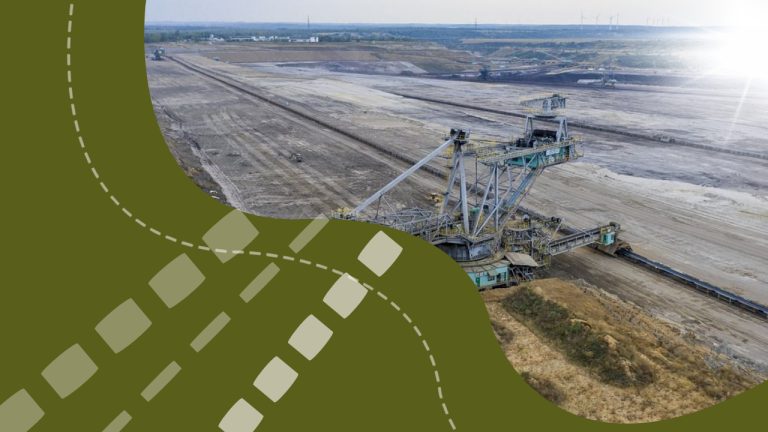
    The European Commission has signed off on Germany’s plan to provide up to €1.75 billion in compensation to energy company LEAG for the early shutdown of its lignite-fired power plants, a major step in the country’s coal phase-out strategy. The funds will cover lost profits as well as social costs, including measures to support workers transitioning into new employment.

    Germany’s coal exit aims to eliminate coal power generation by 2038 at the latest. While western Germany is on track to complete its phase-out by 2030—significantly earlier than originally planned—progress in eastern Germany, where LEAG operates its plants and open-cast mines, is moving more slowly. LEAG’s facilities are scheduled to close in stages between 2028 and 2038.

    Because national subsidy schemes can distort competition, EU approval is required for state aid. The Commission ruled that the compensation meets EU requirements, stating it is necessary to support Germany’s climate goals, appropriate in design, and proportionate—limited strictly to what is needed without leading to overcompensation. Brussels previously approved €2.6 billion in payments to western German lignite operator RWE under similar circumstances.

    German economy and energy minister Katherina Reiche welcomed the decision, calling the transformation of coal-dependent regions a “generational task.” The EU’s green light, she said, provides long-term planning certainty and opens the way to rebuild regional economies around new technologies, sustainable land restoration, and modern employment opportunities. Compensation to LEAG will be disbursed in several instalments over the coming years.

    LEAG is also accelerating its shift toward clean energy. On the same day the EU approved the aid package, LEAG Clean Power — a subsidiary of the group — announced plans for a 1.6 gigawatt-hour battery storage facility on the site of a former coal plant, underscoring the company’s transition strategy.

  • EU Trade Chief Unveils Measures to Curb Aluminium Scrap Leakage and Shield Industry from Global Pressures

    EU Trade Chief Unveils Measures to Curb Aluminium Scrap Leakage and Shield Industry from Global Pressures

    BRUSSELS — Speaking to industry leaders, the EU’s trade commissioner outlined a series of new measures aimed at strengthening Europe’s aluminium sector amid rising geopolitical tensions, high energy costs, and intensifying global competition. Addressing the Aluminium Europe conference, he emphasized that aluminium is not only a pillar of the continent’s industrial history but also a critical material for its clean-tech future, defence capabilities, and strategic autonomy.

    The commissioner noted that aluminium remains essential to modern industries, underpinning technologies such as solar panels, wind turbines, batteries, sustainable buildings, and resource-efficient packaging. Its designation as a strategic raw material under the EU’s Critical Raw Materials Act (CRMA) reflects its importance.

    The speech came against the backdrop of an “increasingly unpredictable” economic and geopolitical landscape, which has hit energy-intensive sectors particularly hard. The European Steel and Metals Action Plan, launched in March 2025, identifies the sector’s three primary challenges: persistently high energy costs, unequal global carbon-pricing systems, and unfair trade practices — the latter being the commissioner’s central focus.

    He highlighted that trade remains a core strength of the European economy, with over 700,000 EU companies exporting goods and supporting more than 30 million jobs. The aluminium industry alone exports over €10 billion annually to key destinations including the UK, U.S., Switzerland, Türkiye, and India.

    To support that competitiveness, the EU is expanding its network of free trade agreements, having recently concluded deals with Indonesia, Mercosur, and Mexico, and continuing negotiations with India, the Philippines, Thailand, Malaysia, and the UAE. As the EU will continue to rely on imports of bauxite and alumina, trade diversification remains essential.

    But openness, he stressed, must be paired with strong protective instruments. The EU will rigorously deploy its trade defence tools against dumped or subsidised imports and has established an import surveillance task force to monitor sudden surges, such as those linked to tariff changes by third countries. The recent EU ban on Russian aluminium under the 16th sanctions package was cited as an example of decisive action.

    A major industry concern is the “leakage” of aluminium scrap, with over one million tonnes leaving the EU annually despite scrap’s central role in decarbonisation and circularity. The commissioner announced that the EU is launching preparatory work on a new measure — expected by spring 2026 — aimed at balancing the needs of producers, recyclers, and downstream users while ensuring adequate access to competitively priced scrap. He underscored that the goal is not to block exports entirely but to safeguard a strategic commodity vital for low-carbon aluminium production. Public consultations will begin later this year.

    Another pressing issue remains the U.S. Section 232 tariffs, which impose 50% duties on EU aluminium and steel exports. Calling the tariffs “de facto prohibitive,” he said the Commission is pushing for a solution based on tariff-rate quotas tied to historical trade levels, maintaining the agreed 15% cap on all EU exports — including derivatives — under the EU-U.S. Joint Statement. He confirmed upcoming meetings with U.S. Commerce Secretary Lutnick and Ambassador Greer to advance discussions.

    Concluding his remarks, the commissioner stressed that aluminium production is inherently complex and now further challenged by global instability. While trade policy tools are essential, deeper structural issues — such as energy pricing and investment conditions — must also be addressed to strengthen the long-term business case for producing aluminium in Europe.

    He reaffirmed the Commission’s commitment to working closely with Aluminium Europe and the broader industry to deliver “tangible results in short order.”

  • EIT RawMaterials Invests in Greenland Resources to Boost Europe’s Magnesium Supply and Reduce Dependence on China

    EIT RawMaterials Invests in Greenland Resources to Boost Europe’s Magnesium Supply and Reduce Dependence on China

    EIT RawMaterials GmbH has announced a €0.5 million equity investment in Greenland Resources A/S, a wholly owned subsidiary of Greenland Resources Inc. and developer of the Malmbjerg molybdenum project in central-east Greenland. The initiative aims to accelerate the recovery of magnesium—currently being evaluated as a potential by-product—from both process water and primary ore, strengthening Europe’s resource security amid growing concerns over supply concentration.

    China currently supplies around 95%–97% of Europe’s magnesium imports, posing a major vulnerability for industrial sectors reliant on the metal. Magnesium is a critical alloying element in aluminum production and plays an essential role in lightweight mobility, defence applications, and modern manufacturing.

    Supported by the EU-backed European Institute of Innovation and Technology (EIT), EIT RawMaterials has collaborated with Greenland Resources from the outset to develop sustainable European molybdenum production. The new financing, provided under the Horizon Europe framework, will enable testing and scaling of low-emission technologies to extract magnesium from saline process water generated during molybdenum operations. Additional investment from existing Greenland Resources shareholders will focus on recovering magnesium directly from primary ore.

    Bernd Schäfer, CEO and Managing Director of EIT RawMaterials, emphasized the strategic importance of the effort. “Magnesium is mission-critical for Europe’s competitiveness — from lightweight mobility to defence — and yet the EU depends on China for nearly all its supply,” he said. He noted that the initiative addresses risks to key industries such as aluminum manufacturing, where magnesium is indispensable, and aligns with EU efforts to expand access to critical raw materials while reducing carbon intensity.

    The investment supports the objectives of the EU’s Critical Raw Materials Act (CRMA), which targets diversification and increased security of critical material supplies by 2030. Magnesium is officially classified as both a critical and strategic raw material, making projects that expand domestic or allied production a clear priority for the EU.

    By advancing technologies to recover magnesium from both process water and ore, the project aims to add new, lower-carbon supply streams to Europe’s raw materials portfolio. It complements the EU’s broader CRMA Strategic Projects and fits within EIT RawMaterials’ mission to mobilize investment and innovation across the raw materials value chain.

    Greenland Resources secured a 30-year exploitation licence for molybdenum and magnesium in June 2025, creating a robust permitting framework for the development pathway that this investment supports.

  • EU Moves Toward Restricting Aluminum Scrap Exports Amid Supply and Decarbonization Concerns

    EU Moves Toward Restricting Aluminum Scrap Exports Amid Supply and Decarbonization Concerns

    BRUSSELS — The European Commission is preparing new measures to curb exports of aluminum scrap from the European Union in an effort to prevent domestic shortages of a key material needed for industrial decarbonization, EU Trade Commissioner Maros Sefcovic announced on Tuesday.

    EU aluminum scrap exports reached a record 1.26 million metric tons in 2024, according to data from industry group European Aluminium—a nearly 50% increase over five years, with most shipments destined for Asian markets. European producers warn that rising exports risk depriving the bloc’s industry of essential recycled material at a time when aluminum recycling plays a critical role in reducing emissions.

    The situation has been exacerbated by U.S. trade policy. Under former President Donald Trump, the United States imposed a 50% tariff on aluminum imports but only a 15% tariff on aluminum scrap. This disparity boosted U.S. scrap imports and reduced its own exports, prompting Asian buyers to turn increasingly to European supply.

    The European Commission began monitoring scrap outflows in July and is now advancing “preparatory work” on a new export measure to address what Sefcovic described as “aluminum scrap leakage.” The proposal is expected to be finalized in spring 2026 and will aim to balance the interests of producers, recyclers, and downstream sectors.

    Recycled aluminum is central to Europe’s climate goals, requiring 95% less energy to produce compared with aluminum smelted from raw bauxite ore. However, recycling industry association EuRIC argues that export restrictions would not address the root cause of rising shipments, saying they stem from low domestic demand and limited EU capacity to process mixed scrap, including material from shredded vehicles.

  • Euro Sun Mining Advances Romanian Copper-Gold Project with Key Regulatory Wins and Strong Updated Feasibility Results

    Euro Sun Mining Advances Romanian Copper-Gold Project with Key Regulatory Wins and Strong Updated Feasibility Results

    TORONTO — Euro Sun Mining Inc. (TSX: ESM) announced a major regulatory breakthrough in Romania as the government has adopted an Emergency Ordinance establishing a national Single Point of Contact to implement the European Union’s Critical Raw Materials Act (CRMA). This new framework is designed to accelerate permitting and streamline processes for strategic projects, directly benefiting Euro Sun’s flagship Rovina Valley Copper-Gold Project.

    The company also released results from its optimized and updated definitive feasibility study (DFS) for the Colnic and Rovina open pits, marking the first phase of development for the project. According to the updated economic model, the project’s pre-tax net present value (NPV) has surged 173% to US$1.776 billion, with a pre-tax internal rate of return (IRR) of 39.7%, based on copper priced at US$4.50/lb and gold at US$3,300/oz.

    Euro Sun estimates the first-stage development will produce 403 million pounds of copper and 1.472 million ounces of gold at an all-in sustaining cost (AISC) of US$1,206 per gold-equivalent ounce. The project incorporates a cyanide-free process and dry stack tailings, aligning with responsible mining practices. Initial capital expenditure (CAPEX) is estimated at US$607.1 million.

    CEO Grant Sboros called the regulatory milestone and DFS results “significant,” adding that the company’s environmental impact assessment technical report has also been completed. Sboros emphasized that the strengthened project economics reaffirm Rovina Valley’s importance as a future European source of critical metals.

    Euro Sun further announced it has fully repaid a US$350,000 secured debenture owed to a company affiliated with one of its directors, releasing all associated security interests.

    In a strategic move, the company has appointed Cantor Fitzgerald Canada Corp. as its exclusive financial advisor to explore potential mergers, acquisitions, or asset-level transactions that could unlock additional value.

    The environmental impact assessment is now ready for submission, and Euro Sun plans to work closely with Romanian authorities to advance the project toward construction. The updated DFS reflects current cost data and revalidated economic assumptions, and it maintains a phased development approach. While the initial phase focuses on the Colnic and Rovina open pits, the underground Ciresata deposit may be integrated later pending future studies.

    Located in Romania’s historic Golden Quadrilateral Mining District, the Rovina Valley Project has access to established infrastructure, skilled local labor, and proximity to major transportation hubs. Over its 17-year open-pit operation, the project is expected to mine 140 million tonnes of ore, delivering 123.3 million tonnes for processing and stockpiling lower-grade material where feasible. Total material movement over the mine life is projected at 219 million tonnes, with a stripping ratio of 1.78:1.