Region: Europe

  • EU Reaches Provisional Deal to Strengthen Foreign Investment Screening Rules

    EU Reaches Provisional Deal to Strengthen Foreign Investment Screening Rules

    The Council of the European Union and representatives of the European Parliament have reached a provisional political agreement to revise the EU’s foreign direct investment (FDI) screening regulation, reinforcing the bloc’s ability to identify and mitigate security and public-order risks linked to foreign investments.

    The updated framework builds on the existing FDI screening system introduced in 2020 and responds to growing geopolitical, technological and supply-chain vulnerabilities. Under the agreement, all EU member states will be required to operate national screening mechanisms with a common minimum scope, ensuring that sensitive investments are assessed consistently across the bloc. Foreign investments made through EU-based subsidiaries will also fall within scope.

    The revised rules target a clearly defined set of sensitive sectors, including dual-use and military items, artificial intelligence, quantum technologies, semiconductors, critical raw materials, energy, transport and digital infrastructure, as well as key elements of electoral and financial market infrastructure. The aim is to harmonise approaches, reduce fragmentation between national regimes and lower administrative burdens for investors, while safeguarding cross-border security interests.

    While cooperation between member states and the European Commission will be strengthened, final decisions on whether to approve, condition or block an investment will remain the exclusive responsibility of the host member state. Where comments or opinions are issued by other member states or the Commission, the host country will be required to explain how these were taken into account.

    Operational improvements include plans for a shared EU database to prevent circumvention of screening rules, an optional single electronic filing portal for investors if requested by at least nine member states, and clearer risk assessment criteria.

    Denmark’s Minister for Industry, Business and Financial Affairs Morten Bødskov said the agreement strikes a balance between security and openness, focusing on the most sensitive technologies and infrastructure while keeping Europe attractive to global investors.

    The provisional deal now requires formal endorsement by both the Council and the European Parliament. Once adopted, the revised regulation will apply 18 months after its entry into force.

  • Critical Metals Corp and Romania’s FPCU Form 50:50 JV to Build EU Rare Earth Processing Hub Linked to Tanbreez

    Critical Metals Corp and Romania’s FPCU Form 50:50 JV to Build EU Rare Earth Processing Hub Linked to Tanbreez

    Critical Metals Corp. (Nasdaq: CRML) has executed a term sheet to establish a 50:50 joint venture with Romania’s state-owned Fabrica de Prelucrare a Concentratelor de Uraniu (FPCU), marking a major step toward creating a fully integrated, Western-aligned rare earth supply chain spanning mine to processing.

    Under the agreement, the JV will secure long-term offtake rights to 50% of Tanbreez’s rare earth concentrate production and advance plans to develop a state-of-the-art rare earth processing facility in Romania. The project is designed to supply European industries and defence sectors while reducing reliance on China, which currently controls more than 80% of global rare earth processing capacity.

    The JV structure is notable in that CRML will not issue debt or equity to fund the facility. The company will retain its 50% stake on a carried-interest basis, with no capital expenditure obligations related to construction. The plant is expected to produce a range of high-value outputs, including aerospace- and military-grade rare earth magnets.

    With this agreement, CRML will have 75% of Tanbreez’s future production committed under long-term offtake agreements with allied partners, following earlier deals allocating 10% to UCORE and 15% to ReAlloys. Once mining at Tanbreez is commissioned, CRML will supply half of the project’s concentrate to the Romanian JV for the full life of mine on competitive market terms.

    The partners will now work to finalise the technical and commercial framework for the JV, overseen by a dedicated development committee responsible for plant design, development strategy and commercialisation of processed products. Both CRML and the Romanian government plan to apply for funding under the EU’s recently announced €3.5-billion critical raw materials support package.

    CRML also confirmed it is updating its feasibility study to reflect a redesigned processing flowsheet at Tanbreez. The company is targeting an increase in concentrate grade from 2.2–2.5% to above 3% TREO, which is expected to improve mine-to-metal economics and downstream product quality. An updated feasibility study and revised timelines are expected by Q1 2026.

  • Strickland Metals Delivers 1.2Moz Maiden Gold Resource at Gradina, Lifting Rogozna Project Scale

    Strickland Metals Delivers 1.2Moz Maiden Gold Resource at Gradina, Lifting Rogozna Project Scale

    Strickland Metals has announced a maiden mineral resource estimate of 1.2 million ounces of gold at its Gradina deposit, significantly enhancing the scale and quality of the broader Rogozna project. The resource carries an average grade of 3.0 g/t gold, a level the company says materially upgrades the overall inventory and underscores the high-grade nature of the discovery.

    The maiden resource was delivered at a discovery cost of just US$10 per ounce, representing a strong return on exploration investment. Managing director Paul L’Herpiniere described the result as outstanding, noting that recent drilling returned multiple high-grade, gold-dominant intercepts along the length of the deposit.

    Gradina’s geometry and grade profile make it well suited to long-hole open stoping, a low-cost underground mining method that uses gravity-assisted ore extraction. The deposit hosts an estimated 3,100 ounces of gold per vertical metre, supporting efficient underground development. Potential access via adits from the eastern flank of the project could further simplify mining and ore haulage.

    The resource has already been optimised using an underground mining model based on a US$2,500/oz gold price and a 1.5 g/t cut-off grade, leaving a wide margin at current gold prices, which are trading above US$4,200/oz.

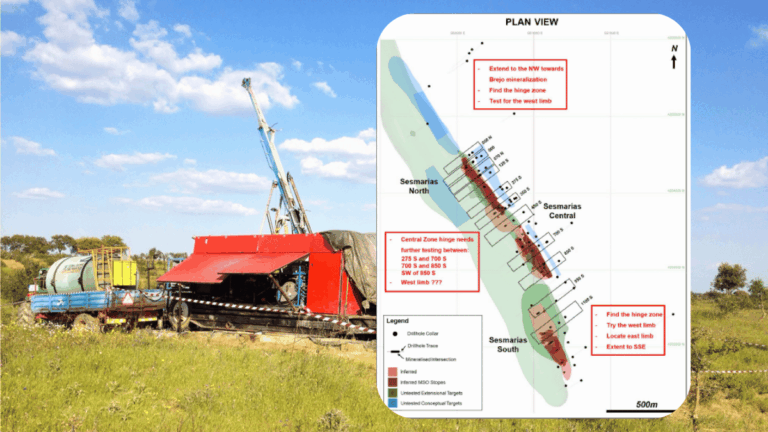
    Mineralisation at Gradina remains open in all directions. Strickland plans further drilling in several priority areas, including a 10 m to 23 m-wide gap zone between two major resource blocks that has seen little or no testing to date. Additional drilling will also target extensions to the north, south and at depth, where mineralisation remains open over an 800 m strike length.

    Drilling continues across the Rogozna project, with two rigs currently focused on the gap zone and three additional rigs testing regional targets. The company’s next milestone is a resource update for its flagship Shanac deposit, expected early next year.

    Strickland remains well funded, reporting $41.8 million in cash and liquid assets at the end of September, providing ample runway to advance exploration and resource development through the coming year.

  • Savannah Resources Highlights Barroso Community as Heart of Europe’s Energy Transition

    Savannah Resources Highlights Barroso Community as Heart of Europe’s Energy Transition

    Savannah Resources has launched a new public messaging initiative framing Portugal’s Barroso region as central to Europe’s clean-energy future, emphasising cultural heritage and community participation as the company advances its controversial lithium project.

    In the campaign titled “The EU’s Energy Independence Starts in Barroso,” the company positions the region not just as a mining location, but as a living cultural landscape shaped by generations of agricultural tradition and collective resilience. Savannah says it aims to integrate the Barroso Lithium Project into this heritage by developing it “responsibly” and ensuring local communities see tangible long-term benefits.

    The company argues that Barroso’s identity, communal strength and deep connection to the land form the foundation of what it calls “The Energy of Barroso.” This concept draws on shared values — mutual support, tradition, and the hope of retaining younger generations — which Savannah says align with Europe’s push toward a more sustainable and independent energy system.

    According to the company, lithium produced in Barroso will contribute to the EU’s ambition of reducing dependence on imported critical minerals and speeding up the green transition. Savannah stresses that the project, once operational, will supply material for millions of European electric vehicles and support regional development.

    The initiative invites the public to follow upcoming stories and updates that showcase community voices and outline how the project is intended to blend cultural preservation with modern industrial progress.

  • GreenRoc Wins 30-Year Licence to Develop High-Grade Amitsoq Graphite Mine in Greenland

    GreenRoc Wins 30-Year Licence to Develop High-Grade Amitsoq Graphite Mine in Greenland

    GreenRoc Mining Plc has secured a 30-year exploitation licence for its Amitsoq graphite project in southern Greenland, clearing a major hurdle on the path to production. The approval, signed by Greenland’s Minister for Business and Mineral Resources Naaja Nathanielsen, marks the third long-term mining permit issued by the territory this year as it seeks to attract responsible investment while managing environmental and community concerns.

    CEO Stefan Bernstein called the licence a “very important milestone” for the company, underscoring the strategic role of graphite in the global energy transition and Europe’s need to establish secure supply chains. GreenRoc’s shares surged as much as 19% on the news, giving the explorer a market value of about £7.5 million.

    Amitsoq, located in the Nanortalik region, hosts one of the world’s highest-grade graphite deposits with a JORC resource of 23 million tonnes at 20.41% graphitic carbon, containing an estimated 4.71 million tonnes of graphite. The site includes a historic mine last operated in 1922. GreenRoc plans to fast-track development and expects annual production of about 80 000 tonnes of graphite concentrate once the mine is operational.

    Earlier this year, the project received “strategic” designation from the European Union for its potential to become a key supplier of graphite, now recognised as a critical raw material. Greenland’s mining sector, long constrained by strict regulations and limited financing, has seen momentum building amid renewed US and European interest in the Arctic territory’s natural resources. In October, GreenRoc secured a €5.2-million loan from Denmark’s export credit agency to support Amitsoq’s advancement.

    Alongside the graphite project, the company also holds ilmenite and iron assets in Greenland, positioning it as a growing player in the region’s critical minerals landscape.

  • Critical Metals Corp Strikes 50:50 JV with Romania’s FPCU to Build EU Rare Earth Processing Hub

    Critical Metals Corp Strikes 50:50 JV with Romania’s FPCU to Build EU Rare Earth Processing Hub

    European Lithium’s US-listed subsidiary, Critical Metals Corp (CRML), has signed a term sheet to form a 50:50 joint venture with Fabrica de Prelucrare a Concentratelor de Uraniu (FPCU), Romania’s state-owned strategic processor of mineral concentrates. The agreement marks one of Europe’s most significant moves yet to establish a Western-aligned rare earths processing base as the EU and NATO seek to reduce reliance on China.

    Under the deal, the JV will secure 50% of the offtake from Greenland’s Tanbreez rare earth project, lifting the total volume under long-term agreements with Western partners to 75%. The partners plan to design, finance and construct a rare earth refinery in Romania to convert Tanbreez concentrate into high-purity metals, salts and military-grade magnet products.

    CRML chair and CEO Tony Sage described the agreement as a “monumental game-changer”, arguing that the partnership positions Europe to claw back strategic independence in rare earths. The facility, he said, will underpin sectors ranging from defence to advanced manufacturing, supplying feedstock sourced entirely from Western-aligned jurisdictions. CRML will retain a 50% stake in the JV on a carried basis and will not contribute capital to construction.

    FPCU CEO Cosmin Ghiță called the initiative a core pillar of Romania’s emerging industrial strategy, aligning with its ten-year plan to modernise strategic materials production. The plant will be located at the Feldioara complex, a site with a long history of refining and hydrometallurgical operations.

    The term sheet also outlines CRML’s intention to upgrade Tanbreez concentrate grades by revising its processing flowsheet, potentially lifting TREO content above 3%. The enhancements will be incorporated into an updated feasibility study to be completed by the end of Q1 2026.

    The announcement comes as the European Commission rolls out up to €3.5 billion in financing to strengthen critical raw materials supply chains under its new Economic Security Strategy. CRML and the Romanian government plan to apply jointly for support under the funding package.

    The JV is expected to serve as a cornerstone of Europe’s rare earth supply chain, processing up to half of Tanbreez’s resource for downstream European industries. Once Tanbreez enters production, CRML will supply the Romanian plant for the life of the mine under competitive, market-based terms.

    Critical Metals Corp currently controls two key assets: the Tanbreez rare earth megadeposit in southern Greenland and the Wolfsberg lithium project in Austria, the first fully permitted lithium mine in Europe. Both are positioned to feed Western supply chains for electrification, defence, and high-tech industries.

  • MINEX Eurasia’25: Oxford-Led Innovation Eyes Central Asia’s Brines as Billion-Dollar Critical Mineral Sources

    MINEX Eurasia’25: Oxford-Led Innovation Eyes Central Asia’s Brines as Billion-Dollar Critical Mineral Sources

    [vc_row type=”in_container” full_screen_row_position=”middle” column_margin=”default” column_direction=”default” column_direction_tablet=”default” column_direction_phone=”default” scene_position=”center” text_color=”dark” text_align=”left” row_border_radius=”none” row_border_radius_applies=”bg” overflow=”visible” overlay_strength=”0.3″ gradient_direction=”left_to_right” shape_divider_position=”bottom” bg_image_animation=”none”][vc_column column_padding=”no-extra-padding” column_padding_tablet=”inherit” column_padding_phone=”inherit” column_padding_position=”all” column_element_direction_desktop=”default” column_element_spacing=”default” desktop_text_alignment=”default” tablet_text_alignment=”default” phone_text_alignment=”default” background_color_opacity=”1″ background_hover_color_opacity=”1″ column_backdrop_filter=”none” column_shadow=”none” column_border_radius=”none” column_link_target=”_self” column_position=”default” gradient_direction=”left_to_right” overlay_strength=”0.3″ width=”1/1″ tablet_width_inherit=”default” animation_type=”default” bg_image_animation=”none” border_type=”simple” column_border_width=”none” column_border_style=”solid”][vc_text_separator title=”6 SESSION BRIEF” color=”blue” border_width=”5″][vc_raw_html]JTNDaWZyYW1lJTIwc3R5bGUlM0QlMjdkaXNwbGF5JTNBYmxvY2slM0JtYXJnaW4lM0FhdXRvJTNCd2lkdGglM0ExMjgwcHglM0JtYXgtd2lkdGglM0ExMDAlMjUlM0Jhc3BlY3QtcmF0aW8lM0ExLjc3MDg4MzA1NDg5MjYwMTMlM0IlMjclMjBzcmMlM0QlMjdodHRwcyUzQSUyRiUyRmtpbGxlcnBsYXllci5jb20lMkZ3YXRjaCUyRnZpZGVvJTJGMDhjYmM5Y2UtZDAxNS00NDZhLTljZWYtODk4NDU4YjVkMTE3JTI3JTIwZnJhbWVib3JkZXIlM0QlMjIwJTIyJTIwYWxsb3clM0QlMjJhdXRvcGxheSUzQiUyMGd5cm9zY29wZSUzQiUyMHBpY3R1cmUtaW4tcGljdHVyZSUzQiUyMiUyMGFsbG93ZnVsbHNjcmVlbiUzRSUzQyUyRmlmcmFtZSUzRQ==[/vc_raw_html][vc_empty_space][/vc_column][vc_column column_padding=”no-extra-padding” column_padding_tablet=”inherit” column_padding_phone=”inherit” column_padding_position=”all” column_element_direction_desktop=”default” column_element_spacing=”default” desktop_text_alignment=”default” tablet_text_alignment=”default” phone_text_alignment=”default” background_color_opacity=”1″ background_hover_color_opacity=”1″ column_backdrop_filter=”none” column_shadow=”none” column_border_radius=”none” column_link_target=”_self” column_position=”default” gradient_direction=”left_to_right” overlay_strength=”0.3″ width=”1/1″ tablet_width_inherit=”default” animation_type=”default” bg_image_animation=”none” border_type=”simple” column_border_width=”none” column_border_style=”solid”][/vc_column][/vc_row]

    Groundbreaking research from the University of Oxford presented at the MINEX Eurasia conference unveiled a transformative vision for critical mineral supply, proposing that oilfield and geothermal brines – long considered waste products – could become highly profitable sources of elements essential for the global energy transition. The session, titled “Turning Brine into Value: Unlocking Central Asia’s Hidden Critical Minerals,” highlighted proven technologies ready for scale-up, with a particular focus on Central Asia’s immense untapped potential.

    Konstantin Nazarov, a DPhil researcher at the University of Oxford and lead presenter, set the stage by emphasizing that traditional hard-rock mining alone may struggle to meet the escalating global demand for critical minerals like lithium, rare earths, bromine, and gallium. “To meet 21st-century needs, we need new resource concepts and new extraction pathways,” Nazarov stated, introducing the Oxford Earth Program, an interdisciplinary initiative focused on rethinking critical mineral sourcing.

    The core concept revolves around “saline geofluids” – naturally occurring subsurface brines found in oil fields and geothermal systems. Nazarov detailed how these fluids, currently often disposed of as waste, are chemically enriched in high-value elements. He cited historical examples, like Arkansas becoming a major bromine exporter in the 1950s by extracting from oilfield brines, and modern operations in the Salton Sea (US) and Ohaka (New Zealand) producing critical minerals alongside power generation, often with revenue streams exceeding electricity sales.

    “Preliminary estimations derived from open-source data showcase strategic resources of crucial minerals and extremely large revenue rates,” Nazarov explained, projecting an annual metal flux from American geothermal and oilfield brines translating to per year. He positioned Central Asia as uniquely poised to leverage this innovation. “Kazakhstan alone holds over 40,000 wells and an extensive reinjection network… its Paleozoic and Mesozoic basins contain highly saline fluids enriched in bromine, iodine, lithium, strontium, and potentially rare earth metals.” Uzbekistan, Turkmenistan, Kyrgyzstan, and Tajikistan also hold significant potential.

    The session further showcased Oxford’s spin-out companies translating this research into real-world applications:

    Ascension Earth Resources, represented by Lead GeoAnalyst Michal Camejo, presented novel technologies to harness the unique metal endowment and geothermal energy of volcanic systems. Camejo detailed a “novel geothermal in-situ recovery process” to sustainably extract critical minerals, particularly heavy rare earth elements, from volcanic glass. This method aims to bypass environmentally damaging aspects of conventional mining by injecting proprietary solutions underground and pumping out metal-rich brines for processing, leveraging existing geothermal heat.
    Seloxium, with Chief Commercial Officer Richard Dixon, introduced their platform of water-soluble polymers for selective metal recovery from process streams. Dixon highlighted the technology’s speed, scalability, and robustness, capable of capturing metals like palladium, gold (at concentrations as low as ), and rare earths even in the presence of high impurities. Notably, Seloxium’s polymers can selectively extract uranium and thorium from rare earth streams, potentially simplifying processing and regulatory compliance. “We get some additional selectivity from know-how and some modifier additives, and we’re currently developing partnerships to validate this technology,” Dixon remarked, noting their pilot plant is already operating at TRL 8.

    However, the path to unlocking this value is not without hurdles. Metehan Ciftci, a Research Associate at the University of Oxford, addressed the legal and societal challenges, drawing lessons from his research on Montserrat in the West Indies. Ciftci highlighted “legal uncertainties” surrounding the definition of a mineral versus waste, ownership disputes (especially in decommissioned oil fields), and the need for “hybrid contractual models” to facilitate collaboration between energy and mining companies. He stressed that “even when the geology is promising, institutions, governance, and public trust… ultimately determine the project success,” underscoring concerns about procurement expertise and community engagement.

    Nazarov concluded by reiterating that two critical challenges face this nascent industry: the “industry’s reluctance” from oil and gas companies to consider the mineral endowment of their brines, and the “absence of expertise and frameworks from the policy-making side.” Despite these challenges, the overwhelming message was one of immense opportunity.

    “If embraced, Central Asia can position itself not just as a supplier, but as a global leader in the next generation of critical mineral production derived from brines,” Nazarov affirmed, painting a picture of a future where existing infrastructure can drive a low-impact, high-value, and environmentally responsible supply chain for the materials of the next Industrial Revolution.[/ohio_text][/vc_column][vc_column][/vc_column][/vc_row]

  • MINEX Eurasia’25: Waste-to-Value, Decarbonisation, and Digital Trust

    MINEX Eurasia’25: Waste-to-Value, Decarbonisation, and Digital Trust

    [vc_row][vc_column][vc_text_separator title=”5 SESSION BRIEF” color=”blue” border_width=”5″ css=””][vc_empty_space][vc_empty_space][vc_raw_html css=””]JTNDaWZyYW1lJTIwc3R5bGUlM0QlMjdkaXNwbGF5JTNBYmxvY2slM0JtYXJnaW4lM0FhdXRvJTNCd2lkdGglM0ExMjgwcHglM0JtYXgtd2lkdGglM0ExMDAlMjUlM0Jhc3BlY3QtcmF0aW8lM0ExLjc3MDg4MzA1NDg5MjYwMTMlM0IlMjclMjBzcmMlM0QlMjdodHRwcyUzQSUyRiUyRmtpbGxlcnBsYXllci5jb20lMkZ3YXRjaCUyRnZpZGVvJTJGMDdkYjk5MTItYzJmNy00OTQ1LTk0NjEtMzczZTkyODA2M2VhJTI3JTIwZnJhbWVib3JkZXIlM0QlMjIwJTIyJTIwYWxsb3clM0QlMjJhdXRvcGxheSUzQiUyMGd5cm9zY29wZSUzQiUyMHBpY3R1cmUtaW4tcGljdHVyZSUzQiUyMiUyMGFsbG93ZnVsbHNjcmVlbiUzRSUzQyUyRmlmcmFtZSUzRQ==[/vc_raw_html][vc_empty_space]Industry leaders gathered on 1 December 2025 at the MINEX Eurasia Conference in London for a discussion on balancing mineral extraction with environmental responsibility. The session, Assessing and Mitigating Environmental Risks for Critical Raw Materials Development in Central Asia, explored innovative solutions to the region’s pressing sustainability challenges.

    From Waste to Wealth: Kazakhstan’s Legislative Push


    Gulvira Shaimerdenova, Director of Government Relations at Kazakh mining firm Qarmet, revealed startling figures: 32 billion tonnes of industrial waste sit unused in Kazakhstan, with just 3.5% recycled annually. She outlined upcoming legislative reforms—expected to pass this month—that will incentivize $500 million in waste-processing projects by major players like Qarmet and Kazakhmys.

    By reclassifying certain mining wastes as secondary raw materials, we can unlock new revenue streams while cleaning up legacy sites,” Shaimerdenova said.

    The Decarbonisation Dilemma


    Bob Robinson of SLR Consulting challenged the notion that miners only act on sustainability when forced. “Cost savings and market pressures are now just as compelling as regulations,” he argued, citing a 10-year efficiency program that saved a global miner $14 million per year.

    He highlighted renewable energy integration and carbon capture as key opportunities but stressed that internal carbon pricing is essential to prioritise green investments.

    Blockchain for Cleaner Supply Chains


    With the EU’s Carbon Border Adjustment Mechanism (CBAM) tightening import rules, Agata Slater of The Hashgraph Group pitched digital product passports as the future of mineral traceability. Her firm’s EcoGuard platform uses blockchain to create immutable records of a resource’s ESG footprint—a system already being tested by a green ammonia producer in Africa.

    Buyers increasingly demand verified low-carbon materials,” Slater noted. “This isn’t just about compliance—it’s about premium pricing and market access.”

    Case Study: Central Asia Metals’ Balanced Approach


    Megan Farrell of Central Asia Metals showcased their Kazakhstan copper operation, where in-situ leaching of waste dumps reduces emissions by avoiding traditional mining methods. A 4.7 MW solar farm covers 14% of energy needs, though winter reliance on coal boilers persists.

    In regions with legacy pollution, baseline environmental data is everything,” Farrell emphasised, detailing collaborations with Kazakh regulators to set cleanup benchmarks.

    The Road Ahead


    The session concluded with consensus on three priorities for Central Asia’s mining sector:

    1. Policy reforms to accelerate waste reuse and decarbonisation
    2. Digital systems to prove sustainability claims
    3. Transparent partnerships between industry and governments

    As global demand for critical minerals surges, the region’s ability to marry resource development with environmental stewardship will determine its role in the clean energy transition.

  • MINEX Eurasia’25: Beyond Rare Earths: The Next Frontier in Strategic Materials

    MINEX Eurasia’25: Beyond Rare Earths: The Next Frontier in Strategic Materials

    [vc_row][vc_column][vc_text_separator title=”FIRESIDE CHAT WITH AEGION’s CEO” color=”blue” border_width=”5″ css=””][vc_empty_space][vc_empty_space][vc_raw_html css=””]JTNDaWZyYW1lJTIwc3R5bGUlM0QlMjdkaXNwbGF5JTNBYmxvY2slM0JtYXJnaW4lM0FhdXRvJTNCd2lkdGglM0ExMjgwcHglM0JtYXgtd2lkdGglM0ExMDAlMjUlM0Jhc3BlY3QtcmF0aW8lM0ExLjc3MDg4MzA1NDg5MjYwMTMlM0IlMjclMjBzcmMlM0QlMjdodHRwcyUzQSUyRiUyRmtpbGxlcnBsYXllci5jb20lMkZ3YXRjaCUyRnZpZGVvJTJGYTc5YmE0MmMtZjFlMC00NjUxLWI1ZGMtY2U1NWM2NGMyNGI3JTI3JTIwZnJhbWVib3JkZXIlM0QlMjIwJTIyJTIwYWxsb3clM0QlMjJhdXRvcGxheSUzQiUyMGd5cm9zY29wZSUzQiUyMHBpY3R1cmUtaW4tcGljdHVyZSUzQiUyMiUyMGFsbG93ZnVsbHNjcmVlbiUzRSUzQyUyRmlmcmFtZSUzRQ==[/vc_raw_html][vc_empty_space]As the world transitions to clean energy and advanced manufacturing, securing critical materials beyond rare earths has become a pressing concern. On 1 December at the 13th MINEX Eurasia Conference in London, Samridhi Shoor, CEO & Director of Aegion, an advanced materials company, led a fireside chat on this critical topic.

    The fireside chat focused on the importance of securing critical materials beyond rare earths as industries transition to clean energy and advanced manufacturing. Samridhi Shoor, CEO & Director of Aegion, an advanced materials company, discussed next-generation materials like graphene-based composites and high entropy alloys, and how they redefine supply chains.

    Shoor emphasised the need for strategic independence and innovation in the material ecosystem. Aegion has been working on substitution and recycling, aiming to make critical materials non-critical by developing abundant chemistries. They have been utilising elements like iron, nitrogen, and aluminium as replacements for rare earth minerals.

    Shoor highlighted the challenges of mining, including environmental concerns and geopolitical supply chain risks. However, he emphasised that the market is moving towards iron, manganese, and aluminium as replacements for critical minerals like cobalt.

    Aegion has been diversifying its supply chain and has initiated discussions with potential partners. Shoor stated that the company is open to sharing its research and innovations with the community, aiming to benefit the industry at large.

    The conversation touched on various topics, including:


    • The importance of abundant chemistries and their potential to replace rare earth minerals
    • The challenges of mining and the need for sustainable and responsible practices
    • The role of recycling and substitution in reducing dependence on critical minerals
    • Aegion’s initiatives in developing new super alloys and recycling mandates
    • The EU Act on critical minerals and the need for diversified supply chains

    Key Takeaways:


    • The transition to clean energy and advanced manufacturing requires securing critical materials beyond rare earths.
    • Aegion is working on substitution and recycling to make critical materials non-critical.
    • The market is moving towards iron, manganese, and aluminium as replacements for critical minerals like cobalt.
    • Aegion is open to sharing its research and innovations with the community to benefit the industry at large.
    • The EU Act on critical minerals and the need for diversified supply chains are critical factors in the industry’s future.
  • MINEX Eurasia’25: Kazakhstan Mining Outlook 2026

    MINEX Eurasia’25: Kazakhstan Mining Outlook 2026

    [vc_row][vc_column][vc_text_separator title=”4 SESSION BRIEF” color=”blue” border_width=”5″ css=””][vc_empty_space][vc_empty_space][vc_raw_html css=””]JTNDaWZyYW1lJTIwc3R5bGUlM0QlMjdkaXNwbGF5JTNBYmxvY2slM0JtYXJnaW4lM0FhdXRvJTNCd2lkdGglM0ExMjgwcHglM0JtYXgtd2lkdGglM0ExMDAlMjUlM0Jhc3BlY3QtcmF0aW8lM0ExLjc3MDg4MzA1NDg5MjYwMTMlM0IlMjclMjBzcmMlM0QlMjdodHRwcyUzQSUyRiUyRmtpbGxlcnBsYXllci5jb20lMkZ3YXRjaCUyRnZpZGVvJTJGMmRiNDQzNjQtZTkwZS00ZGU4LWJlNGItYzFmODM1YmZhMzk3JTI3JTIwZnJhbWVib3JkZXIlM0QlMjIwJTIyJTIwYWxsb3clM0QlMjJhdXRvcGxheSUzQiUyMGd5cm9zY29wZSUzQiUyMHBpY3R1cmUtaW4tcGljdHVyZSUzQiUyMiUyMGFsbG93ZnVsbHNjcmVlbiUzRSUzQyUyRmlmcmFtZSUzRQ==[/vc_raw_html][vc_empty_space]At the MINEX Eurasia conference on 1 December in London, industry leaders and government officials painted a picture of Kazakhstan undergoing profound transformation-one driven by comprehensive regulatory reform, unprecedented foreign investment, and the nation’s emergence as a critical player in global supply chains for strategic minerals.

    The session, titled “Kazakhstan Mining Outlook 2026: Reform, Resources and the Road to Value Creation,” brought together mining executives, government representatives, and investment professionals to discuss how the Central Asian nation is positioning itself as a vital alternative source for critical minerals amid shifting geopolitical dynamics.

    Regulatory Overhaul Creates Investment Momentum


    Kazakhstan has embarked on an ambitious restructuring of its mining regulatory framework, with changes that speakers at the London conference described as the most significant in decades. The reforms include opening the entire territory for subsoil use rights, strengthening penalties for illegal mining, and implementing a comprehensive geological mapping program covering hundreds of thousands of square kilometres.

    Kazakhstan has adopted a new tax code which will come into force on 1st January 2026,” explained Maxim Kononov, First Deputy Executive Director of the Association of Mining and Metallurgical Enterprises of Kazakhstan. The changes include a transition to a royalty-based system for greenfield projects, with rates differentiated by processing level-starting at 13% for ore, 10% for concentrates, and 7% for processed metals.

    Ruslan Baimishev, President of the Kazakhstan Chamber of Mines, acknowledged both progress and ongoing challenges. “Our main victory was holding off discussions on a bill initiated by Parliament members aimed at reversing the 2018 reform,” he told attendees, referring to efforts that would have returned the sector to Soviet-era regulatory methods. “The project has now been held, and this is a major victory for democratic Parliament.

    However, Baimishev noted concerns about new provisions that could affect investment, including expanded government priority rights and increased thresholds for investment agreements—now raised tenfold to $500 million for processing projects.

    Environmental Compliance Becomes Material Cost Factor


    Nargiza Ospanova, Environmental Specialist with SRK Consulting (Kazakhstan), delivered a sobering assessment of how environmental regulations are fundamentally altering project economics. Kazakhstan’s 2021 Environmental Code requires companies to transition to Integrated Environmental Permits and implement Best Available Techniques-or face dramatically escalating pollution payments.

    The peak of pollution payments comes during the main production period,” Ospanova warned, showing projections indicating that environmental costs could become one of the most significant operational expenses for mining operations. “Environmental, social and legal aspects have become highly material right now in Kazakhstan—much more than before.”

    The presentation highlighted that most pollution payments from mining companies stem from waste disposal, and that companies failing to adopt Best Available Techniques face fees that increase progressively after 2028, with particularly steep escalations for Category 1 facilities-Kazakhstan’s top 50 polluters.

    Major Projects Advance with International Backing


    Several significant mining developments presented at the conference illustrated Kazakhstan’s growing appeal to international investors:

    IG Asia’s Pribrezhniy Copper Project:

    Steven McRobbie, VP Projects Development for IG Asia, described the company’s acquisition of the copper porphyry deposit from Rio Tinto and subsequent advancement through preliminary economic assessment. Located 30 kilometres from Lake Balkhash, the project benefits from exceptional infrastructure including direct rail access and proximity to sulfuric acid supply at under $100 per tonne.

    We’re looking at 150 million tons per year material movement in early years,” McRobbie said, describing scenarios ranging from fast-track oxide operations requiring $142 million in capital to combined oxide-sulphide operations with NPVs reaching $2.6 billion. The company has launched a 15,000-meter drilling program and is utilising AI to optimise drill spacing and reduce costs.

    Ivanhoe Mines’ Entry:

    Robert Barlow, Corporate Development Analyst at Ivanhoe Mines, talked about the company’s joint venture with Past Resources covering over 16,000 square kilometres-now the largest exploration land package in Kazakhstan. “We’ve launched a massive 17,500-kilometer drill program in our first year,” Barlow said, with potential spending of up to $115 million within four years.

    Ivanhoe, known for discovering and developing the massive Kamoa-Kakula copper complex in the Democratic Republic of Congo, sees similar potential in Kazakhstan’s sediment-hosted copper systems. “Almost everything that should be discovered at surface has been discovered,” Barlow noted. “The big opportunity lies under heavy cover.”

    U.S.-Kazakhstan Tungsten Deal Signals Strategic Realignment


    Perhaps the session’s most significant revelation concerned the recently announced joint venture between Cove Capital and Tau-Ken Samruk for Kazakhstan’s Northern Katpar and Upper Kayrakty tungsten projects-a deal facilitated by direct involvement from U.S. President Donald Trump and Kazakhstan’s President Kassym-Jomart Tokayev.

    Pini Althaus, Managing Partner of Cove Capital, called it “a generational project” containing over 10% of global tungsten reserves with capacity to produce 15% of annual global supply. “The U.S. has had no tungsten production since 2015,” Althaus explained via video link to the London conference. “Given the wide range of very critical uses that tungsten has in defence applications and industrial applications, this was perhaps the most urgent project the Trump administration has been working on.”

    The deal reflects what Althaus described as “unprecedented” U.S. government support for critical mineral projects, with direct financing assistance, offtake agreements, and price floors. “We’re seeing things that neither Democratic or Republican administrations have done in the past 30 or 40 years since China has essentially taken control of the critical minerals global supply chain.”

    Daniyar Idrissov, Chief Investments and Strategy Officer for Tau-Ken Samruk, emphasised during the panel discussion that the decision was driven by commercial considerations, particularly the secured offtake contract. “Having the supply is not the most critical thing,” Idrissov explained. “One of the most critical things for tungsten is to have the economics work…. This offtake contract will make the economics of the project work very successfully for both parties.”

    Technology and Innovation as Competitive Advantage


    Al-Farabi Ydyryshev, Director General of Kazakhstan’s National Center for Technology Foresight, outlined the country’s strategy for overcoming the challenge of generally lower-grade deposits compared to other mining jurisdictions. “One of the highest points in our agenda is to bring best available technology to Kazakhstan—to mine, to initiate, and to process,” he told the MINEX Eurasia audience.

    Ydyryshev described his organisation’s role as a “think tank” that navigates the complex world of critical minerals and creates recommendations for both government and industry, bridging solution providers with companies operating in Kazakhstan. The centre is building networks across North America, Europe, Asia, and even neighbouring countries like Uzbekistan to access specialised expertise in processing various metals.

    We’re going to move to midstream and downstream to create maximum added value in Kazakhstan,” Ydyryshev said regarding the tungsten cluster development. “All these critical metals and minerals end up used in the West, in developed countries, in China—and I don’t see any contradiction that we’re going to have the most possible added value chain in Kazakhstan.”

    Outlook: Strategic Positioning in a Multipolar World


    The session concluded with a sense that Kazakhstan has reached an inflection point. The combination of regulatory reform, world-class mineral endowment, existing infrastructure, and geopolitical shifts favouring supply chain diversification has created what several speakers called a “perfect storm” of opportunity.

    The outlook is only positive,” Idrissov summarised. “Kazakhstan is a very good place. Please come to Kazakhstan and invest. Our job is to attract investors and make the natural resources of Kazakhstan work-first of all for Kazakhstan people, but also as a mutually beneficial partnership for all partners.”

    The country’s “multi-vectoral” foreign policy approach—balancing relationships with China, Russia, the United States, and Europe-appears designed to avoid monopolistic control by any single power while maximising investment from all quarters. As Ydyryshev noted, “We have to secure no monopoly in mining and metallurgy in Kazakhstan. This approach would be similar for any metals.”

    With major international mining companies now actively exploring, junior companies advancing projects, and strategic partnerships forming at the highest levels of government, Kazakhstan’s mining sector appears poised for substantial growth. Whether the regulatory reforms prove durable and the promised infrastructure materializes will determine if the country can fulfil its ambition to become a global leader in critical mineral supply.

    For now, industry participants at the London conference seemed convinced that Kazakhstan represents one of the most significant mining opportunities in the Eurasian region—a jurisdiction where, as one speaker put it, “the economics work very good for very high, capital-intensive projects.”


    Shortly after the conference, the Ministry of Industry and Construction of Kazakhstan announced the results of the nationwide geological exploration programme, aiming to expand the area of mapped and studied subsoil from 2.1 million sq. km to 2.2 million sq. km by 2026. According to the Ministry of Industry and Construction, the push is already yielding significant results: exploration work completed in 2024 across 11 sites has led to the identification of promising new deposits of precious, rare and strategic metals.  Read more