Region: Europe

  • Adriatic Metals proposes $30 million placing to fund exploration

    Adriatic Metals proposes $30 million placing to fund exploration

    Adriatic Metals PLC on Monday announced it intends to conduct a placing to raise $30.0 million to fund an expanded exploration programme at the Rupice and Rupice Northwest deposits in Bosnia & Herzegovina.

    Adriatic Metals is a precious and base metals explorer and developer that owns the Vares silver project in Bosnia & Herzegovina and the Raska zinc deposit in Serbia. Shares in the firm closed down 1.7% at 169.40 pence on Monday in London.

    Monday’s placing price of £1.70 per share – or A$3.30 per CHESS depositary interest, representing such shares – represents a discount of 5.1% to the company’s average price share in the last 10 days on the Australian Securities Exchange.

    The total number of placing securities is expected to represent approximately 5.0% of the company’s existing share capital.

    Adriatic Metals said the proceeds of the placing will fund an expanded and accelerated exploration programme at Rupice and Rupice Northwest, including an additional 40,000 metres of drilling, and associated facilities and equipment. It will also contribute to the general working capital associated with exploration, as well as growth opportunities, general corporate purposes and fees.

    ‘Rupice and Rupice Northwest remain open and there are numerous regional targets such as Droskovac, SP1 and SP2 that have exciting prospects. We believe this exploration programme will deliver impactful results by more aggressively testing priority targets across our emerging high-grade polymetallic district,’ said Chief Executive Paul Cronin.

  • Poland’s Turów Coal Mine: Symbol of Defiance Against EU Interventionism

    Poland’s Turów Coal Mine: Symbol of Defiance Against EU Interventionism

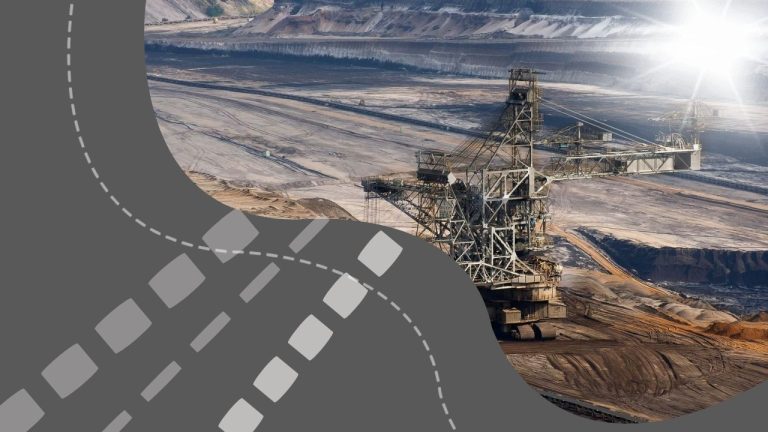
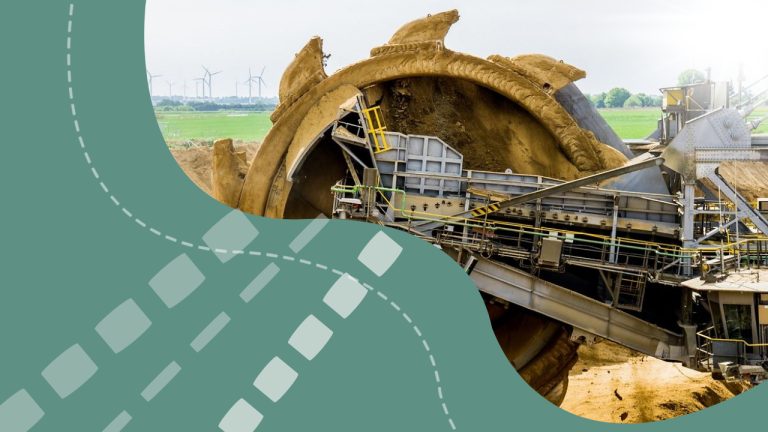
    Poland’s Turów mine has become a source of political pride for the country’s right-wing government, despite being viewed by its EU neighbors as evidence of Warsaw’s refusal to abandon polluting coal. The mine, located in the south-west of the country between Germany and the Czech Republic, is an open pit mine that fuels an adjacent power plant, producing about 7% of Poland’s electricity. However, Turów has become a symbol of the ruling Law and Justice party’s (PiS) defiance against EU interventionism.

    The mine’s importance to Warsaw is evident as Poland has been paying the EU to keep it open. When the Czech Republic sued Poland in the EU Court of Justice, Warsaw defied the court’s order to stop mining and refused to pay the resulting daily fine. The European Commission responded by deducting the fine from EU funds earmarked for Poland. As a result, Warsaw paid compensation to the Czech Republic for environmental damage, and the region around Turów was excluded from EU subsidies for transitioning away from fossil fuel production.

    The legal battle over the mine has extended from Luxembourg to national courts in Warsaw. Environmentalists have raised concerns about pollution and the depletion of underground water in the surrounding countryside. However, miners at Turów and the local municipality of Bogatynia, which receives a third of its budget from taxes paid by the power plant’s operator, support the mine and its preservation of jobs.

    While Poland has made strides in renewable energy production, including a record quarter of electricity production coming from renewables in May, the country still heavily relies on coal, which accounts for 65% of its electricity generation. Some opponents see the defense of coal as a step backward, while others view the mine as a national treasure that should be defended out of love for Poland.

    The battle over Turów is not just about the mine itself but is part of broader tensions between Poland and the EU, as well as between Poland and Germany. The mine has become entangled with disputes over sovereignty, money, and the rule of law. Warsaw has accused Germany of strengthening Russian President Vladimir Putin by embracing him as an economic partner until his invasion of Ukraine. The fight over Turów has become another point of contention between the two countries.

    As Poland prepares for a tight general election, Turów remains a significant symbol for the ruling party and a key issue for the electorate. The future of the mine and Poland’s energy transition will continue to be debated, balancing the need for jobs, national sovereignty, and environmental concerns.

  • Poland nears coal glut prompting powerful union to raise alarm

    Poland nears coal glut prompting powerful union to raise alarm

    Poland’s hard-coal reserves have almost doubled since last year, prompting a powerful union to warn about the consequences for the country’s own miners just months before a tightly contested parliamentary election.

    “We hear that state companies import large amounts of coal, while coal extracted from Polish mines is not being collected,” Boguslaw Hutek, the head of the powerful Solidarity miners’ union, said in a statement. “State-owned companies should not act against the interest of each other.”

    Coal stockpiles jumped 83% to 10.8-million tons in May from a year earlier, according to energy think tank Instrat. The government in Warsaw, which banned Russian coal imports in March 2022, prompted state-run energy producers to import heavily from countries like Colombia, Kazakhstan and South Africa to avoid shortages.

    Coal has long been politically important in Poland, where 75 000 are employed as miners and millions of households depend on the fuel for heating. Aging coal plants provide about 70% of the nation’s electricity.

    Poland is poised to hold its parliamentary election in October. Opinion polls have shown the two main parties short of the support needed to rule independently, putting smaller parties in the position of potential kingmakers after the election.

  • PGE Polska Grupa Energetyczna S A : with the approval of the Board of Directors of the European Investment Bank to support the financing of the Baltica Offshore Wind Farm

    PGE Polska Grupa Energetyczna S A : with the approval of the Board of Directors of the European Investment Bank to support the financing of the Baltica Offshore Wind Farm

    The European Investment Bank (EIB) approved the in-principle financing of the Baltica OWF project to be implemented by the PGE Group. The total financing package amounts to EUR 1.4 billion. This is a significant step towards ensuring an optimal financing structure that will enable the construction of PGE’s first offshore wind farms in the Baltic Sea.

    Project will consist of several sages – for each of the stages of the Baltica OWF – stages Baltica 2 and Baltica 3 – there is one tranche to be disbursed in the Project Finance formula in the amount of up to EUR 350 million, and one tranche to be disbursed based on guarantees from financial institutions, banks or export credit agencies.

    Accelerating the energy transformation is a priority, which is why the EIB Group and the European Commission established the REPowerEU initiative. This aims to make the European Union independent of Russian energy resources and move the EU energy sector towards renewable energy. The Baltica Offshore Wind Farm project meets these goals.

    Obtaining a preliminary credit decision from the European Investment Bank is a significant step for financing the construction of the largest offshore wind farm in the Baltic Sea. The presence of a recognized and experienced international financial institution in financing the project is a signal that we are a reliable partner for financial institutions, the projects we run meet the highest standards, and the interest of the financial sector in cooperation with PGE in the field of offshore wind energy is really high

    Wojciech Dąbrowski, President of the Management Board of PGE Polska Grupa Energetyczna.

    Diversification of energy sources and independence from fossil fuels are key tasks for Poland and the European Union, and Baltica Offshore Wind Farm is a very important project implementing these goals. Supporting energy transition is a priority for the EIB as it accelerates green economic development and supports labor market

    Vice-President of the EIB, prof. Teresa Czerwińska.

    PGE is building the Baltica OWF together with its Danish partner – Ørsted. The project with a total capacity of approx. 2.5 GW consists of two stages – Baltica 2 with a capacity of approx. 1.5 GW, which is scheduled to be commissioned in 2027, and Baltica 3 with a capacity of approx. is planned by the end of this decade.

  • Slovenia’s Cinkarna Celje suffers 620,000 euro flood damage

    Slovenia’s Cinkarna Celje suffers 620,000 euro flood damage

    August 7 (SeeNews) – Slovenian chemicals producer Cinkarna Celje [LJE:CICG] has incurred a material damage estimated at up to 620,000 euro ($681,500) from the flash floods that ravaged the country on August 4, it said on Monday.

    Part of the production and storage areas at Cinkarna Celje’s powder varnishes factory in Mozirje were flooded on August 4 and the economic damage of the destroyed stocks of raw materials and finished products is estimated at between 510,000 euro and 620,000 euro, Cinkarna Celje said in a filing with the Ljubljana Stock Exchange.

    The company will attempt to restart production activities at Mozirje on August 7, after repairing damage to electric motors and pumps but will be unable to guarantee timeliness of deliveries until normal conditions are established and the lost stocks of raw materials, packaging and products are replaced, Cinkarna Celje said.

    The Mozirje business unit contributed approximately 5.3% to the net operating profit of Cinkarna Celje in 2022. The company suffered no damage in the floods at its site in Celje, where most of its production operations are based.

    On August 5, prime minister Robert Golob said Slovenia faced the biggest natural disaster in its history after devastating floods caused by torrential rains killed three people and destroyed roads, bridges and houses on August 4 and 5. The total damage has been estimated at about 500 million euro.

  • One dead, five hurt after tremor in Polish coal mine

    One dead, five hurt after tremor in Polish coal mine

    One worker was killed and five others injured after a tremor hit a Polish coal mine on Saturday morning, authorities said.
    The Bielszowice coal mine is operated by the state-owned Polish Mining Group (PGG) in the country’s southern Silesia region.Photo: PAP/Zbigniew Meissner

    The tremor at the Bielszowice mine in the town of Ruda Śląska in Poland’s southern Silesia region occurred some 1,000 metres underground at around 6:30 a.m., public broadcaster Polish Radio’s IAR news agency reported.

    The injured miners were taken to nearby hospitals; one in serious condition was flown by helicopter for treatment in the southern city of Katowice, state news agency PAP reported.

    Prime Minister Mateusz Morawiecki sent his sympathies to the family of the victim and wishes of a quick recovery to the injured.

  • DTEK restores Ukrainian PV plant

    DTEK restores Ukrainian PV plant

    Specialists at DTEK Renewables have restored the Niko Solar power plant in the Mykolaiv region of Ukraine.

    This is DTEK Renewables’ first such external project.

    It said 90% of the generating equipment of the Niko Solar SPP, which has capacity of 5.7MW, was damaged by Russian shelling.

    DTEK Renewables has acquired unique expertise in restoring RES facilities that have been damaged or destroyed by military operations after fixing its own solar projects, the company said.

    In October 2022, after Ukraine took back part of the southern territories from Russia, DTEK restored operations at the partially damaged Trifonivskaya solar plant in a few weeks and later repaired it to 100% capacity.

    DTEK Renewables chief executive Oleksandr Selishchev said: “Green energy is the key to Ukraine’s energy security.

    “Therefore, we did not hesitate to join the restoration of our colleagues’ solar plant so that the region would once again have such important megawatts of distributed generation.

    “We are also ready to help other companies so that people are sure of a reliable source of energy supply next winter.”

  • Poland Nears Coal Glut Prompting Powerful Union to Raise Alarm

    Poland Nears Coal Glut Prompting Powerful Union to Raise Alarm

    (Bloomberg) — Poland’s hard-coal reserves have almost doubled since last year, prompting a powerful union to warn about the consequences for the country’s own miners just months before a tightly contested parliamentary election.

    “We hear that state companies import large amounts of coal, while coal extracted from Polish mines is not being collected,” Boguslaw Hutek, the head of the powerful Solidarity miners’ union, said in a statement. “State-owned companies should not act against the interest of each other.”

    Coal stockpiles jumped 83% to 10.8 million tons in May from a year earlier, according to energy think tank Instrat. The government in Warsaw, which banned Russian coal imports in March 2022, prompted state-run energy producers to import heavily from countries like Colombia, Kazakhstan and South Africa to avoid shortages.


    Coal has long been politically important in Poland, where 75,000 are employed as miners and millions of households depend on the fuel for heating. Aging coal plants provide about 70% of the nation’s electricity.

    Poland is poised to hold its parliamentary election in October. Opinion polls have shown the two main parties short of the support needed to rule independently, putting smaller parties in the position of potential kingmakers after the election.

  • Robot reducing mining industry’s environmental impact tested in Estonia

    Robot reducing mining industry’s environmental impact tested in Estonia

    A prototype robot that aims to reduce the mining industry’s environmental footprint is undergoing testing in Ubja Quarry in Lääne-Viru County.

    The robot is 10 times smaller than conventional mining equipment and can be sent into small areas where it is difficult to extract materials. The machine only digs in areas where the minerals are located and does not create huge mountains of waste products.

    Researchers from Finland and Estonia are leading the EU-funded project and scientists from Spain, Belgium and Austria are also involved.

    “We would be able to carry out selective mining. A robot that goes down, doesn’t take everything out but understands where the veins in the ore go and follows them, drills down and extracts the metal. The rest of the soil would be left as intact as possible,” TalTech Professor Maarja Kruusmaa told Wednesday’s “Aktuaalne kaamera”.

    She said the prototype could be used to reduce the European Union’s dependence on third countries by mining strategic mineral resources needed for the green transition.

    “Phosphorus comes with all kinds of valuable alkaline minerals that we could use. We know that this is a very painful issue for Estonians, and the question is whether we have the technologies to get this metal out of there without damaging or with minimal damage to nature,” said Kruusmaa.

    However, the robot will not be able to completely replace workers.

    “But in the future, it won’t actually be replacing miners, it will be going where miners can’t go. For example, abandoned underwater mines, deep mines where the miners themselves would not be able to go,” said Asko Ristolainen, senior researcher at TalTech.

    It will take four-six years to move from prototype to production.

  • Li-Cycle starts battery recycling operations at German plant

    Li-Cycle starts battery recycling operations at German plant

    By Ernest Scheyder

    (Reuters) – Li-Cycle said on Tuesday it has started operations at its German plant to break down electric-vehicle batteries for recycling, part of the company’s rapid expansion into the European market and plan to become one of the continent’s largest lithium producers.

    The facility in Magdeburg, roughly 112 miles (180 km)southwest of Berlin, has the capacity to process 10,000 metric tons of battery parts annually, an amount that will eventually grow to 30,000 tonnes.

    The plant is Li-Cycle’s first in Europe and will anchor the company’s plans to replicate its North American hub-and-spoke network, in which multiple collection and processing facilities turn batteries into black mass, which is essentially shredded battery parts, and then supply a central recycling plant that will separate the material into lithium, nickel and other metals.

    “We see the European market as one of our key growth areas for the coming years,” Tim Johnston, Li-Cycle’s executive chairman, told Reuters.

    Toronto-based Li-Cycle is also building battery collection and processing facilities in Norway and France. Collectively, the three will feed black mass to an Italian recycling plant that is expected to open by late 2026 or early 2027.

    “Being able to close the loop within the European ecosystem is a key strategic advantage moving forward,” Johnston said.

    The German plant is roughly 20,000 square feet in size and employs about 50 people.

    Li-Cycle declined to disclose how much it spent on the German operation, though the company has a budget of $35 million to $45 million to build battery processing facilities this year.

    Until the Italian facility opens, Li-Cycle will send black mass produced in Europe to its North American processing facility in New York.

    Amid strong opposition in Europe to lithium mining, Li-Cycle believes its operations on the continent could grow to become one of the region’s largest lithium producers, Johnston said.

    (Reporting by Ernest Scheyder in Houston; Editing by Matthew Lewis)