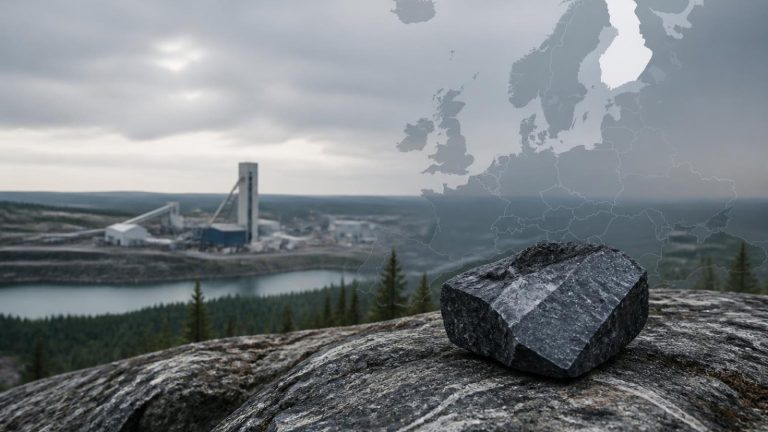
In Cinovec, a small mountain town perched on the Czech-German border known for its clean air, pine forests and spa tourism, plans to extract one of Europe’s largest lithium deposits have opened a fault line between the promises of the green energy transition and the concerns of the communities expected to live with its consequences.
The project is led by Geomet, the Czech subsidiary of London-listed European Metals Holdings, which argues that developing the deposit will bring jobs, investment and economic growth to a region that has long struggled to diversify beyond traditional industries. The Cinovec deposit has been confirmed as one of the largest hard-rock lithium resources in Europe, and its development is seen as strategically significant for the continent’s ambition to reduce dependence on imported battery materials, particularly from China.
But for many residents, the prospect of industrial-scale mining in a landscape still bearing the scars of decades of coal extraction sits uneasily. The area around Cinovec is in the early stages of ecological recovery from the environmental damage wrought by its communist-era mining past, and locals fear that lithium extraction could set that recovery back — contaminating water sources, generating dust and noise, and undermining the region’s carefully rebuilt identity as a destination for health tourism and outdoor recreation. Tourism represents a significant share of the local economy, and business owners worry that the imagery of an active mine would deter the visitors on whom they depend.
Geomet has maintained that the project will meet strict environmental standards and that modern mining techniques bear little resemblance to the open-cast coal operations that scarred the landscape in previous generations. The company points to the project’s classification as a strategic resource by both the European Union and the Czech government as evidence of its broader importance.
The standoff at Cinovec is not unique. Across Europe, communities sitting above critical mineral deposits are grappling with the same fundamental tension: the green transition requires materials that must come from somewhere, and the places asked to provide them are not always willing to bear the costs that the broader project demands. The question of who benefits and who pays — and whether environmental pledges made at the planning stage can be trusted once extraction begins — remains unresolved at Cinovec as it does across the continent.