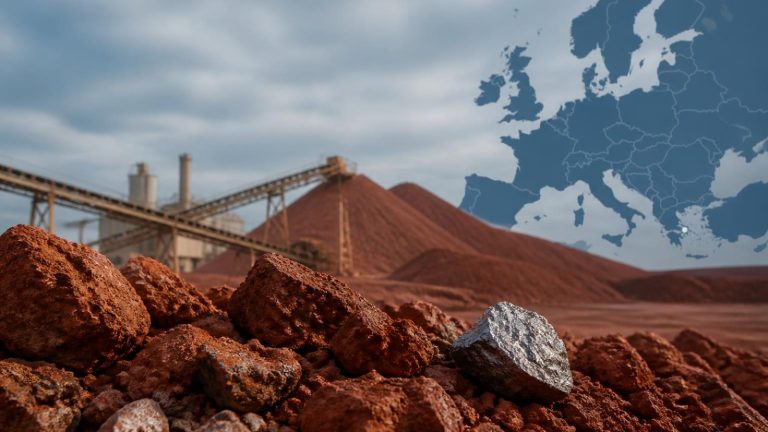
Energy Transition Minerals has secured the final regional approval needed to take over the Penouta tin, tantalum and niobium mine in Galicia, Spain, moving a step closer to making it the European Union’s only domestic primary source of two critical raw materials that Europe currently imports almost entirely from overseas.
The Xunta de Galicia has authorised the transfer of the Section C mining concession at the Penouta mine in Viana do Bolo, Ourense, to ETM’s Spanish subsidiary, formally recognising the company as the incoming holder of mining rights. The approval is the final regional step in ETM’s rescue of the project from the insolvency of previous operator Strategic Minerals Spain, which collapsed in 2024 and halted production.
The strategic significance is considerable. Europe mines almost none of the metals Penouta produces. Over 80% of the world’s niobium comes from Brazil, most tantalum is mined in the DRC and Rwanda, and critical minerals processing is dominated by China. Tantalum prices have reached multi-decade highs this year following supply disruption in central Africa. Both tantalum and niobium are designated critical raw materials by the EU, the US and Australia, with applications across semiconductors, capacitors, high-performance aerospace and defence alloys, and energy transition technologies.
Penouta retains its open-pit mine, a processing plant tailored to its ore type and supporting infrastructure representing a historical investment of approximately €28 million. The site covers 282 hectares and holds certified measured and indicated resources of more than 76 million tonnes under NI 43-101 standards. Mineral resources in the area were exploited from the early 20th century through the 1980s, with exploration reactivated in 2011 by Strategic Minerals Spain.
ETM has signed a memorandum of understanding with commodity trader Traxys for offtake of concentrate from the mine. Managing director Daniel Mamadou said the company intends to reactivate Penouta responsibly, retaining experienced local staff, prioritising local hiring and working closely with the Viana do Bolo municipal council. “Europe has spent years talking about reducing its dependence on a handful of distant suppliers for the metals its industries cannot do without. Penouta is one of the few places on the continent where that ambition can actually be met — and met soon,” he said.
The Penouta news comes the same week that Greenland formally rejected ETM’s application to renew the exploration licence for its Kvanefjeld rare earth project, after the Greenland government gave the company 48 hours to respond to technical assessments and refused a one-week extension.