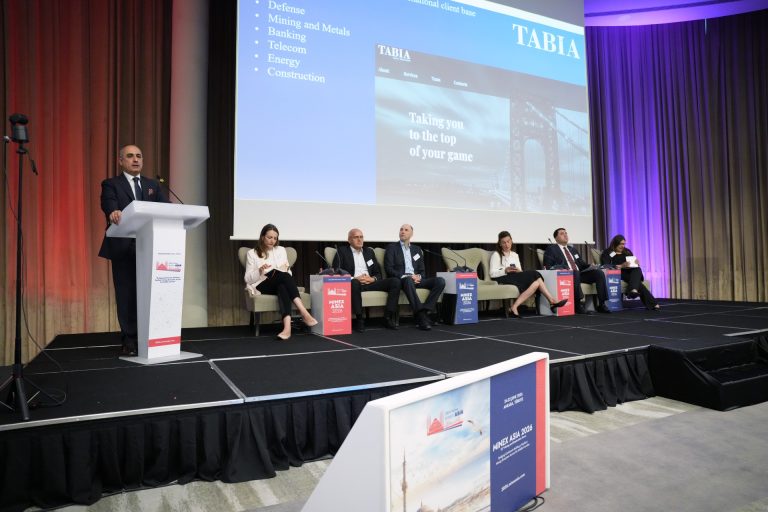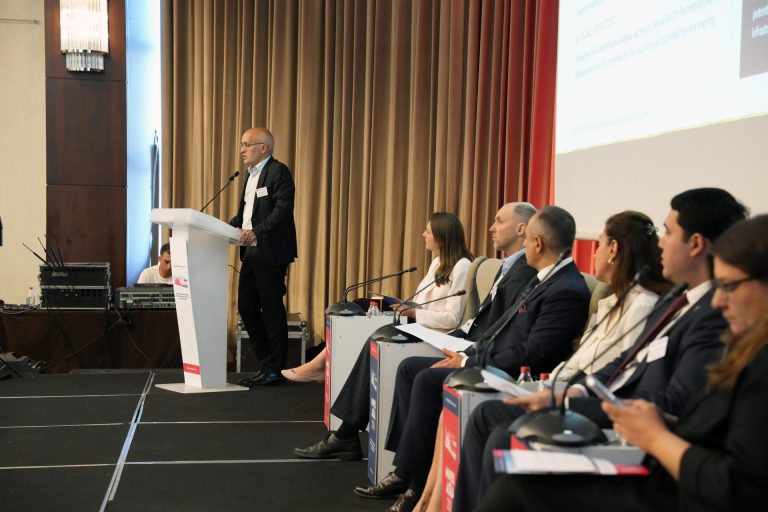
In a recent presentation, Alp from UK Export Finance (UKEF) elucidated the agency’s operations and its pivotal role in financing critical minerals projects across Turkey, Central Asia, and Eastern Europe. UKEF, established over a century ago, serves as the UK government’s official export credit agency, aiming to bolster UK companies’ export growth while also extending its support to non-UK sellers supplying UK buyers. This dual approach is particularly significant in the context of critical minerals, where funding is essential for developing project pipelines and scaling investments.
Alp highlighted UKEF’s impressive financial capacity, noting that in the last financial year, the agency provided £14.5 billion in support for export contracts, which generated over 70,000 jobs in the UK and contributed to GDP growth. UKEF’s guarantees can cover up to 85% of a contract’s value, enabling companies to secure financing with tenors of up to 22 years, significantly more favourable than standard commercial loans. Although UKEF’s presence in Central Asia has been limited, its overall lending capacity for the region has reached £40 billion, a substantial resource for the burgeoning critical minerals sector.
The agency’s support is designed to foster economic development in host countries, with past projects including railways, hospital development, and mining equipment. Alp’s role encompasses a wide geographical area, from Mongolia to Moldova, ensuring that transactions across this region are routed through her team. UKEF can collaborate with sovereign counterparts or directly with the private sector, assessing the bankability of projects and offering tailored financing solutions.
Alp explained how UKEF-backed guarantees alter borrowing economics, allowing lenders to price transactions based on the UK government’s credit rating rather than the borrower’s financial strength. This leads to more competitive interest rates and longer repayment terms. The mechanics of a UKEF-guaranteed transaction involve the agency issuing guarantees to approved lenders, who then extend these guarantees to borrowers, facilitating a smoother financing process.
Focusing on critical minerals, UKEF maintains a list of minerals it supports, with a key requirement being the existence of an offtake agreement with a UK company. This policy aims to bolster the use of critical minerals in UK manufacturing destined for export. Notably, funding accessed through UKEF does not have to be strictly tied to the export contract; it can also assist with broader working capital needs. The agency’s financing can have a multiplier effect, allowing companies to access significantly more funding than the value of their export contracts.
Alp also shared case studies showcasing UKEF’s diverse support across various sectors, while clarifying that the agency does not finance fossil fuel-related transactions. Furthermore, UKEF is increasingly collaborating with other export credit agencies and multilateral development banks to co-finance larger regional projects and is open to supporting cross-border partnerships, provided they meet a minimum UK content threshold. The presentation concluded with an invitation for further discussions on how specific projects could be structured to access UKEF support, emphasising the agency’s commitment to fostering ongoing engagement with potential partners in the region.