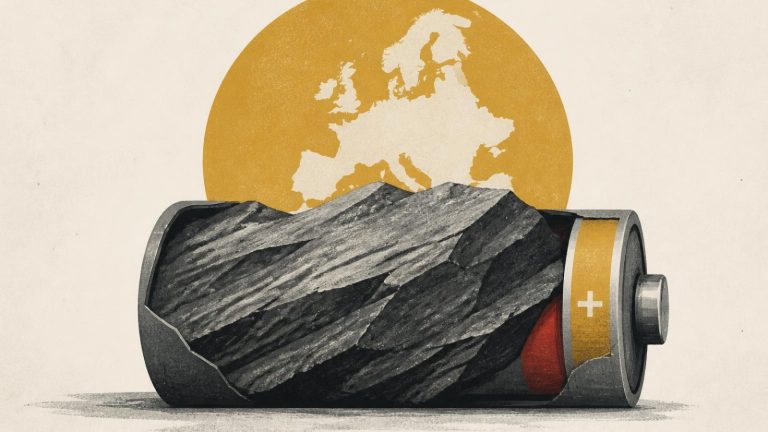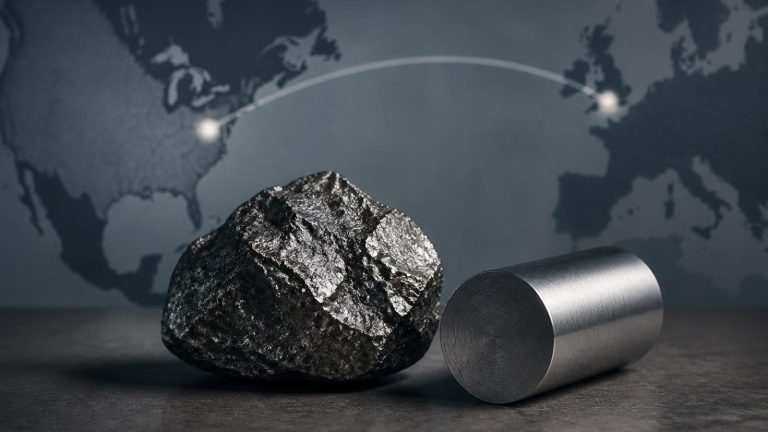
The European Investment Bank (EIB) and the Australian government announced on Monday that they will expand their collaboration on critical raw materials, marking a significant move as Western nations accelerate efforts to reduce dependence on China.
According to their joint statement, the initiative aims to strengthen financing and development across the entire critical minerals value chain—from exploration and extraction to processing, recycling, and innovation. The announcement comes as the European Union prepares to unveil a broad economic security package on December 3, reflecting growing concern over supply-chain vulnerabilities.
Despite longstanding recognition of the issue, European officials and industry representatives say that financing continues to be a major obstacle in securing stable access to strategic minerals. Even projects listed as strategic by the EU currently receive no special financial advantages.
The EIB has already taken steps by forming a dedicated task force earlier this year to boost support for critical materials projects, with plans to double its financing capacity. The new declaration is described as a key step toward enabling the bank to fund mineral projects in Australia, one of the world’s most resource-rich nations.
International efforts are also intensifying. The G7, chaired by Canada in 2025, has established a Critical Minerals Production Alliance to mobilize public and private investment in fast-tracking production of graphite, scandium, and rare earth elements. Australia has offered G7 members the opportunity to purchase shares in its new strategic mineral stockpile.
In parallel, the United States and Australia pledged $3 billion last month to support mining and processing projects, while also introducing a price floor for critical minerals—a measure long requested by Western mining companies. Additionally, Canada has secured offtake agreements for scandium and graphite with Australian producer Rio Tinto and Quebec-based Nouveau Monde Graphite, further reinforcing global attempts to diversify supply chains.