Website: Europe.com

  • Savannah Resources Appoints Ex-Ministers to Steer Controversial Lithium Mine Forward

    Savannah Resources Appoints Ex-Ministers to Steer Controversial Lithium Mine Forward

    Despite persistent local resistance and legal challenges, Savannah Resources continues to press ahead with its controversial open-pit lithium mine in Barroso, northern Portugal. The company announced the formation of a new advisory committee, composed of former Portuguese government ministers Luís Mira Amaral (PSD) and Luís Amado (PS), German supply chain specialist Astrid Karamira, and former EDM president Carlos Caxaria.

    Savannah’s CEO Emanuel Proença stated that the committee’s role is to provide strategic guidance to ensure the “success and sustainability” of the Barroso lithium project, which is slated to begin production in 2027. The mine received a conditional Environmental Impact Statement (EIS) in 2023 and has been classified as a strategic project by the European Commission under the Critical Raw Materials Regulation.

    However, opposition remains fierce. NGOs including Unidos em Defesa de Covas do Barroso (UDCB), MiningWatch Portugal, and ClientEarth have formally challenged the European Commission’s support, claiming the project’s environmental and social impacts were insufficiently assessed.

    Savannah argues that the mine could supply enough lithium to power over half a million electric vehicle batteries annually — more than three times Portugal’s yearly vehicle sales. Nonetheless, the lack of a domestic refinery has drawn criticism, with the original plan for a lithium processing plant by GALP now abandoned and a new facility only projected for 2028.
  • Dundee Precious Metals to Acquire Adriatic Metals in $1.25 Billion Deal

    Dundee Precious Metals to Acquire Adriatic Metals in $1.25 Billion Deal

    Toronto-listed Dundee Precious Metals (DPM) is set to acquire London- and Sydney-listed Adriatic Metals in a $1.25 billion cash-and-stock transaction, expanding its portfolio with the addition of the Vareš silver project in Bosnia and Herzegovina. The deal strengthens DPM’s position in the Balkans and adds near-term production growth and cash flow diversification.

    Adriatic shareholders will receive 0.1590 new DPM shares and 93 pence in cash for each Adriatic share, valuing each share at 268 pence—a 50.5% premium to Adriatic’s LSE closing price on May 19. DPM has already secured support from Adriatic directors and shareholders holding 37.23% of shares.

    The Vareš project, Adriatic’s flagship operation, completed construction last year and began producing silver/lead and zinc concentrates. The mine is ramping up to nameplate capacity of 0.8 million tonnes per year by the second half of 2025, with expansion studies under way to increase output to 1.3 million tonnes.

    “This transaction brings together complementary strengths to create a dynamic and diversified mining company with meaningful scale,” said Adriatic CEO Laura Tyler. DPM CEO David Rae highlighted the strategic fit, citing DPM’s expertise in underground mining and financial strength to maximise Vareš’ potential.

    Analysts from SP Angel endorsed the deal, viewing it as beneficial for Adriatic shareholders and noting that the combined entity could become a key player in the Balkan mining sector. They also noted possible but unlikely interference from Zijin, which already operates in the region.

  • Intensifying Competition for Central Asia’s Critical Raw Materials

    Intensifying Competition for Central Asia’s Critical Raw Materials

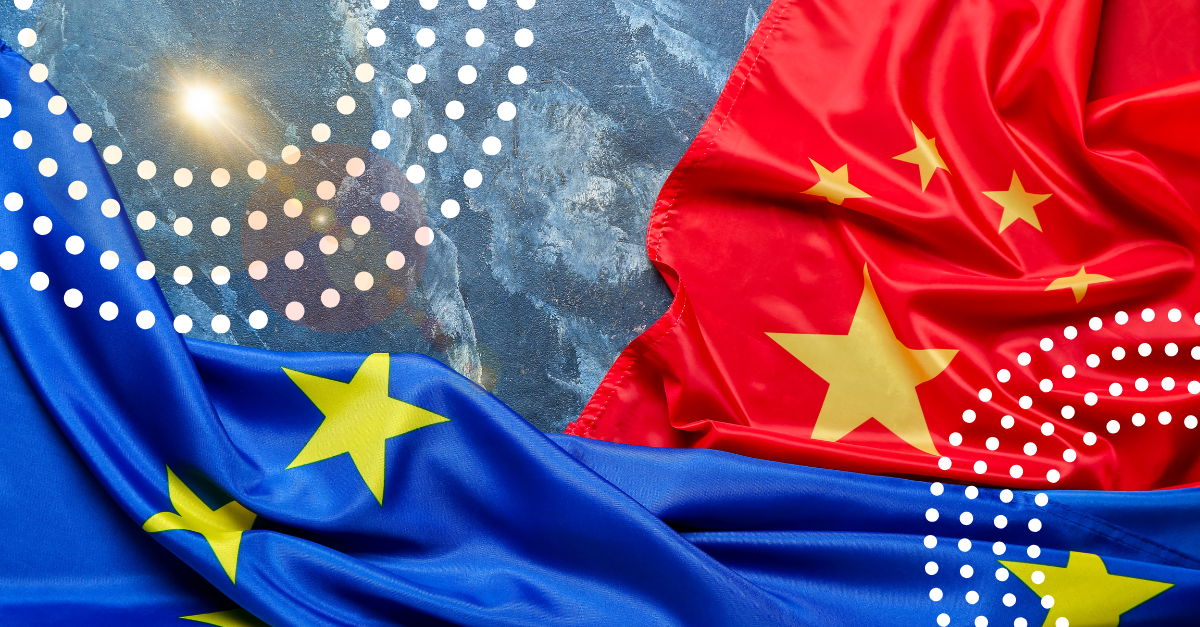
    As the race for Central Asia’s critical raw materials accelerates, the EU is intensifying efforts to reduce its dependency on China—currently the dominant force in the region’s resource exports. Brussels is taking a new approach: instead of merely sourcing raw ore, it is promoting full value-chain development within Kazakhstan and Uzbekistan.

    The EU’s strict environmental standards contrast with growing criticism of China’s ecological impact. In response, Beijing is highlighting its commitment to “green” cooperation. Over the past 18 months, Chinese investments in Central Asia’s energy and manufacturing sectors have surged to $4.1 billion and $11.8 billion, respectively.

    EU MOVES TO STAKE CLAIM IN STRATEGIC MINERALS

    In June 2025, the European Commission designated the Sarytogan graphite deposit as strategic under its Critical Raw Materials Act and began courting investors with EU-backed contract support. Located between Europe and China—which processes over 90% of global graphite—Sarytogan has become a focal point in the resource race.

    Earlier, in August 2024, the European Bank for Reconstruction and Development (EBRD) made its first direct investment in Central Asian graphite, acquiring a 17.36% stake in Sarytogan Graphite for €3 million. Germany has also moved decisively: in mid-2023, HMS Bergbau AG secured a $200 million lithium deal, followed by the formation of a German industrial consortium in Kazakhstan in early 2024.

    CHINA UPS ESG STANDARDS AT HOME AND ABROAD

    Facing growing scrutiny, China has enacted a new Mineral Resources Law, effective July 1, 2025, that for the first time mandates environmental restoration plans prior to mining. While the law raises environmental, social, and governance (ESG) requirements, critics point to vague restoration rules and weak provisions for community involvement. Nonetheless, China is encouraging similar standards in its overseas projects—including in Central Asia.

    To secure supply chains, China is focusing on vertical integration. One major initiative is East Hope Group’s $12 billion industrial project in Kazakhstan, which will combine mining, processing, electrolysis, and power generation, creating up to 10,000 jobs and a self-contained industrial ecosystem.

    INTENSIFYING COMPETITION AND NEW STANDARDS

    As competition heats up, Central Asian governments are under pressure to elevate both environmental and technological benchmarks. The EU is leveraging “soft power” through financing, green policy frameworks, and public diplomacy. Meanwhile, China is building vertically integrated industrial clusters and expanding its outreach through experts and state media.

  • Talga’s Swedish Graphite Mine Gets Final Green Light, Bolstering EU’s Battery Supply Chain

    Talga’s Swedish Graphite Mine Gets Final Green Light, Bolstering EU’s Battery Supply Chain

    Australia’s Talga Group (ASX: TLG) has secured full regulatory approval to begin development of its Nunasvaara South graphite mine in northern Sweden, after the country’s government officially dismissed all remaining appeals against the exploitation concession.

    The decision marks the end of a long and turbulent permitting process, unlocking Talga’s broader Vittangi anode project, which integrates the newly approved mine with its previously permitted Luleå anode refinery. Together, these form one of Europe’s most advanced vertically integrated graphite projects.

    “Today validates years of dedication,” said Talga founder and managing director Mark Thompson, calling the milestone a major step in the company’s ambitions to supply Europe’s growing battery market.

    Sweden’s Energy, Business and Industry Minister Ebba Busch also welcomed the news, stating: “The graphite that Talga is planning to produce is a key material in battery manufacturing and the green transition to a fossil-fuel free society.”

    The announcement triggered a strong market reaction, sending Talga shares up 20% on Thursday to A48 cents, and lifting its market capitalization to A$216 million (approx. $140 million).

    A rough permitting journey
    The path to approval was far from smooth. After obtaining environmental and Natura 2000 permits in April 2023, Talga faced a string of legal challenges from environmental groups. While Sweden’s Land and Environment Court of Appeal upheld the permits, opponents took the case to the Supreme Court, which declined to hear it in October 2024.

    A final appeal against the exploitation concession was filed in December 2024, delaying the project again. This week’s rejection of that challenge by Sweden’s Ministry of Climate and Enterprise officially clears the way for development.

    Strategic timing for Europe
    Talga’s mine arrives just as European battery gigafactory capacity is surging, with demand for graphite anodes projected to rise from 30,000 tonnes in 2023 to over 500,000 tonnes annually by 2030. Currently, China controls 84% of global graphite processing, and Talga’s project is seen as a key move to reduce the bloc’s dependency on foreign supply.

    The EU has recognized the strategic importance of Talga’s project, awarding it a €70 million grant via the Innovation Fund, and naming it a strategic initiative under both the Critical Raw Materials Act and the Net-Zero Industry Act.

    Each 10,000 tonnes of locally produced graphite is expected to reduce the EU’s foreign mineral dependency by 7%, making this not just a commercial success for Talga, but a major geopolitical win for Europe’s green transition.

  • NGOs Challenge EU Backing of Controversial Lithium Mine in Portugal

    NGOs Challenge EU Backing of Controversial Lithium Mine in Portugal

    Three NGOs have formally challenged the European Commission’s decision to grant ‘strategic project’ status to the Covas do Barroso lithium mine in northern Portugal — a move they say threatens both the environment and the cultural fabric of the local community.

    MiningWatch Portugal, ClientEarth, and Unidos em Defesa de Covas do Barroso filed the complaint on grounds that the project, fast-tracked under the Critical Raw Materials Act (CRMA), poses serious environmental and social risks that were not adequately assessed. They argue that preferential permitting and financing for the mine were granted without proper scrutiny.

    “The green transition must not be built on environmental harm and social injustice,” said Ilze Tralmaka, a lawyer with ClientEarth. “This mine threatens a fragile ecosystem and a community that has consistently opposed it.”

    Critics cite unsafe tailings storage, unviable water sources, and potential contamination of the Douro River system as key concerns. Additionally, locals argue the project jeopardizes traditional farming practices and rural livelihoods in the Barroso region — a designated Globally Important Agricultural Heritage System (GIAHS).

    NGOs also question the economic feasibility of the mine. With global lithium prices plummeting and multiple higher-grade spodumene projects in Australia shutting down, they argue that the Covas do Barroso project lacks financial justification. “This sets a dangerous precedent,” warns Nik Völker of MiningWatch Portugal. “It turns European peripheries into sacrifice zones.”

    The mine is being advanced by Savannah Resources, which must still pass regulatory and financing hurdles, and present a definitive feasibility study before construction — currently projected for 2026 or 2027.

    Local activist Catarina Alves highlights what’s at stake: “People here rely on clean water for drinking, farming, and livestock. If that’s lost, our way of life is gone. For what? A few years of lithium and a new kind of pollution?”

    The NGOs are calling for a rigorous, evidence-based reassessment of the project’s status. If their request is rejected or unresolved after up to 22 weeks, they plan to take the case to the Court of Justice of the European Union.

  • Critical Metals Reports Strong Assays from Greenland’s Tanbreez Fjord Deposit, Eyes Doubling Resource

    Critical Metals Reports Strong Assays from Greenland’s Tanbreez Fjord Deposit, Eyes Doubling Resource

    Critical Metals Corp. (Nasdaq: CRML) has released promising assay results from historical deep diamond drilling at its Fjord deposit in southern Greenland, part of the company’s massive Tanbreez rare earth project — one of the largest untapped heavy rare earth element (HREE) resources outside China.

    The Fjord deposit sits within a vast kakortokite host unit stretching 5 km by 2.5 km, hundreds of metres thick and estimated at 4.7 billion tonnes. The newly analyzed core, drilled in 2007 and 2013, extended below the current mineral resource estimate (MRE) and confirmed consistent mineralization at depth, with total rare earth oxide (TREO) grades ranging from 0.33% to 0.51%, and a weighted average of 0.43% TREOs, containing 28% HREEs.

    Earlier this year, Critical Metals released a technical report compliant with Regulation S-K 1300 and a preliminary economic assessment estimating a $3.04 billion NPV and a staggering 180% internal rate of return for the Tanbreez project.

    CEO Tony Sage called the new results “exceptional,” noting that they suggest potential to double the company’s current resource estimate from 225 million tonnes to an exploration target of 500 million tonnes. The deeper drill holes confirm that the high-grade mineralization continues well below sea level, enhancing the project’s long-term development prospects.

    The company plans to follow up with infill and extension drilling across the Fjord and Hill Zone deposits in 2025 and has applied for approval from Greenland’s MSLA to initiate the next phase of drilling. Field crews are already preparing the site.

    Critical Metals’ stock rose 5.8% on the news, bringing its market capitalization to $143 million.

  • Karelian Registers Lahtojoki Mine as EU’s First Diamond Project Moves Forward

    Karelian Registers Lahtojoki Mine as EU’s First Diamond Project Moves Forward

    Karelian Diamond Resources (LON: KDR) has officially registered its Lahtojoki mining concession in Finland’s land registry, marking a key milestone in the development of what may become the European Union’s first diamond mine.

    The registration, managed by Finland’s mining authority TUKES, allows Karelian to move forward with further development plans at the Lahtojoki kimberlite pipe, known for its potential to yield high-quality gem diamonds, including rare pink and coloured stones that can command up to 20 times the price of standard colourless gems.

    TUKES had previously approved the mining concession and will also be responsible for issuing the full mining certificate. However, a hearing on compensation matters has been postponed until Fall 2025, potentially delaying the project’s operational timeline.

    Karelian, headquartered in Dublin, envisions a low strip ratio open-pit operation that could be both profitable and strategically important as the EU looks to increase its domestic supply of critical and luxury minerals.

    The company is also continuing exploration for nickel, copper, and platinum group metals across its Finnish portfolio. Notably, it is advancing work in the Kuhmo region, where it seeks the source of a rare green diamond discovered in 2022 — a potential indicator of deeper mineral wealth.

  • Trump’s Tariff Surge Sparks Global Aluminum Scrap War as US-EU Tensions Rise

    Trump’s Tariff Surge Sparks Global Aluminum Scrap War as US-EU Tensions Rise

    US President Donald Trump’s decision to double tariffs on aluminum imports to 50% has triggered a growing scrap supply crisis, as US buyers turn aggressively to international markets — particularly Europe — to source tariff-free aluminum scrap.

    While the tariffs hit most aluminum products, scrap remains exempt, creating a lucrative gap that US fabricators are racing to exploit. Imports of recyclable material have already jumped, with March volumes exceeding 80,000 tons — the highest since 2022.

    Soaring premiums and shifting trade flows


    The US Midwest aluminum premium has surged to a record $1,325 per ton, far above the base price of $2,430 on the London Metal Exchange. This premium reflects not transportation costs, but tariff pressures and supply tightness.

    Fabricators that turn raw aluminum into semi-finished goods — like can sheets — are once again benefiting, able to pass on tariff-related costs even when sourcing scrap domestically or internationally.

    EU fears scrap leakage


    European aluminum producers are alarmed by the spike in exports to the US. The European Aluminium Association warned of a “full-blown scrap crisis” and urged the European Commission to act quickly with reciprocal export duties.

    The EU had already outlined a trade defense plan in March aimed at curbing the outflow of critical raw materials. Now, under mounting pressure, Brussels may need to accelerate its timeline for protective measures.

    China feels the squeeze


    China, the world’s top aluminum scrap importer, is caught in the crossfire. It has liberalized scrap import rules to boost domestic recycling, but now faces increased competition from the US for scrap sourced from Asia and Europe.

    With China’s primary aluminum production capped, recycling is essential to meet demand. But with Europe clamping down and the US driving up prices, Chinese buyers are being squeezed from both sides.

    What comes next


    The global aluminum scrap market, once fluid and flexible, is being reshaped by protectionist policies and price distortions. The once-humble scrap pile is now a battleground in the broader struggle over trade, climate, and industrial power.

  • Stegra Eyes IPO as Green Steel Ambitions Grow Beyond €6.5 Billion Private Funding

    Stegra Eyes IPO as Green Steel Ambitions Grow Beyond €6.5 Billion Private Funding

    Stegra AB, the Swedish startup constructing the world’s largest green steel plant in Boden, northern Sweden, is laying the groundwork for a potential public listing as it anticipates funding needs beyond the private market’s capacity.

    With €6.5 billion already secured — one-third from equity and two-thirds from debt — the four-year-old firm is set to begin producing green steel by the end of 2026, targeting an annual output of 2.5 million tons. A proposed Phase 2 would double production, but according to CEO Henrik Henriksson, further expansion may require tapping public capital markets.

    “We’re preparing for it,” Henriksson said at Stegra’s first capital markets day, while emphasizing that no timeline has been set for an IPO. “Beyond Phase 2, it’s a lot of money — even with strong investors behind us.”

    Stegra is part of a new generation of low-emissions steelmakers attempting to transform one of the world’s most carbon-intensive industries, responsible for roughly 7% of global CO₂ emissions. Unlike traditional blast furnaces, Stegra will use hydrogen produced from renewable energy, positioning itself as a leader in sustainable heavy industry.

    Henriksson confirmed that Stegra has raised its EBITDA forecast for 2030 by 10%, now expecting €1.2 billion, thanks to higher green steel price premiums. The expected return on capital employed for Phase 1 is projected to exceed 20%, well above industry norms.

    Key Challenge: Grid Connection for Phase 2

    A significant hurdle for expansion is the lack of a confirmed grid connection for Phase 2. Without a secure electricity supply, an investment decision for the second phase is off the table. Henriksson said he hopes for clarity on this by early 2026.

    Stegra is backed by Vargas Holding AB, a Swedish impact investment group that also launched Northvolt AB, the EV battery startup that collapsed under cash strain. While there are similarities in funding models, Henriksson stressed that Stegra’s business and steel product are fundamentally different, citing strong industrial demand and robust long-term supply contracts.

    “We want to finish Boden, prove the model, and show we can generate money,” Henriksson concluded.

  • China Eases Rare Earth Export Curbs Amid Auto Industry Pressure, Offers “Green Channel” to EU Firms

    China Eases Rare Earth Export Curbs Amid Auto Industry Pressure, Offers “Green Channel” to EU Firms

    China has signaled a partial retreat from its rare earth export restrictions by offering a fast-track licensing process — dubbed a “green channel” — for eligible European Union companies, in a move seen as a lifeline for auto manufacturers on both sides of the Atlantic.

    The announcement came following high-level trade talks in Paris between Chinese Commerce Minister Wang Wentao and EU Trade Commissioner Maros Sefcovic. Wang reportedly encouraged the EU to take “reciprocal steps” in fostering compliant high-tech trade with Beijing.

    The rare earths licensing bottleneck, triggered by China’s export curbs in April, has placed immense strain on global auto supply chains, with materials critical to electric vehicle motors, combustion engines, and electronics held up in customs.

    Now, according to sources cited by Reuters, General Motors, Ford, and Stellantis suppliers have received license approvals. Stellantis confirmed that it has avoided major production disruptions and is “working with suppliers and institutions to ensure an efficient licensing process.”

    Europe’s Auto Sector Breathes — Cautiously

    While the move was welcomed by European automakers, analysts remain skeptical about the practical implementation of China’s promised fast-tracking. Maximilian Butek of the German Chamber of Commerce in China called the process a “bureaucratic monster,” expressing doubts that approvals will genuinely speed up.

    “This is retaliation against U.S. tariffs,” Butek added, noting that European companies now feel caught in the crossfire. “It’s not enough to announce it — China needs to prove it’s serious.”

    The European Automobile Manufacturers’ Association (ACEA) had earlier warned that production stoppages were imminent due to depleted rare earth magnet inventories. Companies like Volkswagen, Ferrari, Renault, and Volvo were reportedly days or weeks away from forced shutdowns.

    Further compounding the pressure, Japanese automaker Suzuki has already suspended production of its Swift model due to raw material shortages, Reuters reported.

    China’s Rare Earth Dominance Looms Large

    China dominates the global supply chain for rare earth elements, controlling roughly 60% of production and even more in processing capacity. The April restrictions were seen as a direct response to U.S. President Donald Trump’s tariff hike on Chinese goods, intensifying an already escalating trade conflict.

    The comparison to the 2020 semiconductor crisis is increasingly apt. As Jonathan O’Riordan from ACEA warned, “We’re entering a very critical moment — those stocks are being exhausted. We are potentially going to see production stoppages.”

    The crisis underscores the West’s growing need to diversify supply chains and reduce reliance on a single geopolitical actor for critical materials — especially as the global shift to green energy accelerates.