Website: Europe.com

  • EU to Press China on Rare Earth Access at Upcoming July Summit

    EU to Press China on Rare Earth Access at Upcoming July Summit

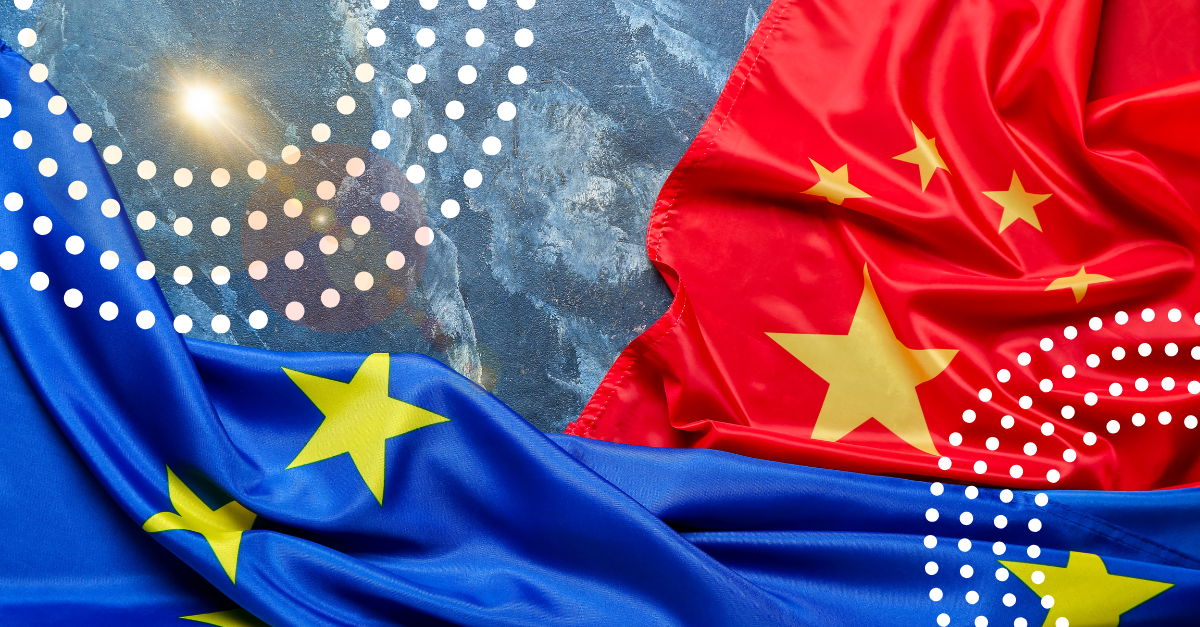
    European Union leaders plan to use next month’s high-level summit with China to push for improved access to critical minerals and rare earths, according to four sources familiar with the matter. The summit, set for July 24–25 in Beijing, comes as tensions grow over trade disputes and export restrictions.

    The EU delegation—led by European Commission President Ursula von der Leyen and European Council President Antonio Costa—will meet with Chinese President Xi Jinping and Premier Li Qiang. Their primary agenda: addressing China’s tightening of export licences on rare earth alloys, magnets, and mixtures, which has created production concerns for European automakers and manufacturers.

    China, which controls the majority of global rare earth output, has offered to expedite licensing for EU firms through a so-called “green channel.” Yet according to diplomats and business leaders, less than half of the hundreds of licence applications have made meaningful progress, and customs delays continue even after approvals.

    Amid the broader trade friction—ranging from European tariffs on Chinese EVs to China’s retaliatory measures on EU brandy—Brussels aims to secure longer-term or exemption-based rare earth agreements that distinguish the EU from the U.S. The summit falls just two weeks before a U.S. deadline for allies to align on new tariff deals, further complicating EU negotiations with Beijing.

    While major breakthroughs are unlikely, EU leaders hope to leverage the symbolic 50th anniversary of EU-China relations to press their case. A European official noted, “China is playing its cards very well,” suggesting Beijing sees rare earths as a strategic bargaining chip.

  • ArcelorMittal Sells Bosnian Steel and Iron Ore Operations to Pavgord Group

    ArcelorMittal Sells Bosnian Steel and Iron Ore Operations to Pavgord Group

    ArcelorMittal, the world’s second-largest steel producer, has agreed to sell its operations in Bosnia and Herzegovina to local conglomerate Pavgord Group, marking the end of a 21-year presence in the Balkan nation. The deal includes ArcelorMittal’s steel mill in Zenica and its iron ore mine in Prijedor, which collectively employ approximately 2,700 workers.

    The sale, announced Friday, is expected to close in the third quarter of 2025 once all regulatory and contractual conditions are satisfied. Under the terms of the agreement, Pavgord Group will retain all employees, aiming to ensure operational continuity.

    ArcelorMittal anticipates a $200 million accounting loss from the transaction, not including any income from the sale itself. The company cited ongoing financial challenges—specifically, €162.6 million in losses over the past two years—as the reason for divesting. A sustained drop in steel demand across Europe heavily impacted the viability of its Bosnian operations.

    “Despite significant investment and efforts to sustain the business, a detailed strategic analysis led us to conclude that a sale is the most viable path forward for the development of the operations and the welfare of the employees,” the company stated.

    Pavgord Group, the buyer, is already a major force in Bosnia’s industrial landscape, owning Alumina, the country’s top exporter last year, and a controlling stake in Boksit, a leading bauxite mining firm.

  • Turkey’s Onur Group Secures Ukraine’s Top Mineral Sites Amid EU Strategic Push

    Turkey’s Onur Group Secures Ukraine’s Top Mineral Sites Amid EU Strategic Push

    Ukraine has granted Turkish conglomerate Onur Group exclusive access to exploit some of its most prized mineral reserves—including graphite, kaolin, and gold—marking a significant step in international investment amid regional conflict and economic uncertainty. The company is expected to launch operations in 2026, starting with what may be Ukraine’s largest graphite deposit in the Khmelnytsky region.

    According to reports from Czech outlet Body Guru, Onur Group currently holds five special mining permits. These include one gold deposit in the Dnipropetrovsk region, three kaolin sites spread across Kirovograd and Dnipropetrovsk, and the massive Gorodnyavskoye graphite deposit. The latter boasts 143 million tonnes of approved ore with an average graphite carbon content of 5.14%, promising up to 130 years of extraction potential.

    The graphite project has been recognized by the European Union as strategically important, reinforcing its role in securing Europe’s supply of critical raw materials essential for electronics, electric vehicles, and green technologies.

    Despite initial optimism, Onur Group has walked away from the gold deposit after discovering far lower-than-expected mineral grades—just 1.4 grams of gold per tonne, compared to the projected 4.5 grams. This economic mismatch rendered the project unfeasible.

    While four of the five mining sites remain in preparation stages due to logistical and security challenges near conflict zones, Onur’s efforts represent more than just a commercial venture—they also illustrate Turkey’s strategic push to increase influence over key mineral supply chains.

    As global competition intensifies over rare earth elements and industrial minerals, Ukraine’s openness to foreign investors may offer both risks and rewards. For some, the move raises concerns over sovereignty and long-term control of national resources. For others, it signals a pragmatic path toward economic recovery and integration with Western supply chains.

  • European Mining Industry Backs Unified EU Carbon Reporting Framework

    European Mining Industry Backs Unified EU Carbon Reporting Framework

    Euromines and leading European industry associations have issued a joint statement urging the European Commission to adopt a harmonised, EU-wide approach to carbon emissions reporting across value chains.

    The move comes in support of the Clean Industrial Deal (CID), a flagship initiative aimed at aligning Europe’s climate ambitions with its industrial strength and strategic autonomy. As the mining sector continues to accelerate its role in a cleaner and more competitive economy, the statement outlines key principles to ensure that CID delivers meaningful progress.

    Specifically, the signatories are calling for:

    • A unified EU methodology for carbon accounting, consistently applied across current and forthcoming legislation
    • Streamlined reporting frameworks to reduce policy fragmentation and improve regulatory clarity
    • Mandatory use of verifiable, primary emissions data to enhance transparency and ensure credibility

    The European mining sector positions itself as ready to collaborate with EU policymakers and stakeholders to develop a robust, reliable, and harmonised carbon accounting system—one that supports both the bloc’s decarbonisation goals and its industrial resilience.

    This call for consistency and data-driven transparency underscores the industry’s commitment to a net-zero future and a more sustainable resource economy.

  • EU Urged to Prioritise ESG in Central Asia’s Raw Materials Push

    EU Urged to Prioritise ESG in Central Asia’s Raw Materials Push

    The EU must prioritize Environmental, Social, and Governance (ESG) principles in its dealings with Central Asia to secure its access to crucial raw materials, commentators warn.

    The bloc arrived in Samarkand this April with a hefty €13.2 billion Global Gateway package, signaling a desire to move beyond merely buying raw materials from the region. A significant portion, €2.5 billion, is earmarked for new mining and processing projects in Kazakhstan, Uzbekistan, and beyond. This drive is born out of necessity: the EU still relies entirely on China for its heavy rare-earth imports and faces the growing risk of vulnerability.

    While geographically late to the game, Europe has a unique advantage: a reputation for robust ESG practices. Local executives cite European partners as “a sign of quality” due to their unwavering adherence to these standards, something often lacking in Chinese or Russian counterparts. However, this edge relies on Brussels consistently embedding ESG into every euro invested. This means robust monitoring and auditing of remediation plans, transparent royalty structures, and genuine upfront consultation with local communities.

    The EU’s Critical Raw Materials Act (CRMA) sets ambitious goals: attaining 10 percent mining, 40 percent processing, and 25 percent recycling of Europe’s annual CRM demand domestically or in trusted partner states by 2030.

    Realising these goals in Central Asia necessitates investment in sustainable technologies. This includes financing water-efficient processing plants, closed-loop waste systems, and solar-powered smelters, rather than simply opening more exploitative mines.

    The EU’s efforts are beginning to take shape, with the spotlight falling on graphite. Kazakhstan’s Sarytogan deposit has been placed on the EU Commission’s list of “strategic projects” eligible for expedited permits and loan guarantees under the CRMA. Meanwhile, the European Bank for Reconstruction and Development has taken a significant stake in the mine operator, marking a direct investment in the region’s CRM sector. The EU is now actively seeking downstream investors to refine indigenous graphite into anode-grade product, capturing added value that historically flowed to Chinese refiners.

    Lithium development is following a similar trajectory. A partnership between HMS Bergbau and Kazakhstan’s Creada Corporation aims to unlock the potential of Kazakh spodumene through extraction, processing, and refining into battery-ready lithium hydroxide. This would be a direct response to the EU’s new battery-passport regulations, which require materials of a certain purity.

    However, Europe faces a formidable competitor: China. The PRC Mineral Resources Law mandates environmental remediation planning before mining commences, setting a new baseline for responsible resource extraction. While welcomed, the application details remain vague, lacking guarantees on local community engagement and enforcement mechanisms, potentially creating loopholes for exploitation.

    Adding to the pressure, Chinese capital is expanding downstream. East Hope Group’s landmark $12 billion investment in Kazakh non-ferrous metals signifies a vertical integration approach—from mining and smelting to fabrication and renewable power generation. This $12 billion vertical integration project in Kazakhstan showcases China’s willingness to build a fully controllable supply chain.

    Europe must act strategically to counter these challenges.

    Firstly, financial aid should be contingent on stringent ESG benchmarks. EU financing must go hand-in-hand with clear, enforceable standards – ISO-compliant tailings dams, methane monitoring, gender-balanced workforce plans, and robust penalties for non-compliance.

    Secondly, the EU should focus on fostering value-adding industries beyond mining. This means investing in processing plants and recycling facilities, not just mines. By creating domestic processing hubs for cathode powders or rare-earth magnets, the CRMA’s 40 percent processing target can be achieved, generating jobs, technology transfer, and increased tax revenue for beneficiary countries.

    Finally, the EU must simplify visa requirements for Central Asian technical personnel. A targeted visa-facilitation agreement could allow them to train in Europe and return, strengthening the region’s skilled workforce.

    Securing a stable and sustainable supply of raw materials is a critical challenge for the EU. While China’s economic clout is undeniable, Europe has the opportunity to win this race by leveraging its commitment to ESG principles and building a truly sustainable, transparent, and trust-based partnership with Central Asia.

    Time is of the essence. The next 18 months, before China’s revised mining law takes full effect and East Hope’s megaproject begins construction, provide a crucial window for the EU to demonstrate its commitment to ESG beyond rhetoric. The stakes are high, as the fate of Europe’s essential raw materials supply hangs in the balance.
  • China Rebukes G7 and EU Over Rare Earth Criticism and Trade Policy Tensions

    China Rebukes G7 and EU Over Rare Earth Criticism and Trade Policy Tensions

    China has strongly condemned the Group of Seven (G7) nations and European Commission President Ursula von der Leyen for what it described as interference in its internal affairs and unfair criticism of its economic practices. The backlash follows a G7 statement issued after the summit in Alberta, where Canadian Prime Minister Mark Carney urged China to curb “market distortions and harmful overcapacity.”

    Chinese Foreign Ministry spokesperson Guo Jiakun labeled the remarks “irresponsible” and “manipulative,” asserting that accusations of overcapacity were a pretext for trade protectionism. He also rejected claims that China’s rare earth dominance was being weaponized, calling such allegations a smear on China’s industrial policy.

    Von der Leyen had warned of a new “China Shock,” accusing Beijing of flooding global markets with subsidized goods and leveraging its control over critical materials to undermine competitors. Her comments coincided with the EU’s decision to postpone an economic dialogue with China due to stalled trade progress.

    Guo defended China’s subsidy policies as fair and transparent, and called for cooperation with the EU to foster a non-discriminatory business environment. Von der Leyen is expected to visit China for a summit next month.

  • Metinvest Completes Buyback of Eurobonds Due 2025

    Metinvest Completes Buyback of Eurobonds Due 2025

    Metinvest BV, the Dutch-based parent company of Ukrainian mining and metallurgical giant Metinvest Group, has fully redeemed its 2025 Eurobonds, according to a stock market disclosure. The bonds were officially paid off on June 17.

    Chief Executive Officer Yuriy Ryzhenkov noted that since the start of Russia’s full-scale invasion in 2022, Metinvest has repaid two bond series totaling nearly $600 million—a significant milestone considering the company continues to operate under extreme wartime conditions.

    “These payments were made despite the war’s profound impact on the Group’s business model, including the loss of operational control and shutdown of certain assets in Ukraine,” Ryzhenkov told Interfax-Ukraine.

    Metinvest, a vertically integrated group with operations across Ukraine (Donetsk, Luhansk, Zaporizhzhia, and Dnipropetrovsk regions), the EU, UK, and US, is majority-owned by SCM Group (71.24%) and Smart-Holding (23.76%).

    In December 2024, Metinvest repurchased $16.27 million worth of its 2025 Eurobonds during an auction, buying them back at prices ranging from 86% to 92.5% of par value. Following the auction, €161.9 million in bonds remained outstanding.

    The company explained the buyback was part of a broader strategy to manage its debt portfolio, smooth payment obligations, bolster resilience, and ease liquidity pressures amid the high-risk operating environment in Ukraine.

    Despite these financial maneuvers, Metinvest reported a third consecutive annual loss in 2024, totaling $1.15 billion, mainly due to asset write-downs at Pokrovske Coal Group. In Q1 2025, steel output held steady, though coal production declined due to the situation in Pokrovsk, and iron ore concentrate volumes dropped by 21% compared to the same period in 2024.

  • Europe puts flagship green steel project in jeopardy

    Europe puts flagship green steel project in jeopardy

    The potential closure of the Steelanol plant in Ghent, Belgium, by ArcelorMittal, due to restrictive and unsupportive EU regulations, highlights a critical issue in the intersection of climate policy and industrial innovation. This plant is a pioneering project in the decarbonization strategy of ArcelorMittal, capturing CO2 from blast furnace gases and converting it into ethanol, thereby reducing carbon emissions and turning industrial waste into a valuable product.

    The EU has shown a clear preference for hydrogen as the path to climate neutrality, potentially overshadowing other technological innovations like Steelanol, which offer immediate CO2 savings. This situation puts €250 million of investment, as well as 35 jobs, at risk, and underlines the challenges that companies face when navigating the complex and sometimes unpredictable regulatory landscape in Europe.

  • Daimler Truck Boosts Inventories to Shield Against Rare Earth Supply Risks from China

    Daimler Truck Boosts Inventories to Shield Against Rare Earth Supply Risks from China

    Faced with tightening export controls from China, German truckmaker Daimler Truck is ramping up inventories of key raw materials to protect against supply disruptions, CEO Karin Rådström said Tuesday at a press conference in Gothenburg.

    Citing lessons learned during the semiconductor crisis of the COVID-19 pandemic, Rådström explained that the company had already begun stockpiling critical components like chips to reduce reliance on just-in-time delivery systems — even though this approach requires tying up more capital.

    “With everything that’s going on in the world right now, this seems to be a good and necessary strategy,” she told reporters.

    A fresh concern is China’s new rare earth export licensing regime, implemented in April. The measures have slowed the flow of critical materials such as neodymium and dysprosium, used in vehicle motors, sensors, and electric power systems.

    China currently dominates the rare earths market, controlling the vast majority of global production and processing capacity. Automakers fear that bureaucratic delays or political tensions could choke supply lines vital for the green transition.

    While Daimler Truck has not yet experienced production halts, Rådström acknowledged the company is monitoring the situation closely. “So far, we seem to be getting what we need,” she said, adding that their purchasing department considers it a top priority.

  • Critical Metals Secures U.S. EXIM Support for Greenland Rare Earths Project Amid Global Supply Battle

    Critical Metals Secures U.S. EXIM Support for Greenland Rare Earths Project Amid Global Supply Battle

    Critical Metals Corp. (NASDAQ: CRML) has secured preliminary approval for up to $120 million in funding from the U.S. Export-Import Bank (EXIM) to advance its Tanbreez rare earths project in southern Greenland — one of the world’s largest untapped deposits of heavy rare earths. The loan, which covers nearly half of the project’s estimated $290 million cost, is contingent on Critical Metals securing sufficient equity from strategic investors.

    Tanbreez, situated on a massive 4.7-billion-tonne kakortokite unit, is expected to begin producing 85,000 tonnes of rare earth concentrates annually by 2026, with plans to scale up to 425,000 tonnes. The resource contains over 27% heavy rare earth elements (HREEs) like dysprosium, terbium, and yttrium — crucial for electric vehicles and defense applications.

    The EXIM support highlights U.S. efforts to counter China’s grip on the rare earths market, where it dominates both production and processing. Tanbreez would be the first overseas mining project backed by the U.S. under the Trump administration and follows prior diplomatic pressure to keep the asset from falling into Chinese hands.

    Critical Metals is conducting a definitive feasibility study due in 2025 and plans to invest an additional $10 million in exploration this year, potentially increasing its stake in Tanbreez to 92.5%. The company aims to process the rare earths in the U.S., with earlier Department of Defense funding applications still pending.

    The announcement sent CRML shares soaring over 21% on the Nasdaq, boosting its market cap to $225.8 million. The loan approval underscores U.S. strategic interest in Greenland’s mineral potential amid a wider push to de-risk Western supply chains for critical materials.