Website: Europe.com

  • Poland’s Parliament Approves Bill Facilitating Coal Mine Closures and Compensation for Miners

    Poland’s Parliament Approves Bill Facilitating Coal Mine Closures and Compensation for Miners

    Poland’s parliament has approved a landmark government bill aimed at easing the country’s transition away from coal. The new legislation facilitates the closure of coal mines, introduces financial support for displaced miners, and promotes the redevelopment of former mining areas. The measure, which gained strong backing from Prime Minister Donald Tusk’s ruling coalition, is designed to support the country’s shift to cleaner energy sources while mitigating the impact on coal-mining communities.

    The bill, which will allow mining companies to close operations with state-backed financial support, is part of Poland’s broader energy transition plan. Under the legislation, coal mines can transfer their assets to local authorities or state entities for redevelopment projects, creating new opportunities for investment, revitalization, and infrastructure construction in former mining regions. In addition to mine closures, the bill provides protective benefits for workers, including severance payments of up to 170,000 zloty (€40,000) for those losing their jobs.

    The government aims to phase out thermal coal mining entirely by 2049, with an initial target of closing five mines within the next decade. The bill received broad support from MPs within the ruling coalition, with 241 votes in favor and just six against. However, the far-right opposition parties abstained from voting, with some critics arguing that the bill does not adequately provide alternatives to coal for affected communities.

    Poland remains Europe’s most coal-dependent nation, with coal accounting for 57% of its power generation in 2024. The transition away from coal has raised concerns, particularly in the Silesian-Dąbrowa region, home to many of the country’s coal mines. Despite this, the government has emphasised that the bill will help ensure a “just transition” for miners and stimulate new investment in coal regions.

    The legislation now heads to Poland’s Senate for approval before reaching President Karol Nawrocki’s desk for signing into law. While Nawrocki has previously voiced strong support for the coal industry, it remains to be seen whether he will sign the bill or veto it.
  • Scania and LKAB Unleash “Sleipner”

    Scania and LKAB Unleash “Sleipner”

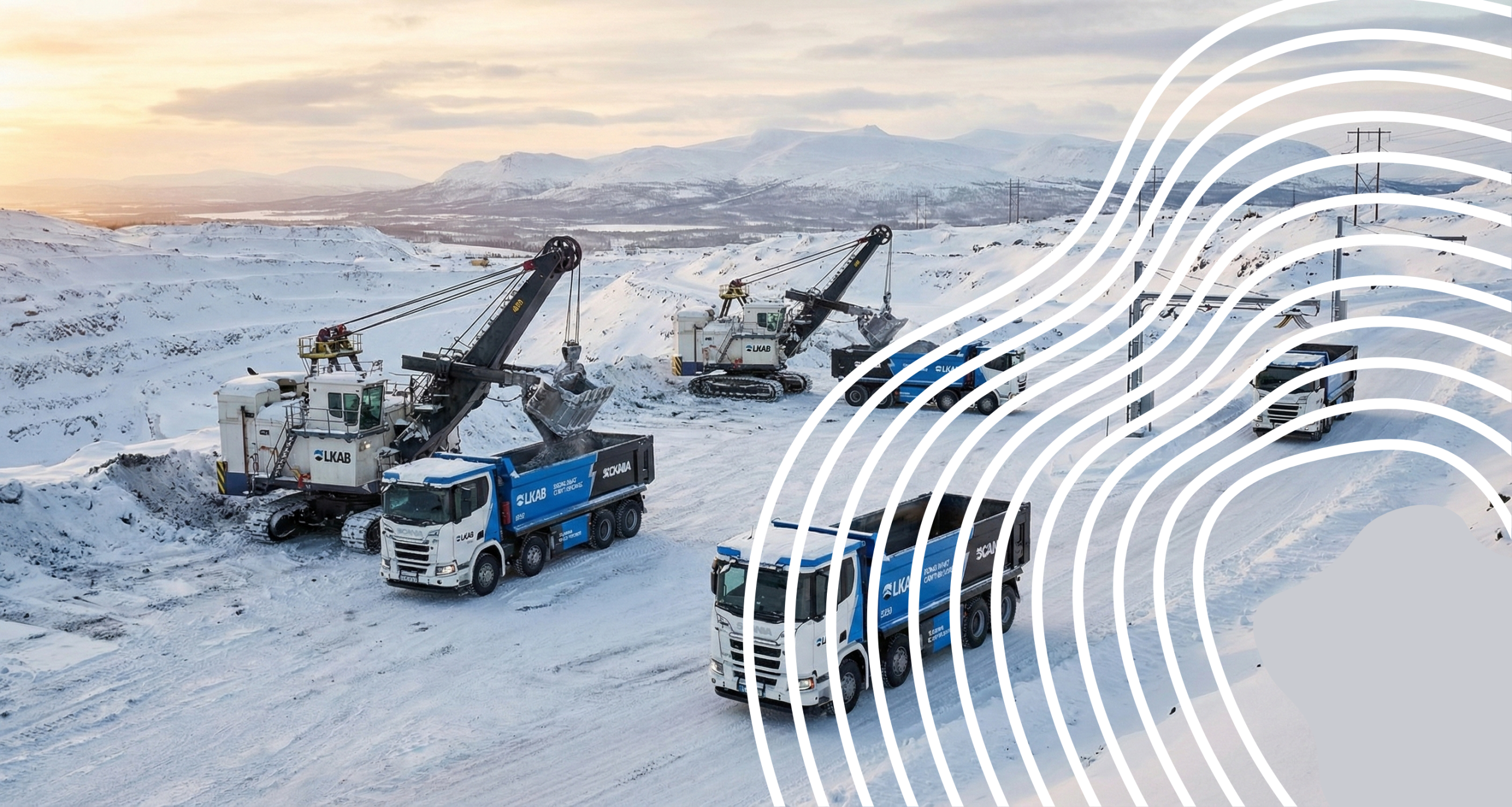
    Scania and LKAB have taken their collaboration to the next level with the introduction of a new fully electric 8×4 heavy tipper truck at LKAB’s Malmberget mine in northern Sweden. This groundbreaking vehicle, named “Sleipner” after Odin’s legendary eight-legged horse, is the first Scania electric truck to feature two steerable front axles. It has been designed to tackle the rigorous demands of mining transport, offering improved stability and load-bearing capabilities on tough mine roads.

    Sleipner represents a significant milestone in Scania’s commitment to electrifying heavy-duty transportation in challenging environments. With a total weight of 60 tonnes—38 tonnes of which is payload—the electric truck replaces its internal combustion counterpart, offering an eco-friendly alternative for transporting waste rock at LKAB’s mining operations.

    Powered by two MP20 battery packs with 416 kWh capacity, and a 400 kW electric motor, Sleipner has been built on Scania’s modular electric platform. This technology enables the vehicle to haul materials over a 5 km route with a 250-meter elevation gain while achieving substantial CO₂ savings. If successful, Sleipner could provide LKAB with a fully fossil-free solution for their transport needs, a major step in meeting their sustainability goals.

    “This vehicle is just the start of many more mining solutions to come,” said Tony Sandberg, Head of Scania Pilot Partner. The vehicle is the latest in a series of electric trucks operating at the Malmberget mine, demonstrating how Scania’s electric technology can be adapted for the toughest of environments.

  • Germany Reports “Constructive” Signals from China on Rare Earth Supplies

    Germany Reports “Constructive” Signals from China on Rare Earth Supplies

    German Foreign Minister Johann Wadephul says China has shown willingness to cooperate on rare earth exports to Europe, offering a rare moment of optimism amid deepening geopolitical and trade tensions. Speaking during a two-day visit to Beijing, Wadephul said Chinese officials indicated they would work “constructively” with European importers seeking general licences to secure supplies of rare earths — metals critical to electronics, defence technologies and electric vehicles.

    The minister met with Commerce Minister Wang Wentao, Foreign Minister Wang Yi and Vice President Han Zheng, using the talks to address Beijing’s recent export restrictions on rare earths, as well as concerns over industrial overcapacity in China’s EV and steel sectors. In a message posted following the meetings, Wadephul said Germany and China remained committed to “balanced economic relations,” while acknowledging the need to confront “imbalances” such as market-access barriers and trade controls.

    China introduced new export restrictions on several rare earth products this year, forcing global manufacturers to confront their dependence on Chinese supply. Wadephul said Beijing reassured him that it had “no intention” of burdening German companies with additional hurdles and encouraged them to apply for general licences under China’s evolving export framework. Wang Wentao also emphasised that the licensing system was designed to keep supply chains “stable and smooth.”

    The discussions come at a time of heightened strain in German-Chinese relations. Chancellor Friedrich Merz has pledged a firmer stance toward Beijing, and Wadephul previously cancelled an earlier trip after criticising China’s activities around Taiwan. German officials have repeatedly warned that the country — long one of China’s closest European trading partners — is now highly exposed to Beijing’s leverage over critical raw materials.

    Last month, Finance Minister Lars Klingbeil left China with only informal assurances regarding rare earth supplies, highlighting the limits of European influence. The European Union is preparing to mobilise at least €3 billion over the next year to reduce its dependency on China for strategic raw materials, including through mining, processing and recycling initiatives.

    Wadephul also used the Beijing meetings to press China to exert pressure on Russia to engage in “serious negotiations” over its war against Ukraine. He said European expectations were clearly conveyed: “If there’s one country that has influence on Russia, it’s China.”

  • GreenRoc Wins 30-Year Licence to Develop High-Grade Amitsoq Graphite Mine in Greenland

    GreenRoc Wins 30-Year Licence to Develop High-Grade Amitsoq Graphite Mine in Greenland

    GreenRoc Mining Plc has secured a 30-year exploitation licence for its Amitsoq graphite project in southern Greenland, clearing a major hurdle on the path to production. The approval, signed by Greenland’s Minister for Business and Mineral Resources Naaja Nathanielsen, marks the third long-term mining permit issued by the territory this year as it seeks to attract responsible investment while managing environmental and community concerns.

    CEO Stefan Bernstein called the licence a “very important milestone” for the company, underscoring the strategic role of graphite in the global energy transition and Europe’s need to establish secure supply chains. GreenRoc’s shares surged as much as 19% on the news, giving the explorer a market value of about £7.5 million.

    Amitsoq, located in the Nanortalik region, hosts one of the world’s highest-grade graphite deposits with a JORC resource of 23 million tonnes at 20.41% graphitic carbon, containing an estimated 4.71 million tonnes of graphite. The site includes a historic mine last operated in 1922. GreenRoc plans to fast-track development and expects annual production of about 80 000 tonnes of graphite concentrate once the mine is operational.

    Earlier this year, the project received “strategic” designation from the European Union for its potential to become a key supplier of graphite, now recognised as a critical raw material. Greenland’s mining sector, long constrained by strict regulations and limited financing, has seen momentum building amid renewed US and European interest in the Arctic territory’s natural resources. In October, GreenRoc secured a €5.2-million loan from Denmark’s export credit agency to support Amitsoq’s advancement.

    Alongside the graphite project, the company also holds ilmenite and iron assets in Greenland, positioning it as a growing player in the region’s critical minerals landscape.

  • Vulcan Energy Breaks Ground on Germany’s First Geothermal-Lithium Extraction Plant

    Vulcan Energy Breaks Ground on Germany’s First Geothermal-Lithium Extraction Plant

    Vulcan Energy has begun construction on its flagship Project Lionheart, officially laying the foundation stone for the combined geothermal and lithium extraction plant (G-LEP) in Landau, Germany. The ceremony, attended by European Investment Bank Vice-President Nicola Beer and other senior officials, follows the company securing a €2.2 billion (A$3.9 billion) financing package to fully fund Phase One of the development.

    Phase One Lionheart will deliver an integrated lithium and renewable energy project in the Upper Rhine Valley, targeting annual production of 24 000 t of lithium hydroxide monohydrate — enough for roughly 500 000 electric vehicle batteries — alongside 275 GWh of renewable electricity and 560 GWh of renewable heat for local consumers. The project has an expected operational life of about 30 years.

    The G-LEP facility is central to Vulcan’s plan to produce carbon-neutral lithium using deep geothermal brine, while also supplying long-term renewable district heating to the City of Landau. Executives described the groundbreaking as a major milestone for European critical raw material security and the region’s clean-energy transition.

    CEO Cris Moreno said the launch signalled strong momentum for Europe’s efforts to build domestic lithium supply chains and reduce reliance on imports. He added that Vulcan would now focus on advancing construction of the G-LEP and delivering climate-friendly lithium and renewable heat to the region.

  • Czech Village Pushes Back Against EU Lithium Mining Plans Amid Fears of History Repeating Itself

    Czech Village Pushes Back Against EU Lithium Mining Plans Amid Fears of History Repeating Itself

    Residents of Cinovec, a remote Czech village near the German border, are mounting growing resistance to a planned lithium mine that the European Union views as a cornerstone of its critical raw materials strategy. The community of roughly 100 people — shaped for generations by the legacy of coal mining — fears that Europe’s renewed appetite for extraction will once again put local health, land and livelihoods at risk.

    Mining was once the foundation of the former Czechoslovakia’s industrial economy, particularly in the Ústí region, where up to 80 coal sites operated between the 1940s and 1960s. But decades of pollution, health hazards and economic decline led to the closure of the final mine in 1993. For residents like Josef Fasmann, childhood memories of coal dust turning a snowman black remain symbolic of what the region endured.

    Three decades later, mining companies have returned — this time pursuing lithium, a metal central to the EU’s strategy for electric vehicles, renewable technologies and defence applications. Geomet, a public-private venture backed in part by Brussels, is overseeing a $1.94-billion lithium project in Cinovec, believed to sit atop one of Europe’s largest untapped deposits. The Czech Geological Survey estimates that the site could hold around 3% of global lithium reserves, making it critical to the EU’s ambition to reduce dependence on imported refined lithium, which today stands at nearly 100%.

    Lithium demand is expected to triple by 2040, according to the International Lithium Association, and the EU’s Critical Raw Materials Act aims to fast-track domestic extraction. Yet residents fear that the environmental and social costs — once familiar from the coal era — are being overlooked. Community groups warn that while the EU promotes the project as essential for energy security and defence, the risks of pollution, industrial damage and disruption to local life remain largely unaddressed.

    The tension encapsulates a broader dilemma for Europe: balancing strategic resource security with public acceptance in regions still scarred by the legacy of extractive industries. As the bloc pushes for mining to power its green transition, Cinovec is emerging as a key test of whether communities will accept a return to the model they thought they had left behind.

  • Boliden CEO Says EU Is a Decade Late on Rare Earths as Brussels Fast-Tracks €3 Billion Plan

    Boliden CEO Says EU Is a Decade Late on Rare Earths as Brussels Fast-Tracks €3 Billion Plan

    The head of Swedish mining group Boliden has warned that the European Union should have acted ten years ago to secure its access to rare earths, calling the bloc’s new €3-billion initiative a welcome but insufficient step given China’s dominance of the sector.

    The remarks follow the European Commission’s announcement that it will fast-track funding into 25 key mineral projects, part of a broader push to reduce dependence on Beijing, which processes more than 90% of the world’s rare earths. China has tightened export restrictions this year, further underscoring Europe’s vulnerability.

    Speaking to Reuters, Boliden CEO Mikael Staffas said Europe’s lack of self-sufficiency in critical raw materials has become a structural weakness and warned that progress will remain slow without sustained, decisive action.

    “The Critical Raw Materials Act was a small step,” he said. “The EU will need many more small steps if they want greater independence.” Staffas described the Commission’s latest effort as a sign of political intent, but stressed that “a lot more needs to be done.”

    Europe’s largest copper producer, Aurubis, echoed a similar sentiment this week, saying the CRMA has so far delivered little visible impact despite expectations of long-term benefits.

    Boliden Sees Little Benefit in New Rare Earths Push
    Although Boliden produces minerals on the EU’s priority list — including copper and nickel — none of its current projects fall within the rare-earth-heavy focus of the new initiative.

    “Everyone is talking about rare earths being super critical, and we do not have any projects there,” Staffas said. He added that even the full €3-billion package would amount to only two years of Boliden’s standard investment levels. The company forecast SEK 15 billion ($1.6 billion) in capital spending for 2026.

    Boliden’s Somincor mine extension in Portugal remains listed under the original CRMA strategic project roster, but none of its developments qualify under the new rare earths programme.

    Staffas’s comments underline a core challenge for the EU: while the bloc aims to diversify supply chains quickly, rare earth extraction and processing remain highly concentrated in China, and Europe’s existing mining pipeline is only partially aligned with the areas Brussels is prioritising.

  • Rio Tinto Scales Back Lithium Expansion, Prioritises Capital Discipline and Existing Projects

    Rio Tinto Scales Back Lithium Expansion, Prioritises Capital Discipline and Existing Projects

    Rio Tinto has pared back its ambitions for rapid lithium growth, telling investors at its capital markets day in London that it will limit investment to projects already under development, with any further expansion contingent on market conditions and strict returns criteria.

    CEO Simon Trott confirmed that the company will complete its current slate of lithium projects — including the Rincon brine operation in Argentina and a single spodumene mine in Canada — to reach approximately 200,000 tonnes per year of lithium capacity by 2028. This figure is below the miner’s earlier guidance of 225,000 t/y, marking a recalibration of expectations amid a volatile market.

    Trott emphasised that Rio Tinto remains bullish on long-term lithium demand, particularly from grid-scale energy storage, but said capital discipline would take precedence over aggressive growth. The company is prioritising delivery of its major ongoing developments, including the Oyu Tolgoi underground expansion in Mongolia and the Simandou iron-ore megaproject in Guinea. Group capital expenditure is expected to fall below $10 billion from 2028.

    Rio Tinto has already halted spending at the Jadar lithium project in Serbia, which has been placed into care and maintenance after regulatory setbacks. The company is also reassessing its next steps in Canada, where the Whabouchi and Galaxy deposits are under review. Energy chief Jérôme Pécresse said both projects will remain active at minimal cost while Rio evaluates which — if either — will proceed. “It’s a reasonable decision to open one mine, not two, but too early to say which one,” he said.

    Trott reiterated that any new lithium investment would move forward only when market fundamentals justify it and when projects meet Rio Tinto’s financial thresholds. The miner has allocated roughly $3 billion per year for growth across the portfolio but will not deploy capital that cannot “move the needle” in terms of shareholder value.

    “We have a clear path to 200,000 tonnes by 2028 and that will be a fantastic business for us,” Trott said. “On other projects, we’ll continue to assess them based on the market fundamentals as they come up to sanction.”

    He added that Rio Tinto still possesses “the best undeveloped lithium assets in the business,” but emphasised that growth for its own sake is off the table. Maintaining a strong balance sheet is the priority, with cost savings from asset reviews and infrastructure optimisation expected to bolster shareholder returns.

  • Safran Taps UK Researchers to Lead Europe’s Push for Rare-Earth Alternatives Amid Fears of China’s Market Dominance

    Safran Taps UK Researchers to Lead Europe’s Push for Rare-Earth Alternatives Amid Fears of China’s Market Dominance

    French aerospace giant Safran, the world’s largest jet engine manufacturer, has chosen its Pitstone facility in Buckinghamshire to spearhead Europe’s search for alternatives to Chinese-controlled rare earths — critical materials essential for magnets used in electric motors, aircraft systems and green technologies.

    The decision comes as Western governments and companies intensify efforts to reduce dependence on China, which controls roughly 90% of global rare-earth supply and has increasingly used export controls as geopolitical leverage. Beijing’s tightening restrictions — temporarily suspended under a one-year truce brokered between Donald Trump and Xi Jinping — have heightened fears that China could disrupt supply chains for future Airbus and Boeing aircraft, while strengthening its domestic aerospace challenger, Comac.

    Safran chief executive Olivier Andriès said the Pitstone site was selected after developing the world’s first electric motor certified for aviation. The UK team will now focus on identifying substitutes for rare earths such as samarium, a key component of samarium-cobalt magnets used in high-temperature aerospace environments.

    “Electrical motors need magnets and magnets need rare earths, and most of these are coming from China,” Andriès said. “The target we’ve given the team is to find alternative sources of these materials — or even imagine rare-earth-free magnets. We don’t yet know the answer.”

    Andriès emphasised that rare-earth access has become an urgent strategic concern as the aerospace industry advances hybrid propulsion systems for next-generation airliners. Safran already relies on export licences from China to obtain the materials it needs and has built emergency stockpiles, but Andriès warned this is only a temporary buffer.

    “The supply chain has been weaponised — it’s an instrument of power,” he said. “The key point is to find alternative sources in the short term and, in the long term, find ways to deliver the same capabilities without using rare earths.”

    As part of its strategy, Safran will designate the UK as its first research and technology centre outside France, reinforcing the country’s role in the company’s global operations. Safran employs 5,500 people across 14 UK sites, producing components ranging from landing gear and helicopter engines to flight controls and engine casings. Pitstone will also host a new electric-motor assembly line.

    The renewed focus follows a surge in geopolitical competition for critical minerals. In October, the US signed an $8.5bn mining and processing agreement with Australia to expand Western rare-earth capabilities amid fears that China could cut off exports once the temporary truce expires.

    Andriès warned that while China has not yet deployed its dominance as a coercive tool, the risk remains significant: “Today, if China is willing to, they can interrupt the supply of most of the rare earths needed for automotive or aerospace applications.”

  • EU Unveils Multi-Billion-Euro Plan to Curb Dependence on China for Rare Earths Amid Rising Geopolitical Tensions

    EU Unveils Multi-Billion-Euro Plan to Curb Dependence on China for Rare Earths Amid Rising Geopolitical Tensions

    The European Union on Wednesday announced a sweeping multi-billion-euro initiative to reduce the bloc’s reliance on China for rare earths and other critical materials, as Beijing’s dominance and recent export restrictions continue to threaten European industry. China — the world’s largest producer of rare earths — unsettled global markets in October when it imposed new limits on rare earth exports used in electric vehicles, electronics, and defence technologies. Although Beijing later suspended the curbs for one year, the episode underscored the EU’s vulnerability.

    EU industry chief Stéphane Séjourné said the new measures respond to a “new global geopolitical reality,” describing China’s grip on the market as a raw-materials “racket.” The European Commission plans to mobilise nearly €3 billion to support strategic mining, refining and recycling projects across Europe and in partner countries, aiming to diversify supply and strengthen domestic production capacity.

    A key feature of the plan is the creation of a European Centre for Critical Raw Materials, modelled on Japan’s state-run metals agency. The centre will act as the EU’s supply hub, tasked with monitoring material needs, coordinating joint purchasing for member states, and managing stockpiles and emergency deliveries to industry.

    Brussels is also moving to restrict exports of permanent-magnet scrap and waste — materials that contain rare earths — beginning next year, in an effort to boost recycling and retain valuable feedstock within the EU. Targeted curbs on aluminium waste exports are also planned, with copper potentially to follow.

    The policy push comes just two years after the bloc adopted the Critical Raw Materials Act, but officials say the geopolitical landscape has changed rapidly. The EU now finds itself squeezed between China’s tightening resource controls and an increasingly assertive United States under President Donald Trump, which is aggressively pursuing bilateral deals to secure its own critical mineral supplies.

    A new survey from the EU Chamber of Commerce in China found 60% of member companies expect supply disruptions due to Chinese restrictions, while 13% warn they may have to slow or halt production altogether.

    The Commission also updated its economic security strategy, acknowledging that supply chains are being weaponised globally. EU trade chief Maroš Šefčovič said the bloc must respond to a world in which “strategic choke points are turning economic dependency into political pressure.”

    The revised doctrine calls for more assertive use of existing tools — including foreign investment screening, export controls and supplier diversification — and for developing new measures where needed.

    “Europe will continue to champion open trade and global investment, but our openness must be backed by security,” Šefčovič said, emphasising a stronger EU capacity for economic intelligence and coordinated action across member states.