Website: Europe.com

  • French minister to push 1 bln euro uranium deal on trip to Mongolia

    French minister to push 1 bln euro uranium deal on trip to Mongolia

    [vc_section][vc_row][vc_column][distance desktop_type=”30″][lvs][distance desktop_type=”30″][vc_btn title=”Source – Reuters” color=”sky” i_type=”material” i_icon_material=”vc-material vc-material-perm_device_information” add_icon=”true” link=”url:https%3A%2F%2Fwww.reuters.com%2Fbusiness%2Fenergy%2Ffrench-minister-push-1-bln-euro-uranium-deal-trip-mongolia-sources-2023-06-28%2F|target:_blank”][distance desktop_type=”30″][vc_column_text]

    PARIS, June 28 (Reuters) – French Foreign Minister Catherine Colonna heads to Mongolia on Wednesday aiming to push a potentially 1 billion euro uranium deal for nuclear group Orano that Paris hopes can be concluded in the autumn, French diplomatic sources said on Wednesday.

    President Emmanuel Macron stopped off in Ulaanbaatar in May on his return from a G7 summit in Japan, saying that the two countries had agreed to work together to boost French energy sovereignty through the supply of critical metals from Mongolia.

    “Mongolia is full of resources and resources that aren’t sufficiently exploited, and not all identified,” a French diplomatic source told reporters ahead of Colonna’s visit.

    “There is one major project, which is an Orano project that aims to exploit uranium mines,” the source said. “It is … worth more than 1 billion euros ($1.1 billion) and enables the extraction of a large quantity of uranium.”

    “It’s advancing well, and there is an agreement that is being negotiated with the objective to conclude by next autumn.”

    According to the company’s website it and its partner, Mongolian state-owned Mon-Atom, are working with Mongolian authorities on an investment agreement for the Zuuvch Ovoo project, one of two for which their Badrakh Energy joint venture received mining licenses in 2015.

    Orano confirmed the project in question was Zuuvch Ovoo and said in an emailed response to Reuters that negotiations were ongoing and that the company aimed to develop the first uranium mine in Mongolia, “applying the highest standards in terms of health, safety and the environment, as well as social responsibility.”

    Orano, a major uranium producer with mines in Canada, Kazakhstan and Niger, has been in Mongolia for more than 25 years, carrying out exploration activities, its website showed.

    Nearly 80% of Mongolia’s total exports go to China, but the mineral-rich country is working to expand trade and mining relationships beyond its two big neighbours China and Russia and hopes to become a bridge between Europe and Asia.

    Mongolia is home to major deposits of rare earth minerals, which are essential to many high-tech manufacturing processes and are used in electric vehicles, wind turbines, portable electronics, microphones and speakers.

    “There will be other meetings to see what we can do to identify resources and prepare possible exploration cooperations,” the diplomatic source said.

    [/vc_column_text][distance desktop_type=”30″][/vc_column][/vc_row][/vc_section]
  • Copper producer Aurubis resumes operations at its Pirdop site in Bulgaria after EUR60M investment project

    Copper producer Aurubis resumes operations at its Pirdop site in Bulgaria after EUR60M investment project

    [vc_section][vc_row][vc_column][distance desktop_type=”30″][lvs][distance desktop_type=”30″][vc_btn title=”Source – Kitco News” color=”sky” i_type=”material” i_icon_material=”vc-material vc-material-perm_device_information” add_icon=”true” link=”url:https%3A%2F%2Fwww.kitco.com%2Fnews%2F2023-06-28%2FCopper-producer-Aurubis-resumes-operations-at-its-Pirdop-site-in-Bulgaria-after-EUR60M-investment-project.html|target:_blank”][distance desktop_type=”30″][vc_column_text]Aurubis, a leading global provider of non-ferrous metals and one of the largest copper recyclers worldwide, announced today it has updated its production facilities at the Pirdop copper smelter in Bulgaria with state-of-the-art technologies and executed additional improvements.

    “Following the successful completion of the project, operations fully resumed in Pirdop today,” the company said. “The investments implemented will allow the site to achieve even better environmental standards in the future while also creating ideal conditions for maintaining the Pirdop plant’s exceptionally high operative performance from recent years.”

    The company added that during the 40 days of the maintenance shutdown, more than 130 maintenance and repair activities were carried out in all the major production areas at the plant.

    “With a total investment volume of around €60 million, the project was completed in the planned timeframe and budget,” the company said. “The maintenance shutdown was also an opportunity to execute investment projects and optimizations that will raise the plant’s energy efficiency even higher.”

    Additionally, a second anode casting wheel with all the feed lines to the anode furnace was installed. This will further improve plant availability and production stability along with it.

    Aurubis is a global provider of non-ferrous metals and one of the world’s largest copper recyclers. The company produces more than 1 million tonnes of copper cathodes with 99.99 % purity in its European smelter network each year. In addition to copper, Aurubis produces gold, silver, platinum group metals, lead, nickel, tin, zinc, and selenium.[/vc_column_text][distance desktop_type=”30″][/vc_column][/vc_row][/vc_section]
  • French-British venture to develop UK’s largest lithium deposit

    French-British venture to develop UK’s largest lithium deposit

    [vc_section][vc_row][vc_column][distance desktop_type=”30″][lvs][distance desktop_type=”30″][vc_btn title=”Source – mining.com” color=”sky” i_type=”material” i_icon_material=”vc-material vc-material-perm_device_information” add_icon=”true” link=”url:https%3A%2F%2Fwww.mining.com%2Ffrench-british-venture-to-develop-uks-largest-lithium-deposit%2F%3Futm_source%3DDaily_Digest%26utm_medium%3Demail%26utm_campaign%3DMNG-DIGESTS%26utm_content%3Dfrenchbritish-venture-to-develop-uks-largest-lithium-deposit|target:_blank”][distance desktop_type=”30″][vc_column_text]

    French mining group Imerys (FRA: IY4) and British Lithium are joining forces to speed up the development of the UK’s largest lithium deposit, said to have enough of the battery metal to supply about 500,000 electric vehicles (EVs) by 2030.

    The partners aim to generate 20,000 tonnes of lithium carbonate equivalent a year by the end of the decade from granite deposits in Cornwall, the same area in southwest England where struggling Cornish Lithium has its Trelavour project.

    Imerys, known for producing minerals for construction and ceramics since its beginnings in the 1880s, will have an 80% stake in the joint venture. British Lithium, which has been conducting exploration on the French company-owned land since 2017, will hold the remaining 20%.

    The joint venture aims to start production at the project, which would become Britain’s first lithium mine, by 2028.

    Imerys chief executive Alessandro Dazza said the project in Cornwall and the company’s planned lithium mine in central France, would reduce Europe’s current reliance on imports. Australia currently covers the majority of the EU’s demand for lithium concentrates, while Chile is by far the bloc’s largest supplier of refined lithium compounds.

    “There is still a long way to go until the UK realises domestic lithium production and remains to be seen if these deposits can be commercially viable,” said Jordan Roberts, Battery Raw Materials analyst at Fastmarkets NewGen.

    “But the partnership with Imerys is a positive step forward and increases the likelihood of successful development through shared technical knowledge and access to existing infrastructure and additional finance.”

    Rocky road

    Plans to boost a lithium industry in the UK have suffered major setbacks in recents months. Britishvolt, the startup that struggled to raise funds for a major EV battery factory in northern England, filed for administration in January and ended up being acquired by Australia’s Recharge Industries.

    Cornish Lithium, which has been working on opening a lithium mine in the country for more than six years, said this week it needs $13 million (£10m) or it would go bust.

    Europe’s car industry needs to meet tighter carbon-dioxide emissions targets, which take effect in 2024, or face billions of dollars in fines if they exceed them.

    Carmakers can currently equip EVs with batteries made up to 70% with materials from countries outside the EU or the UK. From 2024 onwards, however, that requirement will tighten to 50%.

    The sector has warned that those Brexit trade rules governing rules of origin risk adding costs to consumers across Europe unless they are delayed.

    [/vc_column_text][distance desktop_type=”30″][/vc_column][/vc_row][/vc_section]
  • France, Germany, Italy pledge close cooperation on critical raw materials

    France, Germany, Italy pledge close cooperation on critical raw materials

    [vc_section][vc_row][vc_column][distance desktop_type=”30″][lvs][distance desktop_type=”30″][vc_btn title=”Source – euractiv.com” color=”sky” i_type=”material” i_icon_material=”vc-material vc-material-perm_device_information” add_icon=”true” link=”url:https%3A%2F%2Fwww.euractiv.com%2Fsection%2Fenergy-environment%2Fnews%2Ffrance-germany-italy-pledge-close-cooperation-on-critical-raw-materials%2F|target:_blank”][distance desktop_type=”30″][vc_column_text]

    At the press conference in Berlin, France, Germany, and Italy also announced that they were ready to invest in joint projects and data sharing to accelerate the achievement of the objectives set out in the EU regulations. A sort of “common platform” will be set up for this purpose, Le Maire added.

    France, Germany and Italy will cooperate more closely on critical raw materials as ministers pledged in Berlin on Monday (26 June) to invest in joint projects and exchange views on the EU’s currently debated Critical Raw Materials Act.

    In March, the European Commission presented its flagship proposal for a Critical Raw Materials Act (CRMA) to rely less on foreign countries for resources essential to the green and digital transition.

    “We thought it would be useful for Europe’s three largest economies to exchange views and submit proposals for amendments to the CRMA,” explained German Economy and Climate Minister Robert Habeck.

    “This is the first time that France, Italy and Germany have decided, together, to strengthen their independence on critical materials chains,” added his French counterpart, Economy Minister Bruno Le Maire.

    The risks of overreliance on foreign suppliers for critical raw materials were highlighted by the COVID-19 pandemic and the war in Ukraine, which shut down parts of the supply chain, causing a shortage of chips and semiconductors.

    Under the CRMA proposal, European Union member states must harbour 15% of the production, 40% of the refining and 10% of the recycling of certain critical raw materials – such as lithium, cobalt, manganese, and copper – by 2030.

    All these materials are needed to produce wind turbines, solar panels, batteries for electric vehicles and other technologies to decarbonise the European economy.

    Common projects, common investments

    The three countries also announced that they were ready to invest in joint projects and data sharing to accelerate the achievement of the objectives set out at the EU level.

    A “common platform” will be set up for this purpose, Le Maire explained. There will also be a joint strategy for a “genuine recycling industry”, the French minister added.

    Regarding investments, Habeck said Germany would follow in France and Italy’s footsteps, referring to recent announcements that Paris and Rome would raise funds for their respective mining sectors.

    “France is proposing a public investment of around €500 million, Italy €1 billion, which is more or less what we are proposing,” said Habeck.

    At the EU level, Italy’s Business and Made in Italy Minister, Adolfo Urso, said he would like “the creation of a European fund to enable investment projects by European companies to develop the mining sector.”

    In his view, it is “important that from the outset, cooperation is based on the key players in our industry”.

    In Berlin, the three ministers also met several industrialists from the sector, including representatives of Imerys, a French mining site operator in the process of developing a lithium mine in Allier (Auvergne-Rhône-Alpes).

    Extending the EU’s list of critical raw materials

    The meeting was also an opportunity for leaders to discuss extending the list of raw materials covered by EU regulations, notably aluminium.

    “France has spearheaded this inclusion,” Cyrille Mounier, General Delegate of the French aluminium industry union Aluminium France, told EURACTIV France.

    As discussed at the EU Competitiveness Council on 22 May, the three ministers also called for sector-based targets for extracting, processing and recycling each critical raw material.

    “It would be absurd to set the same targets for cobalt, 80% of whose reserves are located in a single African country, as for lithium, for example, which can be extracted in Europe”, French Industry Minister Roland Lescure told EURACTIV France in an interview following the Council meeting – an approach Luxembourg and Slovenia, in particular, are also in favour of, Lescure added.

    As for the Franco-Italian-German initiative, Le Maire said it remains “open to other member states that may wish to join”.

    Swift CRMA adoption

    To oversee this new cooperation between the EU’s three biggest economies, the ministers agreed to set up a working group of experts to monitor the implementation of joint measures.

    This new alliance should also facilitate future discussions on the CRMA at the EU level, for which the ministers are calling for a “rapid conclusion of the negotiations” between the European Parliament, the Council and the Commission.

    On top of that, the three leaders also promised to hold follow-up meetings, including in Rome in October and later in Paris, to continue and broaden the discussions.

    “The Berlin meeting opens a new phase in the definition of the European industrial policy that will enable us to meet the challenges of the dual transition to a green and digital economy,” Urso said.[/vc_column_text][distance desktop_type=”30″][/vc_column][/vc_row][/vc_section]
  • BlackRock launches copper mining ETF in Europe

    BlackRock launches copper mining ETF in Europe

    [vc_section][vc_row][vc_column][distance desktop_type=”30″][lvs][distance desktop_type=”30″][vc_btn title=”Source – ETF Strategy” color=”sky” i_type=”material” i_icon_material=”vc-material vc-material-perm_device_information” add_icon=”true” link=”url:https%3A%2F%2Fwww.etfstrategy.com%2Fblackrock-launches-copper-mining-etf-in-europe-10339%2F|target:_blank”][distance desktop_type=”30″][vc_column_text]BlackRock has introduced a new ETF in Europe providing targeted exposure to companies operating in the global copper mining industry.

    The iShares Copper Miners UCITS ETF (COPM NA) has been listed on Euronext Amsterdam in US dollars.

    The fund comes with an expense ratio of 0.55%.

    Copper is one of the world’s oldest industrial metals and an important input in the manufacture of infrastructure such as urban buildings as well as numerous electronic technologies.

    Copper’s wide range of applications has earned it the nickname “Dr. Copper” given that its consumption is often used to gauge the health of the global economy – increasing copper usage typically corresponds with periods of worldwide economic expansion.

    Demand for copper is also being driven by the climate transition as the metal is an essential component of technologies helping to usher in a low-carbon future. Renewable energy systems, including wind, solar, and hydropower, require copper to generate, transmit, and store electricity, while electric vehicles can use more than double the copper of an internal combustion engine vehicle.

    Methodology

    The ETF is linked to the STOXX Global Copper Miners Index which selects its constituents from a universe of developed and emerging market stocks with market capitalizations greater than $100 million and average daily trading volumes above $1m.

    The methodology targets ‘pure-play’ copper miners by selecting all companies categorized within the ‘Copper Ore Mining’ industry according to the Revere Business Industry Classification System (RBICS). If fewer than 50 stocks have been chosen, the index also selects firms deriving between 25% and 50% of their revenue from copper ore mining (prioritizing those with higher revenue exposure) until the target constituent count is met.

    Any firm that has not already been selected but falls within the top 50% of the copper ore mining industry in terms of market share will also be included.

    Constituents are weighted by float-adjusted market capitalization while capping the weight of any single stock at 8% and the cumulative weight of all companies with less than 50% revenue exposure to copper ore mining at 25%.

    As of the end of May, stocks listed in Canada and the UK each accounted for approximately a quarter of the index’s total weight with the next-largest country exposures being the US (14.1%), Australia (12.3%), and Mexico (9.1%).

    Notable positions included First Quantum Minerals (9.5%), Grupo Mexico SAB (9.1%), Freeport-McMoRan (8.2%), BHP Group (8.1%), and Antofogasta (6.7%).

    [/vc_column_text][distance desktop_type=”30″][/vc_column][/vc_row][/vc_section]

  • Imerys to produce lithium in UK for EV batteries

    Imerys to produce lithium in UK for EV batteries

    [vc_section][vc_row][vc_column][distance desktop_type=”30″][lvs][distance desktop_type=”30″][vc_btn title=”Source – Reuters” color=”sky” i_type=”material” i_icon_material=”vc-material vc-material-perm_device_information” add_icon=”true” link=”url:https%3A%2F%2Fwww.reuters.com%2Fmarkets%2Fcommodities%2Fimerys-aims-be-europes-top-lithium-producer-with-uk-project-2023-06-29%2F|target:_blank”][distance desktop_type=”30″][vc_column_text]

    PARIS, June 29 (Reuters) – French minerals group Imerys (IMTP.PA) on Thursday announced plans to mine lithium in the UK and said the site could supply two-thirds of batteries for Britain’s electric vehicles by 2030.

    Imerys aims to produce around 20,0000 tonnes a year of lithium carbonate equivalent by the end of the decade at its mining site in Cornwall, southwest England, in partnership with British Lithium.

    That would be enough to supply some 500,000 EVs by 2030, it said.

    Global lithium demand is forecast to surge by around three-quarters between 2022 and 2025, helped by governments and industrial companies positioning to secure supply of battery materials as they promote EVs as a way of curbing emissions.

    Imerys’ UK development, and its previously announced plan to mine the metal in central France, would reduce Europe’s current reliance on imported lithium for batteries, CEO Alessandro Dazza said.

    “This project will change the picture,” he said on a call with reporters.

    Most known lithium resources are located outside Europe, including in a so-called lithium triangle spanning Argentina, Bolivia and Chile. But Imerys says it has confirmed large deposits beneath its longstanding kaolin mines in Britain and France.

    Shares in Imerys, which said it expects that the UK and French projects will make it Europe’s biggest producer of the metal, were up 3.5% in morning trade, outperforming a steady broader trend in Paris.

    The company said in a statement that the Cornwall project has been approved by the UK government, and business minister Kemi Badenoch was quoted as welcoming the deal to strengthen domestic supply of critical minerals.

    The UK project is expected to cost “hundreds of millions” of euros in investment, Dazza told reporters, adding it was too early to give precise figures and that talks with the authorities over state aid would follow.

    The project was smaller than Imerys’ existing plan to mine lithium in France, where it aims to reach output of around 34,000 tonnes a year through a 1 billion euro investment, and Dazza said the UK site would have the advantage of being an open pit mine with a nearby processing facility.

    Imerys said UK production could potentially start around the same time as its French output in late 2028, benefiting from synergies between the two projects.

    In its UK partnership, Imerys has taken an 80% stake and will draw on British Lithium’s processing technology and existing pilot for battery-grade lithium, the French group said.

    In the search for battery minerals, traditional energy companies, including Exxon Mobil (XOM.N), are also looking at emerging technologies to boost lithium supply.

    [/vc_column_text][distance desktop_type=”30″][/vc_column][/vc_row][/vc_section]

  • Poland’s PGE sees no risk of delay in Siemens Gamesa turbine supply deal

    Poland’s PGE sees no risk of delay in Siemens Gamesa turbine supply deal

    [vc_section][vc_row][vc_column][distance desktop_type=”30″][lvs][distance desktop_type=”30″][vc_btn title=”Source – Reuters” color=”sky” i_type=”material” i_icon_material=”vc-material vc-material-perm_device_information” add_icon=”true” link=”url:https%3A%2F%2Ffinance.yahoo.com%2Fnews%2Fpolands-pge-sees-no-risk-155106269.html%3Fguccounter%3D1%26guce_referrer%3DaHR0cHM6Ly93d3cuZ29vZ2xlLmNvbS8%26guce_referrer_sig%3DAQAAAFs_VP5HWD-Z7cvJt2CqocCNwQCVfi-y3Wg3N76zm0GWNWSDvxlkfkHr-oPoql_ZNx4XUWHMYBHTPGeLdO5Td-4CQChIUftt-TT98Qv6uaRB-dyEjWxYvKYXR3L6lAxS0eDflNLcDSPIxbfic-BeuvyagimWlDfMbj2g9GAqHo0u|target:_blank”][distance desktop_type=”30″][vc_column_text]WARSAW, June 27 (Reuters) – Poland’s largest utility PGE SA said on Tuesday it saw no risk to timely deliveries of Siemens Gamesa wind turbines for the offshore farm in the Baltic set for commissioning in 2027.

    Troubles at Siemens Gamesa do not concern turbines already installed at wind farms owned by PGE, the company said.

    Last week, Siemens Energy unveiled issues at Siemens Gamesa more recent onshore wind turbine models, including faulty components and possible design flaws, that caused its shares to plummet by more than 37%.

    In April, Siemens Gamesa Renewable Energy agreed to tie up with PGE and Denmark’s Orsted to supply 107 wind turbines for the Baltica 2 offshore wind project in the Baltic Sea.

    “Currently, there are no indications that there will be delays in the delivery schedule of 107 wind turbines for Baltica 2,” PGE spokesman Konrad Mroz said in a response to Reuters questions.

    “The problems indicated in the media coverage do not apply to wind turbines installed on farms owned by PGE.”

    (Reporting by Marek Strzelecki; editing by David Evans)[/vc_column_text][distance desktop_type=”30″][/vc_column][/vc_row][/vc_section]

  • Czech NGO issues stark warning over Poland’s Turów coal mine

    Czech NGO issues stark warning over Poland’s Turów coal mine

    [vc_section][vc_row][vc_column][distance desktop_type=”30″][lvs][distance desktop_type=”30″][vc_btn title=”Source – Expats.cz” color=”sky” i_type=”material” i_icon_material=”vc-material vc-material-perm_device_information” add_icon=”true” link=”url:https%3A%2F%2Fnews.expats.cz%2Fczech-news%2Farticle%2Fczech-ngo-issues-stark-warning-over-poland-s-turow-coal-mine|target:_blank”][distance desktop_type=”30″][vc_column_text]

    The Together for Water non-governmental organization (NGO) issued a press release Tuesday that mining activities at the Turów coal mine in Poland are causing serious environmental harm in neighboring Czechia.

    Better measuring needed

    The group highlighted decreasing water levels in a borehole in the Czech village of Uhelná as evidence. The NGO argues that the measurements in Uhelná do not match those in four control boreholes on the Polish side, which are crucial for evaluating the effectiveness of the mine’s underground barrier.

    Together for Water also stated that the effectiveness of the barrier – intended to prevent water from disappearing from the Czech border area – needs to be measured in Czechia, rather than in Poland.

    The NGO fears that the Czech government may be using inadequate data to assess the ecological damage caused by the mine. It is calling for the Czech Environment Ministry to release all information received since the signing of the Turów agreement, including groundwater data and the amount of water in the Uhelná borehole.

    Earlier this year, the Czech division of the Greenpeace activist organization protested in Prague for the government to fully release water-quality data near the Czech-Polish border of the affected area.

    Together for Water further urges Czechia to engage in negotiations with Poland, requesting an extension of the underground barrier or a reduction in mining operations due to the continuously declining water level in Czech territory. The group also suggests that Poland should develop an updated hydrogeological model, and propose preventive and corrective measures to mitigate environmental damage.

    A tense history

    In February 2021, Czechia took Poland to the EU Court of Justice over the expansion of mining at Turów, and the court ruled in May 2021 that Poland must cease mining immediately.

    Poland refused to comply, leading to a daily fine of EUR 500,000 imposed by the court in September 2021, which Poland objected to paying. Subsequent negotiations between Prague and Warsaw resulted in the signing of the Czech-Polish agreement in February 2022.

    Under the February 2022 agreement, Poland committed to compensating for the damage caused by the mine. However, local communities claim that the compensation has not reached them.

    In February this year, Poland authorized prolonging coal mining in Turów until 2044. Czech environmentalists were angered by this, and also deeply frustrated with the government’s decision to extend Czech coal-mining activities at a separate mine, in the northern town of Bílina.

    [/vc_column_text][distance desktop_type=”30″][/vc_column][/vc_row][/vc_section]
  • The leader of the copper mining industry is the sponsor of a modern laboratory at the University of Zielona Góra

    The leader of the copper mining industry is the sponsor of a modern laboratory at the University of Zielona Góra

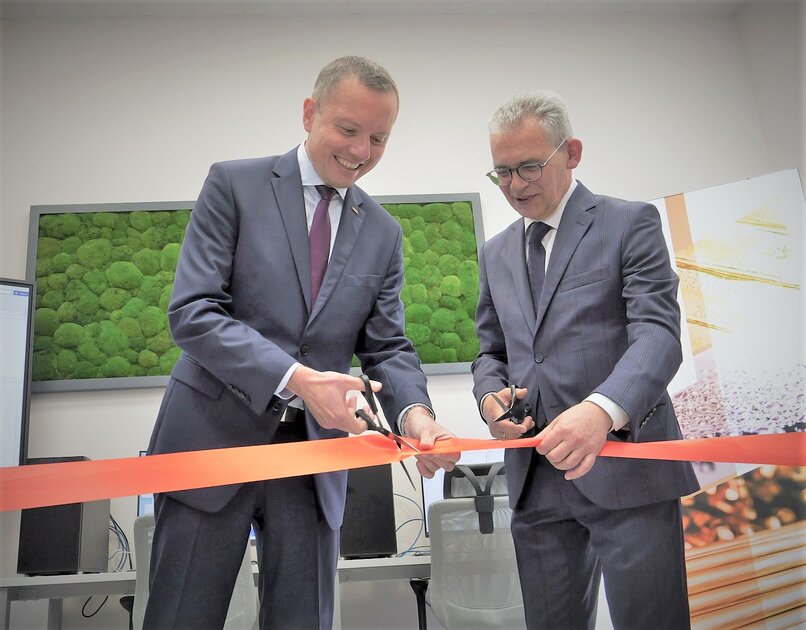
    Modern computer stations for analysis using artificial intelligence methods – the company has funded the equipment and became the sponsor of the KGHM Analytical Laboratory at the University of Zielona Góra. The laboratory is located in the newly constructed building of the Institute of Mechanical Engineering and Physics. Thanks to the support received from KGHM, the KGHM Analytical Laboratory has

    Source: the leader of the copper mining industry is the sponsor of a modern laboratory at the University of Zielona Góra

  • Bogdanka’s strategy as a response to the challenges of transition

    Bogdanka’s strategy as a response to the challenges of transition

    [vc_section][vc_row][vc_column][distance desktop_type=”30″][lvs][distance desktop_type=”30″][vc_btn title=”Source – Lubelski Węgiel Bogdanka” color=”sky” i_type=”material” i_icon_material=”vc-material vc-material-perm_device_information” add_icon=”true” link=”url:https%3A%2F%2Flw.com.pl%2Fen%2Fnews%2Fbogdankas-strategy-as-a-response-to-the-challenges-of-transition|target:_blank”][distance desktop_type=”30″][vc_column_text]

    Lubelski Węgiel Bogdanka has published a new strategy for 2023-2030 with an outlook until 2040. The document outlines the key directions of development and transition for Bogdanka. The Company aims to create an innovative multi-commodity concern to drive green transition and secure the economic development of the Lublin region.

    Lubelski Węgiel Bogdanka’s new strategy is based on 5 pillars. The first is a strong coal foundation, in which Bogdanka remains the efficiency leader in coal mining until the end of the mine’s existence. The four others are: Multi-commodity Concern, Sustainable Energy Guarantor, Green Transition and Future of the Lublin Region.
    Through consistent implementation of the strategy to maintain a high level of production, by 2030 Bogdanka wants to generate funds that will allow for investments related to the multi-commodity area. The Company plans to invest PLN 8.6 billion over the next 8 years, almost half of which will be in new business areas.

    We want a strong multi-commodity concern to be established here, in the Lublin region, in the coming years, so that Bogdanka can remain the driving force of the region for the next 40 years. Our new strategy is primarily a response to the challenges posed by the broader energy transition. We want to naturally take advantage of the fact that we are an efficiency leader in coal production. This foundation will allow us to finance our transition projects. We will use our mining competencies to diversify Bogdanka’s operations towards the extraction of critical raw materials not only in the region, but also in Poland. By investing in renewable energy sources, Bogdanka will also become a guarantor of sustainable energy supply, both for its own needs and for the entire region. We will undertake all these activities with respect and care for the environment. We are driven by concern for the development of the region and care for the people. Because people are Bogdanka’s strength and greatest asset. With this strategy, we want to provide a place to work for the next generations of the Lublin region.

    said Kasjan Wyligała, President of the LW Bogdanka Management Board.

    Bogdanka’s strategic role makes the Company a guarantor of energy security and sovereignty not only for the region, but also for central and eastern Poland. Despite the fact that we are a leader among all Polish coal companies, we are nevertheless still working to optimize our operational efficiency. We are constantly making sure to strengthen the efficiency and profitability of our core business. This will provide us with stable financing for planned strategic initiatives. We will continue to invest in innovative solutions, in particular in the areas of rock mass monitoring, improved safety and ergonomics, and smart mine management systems. Cash flows will allow us to implement Strategic Initiatives with constant monitoring of available support mechanisms, as well as to remain a dividend company with payment of up to 50% of the Company’s net profit as is the case now. We estimate that the Company’s cumulative revenues will reach almost PLN 100 billion by 2040.

    said Artur Wasilewski, Vice-President of the Management Board for Economic and Financial Affairs at LW Bogdanka.

    Bogdanka estimates that nearly PLN 20 billion will be generated by the areas related to production, installation and recycling of RES components.

    The prospect of 2049 means that there are currently no plans for investment in new coal-based generating units in Poland. This necessitates the search for new non-coal sources of income for Bogdanka. Given that approx. 70% of energy in our country still comes from coal, one should assume that only large-scale renewable energy sources can bring about a significant change in the energy mix and significant decarbonization of the Polish economy in the relatively near term. Therefore, one of the important new pillars of the Company’s development is investment in renewable energy installations, i.e.: windmills, photovoltaic farms, energy storage, as well as in the entire value chain – from component production, through energy generation, energy storage to recycling of waste photovoltaic and electric batteries. We believe that the areas of production, installation and recycling of RES components will generate up to PLN 20 billion by 2040. We plan to develop RES in several stages. A 3MW photovoltaic farm near Bogdanka will soon be put into operation, while tender processes for another 27MW have already been launched. Our goal is to meet 10% of the Lubelskie Voivodeship’s annual electricity consumption by 2030.

    said Dariusz Dumkiewicz – Vice-President of the Management Board for Sales and Investments at LW Bogdanka.

    The Company wants to capitalize on its experience in mining and the growing potential of the commodity market, particularly critical raw materials. This makes Bogdanka see the multi-commodity approach as an attractive path to diversification. The Company plans to spend PLN 50 million in the coming years on exploration, appraisal drilling and other work to arrive at an investment decision. Currently, after expert analysis in this area, Bogdanka has tentatively identified 11 raw materials and more than 20 potential locations where it will carry out advanced analyses.

    As part of the Multi-commodity Concern, the Company also plans to establish a Fund to invest in new technology projects related to our current and future operations. In addition, Bogdanka wants to tap the intellectual potential of Lublin’s universities and entrepreneurs.
    Bogdanka’s new strategy is not just focused on the “here and now.” Preserving jobs and economic potential in the region – this is the essence of our plan in the context of the future of the workforce and the entire region of Central and Eastern Poland. We want to do it wisely, through business diversification, acquisitions and development projects. We want to create stable jobs in the region in the future. As part of the new strategy, we will launch programs aimed at attracting and retaining our best employees. But in parallel, we will implement new measures that are so important for any mine, namely investments to increase the level of occupational safety. We want to implement re-branding programs to successively and friendly prepare employees for the distant but imminent closure of hard coal mines. Implementing responsible business practices and ESG issues throughout the value chain will also be a our priority in the new strategy. Our goal is to maintain a stable level of employment in the core business until 2042. As of today it is almost 5,000 people.

    said Adam Partyka Vice-President of the Management Board for Social and Labor Affairs.

    Bogdanka is synonymous with stability and development. The Company’s new strategy is an effective response to the challenges of our times and will allow Bogdanka to be the region’s leader for the next 40 years.

    [/vc_column_text][distance desktop_type=”30″][/vc_column][/vc_row][/vc_section]