Website: Europe.com

  • IEA says coal use hit an all-time high last year — and global demand will persist near record levels

    IEA says coal use hit an all-time high last year — and global demand will persist near record levels

    Coal consumption increased by 3.3% to hit a fresh record high of 8.3 billion metric tons in 2022, the International Energy Agency said Thursday.

    According to the Paris-based organization’s Coal Market Update, demand increased “despite a weaker global economy, mainly driven by being more readily available and relatively cheaper than gas in many parts of the world.”

    Overall, the IEA said 10,440 terawatt hours were generated from coal in 2022, a figure that accounted for 36% of the planet’s electricity generation.

    Looking ahead, the IEA said coal consumption in 2023 would remain near last year’s record levels.

    Geographically, the picture in 2023 is mixed. “By region, coal demand fell faster than previously expected in the first half of this year in the United States and the European Union — by 24% and 16%, respectively,” the IEA said in a statement accompanying its report.

    “However, demand from the two largest consumers, China and India, grew by over 5% during the first half, more than offsetting declines elsewhere,” it added.

    Coal is a fossil fuel. Its use has a substantial impact on the environment, with environmental organization Greenpeace describing it as “the dirtiest, most polluting way of producing energy.”

    The U.S. Energy Information Administration, meanwhile, lists a range of emissions related to the burning of coal, including carbon dioxide, sulfur dioxide, particulates and nitrogen oxides.

    “Coal is the largest single source of carbon emissions from the energy sector, and in Europe and the United States, the growth of clean energy has put coal use into structural decline,” Keisuke Sadamori, the IEA’s director of energy markets and security, said Thursday.

    “But demand remains stubbornly high in Asia, even as many of those economies have significantly ramped up renewable energy sources,” he added.

    Going forward, Sadamori said “greater policy efforts and investments” were needed in order to “drive a massive surge in clean energy and energy efficiency to reduce coal demand in economies where energy needs are growing fast.”

  • Senedd committee seeks answers from Welsh Government on mining at Ffos-y-Fran

    Senedd committee seeks answers from Welsh Government on mining at Ffos-y-Fran

    Siân Williams

    Concerns are mounting that coal is still being extracted from Ffos-y-Fran, the UK’s largest opencast coal mine and that the company operating the mine could eventually “walk away” without restoring the site.

    The Senedd’s Climate Change, Environment and Infrastructure Committee have sent a letter to the Welsh Government’s Minister for Climate Change Julie James seeking answers about the situation at the mine in Merthyr Tydfil.

    Despite the expiration of its planning permission in September 2022, mining has continued, with almost 200,000 tonnes of coal subsequently extracted.

    Ffos-y-Fran’s owners were refused a planning application to extend operations until March 2024.,  by Merthyr Council in April.

    In May, the local authority issued mine operators Merthyr (South Wales) Ltd with an enforcement notice, which they are appealing, and which could take 12 months or more to resolve according to Committee Chair Llyr Gruffydd MS.

    In his letter to Climate Change Minister Julie James MS, Mr Gruffydd points out that the current situation ‘raises significant questions about the environmental impact of the mine, the effectiveness of the legal and regulatory framework, and the effect on the local community’.

    He says that the Welsh Government: “must clarify its position to maintain public trust, and must ensure its actions align with its commitments to addressing climate change and protecting the environment.”

    Outrageous

    Wales Green Party leader Anthony Slaughter told Nation.Cymru he welcomed the letter which which has been sent to the Welsh Government, adding: “It’s outrageous that the mine is still operating when it should have stopped in September.

    “What’s confusing to us is that Merthyr Council could have issued a breach of conditions notice and that can’t be appealed.

    “In the last few days, we have written to the council to ask why that didn’t happen and we’re now waiting for an answer.”

    The Wales Green Party has also been liaising with Coal Action Network and the Good Law Project who have sent a legal letter to Merthyr Council and to the Welsh Government calling for a stop notice to be issued by 1 August at the latest.

    Mr Slaughter said he attended the Merthyr Council meeting last May when councillors refused the extension of the planning application to continue to extract coal at Ffos-y-Fran.

    “Each and every councillor stood up and had to have their say about how we cannot carry on mining, we’re in a climate emergency, although this has been going on under their nose for several months.

    “The local residents have been fighting this for years and it was so good to be there with them when finally, it looked like they’d managed to stop them. Then over the next few weeks it unfolds and they just carry on mining and they could (do so) for another year.

    “The Welsh Government have to step up here – you can’t go around declaring climate emergencies and bragging about the Wellbeing of Future Generations Act (without) using the powers you’ve got to stop this from happening.”

    Environmental impact

    MSs on the committee have also expressed concerns that the mine’s operators might continue to extract coal – possibly for another 12 months – while they appeal against the enforcement notice.

    Mr Slaughter said: “The news couldn’t be starker in recent weeks about the climate emergency at the moment. We’re seeing southern Europe on fire and we’re seeing flooding everywhere and yet this is allowed to continue (at Ffos-y-Fran).”

    Questions have also been raised about the cost of restoring the land at Ffos-y-Fran, estimated at between £75m and £125m.

    It has been reported that the mining company has put aside only £15 million for the work.

    Mr Gruffydd has asked what steps can be taken by the government to ensure the mining company pays the full restoration costs.

    Mr Slaughter agrees that this is “a big worry” and said: “We need really strict enforcement about the restoration of the site once the mining stops. The company haven’t fulfilled their legal obligations, they didn’t put aside the money they promised for restoration. There’s a great fear in the community that once it eventually stops, and hopefully that is in August, they probably will just walk away.

    “The Welsh Government have created a mess and that site is there and needs to be restored. Coal is part of Wales’s past and it has no place in its future.”

    Nation.Cymru has contacted Merthyr (South Wales) Ltd for a response.

  • EU thermal coal consumption reduces amid rising LNG reliance, heatwaves

    EU thermal coal consumption reduces amid rising LNG reliance, heatwaves

    Thermal coal consumption in Europe faces further reductions as reliance on LNG increases, sources said July 25, as prices for imported thermal coal have risen amid anticipation of further heatwaves across the continent.

    “European consumption is low, and they are trying to lower further,” a Europe-based buyer said. “There is more reliance on LNG in Europe. Infrastructure for coal logistics will also prevent them from using more coal even if they want to. They need to rely on LNG even when prices are higher. European buyers are also very selective about miners, and they are willing to pay a premium for supply guarantee of good grade coal.”

    Over the past week, eight shipments of thermal coal have arrived at European ports, containing a total of 386,300 mt of coal from the US, Colombia, Latvia and the Netherlands, according to S&P Global Commodities at Sea data. The figure was 23% lower than the 503,200 mt of thermal coal that arrived in Europe the week prior.

    Six of the shipments from the past week entered the Netherlands, containing 299,800 mt, while 69,700 mt entered Denmark and 16,800 mt entered Germany.

    “[Natural] Gas inventories in Europe remain well above normal now for this time of year,” a US-based trader said. “EU gas storage is almost full and the gas demand for generation vs available tonnage, demonstrates the clear availability of spot LNG in the market,” a US-based trader said.

    A further expected heatwave across Europe could also aid the displacement of coal, sources said.

    “It is very hot across the northern Hemisphere, with record temperatures everywhere, and more to come this week,” a second US-based trader said. “In Europe, wind and solar in the north, with cheap LNG generation in the south, is keeping their grid afloat without coal.”

    The heatwave across the continent dried up water levels, which would hamper loading at European ports. Rivers were reportedly too shallow for cargo ships to be fully loaded.

    “Low coal probably related to low water level of rivers like Rhine,” an Atlantic-based trader said.

    Thermal coal pricing in the European market has risen over the past week amid expectations of record-high temperatures.

    CIF ARA 6,000 kcal/kg NAR physical prices ranged between $114.75-$115/mt intra-week, hitting the low point of $114.75/mt July 25, S&P Global data showed. Platts, part of S&P Global Commodity Insights, assessed the CIF ARA 6,000 kcal/kg NAR at 114.75/mt July 25, up 17% on the week from $98/mt on July 18. However, the July 24 price was 25 cents lower on the day and 70% lower on the year from $378.75/mt on July 25, 2022.

    “As far as coal producers, they would prefer to deal directly if possible and avoid traders,” a Europe-based trader said. “The primary reason is because both the generator and the producer experience production issues and are amenable to bending schedules instead of pricing everything. Europe has increased reliance on LNG. Nevertheless, such negative factors as coal generation cutbacks, high stockpiles and low gas prices are still in place.”

    EU gas storage levels sat at 83.74% capacity as of July 23, compared to 66.27% capacity seen at this time in 2022, Aggregated Gas Storage Inventory data showed. EU member states are required to fill their storage sites to 90% capacity by Nov. 1.

    Since Russia’s invasion of Ukraine, European countries saw the importance of diversifying their energy supplies. LNG became an important component of European energy mix, sources said, with the market seeing some long-term purchasing contracts signed to ensure sustainable and secure LNG supplies.

    “Sluggish growth expectations across Germany’s manufacturing sector is contributing to weak coal demand within Europe despite thermal coal prices prevalent this year,” analysts at S&P Global said. “Though service firms were ‘cautiously optimistic,’ goods manufacturers are expecting a difficult 12 months amidst competitive disadvantages (globally), high costs, political and economic uncertainty.”

  • Cyprus mining company sets sights on IPO — poised to exploit copper demand

    Cyprus mining company sets sights on IPO — poised to exploit copper demand

    Ariana Resources plc, a mineral exploration and development company listed on AIM, a market for small and medium-size growth companies on the London Stock Exchange, has announced a significant update regarding its Cypriot subsidiary Venus Minerals.

    With gold mining interests across Europe, Ariana holds a 58 per cent shareholding in Venus, and the latter is now actively pursuing its plans to seek admission to AIM.

    According to an announcement on the London Stock Exchange, Venus aims to raise up to £3 million from new investors, a move that will result in Ariana retaining approximately 35 per cent ownership in the company.

    The IPO process is set to take place during the third quarter of 2023, with marketing efforts commencing shortly.

    london stock exchange
    London Stock Exchange

    Arianna Resources Managing Director Kerim Sener said that the company is “very pleased to report the latest progress on Venus”, noting that “with the support of its brokers and other advisers, Venus is currently expecting to advance toward listing on AIM during the third quarter of 2023”.

    Sener explained that with a very strong pipeline of copper-gold exploration and development projects in Cyprus and a cutting-edge exploration model, Venus is strategically placed to capitalise on the global deficit currently predicted in the years ahead for the copper market.

    “Cyprus is a well-established and low-risk mining jurisdiction in Europe, so now it is imperative for Europe to develop its own copper resources to support the global decarbonisation agenda,” Sener stated.

    “We expect Venus to help advance and develop a series of high-quality copper projects to satisfy this demand,” he added.

    The managing director continued by saying that Ariana “looks forward to reporting further progress from Venus in due course”.

    copper bronze mining
    Copper rods

    Meanwhile, Peter van der Borgh, Managing Director of Venus Minerals said that the company’s project portfolio is the “culmination of years of geological fieldwork and research, which has resulted in a proprietary, island-wide database of historical exploration, and innovative exploration models for target selection”.

    “Ariana’s involvement over the past few years has enabled us to define JORC 2012 Resources, expand our portfolio to include several exciting new projects, and position ourselves for the IPO,” he added.

    The impending IPO presents Venus with exciting opportunities for growth and expansion, as the raised capital will enable the company to conduct an extensive exploration programme on its portfolio of 100 per cent-owned copper and gold assets in Cyprus.

    The developments surrounding Venus Minerals mark a significant step forward in Ariana Resources’ strategic initiatives and reinforce its commitment to the mineral exploration and development sector.

    The LSE announcement also noted that Venus is being advised by Beaumont Cornish (nomad), Tavira Securities Limited (broker), Fieldfisher (legal), Coffey Group (technical advisor and competent person), Moore Kingston Smith LLP (auditor), and other parties.

    Finally, the announcement clarified that Venus has undertaken further fieldwork and is refining targets at several of its exploration projects in Cyprus in order to carry out drilling once it has completed its planned IPO.

  • DeepRock Minerals Terminates Property Purchase in Romania

    DeepRock Minerals Terminates Property Purchase in Romania

    VANCOUVER, CANADA – TheNewswire – July 25, 2023 – DeepRock Minerals Inc (CSE:DEEP) (“DeepRock” or the “Company”) announces that the Company and Augustine Trading Professionals SRL (“Augustine”) have mutually agreed to terminate the property purchase agreement (the “Purchase Agreement’) between them dated August 31, 2021, whereby the Company was to purchase from Augustine a mineral property in Romania known as the Dragon Valley Property.
    DeepRock had advanced $275,000 of the purchase price to Augustine and had taken no further action. Upon the return of the $275,000 from Augustine to DeepRock, which is to occur before October 30th, 2023, the parties will have no further obligations to each other.

    Andrew Lee, Chief Executive Officer of DeepRock, explained the decision, stating, “Our focus is on the Esperança Lithium Property in Brazil and the Golden Gate Project in New Brunswick, so dropping the Dragon Valley Property and getting our cash back makes a lot of sense. The Company is currently evaluating its strategies and expects to provide further guidance in the coming weeks.”

  • Terra Balcanica Resources Continues Testing Brezani Porphyry Target In Bosnia And Closes Third Tranche Of Financing

    Terra Balcanica Resources Continues Testing Brezani Porphyry Target In Bosnia And Closes Third Tranche Of Financing

    Vancouver, British Columbia, July 20, 2023 (GLOBE NEWSWIRE) — Terra Balcanica Resources Corp. (“Terra” or the “Company”) (CSE:TERA; FRA:UB1) is pleased to announce closing of the 3rd tranche of the non-brokered private placement financing (the “Offering”) of units (the ”Units”) as it continues drilling the Brezani porphyry target in eastern Bosnia and Herzegovina.

    Brezani Phase II Drilling Campaign

    The Company is testing a 650 m wide conductivity high at the centre of an anomalously magnetic volume of rock, 1.2 km in diameter, where potassic altered porphyritic andesites overprinted by chlorite are found below a gold-bearing skarn (Figure 1). Here, the electrically resistive unit returned 88.0 m of 0.61 g/t AuEq from surface (see Company news release dated 24th of January 2023). The redrilled Phase I drill hole has now been extended beyond its 2022 terminal depth of 215 m along the same dip and azimuth. The HQ diameter diamond drill bit has now reached 468 m as it progresses at a rate of ca. 20 m daily to intercept the >60 mS/m conductor in a week.

    Figure 1. A NW-SE geophysical cross section showing the trajectory of the drillhole BREDD002. At 323m, the conductivity reaches 15mS/m and coincides with a pyrite rich footwall indicating that the subsurface resistivity is chiefly controlled by the rock sulfide content. Phyllic altered feldspar phyric andesite (lower right) contains marcasite rich groundmass with up to 2,000 ppm Sb and 600 ppm Co. Also present are pyrite veins with crosscutting calcite centrelines that yield up to 1,000 ppm Cu (click here to view image).

    BREDD002 Geology

    From 240 m to 374.7m below surface, Terra’s BREDD002 drillhole has intersected a large package of phyllic altered hornfels with intermittent porphyry intrusions, crosscut at high angles and associated with both calc-silicate alteration and carbonate base metal veining.

    At depth of 320 m and spatially coincident with a sub-horizontal conductivity change drilling has penetrated an intensely silicified structure underneath which there is a substantial increase in the volume of sulfide minerals and density of carbonate base metal veins (Figure 2). This structure, interpreted as a low-angle reverse fault, appears to intersect surface toward NW around the same area where gossanous material was previously mapped. It is suggested that this zone could be a target for intersection of carbonate-hosted, base metal veining.

    The fault zone is characterized by increased pyrite veining and minor Zn, Sb, Sn anomalies and up to 2,100 ppm arsenic measured by the pXRF technique. If the current observed modal proportions of pyrite stay above 5 vol.% underneath the fault zone, along with the ubiquitous phyllic alteration overprint, this could be interpreted as evidence of the outer pyrite shell within a classic porphyry system and an indicator of potentially fertile ore system below.

    Figure 2. Carbonate base metal vein registering 2,100 ppm arsenic by pXRF (click here to view image).

    Third Tranche Private Placement Financing Closed

    The Company issued an aggregate of 1,194,118 Units at a price of $0.085 per Unit for gross proceeds of $101,500 pursuant to the Offering announced on April 4th, 2023. Each Unit consists of one common share in the capital of the Company (each, a “Common Share”) and one Common Share purchase warrant (each whole warrant, a “Warrant”). Each Warrant entitles the holder to purchase one Common Share at an exercise price of $0.13 until July 19th, 2026. Finders’ fees in the amount of $1,190 were paid.

    Inclusive of the third tranche the Company has issued 9,575,268 units at a price of $0.085 for gross proceeds of $813,898 to date while continuing to raise funds until the end of July. Terra intends to use the net proceeds of the Offering for working capital and to finance the Phase II drilling across its portfolio of properties in Bosnia and Serbia.

    Pursuant to applicable Canadian securities laws, all securities issued and issuable in connection with the closing of the Private Placement will be subject to a four (4) month hold period ending November 20th, 2023.

    This news release does not constitute an offer to sell or a solicitation of an offer to sell any of the securities in the United States. The securities have not been and will not be registered under the United States Securities Act of 1933, as amended (the “U.S. Securities Act”) or any state securities laws, and may not be offered or sold within the United States, or to or for the account or benefit of any U.S. person or any person in the United States, unless registered under the U.S. Securities Act and applicable state securities laws or an exemption from such registration is available. “United States” and “U.S. Person” are as defined in Regulation S under the U.S. Securities Act.

    Qualified Person

    Dr. Aleksandar Mišković, P.Geo. is the Company’s designated Qualified Person within the meaning of National Instrument 43-101 Standards of Disclosure of Mineral Projects (“NI 43-101”). Dr. Mišković has reviewed and validated that the information contained in this news release is factual, accurate and precise.

    About the Company

    Terra Balcanica is a polymetallic exploration company targeting large-scale mineral systems in the Balkans of southeastern Europe. The Company has 90% interest in the Viogor-Zanik Project in eastern Bosnia and Herzegovina, 100% of the Kaludra and Ceovishte mineral exploration licences in southern Serbia. The Company emphasizes responsible engagement with local communities and stakeholders. It is committed to proactively implementing Good International Industry Practice (GIIP) and sustainable health, safety, and environmental management.

  • Serbia to invest EUR 320 million in electricity distribution network

    Serbia to invest EUR 320 million in electricity distribution network

    Minister of Mining and Energy of Serbia Dubravka Đedović said EUR 320 million would be invested to strengthen the power distribution grid. The country’s parliament is about to pass a law on guarantees for a EUR 50 million commercial loan for the purpose.

    The stability of supply has been stabilized after interruptions in several areas in Serbia, caused by several violent storms, according to Minister of Mining and Energy Dubravka Đedović. She said the government would invest EUR 320 million in strengthening the distribution network.

    “We had major problems in identifying the locations where the grid was disconnected. We began big new investments in the distribution network, in which we are investing EUR 320 million to strengthen and automatize it and replace transformers and old meters. This way we will reduce losses and identify future outages more easily,” Đedović stated, as quoted by the ministry.

    Of note, Schneider Electric recently announced that it signed a EUR 140 million contract with Serbia for the delivery of medium voltage equipment and grid management software for the power distribution system.

    Serbia to provide guarantees for commercial loans for EDS

    The National Assembly is currently debating a proposal to provide guarantees for a loan package for distribution system operator Elektrodistribucija Srbije (EDS) of EUR 50 million. The proceeds are intended for the replacement of wooden poles with ones made of concrete, switching noninsulated conductors with self-supporting power cable bundles and the adaptation of household connection devices.

    The upcoming investments are intended for cutting losses in the distribution grid and to identify locations of breakdowns in the system

    The firm agreed through a tender to borrow EUR 40 million from Hungarian OTP Bank’s subsidiary in Serbia and EUR 10 million from the local branch of Italy-based Banca Intesa. The loans are due in seven years including a repayment delay for the first three years. The financing facility is intended for the renewal of the network in and around the cities of Kraljevo, Niš and Kragujevac, the documentation shows.

    The minister earlier said lawmakers would soon vote on bills that would enable the introduction of smart electricity meters throughout the country. She added that the implementation should start by early 2024.

    The project is worth EUR 110 million. EDS signed a loan agreement with the European Bank for Reconstruction and Development in 2021 for EUR 80 million.

  • The global copper market is entering an age of extremely large deficits

    The global copper market is entering an age of extremely large deficits

    Simply put, the road to reaching net zero begins and ends with copper. All infrastructure built to support renewable energy uses large amounts of copper, as the metal is a highly efficient conductor of electricity and heat.

    To keep the energy transition going, millions of feet of copper wiring will be required for strengthening the world’s power grids, and hundreds of thousands of tonnes more are needed to build wind and solar farms. An offshore wind turbine, for example, contains 8 tonnes of copper per megawatt of generation capacity.

    Electric vehicles, now a fast-rising source of demand, use over twice as much copper as gasoline-powered cars, which contain about 30 kg. Not to mention, there is more than 180 kg of copper in the average home, reminding us just how indispensable the metal really is.

    Adding it all up, demand for copper is going to be staggering as we look ahead into the future.

    Copper Supply Gap

    According to McKinsey, global electrification is expected to increase annual copper demand to 36.6 million tonnes by 2031, compared to the current demand of roughly 25 million tonnes. However, the consultancy firm forecasts copper supply to be around 30.1 million tonnes, leaving a gap of 6.5 million tonnes by the start of next decade.

    Green uses of copper accounted for 4% of copper consumption in 2020, but this is expected to rise to 17% by 2030, Aditi Rai, an analyst at Goldman Sachs, wrote in a note. He added a “net-zero emissions” path would mean the world would need an additional 54% of copper by 2030 on top of that forecast.

    S&P Global Market Intelligence goes a bit further out, projecting that annual global copper demand will nearly double to 50 million tonnes by 2035. Last year, global copper mine production sat at approximately 22 million tonnes, short of even the current demand.

    “Assuming mining output continues to grow at a rate of 2.69% annually (as it has done for the past decade), global output will reach a mere 31 million tonnes, a far cry from the 50 million figure that we’d need as previously mentioned,” S&P said.

    “The challenge is that if current trends continue … there’s a huge gap,” said S&P Global vice chair Daniel Yergin upon the release of the copper analysis. “And even if you put on your roller skates and your jet burner [to realize optimistic supply growth], and everything goes right, there’s still a gap, because it’s enormous. And it’s important to recognize that now, not in 2035.”

    “The market overall is pretty tight,” Robert Edwards, copper analyst at CRU, mentioned in a recent Wall Street Journal piece. “Longer term there’s a narrative around resource scarcity and the green transition with EVs and renewables as well as the build-out of electricity grids. On paper it’s quite a substantial supply gap opening up over the next 10 years.

    All of this means one thing — that the global copper market is entering an age of deficits so large that it could derail our climate goals.

    Some of the world’s largest mining companies and metal traders are warning the shortfall could arrive as early as 2025.

    The International Copper Study Group (ICSG) says the copper market is facing another year of deficits. The group’s April forecast, via Reuters, calls for a supply shortfall of 114,000 tonnes in 2023, compared to a 431,000-tonne deficit in 2022.

    When ICSG last met in October, it was expecting global mine production to grow by 3.9% in 2022 and 5.3% this year. It now thinks growth was 3% last year, and revised its forecast down to 3% in 2023.

    The Reuters story says the expected wave of new supply from four new mines — the DRC’s Kamoa-Kakula, Quellaveco in Peru, along with Quebrada Blanca II and Spence-SGO in Chile – is being offset by multiple hits to existing operations:

    The ICSG cites as reason for its lowered mine growth expectations “operational and geotechnical issues, equipment failure, adverse weather, landslides, revised company guidance in a few countries and community actions in Peru”.

    And for a lot of the current mine projects the offtake agreements are already in place, that copper is not coming west. Its mostly eastbound to China, South Korea and Japan.

    Supply Prone to Disruptions

    Geopolitics is seen by S&P as a major contributing factor to the shortfall in global copper supply. Of the 20 million tonnes of copper produced in 2020, more than half were from nations categorized as “Unstable” or “Extremely Unstable”.

    Since late 2022, Peru, the second-largest producer, has been rocked by political turmoil. The nation has experienced daily rioting, meaning supply chains across the country have been crunched. In January, experts estimated roughly 30% of Peru’s production was at risk

    Multiple world-leading mines such as Glencore’s Antapaccay and MMG’s Las Bamba – combining for 2.5% of global copper output, were either shut down or restricted by protestor roadblocks.

    Perhaps no country serves a better example of how vulnerable the copper supply chain is than Chile.

    As the world’s No.1 producer, Chile’s output has stagnated due to deteriorating ore quality and water restrictions in the arid north. Permitting is also getting tougher.

    Research firm Fitch Solutions estimates 2023 copper production in the world’s top producer will be about 5.7Mt, the same as in 2020.

    In 2021, leftist candidate Gabriel Boric was elected president of Chile, on a mandate to impose higher taxes, sending a chill through the mining industry which argued the change would impede competitiveness.

    Constitutional reform was also on the agenda. Since then, cooler heads have prevailed. A proposed new constitution was rejected by voters last September, while an ambitious tax overhaul plan was voted down by Congress in March.

    A government plan for new royalties on mining, which is currently moving through Congress, has been tempered to 46%.

    Large mining companies are watching these developments closely. BHP, majority owner of the world’s biggest copper mine Escondida, wants the Chilean government to make further concessions on the tax legislation before investing an estimated $10 billion in the country.

    Necessary to Diversify Supply

    In the background, though, mining companies are determined to diversify away from high-risk jurisdictions like Chile and Peru, which is why aggressive deals are being made on high-quality copper assets elsewhere.

    BHP, for example, went to acquire fellow Australian miner OZ Minerals last year, a move that would boost its copper production by about 7%. Swiss commodities giant Glencore is also seeking to flex its financial muscles, offering $23 billion for Canada’s Teck Resources to create what would be the third-largest copper producer in the world.

    Rio Tinto, the leading producer of iron ore, also made significant forays into copper by completing its $3.3 billion acquisition of Turquoise Hill and giving the company a 66% stake in Mongolia’s Oyu Tolgoi, one of the world’s largest known copper deposits.

    Analysts at BloombergNEF are expecting more consolidation in the near term to boost supply and lower costs. Copper miners have the cash to fund mergers and acquisitions, with BNEF analysis indicating the top 11 miners are sitting on $53 billion of cash and cash equivalents — the highest level in a decade.

    But making deals only goes as far as maximizing the output of existing copper operations.

    The problem, as identified by Reuters metals columnist Andy Home, is that there is precious little copper supply in the pipeline beyond the four aforementioned mines currently being brought online.

    This is what Glencore’s CEO Gary Nagle said in late 2022: “Whatever was planned to be built has been built. There is nothing coming behind [the projects now ramping up into production].”

    The commodity trader’s outlook on copper supply is way more pessimistic than, say, McKinsey’s. The firm says if the world is going to meet its zero emissions targets, it will be short 50 million tonnes of copper by 2030.

    Clearly, the world needs new copper mines, but they can’t be built and commissioned that fast. In North America, 20 years can elapse between initial discovery and first production. We’ve got less than seven years.

    Sam Crittenden, an analyst with RBC Dominion Securities, recently estimated that the energy transition’s copper requirements will mean an additional 1% of copper supply, the equivalent of one large copper mine (a la Escondida) coming online every year.

    Quality shovel ready projects are scarce and getting more difficult to build: When we look at the list of available copper projects it’s notable that there is a lot of copper out there but a lot of it may never come out of the ground,” Crittenden said.

    A report this week from the Energy Transitions Commission further reinforces the idea that there has been a severe lack of investment leading to new copper discoveries. “Annual capital investment in energy transition metals averaged $45 billion over the last two decades compared with the $70 billion needed each year through to 2030 to expand supply,” the ETC said.

    Clearly, to stand a chance of hitting our climate change targets, more copper mines must be built from scratch. This begins identifying exploration projects with such potential, but absent the risks posed by countries like Chile.

    Conclusion

    Currently offering a private placement for gross proceeds up to $400,000, Copper Road Resources is in a great position to accomplish its 2023 exploration goals.

    Its progress is also gaining some traction within the investment community. Within a span of two months, the company’s stock rebounded from a low of 5.5 cents a share in May to almost doubling, a show of confidence not only in the company but also where the market for copper junior miners is at.

    “We now see some projects coming online in Peru and in Chile, which will add incremental supply, but there is not a lot in terms of pipeline in terms of long run,” Barbara Mattos, an analyst at ratings company Moody’s Investors Service, told WSJ, referring to the general lack of investment in mining projects over the past couple of decades.

    As CEO Timmins noted in a May interview with RocksAndStocksNews, there’s not enough supply to meet a projected $2 trillion upgrade that America needs to reach net zero.

    In fact, he says that high-level fund managers with hundreds of millions of dollars are having a tough time finding good projects to invest in.

    Now that the majors are starting to spend their cash, it makes copper explorers sitting on large projects with past production history worth monitoring, especially in a period of already high, and increasing metal demand.


    Source: ahead of the herd

    The post The global copper market is entering an age of extremely large deficits appeared first on European Mining News.

  • Graphite One a technology company that mines graphite receives $37.5 million from US DoD

    Graphite One a technology company that mines graphite receives $37.5 million from US DoD

    Graphite One and its Graphite Creek deposit in Alaska have just been given a huge vote of confidence from the United States’ Department of Defense. The company was awarded a DoD technology investment grant of $37.5 million under Title III of the Defense Production Act, funded through the Inflation Reduction Act, passed into law by the Biden administration in June, 2022 to accelerate domestic manufacturing of clean energy.

    Investors reacted favorably to the news, with shares in GPH advancing nearly 20% to $1.65/sh, in mid-day trading Monday on the Toronto Venture Exchange — a four-month high.

    “Graphite One is honored to receive this award from the Department of Defense, funded by the IRA, and we look forward to advancing our Feasibility Study program,” said Anthony Huston, Graphite One’s founder and CEO, in the July 17 news release. “This Department of Defense grant underscores our confidence in our strategy to build a 100% U.S.-based advanced graphite supply chain – from mining to refining to recycling. The World Bank Group reports that the production of minerals, including graphite, could increase by nearly 500% by 2050, to meet the growing demand for clean energy technologies.”

    “This investment to increase domestic capabilities for graphite exemplifies Industrial Base Policy’s commitment to building a resilient industrial base to meet current and future national defense requirements,” said Dr. Laura Taylor-Kale, assistant secretary for Industrial Base Policy with the Department of Defense. “The agreement with Graphite One (Alaska) is in furtherance of the Defense Department’s strategy for minerals and materials related to large-capacity batteries,” Taylor-Kale added.

    Industrial Base Policy is the principal advisor to the Under Secretary of Defense for Acquisition and Sustainment for developing Department of Defense policies for the maintenance of the United States defense industrial base, executing small business programs and policy, and conduction geo-economic analysis and assessments.

    “Graphite One thanks Assistant Secretary of Defense Taylor-Kale and her DPA Title III team for their support of our proposal, and we look forward to commencing the program,” Huston said.

    China’s graphite dominance

    China is by far the biggest graphite producer at about 80% of global production. It also controls almost all graphite processing, establishing itself as a dominant player in every stage of the supply chain.

    After China, the next leading graphite producers are Mozambique, Brazil, Madagascar, Canada and India. The US currently produces no graphite, and therefore must rely solely on imports to satisfy domestic demand.

    According to the US Geological Survey, in 2022 the US imported 82,000 tonnes of natural graphite, of which 77% was flake and high-purity. The top importers were China (33%), Mexico (18%), Canada (17%) and Madagascar (10%).

    But taking into account the fact that EV batteries require run-of-mine graphite to go through purification and coating, a process controlled by China, the US was actually not 33% dependent on China for its battery-grade graphite, but 100%. This is a precarious position to be in should the country want to stay in contention for EV dominance.

    Defense Production Act

    Thankfully, the US government has begun to appreciate the current crisis in graphite and other critical minerals it is import-dependent on.

    In 2022 the Biden administration invoked its Cold War powers by including lithium, nickel, cobalt, graphite and manganese on the list of items covered by the 1950 Defense Production Act, previously used by President Harry Truman to make steel for the Korean War.

    To bolster domestic production of these minerals, US miners can now gain access to $750 million under the act’s Title III fund, which can be used for current operations, productivity and safety upgrades, and feasibility studies.

    Also, Graphite One’s production from Graphite Creek is expected to qualify for tax credits under the US Inflation Reduction Act, because it plans to produce both EV battery anode materials and purified graphite in the United States, as required by the act.

    Feasibility study

    According to G1, the funding objective of the DoD-Graphite One (Alaska) Technology Investment Agreement is to perform an accelerated feasibility study to modernize and expand domestic production capacity and supply for graphite battery anodes necessary for electronic vehicles and alternative energy batteries, as an essential national defense technology item.

    (The total amount covered under the Technology Investment Agreement is $75 million, with the Department of Defense and the company each providing $37.5 million.)

    If all goes according to plan, the feasibility study would move Graphite One’s Graphite Creek deposit that much closer to becoming America’s only source of mined graphite, helping to shed its import reliance.

    Graphite Creek

    Located 35 miles north of Nome, Alaska, Graphite Creek in early 2021 was given High-Priority Infrastructure Project (HPIP) status by the Federal Permitting Improvement Steering Committee (FPISC). The HPIP designation allows Graphite One to list on the US government’s Federal Permitting Dashboard, which ensures that the various federal permitting agencies coordinate their reviews of projects as a means of streamlining the approval process. In other words, having HPIP status means that Graphite Creek will likely be fast-tracked to production.

    The US Geological Survey has cited Graphite Creek as the country’s largest known graphite deposit, and one of the biggest in the world.

    Once up and running, the mine would produce, on average, 51,813 tonnes of graphite concentrate per year during its projected 23-year mine life. The company itself would produce about 75,000 tonnes of products a year, of which 49,600 tonnes would be anode materials, 7,400 tonnes purified graphite products and 18,000 tonnes unpurified graphite products.

    A prefeasibility study released last fall is based on the exploration of only one square kilometer of the 16-km deposit, meaning that it could easily crank up production by a factor several times the current (proposed) run rate of 2,860 tonnes per day. Drill results indicate the resource remains open down dip and along strike to the east and west.

    Results of 2022 drilling (1,940m) were released by Graphite One earlier this year, confirming that “significant graphite grade” continues 4 kilometers from the pit boundary defined in the 2022 prefeasibility study (PFS). One step-out hole showed significant intervals above mill cut-off grade, with selected intervals totalling 8.2m of 4.18% Cg (graphitic carbon).

    Based on these results, the company then put out an updated resource estimate for Graphite Creek, which showed an increase of 15.5% in measured and indicated tonnage with a corresponding increase of 13.1% in contained tonnes of graphite over the 2022 PFS.

    The deposit now has 37.6 million tonnes of M+I resources grading 5.14% Cg, for 1.93 million tonnes of contained natural graphite. It also has 243.7 million tonnes of inferred resources at 5.07% Cg, for 12.3 million tonnes of natural graphite.

    Circular economy

    Anchored by this resource, Graphite One aims to become the first vertically integrated domestic producer of natural graphite to serve the nascent US electric vehicle battery market.

    To do that, the company entered an MOU in 2022 with Sunrise New Energy Material Company, a China-based lithium-ion battery anode producer. The intent is to develop an agreement to share expertise and technology for the design, construction and operation of a proposed graphite material manufacturing facility in Washington State.

    The Washington facility represents the second link in Graphite One’s advanced graphite materials supply chain. A recycling facility to reclaim graphite and other battery materials is also being planned, to be co-located at the Washington plant, completing the third link.

    Following the MOU, Sunrise subsequently started preparing anode materials for sample purposes from Graphite Creek concentrate, and in December, it was revealed that the concentrate is being used to prepare sample battery anode materials for two major electric vehicle manufacturers, while an artificial graphite anode sample is being prepared for a third EV company.

    Earlier this year, Graphite One announced it had received the active anode material samples produced by Sunrise. These samples, along with specification data, were then provided to PNNL, the U.S. Department of Energy lab with which it has a material transfer agreement, for additional testing. They were also sent to a leading EV manufacturer for evaluation.

    Government support

    Graphite One has the support of high-ranking US politicians, including Alaska Governor Mike Dunleavy, Alaska Senator Lisa Murkowski, junior Alaska Senator Dan Sulllivan, and Congresswoman Mary Peltola.

    “All of us at Graphite One want to express our thanks for the strong support we’ve received from public officials whose mission it is to advance Alaska’s and America’s best interests,” Huston said in Monday’s news release.

    “Senator Lisa Murkowski, the thought leader in Congress on critical minerals policy from her position on the Senate Energy and Natural Resources Committee — and an early advocate of designating graphite and the other battery materials as Defense Production Act Title III materials; Senator Dan Sullivan, the driving force behind a U.S. Arctic Strategy from his position on the Senate Armed Services Committee with his past service as Alaska’s Director of the Department of Natural Resources; Congresswoman Mary Peltola, member of the House Natural Resources Committee and a strong proponent of domestic resource development; and of course the late Don Young, Dean of the House and from the very first, a strong supporter of our project. At the state level, Graphite One thanks Governor Mike Dunleavy for nominating us as a High-Priority Infrastructure Project, and for his commitment to making Alaska a leader in critical minerals development.”

    “We also want to thank President Biden and his White House staff for the decision to designate graphite and the battery materials as DPA Title III materials, underscoring their importance for the national economy and national security.”

    During a July 11 Senate session, Sen. Lisa Murkowski spoke in support of G1 and its Graphite Creek deposit — having just returned from a site visit where she is seen holding a core sample from recent drilling.

    “I’ve always supported Graphite One and what they’re doing in Alaska, but really after my site visit there on Saturday, I’m convinced that this is a project that every one of us, those of us here in the Congress, the Biden Administration, all of us needs to support,” Murkowski said in a July 13 news release. She added:

    “Graphite One’s vision is to build a complete domestic supply chain for natural graphite. Their project would be anchored by responsible mining of the Graphite Creek deposit producing tens of thousands of metric tons a year, but it would also extend to a battery anode manufacturing facility in Washington State which would be co-located with a battery recycling plant, which is why their CEO Anthony Huston often describes Graphite One as a technology company that mines graphite. This, Mr. President, is a major opportunity for us.”

    In the news release, Huston stated:

    “Senator Murkowski has been a key supporter of Graphite One as we aim to develop a 100 per cent U.S.-based graphite supply chain. She is a very large proponent of clean energy, and responsible development of resources to encourage economic growth in United States. We are honored to have her support and will continue to drive forward with our ambition to develop the United States’ first graphite mine and supply chain solution”.

    Graphite supply and demand

    With electric vehicles gaining popularity in recent years, the world’s consumption of graphite has skyrocketed. According to the USGS, the battery end-use market for graphite has grown by 250% since 2018.

    According to the World Bank, graphite accounts for 53.8% of the mineral demand in batteries, the most of any. Lithium, despite being a staple across all batteries, accounts for only 4% of total demand.

    BloombergNEF forecasts graphite demand to quadruple by 2030 on the back of an EV battery boom. The International Energy Agency (IEA) goes 10 years further out, predicting that graphite demand could see an 8- to 25-fold increase between 2020-2040, trailing only lithium in demand growth upside.

    Global carmakers and established battery manufacturers have announced plans to invest at least $50 billion into at least 10 states to build EV assembly and battery plants since the start of 2021, and states have made commitments totaling at least $10.8 billion to lure those investments, according to a 2022 Bloomberg piece.

    Remember, this is only for the United States. Other countries wanting to build electric vehicles will have to find the money to build battery plants and figure out how they are going to get the graphite and other battery raw materials required.

    The Department of Energy last October awarded $2.8 billion in grants to 20 manufacturing and processing companies for projects across 12 states.

    The funding came from the $1-trillion bipartisan infrastructure law passed in 2021 and will include components affecting both the electric grid and electric vehicles.

    The Biden administration’s plan is to have 50% of US auto production be electric and hybrid by 2030.

    According to the Department of Energy, a wave of new planned EV battery plants will increase North America’s battery manufacturing capacity nearly 20 times, from 55 gigawatt-hours per year in 2021 to nearly 1,000 GWh/year by 2030. Most of the announced projects are scheduled to begin production between 2025 and 2030. That year, production capacity will be capable of supporting the manufacture of roughly 10 to 13 million all-electric vehicles per year.

    It’s thought that battery demand could gobble up well over 1.6 million tonnes of natural graphite output per year. However, this figure will likely grow each year as expected, posing a serious threat to the global supply chain as the material is already used in a variety of industries.

    For context, the 2022 mine supply was about 1.3 million tonnes, which means we’re very close to entering, if not already, a period of deficits.

    Benchmark Mineral Intelligence projects that natural graphite will have the largest supply shortfalls of all battery materials by 2030, with demand outstripping expected supplies by about 1.2 million tonnes.

    And this is counting EV battery use only; the mining industry still needs to supply other end-users. The automotive and steel industries remain the largest consumers of graphite today, with demand across both rising at 5% per annum.

    Benchmark Mineral Intelligence has said as many as 97 average-sized graphite mines need to come online by 2035 to meet global demand. That’s about eight new mines a year, which at first may seem doable but considering the number of graphite projects worldwide and the time it takes to develop them into mines, we’re really up against it.

    Conclusion

    I see Graphite One taking a leading role in loosening China’s tight grip on the US graphite market by mining feedstock from its Graphite Creek mine in Alaska and shipping it to Washington State to manufacture lithium battery anodes (and other graphite products).

    Indeed the company could supply a major portion of North America’s graphite demand.

    G1 continues to make substantial progress on Graphite Creek, first releasing a prefeasibility study, then a new resource estimate, has sent sample battery anode materials to major electric vehicle manufacturers, and now is onto the next step, a feasibility study.

    The U.S. Department of Defense has come through with a huge grant, $37.5 million, and in doing so, is matching an equivalent level of expenditure from Graphite One.

    If all goes according to plan, the feasibility study would advance the Graphite Creek deposit that much closer to becoming America’s only source of mined graphite, helping to shed its import reliance.

    The US government appears to be in a giving mood when it comes to electric vehicles, battery plants and critical minerals like graphite. The Department of Energy last year awarded nearly $3 billion in grants to manufacturing/ processing companies for projects across 12 states.

    Arguably, the DoD’s $37.5 million grant is just the first of a number of government funding announcements still to come, all designed to move Graphite One’s project — the mine, manufacturing facility and recycling plant — forward. And why not? Politicians clearly see an investment to increase domestic capabilities for graphite as money well spent.


    Source: ahead of the herd


    The post Graphite One a technology company that mines graphite receives $37.5 million from US DoD appeared first on European Mining News.
  • EU already late for its 2030 raw materials targets, French experts warn

    EU already late for its 2030 raw materials targets, French experts warn

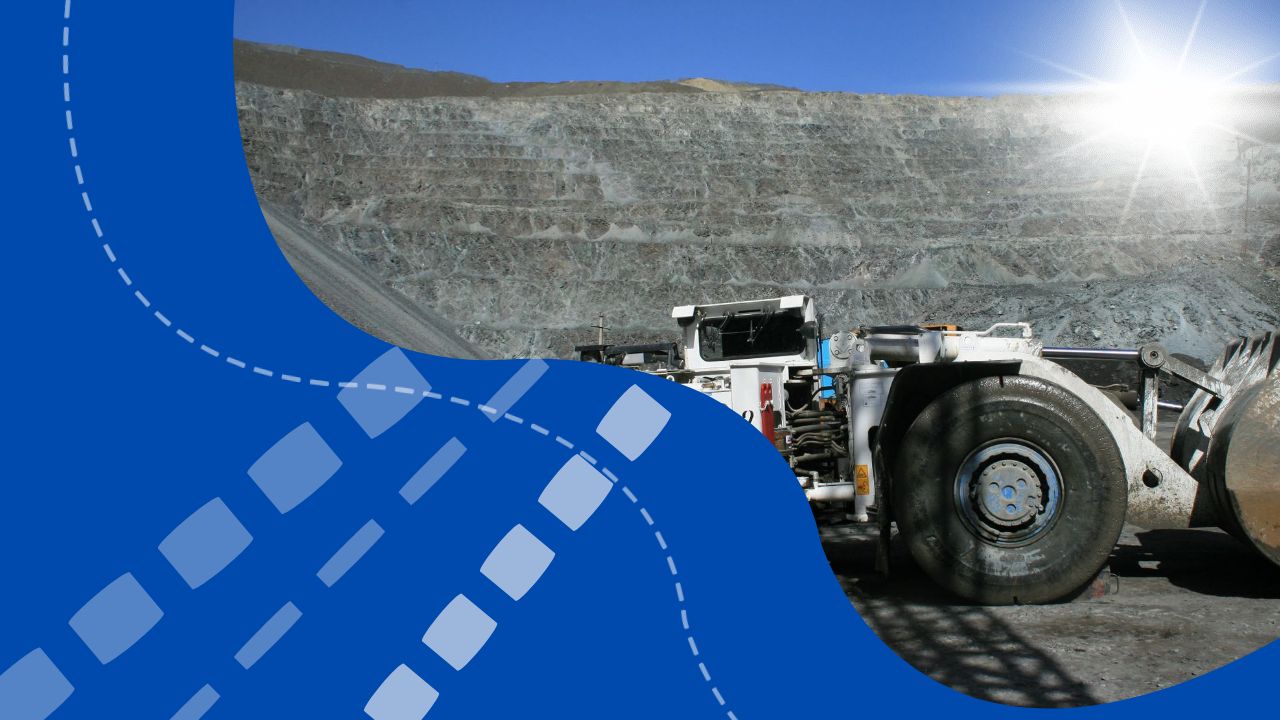
    Even if new mines were to be opened in the European Union today, experts in the French mining sector say it would be very difficult to achieve the EU objectives for extracting critical and strategic raw materials by 2030.

    Read the original French article here.

    To achieve its energy and climate goals, the European Union will need to electrify on a massive scale, which in turn, will require more raw materials for the manufacture of electricity-generating and storage equipment such as batteries, wind turbines and solar panels.

    To this end, the European Commission presented its proposal in mid-March for a Critical Raw Materials Act (CRMA), with a view to advancing the EU’s energy and ecological transition.

    Under it, EU countries must ensure that 10% of the extraction, 40% of the refining and 15% of the recycling of several dozen raw materials takes place on home turf by 2030.

    On top of that, the Commission proposes the EU should no longer be more than 65% dependent on a single non-EU country for a single raw material – a difficult task given to what extent the EU currently depends on imported minerals, notably from China, which accounts for up to 90% of the value chain for certain materials.

    Those targets have been at the centre of the debate ever since, with some lawmakers in the European Parliament opposed to their introduction and some EU countries like France and Germany prefering targets for individual minerals.

    “It would be absurd to set the same targets for cobalt, 80% of whose reserves are located in a single African country, as for lithium, for example, which can be mined in Europe,” explained French Industry Minister Roland Lescure.

    Unexplored subsoils

    The French mining industry also supports the idea of introducing sector-specific targets for individual raw materials, saying Europe “lacks sufficient production capacity and time to implement them” for certain metals listed in the CRMA, explained Christophe Poinssot, deputy director general of the French geological and mining research bureau.

    But beyond the difficulties of supplying certain minerals domestically, Poinssot also pointed to data gaps due to an unexplored geological potential in Europe.

    In France, “knowledge of subsoil resources is extremely patchy and covers only part of the country,” Poinssot said at a conference organised by the right-wing Les Républicains party in early July.

    “The inventory carried out 40 years ago was for a long time limited to the first 100 metres underground,” he explained.

    Resources in Europe’s subsoil could even be exported, the researcher also said.

    Norway, for example, recently discovered a phosphate deposit that could supply a considerable proportion of the EU’s needs. At the beginning of January, Sweden also announced the discovery a major deposit of rare earth oxides.

    Under these conditions, “we need to reinvest in learning more about our subsoil and reopening mines. To do this, we need to relaunch an inventory of the mineral resources present in all 27 EU member states,” Poinssot argues.