Website: Europe.com

  • RHI Magnesita takes another leap towards net-zero emissions

    RHI Magnesita takes another leap towards net-zero emissions

    This collaboration marks a significant milestone in RHI Magnesita’s journey towards achieving net-zero emissions. CMS, a pioneer in separation solutions for low carbon intensity processes, was introduced to RHI Magnesita through their participation in the Verbund X accelerator program in 2022, which fosters collaboration between established industry leaders and startups. “The Verbund X accelerator has been a tremendous experience and was an excellent way to meet industrial players who are taking practical steps for near-term decarbonization” says Erica Nemser, CEO of CMS.

    RHI Magnesita is the world’s leading producer of refractory materials which are used in all high-temperature industrial processes. As market leader, RHI Magnesita recognizes its ecological and economic responsibility to drive sustainability. Reducing CO2 emissions is therefore one of the company’s top priorities. A significant part of the company’s carbon emissions is released during the processing of raw materials. Decarbonizing the company therefore requires unprecedented innovation and technology.

    Andreas Drescher, Sustainable Technology and Decarbonization Expert at RHI Magnesita, explains, “Collaboration between leading industrial companies and start-ups is crucial to achieve the sustainable progress we are striving for at RHI Magnesita. As the world’s leading manufacturer of refractories, we see it as our responsibility to significantly drive sustainability. Reducing CO2 emissions is therefore one of our top priorities.”

    Pilot plant to be installed in Austria in 2023

    Following an intensive research and testing phase in 2022, RHI Magnesita will implement CMS’ cutting-edge Optiperm™ Carbon membrane technology in a field rig designed to capture process waste gases from one of its furnaces. The pilot plant is scheduled for commissioning in Q4 2023 and will operate at one of RHI Magnesita’s sites in Austria. This pilot project aims to verify the technology’s effectiveness in a real industrial environment and pave the way for subsequent phases, including larger-scale demonstrations.

    Andreas Drescher comments, “The decarbonization of our industry requires unprecedented innovation and investment. Therefore, RHI Magnesita announced at the beginning of 2021 its intention to invest €50 million in technology research and the construction of pilot plants. CMS is one of the projects realized as part of this ongoing investment. We are looking forward to the test results of the membrane carbon capture technology and are also excited about the prospect of sharing knowledge with other industrial partners to accelerate their path to achieving net zero emissions.”

    This partnership represents a significant step forward in the pursuit of sustainable industrial practices. The collaboration between CMS and RHI Magnesita will advance carbon capture in hard-to-abate industries and facilitate the transition towards a greener and more sustainable future.

    ABOUT COMPACT MEMBRANE SYSTEMS, INC. (CMS)

    Compact Membrane Systems (CMS) enable the clean energy transition and improve the efficiency of chemical processing through membrane solutions. Located in Newport, Delaware, CMS provides durable and effective separation solutions in the toughest environments. Founded in 1993, CMS has developed and produced membrane systems for use in transformers, wind turbines, marine systems, pharmaceutical manufacturing, and bulk gasoline storage, among other applications. CMS’ breakthrough Optiperm™ facilitated-transport technology has been demonstrated in the field several times, and most recently in an olefin-paraffin separation application at a Braskem site, and is now being tested in point-source carbon capture applications in hard-to-abate sectors. Manufacturing and development are performed at our site in Newport, Delaware. CMS’ team comprises of 20 employees with skills spanning across R&D, product development, systems modelling, business development, operations and management. CMS also has a handful of advisors with decades of experience in the oil & gas and membrane industries. For more information visit www.compactmembrane.com.
  • Moratorium on the open-pit mine in the Polish-German-Czech border region of Turow reapealed

    Moratorium on the open-pit mine in the Polish-German-Czech border region of Turow reapealed

    A decision by Poland’s Supreme Administrative Court to repeal a moratorium on the open-pit mine in the Polish-German-Czech border region of Turow has irked policymakers from the neighbouring eastern German state Saxony. Anna Cavazzini, member of the EU Parliament for the Green Party in Saxony, criticised the court for overturning an interim junction by a local Polish court, which in late May had ordered to stop mining at the site due to negative impacts on building stability in nearby regions in Germany and Czechia. Cavazzini said the decision was “not a good sign” for cross-border relations after the German town of Zittau and a Czech NGO had sued the mine’s operators. In contrast, Polish prime minister Mateusz Morawiecki expressed joy at the supreme court’s decision, saying that Poland has “not allowed themselves to be blackmailed by eco-terrorists from the West, particularly those from Germany”, reports the newspaper taz. The court had made the decision on the grounds that the Polish population has a right to a steady supply of energy.

    Greenpeace subsidiaries in Germany and Czechia, as well as Zittau authorities, litigated against the mine, arguing the consequences on Germany and the Czech Republic have not been properly considered. Concerns include noise pollution and a reduction of the groundwater level could result in damaging buildings. In 2021, the European Court of Justice temporarily ordered the mine to cease digging, which Poland ignored, reported German public broadcaster ARD. Morawiecki said Poland will not allow the mine to be closed and his government will do everything to ensure it can function as planned until 2044. Cavazzini, on the other hand, said the area could be a leader for Europe as a cross-border example of phasing out coal. Germany aims to phase-out the fossil fuel by 2038, though the coalition government hopes to bring that forward to 2030.

  • Urban mining is putting Poland on the path to a greener future

    Urban mining is putting Poland on the path to a greener future

    A paradigm shift is underway in Poland. Traditionally one of the European Union’s heaviest polluters and lowest recyclers, Poland now has the second-highest increase in recycling rates among EU countries over the last decade— new data shows. This is down in part to the work of Pawel Jarski, CEO and Founder of Elemental Holding, and his team. The company’s work is repositioning Poland at the forefront of Europe’s circular economy, a sector that puts eliminating pollution as one of its foundation principles.

    Elemental’s hub of operations lies 40km southwest of Poland’s capital Warsaw. The site is one of energy and contrast. A modern office of floor-to-ceiling glass sits adjacent to a bustling urban mining operation processing electronic waste. A hum of workers busily sort through metal, plastic and cables from massive bags. An assembly line dismantles aging refrigerators, methodically stripping away layers to reveal valuable raw materials. Amidst the ordered chaos, trucks unload circuit boards, adding to the growing heaps.

    It is this well-coordinated mix of hands-on labor and mechanical processing that has powered Elemental’s growth. Founded in Poland in 2010, the company expand into an urban mining and recycling trailblazer with a footprint extending across 15 nations, spanning three continents: Europe, Asia, and North America. They are at the forefront of a new industry dedicated to extracting value from the metal components in disposed electronics and other waste – urban mining.

    IFC is investing $90 million to ramp up the firm’s ability to extract valuable materials from electronic waste while also expanding the firm’s scope to refine them for resale and reuse. At its most fundamental, urban mining seeks to harness electronic materials of untapped and overlooked value – the aluminum, cobalt, and gold in your old mobile phones for example – and transform them back into raw valuable resources. This can quickly add up. A new study in Switzerland puts an estimated $10 million worth of embedded gold in the country’s seven million unused phones. The US throws out $60 million in gold and silver contained in used phones every year based on e-waste disposal rates. While back in 2016, researchers at United Nations University were already estimating the raw materials contained in e-waste to be worth roughly $61 billion on a global scale.

    The financial backing will pave the way for new metal recycling and refining facilities in Poland. Elemental is building one of its most innovative and ambitious projects – a facility to recycle spent lithium-ion batteries from electric vehicles and other products – in the city of Zawiercie in southern Poland, while also employing onsite solar generation and sustainable water management.

    Transforming waste into valuable metals ripe for reuse is challenging. The process of recycling electronic scrap and lithium-ion batteries into valuable resources is still crude and does not always realize the potential recyclable amount. But Elemental’s track record and ambitious vision – environmentally sound and socially responsible mining that can catalyze long-term economic growth – goes beyond driving sustainable growth for one company. It illustrates a viable blueprint for how large businesses can integrate circular economy principles into their operations for the most impact. And it underpins the essence of circular waste management – where every waste stream is a valuable resource waiting to be harnessed.

  • State aid: Commission approves amendments to Polish scheme to support closure of coal mines

    State aid: Commission approves amendments to Polish scheme to support closure of coal mines

    The scheme was originally approved by the European Commission in November 2016 (SA.41161), after which amendments were approved in February 2018 (SA.46891) and in July 2019 (SA.52832), and is due to expire by the end of 2023. Since 2019, the aim of the scheme has been limited to cover only the exceptional social and environmental costs resulting from the closure of uncompetitive coal mines that ceased operations by the end of 2018, such as the costs of social welfare benefits or early retirement, or costs incurred in safety or in site decommissioning and rehabilitation.

    The amendments to this scheme that were approved today include

    • its prolongation until the end of 2027
    • a budget increase by €1 billion (PLN 5 billion) to cover exceptional costs, bringing the overall budget to €3.7 billion (PLN 17 billion)
    • the inclusion of two additional mines that ceased coal production in 2020 (Ruch Jastrzębie III) and 2021 (Ruch Pokój II)

    The Commission assessed the amended scheme under EU State aid rules, and in particular Council Decision 2010/787/EU on State aid to facilitate the closure of uncompetitive coal mines. The Commission found that the amended scheme continues to be necessary and appropriate to support the closure process of mines that ceased operations, by (i) providing financial support to workers who have lost, or will lose, their jobs due to the closure of the mines, and (ii) helping to secure mine shafts and decommission mine infrastructure, repair damage to the environment caused by mining and re-cultivate land after the mine closures. Furthermore, the Commission found that the aid amounts do not exceed the exceptional social and environmental costs incurred. On this basis, the Commission approved the amended Polish scheme under EU State aid rules.

    The non-confidential version of the decision will be made available under case number SA.100533 in the State Aid Register on the Commission’s competition website once any confidentiality issues have been resolved.

  • EU already late for its 2030 raw materials targets, French experts warn

    EU already late for its 2030 raw materials targets, French experts warn

    To achieve its energy and climate goals, the European Union will need to electrify on a massive scale, which in turn, will require more raw materials for the manufacture of electricity-generating and storage equipment such as batteries, wind turbines and solar panels.

    To this end, the European Commission presented its proposal in mid-March for a Critical Raw Materials Act (CRMA), with a view to advancing the EU’s energy and ecological transition.

    Under it, EU countries must ensure that 10% of the extraction, 40% of the refining and 15% of the recycling of several dozen raw materials takes place on home turf by 2030.

    On top of that, the Commission proposes the EU should no longer be more than 65% dependent on a single non-EU country for a single raw material – a difficult task given to what extent the EU currently depends on imported minerals, notably from China, which accounts for up to 90% of the value chain for certain materials.

    Those targets have been at the centre of the debate ever since, with some lawmakers in the European Parliament opposed to their introduction and some EU countries like France and Germany prefering targets for individual minerals.

    “It would be absurd to set the same targets for cobalt, 80% of whose reserves are located in a single African country, as for lithium, for example, which can be mined in Europe,” explained French Industry Minister Roland Lescure.

    Unexplored subsoils

    The French mining industry also supports the idea of introducing sector-specific targets for individual raw materials, saying Europe “lacks sufficient production capacity and time to implement them” for certain metals listed in the CRMA, explained Christophe Poinssot, deputy director general of the French geological and mining research bureau.

    But beyond the difficulties of supplying certain minerals domestically, Poinssot also pointed to data gaps due to an unexplored geological potential in Europe.

    In France, “knowledge of subsoil resources is extremely patchy and covers only part of the country,” Poinssot said at a conference organised by the right-wing Les Républicains party in early July.

    “The inventory carried out 40 years ago was for a long time limited to the first 100 metres underground,” he explained.

    Resources in Europe’s subsoil could even be exported, the researcher also said.

    Norway, for example, recently discovered a phosphate deposit that could supply a considerable proportion of the EU’s needs. At the beginning of January, Sweden also announced the discovery a major deposit of rare earth oxides.

    Under these conditions, “we need to reinvest in learning more about our subsoil and reopening mines. To do this, we need to relaunch an inventory of the mineral resources present in all 27 EU member states,” Poinssot argues.

    Critical Raw Materials: EU countries push for more ambitious targets

    In a fresh agreement on the Critical Raw Materials Act (CRMA), EU countries want to further increase targets for domestic processing of strategic raw materials, despite public commitments that processing should be done in resource-rich partner countries.

    New mines take time

    However, new mining projects take many years to come to fruition, said Poinssot, who pointed to the average 17 years it takes to bring a mine from exploration into production, globally.

    “We need to start working now on developing mining projects,” he said. Otherwise, “a certain number of trajectories and scenarios desired by the EU will be constrained by our extraction capacities,” he warned.

    The French Atomic Energy Commission, a key player in French industrial and technological research, also shares this observation, saying EU objectives are “not very credible” because of the intrinsic delays in opening new mines.

    Between now and 2030, “most of the extraction capacity that will be available in the EU […] depends on projects that are already under development,” explains the French body in its opinion on the draft CRMA.

    To address this, the French research energy body suggests that the Commission “define progressively increasing targets for the share of extraction in the EU over different time horizons”.

    In short, without opening a mine now, the EU is already behind its targets.

    “The Commission is a little too optimistic about the speed with which we will be able to deploy industrial solutions to achieve these targets,” Bertrand Boucher, the CEA’s representative to the European Commission, told EURACTIV France.

    Speeding up

    Despite these caveats, the EU has every interest in speeding up mining projects since the transformation and recycling parts of the value chain will remain “permanently insufficient to meet demand,” CEA added.

    Even if all available resources were to be extracted, “more will be needed” because of the very high demand, Bouchet explained.

    For instance, “there won’t be enough resources worldwide” to meet the electric mobility targets adopted by all countries globally, Poinssot explained, adding that “it’s not a question of resources but of timing”.

    Jean-Dominique Senard, Chairman of French carmaker Renault, painted the situation in doomsday terms, saying that “the war of the future will be the war of metals”.

    This means that CRMA targets need to match those of the Net-Zero Industry Act (NZIA), as advocated by the European Association of Research and Technology Organisations (EARTO), of which CEA is a member.

  • A look at the projects being brought forward by Great British Nuclear

    A look at the projects being brought forward by Great British Nuclear

    SMRs

    The launch of GBN saw the opening of registration for companies to participate in a competition to secure funding support to develop their products. This is mainly focused around developing small modular reactors (SMRs) in the UK. As the government explains: “Unlike conventional reactors that are built on site, SMRs are smaller, can be made in factories and could transform how power stations are built by making construction faster, and less expensive.”

    Rolls-Royce is the most advanced in developing SMRs as the leader of the UK SMR consortium, which features Atkins, Bam Nuttall, Jacobs, Laing O’Rourke, National Nuclear Laboratory, Nuclear Advanced Manufacturing Research Centre, TWI and Assystem.

    Its design for a 470MW SMR passed the first assessment hurdle in April this year. It has now moved on to Step 2 of the generic design assessment process, which is expected to take 16 months.

    Rolls-Royce is acting quickly though, having released a shortlist of three potential locations for its heavy pressure vessels factory, which will produce components for a fleet of SMRs. It has also met with stakeholders at potential sites for its first SMR in Oldbury and Berkeley. It is aiming to power up the first SMR in 2029 or early 2030s.

    Meanwhile, another UK-based nuclear start up called Newcleo is working on its own SMR design that would use nuclear waste. It is currently seeking to raise up to £1bn to fund its delivery roadmap for its SMR, known as the Mini 30MWe LFR that will be deployed in France. This will then be followed by the 200Mwe commercial unit to be deployed in the UK two years later.

    Ultra Safe Nuclear Corporation’s micro modular reactor

    GBN has granted £22.5M to Ultra Safe Nuclear Corporation (USNC) for the development of its micro modular reactor (MMR), a type of advanced modular reactor (AMR) suited to UK industrial demands including hydrogen and sustainable aviation fuel production.

    USNC has match-funded the £22.5M to enable the second phase of work toward building a UK demonstrator. It has appointed Jacobs to support the design and development of the MMR.

    Unlike other nuclear reactors, the MMR uses no water and has no need for an electrical grid or infrastructure support. It is usable in extreme climates.

    The MMR’s fully ceramic micro-encapsulated fuel provides inherent reactor safety. Industry-standard TRISO particles, which contain the radioactive byproducts of fission within layered ceramic coatings, are encased within a fully dense silicon carbide matrix. This combination provides an extremely rugged and stable fuel with extraordinary high temperature stability.

    The Seattle-based company has plans to deploy its MMRs in Poland, Finland, Canada and the USA. It has demonstration projects underway at Canadian Nuclear Laboratories and at the University of Illinios.

    The demonstration units are scheduled for first nuclear power in 2026.

    National Nuclear Laboratory’s next generation high temperature reactor

    GBN has committed £15M to the National Nuclear Laboratory (NNL) in Warrington. It is working with the Japan Atomic Energy Authority to accelerate the development of a high temperature reactor, which has already been successful in Japan.

    The next generation high temperature gas cooled reactors have now reached design phase. This reactor delivers much higher outlet temperatures than existing technology, allowing the heat to be used directly to decarbonise industrial processes. It will enable the large-scale production of hydrogen via electrochemical or thermochemical processes.

    National Nuclear Laboratory’s sovereign coated particle fuel capability

    High-temperature reactors use coated particle fuel and GBN has committed £16M to the NNL in Preston to continue developing its sovereign coated particle fuel capability, a critical enabler for the UK’s future energy security.

    The NNL recently celebrated the casting of active fuel kernels at scale. These kernels form the tiny particles of uranium, that are subsequently coated in four layers of ceramic and carbon creating coated particle fuel. Often referred to as ‘the most robust nuclear fuel’, each coated particle is roughly the size of a poppy seed – with the uranium kernel housed inside its own miniature container vessel.

    New nuclear fuels

    GBN’s Nuclear Fuel Fund is forking out £22.3M to enable eight projects to develop new fuel production and manufacturing capabilities in the UK.

    The biggest sum has gone to Springfields Fuels in Preston, part of the Westinghouse Group, which has received £10.5M. Nuclear fuel fabrication services have taken place at the site since the mid-1940s and today Springfield Fuels designs, manufactures and delivers fuel for nuclear plants. This includes the manufacture of oxide fuels for Advanced Gas-cooled and Light Water Reactors, as well as intermediate fuel products, such as powders, granules and pellets.

    A £9.56M sum has been committed to Urenco UK in Chester, a specialist in the production of advanced fuels for nuclear reactors of tomorrow. The funds will be used for the concept design of plants and processes supporting the further development of advanced fuels. It will also look at enriching uranium to higher levels to allow for reactors to run for longer between refuelling outages.

    MoltexFLEX, a UK molten salt reactor (MSR) developer, received £1.3M. MSRs are a type of AMR that use separate molten salts as a coolant and fuel, leading to intrinsic safety compared with conventional fuels. The funds from the Nuclear Fuel Fund will be used to develop detailed technical plans for commercial-scale delivery of its low-enriched uranium fuel salt. MoltexFLEX has developed significant proprietary data on fuel design and is expecting to partner with a major fuel supplier to establish a pathway to commercial production.

    Nuclear Transport Solutions (NTS) is the recipient of over £1M for the development of a new transport package that will support a new generation of nuclear reactors. The fuel – High-Assay, Low-Enriched Uranium (HALEU) – is more energy dense and requires less fuel than current nuclear power production. HALEU requires innovative transportation solutions to ensure it can be moved safely and securely to new reactor. NTS’ new package will be versatile to allow the transport of HALEU in multiple forms, such as powder or fuel elements.

    Advanced Nuclear Business Development

    As part of the funding package announced in conjunction with the launch of GBN, the Department of Energy Security and Net Zero (DESNZ) committed up to £77.1M of funding for companies to accelerate advanced nuclear business development in the UK. This will help and support advanced nuclear designs to enter UK regulation and maximise the chance of SMRs and AMRs being built in the next Parliament.

    Hinkley Point C and Sizewell C

    While no new funds were specifically designated to the development of the UK’s in-progress large-scale nuclear power plants, the government’s announcement of GBN mentioned that it “remains committed” to them.

    Last year the government committed £700M to the development of Sizewell C, a new 3,200MWe nuclear plant in Suffolk that is currently in the design phase. Sizewell C managing director Julia Pyke has said that the launch of GBN is “another big vote of confidence in Sizewell C”.

    Hinkley Point C is an under-construction 3,200MWe nuclear plant in Somerset. Its first nuclear reactor arrived on site in February and it is nearing the completion of its undersea work. However, it has faced numerous construction setbacks and is now not expected to power up until the mid 2030s.

  • Russians to shut down nine more mines in Luhansk Oblast

    Russians to shut down nine more mines in Luhansk Oblast

    Source: Luhansk Oblast Military Administration on Facebook.

    Quote: “The occupiers have declared another nine coal-mining businesses in Luhansk Oblast unpromising,” the message reads.

    The Luhansk Oblast Military Administration adds that the businesses will be transferred to the Mine Restructuring Department for further liquidation. The personnel needed for the technical maintenance of these mines will also be transferred there.

    In addition, the workers will face a significant reduction in wages and subsequent layoffs, the administration emphasises.

    Background:

    • In the temporarily occupied territories of Luhansk Oblast, Russian invaders were conducting raids to remove the hryvnia from circulation.
    • The occupiers in Luhansk Oblast prepared a list of mines that they considered unprofitable; from some mines, the Russians took out equipment every day, and 700 miners were offered to look for new work.
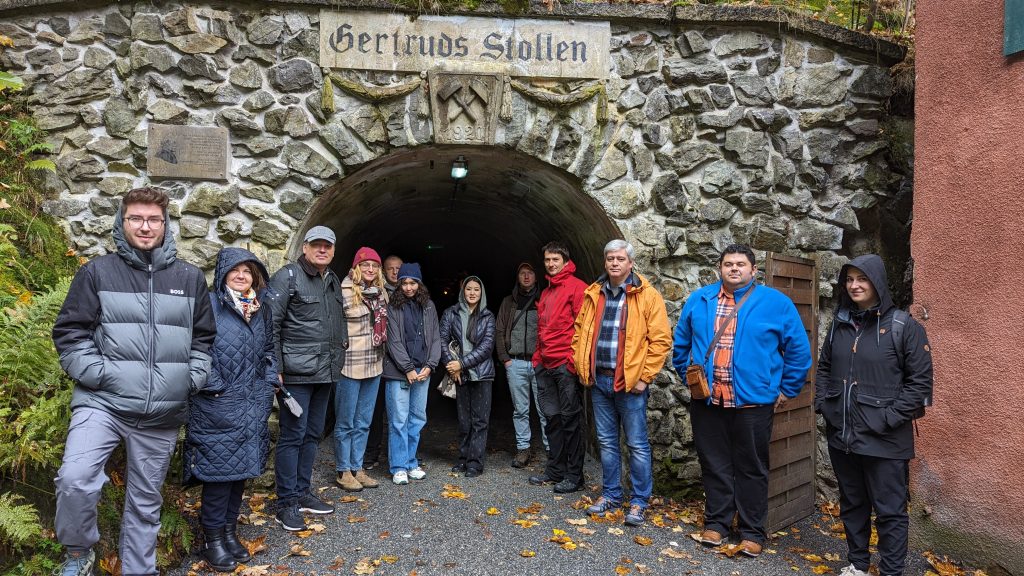
  • Złoty Stok historic mine, Poland

    Złoty Stok historic mine, Poland

    Visit to Złoty Stok Medieval Gold Mine near Wroclaw, Poland

    Photos>>>

    Date: 19 October 2023

    Location:  Situated approximately 100 kilometres south of Wroclaw, it lies close to the Czech border in Lower Silesia.

    Highlights:

    • This historic mine dates back over 1000 years and has been an important site for gold mining since medieval times.
    • Today, it serves as a popular tourist attraction offering guided tours through its underground tunnels and a museum exhibition showcasing the history and techniques of gold mining.
    • Tourists can explore the mine by foot or boat. The mine also offers educational programs for groups. Other attractions include a medieval village and a restaurant.

    One of the key objectives of the MINEX Europe Forum is to share best practices in mineral resources management, mining and post-mining reconciliation and redevelopment of mining areas. The MINEX Europe 2023 Forum delegates will have an opportunity to visit one of the most prominent cases of the repurposing of the old mine turned into a grand tourist attraction in Poland which has in 2022 won the prestigious European Heritage Award.

    Visit to a Medieval Gold Mining Village at Złoty Stok became an unforgettable experience showcasing post-mining reconciliation and redevelopment of mining areas, turning an abandoned mine town into a thriving tourist attraction and Polish-German heritage centre. 

    Złoty Stok is the oldest mining and metallurgical centre in Poland. Arsenic and gold deposits were mined in these areas as early as the 13th century. Mining activity flourished in the 16th century. In the golden age of mining, there could be as many as 150 small and larger mines in the area In 1962, the mine in Złoty Stok ceased its activity, and later it was completely flooded. It is estimated that during 700 years of exploitation, 16 tonnes of pure gold were obtained from local deposits.

    On May 28, 1996, the Underground Tourist Route “Gold Mine” was launched. Extremely interesting tunnels were made available: “Gertuda Adit”, and “Black Upper Adit” with the only underground waterfall in Poland (8 m high) and the newest section, open to the public since 2008, the Lower Black Adit.

  • Zinnwald Lithium is granted additional exploration licence

    Zinnwald Lithium is granted additional exploration licence

    The 5-year exploration licence was issued to Deutsche Lithium by the Saxony State Mining Authority (Sächsisches Oberbergamt) in accordance with §7 of the German Mining Act (Bundesberggesetz). As is standard practise in Germany, the granting of the licence is subject to there being confirmation of no valid objection to its granting and the Company anticipates this confirmation being received by end-July 2023.

    The Bärenstein Licence lies adjacent to, and directly to the north-east of, the Altenberg-DL licence and almost completely encloses the Falkenhain licence, both of which the company already holds (please see overview map above). By being granted this exploration licence, the Company has closed the gap between Falkenhain and Altenberg-DL licences, which also contains valuable geo-logical targets and areas for planned future development of the Zinnwald mining operation.

    The lithium and tin endowment of the area is tied to the presence of granitic intrusions of certain geological ages, as well as structural corridors that have carried mineralising fluids. Utilising geological knowledge Zinnwald Lithium has gained from working in the immediate area, the Company is planning to undertake further greenfield exploration on the Bärenstein Licence and expand its resource base locally. The ‘Sachsenhöhe’ area has been identified as an especially promising exploration target, as it is known for historic mining activities for tin and silver since the 15th century.

    Furthermore, the Company continues to investigate the broader Bärenstein area as a location for future mining and processing operations. To also hold the mineral rights for these areas has therefore been a priority to maintain planning flexibility as well as legal certainty.

    The Company’s key focus remains the development of its principal asset, the 100% owned advanced Zinnwald Lithium Project in Germany, where it is progressing the work for a new Bankable Feasibility Study. By consolidating mineral rights in the Zinnwald area, the Company maintains the aim to become an important supplier to Europe’s fast-growing lithium sector. One of the Company’s primary immediate goals is the completion of its on-going infill drilling campaign on the Zinnwald Licence to support the delivery of an updated MRE in 4Q23. To date, the Company has completed 61 drill holes totalling more than 20 000m of drill core.

    Deutsche Lithium plans to investigate the Bärenstein Licence over the next five years and to assess its potential to enhance the Project.

  • Euromines Advocates for Responsible and Sustainable Mining at Renew CRMA Event

    Euromines Advocates for Responsible and Sustainable Mining at Renew CRMA Event

    Euromines, the European Association of Mining Industries, Metal Ores & Industrial Minerals, emphasised the importance of responsible and sustainable mining, as thecornerstone of achieving Europe’s strategic autonomy in critical raw materials and fostering a competitive transformation aligned with the Green Deal.

    The Importance of Mining in the Green Deal

    Euromines presented three critical points during the event: firstly, the importance of the mining industry in the Green Deal’s industrial transition. As the demand for metals and minerals for green technologies increases, secure access and supply become essential, necessitating more mining activities within the EU.

    Responsible Mining Practices and Sustainability

    Secondly, Euromines called for an honest debate about responsible mining practices, emphasising the need to distinguish between responsible mining in the EU and practices in third countries with weaker environmental standards. To achieve the EU’s green transition, it is vital to recognize and elevate the sustainability performance of EU mining.

    Policy Coherence and Competitive Transformation in Mining

    Thirdly, Euromines urged to support the mining sector in reducing its environmental footprint. While the industry invests heavily in sustainability measures, it requires regulatory recognition and enabling conditions to do more and better. Regulatory coherence and a clear interlinkage between the Net Zero Industry Act, Critical Raw Materials Act, decarbonization, and environmental legislation are crucial for the predictability and viability of mining projects.

    Challenges Faced by the EU Mining Industry

    To ensure the success of the Green Deal, Euromines called for a responsible raw materials policy framework that balances the EU raw materials security of supply, global net-positive impact and environmental protection. The emphasis should be given to resolving conflicting objectives and provide incentives for responsible mining practices.

    Importantly, all speakers agreed with the need to address the European approach to permitting industrial projects. While environmental protection remains the guiding principle for any consideration, there is a lot to improve in the system including on digitalisation, providing one-stop-shop, and certainly on timing.

    Euromines remains committed to fostering responsible and sustainable mining practices and looks forward to continued collaboration with policymakers and stakeholders in shaping Europe’s green transformation.