Website: Europe.com

  • BMW Built Its Largest And Newest Test Site Inside An Old Mine

    BMW Built Its Largest And Newest Test Site Inside An Old Mine

    • BMW inaugurates Future Mobility Development Center (FMDC) in Sokolov, Czech Republic, aimed at testing its autonomous tech.
    • The 1482-acre site contains a variety of roads and traffic patterns, allowing the automaker to simulate a variety of real-world environments.
    • BMW is expected to offer a hands-off, eyes-off Level 3 system in its vehicles starting in 2025, joining other automakers that have also invested in such systems.

    The age of autonomous vehicles hasn’t yet dawned, but its impending arrival has already brought about significant changes to how automakers test cars.

    Even the development of advanced driver assistance systems (ADAS) has altered the way cars are tested, employing all types of digital environments to put hundreds of thousands of virtual miles on cars’ systems to validate them.

    The Real World

    Despite the growth of companies catering such simulation services, testing in physical environments is still crucial as more Level 3 and Level 4 systems approach market readiness.

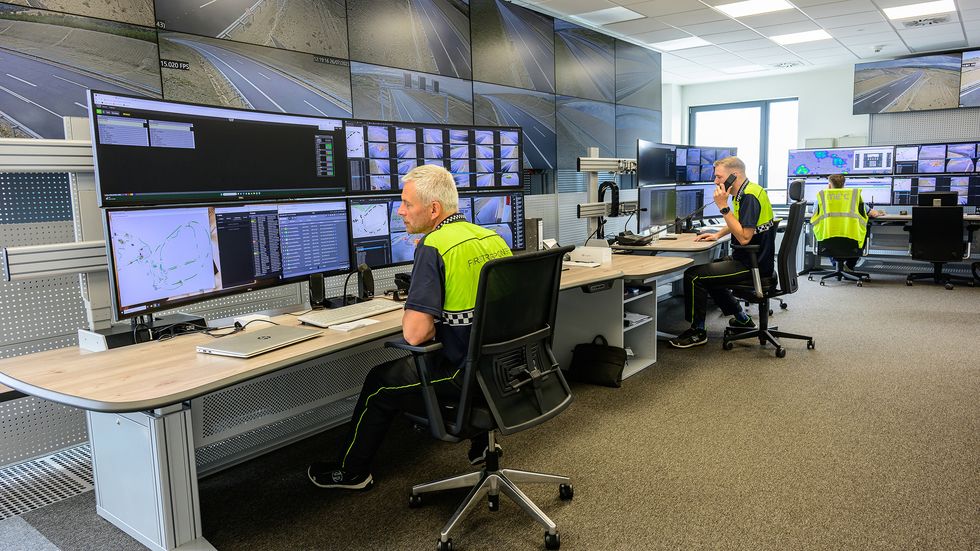
    Just a few days ago BMW opened its largest test site in the world, and it’s aimed primarily at testing autonomous vehicles.

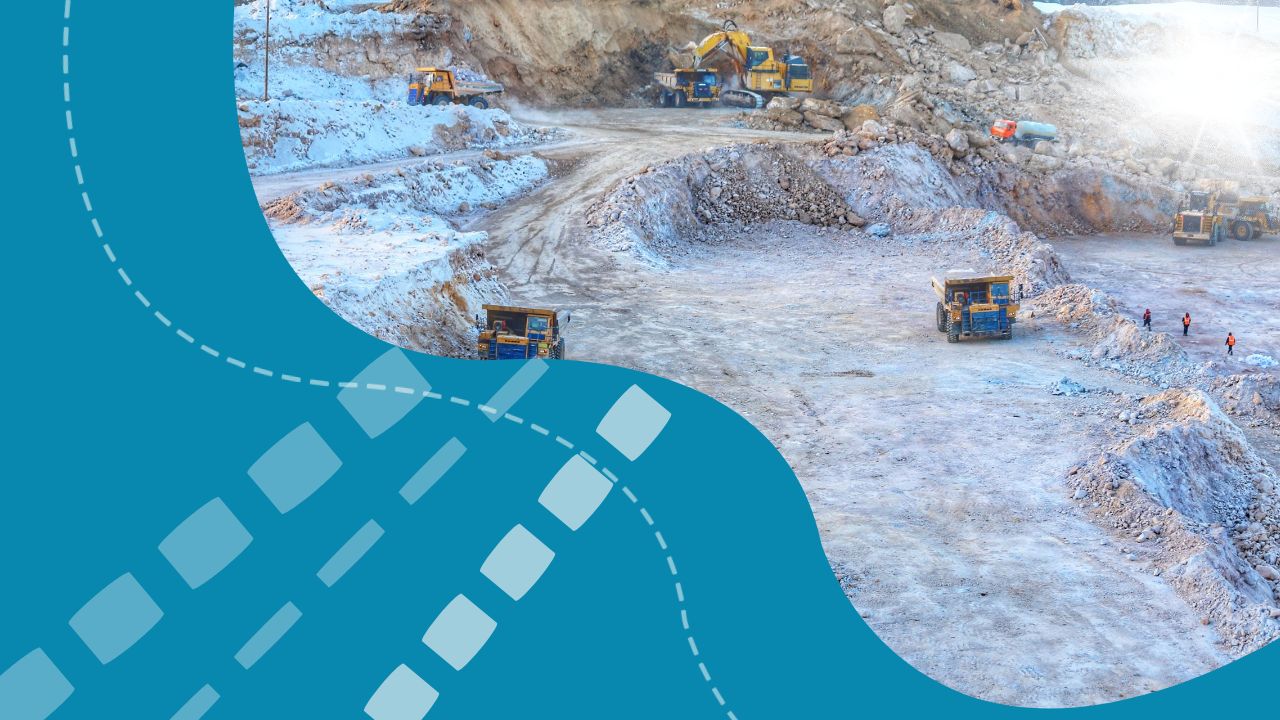
    The new site, dubbed Future Mobility Development Center (FMDC), is located in Sokolov, Czech Republic, and it’s been built in a former surface mine. The new center, covering some 1482 acres, contains a variety of simulated locations including city, freeway, country roads, and a variety of street and intersection types.

    “With our new Future Mobility Development Center, we have created a one-of-a-kind test site, designed exclusively for the highly demanding testing of automated driving and parking up to level 4,” said Frank Weber, BMW Board Member for Development.

    bmw future mobility development center fmdc

    The Future Mobility Development Center (FMDC) is designed to test autonomous vehicles up to SAE Level 4, which is how driverless but geofenced robotaxis are designated.

    UWE FISCHER

    Eco-Friendly

    The automaker did not neglect environmental aspects in developing a site this large, using 2.2 million cubic meters of soil that had already been excavated during mining operations to construct the site. The test track also features a water management system that collects rainwater to irrigate the track.

    “The special thing: We can run our test modules one after the other without stopping. This makes our testing as realistic, reliable, and customer-oriented as possible,” Weber added.

    When it comes to autonomous tech in the pipeline, BMW is known to be working on Level 3 tech along with autonomous developer Arriver, and chipmaker Qualcomm.

    The automaker is expected to offer a hands-off, eyes-off Level 3 system in at least some of its vehicles starting in 2025, following the lead of other automakers like Honda, Volvo, and Mercedes-Benz in developing Level 3 systems. Specifically, BMW is expected to use Qualcomm’s Snapdragon Ride Vision system-on-a-chip (SoC), as well as Arriver’s Computer Vision tech. And Sokolov is where these systems will be tested.

  • Uganda Seeks Serbian Investment to Develop Raw Materials

    Uganda Seeks Serbian Investment to Develop Raw Materials

    President Yoweri Museveni of Uganda has reached out to his Serbian counterpart, President Aleksandar Vucic, seeking support to advance Uganda’s economic agenda.

    During the launch of the Uganda Trade Hub in Belgrade, President Museveni urged for collaboration in adding value to Uganda’s raw materials, with the goal of increasing revenue for the country.

    “We need to add value to our agricultural products to enhance revenue generation for Uganda. I call on the Serbian Government to collaborate with us in critical sectors.” stated President Museveni.

    In a round table meeting with Serbian businessmen and women, President Museveni highlighted the importance of adding value to Uganda’s agricultural products to ensure higher returns. He urged the Serbian Government to join hands with Uganda in crucial sectors to achieve this objective.

    In response to President Museveni’s appeal, President Vucic pledged support by ensuring direct flights between Belgrade and Entebbe proposing that Serbian Career Air Serbia would fly directly to Entebbe via a code share with Uganda Airlines, aiming to enhance connectivity and reduce logistical costs for exporters. To materialize this agenda, President Vucic committed to sending a Serbian delegation to Uganda in August.

    “Serbian Career Air Serbia will fly directly to Entebbe via a code share with Uganda Airlines, strengthening connectivity and reducing logistical costs for exporters.” Stated President Vucic.

    The waterfront in Belgrade witnessed the official launch of the Uganda Connect Trade Hub, which is expected to play a significant role in marketing Ugandan products to the world.

    The hub, fully stocked with Ugandan products, is manned by Ugandan students who will coordinate bulk orders and serve as ambassadors for the nation’s exports.

    Board member of the Private Sector Foundation Uganda (PSFU), Badru Ntege, expressed his enthusiasm about the trade hub.

    Chairman of the Presidential Advisory Committee on Exports and Development, Odrek Rwabwogo, described the trade hub as the first step toward a bigger vision, representing a disruptive force in the traditional flow of trade. This venture is set to stimulate and invigorate Uganda’s export sector significantly.

    “The trade hub marks the first step into a bigger picture, disrupting the usual flow of trade,” noted Rwabwogo.

    As the Uganda flag flew high in Belgrade, local producers back home were encouraged to collaborate and establish consortiums that meet global standards, essential for accessing this new market. The strategic partnership with Serbia holds immense potential to drive Uganda’s socio-economic transformation.

    With the trade hub now operational and the commitment of the Serbian Government to support Uganda’s endeavors, the stage is set for a dynamic surge in Uganda’s exports, paving the way for increased revenue and economic prosperity in the East African nation.

  • Montenegro’s Rudnik Uglja net profit rises in H1

    Montenegro’s Rudnik Uglja net profit rises in H1

    August 1 (SeeNews) – Montenegro’s coal mining company Rudnik Uglja [MNG:RUPV] said on Friday that its net profit soared to 1.1 million euro ($1.2 million) in the first half of 2023 from 53,770 euro in the like period of last year.

    Rudnik Uglja’s revenue rose to 26.9 million euro from 20.5 million euro, while operating costs grew 19.5% to 14.1 million euro, Rudnik Uglja said in an interim financial statement filed with the Montenegro Stock Exchange on Monday.

    Following are details of Rudnik Uglja’s financial performance (in millions of euro):

    H1 ’23 H1 ’22
    Operating costs 14.109 11.787
    Revenue 26.857 20.472
    Net profit 1.130 0.530

    $ = 0.9112 euro

  • German companies in Hungary now face hostile takeovers from the Orbán Government

    German companies in Hungary now face hostile takeovers from the Orbán Government

    German companies are sounding the alarm: the expropriation of foreign companies in Hungary is becoming frequent. This is the thrust of a new exposé from the newspaper Frankfurter Rundschau. “The unbelievable is happening, right in the middle of the EU. Foreign companies are increasingly complaining about massive violations of the law by the [Hungarian] authorities,” it states.

    The newspaper claims that more and more multinationals in Hungary are reporting a political system geared for “legalised” theft and hostile takeover. More specifically, it speaks of disproportionately high “special taxes” affecting non-Hungarian companies only; of legal or logistical blockages preventing said companies from growing; of price fixing; and, quite remarkably, of arbitrary raids on the homes of employees of foreign companies, as issued by public prosecutors.

    Frankfurter Rundschau gives one example in the form of Heidelberg Materials, a German company that started selling cement in Hungary in the 1990s. In 2022, however, the group received a takeover offer from the Orbán Government, which it rejected. In return, a 90% mining tax was imposed on Heidelberg Materials. Now the Hungarian subsidiary is making a loss. Moreover, the prices for cement products are now more or less set by the state. How long the company can keep going is unclear. “But we are ready to fight,” a company manager told Frankfurter Rundschau.

    “Construction, telecommunication, energy, transportation and food trade industry are pressured the most by [Viktor Orbán],” says Edit Zgut, vice-chair of Amnesty International Hungary, whose recent research paper elaborates on this process in great detail. “Stakeholders speak anonymously about this, or decline to comment due to fear of government retaliation. Intimidation and its chilling effect is the linchpin of the regime.

    “[What is happening now] indicates a wind of change in the operation of the regime,” she adds. “While Germany is Hungary’s most important trade partner, Orbán has pushed for forced nationalisation since Covid-19, saying that the key economic sectors have to be in Hungarian hands. One of the first victims was the Heidelberg Materials.”

    Ironically, it was German and Austrian foreign investors that directly and indirectly helped Orbán decimate Hungary’s free press, as reported by Investment Monitor. But now the ‘illiberal democracy’, as Orbán proudly self-identifies, appears to be coming for them. Meanwhile, it has now been more than eight years in which German automotive companies in Hungary have turned a blind eye to Orbán’s actions (while gaining large tax benefits via opaque agreements).

    Frankfurter Rundschau’s allegations offer further evidence of the manner in which the EU, via Hungary, is being undermined. “The Orbán regime becomes more ideological, predatorial, by the day,” says Zgut. “The European Commission and Council have to move faster and more efficiently to protect the integrity of the common market.”

  • EU sees ‘no immediate risks’ if Niger cuts uranium supplies

    EU sees ‘no immediate risks’ if Niger cuts uranium supplies

    BRUSSELS, Aug 1 (Reuters) – EU nuclear agency Euratom said on Tuesday it saw no immediate risk to nuclear power production in Europe should Niger cut its deliveries of uranium.

    Euratom told Reuters that Niger – a West African country where a junta seized power last week – was the second-largest supplier of natural uranium to the European Union last year.

    It said utilities in the bloc had enough uranium inventories to fuel its nuclear power reactors for three years.

    “If imports from Niger are being cut, there are no immediate risks to the security of nuclear power production in the short term,” said Euratom.

    France – a leading nuclear power producer in Europe and Niger’s former colonial power – said on Tuesday it would evacuate French and European citizens after the overthrow of the country’s democratically elected government.

    The EU’s executive European Commission also said the 27-nation bloc had “sufficient inventories of uranium to mitigate any short-term supply risks”.

    “Medium and long-term, there are enough deposits on the world market” to cover EU needs, a spokesman for the executive said.

    Euratom said that in 2022 Niger delivered 2,975 tU of natural uranium, or 25,4% of the EU’s supplies. Kazakhstan was the biggest supplier for the bloc, with Canada third.

    The agency said natural uranium equivalent in inventories owned by EU utilities last year totalled 35,710 tU, compared to average annual consumption of around 12,500 tU.

    It said the bloc could diversify imports in up to three years, including from currently idled production sites in Canada, Australia and Namibia, as well as from new deposits.

  • Bosnia suspends 700MW lignite-fired plant project

    Bosnia suspends 700MW lignite-fired plant project

    The spatial planning ministry of Bosnia and Herzegovina’s Republika Srpska entity has terminated the environmental permitting procedure for the proposed 700MW Ugljevik 3 lignite-fired power plant.

    The decision means the project is “practically suspended until further notice,” Redzib Skomorac, legal advisor to the Bosnian environmental organisation Centre for the Environment, told Argus. The halting of the permitting procedure comes shortly after a Bosnian district court annulled the planning ministry’s decision to approve the plant’s environmental permit following a lawsuit initiated by the Centre for the Environment, which highlighted “numerous procedural deficiencies” in the document.

    The recent termination of the environmental procedure came at the request of developer Comsar Energy Republika Srpska. The project’s suspension will last until the entity’s supreme court delivers a decision on the ministry’s request for a review of a previous court judgement to annul the plant’s environmental impact study in December 2022. This process will be complete “three years after the case is initiated,” Skomorac told Argus, giving a date of December 2025. The Centre for the Environment would expect “much greater scrutiny if the continuation of the permitting [procedure] occurs in the near future,” Skomorac said.

    “It is necessary to stop with the persistent approval of the project whose legality is as questionable as its economic justification,” Skomorac said in a post on the Centre for the Environment’s website. “The ministry’s decision to stop the proceedings, at least temporarily, was a necessary decision,” he added.

    If completed, Ugljevik 3 would consist of two 350MW units, which would generate a combined 4.9 TWh/yr of power. But a timeframe for building works at the plant is far from clear, with Bosnia’s recent draft National Energy and Climate Plan stating that the country has “no plan to increase the capacity of plants burning fossil fuels”.

    The spatial planning ministry of the Republika Srpska did not respond to an Argus request for comment on the suspension of Ugljevik 3 or the fate of other proposed lignite-fired plants, such as the 450MW unit 7 at Tuzla and the 300MW unit 8 at Kakanj.

    Power generation in the Republika Srpska is dominated by state-owned utility ERS, which also owns the existing 300MW Ugljevik lignite-fired power plant through its subsidiary RiTE Ugljevik. ERS relies on lignite-fired plants for 56pc of its generation, while the final 44pc comes from hydropower plants. The region has very limited non-hydropower renewable capacity installed, though ambitious projects such as the 500MW Nevesinje solar farm have progressed recently.

  • The Future of Coal in Bulgaria’s Energy Market

    The Future of Coal in Bulgaria’s Energy Market

    The future of coal in Bulgaria’s energy market is a topic of significant debate and concern, as the country grapples with the challenges of climate change, air pollution, and the need to transition to cleaner and more sustainable sources of energy. As a member of the European Union, Bulgaria is subject to the bloc’s ambitious climate and energy targets, which include a commitment to reduce greenhouse gas emissions by at least 40% by 2030, compared to 1990 levels, and to increase the share of renewable energy in the energy mix to at least 32% by 2030. These targets have important implications for the role of coal in Bulgaria’s energy market, as the country currently relies heavily on coal-fired power plants for electricity generation, particularly lignite coal, which is a highly polluting and carbon-intensive fuel.

    In recent years, there have been growing calls for Bulgaria to phase out coal and transition to cleaner sources of energy, such as renewable energy and natural gas. This has been driven not only by the need to comply with EU climate and energy targets but also by concerns about the negative impacts of coal on public health and the environment. Air pollution from coal-fired power plants is a major problem in Bulgaria, with the country consistently ranking among the worst in Europe for air quality. According to a recent report by the Health and Environment Alliance (HEAL), air pollution from coal-fired power plants in Bulgaria is responsible for an estimated 1,660 premature deaths, 1,600 cases of chronic bronchitis, and 2,200 hospital admissions each year.

    Despite these challenges, the future of coal in Bulgaria’s energy market remains uncertain, as the country faces significant economic, social, and political barriers to phasing out coal. One of the main challenges is the lack of alternative employment opportunities for workers in the coal industry, which is a major source of jobs and income in some regions of the country. According to the International Labour Organization (ILO), around 12,000 people are directly employed in the coal sector in Bulgaria, with many more jobs indirectly linked to the industry. The closure of coal mines and power plants could therefore have significant social and economic consequences, particularly in regions where coal is the main employer.

    Another challenge is the need to ensure energy security and affordability for consumers, as Bulgaria currently relies on coal for around 40% of its electricity generation. While renewable energy and natural gas have the potential to replace coal in the energy mix, there are concerns about the costs and reliability of these alternatives, particularly in the short to medium term. The Bulgarian government has also been criticized for its lack of ambition and clarity in its plans for the energy transition, with critics arguing that the country’s current energy strategy does not go far enough in addressing the challenges of climate change and air pollution.

    In conclusion, the future of coal in Bulgaria’s energy market is a complex and contested issue, with significant challenges and uncertainties ahead. While there is a clear need for the country to phase out coal and transition to cleaner sources of energy, this will require a careful balancing act between the competing demands of climate and energy policy, economic development, and social justice. It will also require strong political leadership and a clear vision for the future of the energy sector, as well as support from the European Union and other international partners in addressing the financial, technical, and capacity-building challenges of the energy transition. Ultimately, the future of coal in Bulgaria’s energy market will depend on the ability of the country to navigate these challenges and seize the opportunities of a cleaner, more sustainable, and more resilient energy system.

  • Miners from all over Bosnia and Herzegovina to protest in Sarajevo

    Miners from all over Bosnia and Herzegovina to protest in Sarajevo

    The Federation of Independent Unions of Mine Workers of the Federation of Bosnia and Herzegovina will not leave the miners of the Zenica Brown Coal Mine alone in their struggle for the right to pay, and tomorrow in Sarajevo in front of the building of the ruling company Public Company Elektroprivreda BiH will hold the announced protest, President of the USSR FBiH Sinan Husić said today in Zenica.

    After today’s session of the Presidency of the USSRRFBiH in Zenica, he announced that tomorrow at the protests in Sarajevo, which will be organized from 11 am to 2 pm, there will be 500 workers from seven mines of the JP EPBiH Concern.

    “We are not asking for anyone to receive us tomorrow. We are coming to express our huge dissatisfaction with everything that is happening… Tomorrow we want to say that we are united,” said Husić, reports Fena news agency.

    As he said, they tried to direct them from some structures of the EPBiH to some other addresses, in order to solve the issue of salary payment for Zenica miners.

    “But we say: Miners are always at the right address and the state, what are you waiting for?! If what we are going to do does not bear fruit tomorrow, the state must do what the state needs to do and end the suffering and suffering of 830 workers of RMU Zenica,” said Husić.

    He underlined that the Zenica miners must receive their salary for June, as they received for the month of May according to the Agreement signed on July 3, after last month’s suspension of production in that mine.

    He noted that they have already sent a letter to the address of the new FBiH Minister of Energy, Industry and Mining, Vedran Lakić, in which they request that “RMU Zenica must be the first issue to be dealt with.

    “We need to carry out an analysis from beginning to end, see on the human resources plan what we have, what is possible, with incentive severance pay, retirement, what is possible to do on the mutual termination of the employment contract, what is possible to redirect from certain services to production processes… at the end of the day, we need to re-examine where those people are, who only on paper claim to be workers of RMU Zenica, because that’s what production and workers from the production process are telling us these days, there are such people. We put it on paper,” says Husić.

    As he added, he has information that this morning the director of RMU Zenica was ordered by the relevant ministry “to do what we are talking about”.

    Regarding the need to review the relationship between the mines of that concern and the governing society EPBiH, Husić expressed the hope that the new Government of the Federation of BiH and the future leadership of the EP BiH “will not be afraid of the determination of the Trade Union for those processes”.

    As a reminder, due to the situation in the Zenica Brown Coal Mine, the board of directors of the Association of Independent Unions of Mine Workers of the Federation of Bosnia and Herzegovina recently made a decision to organize a protest that will be held tomorrow, August 1, in front of the building of the Public Enterprise Elektroprivreda BiH in Sarajevo.

    They point out that due to the unpaid salary for June and allowance for a hot meal for the month of May, the Zenica miners stopped production on Tuesday, July 25 in the second shift, when a group of 30 miners decided not to leave the “Raspotočje” pit where they spent two nights.

    They stated earlier that according to the Agreement signed on July 3, the Zenica miners should have received a reduced salary by July 25, but that this did not happen.

    They had a similar situation when they had agreed on almost the same conclusions with the City of Zenica for account unblocking and when they had the support of JP EPBiH, while this time they have no understanding from the current management of the governing company of the seven coal mines of the Federation of BiH.

    Elektroprivreda Bosnia and Herzegovina previously said that the payment of wages is not their responsibility, but the responsibility of the director of the Zenica Brown Coal Mine.

  • Mineral-rich African states to explore new markets after EU changes its buying rules

    Mineral-rich African states to explore new markets after EU changes its buying rules

    The European Union, the world’s largest single market, has introduced new measures to reduce their “dependency” on mineral imports from outside the bloc.

    The European Council adopted the Critical Raw Materials Act on June 30, a regulation that seeks to utilise the bloc’s Common Market and partnerships to “diversify critical raw material supply chains, which currently rely on imports from a handful of third countries.”

    A spokesperson of the European Commission told The EastAfrican that the bloc has taken this route because of the lessons they have learnt from the recent supply-chain disruptions that significantly impacted their supply and consequently costs of products associated with the raw materials.

    “The urgency of such measures is made clear by the recent Covid-related supply disruptions, Russia’s war of aggression in Ukraine, disrupting, for example, nickel and titanium markets, and the Chinese export restrictions on gallium and germanium introduced last week,” the spokesperson said.

    Under the new regulations, EU will source up to 65 percent of its annual consumption of critical and strategic raw materials from within the bloc, dealing a blow to countries in the region that have been exporting to the region.

    At least 10 percent of the minerals used in the bloc will now be extracted from countries in the union, 40 percent will come from processing, and 15 percent will come from domestic recycling of the critical and strategic minerals.

    According to the spokesperson, domestic extraction of the minerals in the EU has been low due to a number of factors, including “long permitting procedures, local opposition, high energy costs, high labour costs, and high costs of regulatory compliance.”

    The Act now seeks to address most of these hurdles.

    “By prioritising strategic projects and setting binding timelines, domestic extraction projects should be approved more quickly; by requiring companies to engage with local communities, social acceptance should be improved, and by promoting supply diversification by private businesses, EU projects should be able to become competitive despite higher production costs,” the spokesperson told The EastAfrican.

    The Act also seeks to spur recycling of the critical raw materials by addressing the key barriers to that, which include the lack of awareness by users on when recyclable products have come to their end of life and higher costs associated with products made from recycled raw materials.

    Ebba Busch, Minister for Energy, Business, and Industry of Sweden – the current President of the EU – said with the Act, the EU will gain the much-needed freedom in the exploration and supply of critical raw materials and will no longer have to depend on any countries outside the bloc.

    “When it comes to raw materials, Europe’s destiny is mainly in the hands of a few third countries,” she said.

    “With the Raw Materials Act, we want to recover our autonomy in a truly European way: extracting our minerals sustainably; recycling as much as we can and working in partnership with like-minded third countries to promote their development and sustainability, while ensuring our supply chains.”

    Critical to manufacturing

    The list of 34 critical and 17 strategic raw materials that will be affected by the new regulations includes copper, cobalt, titanium, manganese, natural graphite, platinum group metals, nickel, tantalum, vanadium and niobium.

    The minerals are crucial in the manufacture of electric vehicles’ batteries, wind turbines, solar photovoltaic systems, aircraft and spacecraft parts, laptop and mobile phone parts.

    They are crucial export commodities, providing foreign exchange needed for importation of other goods and services and debt repayment, and source of employment for millions of people in the region.

    In the Democratic Republic of Congo, copper and cobalt and their related products account for about 93 percent of their annual exports, majority of which goes to China and Europe, making the extractive sector the primary source of foreign exchange in the country.

    According to the World Bank, DRC’s exports to Europe stood at $992,105 in 2020, coming after the country’s exports to Sub-Saharan Africa and East Asia, where China – Kinshasa’s largest export market – is.

    With about half a million people in the DRC directly employed in the mining industry, the loss of the European market as an export destination could lead to massive job losses, in addition to a drop in forex, which is crucial for imports.

    Tanzania also earns a significant amount of foreign exchange from these raw materials and has the European Union as a key export market. World Bank estimates that Dar’s exports of minerals, excluding gold, silver and diamond, amounted to $562,735 in 2020, making it their third-leading export.

    Some of the minerals Tanzania exports include nickel, graphite, coal, and uranium, which have also been affected by the new regulations. Data firm Statista estimates that Dar’s mining sector employs some 310,000 people, who might be affected by the EU move.

    Ambitious goals

    As Europe is Dar’s second largest export market after Sub-Saharan Africa, the plan to reduce mineral imports from outside the bloc could significantly affect their foreign exchange earnings.

    Kenya might also be affected by the changes, should they trickle down to African mineral exporters. Minerals and metals account for about 8.9 percent of Kenya’s exports, with the main one being titanium ores, which contributed $156,804 of foreign exchange in 2020, according to the World Bank.

    Rwanda and Burundi may also be significantly affected by the EU’s change in regulations, as mineral exports account for about 12 percent of their individual total exports. Kigali and Bujumbura are exporters of niobium, tantalum and vanadium ores.

    In Uganda, the mining sector, other than gold mining, is a small performer, accounting for just about 4.5 percent of exports, having brought in $185,238 in 2020, based on World Bank’s statistics.

    Patrick Kanyoro, Chairman of the Kenya Chamber of Mines, a Nairobi-based lobby group for the mining sector, however, believes that the new regulations in Europe will not have a “serious impact” on the revenues from Africa’s extractive industry and on jobs in the sector.

    Continental free trade

    “I do not think this will have any major impact on mining in Africa in the next ten years. Even if they reduce their demand, we will still have other markets, particularly under the Africa Continental Free Trade Area,” Dr Kanyoro told The EastAfrican.

    According to him, the plan to source at least 15 percent of critical minerals used in Europe from recycling is “quite ambitious” and may not be met in the next ten years, hence they will continue relying on raw materials imported from other countries.

    Besides spurring intra-African trade, Dr Kanyoro says should EU’s demand for African minerals fall as projected, it will also encourage industrialisation on the continent, to have the raw materials processed here, which will still be a win for Africa and will safeguard jobs.

    “The truth is, the EU is not buying much of our minerals, but even if that were to drop, we will focus on selling to Asia and on industrialising our countries and we will still be good to go regardless,” he said.

    China is currently the leading buyer of African minerals and most of the manufacturing in the Asian economic giant relies on raw materials drawn from the DRC and other African countries.

    In most mineral-rich African countries, Beijing is among the leading single country export market, if not the leading, as is the case in Kinshasa.