Website: Europe.com

  • Savannah Resources Initiates Contentious Lithium Mining Venture in Portugal

    Savannah Resources Initiates Contentious Lithium Mining Venture in Portugal

    Savannah Resources, a London-based company, has embarked on a lithium mining project in Boticas, Portugal, which has garnered significant attention due to potentially becoming Western Europe’s largest lithium mine. This initiative is part of a broader push to capitalise on Portugal’s lithium reserves, which are over 60 000 tonnes, positioning the country as a key player in Europe’s strategy to secure a more self-sufficient battery value chain and reduce dependency on imported raw materials.

    This initiatives was approved by the Portuguese Environmental Agency last year, conditional on some premises, for this initiative to take place. However, the project has encountered substantial legal and environmental challenges. Portuguese prosecutors have raised concerns about the environmental permit granted to the project, citing potential violations and the risks it poses to the local environment, including the Barroso region — a world heritage site recognised for its agricultural significance since 2018.

    The primary issues highlighted include the project’s potential impact on this heritage site, inadequate assessments of mining waste management, and water contamination risks. This is significant as poor environmental strategies in the context of mining projects, such as those involving lithium extraction, can have significant health repercussions, as well as, fundamentally eroding local human rights. This relationship stems from the fact that environmental degradation often directly impacts the fundamental needs and rights of local communities. For example, water contamination and air pollution can impinge on the right to clean water, and healthy living conditions.

    In regions where mining projects for things like precious metals are situated, the environmental consequences can seriously disrupt local ecosystems, leading to loss of biodiversity, soil erosion, alteration of water courses and the water table. Environmental impacts can, in turn, affect agricultural productivity and access to natural resources that local populations depend on for their livelihoods, thereby, infringing upon their right to food security and economic stability.

    The Prosecutor’s Office has requested that the Administrative Court of Mirandela, in Northern Portugal, to annul the approval of the Boticas mine on the basis that it “suffers from the defect of violating the law”. Additionally, the cumulative environmental impact of Savannah’s project and another nearby lithium initiative by Lusorecursos in Montalegre has not been fully considered, raising concerns about the broader implications for the region’s ecosystem. In response, Savannah Resources has expressed it’s readiness to address these concerns and stated that the legal actions do not hinder the project’s operations.

    The legal challenges faced by Savannah Resources, couple with the ongoing investigation into alleged illegalities in lithium and ‘green hydrogen’ deals in Portugal, which led to the then-Prime Minister Antonio Costa’s resignation, highlighting the delicate and volatile state of environmental policy. The case surely serves as a serious reminder of the importance of adhering to legal and environmental standards to ensure sustainable development and trust in the workings of political institutions.

    With that being said, navigating the complexities of lithium mining projects such as the one undertaken by Savannah Resources necessitates a multi-faceted approach to the policy making to ensure sustainable development. There are a number of cogent options available to the Portuguese state, notably, Chile’s approach to managing it’s lithium reserves and the associated environmental and regulatory challenges could offer relevant insights for Portugal.

    Chile has significant lithium reserves, the largest in the world, and has positioned itself as a key player in the global lithium market. Chile has established a legal and regulatory framework that treats lithium as a strategic mineral, limiting its extraction to state, state-owned companies, or private firms in partnership with the Chilean Production Development Corporation. This framework aims to ensure that lithium mining benefits the country, while mitigating environmental impacts. Chile’s experience highlights the importance of a clear regulatory framework that balances economic interests with environmental protection and social responsibility. Given Portugal’s significant lithium reserves, and the environmental concerns surrounding the Savannah Resources project, adopting a strategic approach similar to Chile’s could help Portugal navigate the complexities of mining. In this sense, implementing a framework, perhaps similar to Chile’s, would hold companies accountable for their environmental compliance and provide clear, actionable guidelines for conducting mining operations sustainably.

    The National Lithium Strategy, announced in April 2023, is the clear frameworks to “exploit lithium in Chile’s salt flats”. Perhaps with the longer-term goal of creating the “National Lithium Company”, which should lead to negotiations with private companies wishing to explore and exploit the salt flats. With the largest share of lithium deposits in the world, the Chilean state is looking to create a balance between private and public sectors.

    Furthermore, there is a critical need to enhance the rigor and comprehensiveness of Environmental Impact Assessments. By mandating the EIAs to consider the cumulative impacts of nearby projects, policymakers can gain a more holistic understanding of potential environmental consequences, thereby facilitating the implementation of effective mitigation strategies.

    Equally important is the engagement of local communities and stakeholders in the decision-making processes. Such involvement ensures that the concerns and insights of those most directly impacted by mining activities are heard, leading to mining practices that are not only more socially accepted but also sustainable. Developing clear forums for local discussion, perhaps through state initiatives, are the most cogent manner in which to develop clear community guidance.

    Accordingly, the protection of heritage sites also demands attention, with the development of specific guidelines and regulations aimed at ensuring mining activities do not encroach upon or degrade cultural and environmental values. This is particularly pertinent in areas like the Barroso region, which holds significant agricultural and cultural importance.

    Additionally, adopting a sustainable mining practice is another cornerstone of our policy recommendations. Urging the use of advanced technologies in waste management, investing heavily in protective measures, as well as, ensuring that companies are prepared to financially compensate locals for any issues that may arise are vital. Water protection is another serious issue. Minimising the environmental impact through continuous and public testing of the water table is vital. Precious metal mining, particularly lithium and copper mines, can be disastrous for local water supply if not persistently analysed. impACT implores the Portuguese state to consider establishing a public dataset for analysis of the regions ecological analysis.

    Fostering cross-sector collaboration stands out as a vital strategy. By encouraging partnerships between the mining sector, environmental agencies, and research institutions, innovative solutions can be developed for waste reduction, the recycling of mining by-products, and the implementation of conservation strategies. Adoption of a similar public-private model, like Chile’s, may prove a good method of this collaboration.

    Through the implementation of these policy recommendations, countries like Portugal, endowed with significant lithium reserves, can leverage their natural resources to fuel economic growth and achieve strategic autonomy in the battery value chain. This approach ensure not only the safeguarding of environmental heritage but also the well-being of local communities, thereby aligning economic interests with sustainable and responsible environmental stewardship.

     

  • Anticipated 60% Surge in Raw Material Extraction by 2060 Sparks Concerns, Green Mining Measures Not Enough to Mitigate Environmental Impact

    Anticipated 60% Surge in Raw Material Extraction by 2060 Sparks Concerns, Green Mining Measures Not Enough to Mitigate Environmental Impact

    The United Nations’ flagship Global Resources Outlook report is the portrait of a juggernaut. Due to be published later this month by the UN’s International Resource Panel, it highlights how global consumption of raw materials, having increased four-fold since 1970, is set to rise by a further 60% by 2060.

    Already, the technosphere — the totality of human-made products, from airports to Zimmer frames — is heavier than the biosphere. From the 2020s onward, the weight of humanity’s extended body — the concrete shells that keep us sheltered, the metal wings that fly us around — have exceeded that of all life on Earth. Producing this volume of stuff is a major contributor to global heating and ocean acidification, and the rapidly accelerating extinction of plants and animals.

    As the UN report spells out, the extractive activities that lie behind the concrete, metal and other materials we use are disrupting the balance of the planet’s ecosystems. The mining industry requires the annexation of large tracts of land for extraction and transportation; its energy consumption has more than tripled since the 1970s.

    That upward curve is set to continue. The demand for materials is rising, the quality of ores such as copper is declining, and deeper and more remote mines require extra energy for extraction. More seams will be dug and more mountains moved to bring glittering fortunes to some while many regions, above all in developing countries, become sacrifice zones.

    Critical raw materials

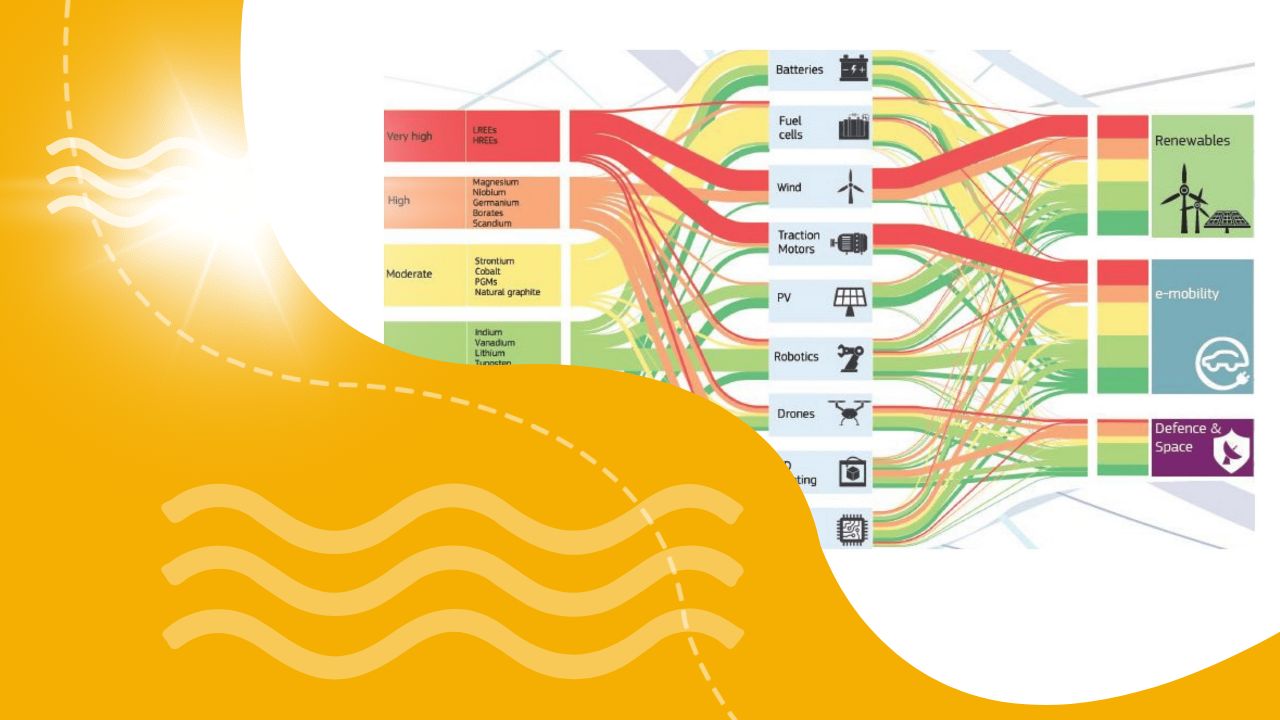
    Attention is increasingly focused on a particular class of material. “Critical” and “strategic” raw materials are those that face supply risk either in their scarcity or their geographical concentration, and which the major powers require for their military sectors and for competitive advantage in tech industries. Right now, the race for critical materials is geopolitical: each major power wants to secure supplies in allied countries.

    Critical raw materials are indispensable to the green transition too. The EU, for example, deems nickel a strategic material in view of its role in batteries.

    A wind turbine can require nine times the mineral inputs of a typical gas-fired power plant, while the average electric vehicle contains between six and ten times those of its conventional counterpart, according to the UN report that is due to be published on February 26.

    None of this means that a green economy would use greater quantities of materials than the current fossil fuel-based one. Energy consumption due to mineral demand for energy transition technologies is dwarfed by that which arises from mineral demand for the rest of the economy.

    Nonetheless, the mineral demand of the energy transition stokes the mining boom in such sectors as copper and lithium.

    Urban mining

    Mining must change in order to reduce its environmental impact. On the supply side, recovering minerals from waste goods can be ramped up, for instance by forcing retailers to offer collections of household electronic waste that can be sent for enhanced recycling.

    There is scope for urban mining: for example, locating copper from inactive underground power cables or recovering elements from construction waste, sewage, incinerator ash and other garbage zones.

    In practice, however, the use of secondary materials relative to newly-extracted ones is declining. The recovery rates of minerals from recycling remain low. Another UN study of 60 metals found the recycling rate for most of them was below one percent.

    The current economic system makes extractive mining cheaper and easier than urban mining. Extractive mining involves the purchase of cheap land, often in developing countries.

    That land gets dug up, pulverised and processed in a simple flow that is amenable to capital-intensive operations. Urban mining by contrast is often labour-intensive and requires a complex and state-enforced regulation of waste streams.

    Urban mining suffers from the refusal of governments to shift taxation from labour to “the use of non-renewable resources”, as Walter Stahel, an originator of the circular economy concept, recommended in 2006. Until robust regulation and taxation is introduced, all forms of circular economy risk unleashing rebound effects.

    So, throwing more materials onto the market lowers prices, which tends to expedite economic growth, raise energy consumption, and proliferate environmental harms. In short, there is nothing intrinsically “green” about urban mining or the circular economy. The progressive potential of all such engineering programmes is governed by the political-economic framework.

    Is degrowth the answer?

    The insufficiency of engineering and green growth programmes has informed the waxing interest in “degrowth” strategies. This term is not intended to suggest that all economic sectors should shrink, but that for society-nature relations to regain some balance, the unsustainable global use of materials and energy must radically reduce, and in an egalitarian manner.

    As the scale of the environmental crisis grows more daunting, even moderate voices — not degrowthers — have recognised that certain sectors, such as shipping and aviation, will have to be cut to virtually zero over the next 20 or 30 years.

    What does this mean for critical minerals? According to degrowth advocate Jason Hickel, political means should be forged through which to plan priority sectors.

    Reducing luxury and wasteful sectors such as SUVs, aviation and fast fashion would free up critical materials for the green transition. “Factories that produce SUVs could produce solar panels instead,” suggests Hickel. “Engineers who are presently developing private jets could work on innovating more efficient trains and wind turbines instead.”

    Such practical examples highlight the possibility that today’s predictions of utterly unsustainable materials throughput by 2060 could at least be revised downward.


  • Zinnwald Lithium Announces Major Increase in Mineral Resource Estimate

    Zinnwald Lithium Announces Major Increase in Mineral Resource Estimate

    Saxony, Germany – [21 Feb 2024 07:00] – Zinnwald Lithium plc is thrilled to announce a significant upgrade to its Mineral Resource Estimate (MRE) at the 100% owned Zinnwald Lithium Project in Saxony, Germany.

    Key Highlights:

    445% increase in tonnage and 243% increase in contained lithium in Measured and Indicated categories compared to 2018 MRE.
    Second largest hard rock lithium resource in the EU by both size and contained lithium.
    The inclusion of a broader mineralized granite zone boosts potential production rates and project economics.

    CEO Quote:

    “This substantial increase in our Mineral Resource establishes Zinnwald as a strategically important project of scale within the EU,” said Anton du Plessis, CEO of Zinnwald Lithium. “The wider mineralized zone allows for more efficient mining techniques, potentially further increasing lithium production beyond our 2022 PEA projections.”

    Additional Notes:

    The updated MRE incorporates 26,911 meters of new drilling across 84 holes and a revised geological model.
    The statement was prepared by Snowden Optiro Ltd in accordance with NI 43-101 standards.
    About Zinnwald Lithium plc
    Zinnwald Lithium plc is a European-focused lithium company developing the Zinnwald Lithium Project, with the goal of becoming a leading domestic supplier of lithium hydroxide to the European battery industry.

  • NewPeak sells Finland, NZ gold assets as it switches to battery metals

    NewPeak sells Finland, NZ gold assets as it switches to battery metals

    Australia-based NewPeak Metals has announced the sale of its Finland and New Zealand gold permits as part of the company’s strategic rejuvenation plan to focus on battery and critical metals.

    The ASX-listed company on Monday announced a binding term sheet to sell 100% of its interest in its Finnish subsidiary companies to Canco – a Canadian unlisted private company, run by resource entrepreneur Emma Fairhurst.

  • Amidst Growing Importance, Europe’s Battery Innovation Strategy Takes Center Stage

    Amidst Growing Importance, Europe’s Battery Innovation Strategy Takes Center Stage

    Europe aspires to become a global leader in battery innovation. To this end, BATT4EU has published a new Strategic Research and Innovation Agenda recommending the battery research and innovation priorities for which public funding should be allocated effectively and efficiently.

    Competing in the global battery arena requires constant innovation

    The global demand for batteries has increased significantly in recent years, due to the rapid adoption of electric vehicles, renewable energy storage systems, and portable electronics. Given the expected growth in demand and the associated business opportunities, competition in the battery space is surging worldwide with China dominating. When it comes to battery manufacturing, China holds close to 70% of the current and forecast battery cell production capacity, with 101 battery plants planned till 2029. In the meantime, in Europe, the construction of 30 gigafactories has been planned to exceed 1 Terawatt-Hour capacity by 2030.

    To reduce reliance on China for the EV transition, ensure open strategic autonomy and get close to climate neutrality, significant initiatives are now being developed in Europe and North America. Europe wants to compete with current manufacturing bases and increase its share of production to 25% within this decade.

    Taking on the challenge of becoming a global leader in sustainable batteries will require constant and ambitious innovation efforts all along the battery value chain, from raw materials, to advanced materials, to battery manufacturing, application development and of course battery recycling.

    Innovation is however costly

    Estimates by the European Battery Alliance suggest that the European battery market could be worth €250 billion a year as of 2025. To ensure that Europe develops fast and well its own competitive battery value chain able to meet the growing demand for more sustainable batteries, funding of innovation efforts by public authorities is of vital importance for the sector to reduce technology risks. Between 2014 and 2020, the battery industry received at least €1.7 billion in EU grants and loan guarantees, on top of state aid of up to €6 billion authorised between 2019 and 2021. With BATT4EU, the batteries European partnership, the current EU funding for battery research and innovation planned until 2027 should reach up to €925 million under Horizon Europe Programme. Innovation is however costly and despite the generous funding made available to Europe’s industry and research organizations, it is essential that limited available financial resources are allocated in the best way to maximise the impact of research and innovation efforts.

    Research and innovation priorities are aligned through a European strategic research and innovation agenda

    To avoid gaps in funding and duplication of research and innovation efforts, the BATT4EU Partnership has developed a new Strategic Research and Innovation Agenda (SRIA). The document represents the culmination of extensive consultations with over 200 members of the Batteries European Partnership Association (BEPA). In addition, it incorporates collaborative inputs from other significant European battery initiatives, including Batteries Europe and Battery 2030+, ensuring a comprehensive and unified approach to advancing battery technology across Europe.

    The new SRIA outlines time-based research and innovation priorities for every part of the battery value chain and points to 6 imperatives that need tackling in order to increase the competitiveness of the European battery value chain.

    The 6 imperatives of the SRIA are:

    Ensure research and innovation match industry needs to translate into gigafactories and markets

    Increase the strategic autonomy of Europe by reducing the reliance on imported critical raw materials

    Improve battery affordability to accelerate the green transition and keep the European industry competitive

    Improve the flexibility of battery manufacturing and recycling systems

    Implement a safe and sustainable by design framework for batteries

    Support the continuity of excellent European battery research and academic-industrial

    The SRIA aims to guide funding in Europe and maximize impact

    In conclusion, as Europe aims to establish itself as a global leader in battery research and innovation, the SRIA will serve as a reference to highlight key technological challenges, promote research and innovation, and guide funding priorities across Europe (at European level in Horizon Europe, at the level of Member States and Regions). This should maximize impact to help put Europe at the forefront of research and innovation, for the benefit of competitiveness across the European battery value chain.


  • Volodymyr Zelenskyy met with the founder of Fortescue Metals Group Andrew Forrest

    Volodymyr Zelenskyy met with the founder of Fortescue Metals Group Andrew Forrest

    In Munich, President of Ukraine Volodymyr Zelenskyy met with Australian businessman and philanthropist Andrew Forrest, founder of one of the world’s largest mining companies, Fortescue Metals Group (FMG).

    The Head of State thanked him for his active public support of Ukraine.

    Volodymyr Zelenskyy praised Andrew Forrest’s assistance in implementing humanitarian projects in our country, in particular, the construction of housing for internally displaced Ukrainian families who lost their homes due to the war.

    During the meeting, special attention was paid to the issues of rebuilding Ukraine, involving large global financial and industrial companies in projects to restore our country from the consequences of Russian aggression.

  • Energy Transition of Bosnia and Herzegovina is on hold

    Energy Transition of Bosnia and Herzegovina is on hold

    Bosnia and Herzegovina has not yet adopted the final version of the National Energy Climate Plan, although the deadline was set by the end of last year. In practice, this means that energy transition measures are implemented unsystematically and without clear deadlines, especially when it comes to phasing out coal, one of the biggest polluters. BHRT has checked the experiences and challenges in countries that have advanced in the planned transition to renewable energy sources in one of the EU members, Slovenia.

    A new image of the former mining region of Zasavja, east of Ljubljana – Solar power plants have become an almost indispensable decoration of business buildings and households. Entrepreneur Sergej Smrkolj says that he made the right decision five years ago. Today, it independently produces half of the electricity needed in production. The energy crisis only reinforced the effect of self-sustainability.

    “We did not invest anything in the project. GENi invested in the project. We pay off the project with the consumption of electricity. After ten years, it becomes our property,” emphasizes Sergej Smrkolj, director of “Skitti”, Izlake.

    The process of energy transition in Slovenia was initiated by the decision not to build a new unit of the Trbovlje Thermal Power Plant, which was adopted more than two decades ago. Ten years ago, the existing block was shut down, and the last mines were closed. With a lot of challenges.

    “It was really painful for some workers who were left without everything, stayed overnight without everything and had no more work,” says Ervin Renko, HSE Energetska družba, Trbovlje.

    Official data show that in the long process of closing the mine, the Zasavja region lost 23 percent of its jobs, and 11 percent of its population decreased. The country is gradually remediating the negative consequences with significant help from the European Fund for Just Transition. 258 million euros are earmarked for two mining regions in Slovenia.

    “The largest part of the EU funds will be for the economy for companies and for municipalities. In the first phase, this is already happening, the first tender was published, municipalities will create economic business zones and prepare the ground for companies to do their business here,” says Jani Medvešek, director of the Zasavje Regional Development Agency.

    With the strategy of getting out of coal, Slovenia also planned to shut down the Šoštanj TPP in 2033. The Slovenian Ministry of Energy says that coal production has become unprofitable, which could speed up the process.

    “That should stop and it will stop. Due to the energy crisis, that year was not extended, because the economic price of electricity from TE Šoštanj is very high, because it includes the price of CO2 coupons, so maybe due to economic reasons, electricity production will stop even before” 33rd year”, emphasizes Hinko Šolinc from the Ministry of Environment, Climate and Energy of Slovenia.

    One of the key tools of the energy transition in Slovenia is “Eco Sklad”. This public fund annually places around 50 million euros in loans and up to 80 million euros in grants for energy efficiency and renewable resources, water protection, and waste management. Grants cover between 20 and 50 percent of investments. The money was provided from a special tax for energy efficiency, and from the sale of carbon coupons.

    “Recently, we started introducing measures to combat energy poverty. These measures provide grants for households with low incomes and these are 100 percent grants, because they cover the entire investment,” says Mojca Vendramin, director of “Eko Sklada”.

    Slovenia follows the EU’s goals that by 2030, renewable energy sources make up 45 percent of the energy mix, and that harmful emissions are reduced by 55 percent compared to the reference year. The expansion of the photovoltaic screen built on the former slag dump from the Trbovlje Thermal Power Plant is in accordance with these plans, BHRT writes.

  • Ukraine: non-ferrous metals works in occupied Bakhmut declared bankrupt

    Ukraine: non-ferrous metals works in occupied Bakhmut declared bankrupt

    The Commercial Court of Donetsk region on February 6 declared one of the largest enterprises of the temporarily occupied Bakhmut – Non-Ferrous Metals Processing Works – bankrupt and launched liquidation procedures there.

    The works was founded in 1954 as the state enterprise and was subordinate to the Ministry of Non-Ferrous Metallurgy of the USSR. It specialized in the manufacture of non-ferrous products – round (pipes, rods and wire) and flat (sheets, strips and belt) rolled metal of copper and other non-ferrous metals. In 1994 it was privatized.

    In December 2022, during the battle for Bakhmut, it was this works that the president Wolodymyr Zelenskiy visited to decorate the defenders of the town. Since March 2023, the works has been on the temporarily occupied territory.

  • EU Postpones Implementation of Corporate Transparency Rules for Mining, Oil, and Gas Companies

    EU Postpones Implementation of Corporate Transparency Rules for Mining, Oil, and Gas Companies

    The European Parliament and the Council of EU member states agreed on Wednesday evening (7 February) to grant a two-year delay for sector-specific standards under the Corporate Sustainability Reporting Directive (CSRD), offering a break to mining and fossil fuel firms targeted by the upcoming transparency rules.

    The deal reached on Wednesday will give companies more time to prepare for the sectorial reporting rules, the Council said in a statement.

    Those will be adopted in June 2026, two years later than originally planned, it added.

    Belgium, the current holder of the rotating EU Council presidency, welcomed the agreement, saying it fits with its agenda of “boosting European competitiveness” and “reducing the administrative burden on companies”.

    “Today’s agreement limits reporting requirements to the minimum and gives companies time to implement the European Sustainability Reporting Standards (ESRS) and prepare for the sectorial European Sustainability Reporting Standards,” said Vincent Van Peteghem, Belgian deputy prime minister and minister of finance.

    The EU’s Corporate Sustainability Reporting Directive (CSRD), in force since January last year, requires listed companies to disclose information about the social and environmental risks associated with their activities.

    Since January this year, the first set of general reporting standards – the European Sustainability Reporting Standards (ESRS) – became applicable to large companies across all economic sectors.

    Those were expected to be followed by specific reporting standards for sectors like oil and gas, mining, road transport, textiles, as well as agriculture and fishing.

    The sector-specific standards had already been drafted by a technical body advising the European Commission, the European Financial Reporting Advisory Group (EFRAG), and were almost ready for publication, Euractiv understands.

    But in October last year, the Commission proposed to postpone them for two years, based on a recommendation from EFRAG.

    The move caused concern among a group of 21 academics, who wrote a letter to the European Commission before Wednesday’s meeting to express their concerns.

    “As the academic community, we are worried by the current proposal to postpone the sector standards by two years,” reads the letter, penned by Prof. Dr. Frank Schiemann and Dr. Blerita Korca from the University of Bamberg in Germany, as well as Assoc. Prof. Dr. Florian Habermann from Radboud University Nijmegen in the Netherlands.

    “This suggestion jeopardises not only the immediate benefits of sector standards for sustainable development and the financial sector but also deprives companies of guidance for their reporting obligation under the CSRD,” they warned.

    The letter was signed by 21 academics from across Europe, including professors from the University of Groningen, the University of Trento, the Krakow University of Economics, and the EM Strasbourg Business School.

    In the letter, the academics underlined the immediate benefits brought by greater transparency in corporate reporting, pointing out that “mine accidents have decreased after a disclosure mandate” that was issued by the US Securities and Exchange Commission.

    “Companies have to start reporting now and sector standards can be crucial to support their materiality assessment,” they argued, urging the Commission to adopt the standards that had already been largely drafted by EFRAG.

    “The prompt release of standards for sectors with significant impact is crucial. By 2026, all high-impact sectors identified by EFRAG should be comprehensively addressed,” the academics wrote, suggesting to use the two-year delay as an opportunity to implement pilot projects and “address sector-specific issues such as materiality analyses or transition pathways and plans”.

    In the European Parliament, meanwhile, some rejoiced at the two-year postponement of rules.

    “Everyone has finally understood that companies cannot be overloaded with new standards every year,” said Axel Voss, a German lawmaker from the centre-right European People’s Party (EPP).

    “They have been putting up with too much bureaucracy in years of crisis, from COVID to inflation. There is also a lack of quality if you don’t take the time to develop such standards in a practical way,” he said.

    Others, however, pointed to wording added to Wednesday’s agreement, which says the two-year delay “does not prevent the Commission from publishing the sector specific sustainability reporting standards” before 2026.

    “The Commission shall endeavour to adopt eight of the sustainability reporting standards … as soon as each is ready,” says the revised Article 29b(1) of the directive, according to the compromise text adopted on Wednesday.

    “We had to fight hard against EPP to make sure that we don’t lose time on sectors for which the standards are almost ready,” said Pierre Karleskind, a centrist MEP from the Renew Europe political group in Parliament.

    “Oil, gas and mining are high-risk sectors, and with this deal, they will have to start reporting earlier than other sectors,” he told Euractiv in emailed comments.

    Under the Corporate Sustainability Reporting Directive (CSRD), companies with over 250 staff and a turnover of €40 million have to disclose environmental, social, and governance (ESG) risks, as well as the impact of their activities on the environment and people.

    Smaller listed companies are subject to a lighter set of reporting standards, from which they can opt out until 2028.


  • EU’s Initiative to Curtail Dependency: Critical Raw Materials Act Aims for Reduction

    EU’s Initiative to Curtail Dependency: Critical Raw Materials Act Aims for Reduction

    Rare earths, lithium and other raw materials are of enormous importance for future technologies. The demand for such “critical raw materials” will continue to increase in the future. However, the European Union has so far almost only been able to import them and is dependent on individual countries such as China. A regulation, the Critical Raw Materials Act (“CRMA”), is intended to increase and diversify the supply of critical and strategic raw materials, strengthen recycling and reduce dependence on individual supplier countries.

    The main requirements of the CRMA are aimed at the member states, but companies are also subject to certain requirements. The European Parliament formally adopted the proposed regulation on December 12 last year and the European Council is expected to approve it in March this year, meaning that the regulation could come into force as early as April.

    Critical raw materials are very important for the manufacture of various products, such as electric vehicles or solar panels. Demand will increase significantly in the coming years due to the global transition to renewable energies and digitalization. The European Union is exclusively dependent on imports for many critical raw materials. The COVID-19 crisis and the energy crisis triggered by the Russian war of aggression against Ukraine illustrate the European Union’s structural dependence on imports. The suppliers of these imports are generally a small number of third countries, both for the extraction and processing of raw materials.

    To improve this situation, on March 16, 2023, the European Commission presented a proposal for a Regulation establishing a framework for ensuring a secure and sustainable supply of critical raw materials. The aim is to use the CRMA to free themselves from this dependency for the future or to significantly reduce it so that these countries cannot exploit their strong position as suppliers, for example through export restrictions. The European Parliament and the Council of the European Union were able to agree on a final text for the proposed regulation on November 13, 2023. The proposal was formally adopted by the European Parliament on December 12, 2023.

    Central to the Proposal is the aspiration that by 2030, EU capacity in respect of each strategic raw material should approach or reach the following benchmarks:

    At least 10% of the European Union’s annual consumption should come from EU extraction

    At least 40% of the European Union’s annual consumption should come from EU processing

    At least 25% of the European Union’s annual consumption should come from domestic recycling

    No more than 65% of the European Union’s annual consumption of each strategically important raw material at each relevant stage of processing may originate from a single third country

    These are not enforceable target percentages vis-à-vis individual Member States or companies. The targets are to be addressed by the European Union by strengthening strategic projects to increase EU capacities.

    Fast permit granting process for strategic projects

    To ensure that the development of these strategic projects can be driven forward, the CRMA includes fast and simplified permit granting process for them. The member states should ensure that the specified deadlines are not exceeded. To this end, a single national contact point should be created, which does not necessarily have to be an authority but should be adequately staffed and resourced. The duration of the permit for strategic projects should not exceed 27 months for strategic projects in the extraction sector and 15 months for strategic projects relating exclusively to processing or recycling.

    Significance for companies

    The main requirements of the CRMA are directed at the member states. Nevertheless, companies also have to comply with certain requirements. To name just a few important examples:

    Large companies that use strategic raw materials to manufacture batteries for energy storage and electromobility, equipment related to hydrogen production and utilisation, equipment related to renewable energy generation, aircrafts, traction motors, heat pumps, data transmission and storage, mobile electronic devices, equipment related to additive manufacturing, robotics, rocket launchers, satellites or advanced chips must carry out a risk assessment of the supply chain for strategic raw materials every three years. The risk assessment must include a mapping of where the strategic raw materials used by the company are extracted, processed or recycled, an analysis of the factors that may impact their supply of strategic raw materials and an assessment of their vulnerabilities to supply disruptions.

    If a company is considered as a “key market operator” along the supply chain for critical raw materials, which is particularly the case if their reliable functioning is essential for the supply of critical raw materials, the company may have to participate in regular and appropriate surveys of Member States. However, key market participants may refuse to provide the data requested in these surveys if the disclosure of such data would lead to the disclosure of business and trade secrets.

    Next steps

    The approval of the European Council is still pending and is expected in March of this year.