Website: Europe.com

  • Eldorado Gold has increased the capital expenditure estimate of the Skouries gold project in Greece

    Eldorado Gold has increased the capital expenditure estimate of the Skouries gold project in Greece

    The company advanced to full construction last year following the closing of a €680-million project financing facility with two Greek banks. In addition, Eldorado completed a C$81.5-million strategic investment with the European Bank for Reconstruction and Development.

    After finalising key contracts last year, the capital cost estimate remained in line with the December 2021 feasibility study estimate.  However, more recent and pending contracts incorporate labour rates and labour hours that are higher than the feasibility study estimate, resulting in the capex rising from the initial $845-million.

    Further, the time it took to negotiate key contracts has had a “modest” impact on the production schedule, the company reports. Skouries is now expected to deliver its first copper/gold concentrate in the third quarter of next year, rather than the previously guided mid-2025.

    As such, Eldorado now expects to produce between 50 000 oz and 60 000 oz from Skouries in 2025, compared with the previously guided 80 000 oz to 90 000 oz range.

    Copper production from the new Greek mine is expected to be between 15-million and 20-million pounds in 2025.

    A steep ramp-up curve is expected over that second half of 2025 and remains on track for commercial production at the end of 2025.

    “We look forward to bringing online this world class copper/gold asset that will deliver an additional 40% of high-quality gold production growth for our company by 2027,” said CEO George Burns.

    In 2023, Eldorado produced 485 139 oz of gold from a portfolio of four operating mines. The company delivered a 7% production growth and lowered all-in sustaining costs by 4% to $1 229/oz.

    “We achieved this in a challenging inflationary environment and successfully delivered key initiatives across our operations. Kisladag successfully commissioned the new agglomeration drum and North Heap Leach Pad; Olympias started up its ventilation system and bulk emulsion explosives; and Lamaque converted a portion of the Ormaque inferred resources into indicated in preparation for an initial reserve later in 2024. By completing these critical activities we have set up our operations for success to deliver consistent, sustainable results through continued execution,” said Burns.

  • Montenegro’s largest zinc mine under review: Working group analyzes Brskovo project’s future

    Montenegro’s largest zinc mine under review: Working group analyzes Brskovo project’s future

    The Brskovo project will be one of the biggest zinc mines in Europe, according to its owner, Swiss-based Tara Resources. However, it has been facing severe criticism from non-governmental organisations and citizens in the northeastern town of Mojkovac, in close proximity to the mine, over environmental issues.

    The working group was formed following a government decision adopted in January, requesting a thorough analysis of the concession contract, all annexes and other documentation, with the aim of taking a final decision on the future of the project, the ministry said in a statement earlier this week.

    The working group’s first session took place on February 1, and a second meeting is scheduled for February 5.

    In 2010, the Montenegrin government awarded Australian mining company Sultan Corporation a 25-year exploration and mining lease rights for the Brskovo lead and zinc complex. In 2011, Sultan said it found an initial inferred resource of 9.2 million tonnes at Brskovo, and strong upside potential.

    In 2018, Tara Resources acquired the project and is now operating it via its local subsidiary Brskovo Mine.

    Tara Resources says on its website that it completed a preliminary economic assessment in 2019 and a pre-feasibility study in 2021, proving the strong economics of the project. It notes that construction of the Brskovo mine will involve a capital investment of some 180 million euro ($195 million), and will consist of two open pit mines, a processing plant, and an integrated waste management facility.

    The Brskovo mine will produce some 45,000 tonnes of zinc in concentrate, 13,000 tonnes of lead in concentrate, 3,000 tonnes of copper in concentrate and approximately 1 million ounces of payable silver in the copper and lead concentrates, according to Tara Resources. The project will employ 700 people in construction, and will create 550 direct jobs and 200 indirect jobs during operations.

    Last week, local daily Vijesti reported that at the first session of the working group formed to examine the project, the state body in charge of protecting the property rights and interests in Montenegro declared that the government has a legal basis to cancel the concession contract with Brskovo Mine since it has missed many of the deadlines for receiving urban and technical permits.

    The daily recalls that the concession holder has changed several times since 2010, while the original contract was amended six times via annexes that had extended the deadlines for meeting certain obligations.

    The report also says that the working group has 30 days to send its final recommendations on the future of the project to the government.

  • France’s $1.6bn uranium deal with Mongolia faces delays

    France’s $1.6bn uranium deal with Mongolia faces delays

    A $1.6-billion uranium mining deal between France and Mongolia, aimed at diversifying supplies for France’s nuclear reactors, faces political obstacles that may delay its finalization until after the upcoming elections in June, sources familiar with the matter revealed. The agreement, concerning the development and operation of the Zuuvch-Ovoo mine, was initially outlined during a visit to Paris by Mongolia’s President, Khurelsukh Ukhnaa, in October, with expectations for a final investment agreement by the end of last year and production commencement in 2028.

    However, setbacks including the resignation of Mongolia’s chief negotiator and concerns over safeguarding strategic resources have led to delays and necessitated the redrafting of the deal. The potential postponement or cancellation of the project poses challenges for Orano, the French uranium producer, which views the plan as vital for expanding its supply sources amidst increasing global demand.

    While Mongolian government representatives were unavailable for immediate comment on the contract delays, Orano affirmed ongoing negotiations and expressed optimism regarding finalizing the agreement promptly. The context of the deal underscores France’s efforts to bolster Mongolia’s strategic sovereignty amid its positioning between influential neighbors Russia and China, with the aim of reducing dependency on external energy sources.

    However, geopolitical tensions and Russia’s assertive stance in the region, coupled with Mongolia’s energy vulnerabilities, have added complexities to the negotiation process. The situation underscores the broader geopolitical dynamics at play, including heightened competition for access to critical resources and influence in strategic regions.

  • Kazakhstan is focused on strengthening cooperation with countries in Northern Europe and the Baltics

    Kazakhstan is focused on strengthening cooperation with countries in Northern Europe and the Baltics

    Deputy Minister of Foreign Affairs of the Republic of Kazakhstan, Roman Vasilenko, held meetings with the Ambassadors of Finland, Soile Mäkeläinen-Buchanist, Sweden, Eva Polano, and Latvia, Irina Mangule, as reported by “ZhambylNews” citing the Ministry of Foreign Affairs of the Republic of Kazakhstan.

    During the discussions, the parties talked about further enhancing political dialogue and activating economic ties between Kazakhstan and its partners in Northern Europe and the Baltics.

    During the meeting with the Finnish Ambassador, the Deputy Minister expressed commitment to maintaining active bilateral contacts with Finland at governmental, business, and expert levels. In this context, the parties highly appreciated the effectiveness of the Kazakh-Finnish Intergovernmental Commission on Trade and Economic Cooperation, the next meeting of which is scheduled to be held in Astana on April 11 this year. (The co-chairs of the Intergovernmental Commission are the Minister of Ecology and Natural Resources of the Republic of Kazakhstan, E. Nysanbayev, and the Minister for Foreign Trade and Development of Finland, V. Tavio). The interlocutors also discussed the prospects for cooperation in the field of judiciary and customs authorities.

    During the meeting with the Swedish Ambassador, diplomats expressed satisfaction with the positive dynamics of trade and investment cooperation. Special attention was paid to expanding the presence of Swedish businesses in Kazakhstan and attracting advanced technologies. The parties welcomed mutual visits and exchange of experience in the fields of medicine, science, and innovation. Prospects for expanding bilateral legal frameworks were also discussed.

    During the meeting with the Latvian Ambassador, the parties summed up the main results of the development of bilateral cooperation in 2023, expressing satisfaction with the high pace of interaction. The interlocutors thoroughly discussed current issues of Kazakh-Latvian relations, paying special attention to building sustainable transport and logistics chains of interaction and increasing trade and investment partnership between the countries.

    As the co-chair of the bilateral Intergovernmental Commission on Trade, Economic, and Scientific-Technical Cooperation with Latvia, R. Vasilenko confirmed the intention to contribute fully to further developing the positive dynamics of trade.

    Overall, the Deputy Minister called for active participation of European countries in the development of the Trans-Caspian International Transport Route and expressed Kazakhstan’s interest in fruitful cooperation in promoting the issue of easing the visa regime of the European Union for citizens of Kazakhstan.

    Following the negotiations, the parties agreed to continue joint efforts aimed at expanding mutually beneficial partnerships.

    Reference: Finland is an important partner of Kazakhstan in the EU. Bilateral trade turnover in 2023 amounted to $208 million (exports – $3.06 million, imports – $205.1 million). The gross inflow of investments from Finland to Kazakhstan since 2005 amounted to $409.5 million.

    Sweden is one of Kazakhstan’s major trade and investment partners in Europe. In 2023, the trade turnover between the countries amounted to $467 million (exports – $60 million, imports – $407 million). Since 2005, the gross inflow of direct investments from Sweden to Kazakhstan has exceeded $622 million.

    Latvia is a significant partner of Kazakhstan in the Baltic region. In 2023, bilateral trade turnover increased by 76% and amounted to $336 million (exports – $279 million, imports – $77 million). In the first three quarters of 2023, the volume of investments attracted from Latvia to Kazakhstan amounted to $12.4 million.

  • Lopare municipality demands from Republic of Srpska to reject lithium project

    Lopare municipality demands from Republic of Srpska to reject lithium project

    Head of the Municipality of Lopare, Rado Savić, has taken action against the proposed opening of a lithium mine in Majevica mountain by submitting a petition signed by 3,711 citizens to the National Assembly of the Republic of Srpska. The petition, along with a local declaration, opposes the exploitation of lithium, boron, sodium, strontium, potassium, and associated elements within the municipality’s territory. Mayor Rado Savić emphasized the widespread opposition to the mine among the local population, citing concerns about its potential harm to the environment, rivers, and community well-being, as reported by Nezavisne novine.

    Savić stressed the lack of similar mines in Europe, fueling significant fear among citizens. The petition’s submission follows a similar stance taken by officials in the Brčko District against lithium mining in their area. Investors have shown interest in exploration across various locations, including Bijeljina, Brčko, Lopare, Ugljevik, and Zvornik, all situated along the Drina river opposite Rio Tinto’s controversial Jadar project in Loznica, Serbia.

    In particular, Swiss company Arcore has expressed interest in developing the mine, conducting several years of research with approval from local authorities. The company reported lithium deposits worth approximately USD 10 billion in the municipality of Lopare in October. Mayor Rado Savić is urging the National Assembly to compel the Government of the Republic of Srpska to reject the proposed lithium mine, reflecting the concerns and opposition voiced by the local community.

  • Quest Critical Metals Provides Update on EU HORIZON-Funded EIS Project

    Quest Critical Metals Provides Update on EU HORIZON-Funded EIS Project

    Quest Critical Metals Inc. (formerly Canadian Palladium Resources Inc.) (“Quest Critical Metals” or the “Company”) is delighted to share the latest advancements in the EU HORIZON-funded Exploration Information Systems (EIS) Project. The project, in which the Company participates through its wholly-owned Czech subsidiary, Golden Pet SRO, aims to bolster Europe’s self-sufficiency in critical raw materials (CRM) with a focus on sustainable mineral exploration.

    The EU HORIZON-funded EIS Project, valued at €7.5 million, is dedicated to developing advanced exploration concepts and data tools to facilitate mineral exploration while minimizing its environmental impact. Moreover, the project seeks to raise awareness regarding the significance of critical raw materials and the challenges associated with exploring for them within the EU.

    James Newall, CEO of Quest Critical Metals, expressed his enthusiasm, stating, “We are privileged to have an abundance of geological and geophysical expertise analyzing our Klingenthal/Tisova project, all funded by the EU. Their validation of our geological interpretation is not only reassuring but also invaluable. Furthermore, being selected as a case study for the EIS Awareness Campaign will significantly amplify our project’s exposure.”

    Key Highlights:

    1. EU Funding Boost: Quest Critical Metals has received three tranches of EU grant funding, bolstering its exploration efforts.
    2. Top European Collaboration: The Company has collaborated with leading geologists and geophysicists in Europe, benefiting from their expertise. Notably, Professor Jiri Zacharias of Charles University, Prague, contributed to the understanding of the ore body evolution at Tisova.
    3. Data Contribution: Quest Critical Metals’ data has played a crucial role in creating the Volcanogenic Massive Sulphide (VMS) identifying model.
    4. Tisova Project Advancement: The EIS project is advancing into its testing phase in 2024, with Klingenthal/Tisova identified as the sole test site for planned drilling activities.

    EIS Project Awareness Campaign:

    The EIS Project aims to raise awareness of the importance of Critical Minerals and the challenges associated with their exploration within the EU. Golden Pet, the Company’s wholly-owned subsidiary, serves as a case study for this campaign.

    Objective: Targeting governments, corporations, and stakeholders, the campaign will culminate at the EU Raw Minerals Week in November 2024 in Brussels.

    Engagement: A dedicated workshop at the PDAC 2024 Convention in Toronto, Canada, will be led by EIS Project partners, engaging with leading mineral exploration and mining companies.

    Quest Critical Metals is poised for significant advancements, with its participation in the EIS Project and strategic acquisitions positioning the Company for growth and success in critical minerals exploration.

  • Extraction of raw materials could rise 60% by 2060

    Extraction of raw materials could rise 60% by 2060

    The United Nations’ flagship Global Resources Outlook report is the portrait of a juggernaut. Due to be published later this month by the UN’s International Resource Panel, it highlights how global consumption of raw materials, having increased four-fold since 1970, is set to rise by a further 60% by 2060.

    Already, the technosphere — the totality of human-made products, from airports to Zimmer frames — is heavier than the biosphere. From the 2020s onward, the weight of humanity’s extended body — the concrete shells that keep us sheltered, the metal wings that fly us around — have exceeded that of all life on Earth. Producing this volume of stuff is a major contributor to global heating and ocean acidification, and the rapidly accelerating extinction of plants and animals.

    As the UN report spells out, the extractive activities that lie behind the concrete, metal and other materials we use are disrupting the balance of the planet’s ecosystems. The mining industry requires the annexation of large tracts of land for extraction and transportation; its energy consumption has more than tripled since the 1970s.

    That upward curve is set to continue. The demand for materials is rising, the quality of ores such as copper is declining, and deeper and more remote mines require extra energy for extraction. More seams will be dug and more mountains moved to bring glittering fortunes to some while many regions, above all in developing countries, become sacrifice zones.

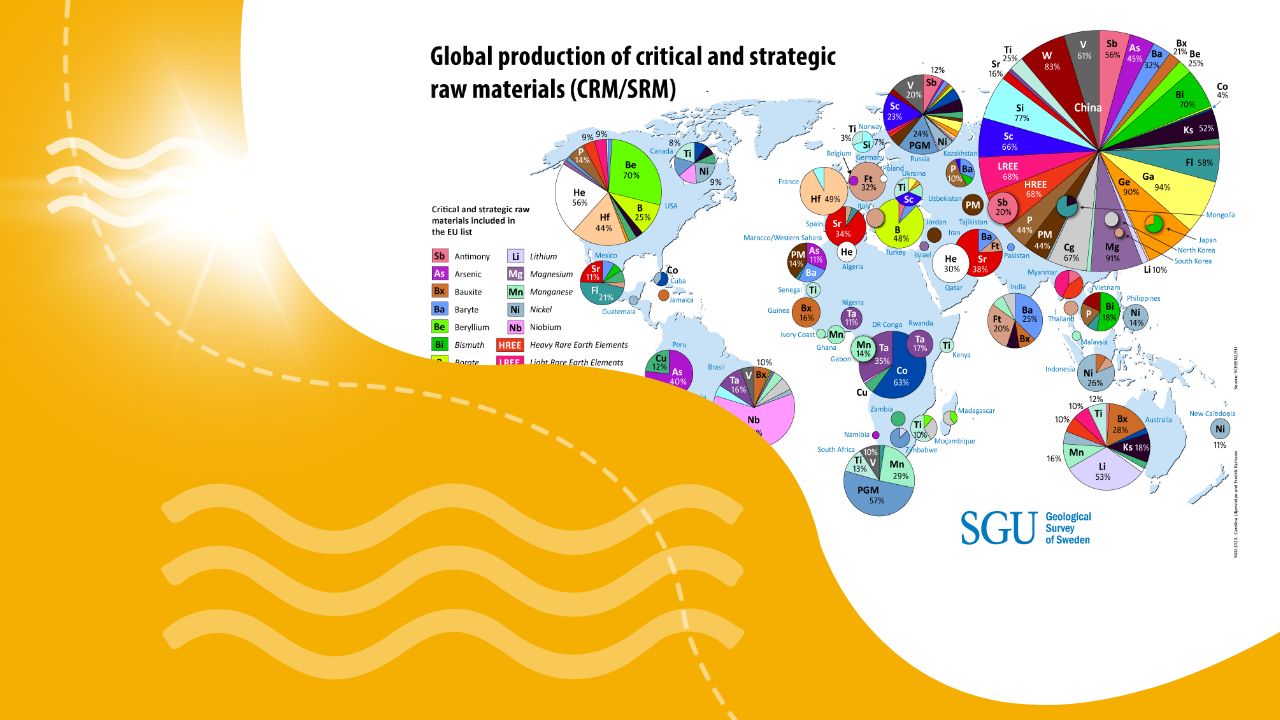
    Critical raw materials

    Attention is increasingly focused on a particular class of material. “Critical” and “strategic” raw materials are those that face supply risk either in their scarcity or their geographical concentration, and which the major powers require for their military sectors and for competitive advantage in tech industries. Right now, the race for critical materials is geopolitical: each major power wants to secure supplies in allied countries.

    Critical raw materials are indispensable to the green transition too. The EU, for example, deems nickel a strategic material in view of its role in batteries.

    A wind turbine can require nine times the mineral inputs of a typical gas-fired power plant, while the average electric vehicle contains between six and ten times those of its conventional counterpart, according to the UN report that is due to be published on February 26.

    None of this means that a green economy would use greater quantities of materials than the current fossil fuel-based one. Energy consumption due to mineral demand for energy transition technologies is dwarfed by that which arises from mineral demand for the rest of the economy.

    Nonetheless, the mineral demand of the energy transition stokes the mining boom in such sectors as copper and lithium.

    Urban mining

    Mining must change in order to reduce its environmental impact. On the supply side, recovering minerals from waste goods can be ramped up, for instance by forcing retailers to offer collections of household electronic waste that can be sent for enhanced recycling.

    There is scope for urban mining: for example, locating copper from inactive underground power cables or recovering elements from construction waste, sewage, incinerator ash and other garbage zones.

    In practice, however, the use of secondary materials relative to newly-extracted ones is declining. The recovery rates of minerals from recycling remain low. Another UN study of 60 metals found the recycling rate for most of them was below one percent.

    The current economic system makes extractive mining cheaper and easier than urban mining. Extractive mining involves the purchase of cheap land, often in developing countries.

    That land gets dug up, pulverised and processed in a simple flow that is amenable to capital-intensive operations. Urban mining by contrast is often labour-intensive and requires a complex and state-enforced regulation of waste streams.

    Urban mining suffers from the refusal of governments to shift taxation from labour to “the use of non-renewable resources”, as Walter Stahel, an originator of the circular economy concept, recommended in 2006. Until robust regulation and taxation is introduced, all forms of circular economy risk unleashing rebound effects.

    So, throwing more materials onto the market lowers prices, which tends to expedite economic growth, raise energy consumption, and proliferate environmental harms. In short, there is nothing intrinsically “green” about urban mining or the circular economy. The progressive potential of all such engineering programmes is governed by the political-economic framework.

  • ArcelorMittal Secures €1.3bn Grants to Decarbonize German Steel Plants

    ArcelorMittal Secures €1.3bn Grants to Decarbonize German Steel Plants

    ArcelorMittal, Europe’s largest steelmaker, has received approval from the European Commission for €1.3 billion in grants to facilitate the decarbonization of two steel plants in Germany through the use of low-carbon hydrogen.

    The grants, sanctioned by the European Commission, are set to bolster ArcelorMittal’s efforts in transitioning its steel plants in Bremen and Eisenhüttenstadt towards greener practices, with plans to utilize renewable hydrogen exclusively. Despite initial operations relying on natural gas, the plants are slated for a shift towards renewable hydrogen, marking a significant step towards sustainable steel production.

  • The UK’s major miners face multiple challenges.

    The UK’s major miners face multiple challenges.

    For the former, adjusted EBITDA fell by 50 per cent year-on-year to $17bn in 2023 while Anglo American saw a net profit fall of 94 per cent.

    Glencore is really struggling to reckon an attempted exit of its legacy coal business, one that delivered $17.9bn EBITDA in 2022 – more than the groups entire return in that metric for 2023.

    The problem across the board for miners, not just Anglo and Glencore, is that this isn’t the good old days.

    It is instead putting down a roadmap towards essential metals for the energy transition; nickel, cobalt and zinc.

    Anglo is also trying to dial in on battery metals but remains heavily tied to another poorly-performing asset class – Platinum Group Metals (PGM), used in the diesel and petrol car industry.

    Alongside a wheezing diamond market, PGMs cost Anglo around $5.5bn in revenue in 2023.

    The problem across the board for miners, not just Anglo and Glencore, is that this isn’t the good old days.

    Miners had rarely been as profitable in recent history as they were in the immediate aftermath of the pandemic, which effectively ignored individual market permutations and sent all commodities skywards.

    Now, mining sub-sectors are off the ride and are starting to reconfigure individual supply-demand dynamics and that is where the underlying issues are coming to the fore.

    The nickel market, for example, has dramatically over-estimated short-term demands resulting in a market flood and pain for those with exposure.

    Exacerbated by a supply monopoly from Indonesia, miners with exposure like Glencore are struggling to sell the metal at a lower market price, and further hampered by dramatic increases in operational costs versus what they were a decade ago.

    The firm has firmly felt the nickel bite, announcing the sell-off of its stake in the Koniambo mine in New Caledonia after a profitless decade.

    The head of French metal mining group Eramet said last week that Indonesia would effectively render “old traditional players structurally non-competitive” for the foreseeable future.

    Nevertheless, the firm’s chief executive Gary Nagle is determined to spin off Glencore’s coal businesses to the U.S in favour of making UK-based operations more green metal focused – an uphill battle for the foreseeable future.

    China is continuing to weigh on miners too as its copper-hungry property business remains subdued despite state efforts to wake it up.

    Firms like Anglo are sitting on ageing assets and analysts know that major projects need to be found pretty quickly to avoid slipping further into the mooted steep production deficits.

    But Anglo faces a challenge not shared as acutely by its competitors like Glencore, Rio Tinto or Vale in that its portfolio is attempting to cater for two inversely expanding ends of the motoring market.

    The costly revenue shortfalls from its PGM group in 2023 are in large part attributable to stalling petrol and diesel vehicle demand. And with battery metal demand bottoming out too, the firm is stuck between a rock and a hard place.

    Glencore and Anglo are not Shell and BP. In market cap terms at $45bn and $23bn, they might look like they hold relatively comparable positions within the London-listed market.

    But miners are far more exposed to market volatility owing to the demand in sectors they feed.

    For now, both Glencore and Anglo can weather instability through manageable debt piles and the resources to try and pivot in whatever way possible to drive profitability.

    But investors should strap in for a bumpy ride.

  • Anglo American’s Woodsmith Mine Project: A Monumental Undertaking

    Anglo American’s Woodsmith Mine Project: A Monumental Undertaking

    In the heart of Yorkshire’s North York Moors National Park, a colossal venture is underway, captivating the attention of mining magnate Duncan Wanblad. Leading the charge for Anglo American, Wanblad finds himself at the helm of the ambitious Woodsmith fertiliser mine project, nestled near the coastal town of Whitby.

    Boasting unparalleled dimensions, the project unveils the largest polyhalite deposits globally, concealed beneath the picturesque countryside. With mine shafts delving a mile deep and engineers carving out a 23-mile transport tunnel, the scale of operations is nothing short of monumental.

    Yet, amid the grandeur lies a daunting reality. The project’s expenses have skyrocketed, far surpassing initial estimates since Anglo American’s acquisition of Woodsmith Mine owner Sirius Minerals in 2020. With expenditures already exceeding £2 billion and projections pointing towards a total bill of at least £7 billion, Wanblad faces mounting scrutiny over the venture’s viability.

    In Wanblad’s own words, the Woodsmith project embodies both promise and peril, encapsulating the spirit of ambition and risk inherent in the mining industry’s pursuit of monumental endeavors.