Website: Eurasia.com

  • Savannah Resources Lifts Barroso Lithium Reserves by 40%, Reinforcing Europe’s Largest Deposit

    Savannah Resources Lifts Barroso Lithium Reserves by 40%, Reinforcing Europe’s Largest Deposit

    Savannah Resources (LON: SAV) has increased the reserve estimate for its flagship Barroso lithium project in northern Portugal by 40%, strengthening its role as Europe’s largest spodumene deposit.

    Following additional prospecting work, reserves are now pegged at more than 39 million tonnes, up from 28 million tonnes. The announcement pushed Savannah’s shares up 2.4%, giving the London-listed company a market value of £104 million ($141.5 million).

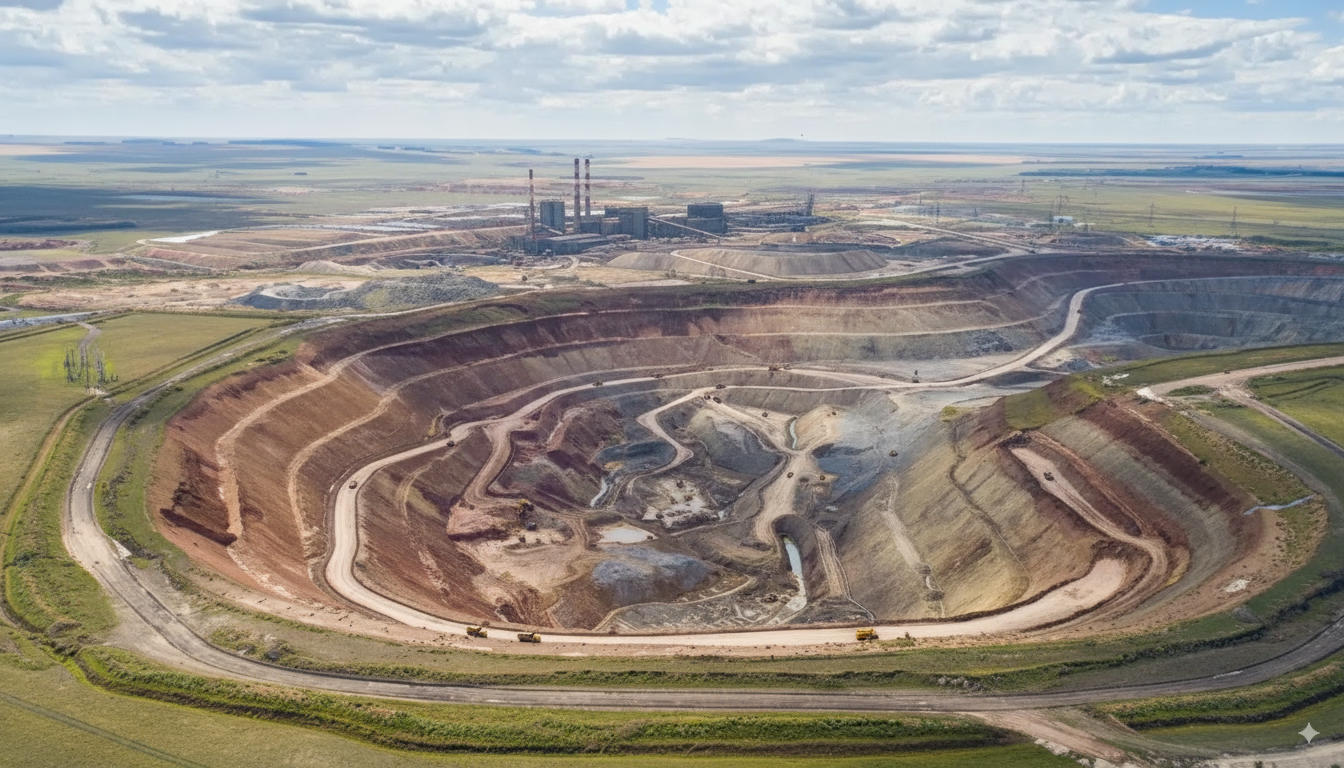
    Savannah highlighted the project’s importance to Europe’s battery value chain, noting its potential as both a strategic supplier of raw lithium and a long-term contributor to regional economic development. The company plans to develop four open-pit mines capable of producing enough lithium annually to power batteries for around 500,000 electric vehicles. Subject to permitting and financing, production is expected to start in 2027.

    At full operation, the mine is forecast to process 1.5 million tonnes per year over a 14-year lifespan, based on a resource of 20.5 million tonnes grading 1.05% lithium oxide.

    However, the project has drawn strong opposition from local communities and environmental groups. The Barroso region, recognized as a World Heritage agricultural site since 2018, has raised concerns over potential impacts on land, water resources, and biodiversity.

    Savannah said it expects to complete its definitive feasibility study and secure environmental licensing by the end of the year. The company also dismissed recent media reports claiming a United Nations committee had accused Portuguese authorities of breaching international law during the project’s approval process.

  • Ukraine and US Advance Minerals Deal with Site Visits for Investment Projects

    Ukraine and US Advance Minerals Deal with Site Visits for Investment Projects

    Ukrainian officials and representatives from the US International Development Finance Corporation have begun site visits to identify investment opportunities under a bilateral minerals deal signed in April, Economy Minister Oleksiy Sobolev confirmed on Saturday.

    The agreement, strongly promoted by US President Donald Trump, grants the United States preferential access to new Ukrainian mineral projects in return for investment. Kyiv views the deal as a mechanism to attract US financing for economic recovery and infrastructure rebuilding, while also shoring up continued US defence support amid the ongoing war with Russia.

    Sobolev told a conference in Kyiv, attended by Ukrainian, US, and European officials, that the government aimed to identify three pilot investment projects within the next 18 months. “Right now, there are site visits … from the US, and we are going to the regions tomorrow with them to look for an investment pipeline,” he said.

    Under the terms of the agreement, half of Ukraine’s revenues from new mineral extraction will be directed into a joint investment fund, with profits shared between Kyiv and Washington. Beyond minerals, the fund is also expected to invest in Ukraine’s energy sector and infrastructure.

    Ukraine has reserves of 22 of the 34 minerals deemed critical by the European Union for industries such as defence, green energy, and high-tech manufacturing. These include ferro alloys for steelmaking, non-ferrous metals for construction, as well as rare earths and precious metals.

    The initiative underscores Trump’s view that the US should gain direct economic benefits in exchange for its role as Ukraine’s largest military donor since Russia’s full-scale invasion in 2022.

  • RG Gold Reports Sharp Profit Increase for 2024 as Output and Revenues Surge

    RG Gold Reports Sharp Profit Increase for 2024 as Output and Revenues Surge

    RG Gold, controlled by Cantech S.a.r.l. on behalf of beneficiaries from Bulat Utemuratov’s family, announced a net profit of 80.5 billion tenge in 2024, up sharply from 46 billion tenge in 2023, according to the company’s published financial statements. Revenue rose to 221.8 billion tenge, compared to 167.7 billion tenge a year earlier. Despite higher profits, undistributed earnings fell to 103 billion tenge at the end of 2024, from 120 billion the prior year.

    The company’s performance was driven by strong operations at the North and South Raygorodok deposits in Akmola region, which form the backbone of RG Gold’s resource base. In 2024, almost all sales came from gold doré bars—with gold and silver content of at least 70%—delivered primarily to Kazakh refining companies like KazZinc (68% of sales) and Tau Ken (32%).

    In 2024, RG Gold declared 97.5 billion tenge in dividends, distributing 82.5 billion tenge net of 14.6 billion in taxes. Remuneration to key management personnel reached 739.7 million tenge, up from 660.7 million a year before.

    According to international reporting, the Raygorodok project generated USD 473 million in revenue and USD 202 million in net profit in 2024, underlining its profitability following recent technological upgrades and production expansions.

    RG Gold’s ownership structure links back to Swiss-based Timebrlay S.A. as trust manager and US-based Resource Capital Funds, alongside Utemuratov’s business interests. Bulat Utemuratov currently ranks sixth among Kazakhstan’s wealthiest, with a Forbes-estimated fortune of $3.7 billion.

    The company also continues to invest in exploration, particularly at Kovalevsky deposit, securing future resource growth. Robust market conditions and rising gold prices have underpinned this sharp improvement in financial results

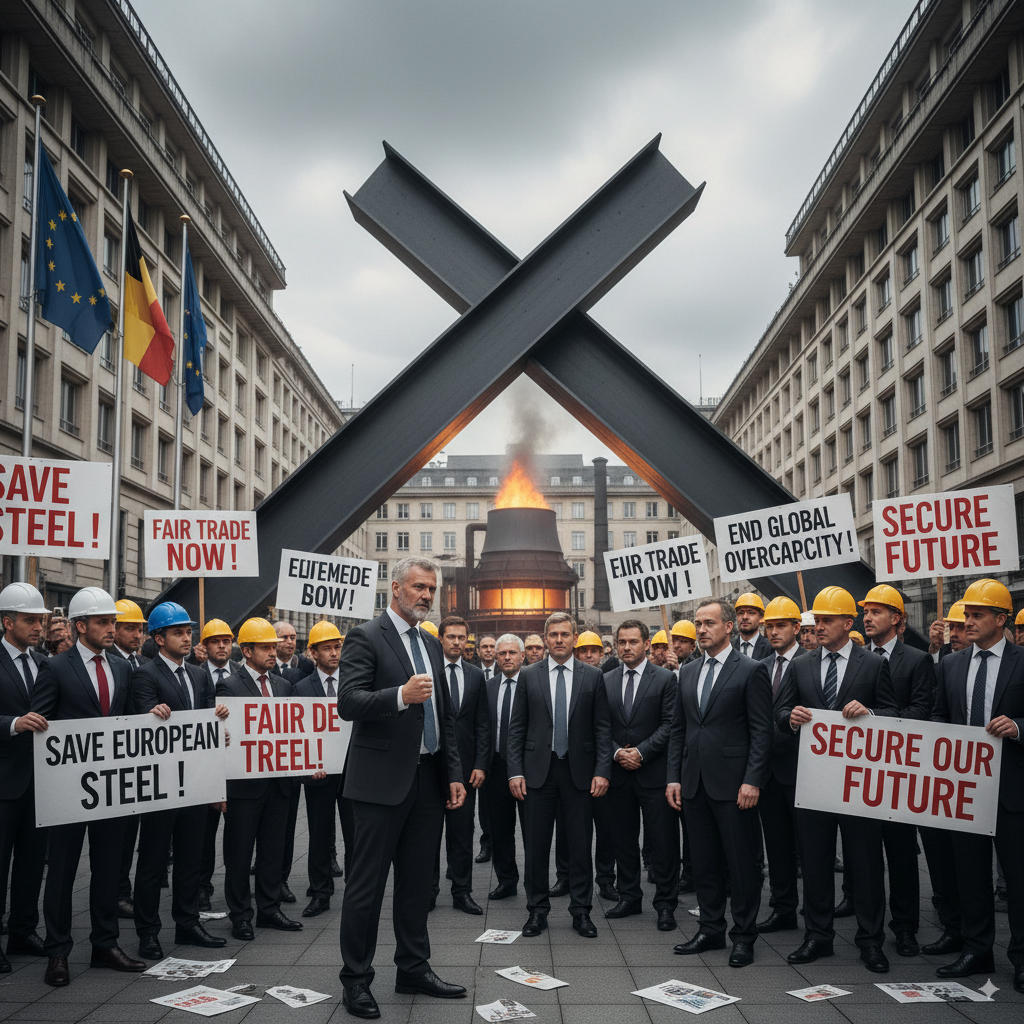
  • MEPs Urge Swift Action on New EU Steel Safeguard to Protect Industry Amid Global Overcapacity

    MEPs Urge Swift Action on New EU Steel Safeguard to Protect Industry Amid Global Overcapacity

    A group of European lawmakers has written to the European Commission, calling for swift action to address the pressing issues facing the EU’s steel sector. The letter, signed by 105 MEPs and industry representatives, comes as the Commission prepares to launch a new trade protection framework for the industry.

    The lawmakers, who are members of the European Parliament’s Industry, Research and Energy Committee, are urging the Commission to implement a new trade instrument that will provide effective protection to the EU’s steel sector. They are calling for the framework to be operational by January 2026, with a view to bringing import market shares back to sustainable levels comparable to 2012-2013.

    The lawmakers argue that the current global overcapacities, which are forecast to increase to over 721 million tonnes by 2027, pose a significant threat to the EU’s steel sector. They are urging the Commission to adopt a comprehensive approach that will address the issue of circumvention, provide for a meaningful tariff on imports out of quota, and ensure that the framework is WTO-compatible.

    The lawmakers are also calling for the Commission to consider the competitiveness of steel-using sectors, arguing that the EU cannot afford to lose competitiveness in one industry at the expense of another. They are urging the Commission to adopt measures to boost the competitiveness of steel-using sectors, in addition to implementing a strong and highly effective trade safeguard for steel.

    The letter is a clear call to action for the Commission to take decisive steps to protect the EU’s steel sector. The lawmakers are urging the Commission to deliver a legislative proposal with urgency and ambition, in order to secure the competitiveness of the European steel sector.

  • Kazatomprom Retains Baa1 Rating Following Moody’s Review

    Kazatomprom Retains Baa1 Rating Following Moody’s Review

    Moody’s Ratings has confirmed JSC National Atomic Company Kazatomprom’s credit rating at ‘Baa1’ with a Stable outlook following a periodic review published on 10 September 2025. The agency underscored the company’s pivotal role in Kazakhstan’s economy, given state oversight via the sovereign wealth fund Samruk-Kazyna.

    Kazatomprom’s rating reflects its robust financial metrics, low production costs, and dominance in uranium supply—accounting for roughly 20% of global output. Moody’s also noted its vast uranium reserves, operational diversification, and long-term client contracts as key strengths.

    The review reiterated Kazatomprom’s alignment with Kazakhstan’s strategic interests, reinforcing investor confidence. For further details, refer to Moody’s press release.

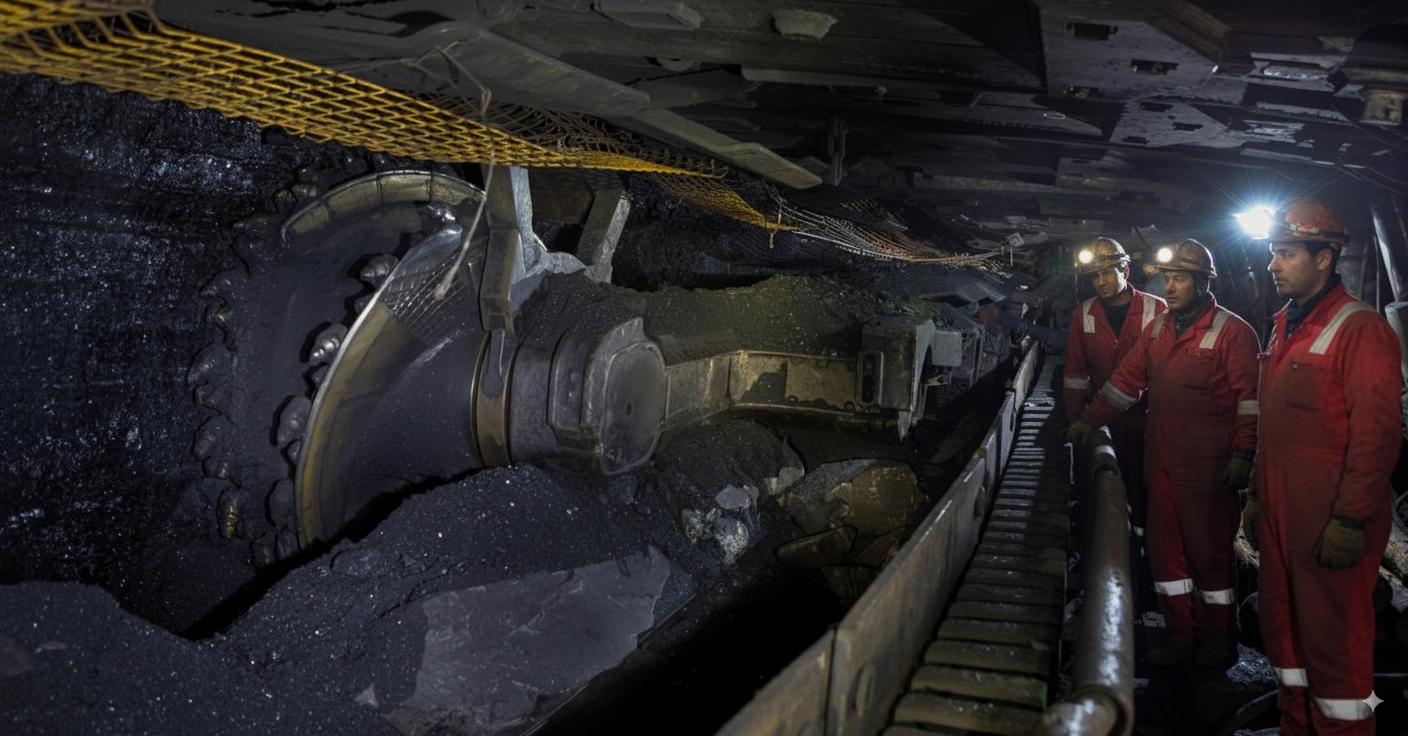
  • Poland’s JSW Mined 1.01 Million Tons of Coal in August 2025

    Poland’s JSW Mined 1.01 Million Tons of Coal in August 2025

    Jastrzębska Spółka Węglowa (JSW) reported August 2025 coal production of 1.01 million tons, achieving 84% of its monthly target due to operational disruptions, including a fire at the Budryk mine, force majeure declarations, and challenging geological conditions. Despite this, the company’s cumulative January-August output reached 8.44 million tons, exceeding its annual plan by 0.5%.

    Coal sales in August totaled 1.18 million tons (95.3% of the target), with energy coal outperforming expectations at 135.4% of the monthly goal. Coking coal sales, however, dipped to 0.93 million tons against a 1.05-million-ton target. The coke segment proved resilient, with August production hitting 0.30 million tons (116.3% of the plan) and sales reaching 0.29 million tons (110.1%). Year-to-date coke output stands at 2.01 million tons, surpassing annual projections.

    JSW underscored its long-term stability after securing a license extension for the Borynia deposit until 2042, which holds 40 million tons of coking coal reserves. The company attributed its sustained performance to its Strategic Transformation Plan, ensuring operational resilience despite market volatility.

  • ERG Opens Pioneering Solar-Powered School in Kazakhstan as Part of KZT15 Billion Education Drive

    ERG Opens Pioneering Solar-Powered School in Kazakhstan as Part of KZT15 Billion Education Drive

    The KZT7.8 billion (£13.7 million) school, which can accommodate 1,200 students, is part of ERG’s “ERG mektep” (“ERG for Schools”) programme. This initiative has channelled over KZT15 billion into education in Kazakhstan in recent years.

    The new building, spanning over 19,590 square meters, is one of the largest constructed under the state-led Keleshek Mektepteri (“Schools of the Future”) initiative. It incorporates modern features focusing on ergonomics, inclusivity, and energy efficiency. The school also features advanced security systems integrated with artificial intelligence.

    Shukhrat Ibragimov, Chairman of the Board of Directors and CEO of ERG, expressed pride in the project’s inclusion in the national initiative. He quoted Kanysh Satbayev, a prominent Kazakh scientist, stating, “The future belongs to young people. But in order to be prepared for this future, they need to be equipped with knowledge.”

    The school boasts 60 classrooms, four computer labs, a STEM laboratory, a robotics room, and language labs. It also includes hydroponic systems for biology and ecology studies and a media centre with a podcast studio. Digital assistants will assist teachers, providing tailored learning tasks for students.

    A key feature of the design is its focus on inclusivity, with accessible classrooms and special elevators to accommodate students with special educational needs. The Akim of the Kostanay Region, Mr Kumar Aksakalov, praised the collaboration between government and business, stating the school “meets all modern requirements” and will “become a solid foundation for fostering honesty, hard work, patriotism and civic responsibility among the younger generation.”

    In a joint programme with the Teach for Qazaqstan foundation, four specialist STEM teachers will join the new school to strengthen technical education. ERG has a history of supporting educational infrastructure in the country, having previously funded similar projects in the Pavlodar Region and modernisations in Aksu and Khromtau.

  • Ukraine Eyes Mining Waste as Strategic Source of Critical Materials

    Ukraine Eyes Mining Waste as Strategic Source of Critical Materials

    Ukraine plans to broaden its investment strategy for critical raw materials under the American-Ukrainian Reconstruction Investment Fund (AUIF), considering not only greenfield deposits but also alternative sources such as mining waste and tailings, Deputy Minister of Economy, Environment and Agriculture Yehor Perelyhin has said.

    In a column for Interfax-Ukraine, Perelyhin described decades-old mining and metallurgical waste as a potential “new raw material base” capable of supplying metals essential for batteries, electronics, aviation, and defense — while also addressing environmental damage from legacy industrial activity.

    He outlined six priority areas for exploration. The first involves tailings dams from mineral sands (titanium and monazite), where rutile, ilmenite, and zircon remain. Advanced processing and hydrometallurgy could unlock zirconium, hafnium, and scandium — vital for ceramics, optics, and aerospace.

    A second area is “red sludge” and slags from titanium dioxide pigment and alumina plants, which contain scandium alongside titanium, iron, and aluminum. Perelyhin noted that existing technologies allow scandium extraction modules to be integrated directly into production lines, reducing costs and accelerating output.

    Other promising sources include:

    • Phosphogypsum and phosphate waste, where rare earth recovery can be paired with gypsum production for construction.

    • Thermal power plant ash and coal dumps, which hold rare earths, gallium, scandium, aluminum, and germanium.

    • Tailings of iron, copper, and nickel ores, where cobalt, tellurium, germanium, vanadium, tungsten, and even gold and silver may be recovered with modern leaching methods.

    • Waste from uranium mining and processing, which contains vanadium, scandium, molybdenum, selenium, heavy rare earth elements, and yttrium, representing both strategic value and urgent environmental remediation needs.

    Perelyhin emphasized that this “brownfield” approach offers quicker access to marketable materials with lower capital investment than new mines, aligning with both Ukraine’s industrial strategy and global demand for critical minerals.

  • Kazakhstan and DR Congo Sign Mining and Geology Cooperation Agreements

    Kazakhstan and DR Congo Sign Mining and Geology Cooperation Agreements

    Kazakhstan’s President Kassym-Jomart Tokayev and Democratic Republic of Congo (DRC) President Félix Tshisekedi have held talks, according to Kapital.kz citing the Akorda press service. The two leaders oversaw the signing of interagency agreements covering diplomatic consultations as well as cooperation in mining and geology.

    Both nations hold vast natural resources and see potential in becoming reliable partners for mutually beneficial projects. The DRC plays a central role in global supply chains of critical minerals, accounting for approximately 76% of the world’s cobalt production, 14% of copper, 8.3% of tin, 42% of tantalum, and 40% of coltan, alongside deposits of other strategic metals essential to high-tech industries.

    Kazakhstan’s Eurasian Resources Group (ERG) already operates successfully in the DRC with the support of Congolese authorities. The new agreements are expected to accelerate the development of bilateral ties in the resource sector.

    In addition, the two presidents agreed to hold regular consultations and maintain close working contacts between their foreign ministries to ensure steady progress in cooperation.

  • Kyrgyzstan to Discuss Proposal to Build Nuclear Power Plant

    Kyrgyzstan to Discuss Proposal to Build Nuclear Power Plant

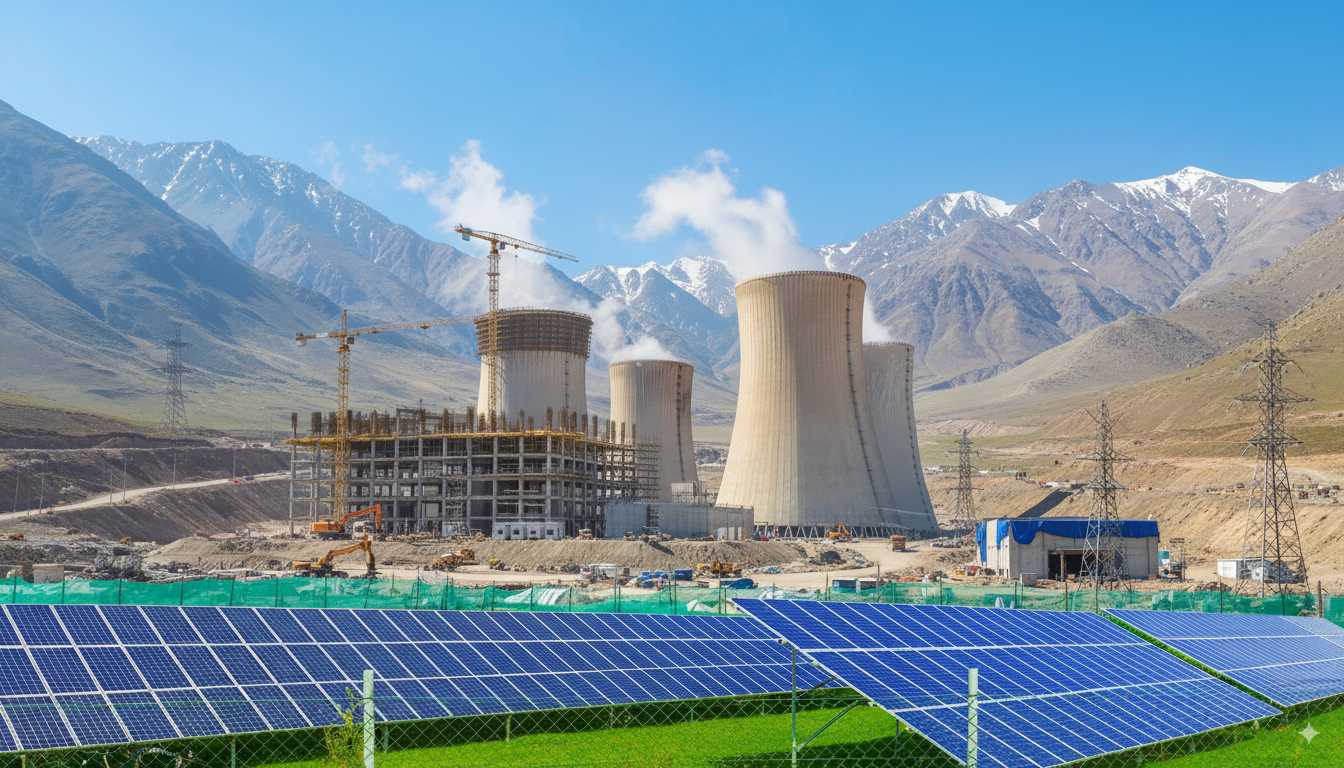
    Kyrgyzstan is set to discuss a proposal to build a nuclear power plant (NPP) in the country, with the energy ministry planning to put forward a proposal for a facility that would use small modular reactor (SMR) technology.

    Deputy Minister of Energy Emilbek Ysmanov told a parliamentary committee that the proposal would be discussed soon, with the aim of alleviating the country’s power outages. Kyrgyzstan is heavily dependent on hydropower and has ambitious plans to build up its hydro infrastructure, but the country still experiences frequent power outages.

    The planned NPP would be the first of its kind in Kyrgyzstan, and would be built in partnership with Russia’s state nuclear corporation Rosatom. Rosatom has already compiled a preliminary feasibility study for small NPPs in Kyrgyzstan and Myanmar, and has identified the northern Chui region as a possible location for the plant.

    The proposal comes as Kyrgyzstan resumes uranium mining after a five-year hiatus. The country has significant uranium reserves, and the resumption of mining is expected to help increase the country’s energy independence.

    The planned NPP would be a significant development for Kyrgyzstan, which has struggled with power outages in recent years. The country’s energy minister, Taalaibek Ibrayev, announced in October 2024 that public education efforts were underway to inform citizens about the planned NPP.

    Kyrgyzstan is not the only country in the region to be considering nuclear power. Kazakhstan and Uzbekistan are also moving ahead with plans for NPPs, with Kazakhstan planning to build three plants and Uzbekistan planning to build several SMRs and a large NPP.