Website: Eurasia.com

  • Tokayev Begins UN Visit with Talks on Uranium Cooperation with Cameco

    Tokayev Begins UN Visit with Talks on Uranium Cooperation with Cameco

    Kazakh President Kassym-Jomart Tokayev has arrived in New York to take part in the 80th session of the UN General Assembly, beginning his working visit with a meeting with Tim Gitzel, president of multinational corporation Cameco, the Akorda press service reported.

    The two sides discussed prospects for cooperation in the uranium sector. Tokayev stressed that Cameco has long been a reliable partner of Kazatomprom, having invested more than $500 million in Kazakhstan since entering the market and contributing to technology transfer.

    The president noted that Kazakhstan is entering a new stage in its energy development, which includes plans to build three nuclear power plants. He said the country is interested in adopting innovative methods in the nuclear industry.

    Gitzel provided an update on the operations of the Inkai joint venture, which has been developing the Inkai deposit in Turkestan Region for more than 25 years.

    During his stay in New York, Tokayev will deliver remarks at the General Debate of the UNGA’s landmark 80th session, hold talks with world leaders and heads of international organisations, and take part in a roundtable with representatives of multinational companies to present Kazakhstan’s investment opportunities.

  • Cornish Lithium Lifts Trelavour Resource by 50%, Targeting 10,000 tpa LiOH for 20+ Years

    Cornish Lithium Lifts Trelavour Resource by 50%, Targeting 10,000 tpa LiOH for 20+ Years

    Cornish Lithium has announced a 50% increase in its JORC-compliant Mineral Resource for the Trelavour Lithium Project in Cornwall, following 12 months of additional drilling, sampling, testing, and modelling. The upgrade underpins plans to produce ~10,000 tonnes per year of battery-grade lithium hydroxide for at least 20 years and provides the platform for a Feasibility Study due by end-2025.

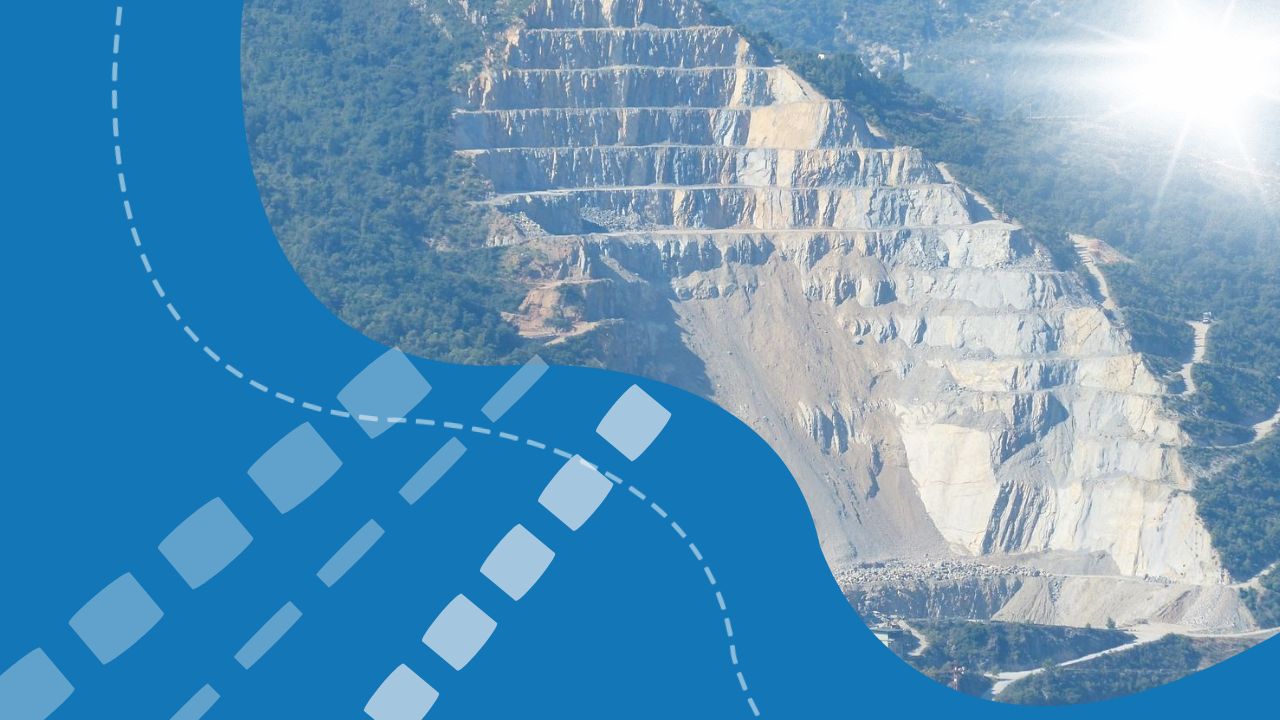
    The updated Mineral Resource stands at 88.5 Mt @ 0.21% Li₂O (equivalent to 183.5 kt Li₂O or 454.5 kt LCE), comprising 63.0 Mt Measured & Indicated and 25.5 Mt Inferred—a 50% increase versus the 2022 estimate. The resource extends from surface within a former china clay pit, implying a very low strip ratio.

    The update incorporates 18,616 m of Mineral Resource drilling (56 diamond, 88 RC holes), with more than 20,000 m completed across resource, exploration, and geotechnical programs. Cornish Lithium says the project is fully integrated, producing refined battery-grade lithium hydroxide domestically with no reliance on overseas refineries, utilising proprietary low-carbon processing technology now fully owned by the company.

    CEO Jamie Airnes welcomed the milestone as “one more step” toward securing UK critical minerals, jobs, and industrial capacity, noting the upgrade’s role in supporting the Development Consent Order (DCO) application and the path to commercial production from 2029. Planned next steps include completing the Feasibility Study and advancing permitting to keep the project on its targeted timeline.

  • Estonia Opens First Rare Earth Magnet Plan

    Estonia Opens First Rare Earth Magnet Plan

    Europe’s first large-scale rare earth magnet production plant has opened in Estonia, marking a watershed moment in the EU’s efforts to secure supply chains for critical raw materials. The facility, developed by Canadian group Neo Performance Materials at an investment of $75 million, is more than just a factory—it represents Europe’s growing determination to reduce its reliance on China in the race toward renewable energy and electric mobility.

    Why Rare Earth Magnets Matter

    Rare earth magnets are a cornerstone of the energy transition. They power electric motors in vehicles, enable the operation of wind turbines, and play a role in advanced electronics. Without them, scaling up clean technology becomes almost impossible. The challenge is that China has long dominated both the processing and production chains, supplying over 90 percent of the world’s rare earth magnets and an estimated 98 percent of Europe’s demand. This dominance has left industries on the continent vulnerable.

    When Beijing tightened export controls on certain rare earth materials earlier this year, European manufacturers reported severe delays in securing supplies. Such disruptions risk derailing the EU’s aggressive targets for decarbonisation and the expansion of electric vehicle production. As Neo’s chief executive Rahim Suleman put it, “Customer motivations are incredibly high to diversify their supply base and to have localized supply chains.”

    A Strategic Investment for Europe

    The new Estonian plant will initially produce 2,000 tonnes of rare earth magnets annually, with plans to scale up to 5,000 tonnes. While this is still only a fraction of projected European demand—forecast to rise from roughly 22,000 tonnes today to 60,000 tonnes within the next decade—it represents a critical first step toward supply diversification.The facility’s operations are closely linked with Neo’s nearby separation plant, creating an integrated processing hub inside the EU. Raw materials will be sourced from Australia and Malaysia, regions that Europe considers more geopolitically reliable than China.

    Beyond private investment, the project has enjoyed notable public support: a €18.7 million grant from the EU’s Just Transition Fund and a $50 million line of credit from Export Development Canada.European Commission president Ursula von der Leyen underscored the significance, stating that the magnets produced in Estonia are “indispensable to growth and innovation.” Her comments align with the EU’s strategic goal of processing at least 40 percent of its critical raw materials domestically, part of a broader strategy to insulate the bloc from geopolitical shocks.

    Industrial Demand and Auto Sector Stakes

    The automotive sector stands at the heart of the rare earth magnet debate. German auto suppliers Bosch and Schaeffler have already signed contracts with Neo, highlighting the desperation among manufacturers to lock in alternative supply lines. Electric vehicles rely heavily on permanent magnets for motors, making uninterrupted access critical to Europe’s industrial competitiveness.At the same time, Europe faces a delicate balancing act. Producing magnets outside China comes at a cost premium, driven by higher environmental standards, energy costs, and raw material logistics. But as Suleman pointed out, the magnet within an electric vehicle motor represents only a small fraction of the total cost. For carmakers increasingly judged by their ability to produce cleaner vehicles, paying a premium for secure, non-Chinese inputs may soon be seen as a necessary trade-off.

    Europe vs. U.S.: Diverging Paths

    The EU is not the only region scrambling to insulate itself from China’s grip on rare earths. The United States has moved aggressively, fueled by larger federal subsidies and sharper geopolitical confrontation with Beijing.

    Washington has poured billions into rare earth mining and processing projects, while Europe has leaned more heavily on public–private partnerships and industry demand.

    Suleman contrasted the two approaches bluntly: “In the U.S., they’re chasing government money, and in Europe we’re chasing customers—or customers are chasing us.” Europe’s model may take longer to scale, but some argue it will prove more resilient, given that it is anchored in long-term demand rather than temporary government incentives.

    The Limits of Diversification

    Despite bold moves like the Estonian plant, Europe cannot entirely sever ties with China in the near future. Analysts suggest that at best, 30 percent of global rare earth magnet production could shift outside Chinese borders in the next decade, leaving Beijing with enduring dominance. France has spearheaded several projects to challenge this control, but insufficient mining and processing capacity across the continent means Europe will remain dependent on imports.

    Furthermore, the global raw material supply chain itself has bottlenecks. While Australia is emerging as a reliable supplier, and southeast Asia provides alternatives, scaling these sources to cover growing demand will take time, investment, and political stability.

    A Turning Point for Europe’s Green Transition

    The Estonian facility is ultimately a symbol of Europe’s intent to claim greater agency in a strategically vital industry. As electric vehicle adoption accelerates and renewable power scales, the demand for rare earth magnets will only intensify. Neo Performance Materials’ new plant will not solve Europe’s dependency overnight. But by anchoring at least part of the value chain closer to home, it signals to both industry and policymakers that strategic autonomy in essential raw materials is not only desirable but possible.

    For Europe, Estonia is just the beginning. The continent will need more facilities, stronger alliances with trusted suppliers, and coordinated industrial policies to reduce its rare earths vulnerability. The magnet plant may be a modest contribution in terms of tonnage, but geopolitically, it is a giant leap forward.
  • Kyrgyzstan Boosts Mineral Output in Early 2025 Amid Sector Consolidation

    Kyrgyzstan Boosts Mineral Output in Early 2025 Amid Sector Consolidation

    Kyrgyzstan recorded significant growth in gold, silver, coal, and natural gas production during the first half of 2025, according to data from the Kyrgyz Geological Service. Despite the increase, the number of active companies in the sector fell, reflecting a wave of license revocations and industry consolidation.

    Compared to the same period in 2024, the country produced an additional 700 kg of gold and 1.1 million cubic meters of natural gas. Silver production surged from 198 kg to 3.8 tons, while coal output rose from 3.1 million to 4.4 million tons.

    The state resource balance for January–June 2025 was as follows:

    • Regular gold: 5.8 tons

    • Placer gold: 57 kg (up from 28.3 kg)

    • Silver: 3.8 tons (up from 198 kg)

    • Coal: 4.4 million tons (up from 3.1 million tons)

    The sector also delivered stronger fiscal results, with tax and non-tax revenues climbing from 17.9 billion KGS ($205.2 million) in 2024 to 27.8 billion KGS ($318.5 million) in 2025. Industrial production reached 30.7 billion KGS ($352 million), an increase of nearly 3 billion KGS ($34.4 million).

    At the same time, licensing activity slowed. Authorities revoked 199 production licenses in the first half of 2025, citing inactivity, while only 15 new licenses were issued, compared with 26 during the same period last year. Expired permits were reallocated to other operators.

    Officials welcomed the rise in output as a positive contribution to GDP and a sign of improved efficiency. However, the report warned of risks to construction resources such as marble, sand, and gravel, which are being rapidly depleted due to high demand from the building sector.

    Experts caution that while the surge in mining strengthens revenues and energy security, long-term sustainability will require careful planning to prevent overexploitation of finite resources.

  • Portugal’s Lithium Debate Intensifies as EU Pushes for Faster Mining Projects

    Portugal’s Lithium Debate Intensifies as EU Pushes for Faster Mining Projects

    Portugal has once again become a focal point in Europe’s race to secure lithium for electric mobility, as the European Commission presses for the removal of barriers delaying mining projects. This comes just as Savannah Resources, a UK-based company, announced a major increase in estimated resources at its Barroso project in Boticas, northern Portugal.

    Savannah reported that confirmed resources at Barroso have risen by 40% to 39 million tonnes, with exploration targets potentially lifting that figure to 62 million tonnes. The company suggested that in time, deposits could exceed 100 million tonnes of lithium mineralisation — theoretically enough to supply batteries for 47 million electric vehicles. The project, flagged by Brussels as one of three “strategic” lithium developments in Portugal, benefits from simplified licensing procedures under the EU’s Critical Raw Materials Act.

    However, local opposition remains fierce. Communities in Covas do Barroso, environmental groups, and academics argue that the mine would devastate heritage landscapes, deplete scarce water resources, and offer limited returns given Portugal’s comparatively small reserves. Despite being described as Europe’s largest deposit, Portugal holds just 60,000 tonnes of lithium reserves — far less than global leaders such as Chile, Australia, and China, which hold millions of tonnes.

    Former PSD environment secretary Joaquim Poças Martins has warned that lithium cannot be a long-term solution for Europe’s energy transition. “You cannot destroy a mountain in order to extract a few kilos of lithium,” he said, pointing instead to hydrogen as a more viable energy storage alternative.

    The European Commission, led by President Ursula von der Leyen, maintains that lithium projects are vital for reducing dependence on China and other dominant suppliers. Von der Leyen this week called for urgent action to fast-track such initiatives, citing lithium processing in Portugal as a priority.

    Yet Portugal’s environment minister Maria da Graça Carvalho has acknowledged the difficulty of advancing projects “against the will of everyone around you.” Meanwhile, a UN committee recently ruled that Portuguese authorities failed to respect citizens’ rights to environmental information and participation in the case of the Barroso mine.

    For residents, the stakes remain high. Campaigner Aida Fernandes of United in the Defence of Covas do Barroso argues the mine represents “destruction in the name of climate protection,” while former mayor Fernando Queiroga has warned that water scarcity could make the project disastrous during drought years.

    With Brussels urging speed and locals vowing resistance, Portugal’s lithium question has become a defining test of how Europe balances strategic ambitions with environmental and social sustainability.

  • US Delegation Explores Ukrainian Titanium and Zirconium Mines Under New Minerals Pact

    US Delegation Explores Ukrainian Titanium and Zirconium Mines Under New Minerals Pact

    A United States delegation has visited central Ukraine to assess titanium, zirconium, and hafnium mining opportunities, marking the first steps in a new minerals agreement between Kyiv and Washington.

    Representatives from the US International Development Finance Corporation (DFC), accompanied by Ukraine’s Minister of Economy, Environment and Agriculture Oleksiy Sobolev, toured the Birzulivskiy mining and processing complex and the Likarivske deposit in the Kirovohrad region. Both sites are operated by Ukrainian titanium producer Velta, which has mined in the area for more than 14 years.

    Velta’s expansion plans include producing zircon and hafnium—metals essential to the nuclear industry—in addition to titanium, while also generating by-products such as clay and sand for construction. “Our ability to provide an alternative source of critical raw materials outside of China is important to our American partners, while our additional products will be essential for the reconstruction of Ukraine,” said Velta director Andriy Brodsky.

    Titanium is one of the 34 critical raw materials on the European Union’s list, with applications across defense, aerospace, and technology sectors. Its global market value is forecast to exceed $53 billion by 2034, with demand rising amid supply disruptions caused by Russia’s war in Ukraine and Western sanctions. Before the conflict, Russia supplied nearly one-third of US titanium by-products, a gap Washington now seeks to fill through new partnerships.

    The April 30 minerals agreement grants the US preferential access to Ukrainian investment projects spanning natural resources, infrastructure, and defense programs. The site visits by the DFC and Ukrainian officials mark an early move to accelerate joint ventures under this framework.

  • Krumovgrad’s Ada Tepe Gold Mine Seen as Model for Sustainable Mining in Protected Areas

    Krumovgrad’s Ada Tepe Gold Mine Seen as Model for Sustainable Mining in Protected Areas

    In southeastern Bulgaria, near the borders with Turkey and Greece, the Ada Tepe gold mine in Krumovgrad has become a showcase for how modern technology and strict environmental standards can align mining with community development. Operated by Canada’s Dundee Precious Metals, the mine is located within the Natura 2000 Protected Area — an unusual setting for industrial activity — but is widely recognized in Europe as one of the region’s most environmentally responsible mining projects.

    Local officials say the mine has revitalized the Krumovgrad area, creating jobs, supporting small businesses, and financing local infrastructure. “At first we faced protests from green activists,” explained Mayor Sebihan Mehmed. “But we clarified the question: do we not want a mine at all, or do we want one with the most advanced technology? Instead of cyanide, which would have meant 95% ore recovery, the company uses flotation with 75%, reducing environmental risk.” The mine also applies parallel reclamation methods for tailings and provides real-time water quality data online from multiple monitoring points.

    Beyond mining, Dundee has established a development fund for small businesses, offering a mix of grants and soft loans. More than 70 projects have been approved, including a local canning factory to process the region’s abundant peppers. Investments have also been directed toward healthcare, education, and municipal infrastructure.

    The Ada Tepe mine is expected to close in 2026, after which Dundee plans to hand over the land to Krumovgrad for transformation into a tourist zone by 2032. Plans include camping facilities, eco-trails, sports grounds, and educational areas.

    For Bulgaria’s neighbors, including North Macedonia, the project is an important case study. A Macedonian delegation of officials, engineers, and journalists recently visited the site to learn best practices for sustainable mining. “This mine is recognized in Europe as one of the most environmentally friendly,” said Filip Petrovski, Macedonia’s State Secretary for Mining. “We want to learn how responsible cooperation with local communities and clear regulations can build a sustainable sector.”

    Debates over mining remain heated in Macedonia, particularly regarding cyanide use, which will soon be prohibited under new regulations. Activists in Strumica have long opposed concessions for gold mines in fertile farmland, citing environmental and health concerns.

    The example of Ada Tepe suggests that with strong regulation, advanced technology, and community engagement, mining can deliver economic and social benefits while laying the groundwork for sustainable post-mining development.

  • Aurubis Upgrades Avellino Shaft Furnace to Boost Copper Wire Rod Production and Sustainability

    Aurubis Upgrades Avellino Shaft Furnace to Boost Copper Wire Rod Production and Sustainability

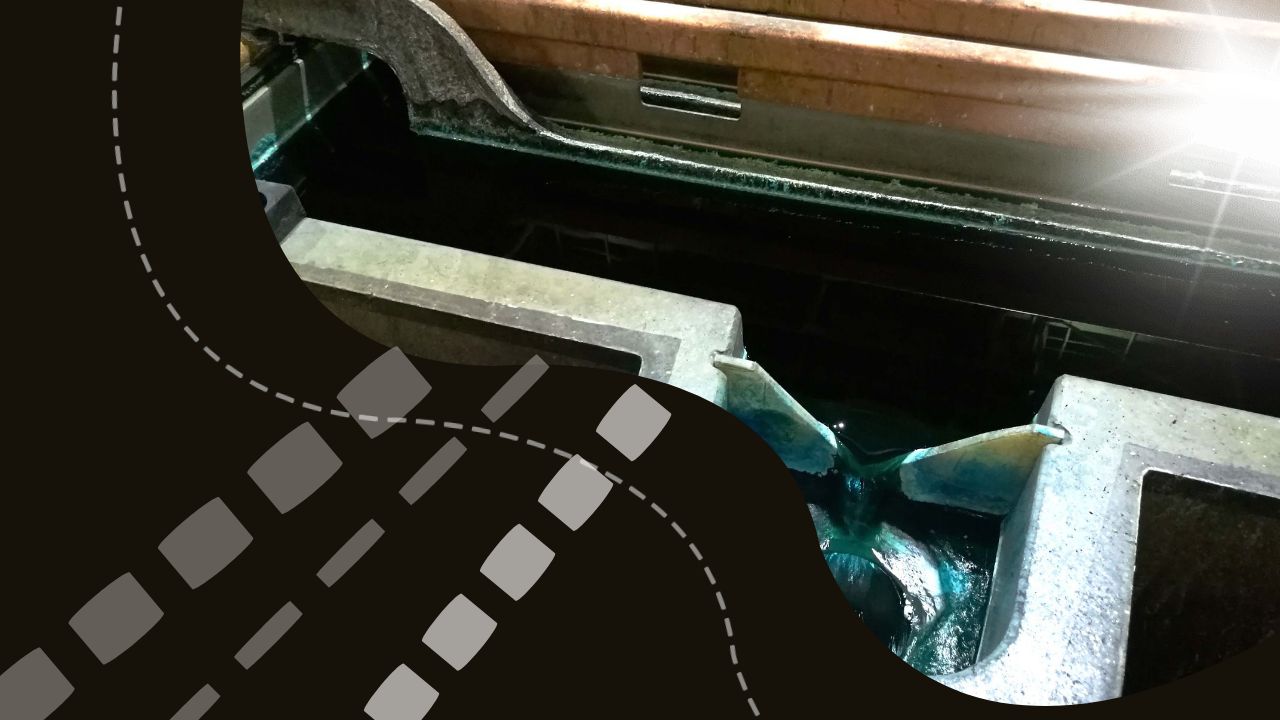
    Aurubis AG, one of the world’s largest copper recyclers and a leading provider of non-ferrous metals, has completed the modernization of its shaft furnace at the Avellino site in Italy. The €5 million investment marks a key milestone in enhancing the efficiency, sustainability, and long-term competitiveness of copper wire rod production.

    Copper wire, essential for data centers, renewable energy, electrification, and e-mobility, is a strategic material at the core of Europe’s energy transition. The modernization has increased production capacity at Avellino by nearly 20% while lowering energy use and reducing CO₂ emissions.

    The shaft furnace, central to wire rod production, operates by feeding copper cathodes and high-purity scrap from the top, where they are preheated by rising hot gases before melting at the bottom. This process maximizes energy efficiency and throughput.

    Upgrades included extending the furnace shaft, installing a new shell, modernizing the refractory lining, optimizing the charging system, and preparing the site for a future-ready burner and combustion setup. These improvements lay the foundation for further decarbonization and sustainable energy solutions.

    “Modernizing the shaft furnace provides the foundation for more energy-efficient and future-ready production in Avellino. At the same time, it strengthens our market position and ensures the long-term supply of strategically important copper wire rod for our customers,” said Bernardino Greco, Site Manager at Aurubis Avellino.

    Tim Kurth, Chief Operations Officer for Custom Smelting and Products, added: “The investment secures an advanced supply of copper wire, a key product for the major transformation trends, and plays a decisive role in strengthening Europe’s competitiveness.”

    Aurubis plans a second upgrade phase in August 2026, which will introduce a new natural gas combustion system expected to lower gas consumption by up to 10%. Once completed, the full production capacity increase will take effect.

    The Avellino site is also the first in Italy to begin the process of securing The Copper Mark certification, an independent assurance framework promoting responsible copper value chain practices.

  • Kazakhstan to Open National Laboratory for Rare Earth and Precious Metal Export Control

    Kazakhstan to Open National Laboratory for Rare Earth and Precious Metal Export Control

    Kazakhstan will establish a new laboratory to strengthen oversight of exported raw materials and detect the presence of rare earth elements (REEs) and precious metals, Vice Minister of Industry and Construction Iran Sharkan announced at a briefing, according to Interfax-Kazakhstan.

    The facility will be created under the National Geological Service and accredited to international standards. Its role will be to analyze the composition of ores and concentrates leaving the country, preventing the uncontrolled export of materials that may contain valuable or scarce metals.

    Sharkan emphasized that unauthorized export of rare earths remains a pressing issue for Kazakhstan, and the government is actively working to address it. The new laboratory will ensure that shipments are properly assessed before crossing borders, closing gaps in current oversight.

    The initiative follows calls made in September by the Ak Zhol party, which proposed that all export shipments of ores and concentrates undergo chemical testing in independent accredited laboratories, alongside the creation of state-run labs. The party argued that existing procedures—where analyses are commissioned directly by subsoil users—leave results unchecked and unverifiable by government authorities.

    By establishing its own laboratory infrastructure, Kazakhstan aims to tighten control, safeguard strategic resources, and ensure transparency in the country’s mineral exports.

  • Von der Leyen Calls for Removal of Barriers to AI and Lithium Projects in Push for EU Competitiveness

    Von der Leyen Calls for Removal of Barriers to AI and Lithium Projects in Push for EU Competitiveness

    European Commission President Ursula von der Leyen has urged the removal of obstacles hindering the growth of key sectors such as artificial intelligence start-ups and lithium processing, while also calling for stronger infrastructure and trade partnerships to boost the EU’s competitiveness.

    Speaking in Brussels at a high-level conference marking one year since the Draghi Report, von der Leyen said Europe must act urgently to close the investment gap with the United States and China. The report estimated the EU needs an additional €800 billion annually, more than 4% of its GDP, to stay competitive.

    Von der Leyen highlighted the need to strengthen the EU’s single market, noting that internal barriers currently equate to tariffs of 45% on goods and 110% on services. “An AI start-up from Portugal or Romania should be able to grow without problems across our continent, and currently this is often not the case,” she said.

    She also pointed to the importance of securing critical raw materials, citing lithium processing in Portugal as an example of initiatives that need both financial support and timely licensing. On energy, she pledged further investment in interconnections, including the Bay of Biscay project, which will double capacity between France and Spain. She announced plans for a “network package” and an “energy motorways initiative” to address eight key bottlenecks in European energy infrastructure.

    In terms of global partnerships, von der Leyen underscored the EU’s distinctive approach to resource projects, pointing to the Lobito corridor linking Angola’s copper belt as a strategic initiative. “Other powers are only interested in extraction, [but] we build local processing industries and value chains because that is how we strengthen our own security,” she said.

    She also expressed determination to secure trade agreements, including with India by year-end, as well as advancing negotiations with South Africa, Malaysia, and the UAE.

    Acknowledging the EU’s slow progress on Draghi’s recommendations — only 11.2% have been fully implemented — von der Leyen stressed the need for urgency. She also reiterated the importance of greater European independence in defence, while cautioning that such efforts “will not happen overnight.”