Website: Eurasia.com

  • Ferroglobe PLC Suspends Silicon Metal Production in Europe, Citing Market Pressures and Need for Fair Competition

    Ferroglobe PLC Suspends Silicon Metal Production in Europe, Citing Market Pressures and Need for Fair Competition

    Ferroglobe PLC, a leading producer of silicon metal, has revealed plans to temporarily halt all silicon production in France and Europe beginning this October. This decision follows severe challenges impacting the European silicon industry, as highlighted by Benjamin Crespy, Chief Operating Officer at Ferroglobe PLC, in a recent interview with Les Echos. The suspension is driven by collapsing demand from key sectors and falling prices, which are largely attributed to less constrained and more carbon-intensive low-cost imports.

    Benjamin Crespy emphasised the critical need to restore fair competition in the European silicon market. Without immediate and decisive action, Europe risks losing its sovereign silicon production capacity, falling short of its carbon emission targets, and forfeiting access to a strategic material essential for the energy transition, green mobility, defense technologies, and other key industries.

    High-purity silicon metal is used by many industries. In the chemical industry it is used for producing silicon compounds as well as silicon wafers used in photovoltaic solar cells and electronic semiconductors. And aluminum manufacturers use it to improve the already useful properties of aluminum. When used with aluminum, silicon improves its castability, hardness and strength.

    Besides, aluminum demand has been growing steadily in recent years, as a reflection of the economic activity in both the developed and developing word. This demand of lighter and more economical material has triggered a growth in Silicon metal consumption by aluminum manufacturers.

    Ferroglobe PLC remains committed to producing high-quality silicon metal and collaborating with customers and partners to innovate and enhance competitiveness. However, Crespy stressed that securing Europe’s future in silicon requires collective efforts and decisive measures to address the current market pressures and restore a level playing field. The company’s decision serves as a stark reminder of the challenges facing the European silicon industry and the importance of safeguarding its strategic interests.

  • Mongolia Unveils Oyut Copper Deposit with 357 Million Tons of Ore

    Mongolia Unveils Oyut Copper Deposit with 357 Million Tons of Ore

    A newly discovered mineral deposit named Oyut has been identified within the territories of Bayan-Undur and Jargalant districts in Mongolia’s Orkhon province, as reported by Montsame. Preliminary geological exploration indicates that the Oyut deposit contains approximately 357 million tons of ore reserves, positioning it as a potential asset of significant scale, comparable to Mongolia’s largest copper and molybdenum ore mining operation at Erdenet.

    On September 7, Mongolian Prime Minister Zandansahtar Gombojav attended the official opening and preparatory activities for the operational launch of the Oyut deposit. The Prime Minister has authorised a feasibility study for the construction of a concentrator designed to process between 5 to 10 million tons of ore annually. Early estimates suggest that the deposit could sustain operations for 30 to 35 years, marking it as a long-term strategic resource. The initial geological exploration was conducted independently by specialists from the Erdenet Mining Corporation, with senior engineers from the corporation overseeing the project’s design and construction.

    Prime Minister Gombojav emphasised Mongolia’s constitutional commitment to equitable resource distribution, stating that the benefits derived from subsoil resources will be consolidated into the National Sovereign Wealth Fund and fairly allocated to all citizens. The Oyut copper deposit is strategically located approximately 8 kilometres from the Erdenetyn-Ovoo deposit, the foundation of the Erdenet Mining Corporation, and just 3 kilometres from the infrastructure of the Industrial and Technology Park near Erdenet city.

    The launch of operations at the Oyut deposit is anticipated to make a substantial contribution to the Sovereign Wealth Fund. It is also expected to serve as a key driver of socio-economic development in Erdenet city, Orkhon aimag, the Northern region, and Mongolia as a whole. This discovery underscores Mongolia’s potential to leverage its mineral resources for long-term economic growth and development.

  • Mining & Metals Analytical Report Highlights Kazakhstan’s Potential as a Mineral Investment Hub

    Mining & Metals Analytical Report Highlights Kazakhstan’s Potential as a Mineral Investment Hub

    A new analytical report produced by AIFC highlights Kazakhstan’s significant potential to become a leading hub for mineral investment, positioning the country as a crucial player in the global energy transition. The report, which includes what is believed to be the first-ever comparative benchmark of Kazakhstan against major mining jurisdictions like Canada, Chile, Australia, and Indonesia, concludes that while the nation has vast untapped potential, it must take specific steps to fully capitalize on it.

    The report identifies several key actions necessary to support this ambition. These include a strategic focus on active investment in junior mining companies, which are vital for early-stage exploration. The country also needs to provide a stable legal and regulatory framework to attract and retain foreign investment. Finally, Kazakhstan must align its development strategy with its mineral strengths and global trends, focusing on the materials most in demand for clean energy technologies.

    The report’s findings are underpinned by compelling data points that showcase Kazakhstan’s existing role and future prospects in the mining and metals sector. In 2024, the industry attracted $3 billion in gross foreign direct investment, accounting for 17% of the national total. Mining and metals also made up a substantial 12.1% of the country’s GDP last year. Despite its established importance, a staggering 65% of Kazakhstan’s geological area remains unexplored, presenting a monumental opportunity for new discoveries. These domestic figures are set against the backdrop of a global context where an estimated $2.1 trillion in mining investment will be needed by 2050 to meet the demands of a net-zero world.

  • Kazatomprom Expands Exploration and Seeks International Ventures

    Kazatomprom Expands Exploration and Seeks International Ventures

    Kazatomprom, the world’s largest uranium producer, has announced plans to significantly increase its exploration activities both in Kazakhstan and internationally, as the company seeks to capitalise on growing global demand for uranium. The state-controlled giant revealed that it will triple its exploration efforts in Kazakhstan while also pursuing new ventures abroad, following recent agreements with Jordan and Mongolia.

    Currently, Kazatomprom produces all of its uranium domestically, but last week the company signed a landmark agreement with Jordan to develop the country’s uranium assets. Meirzhan Yussupov, the company’s CEO, addressed the World Nuclear Symposium in London, highlighting the company’s reputation in mining and its growing interest in international expansion. “We are acknowledged for our ability to do mining, and that’s why … we are also looking at opportunities abroad,” Yussupov said.

    Kazatomprom has also made strides beyond Kazakhstan’s borders in recent years. Last year, the company signed a cooperation agreement with Mongolia’s state nuclear company, Mon-Atom, and Yussupov hinted that further international opportunities are being explored, although he did not provide specific details.

    “We are trying to diversify our operations on a global scale geographically,” Yussupov explained, reinforcing the company’s strategy of global expansion.

    The push for greater international expansion comes amid rising demand for uranium. The World Nuclear Association’s report, released on Friday, warned that global uranium demand for nuclear reactors is expected to more than double by 2040, necessitating the development of new mining operations. To meet this demand, Kazatomprom has launched an ambitious exploration programme in Kazakhstan, increasing its exploration capacity threefold.

    The company, which supplies about 20% of the world’s primary uranium, has already seen growth in its output. In the first half of 2025, Kazatomprom boosted production by 13% and confirmed its production guidance for 2025. However, it also noted that it plans to scale back its output expansion in 2026 due to market conditions.

    Uranium prices have been on the rise, more than doubling over the past five years to $76 per pound. However, prices are still well below the February 2024 peak of $106 per pound, which was the highest level seen since November 2007.

    With increased exploration efforts and an eye on global diversification, Kazatomprom appears poised to strengthen its position as a key player in the uranium market, aligning with the long-term outlook of rising nuclear energy demand worldwide.

  • SSGPO Secures $400 Million Syndicated Loan for Strategic Expansion

    SSGPO Secures $400 Million Syndicated Loan for Strategic Expansion

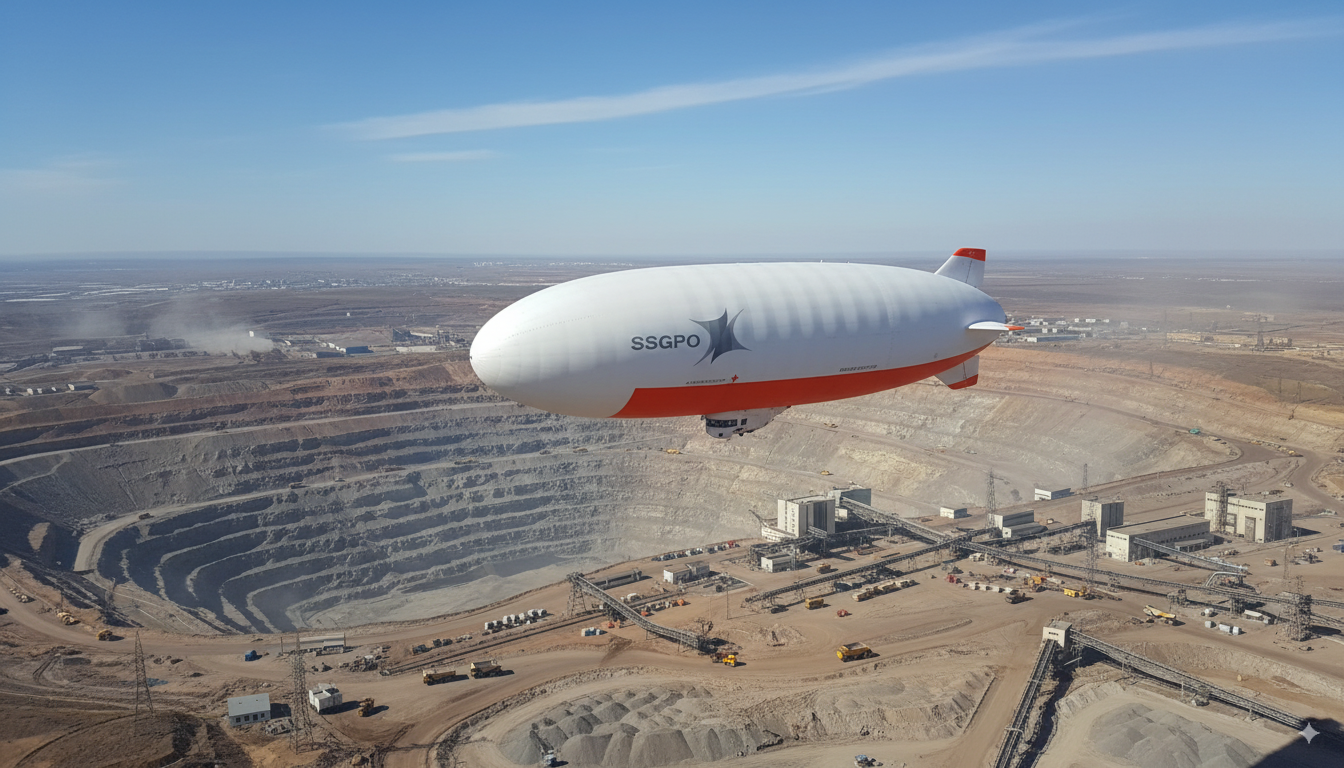
    Sokolovsko-Sarbayskoye Mining Production Association (SSGPO), part of the Eurasian Resources Group (ERG), has opened a new syndicated credit line worth up to $400 million with other firms under common control, according to its recently published financial report. The agreement was finalised in February 2025 and is set to run until 2029. The document states that the interest rate on the loans, denominated in US dollars and euros, will be a market rate.

    This latest move follows a similar arrangement made in 2024, when SSGPO signed a syndicated credit line agreement with affiliated companies for up to $300 million, with a repayment deadline of the end of 2028. Furthermore, SSGPO acts as a co-guarantor for ERG’s loans, alongside other subsidiaries within the group. As part of the new credit line, SSGPO provided a loan of $6 million to an unnamed company under common control in June 2025.

    SSGPO’s core business is the extraction and processing of iron ore. The company holds a number of iron ore mining contracts in the Kostanay region, which are due to expire in 2033, 2035, and 2040. In addition, SSGPO is currently constructing a hot-briquetted iron plant in Rudny, which is scheduled to commence operations in late 2027. The company’s financial performance for 2024 showed an increase in revenue to 424.1 billion tenge from 389.6 billion tenge in the previous year, although it recorded a loss of 69.3 billion tenge, a slight improvement on the 71.4 billion tenge loss in 2023. The sole owner of SSGPO is ERG Iron Ore Holding B.V., which is part of the broader ERG group. The Eurasian Resources Group itself is co-owned by the Ministry of Finance of the Republic of Kazakhstan, which holds a 40% stake, with the remaining shares divided between the heirs of Alexander Mashkevich and the Ibragimov family, each with 20.7%, and Patokh Shodiev, who holds 18.6%. The Ibragimov family is listed by Forbes as the seventh wealthiest in Kazakhstan, with a net worth of $2.06 billion.

  • Europe’s Green Transition Paradox: Rare Earths vs. Sami Rights in Sweden’s Kiruna

    Europe’s Green Transition Paradox: Rare Earths vs. Sami Rights in Sweden’s Kiruna

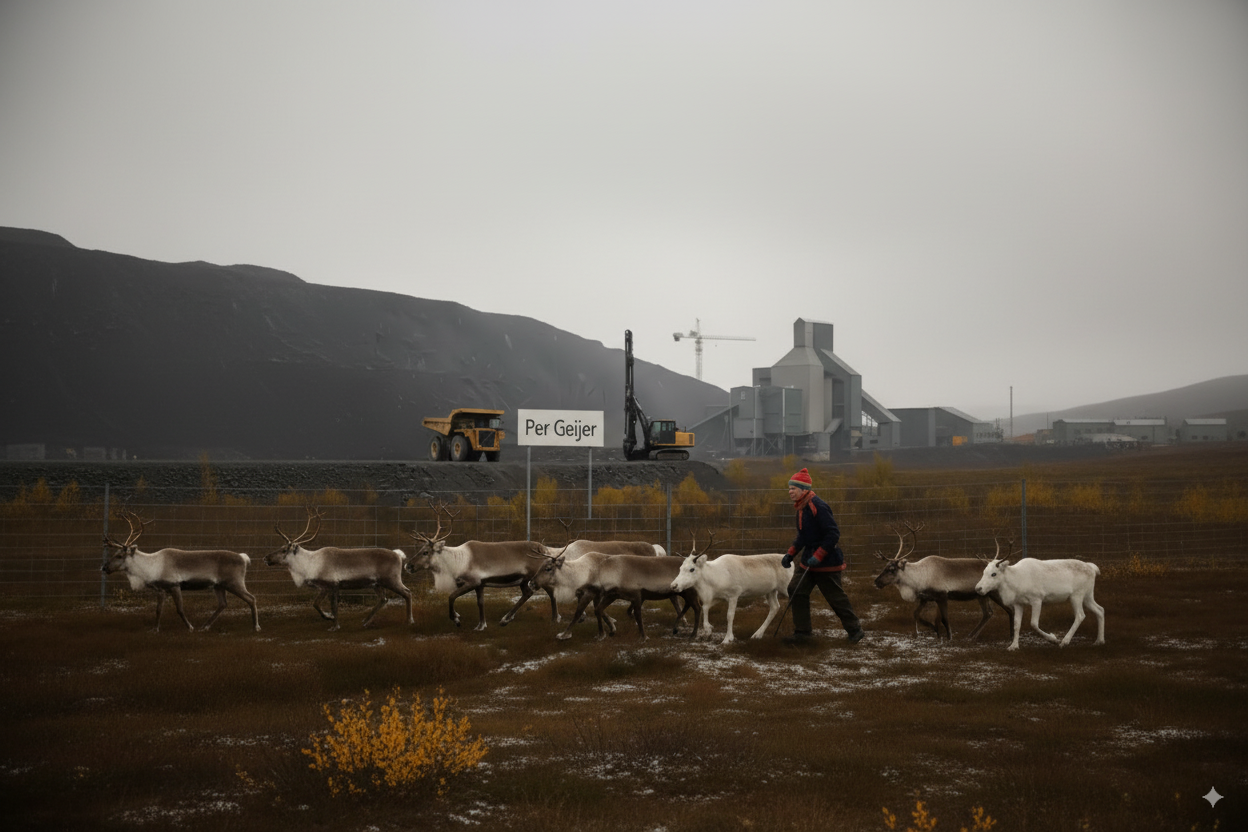
    Kiruna, Sweden — When LKAB confirmed earlier this year that its Per Geijer deposit contains approximately 1.2 billion tonnes of ore, including 2.2 million tonnes of rare-earth oxides (REO), the news sent shockwaves through European capitals. Designated as Europe’s largest known rare-earth deposit, the Per Geijer project was swiftly elevated to “strategic project” status under the EU’s Critical Raw Materials Act (CRMA). However, beneath the surface of this economic boon lies a complex paradox: the deposit directly intersects the Gábna Sami community’s centuries-old reindeer migration corridor, a vital lifeline now further threatened by climate change and a century of mining activity.

    The CRMA’s 2030 benchmarks are clear: at least 10% of strategic raw materials must be mined within the EU, 40% processed domestically, 25% recycled, and no more than 65% dependence on any single third country. Rare earths, however, remain a critical weak link. According to Eurostat and the European Commission, 95% of the EU’s rare-earth imports in 2024 originated from China, Malaysia, and Russia, with Europe’s dependency on China for heavy rare earth elements (REEs) being effectively absolute. Per Geijer is thus positioned as a linchpin in Europe’s clean-tech ambitions, supplying essential elements like neodymium, praseodymium, and dysprosium for electric-vehicle motors and offshore wind turbines. Yet, for the Sami people, the stakes are profoundly different. “The mine would cut our land in half,” says Lars-Marcus Kuhmunen, head of the Gábna sameby. “It would end reindeer herding as we know it.”

    Mining is not new to Kiruna. LKAB’s century-old Kiirunavaara iron-ore mine has already forced the relocation of the entire town, including Kiruna Church, which was moved 5 kilometers in August 2024 to avoid subsidence. For the Sami, the situation is exacerbated by the rapid warming of the Arctic, which is occurring nearly four times faster than the global average. Winter rain events now frequently ice over lichen, starving reindeer herds, while hotter summers erode their weight reserves. The loss of migration access is not merely a cultural loss but a threat to their survival.

    LKAB first unveiled Per Geijer in January 2023, estimating it could contain over 1 million tonnes of REO, but cautioned that permitting could take 10–15 years. Even with a smooth process, production is unlikely before the 2030s. This year, the company launched an 8-kilometer underground exploration drift to better define the orebody, signaling intent but not immediate production. While LKAB emphasizes its role in Europe’s green transition, it has yet to propose concrete solutions for preserving Sami migration routes.

    Even if the rare earths are mined, Europe lacks sufficient separation and alloying capacity. China currently dominates all midstream processing stages. Efforts are underway to address this, such as REEtec’s Herøya plant in Norway, backed by LKAB, which aims for commercial separation by 2025, and Solvay’s La Rochelle facility in France, upgrading to produce magnet-grade oxides. However, analysts, including Bernstein Research, warn that without accelerated funding and permitting, Europe risks falling short of CRMA targets.

    CRMA status does not override Swedish law, and projects must still pass national environmental reviews and address Indigenous rights substantively. Nordic precedent is clear: in 2021, Norway’s Supreme Court struck down the Fosen wind farm, ruling it violated Sami cultural rights by disrupting grazing. The case set a precedent that green-transition infrastructure can be unlawful if it severs reindeer husbandry.

    Industry observers suggest that any workable compromise at Per Geijer would require engineered migration corridors built before production, seasonal traffic windows to avoid peak herding periods, legally binding co-management with Sami herders backed by compensation tied to measurable herd health, and off-site processing via facilities like REEtec to minimize local disruption.

    Europe’s decarbonization targets and geopolitical autonomy are colliding head-on in Kiruna. The paradox is not unique to Sweden but symptomatic of global green-transition mining conflicts. For mining professionals, Per Geijer illustrates how permitting risk is now as much about cultural rights and climate resilience as ore grade and cut-off ratios. Investors should track Indigenous rights litigation closely, as a single ruling could reshape the economics of strategic minerals across the Nordics.

    With production realistically a decade away, Europe’s dependence on Chinese REEs will persist into the 2030s. In the meantime, Sami concerns are escalating, and Brussels faces a choice: fast-track raw material security or enforce the same environmental and cultural protections it champions abroad. The Per Geijer paradox will test whether Europe can mine its way to a green future without undermining the Arctic’s oldest cultural landscapes.
  • Kazakhmys Overhauls Safety Protocol Following Jomart Mine Tragedy

    Kazakhmys Overhauls Safety Protocol Following Jomart Mine Tragedy

    Kazakhstan’s mining and metallurgical giant Kazakhmys is implementing sweeping safety reforms following the February 2025 methane explosion at its Zhomart copper mine, which claimed seven lives. The tragedy exposed systemic risks in the sector, long regarded as one of the most hazardous in the country, and prompted regulators to issue 45 safety directives, over half of which have already been addressed.

    The company has since launched a comprehensive modernisation programme under its Digital Kazakhmys initiative. Key measures include real-time GPS tracking of all underground staff, predictive gas monitoring via advanced sensors integrated into the DMMS digital platform, and the installation of an in-house gas analysis laboratory. Additional safeguards—such as automatic equipment shutdowns when methane thresholds are exceeded—aim to reduce reliance on human intervention.

    Kazakhmys is also working with scientific institutes to study gas emissions in copper ore deposits, a relatively new phenomenon for the industry, with the aim of shaping updated mining regulations by 2026. The Zhomart mine has effectively become a testing ground for technologies that could transform Kazakhstan’s mining sector from one of the deadliest into a more predictable and manageable industry.

  • Polish Coal Sector Faces Financial Strain Amid Energy Transition

    Polish Coal Sector Faces Financial Strain Amid Energy Transition

    Poland’s coal mining sector has reduced its losses since last year but still needs billions of złoty in state support to survive, according to Polish media.

    In the first half of 2025, the sector made a net loss of 4.059 billion złoty (€950 million), Industrial Development Agency data show, less than half of the 8.365 billion złoty (€1.97 billion) lost in the first six months of 2024. Over the whole of 2023, Polish coal mining turned a net profit of 4.8 billion złoty (€1.13 billion).

    Despite the improved performance, the industry needs shoring up from the state budget due to rising costs and falling output, one trade union leader told the wnp.pl business news site. Bogusław Ziętek, head of the Sierpień 80 miners’ union, said the high costs are a result of government policy.

    As part of its ‘green transition’ policy of diversifying energy production away from fossil fuels and toward renewables, the government has capped coal extraction. This year’s output is equal to that forecast for 2035, and this falling yield has pushed up the production price per ton, Ziętek said. Because of this, he argues, the government’s energy policy will cost the state billions.

    Polish online energy portal Wysokie Napięcie reports that the government has earmarked over 9 billion złoty (€2.12 billion) to support collieries in 2025, made up of 3.5 billion złoty (€820 million) in direct subsidies and up to a further 5.4 billion złoty (€1.27 billion) in loans.

    A ‘social agreement’ between the government and miners’ unions officially allocates around 29 billion złoty (€6.82 billion) for subsidies to unprofitable mining firms until 2031, though some sources have suggested the true cost may be as high as 42 billion złoty (€9.88 billion).

  • Eurasian Resources Group Launches Major Wind Farm in Kazakhstan

    Eurasian Resources Group Launches Major Wind Farm in Kazakhstan

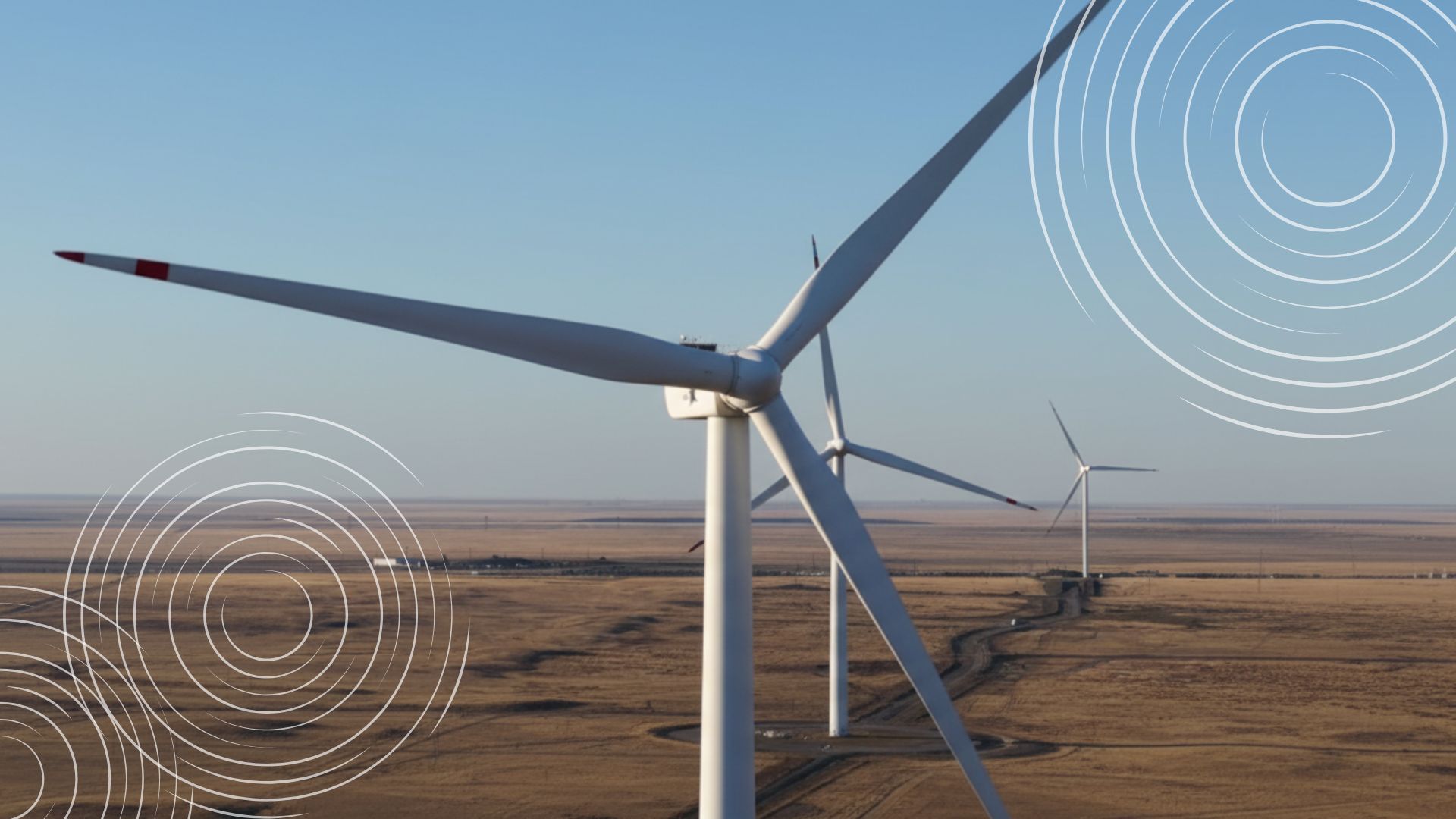
    Eurasian Resources Group (ERG), a global metals and mining company headquartered in Luxembourg, has opened the Khromtau wind farm in Kazakhstan with a capacity of 150 megawatts of green energy. The project is one of the largest renewable energy facilities in Kazakhstan and Central Asia and required an investment of more than US$142 million. The wind farm is located in the Aktobe Region and includes 24 turbines. The facility will generate more than 500 million kilowatt hours of green energy annually. All in all, the facility will help reduce up to 440,000 tonnes of carbon dioxide emissions and save more than 300,000 tonnes of coal each year. The project has been implemented by ERG Capital Projects, a Group subsidiary, with financial support from the Development Bank of Kazakhstan.

    During the opening ceremony of this critical green energy project, Shukhrat Ibragimov, CEO and Chairman of the Board of Directors of ERG, said: “With its Khromtau wind power project, the Group makes a major contribution towards achieving Kazakhstan’s national goal of increasing the share of renewable energy sources. ERG is committed to ESG principles, and the new Khromtau wind power farm is a logical and very ambitious next step while implementing this. ERG’s first wind power project has already become a symbol of our transition to green energy.”

    The ESG Agenda is part of the company’s Strategy. The Group’s medium-term goal is to reduce the carbon footprint of its core products (aluminium, ferroalloys and iron ore pellets) by 30%. To achieve this, ERG is implementing projects with cumulative investments totalling US$300 million. In addition to wind power, these projects include switching the Kacharsky heating centre to gas in the Iron Ore Division, reducing steam consumption and improving the alumina production process in the Aluminium Division, and building a ferroalloy gas recycling power facility at the Aktobe Ferroalloys Plant to convert secondary energy resources into electricity.

  • Savannah Resources Pushes Back on Claims Portugal Withheld Barroso Mine Data

    Savannah Resources Pushes Back on Claims Portugal Withheld Barroso Mine Data

    Savannah Resources (LON: SAV) is pushing back against media reports that a United Nations committee has accused Portuguese authorities of violating international law during the approval process for the company’s Barroso lithium project.

    In a statement to MINING.COM, Savannah’s Communications Manager António Neves Costa said that two of the public bodies named in the UN document have clarified their positions, stating that no step of the licensing process was carried out in violation of Portuguese law.

    The clarifications follow a report by the Aarhus Convention Compliance Committee, which alleged that Portugal failed to guarantee citizens’ rights to environmental information and participation during the project’s licensing process.

    The Portuguese Environmental Agency (APA) said the Barroso project underwent the longest public consultation period ever granted to an industrial project in the country, spanning more than 110 days. The Northern Regional Coordination and Development Commission (CCDR-N) also rejected the suggestion that it withheld information, stating that all documents were made available in line with national law.

    According to Reuters, the UN committee’s findings have reinforced calls from local residents and environmental groups for the project’s license to be revoked. The APA, while noting a “divergent interpretation” of the Convention, maintains that it acted in strict compliance with administrative procedures.

    Savannah Resources is seeking to develop what it calls Western Europe’s largest mine of spodumene, a hard-rock form of lithium. The company plans to build four open-pit mines in northern Portugal, with the goal of producing enough lithium annually for 500,000 to one million electric vehicle batteries. First output is slated for 2027.