[vc_row type=”in_container” full_screen_row_position=”middle” column_margin=”default” column_direction=”default” column_direction_tablet=”default” column_direction_phone=”default” scene_position=”center” text_color=”dark” text_align=”left” row_border_radius=”none” row_border_radius_applies=”bg” overflow=”visible” overlay_strength=”0.3″ gradient_direction=”left_to_right” shape_divider_position=”bottom” bg_image_animation=”none”][vc_column column_padding=”no-extra-padding” column_padding_tablet=”inherit” column_padding_phone=”inherit” column_padding_position=”all” column_element_direction_desktop=”default” column_element_spacing=”default” desktop_text_alignment=”default” tablet_text_alignment=”default” phone_text_alignment=”default” background_color_opacity=”1″ background_hover_color_opacity=”1″ column_backdrop_filter=”none” column_shadow=”none” column_border_radius=”none” column_link_target=”_self” column_position=”default” gradient_direction=”left_to_right” overlay_strength=”0.3″ width=”1/1″ tablet_width_inherit=”default” animation_type=”default” bg_image_animation=”none” border_type=”simple” column_border_width=”none” column_border_style=”solid”][vc_column_text text_direction=”default”]
Краткое содержание
Настоящее исследование посвящено фундаментальному технологическому, экономическому и кадровому сдвигу в мировой горнодобывающей промышленности на горизонте 2026–2031 годов. Переход индустрии от изолированных цифровых экспериментов к сквозному внедрению агентного искусственного интеллекта (ИИ), мультимодальных нейросетей и пограничных вычислений (Edge Computing) обусловлен жесткими макроэкономическими факторами: истощением богатых месторождений, усложнением горно-геологических условий и жесткими регуляторными рамками ESG.
В работе на основе примеров анализируется влияние ИИ на всю цепочку создания стоимости — от обработки геологоразведочной информации до автоматизации карьеров и оптимизации обогатительных фабрик. На основе математических моделей изменения производительности труда представлен финансовый и кадровый прогноз: описаны экономические механизмы снижения себестоимости производства, трансформация структуры затрат (OPEX/CAPEX), топ-10 профессий будущего и радикально изменившаяся роль HR-департаментов. Исследование опирается на передовой опыт макрорегионов (Центральная Азия, Европа, США, Китай) и данными авторитетных академических и аналитических источников.
Агентный ИИ, периферийные вычисления и нейросети против крупнейших макроэкономических вызовов отрасли: как технологии перекраивают рынок труда в 2026–2031 годах.
Присоединяйтесь к обсуждению на горно-геологических форумах MINEX
🗓️ 24-25 июня | Анкара: https://2026.minexasia.com
🗓️ 28-29 октября | Трим: https://2026.minexeurope.com/
🗓️30 ноября | Лондон: https://2026.minexeurasia.com/
[/vc_column_text][vc_video link=”https://www.youtube.com/watch?v=0jEEK6nWaGA”][vc_column_text text_direction=”default”]
1. Введение и макроэкономический контекст (2026 год)
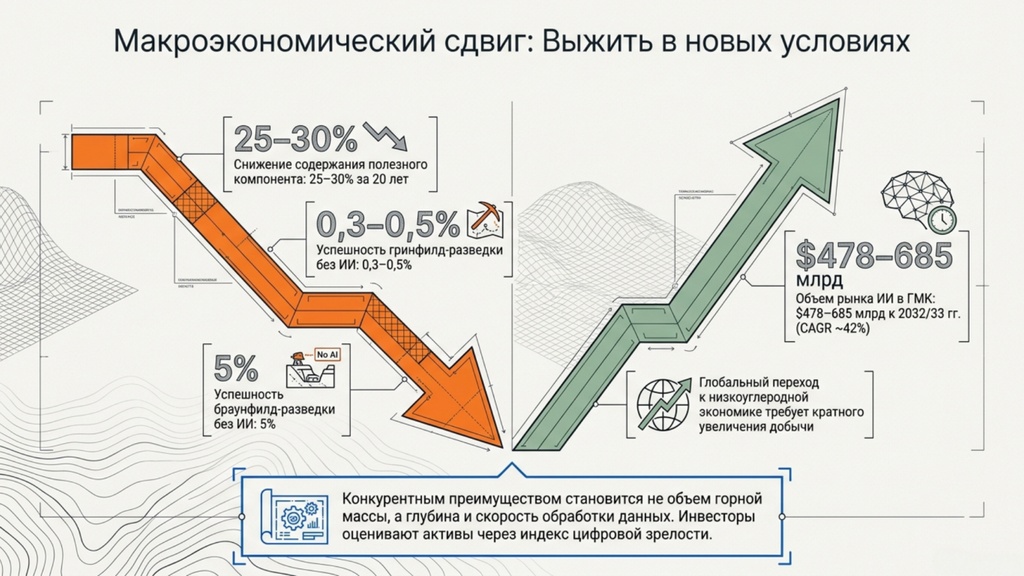
В 2026 году мировая горнодобывающая отрасль функционирует в условиях беспрецедентного давления. Глобальный переход к низкоуглеродной экономике требует кратного увеличения добычи критически важных металлов (лития, кобальта, меди, никеля). В то же время среднее содержание полезного компонента в разрабатываемых рудах за последние два десятилетия снизилось на 25–30%, а глубина залегания вновь открываемых рудных тел увеличилась. По данным отраслевой аналитики, вероятность коммерческого успеха поисково-разведочных проектов без применения продвинутых методов прогнозного анализа снизилась до критических 5% (для браунфилд-проектов на ранее освоенных территориях; для гринфилд-разведки на нетронутых площадях — лишь 0,3–0,5%).
Исторически ассоциировавшаяся с тяжелым физическим трудом, высокими рисками для здоровья и массивным воздействием на экологию, индустрия переживает тектонические сдвиги. Искусственный интеллект эволюционировал из категории передовых ИТ-надстроек в ядро операционной и управленческой деятельности предприятий. Как отмечают эксперты на международных форумах MINEX в Великобритании, Казахстане, Узбекистане, ключевым конкурентным преимуществом компаний становится не просто физический объём добываемой горной массы, а глубина и скорость обработки данных. Инвесторы при оценке стоимости активов напрямую учитывают индекс их цифровой зрелости и способность верифицировать экологические показатели с помощью прозрачных ИИ-алгоритмов.
Объём глобального рынка ИИ в горнодобывающей промышленности оценивается различными аналитическими агентствами по-разному: Grand View Research оценивала рынок в 29,94 млрд долларов в 2024 году с ростом до ~41,77 млрд в 2025 году и прогнозом 685,61 млрд долларов к 2033 году (CAGR 41,87%); SNS Insider — в 28,91 млрд долларов в 2024 году с прогнозом 478,29 млрд долларов к 2032 году (CAGR 42,15%). Разброс в прогнозах объясняется различиями в методологии и охвате рынка. Основными драйверами этого феноменального роста выступают технологии глубокого машинного обучения и стремительно растущий сегмент компьютерного зрения.
2. Глобальные технологические тренды ИИ в горном деле
Технологическая архитектура современного предприятия базируется на переходе от централизованных облачных вычислений к гибридным пограничным системам (Edge Computing). Удаленность большинства рудников от мегаполисов и нестабильность каналов связи привели к тому, что обработка критических данных перенесена непосредственно на бортовые компьютеры тяжелой техники и локальные серверы предприятий. Задержка передачи данных в облачных ИИ-системах составляет от 50 до 500 миллисекунд, что недопустимо для систем промышленной безопасности, тогда как пограничные вычисления выполняют транзакции за доли миллисекунд.
Основные сквозные технологии:
- Мультимодальные агентные системы: Автономные программные агенты, способные одновременно анализировать неструктурированные текстовые отчеты, каротажные диаграммы, спутниковые снимки и финансовые документы для комплексной поддержки принятия решений.
- Цифровые двойники (Digital Twins) на базе ИИ: Динамические трехмерные модели фабрик и карьеров, которые не просто отображают текущее состояние объектов, но и симулируют сценарии развития ситуации при изменении внешних физических или экономических параметров.
- Умное оптическое сортирование: Интеграция гиперспектральных камер и нейросетей на конвейерных лентах для мгновенной отбраковки пустой породы до стадии энергоемкого измельчения.
3. Влияние ИИ на цепочку создания стоимости
3.1. Геологоразведка и геодезия
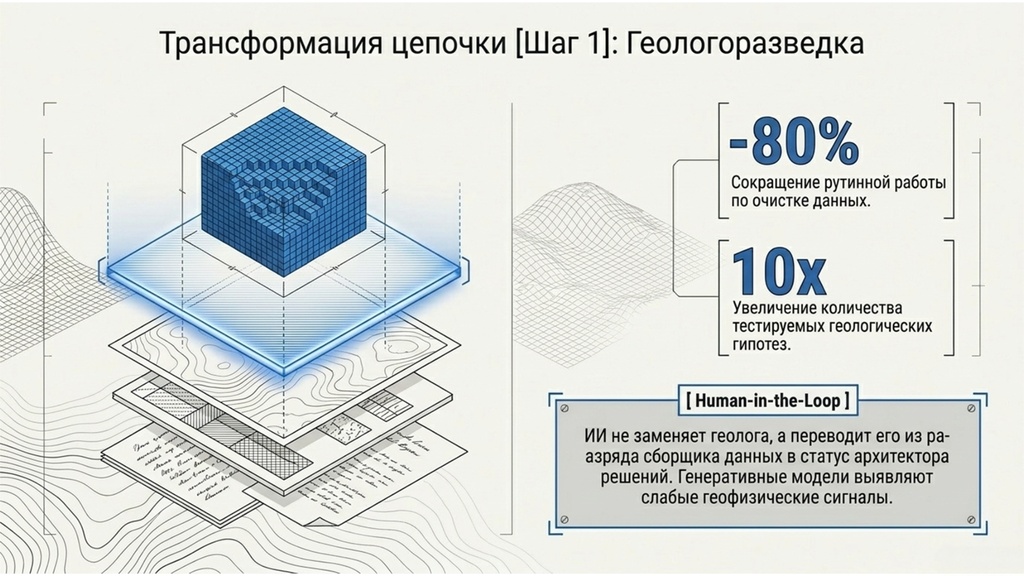
Традиционный процесс сбора и интерпретации геологических данных занимал месяцы ручного труда. Генеративные модели преобразуют терабайты исторических неструктурированных отчетов, старых карт и полевых журналов в стандартизированные цифровые датасеты за несколько часов.
Платформы нового поколения используют алгоритмы для выявления скрытых закономерностей и слабых сигналов в больших массивах геофизических и геохимических данных. Нейросети строят вероятностные 3D-модели блочного распределения содержаний металлов, оптимизируя планирование разведочного бурения. При этом реализуется концепция «геолога в контуре управления» (Human-in-the-Loop): ИИ не заменяет человека, а убирает до 80% рутинной работы по очистке данных, позволяя специалисту тестировать в десятки раз больше гипотез.
3.2. Горные работы
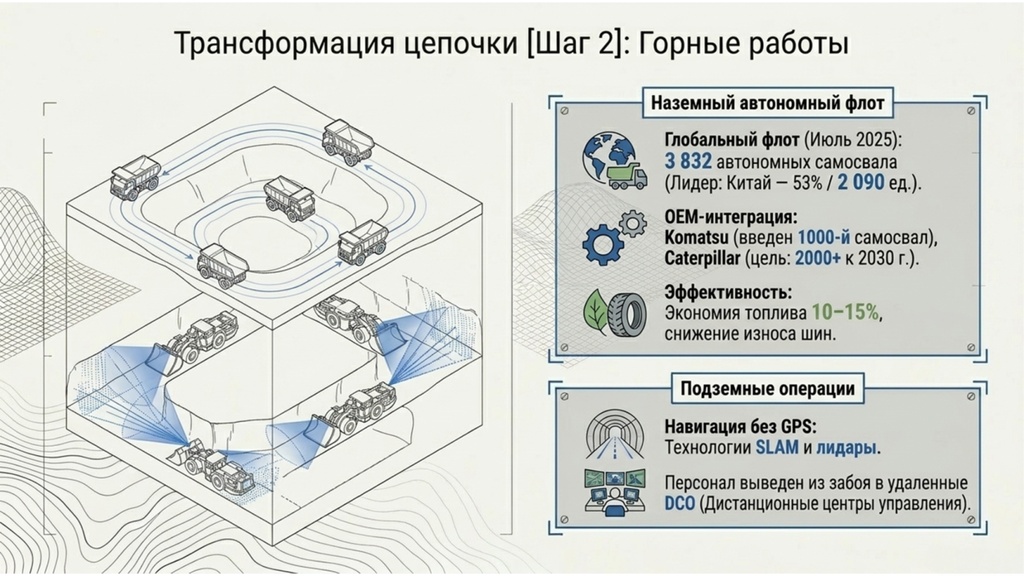
В сегменте открытых горных работ стандартом индустрии стали автоматизированные системы управления потоками. Программно-определяемые платформы автономии позволяют карьерным самосвалам двигаться без водителей, оптимизируя расход топлива на 10–15% и снижая износ крупногабаритных шин.
Масштаб глобального внедрения впечатляет: по данным GlobalData, к июлю 2025 года в мире на открытых горных работах эксплуатировались 3 832 автономных самосвала. Лидирует Китай с 2 090 машинами (53% мирового флота), следом — Австралия, Канада и Чили. Komatsu в апреле 2026 года ввёл в эксплуатацию тысячный автономный карьерный самосвал автономный самосвал класса ultra-class с системой FrontRunner, став первым производителем оборудования (OEM), достигшим этого рубежа. Caterpillar, в свою очередь, поставила цель довести парк до 2 000+ автономных машин к 2030 году, в том числе активно расширяя применение технологии на карьерах и каменных разработках меньшего масштаба.
В подземных условиях, где отсутствует сигнал GPS, ИИ решает задачи навигации с помощью технологий одновременной локализации и картографирования (SLAM) на базе лидаров. Автономные буровые установки и погрузочно-доставочные машины (ПДМ) работают в зонах повышенной опасности, в то время как операторы находятся в комфортных дистанционных центрах управления за сотни километров от забоя.
3.3. Переработка и обогащение полезных ископаемых
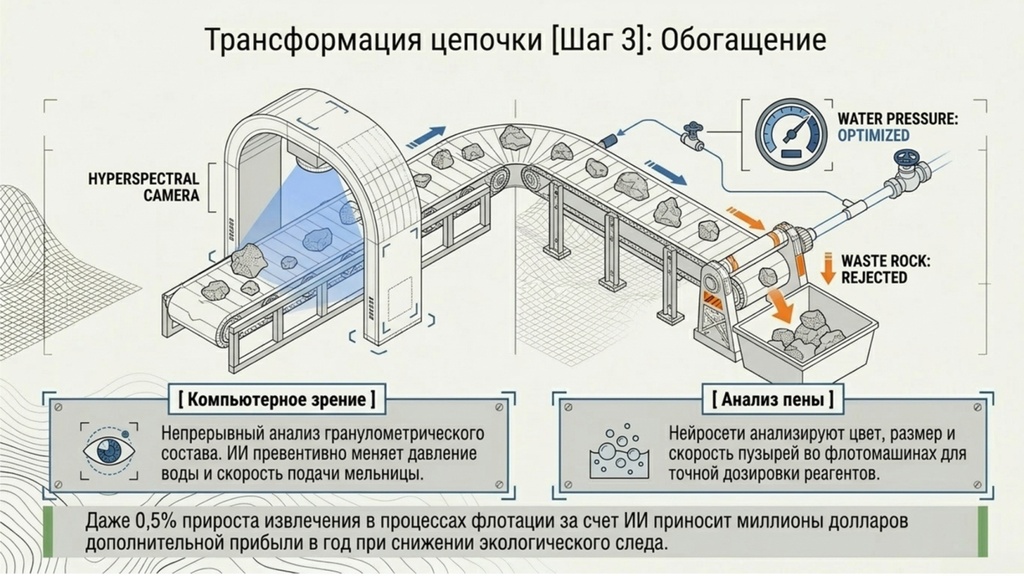
Обогатительная фабрика — это сверхсложная система с сотнями переменных. Алгоритмы машинного обучения непрерывно анализируют гранулометрический состав руды на конвейере с помощью компьютерного зрения. Если на мельницу поступает слишком крупный или твердый материал, ИИ превентивно изменяет скорость подачи и давление воды.
В процессах флотации нейросети анализируют цвет, размер и скорость движения пузырей пены на поверхности флотомашин, автоматически регулируя расход реагентов. Это позволяет повысить извлечение ценного компонента до 0,5%, что в масштабах крупного комбината приносит миллионы долларов дополнительной прибыли в год, одновременно снижая воздействие на экологическую среду.
4. Региональный анализ
4.1. Центральная Азия: Казахстан как региональный ИИ-хаб
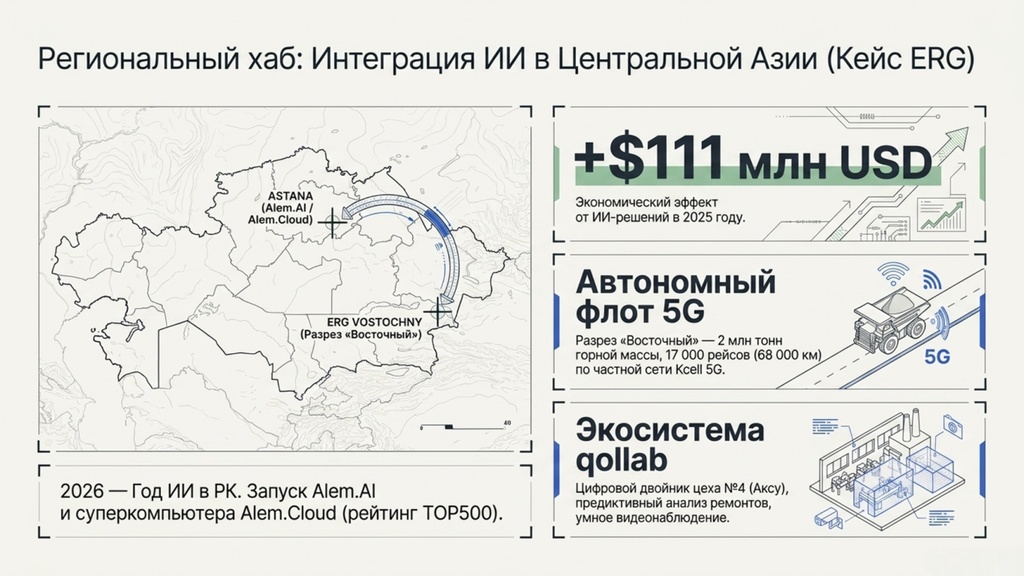
Республика Казахстан официально объявила 2026 год Годом цифровизации и искусственного интеллекта. В рамках национальной стратегии в стране развернуто Министерство искусственного интеллекта и цифрового развития, создан национальный AI-центр Alem.AI (расположен на площадке EXPO в Астане; открыт в октябре 2025 года), а также введён в эксплуатацию суперкомпьютерный кластер Alem.Cloud — крупнейший в Центральной Азии суперкомпьютерный кластр, вошедший в мировой рейтинг TOP500. Компания Presight AI (дочерняя структура G42, ОАЭ) участвует в проекте ситуационного центра при Alem.AI и в реализации инициативы Астана Смарт-Сити.
Флагманом внедрения промышленного ИИ в регионе выступает международная горно-металлургическая группа Eurasian Resources Group (ERG). Экономический эффект от внедрения собственных цифровых инструментов и ИИ-решений на предприятиях ERG в Казахстане по итогам 2025 года превысил 111 млн долларов США. Разработкой систем занимается выделенная IT-структура группы — BTS (Business & Technology Services), развернувшая технологии по трем направлениям:
- Компьютерное зрение: Система видеоаналитики в режиме реального времени контролирует степень загрузки конвейеров, оценивает качество готовой продукции и отслеживает ТБ персонала. На Аксуском заводе ферросплавов модернизированный центр управления использует полномасштабный цифровой двойник плавильного цеха №4, позволяя инженерам осуществлять виртуальные обходы и моментально выявлять отклонения.
- Роботизированная и автономная техника: ИИ применяется для точного расчета себестоимости технологических переделов, оптимизации энергопотребления и сквозного планирования горных работ.
- Корпоративные платформы интеграции: Все ремонтные и операционные процессы оцифрованы в рамках единой экосистемы qollab, где ИИ распределяет наряды, формирует графики загрузки ремонтных бригад и прогнозирует выход оборудования из строя на основе предиктивного анализа.
Флагманским проектом в сегменте автономного транспорта стал угольный разрез «Восточный»: беспилотные самосвалы ERG к началу 2026 года перевезли более 2 млн тонн горной массы, совершив 17 000 рейсов и преодолев свыше 68 000 км под управлением по частной сети 5G от казахстанского оператора Kcell. ERG стала первой компанией в Казахстане, развернувшей беспилотные грузовики в промышленной эксплуатации; к 2027 году группа планирует нарастить объём перемещения горной массы автономными машинами до 115 млн тонн.
4.2. Западная и Северная Европа: Устойчивое развитие и мониторинг
В Европейском союзе фокус смещен в сторону максимальной экологичности, безопасности и глубокой аналитики данных геосферы. Примером служит внедрение комплексных беспроводных экосистем мониторинга (разработки компаний Senceive и европейской инициативы SensAI Mining).
Эти системы используют распределенные сети датчиков с элементами пограничных вычислений:
- Контроль устойчивости бортов карьеров: Инструменты класса InfraGuard фиксируют микросдвиги грунта, отфильтровывают ложные шумы окружающей среды и отправляют ранние предупреждения о рисках оползней.
- Мониторинг хвостохранилищ: ИИ анализирует поровое давление воды и структурную целостность дамб, исключая прорывы и минимизируя риски экологических катастроф.
- Умный подземный мониторинг: Датчики деформации и конвергенции крепи в выработках позволяют предсказывать обрушения кровли задолго до визуальных проявлений.
Параллельно в Европе бурно развивается рынок специализированного ПО. Около 90% сделок слияний и поглощений (M&A) в секторе горнодобывающих технологий приходятся на компании, специализирующиеся на сенсорах и программном обеспечении со встроенным машинным обучением.
5. Государственное регулирование ИИ и его влияние на кадровый потенциал (ЕС, США, Китай)
Период 2026–2031 годов знаменует собой переход к эпохе жесткого суверенного регулирования ИИ, что напрямую трансформирует карту дефицитных профессий.
5.1. Европейский союз: Жесткая комплаенс-модель
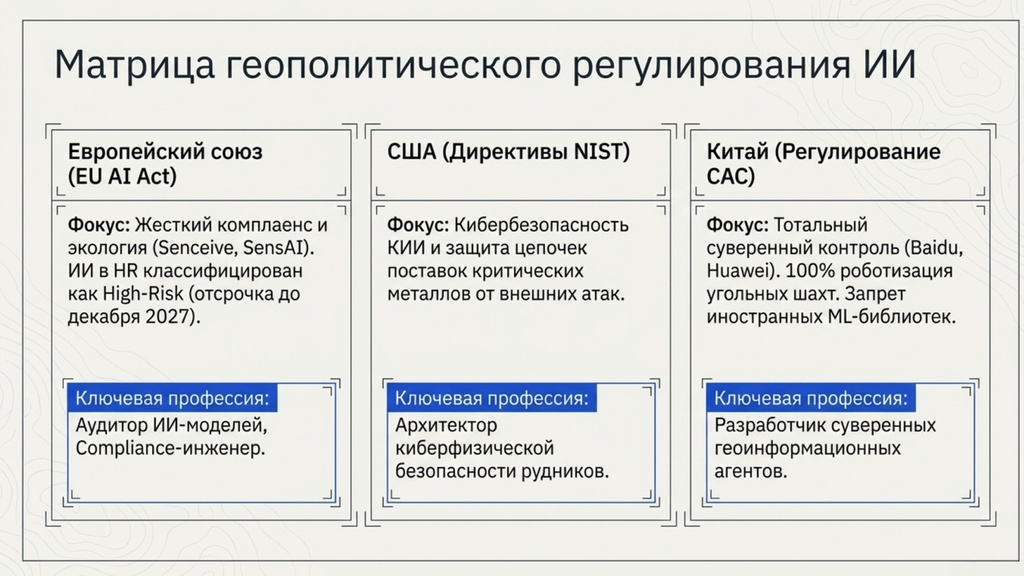
Поэтапно вводимый в действие (с августа 2024 года) Закон ЕС об искусственном интеллекте (EU AI Act) сформировал самую строгую в мире регуляторную среду. Важное уточнение: в мае 2026 года ЕС достиг предварительного политического соглашения о переносе сроков полного соответствия требованиям для высокорисковых ИИ-систем (Annex III, включая HR-приложения) с 2 августа 2026 года на 2 декабря 2027 года — в рамках пакета “Digital Omnibus”. Требования к запрещённым практикам (эмоциональное распознавание на рабочих местах и др.) вступили в силу в феврале 2025 года.
- Регуляторный контекст: Любые ИИ-системы, используемые для управления персоналом (скрининг резюме, оценка KPI), а также системы мониторинга поведения рабочих на опасных объектах, классифицированы как «высокорисковые» (High-Risk).
- Влияние на кадры: Рожден взрывной спрос на Аудиторов ИИ-моделей и Compliance-инженеров. От традиционных HR-директоров теперь требуется уровень AI Literacy и понимание принципов работы объяснимого ИИ (XAI), чтобы легитимно защищать перед профсоюзами решения, принятые алгоритмами.
5.2. США: Кибербезопасность КИИ и критические цепочки поставок
Стратегия США строится вокруг защиты критической информационной инфраструктуры (КИИ) и форсирования добычи критически важных минералов.
- Регуляторный контекст: Согласно исполнительным указам Белого дома и директивам NIST, ИИ-решения в добывающем секторе рассматриваются через призму национальной безопасности. Особое внимание уделяется защите от кибератак на геоинформационные системы и автономный транспорт.
- Влияние на кадры: Критически востребованными стали Архитекторы киберфизической безопасности рудников и Инженеры по безопасности Edge Computing. От ИТ-директоров требуется глубокое знание стандартов киберустойчивости, таких как NIST AI Risk Management Framework.
5.3. Китай: Суверенный контроль алгоритмов и сквозная роботизация
Китай демонстрирует модель тотального государственного контроля в сочетании с жестким директивным планированием индустриальной модернизации.
- Регуляторный контекст: Администрация киберпространства Китая (CAC) требует обязательной государственной регистрации всех промышленных алгоритмов. Действует пятилетний план по полной автоматизации угольных и железорудных шахт. Использование иностранных ML-библиотек в контуре стратегических предприятий запрещено.
- Влияние на кадры: Сформирован колоссальный внутренний рынок для Разработчиков геоинформационных агентов и Инженеров цифровых двойников, работающих исключительно на китайском технологическом стеке (Baidu Ernie, Huawei Pangu). Обучение инженерного персонала жестко стандартизировано под концепцию «Умных шахт».
6. Экономика трансформации: Снижение себестоимости труда и производства
Внедрение искусственного интеллекта меняет традиционную структуру стоимости человеческих ресурсов за счет трех ключевых экономических механизмов:
1. Квалификационная компрессия (Skill Compression)
Интеграция мультимодальных ИИ-помощников сокращает время выполнения сложных инженерных задач на 15–50%. ИИ нивелирует разрыв между начинающими специалистами и экспертами. Менее опытные сотрудники, подстрахованные ИИ-агентами, начинают выполнять задачи уровня senior без потери качества. Это резко снижает «кадровую премию за дефицитный стаж», которую компании вынуждены выплачивать на перегретом рынке труда.
2. Географический арбитраж и ликвидация вахтовых издержек
Перенос функций управления в удаленные центры (DCO) позволяет нанимать персонал на стандартных городских условиях. Компания полностью ликвидирует или сокращает на 35–40% сопутствующие издержки: содержание вахтовых поселков, вертолетную логистику, повышенное медицинское страхование и законодательные надбавки за работу в экстремальных климатических условиях.
3. Ликвидация операционных микропростоев
Человеческий фактор обуславливает циклические потери (пересменки, обеды, снижение концентрации внимания). Автономные комплексы под управлением ИИ работают в режиме 24/7, что повышает утилизацию техники на 10–15%. Удельная стоимость человеческого труда, заложенная в каждую тонну перемещенной горной массы, падает пропорционально росту непрерывной производительности оборудования.
Трансформация OPEX в CAPEX и снижение AISC
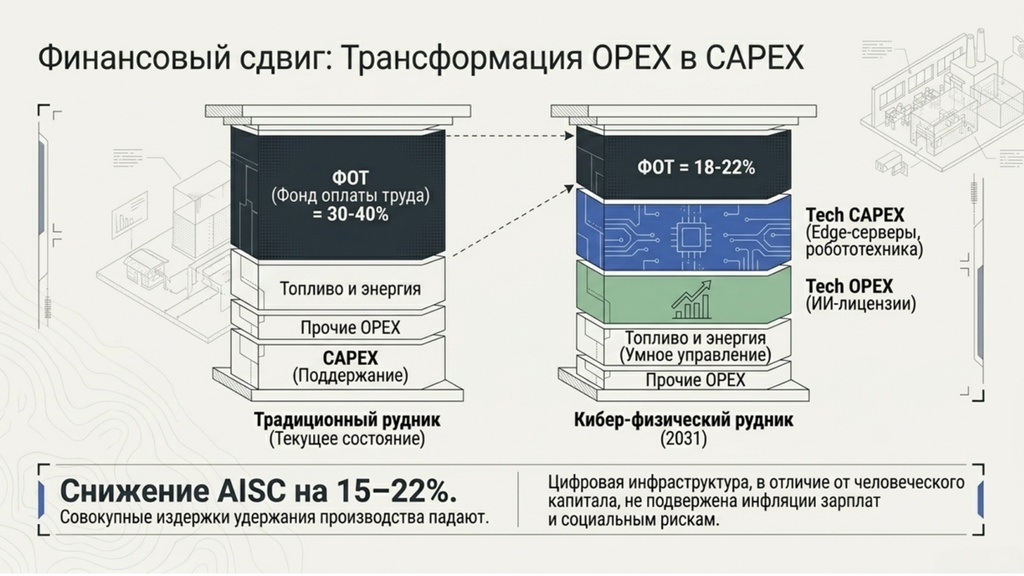
Фонд оплаты труда (ФОТ), составляющий на традиционных рудниках до 30–40% от операционных расходов (OPEX), к 2031 году сократится до 18–22%. Эти затраты частично перейдут в категорию технологического OPEX (оплата лицензий) и CAPEX (закупка Edge-серверов и роботизированных комплексов). Цифровая инфраструктура, в отличие от людей, не подвержена инфляции зарплат и социальным рискам.
За счет сквозного применения ИИ-агентов совокупные издержки удержания производства (AISC — All-In Sustaining Costs) на унцию/тонну готового металла снизятся к 2031 году в среднем на 15–22%, что позволит сохранять высокую маржинальность даже при разработке бедных руд.
7. Прогноз кадровой структуры и потребностей (2026–2031 годы)
7.1. Математическое обоснование трансформации занятости
Для оценки изменения структуры трудозатрат инженерно-технического персонала ) применяется модель разделения времени на рутинные операции () и экспертную деятельность ():
Внедрение мультимодальных ИИ-агентов приводит к экспоненциальному снижению временных затрат на рутинные операции, что описывается коэффициентом автоматизации α, зависящим от цифровой зрелости предприятия
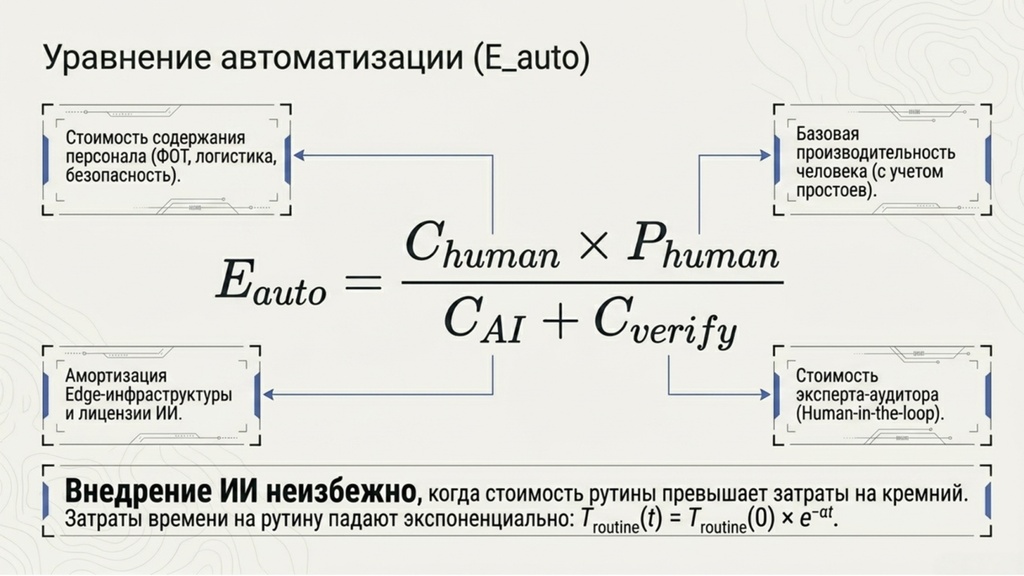
Освобождающийся временной ресурс перенаправляется на экспертный анализ. Для принятия решения о замещении человеческого труда ИИ-системами финансовые департаменты оценивают коэффициент экономической эффективности автоматизации ()
Где:
- — совокупная стоимость содержания человека в единицу времени (ФОТ, логистика, охрана труда).
- — индекс базовой производительности человека с учетом простоев.
- — стоимость эксплуатации ИИ-инфраструктуры (амортизация железа, лицензии).
- — стоимость труда эксперта-аудитора, осуществляющего контроль решений ИИ (Human-in-the-loop).
На горизонте 2031 года за счет удешевления вычислительных мощностей показатель будет снижаться в среднем на 12–15% в год, делая автоматизацию выгодной даже в регионах с исторически дешевой рабочей силой.
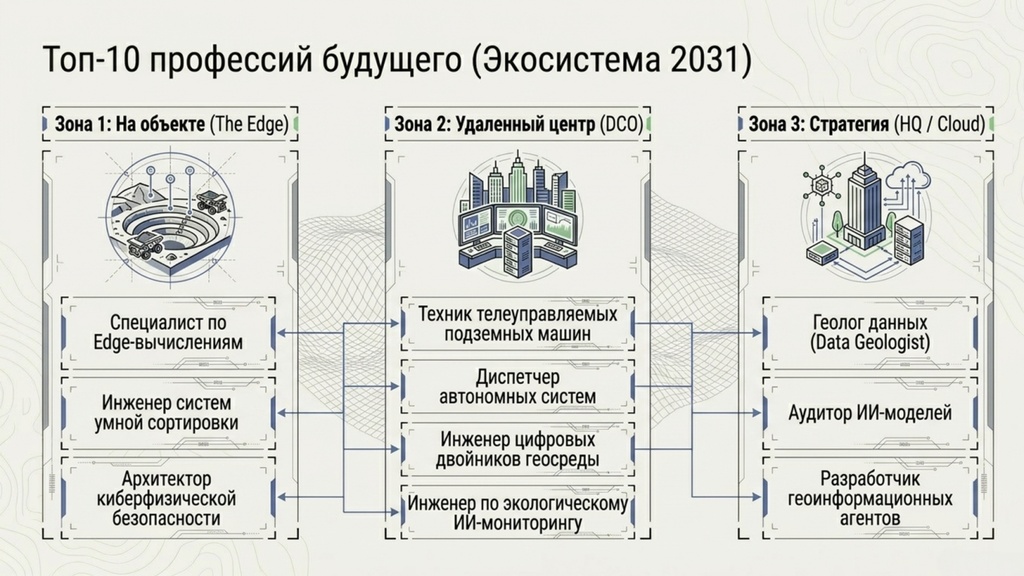
7.2. Топ-10 профессий будущего (2026–2031 годы)
- Геолог данных (Data Geologist): Специалист на стыке классической геологии и Big Data. Занимается подготовкой и структурированием геологической информации для ML-моделей.
- Инженер цифровых двойников геосреды: Оператор динамических ИИ-моделей месторождений, связывающий данные датчиков из карьеров с 3D-моделью рудника.
- Диспетчер автономных транспортных систем: Специалист ситуационного центра, координирующий работу беспилотных самосвалов, буровых станков и дронов.
- Специалист по пограничным вычислениям (Edge AI Engineer): IT-инженер, поддерживающий модели непосредственно на бортовых компьютерах тяжелой техники.
- Оператор систем умной сортировки руды: Инженер-обогатитель, управляющий параметрами нейросетей, распознающих руду на конвейерных лентах по спектральным характеристикам.
- Аудитор моделей и алгоритмов искусственного интеллекта: Эксперт, проверяющий решения на предмет «галлюцинаций» и соответствия физико-геологической реальности.
- Инженер по экологическому ИИ-мониторингу: Специалист, управляющий системами контроля углеродного следа, выбросов и состояния хвостохранилищ на базе машинного обучения.
- Разработчик геоинформационных агентов: IT-специалист, настраивающий LLM- и мультимодальные модели под специфику конкретных типов месторождений.
- Техник телеуправляемых подземных машин: Профессиональный рабочий нового типа, управляющий подземными погрузчиками и комбайнами из удаленного городского офиса.
- Архитектор киберфизической безопасности рудников: Специалист по защите автоматизированных систем управления и Edge-сетей предприятия от внешних атак.
7.3. Исчезающие и трансформирующиеся профессии к 2031 году
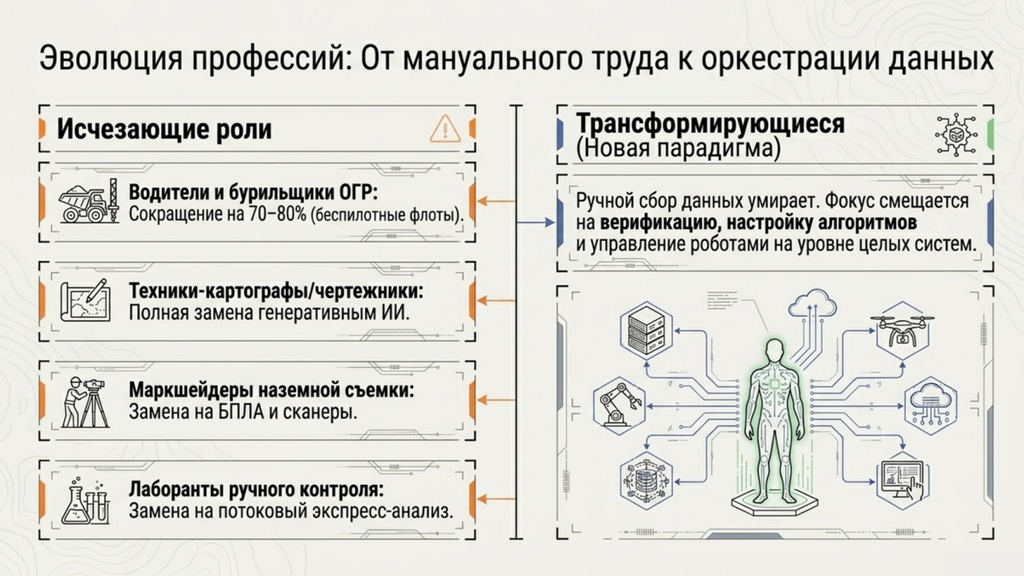
- Техники-картографы и чертежники: Полностью заменяются генеративным ИИ.
- Водители самосвалов и бурильщики на ОГР: Численность сократится на 70–80% за счет перехода на беспилотные флоты.
- Маркшейдеры наземной съемки: Перейдут в статус операторов беспилотных летательных аппаратов (БПЛА) и лазерных сканеров.
- Лаборанты ручного контроля проб: Уступят место потоковому экспресс-анализу, встроенному в технологический поток обогатительных фабрик.
8. Влияние на кадровые службы (HR-департаменты)
Трансформация HR-департаментов носит радикальный характер. Основные изменения включают:
- Использование профильных ИИ-платформ: Для поиска редких междисциплинарных специалистов HR переходит на специализированные площадки. Алгоритмы автоматически сопоставляют специфический набор навыков соискателя с профилем вакансии, осуществляют автоимпорт данных и предиктивный скоринг (рейтинг).
- Управление концепцией непрерывного обучения (Lifelong Learning): Главной задачей становится не увольнение старых сотрудников, а их рескиллинг (переобучение). Кадровые службы создают внутренние цифровые академии для повышения цифровой грамотности рабочих и инженеров.
- Переход к матрицам компетенций T-Shaped: Оценка смещается в сторону выявления навыков, где горизонтальная черта — это широкие междисциплинарные знания и мягкие навыки, а вертикальная — глубокая экспертиза в базовой дисциплине.
9. Практические рекомендации для стейкхолдеров
9.1. Матрица компетенций T-Shaped для специалистов
Для сохранения востребованности профессионалы горного профиля должны сформировать сбалансированный портфель навыков:
9.2. Стратегия для горнодобывающих компаний
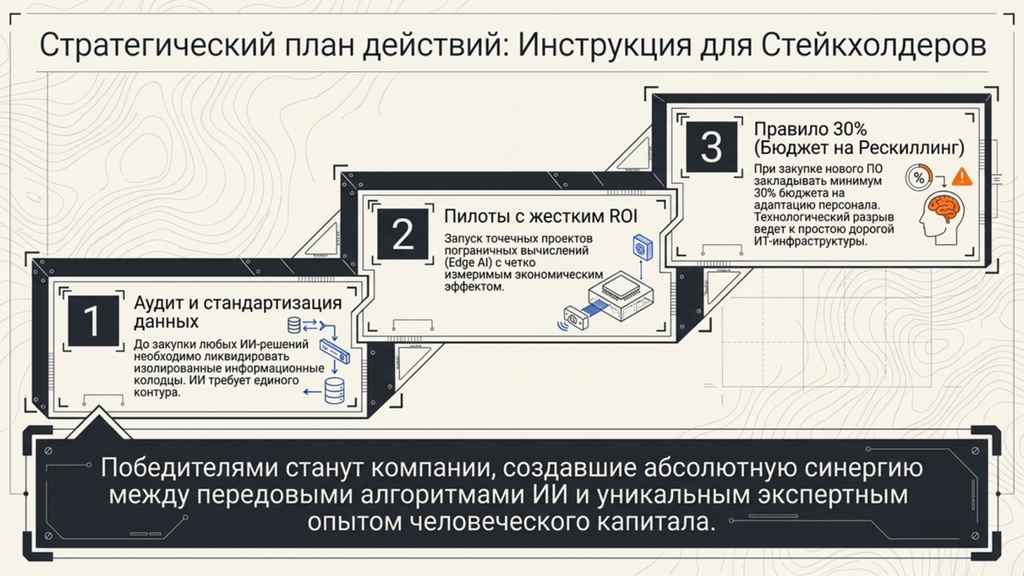
- Стандартизация данных: До начала внедрения ИИ необходимо провести тотальный аудит данных, ликвидировав информационные колодцы.
- Экономически обоснованные пилоты: Запускать ИИ-проекты с четко измеримым экономическим эффектом (ROI).
- Бюджет на рескиллинг (получение новых навыков): При закупке нового цифрового ПО закладывать в бюджет не менее 30% средств непосредственно на обучение и адаптацию персонала. Если внутреннее обучение отстает от коэффициента автоматизации, возникает технологический разрыв, приводящий к неэффективному использованию дорогой ИТ-инфраструктуры при падающих показателях производства.
9.3. Трансформация академического сектора
Вузы и колледжи горного профиля должны срочно пересмотреть учебные планы, внедрив обязательные модули по машинному обучению, анализу больших данных, управлению беспилотными системами и основам кибербезопасности киберфизических систем в традиционные программы.
10. Заключение
Искусственный интеллект в период с 2026 по 2031 год окончательно превращает горнодобывающую отрасль из мануальной и трудоемкой в высокотехнологичную киберфизическую индустрию. Общая численность штата крупных холдингов к 2031 году сократится в среднем на 20–25%, однако затраты на оставшийся высококвалифицированный персонал вырастут. ИИ также снизит барьер входа на рынок для юниорных и сервисных компаний: небольшие команды из 10–15 специалистов, вооруженные ИИ-агентами, смогут выполнять объемы работ, которые раньше требовали целых институтов. Победителями в этой технологической гонке станут те компании, которые смогут выстроить синергию между передовыми алгоритмами ИИ и уникальным экспертным опытом человеческого капитала.
11. Источники, использованные в исследовании
- Recent Advances and Future Perspectives of AI-Based Mineral Exploration — MDPI Minerals
- Machine Learning Approaches for Real-Time Mineral Classification and Educational Applications — MDPI Applied Sciences
- Digital Twins and Enabling Technology Applications in Mining — IEEE Xplore
- Time-Space-Quantity-Energy Coupling in Intelligent Caving Mines — MDPI Minerals
- The Evolution of Machine Learning in Large-Scale Mineral Prospectivity Prediction — MDPI Minerals
- Integration of machine learning with complex industrial mining systems for reduced energy consumption — PMC/Nature
- Mine Management Optimization in the Era of AI and Advanced Analytics — MDPI Mining Special Issue
- Computer Vision and Machine Learning in Mining Technology — MDPI Applied Sciences Special Issue
- New machine learning tools uncover hidden mineral resources in complex terrains — European Commission CORDIS (MultiMiner Project)
- Digital Twins for Mine Safety and Infrastructure Monitoring — PMC open access research
- Artificial Intelligence (AI) in Mining Market Report: Trends and Forecasts — SNS Insider Market Research
- Copper in the Age of AI: Strategic Implications for Global Supply Chains — S&P Global Special Report (January 2026)
- Machine learning applications in minerals processing: A review — GlobalData — Development of Autonomous Trucks in Mining (2025)
- AI in Mining Market Report 2024-2032 — SNS Insider
- Stanford AI Index Report 2026 — Stanford Institute for Human-Centered AI (hai.stanford.edu)
- Tracking the Trends: The top 10 issues shaping the future of mining and metals — Deloitte Insights
- Rock Solid AI: How Digital Tools Are Unearthing a New Era of Mining Exploration — Cleantech Group (2025)
- Development of Autonomous Trucks in the Global Mining Sector (2025) — GlobalData Mining Intelligence (2025)
- Artificial Intelligence in Mining Market Size, Share & Industry Analysis — Grand View Research (grandviewresearch.com)
- Mining’s top ten ESG trends for 2026: Verification and Transparency — Mining.com (2026)
- ERG heralds “Year of Digitalisation and AI” as new programs start paying off — International Mining (February 2026)
- Komatsu becomes first OEM to commission 1,000 ultra-class autonomous haul trucks — IVT International (April 2026)
- EU AI Act Update: Timeline Relief, Targeted Simplification, and New Prohibitions (Digital Omnibus, May 2026) — Inside Privacy / Gibson Dunn (2026)
[/vc_column_text][/vc_column][/vc_row]