Website: Eurasia.com

  • Samruk-Kazyna Share Placement Worth $1.4 Billion Sparks Speculation Over Transfer of State’s 40% ERG Stake

    Samruk-Kazyna Share Placement Worth $1.4 Billion Sparks Speculation Over Transfer of State’s 40% ERG Stake

    Kazakhstan’s sovereign wealth fund Samruk-Kazyna has announced the placement of 31 of its own shares at 22.5 billion tenge each — a total of 697.7 billion tenge, equivalent to approximately $1.4 billion — in exchange for unspecified state property, sparking speculation that the transaction may involve the government’s 40% stake in Eurasian Resources Group currently held by the Ministry of Finance’s Committee on State Property and Privatisation.

    The fund’s sole shareholder, the Kazakhstani government, holds the pre-emptive right to purchase the shares. The announcement did not identify the state property being transferred, but the scale of the transaction — $1.4 billion — prompted financial analyst Arman Bataev of the Finmentor Telegram channel to suggest the asset in question is the government’s ERG stake, given that it is the most significant state-held mining asset at a comparable valuation.

    The timing adds to the intrigue. On 23 May, ERG announced a major ownership change: Nature Energy Solutions Ltd., owned by Kazakhstani businessman Shakhmurat Mutalip, acquired a combined 39.3% stake from Patokh Chodiev (18.6%) and the heirs of Alexander Machkevitch (20.7%). The Financial Times had previously reported that the transaction value was approximately $1.4 billion — precisely matching the sum now involved in the Samruk-Kazyna share placement.

    If the analysis is correct, the current ERG ownership structure would be: the Ministry of Finance holding 40%, the Ibragimov family 20.7%, and Nature Energy Solutions — Mutalip’s vehicle — 39.3%. A transfer of the Ministry of Finance’s 40% stake to Samruk-Kazyna would consolidate state control of ERG within the sovereign fund structure rather than the government’s direct balance sheet.

    ERG is one of Kazakhstan’s most strategically significant industrial conglomerates, producing ferroalloys, copper, cobalt, aluminium and gallium across operations in Kazakhstan, Africa and beyond.

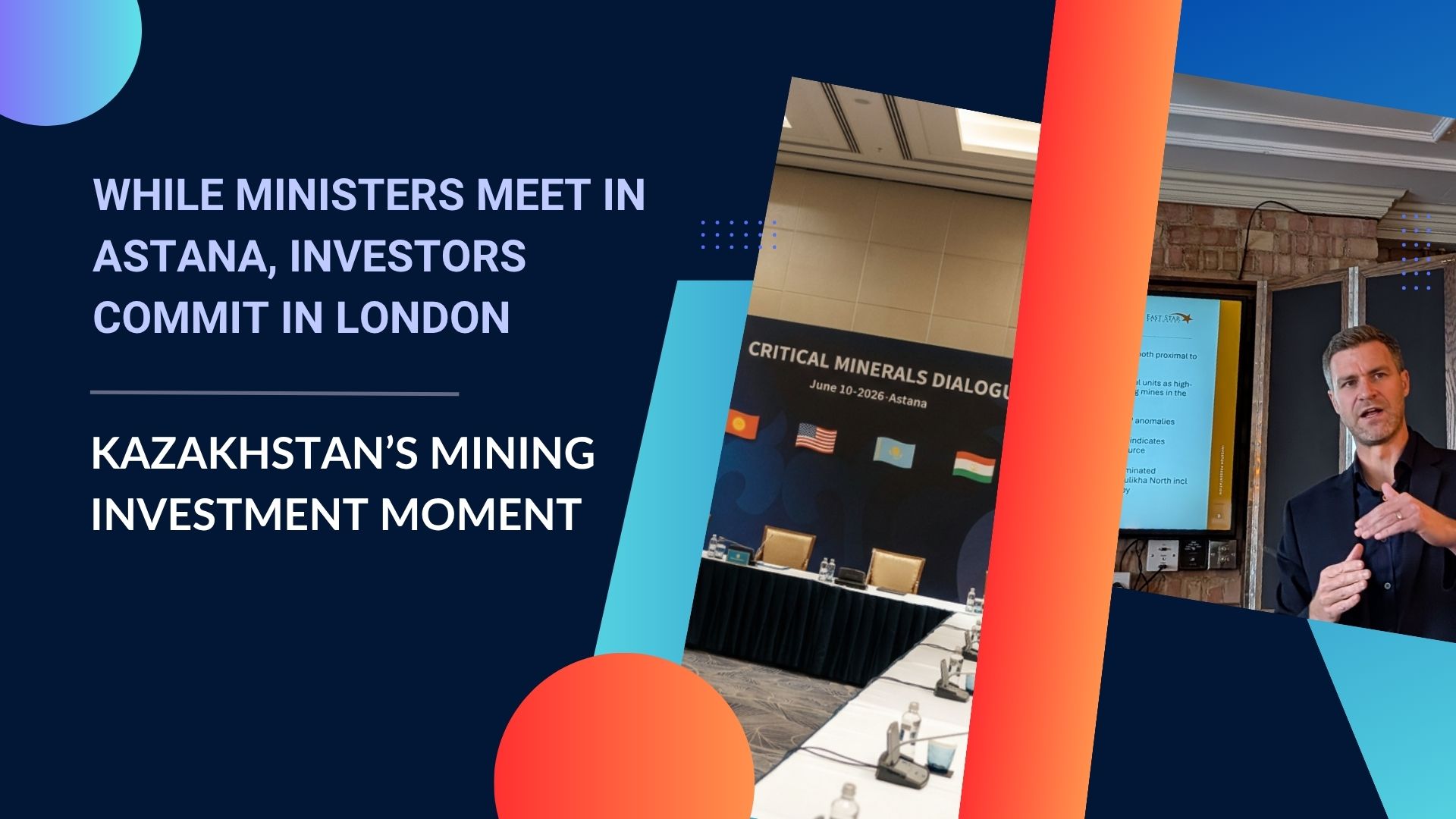
  • Kazakhstan’s Mining Investment Moment:  While Ministers Meet in Astana, Investors Commit in London

    Kazakhstan’s Mining Investment Moment: While Ministers Meet in Astana, Investors Commit in London

    This week, Astana is hosting two very different conversations about Kazakhstan’s mining future.

    In the official corridors, government delegations, US officials, and ministers from across Central Asia are gathered for high-level discussions. Grand statements are being made. Frameworks are being signed. Photographs are being taken.

    On the other side of the world in a brick-walled London dining room — a rather different conversation is taking place. A small group of private investors is gathered around a screen, listening to a junior mining CEO explain, with disarming candour, exactly how he plans to turn a copper deposit in Kazakhstan into a billion-dollar producing mine. Without debt. Without dilution. And without losing sleep over capex blowouts.

    These two conversations are not separate. They are, in fact, the same conversation — just conducted at different altitudes.


    The Ground-Level Reality of Kazakhstan Mining Finance

    East Star Resources CEO Alex Walker presented to investors with the kind of frankness that rarely makes it into official mining forums. His central message: the Verkhuba copper deposit in Kazakhstan is now funded to production, with Chinese EPCM powerhouse Xinhai taking 70% in exchange for carrying all development costs — an estimated US$65 million — to first copper.

    East Star retains 30%, fully carried, with no debt obligation. Xinhai gains majority only when it has delivered US$50 million worth of equipment to site. Until that moment, East Star holds control.

    “You do not get majority until you have sunk way more money into this,” Walker tells his audience.

    It is a deal structure worth understanding carefully, because it illuminates something important about how junior miners are actually navigating the Kazakhstan opportunity in 2026 — and it is a long way from the headline-grabbing announcements coming out of this week’s official forums.

    The Xinhai model — a Chinese EPCM contractor taking equity in exchange for funded development — is not new. But its scale and pace are accelerating. Xinhai now claims over 2,500 projects delivered globally, with more than US$42 million committed to ASX and LSE-listed companies for feasibility and construction in 2025 alone. They manufacture their own processing equipment, manage their own supply chains, and have demonstrated the ability to build a 1.5 million tonne per annum processing plant in Kazakhstan in under twelve months.

    Walker is characteristically direct about the implications: “I visited their factory in Yantai. They make everything — the rubber liners that go in your crushing plants. That means you are not reliant on where you sit in a queue for your equipment provider. You manage your entire supply chain.” When Xinhai told him they thought they could deliver Verkhuba within a compressed timeline, he said, he believed them.

    For a junior miner navigating the gap between resource and production — the graveyard of so many promising projects — this kind of vertically integrated partner is genuinely transformational. Walker is blunt about which risks he had effectively eliminated: financing, capex blowouts, and timing. Three of the five classic killers of junior development projects, struck off in a single deal.


    The Copper Market Context Nobody Is Ignoring

    Walker touched on the macro backdrop, referencing a conversation with senior Goldman Sachs mining analysts about the copper deficit forming in the rest-of-world, non-US market. The figures are striking. Goldman Sachs now projects a deficit of over 640,000 tonnes in ex-US copper markets in 2026 — a number revised sharply upward from a prior estimate of just 60,000 tonnes, driven largely by US front-loading of copper imports ahead of potential tariffs. J.P. Morgan adds a 330,000-tonne deficit projection of its own, while even the historically conservative International Copper Study Group has swung from forecasting a 209,000-tonne surplus in late 2025 to a 150,000-tonne deficit by May 2026.

    The convergence of major institutional forecasters on a significant 2026 deficit is the backdrop against which Walker’s geopolitical point lands hardest. Copper from the DRC loaded onto a ship can be diverted mid-voyage to capture a premium on the COMEX in New York. Copper that travels by rail from Kazakhstan cannot. Its destination is fixed. In a world where tariffs and trade route disruption are rewriting commodity flows in real time, Kazakhstan’s landlocked geography – once a liability – is becoming a structural advantage for certain end markets, particularly China. The supply cannot be diverted. It simply arrives.


    The Questions Investors Are Actually Asking

    The sharpest exchanges of the meeting came during questions. One investor raised the spectre familiar to anyone who has backed a junior miner in a joint venture with a larger partner: what stops the big partner from simply putting the project on ice when it suits them?

    Walker’s answer was layered. First, the deal structure itself: Xinhai only achieves majority when equipment worth US$50 million has been delivered to site. If they walk away before that, East Star keeps its majority and a significant amount of delivered capital. “They’d be selling US$50 million worth of equipment and still getting a good return on capital,” he noted. “So we’ll figure out how to build it ourselves.”

    Second, he made a pointed commercial observation: Xinhai wants East Star to be their business development partner in Kazakhstan, bringing them more deals. Betraying a partner publicly would destroy that franchise. “The first group they screw over — that business model is shut,” he said. “That’s why I don’t think they’d do it.”

    A second question probed the structure of East Star’s 30% retained interest more sharply: does the company actually own 30% of the project, or is it simply entitled to 30% of the copper? And crucially, who controls the surplus capital once the mine is producing?

    Walker confirmed that East Star owns 30% of the project entity, with marketing rights for approximately 30% of production. On dividend distribution, he was direct: under the shareholders’ agreement with Xinhai, dividend policy is a reserved matter requiring mutual agreement — the majority shareholder cannot unilaterally determine how cash is deployed. “Dividend distribution is one of those matters that needs a vote from both sides,” he said. Whether the cash ultimately flows back to shareholders or is redeployed into new projects — perhaps towards building a 300,000-ounce-per-year gold mine with Endeavour — is a question for later. The structural protection, he argued, is real.

    It was, collectively, the answer of someone who has read enough JV agreements to know exactly where the traps are.


    AI and the New Exploration Toolkit

    One detail from the evening deserves particular attention, and it speaks to how the competitive landscape for junior miners in Kazakhstan is changing.

    East Star’s porphyry gold exploration programme — the Snowy and Piket licences on the Balkash-Ili magmatic arc — was initially funded through a grant from the BHP Xplor programme, which Walker described as “a highly competitive programme: 600 applicants, 6 accepted.” The programme is explicitly oriented around applying advanced analytical techniques — including AI-driven target generation — to early-stage exploration. East Star’s selection is a mark of technical credibility that carries weight with institutional investors.

    The broader context matters here. Kazakhstan’s government has been investing heavily in the digitalisation of its geological archive — over 97% of primary geological information, approximately 250 terabytes of data, has now been scanned and consolidated into a unified system. An AI-powered platform has been developed to automatically process this archive, extract coordinates, and generate subsurface geological models. Officials describe the technology as significantly reducing data processing time and improving the quality of exploration decisions.

    For companies like East Star, operating across some of Kazakhstan’s most prospective but underexplored belts, this convergence of digitised state geological data and AI-assisted targeting represents a genuine step-change in the speed and cost of identifying drill-ready targets. The question of where the next Nikolskoye or Verkhuba might be hiding is increasingly one that algorithms, not just geologists, are helping to answer.


    The Regulatory Picture: Nuance Required

    One of the most interesting questions of the meeting came from an investor who had been tracking changes to Kazakhstan’s mining regulatory framework. The question concerned a reported increase in the threshold for mandatory government approval of ownership changes in mining companies, and the role of the national mining company Tau-Ken Samruk in new joint ventures.

    The regulatory picture here is genuinely nuanced, and worth examining carefully.

    Kazakhstan’s December 2025 amendments to the Subsoil and Subsoil Use Code were primarily aimed at digitalisation, transparency, and strengthening strategic investor incentives. Separately, amendments signed by President Tokayev also tightened state control in the uranium sector specifically, raising certain transfer thresholds and granting Kazatomprom priority rights over uranium exploration licences.

    As for Tau-Ken Samruk — the state’s national mining company and a subsidiary of the sovereign wealth fund Samruk-Kazyna — Chambers and Partners’ 2026 Kazakhstan Mining guide notes that the government is actively seeking to restore Tau-Ken Samruk’s priority rights for obtaining exploration and mining licences for critical minerals, a right that had previously been removed as part of earlier liberalisation efforts. “We expect this priority right to be restored in 2026,” the guide notes, describing it as a deliberate effort to increase the state’s foothold in the early stages of the critical minerals supply chain.

    The direction of travel is clear, even if the precise mechanics are still being finalised: Kazakhstan is simultaneously offering incentives to attract international capital and tightening state participation rights in the assets that matter most. For investors in junior miners operating here, this duality is not a contradiction — it is the operating environment. Understanding it, and structuring agreements, accordingly, is the price of entry.


    This is precisely the kind of regulatory intelligence that MINEX Eurasia Forum — convening in London on 30 November as part of London Mining Week — exists to provide. The forum brings together mining investors, operators, legal practitioners, and government representatives from across the region to examine exactly these dynamics: where is capital coming from, on what terms, and under what regulatory conditions?


    The Endeavour JV: A Different Model, Same Logic

    East Star’s joint venture with Endeavour Mining – a US$25 million exploration programme with one of the world’s top ten gold producers – follows a different but structurally similar logic. Endeavour funds exploration through to pre-feasibility study, earning up to 80% along the way. East Star manages the JV until Endeavour reaches 51% and is carried through to PFS completion.

    Again: no dilution beyond agreed thresholds, no unilateral majority until capital milestones are met, and a world-class operator bearing the exploration and development risk.

    Walker’s reference point is Independence Group in Western Australia — a company that held a minority in what became the Tropicana gold project with AngloGold, eventually building that stake into hundreds of millions of dollars of annual cash flow. The analogy is instructive: the value is not in owning the whole mine. It is in owning the right percentage of the right mine, with the right partner, under the right agreement.

    Walker put it simply: “If we have 20% of something that Endeavour is building, even with financing, that’s a billion-dollar company for just East’s percentage. That’s something I’m really excited to maintain.”

    This philosophy is increasingly evident among the better-managed junior miners operating in Central Asia. The era of the go-it-alone junior – raising capital dilutively on the back of exploration results, lurching from drill hole to drill hole – is giving way to something more sophisticated: structured, partner-funded development with clear milestone-based governance.


    MINEX Asia and the Longer Arc

    For those who follow the MINEX forum series closely, none of this comes as a surprise. Over more than a decade, MINEX Eurasia events in London have documented and debated the evolution of mining investment in Central Asia and the Caucasus — the shift from Soviet-era brownfield rehabilitation to greenfield discovery, the growing role of Chinese EPCM capital, the fitful but real improvement in regulatory environments, and the persistent challenge of converting geological endowment into investable projects.

    What is new in 2026 is the intensity of the moment. The critical minerals agenda — driven by the energy transition, by great power competition over supply chains, and by the explicit industrial policy of both the EU and the US — has focused international attention on Kazakhstan, Kyrgyzstan, Uzbekistan, and their neighbours in a way that was not true even three years ago.

    The question that MINEX Asia 2026, convening in Ankara this month, is already pressing — and that MINEX Eurasia Forum will continue to examine in London in November — is whether this intensified international attention translates into genuinely diversified investment, or whether the structural realities of Kazakhstani mining (Chinese EPCM dominance, evolving state participation requirements, infrastructure constraints) mean that the beneficiaries of the critical minerals boom will ultimately be narrower than the official narrative suggests.


    The Real Work

    Back in that London dining room, the questions kept coming. Minority shareholder protection. Dividend policy. The role of assay labs on site. The timeline to production. Each one answered with the same register: direct, detailed, and unspun.

    It was a window into the real sophistication now required to operate as a junior miner in Kazakhstan. The geology is compelling. The copper market backdrop is as strong as it has been in years. Chinese EPCM capital is available, at scale, on terms that can work for a well-advised junior. The regulatory environment, for all its complexity, is navigable.

    But the deals that will create value – the ones that will turn exploration licences into producing mines and producing mines into returns for investors — will be won or lost on the quality of the agreements, the rigour of the governance structures, and the acuity of the people sitting across the table.

    Ministers may gather for the photographs, but the real work happens away from the cameras.

  • What the press releases don’t tell you about Kazakhstan’s mining boom

    What the press releases don’t tell you about Kazakhstan’s mining boom

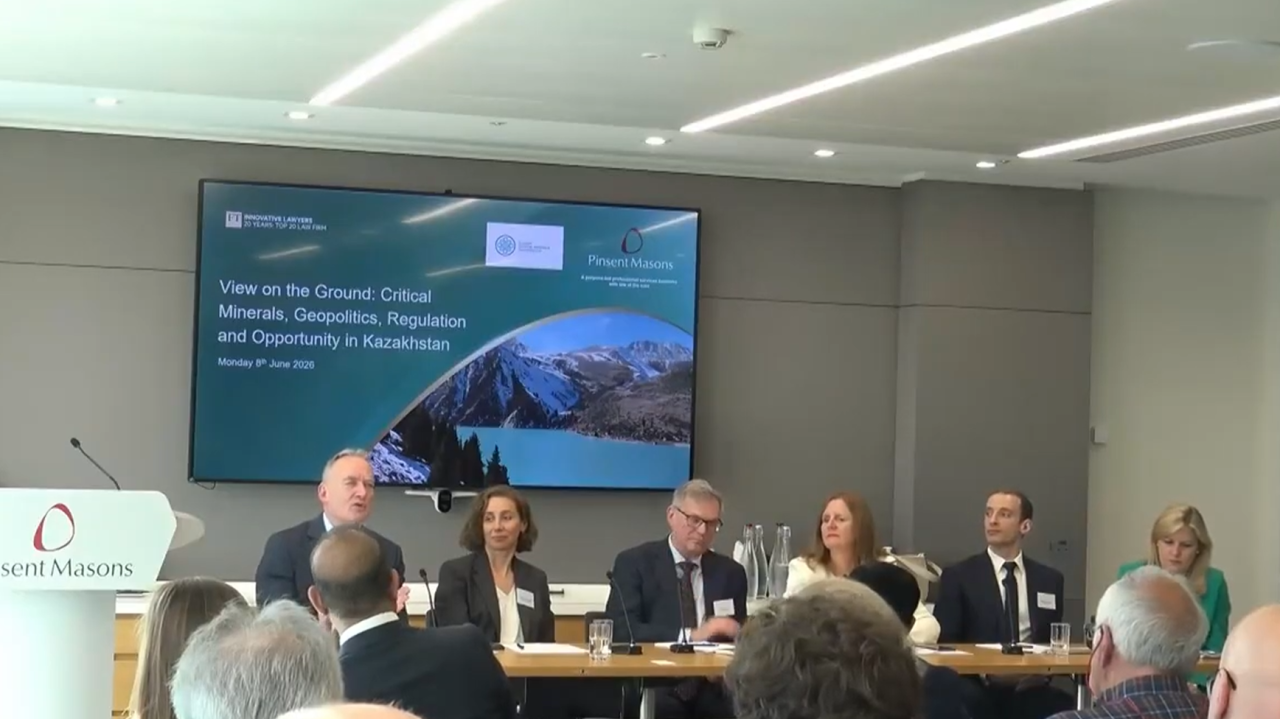
    On 8 June, we joined in London a meeting chaired by Ros Lund the CEO of the Eurasia Critical Minerals Organisation and hosted by Pinsent Masons in London — a compact but exceptionally well-informed panel bringing together geoscientists, financiers, lawyers, and diplomats from the Kazakh Embassy.

    These are the conversations that rarely make it into press releases. Here is what stood out.


    The ground is moving faster than the headlines suggest

    Ash Johnson of IGS, returning to Kazakhstan after eight years, was direct: the atmosphere has changed. There is a greater appetite for engaging with international experts, a more realistic appraisal of where Kazakhstan stands on the global exploration investment ladder, and — crucially — a shift from confidence in geological potential toward something more demanding: the question of execution.

    In the Fraser Institute rankings, Kazakhstan placed 24th out of 91 jurisdictions in 2017. By the most recent survey, it had slipped toward the bottom quarter of the index — a trajectory that reflects not a failure of geology, but unfinished work on policy and data.

    The 2018 mining code reforms, modelled on the Australian first-come-first-served system, remain the single most important driver of renewed interest. Eric Rasmussen — former head of natural resources banking at EBRD, subsequently involved in investment strategy at Rio Tinto, now advising governments across the region — described it plainly: investors today see a more competitive, more predictable licensing process, clearer allocation of rights, and a statutory framework that, while complex, offers security over the long term. As Eric put it: mining is a long-term game. Better to implement things right from the outset than to move quickly and spend years fixing what wasn’t done properly.


    The data imperative

    The conversation kept returning to one theme: geological data.

    IGS’s work at the geological survey interface, from Northern Ireland to a vast programme across the Arabian Shield in Saudi Arabia, has shown consistently that making high-quality data freely available is the single most effective lever for attracting junior exploration capital. Ash’s prescription for Kazakhstan was unambiguous: get the data, get it released, and then use AI to unlock the legacy Soviet archive — tens of thousands of reports, scanned to PDF but not yet fully digitised, written by highly trained geologists and representing an extraordinary unexploited asset.

    The Kazakh Embassy’s first secretary confirmed that this is now underway: the National Geological Survey is actively introducing AI tools to translate and systematise that Russian-language archive, and a first tranche of publicly available data is expected before year end. The infrastructure challenge is real — we are talking petabytes, not megabytes — but the direction of travel is right.

    A national geoscience database of the quality now being built in Saudi Arabia would, in Ash’s view, be the single most transformative step Kazakhstan could take for investment attraction. There are over 3,000 exploration licences currently active in the country, yet around 65% of the country remains underexplored. That fragmentation is both the problem and — for the right kind of capital — the opportunity.

    Article content

    The consolidation play

    Matthew Fisher of La Mancha Resource Capital put a precise investment thesis on the table. La Mancha takes 20–30% of a company, takes seats on the board, uses contractual rights to drive exploration, and engineers consolidation — mergers between adjacent projects, resource aggregation, and scale. They have done it in Africa with Endeavour Mining (invested over a decade ago, now approximately $12 billion market cap), in Australia with Evolution Mining (exited 2021, now $16 billion), and are building a similar position in Latin America with G Mining Ventures (approximately $6 billion). Kazakhstan is next on the list.

    The three criteria: good geology (established), a mining-friendly jurisdiction (nuanced but broadly yes, with uranium as the carve-out), and a strong team on the ground willing to commit to the thesis. La Mancha’s chairman Nagib Sawiris has already met with Deputy Prime Minister – Minister of Foreign Affairs of the Republic of Kazakhstan Mr. Murat Nurtleu in January this year. The geology and jurisdiction boxes are ticked. The team question, Matthew was candid, is still being worked.

    Matthew also offered what struck me as the most practically useful observation of the evening on regulation: investors can deal with complexity. What they cannot deal with is shifting sands and chaos.

    From an investor’s perspective, a degree of red tape, properly implemented, is a blessing, not a burden.

    Article content

    The legislative changes: less alarming than reported

    The recent amendments to Kazakhstan’s subsoil use code — signed by President Tokayev in December 2024, in force since March 2025 — introduce two significant mechanisms: a unified digital licensing platform (allowing e-signature registration and royalty payment for exploration and extraction licences) and an electronic auction system for contested ground. Where two or more applications are filed for the same area, an auction is automatically triggered within 15 days.

    Sylvia Tonova, Partner and Co-Head of International Arbitration at Pinsent Masons, brought her investment arbitration and public international law perspective to bear. As long as the uranium-related changes are not retroactive — and her reading is that they are not — the direction is clarifying rather than restrictive. She also noted something that tends to get lost in the headlines: the amendments include material incentives for solid mineral processing projects, including exemptions from corporate income tax and land tax for ten years, from property tax for eight years, and VAT on imported equipment for five years. Good news for investors, and largely unreported.

    Her wider counsel was pointed: involve disputes lawyers at the transactional stage, not the crisis stage. Kazakhstan has signed bilateral investment treaties with China, the UK, Singapore, the Netherlands, Luxembourg, Switzerland, Italy and the US, among others, as well as the Energy Charter Treaty. These are real instruments of protection — cheaper and more comprehensive than political risk insurance — that investors routinely fail to structure correctly at inception. More importantly, having that treaty architecture in place often brings a counterparty government to the table for dialogue long before arbitration becomes necessary.

    As Sylvia put it, with characteristic directness:

    it is a little like a prenuptial agreement. You hope you never need it. But you would be unwise to proceed without one.

    Article content

    Operating at the coalface: the Solidcore perspective

    Tania Tchedaeva, Executive VP for Corporate Governance and Compliance at Solidcore Resources — the Kazakhstan-focused gold producer formerly known as Polymetal, now listed on the Astana International Exchange — offered what was perhaps the most grounded perspective of the evening: that of a company that has been doing all of this in practice, not in theory, for over a decade.

    Solidcore’s story in Kazakhstan is instructive. The company’s first acquisition was built into a processing hub. Its second — a large but long-troubled mine — was unlocked through its proprietary pressure oxidation technology, which handles the refractory ore that defeated previous owners. A new processing facility is now under construction and due for completion in two years. A more recent tin acquisition reflects a deliberate strategy of learning new commodity verticals through smaller, simpler operations before scaling. And crucially, that processing facility will not just serve Solidcore’s own operations: it will process ore from third-party companies, making it both a revenue stream and a strategic asset for Kazakhstan’s broader value-add ambitions.

    Tania was equally direct about the human dimension of operating in Kazakhstan: Solidcore invests heavily in local communities, including funding children’s education in the areas where it operates, on the explicit premise that it wants those children to return as qualified professionals. This is not philanthropy as a footnote. It is the operating model.

    On the capital markets dimension, Tania made two points that deserve wider attention. First, Solidcore was among the earliest companies listed on the AIX when it launched, and has been working actively with Kazakh regulators ever since — bringing international standards, brokers, and institutional relationships that had never previously looked at Kazakhstan. When Solidcore moved its primary listing from London to the AIX in 2023, it did not come alone. That kind of institutional transfer of know-how is precisely what a nascent exchange needs.

    Second — and this is the structural point that rarely surfaces in investment attraction conversations — Kazakhstan is currently classified as a frontier market rather than an emerging market. For a significant category of institutional investors, this is not a deterrent to be argued away. It is a hard constraint. Their mandates physically prohibit investment in frontier-classified jurisdictions, regardless of the quality of the opportunity. Kazakhstan has been working on this reclassification for some time, and Tania noted there is finally some traction. If and when that changes, the effect on available capital flowing into Kazakh mining could be transformative.

    Her closing observation on Russia — raised by another panellist as the elephant in the room — was characteristically measured. Solidcore was formerly a top-ten gold producer and top-three silver producer globally. The Russian chapter of that story is now closed. The expertise, however — technical, operational, managerial — is being transferred to Kazakhstan and built upon there. Russia still exerts significant influence across the region. The pragmatic approach, she suggested, is to extract what value you can from that proximity, not to pretend it does not exist.

    Article content

    The Chinese question — and the wider investment geography

    The room did not shy away from the China question. Chinese capital is moving faster than OECD-bound investors on virtually every dimension: speed of deployment, appetite for risk, integration of EPC contractors and labour, and — frankly — a different relationship with ESG standards.

    Eric Rasmussen put it clearly: western firms are not going to out-pace Chinese capital on speed. The competition, if it is to be won, must be won on the quality and durability of the investment relationship. Standards are not bureaucratic inconvenience; they are long-term risk management. Licences get revoked. Governments change. Communities remember.

    That said, the picture is not monolithic. Ash noted that IGS is currently working alongside the China Geological Survey on the Saudi Arabian national data programme — the Chinese are the main contractor — specifically to bring their methodology up to international standards. The Chinese teams have welcomed this, seeing it as a route to greater international competitiveness. And the composition of Chinese investment in Kazakhstan is itself shifting: while CNPC and Sinopec have anchored Chinese capital in oil and gas since the late 1990s, newer entrants are moving into higher value-added industries — amino acid production, metallurgy, and textile clusters. The extractive story is becoming more complex.

    The broader investment geography, however, is one that deserves more attention than it typically receives. According to the EDB Monitoring of Mutual Investments database, FDI stock in Kazakhstan from the Eurasian region, China, Türkiye, and the Gulf states combined exceeded $28 billion by mid-2025 — up nearly 50% from 2020, representing more than $9 billion of new capital in five years. The Gulf states have been the fastest-growing source, tripling their investment stock to $4.4 billion, with capital now spanning construction, telecoms, power infrastructure, and mining — including Omani investment in Solidcore Resources itself. The Eurasian region accounts for $9.4 billion, growing at 40%, with Kazakhstan outpacing the regional average by a factor of 2.5.

    Türkiye’s position in this picture is particularly worth watching. Turkish FDI stock in Kazakhstan has more than tripled to $3.3 billion, with transport and logistics emerging as the key sector — flagship projects including the modernisation of Almaty International Airport, the construction of Turkistan International Airport, and a logistics hub in Aktobe.

    At the end of the Q&As, Eric Rasmussen offered a well-timed caution on the processing ambitions more broadly: pursue concentrate by all means — that is where approximately 70% of the value sits. But be wary of the current fashion for smelters. They are not profitable, and they are highly demanding on energy and water. As he put it: process, yes. But let’s not melt down.

  • B5+1 Business Forum in Bishkek Draws Largest-Ever US Commercial Delegation to Central Asia as Private Sector Leads Engagement Push

    B5+1 Business Forum in Bishkek Draws Largest-Ever US Commercial Delegation to Central Asia as Private Sector Leads Engagement Push

    More than 50 US companies gathered in Bishkek on 4 February for the second B5+1 Business Forum, the private-sector counterpart to the C5+1 diplomatic format linking the United States with Kazakhstan, Kyrgyzstan, Tajikistan, Turkmenistan and Uzbekistan, in what US Special Envoy Sergio Gor described as the largest and most comprehensive American commercial delegation ever to visit Central Asia.

    The forum, co-organised by the Kyrgyz government and the Center for International Private Enterprise, is designed to bring companies and policymakers together to identify investment barriers and propose cross-border regulatory changes. The Bishkek agenda centred on reviewing progress against the 21 private-sector recommendations produced at the inaugural B5+1 forum in Almaty in March 2024, and setting priorities for the next phase of work.

    Gor framed the forum as a deliberate shift in Washington’s approach to Central Asian engagement. “The private sector, not intergovernmental agreements, will become the key instrument of interaction,” he said, identifying electronic commerce, artificial intelligence, critical minerals, agriculture and transport infrastructure as priority areas. He also referenced the TRIPP transport corridor as a vehicle for connecting Central Asia through the South Caucasus to global markets — “a historic opportunity to strengthen economic integration and long-term prosperity across the region.”

    Kazakhstan’s Industry and Construction Minister Yersaiyn Nagassayev used the event to make the case for treating Central Asia as a single investment market rather than a collection of bilateral relationships. He noted that more than 600 US companies currently operate in Kazakhstan and said foreign investors increasingly assess the region as a unified commercial space with aligned regulations and investment conditions.

    Kyrgyzstan used the forum to highlight its domestic economic performance within that regional context. First Deputy Chairman Daniyar Amangeldiyev said Kyrgyzstan’s economy grew 11.1% in 2025, which he described as one of the highest growth rates in the region. Gor also met separately with Kyrgyz President Sadyr Japarov to discuss economic cooperation, trade expansion and investment attraction.

    The B5+1 is being positioned as a standing mechanism with an ongoing cycle of working groups, private-sector proposals and annual meetings, rather than a one-off event. Any updated recommendations from the Bishkek forum are expected to be published following additional consultations rather than issued as immediate communiqués at the event itself.

  • Kyrgyzstan and Turkey Advance Mining Cooperation Talks as Bishkek Courts Foreign Expertise in Rare Earths and Critical Minerals

    Kyrgyzstan and Turkey Advance Mining Cooperation Talks as Bishkek Courts Foreign Expertise in Rare Earths and Critical Minerals

    Kyrgyzstan’s Minister of Natural Resources, Ecology and Technical Supervision Akyl Toktobaev has met with a delegation from Turkish company MTA International Mining Inc., led by CEO Nail Yildirim, to discuss prospects for bilateral cooperation across the full mining value chain including geological exploration, mineral processing and critical minerals development.

    The discussions focused on joint geological exploration, technology and knowledge sharing in exploration, production, beneficiation and mineral processing, personnel training, specialist internships and joint research projects in rare earth elements and critical minerals — areas of growing strategic priority as Western governments seek to diversify supply chains away from Chinese-dominated sources.

    The meeting follows Toktobaev’s participation in April 2026 in the OECD Forum on Strategically Important Minerals in Istanbul, where he emphasised Kyrgyzstan’s ongoing implementation of international reporting standards and strengthened disclosure requirements in the subsoil use sector. “This contributes to increased transparency in the industry and strengthens investor and public confidence,” he said. On the sidelines of the Istanbul forum, Toktobaev also held a bilateral meeting with Turkish Energy and Natural Resources Minister Alparslan Bayraktar to discuss expanding subsoil use cooperation between the two countries.

    Kyrgyzstan holds significant critical mineral endowment including approximately 13% of global antimony reserves and substantial gold, copper and rare metal resources, and has been working to position itself as an investable jurisdiction as Western and allied interest in Central Asian mineral assets intensifies. Turkey’s MTA International Mining is the international arm of the Turkish state geological survey, giving the cooperation discussions an institutional rather than purely commercial character.

  • US Envoy Gor Tells Astana C5+1 Dialogue Washington Is Changing Its Approach to Central Asia: “This Is Where We Want to Work”

    US Envoy Gor Tells Astana C5+1 Dialogue Washington Is Changing Its Approach to Central Asia: “This Is Where We Want to Work”

    The United States opened a new round of high-level critical minerals talks with all five Central Asian governments in Astana on 10 June, with US Special Envoy for South and Central Asian Affairs Sergio Gor delivering a pointed message that Washington has decided to significantly deepen its engagement with a region it acknowledges has not received the attention it deserves.

    “We care about this region, we want to be involved with this region, we want to identify win-win situations for the United States and your nations,” Gor told the first in-person C5+1 Critical Minerals Dialogue, held at The Ritz-Carlton in Astana and attended by officials from Kazakhstan, Kyrgyzstan, Tajikistan, Turkmenistan and Uzbekistan. The session covered geological exploration, surveying and mapping, mining and processing, and global value and supply chains.

    Gor said the Trump administration’s increased focus on Central Asia reflects a clear strategic calculation. “There’s a reason we’re sitting at this table and not at another table around the world. It’s because this is where we have identified trusted partners,” he said. He pointed to the US International Development Finance Corporation as a key instrument, saying it was preparing to invest in critical minerals, telecommunications and Trans-Caspian infrastructure, and saw potential to transform the region’s mineral deposits into “the foundation of a new wave of industrialisation.” He added that Washington stands behind American companies operating in the region: “There is no such thing as a deal too small.”

    Kazakhstan’s Industry and Construction Minister Yersaiyn Nagassayev framed the dialogue as a continuation of the bilateral track opened during President Tokayev’s November 2025 visit to Washington, when a critical minerals memorandum of understanding was signed in Tokayev’s presence by Nagassayev and US Commerce Secretary Howard Lutnick. He cited the Cove Capital tungsten cooperation — involving the Northern Katpar and Upper Kairakty deposits in Karaganda Region — as a concrete follow-up to those agreements.

    Nagassayev presented Kazakhstan’s case for deeper partnership on multiple dimensions. The country holds more than 9,500 mineral deposits, including over 100 containing rare and rare earth metals. Investment in geological exploration has tripled since 2018 to exceed $1 billion annually, and the country has adopted the CRIRSCO international reporting standards since 2024. Major international companies including Rio Tinto, Barrick Gold, First Quantum, Ivanhoe, Teck, Fortescue and Cove Capital have entered the market.

    Crucially, Nagassayev emphasised that Kazakhstan seeks to be a value-added partner rather than a raw material exporter. “Kazakhstan is interested not only in exporting raw materials, but also in developing joint production facilities, technology transfer, workforce training, and scientific cooperation,” he said, proposing cooperation in processing, industrial clusters, advanced materials and research centres. He also linked the critical minerals agenda to the Middle Corridor transport route as a mechanism for diversifying Eurasian connectivity and ensuring reliable supply chain flows.

    Gor met President Tokayev shortly before the dialogue session, and Kazakhstan’s Foreign Ministry said the bilateral talks with Foreign Minister Yermek Kosherbayev covered economic partnerships, innovation, artificial intelligence, education, transport, logistics and the implementation of Tokayev-Trump agreements from November 2025.

  • Japan and Kazakhstan Launch EAGLE-4 Fast Reactor Safety Programme as Tokyo Advances Generation IV Nuclear Development Towards 2050

    Japan and Kazakhstan Launch EAGLE-4 Fast Reactor Safety Programme as Tokyo Advances Generation IV Nuclear Development Towards 2050

    Japan’s Atomic Energy Agency and Kazakhstan’s National Nuclear Centre have signed a memorandum of cooperation to undertake a fourth phase of the EAGLE project — a long-running joint research programme on core safety experiments for sodium-cooled fast reactors — marking a new chapter in nuclear technology collaboration between the two countries.

    NNC RK Director General Erlan Batyrbekov and JAEA President Masanori Koguchi signed the agreement, which initiates the EAGLE-4 project covering several in-pile experiments at NNC RK’s IGR research reactor, twelve out-of-pile experiments at the EAGLE test bench, and a series of small-scale tests. The main objectives are to test fuel assemblies for advanced Japanese Generation IV reactors, conduct research at NNC RK facilities, and provide a scientific basis for safety assessment of advanced nuclear technologies. NNC RK is in discussions with JAEA on extending the project through to 2031.

    The EAGLE programme began in the early 2000s and has now completed three phases. Across those phases, approximately 200 preparatory tests, two intermediate-scale and nine full-scale reactor experiments, and more than 65 out-of-pile tests were carried out, collectively confirming that molten fuel is promptly discharged from a reactor core in the event of a severe accident — a key safety finding for the development of next-generation sodium-cooled fast reactor technology.

    The programme sits within Japan’s broader strategic effort to revive fast reactor development after a prolonged pause. Japan’s government decommissioned the Monju sodium-cooled fast reactor in 2016 following a series of technical problems, including a sodium coolant leak in 1995. A strategic roadmap adopted by the Cabinet in 2018 and revised in 2022 selected sodium-cooled fast reactors as the target for a demonstration reactor conceptual design, with a demonstration fast reactor planned for operation by 2050.

    Fast neutron reactors offer substantially more efficient use of uranium resources than conventional power reactors and can burn actinides — characteristics that make them attractive for long-term energy security and waste management. For Kazakhstan, the EAGLE collaboration provides both scientific engagement and a demonstration of the country’s growing role as a partner in advanced nuclear research, complementing its dominant position as the world’s largest uranium producer.

  • Kazakhstan Emerges as Central Asia’s Critical Minerals Powerhouse as Uranium, Tungsten and Rare Earths Drive Global Investor Interest

    Kazakhstan Emerges as Central Asia’s Critical Minerals Powerhouse as Uranium, Tungsten and Rare Earths Drive Global Investor Interest

    Kazakhstan is undergoing a fundamental repositioning in global resource markets, moving from a country primarily associated with oil, gas and bulk commodities to one increasingly recognised as a strategic supplier of uranium, rare earth elements, tungsten and other critical minerals essential to advanced manufacturing, defence systems and the energy transition.

    Three themes dominated Central Asian mining capital markets over the past week: strategic developments at Kazatomprom, shifting ownership dynamics at Eurasian Resources Group, and US government-backed financing for Kazakhstan’s tungsten projects.

    Kazatomprom, the world’s largest uranium producer, reinforced investor confidence by announcing the partial redemption of $100 million in long-term bonds — a signal of balance sheet strength during one of the strongest uranium markets in decades. The company’s market value has grown to approximately $19 billion, more than six times its IPO valuation, as nuclear energy regains strategic favour across Europe, North America and Asia. Management expects production growth in 2026 while maintaining a disciplined approach that prioritises value creation over aggressive volume expansion. State ownership through Samruk-Kazyna remains an important factor for investors assessing long-term strategic direction.

    ERG, one of the world’s largest producers of ferroalloys, iron ore, aluminium, copper and cobalt, attracted attention following ownership changes involving a significant stake. Investors interpreted the development as part of a broader trend toward greater government influence over strategically important mining assets — a pattern that extends beyond corporate governance given ERG’s critical minerals portfolio. The group previously accounted for approximately 20% of global gallium production, a metal classified as strategic by both the US and EU for its applications in semiconductors, telecommunications equipment and advanced electronics. ERG’s growing importance to global resource security has elevated it from a traditional mining group to a company viewed as critical infrastructure within global supply chains.

    On the tungsten front, a company developing the Northern Katpar and Upper Kairakty deposits — among the largest tungsten developments outside China — has reportedly sought an additional $400 million in US government-backed financing, supplementing previous expressions of interest valued at up to $1.6 billion. The scale of international backing reflects how strategic mineral projects are increasingly evaluated through a national security lens rather than as conventional commodity investments.

    Both Kazakhstan and Uzbekistan are pursuing policies designed to move beyond raw material exports, attracting investment in processing, refining and downstream industrial operations to capture a greater share of the value chain domestically. This strategic shift mirrors approaches seen in other resource-rich regions seeking long-term economic resilience, and creates new investment opportunities across multiple segments of the mining and industrial ecosystem.

  • US House Passes Bipartisan DOMINANCE Act to Expand Allied Critical Minerals Cooperation and Reduce Chinese Rare Earth Dependence

    US House Passes Bipartisan DOMINANCE Act to Expand Allied Critical Minerals Cooperation and Reduce Chinese Rare Earth Dependence

    The US House of Representatives has passed the Developing Overseas Mineral Investments and New Allied Networks for Critical Energies Act — known as the DOMINANCE Act — bipartisan legislation designed to reduce American dependence on China for critical minerals and build more resilient supply chains through expanded cooperation with allied and partner nations.

    The legislation was introduced by Representatives Ami Bera and Young Kim of California. It addresses four main pillars: expanding cooperation with allies and partners on mineral security, supporting strategic mineral and energy investments, strengthening US energy diplomacy, and investing in the workforce and expertise required to build diversified and resilient critical mineral supply chains.

    Bera framed the bill as a matter of national security that transcends partisan lines. “Today, China controls roughly 90% of global rare earth processing capacity, creating a strategic vulnerability that Beijing has shown it is willing to exploit through export restrictions and economic coercion,” he said. “The United States must continue expanding domestic mining, processing, refining, and recycling capacity, but we cannot build secure and resilient supply chains alone.”

    The legislation has attracted support from a broad coalition spanning national security, manufacturing, technology, energy and policy organisations, including the National Association of Manufacturers, the Information Technology Industry Council, the Bipartisan Policy Center Action, the Climate Leadership Council and the US-ASEAN Business Council.

    The bill now moves to the Senate. Its passage through the House reflects growing bipartisan consensus that securing critical mineral supply chains is a strategic imperative requiring both domestic capacity building and systematic allied engagement — a recognition accelerated by China’s progressive tightening of export controls on gallium, germanium, graphite, antimony and rare earth elements over the past two years.

  • C5+1 Critical Minerals Dialogue Convenes in Astana Ahead of AMM-2026 Congress as Kazakhstan Highlights 9,500-Deposit Resource Base

    C5+1 Critical Minerals Dialogue Convenes in Astana Ahead of AMM-2026 Congress as Kazakhstan Highlights 9,500-Deposit Resource Base

    A C5+1 Critical Minerals Dialogue was held in Astana on the eve of the 16th Astana Mining and Metallurgy Congress, co-chaired by Kazakhstan’s Minister of Industry and Construction Yersaiyn Nagassayev and US Special Envoy for South and Central Asia Sergio Gor, bringing together government representatives from Kyrgyzstan, Tajikistan, Turkmenistan and Uzbekistan alongside the United States.

    Discussions focused on priority areas of cooperation between Central Asian states and the US across the full critical minerals value chain — geological exploration, extraction, processing and supply to global markets. Participants identified long-term cooperation directions including the development of high-technology processing industries, creation of industrial clusters, technology transfer, workforce training and strengthened scientific and technical cooperation. Logistics and supply chain reliability for delivering products to world markets also featured prominently in the agenda.

    Minister Nagassayev emphasised Kazakhstan’s position at the centre of the format’s mineral security agenda. “President Tokayev particularly underscores the important role of the C5+1 platform as a new format of interaction between Central Asia and the United States. The C5+1 Critical Minerals Dialogue is aimed at deepening cooperation in sustainable strategic raw material supply, developing technological interaction and building reliable global supply chains,” he said. He described Kazakhstan’s critical minerals sector as one of the country’s industrial policy priorities, noting that the country’s resource base encompasses more than 9,500 deposits, over 100 of which contain rare and rare earth metals. Digitalisation measures and the adoption of international standards have driven a significant increase in investment, attracting major global companies including Rio Tinto, Barrick Gold, First Quantum, Ivanhoe, Teck, Fortescue and Cove Capital.

    All parties confirmed their interest in developing multilateral cooperation and implementing joint industrial and infrastructure projects.