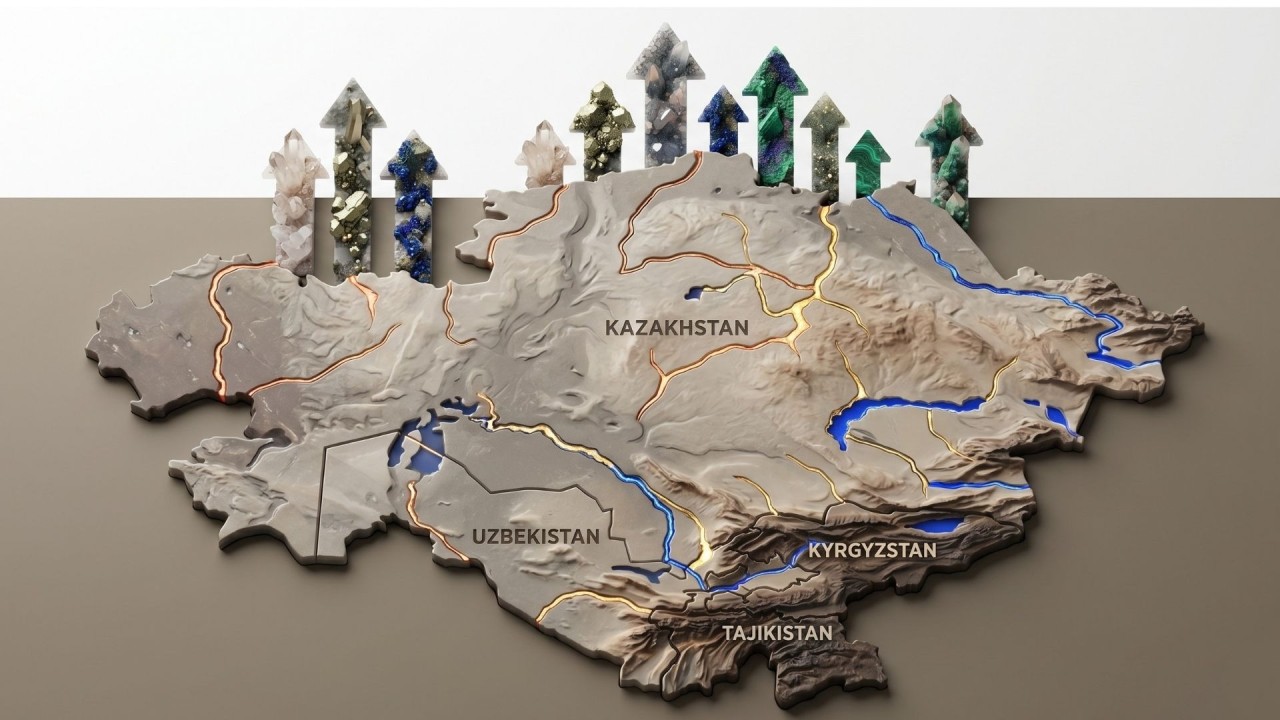
The United States and Central Asia advanced the C5+1 format on multiple fronts in the same week, with a cultural cooperation meeting in Tashkent on 5 June followed days later by a critical minerals dialogue session in Astana — a sequence that reflects the format’s deliberate expansion from security and energy diplomacy into a more comprehensive regional engagement framework.
The Tashkent meeting brought together culture ministers from all five Central Asian states alongside US Under Secretary of State for Public Diplomacy Sarah Rogers. Participants discussed the formation of a permanent C5+1 Working Group on Culture, a joint Culture and Innovation Forum, expanded places for Central Asian cultural professionals in US education and exchange programmes, and closer cooperation in the creative industries. Uzbekistan proposed establishing joint English for Culture centres with US partners at cultural education institutions — a concrete institutional base for an agenda that has previously remained at the level of declarations. The meeting concluded with a protocol reaffirming commitments from the November 2025 Washington summit, covering joint events in art, literature, theatre, cinema and music, museum partnerships, heritage digitisation and tourism routes.
The cultural diplomacy track sits alongside the more commercially focused critical minerals agenda that brought the C5+1 format to Astana for the 10 June Critical Minerals Dialogue, held immediately before the Astana Mining and Metallurgy Congress on 11 to 12 June. The congress programme covers investment conditions, taxation, transport and logistics, copper as a strategic metal and the transition from mineral resources to funded investment projects, with B2B and B2G meetings and a site visit to a Qarmet enterprise on 13 June. Companies and organisations from Kazakhstan, Canada, China, Germany, Saudi Arabia, Sweden and the United States are among confirmed participants.
Kazakhstan’s position at the centre of these discussions reflects its genuine strategic weight. The country accounted for 39% of global uranium production and 48.8% of global natural uranium exports in 2024, while hard minerals and metals made up 18% of exports by value. Refined copper exports generated $2 billion that year, zinc $788 million and silver $588 million. Kazakhstan is also working to develop rare earth potential into bankable projects, following the 2025 announcement of the Zhana Kazakhstan deposit with estimated resources exceeding 20 million metric tonnes containing neodymium, cerium, lanthanum and yttrium.
The week’s sequence illustrates how the C5+1 format is evolving from broad diplomatic declarations toward working-level deliverables. Leaders set priorities in Washington in November 2025; ministers and sectoral officials are now converting those priorities into practical workstreams. For the United States, critical minerals represent the strongest economic rationale for maintaining the format’s momentum. For Central Asian governments, the incentive is technology transfer, financing, market access and a larger share of value captured domestically from their own resources.
Rasta Resources has announced plans to conduct geological exploration for gold and silver across six licence areas in the Aktogay District of Karaganda Region, with work scheduled to begin in the second quarter of 2026 and conclude in the fourth quarter of 2031.
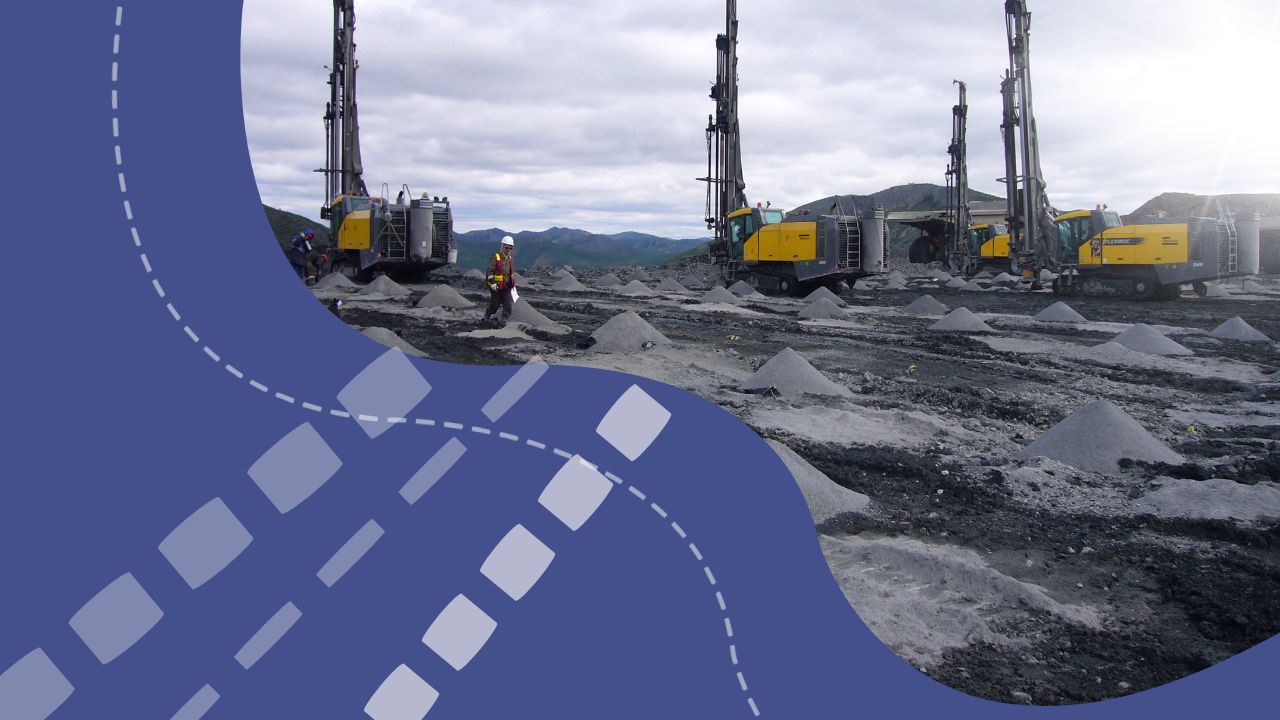
The company received its exploration licence on 4 October 2025. The total licensed area covers 12 square kilometres, with the nearest inhabited settlement — the village of Koshkar — located more than 14 kilometres to the southeast. The exploration programme includes 21.4 linear kilometres of geological survey routes, topographic work across 1.69 square kilometres, and geophysical electrical survey work over two square kilometres. Mining works will involve the excavation of 2,000 cubic metres of trenches and the drilling of 30 exploration boreholes totalling 3,000 linear metres. Some 5,000 samples will be collected for gold analysis and other laboratory work, with the programme concluding in a geological report and reserve calculation under C1 and C2 categories.
Rasta Resources is registered in Almaty and is owned by AIFC-registered private company SD Resources Group Ltd and Almas Rakhymbayev. SD Resources Group is co-owned by Danagul Adamyshina and Suzanna Toktabayeva. Public registry data shows that Adamyshina is listed as director of at least seven companies registered at the same Almaty address, including White Peak, Metanor Resources, Noctung Resources, Quantum Minerals, Altynkol Resources and Terrasouth Resources.
The ownership structure carries notable background. Ten years ago, Adamyshina headed the subsoil use analysis and development department at Kazakhstan’s Ministry of Investment and Development — the predecessor to the current Ministry of Industry and Construction — and was actively involved in drafting the future Subsoil Code. Her co-owner Suzanna Toktabayeva shares a surname with Timur Toktabayev, who served as director of the subsoil use department and later as deputy minister at the same ministry before being convicted in 2023 and sentenced to seven years in prison. The director of OTSD Group Ltd, another company in the network, is listed as Olzhas Toktabayev.
China has built a commanding lead in the global competition for critical minerals that its rivals are only beginning to take seriously, and the strategies required to challenge that dominance will need to go well beyond capital deployment, according to an analysis by Veridicor that frames the contest as a “Great New Game” of geopolitical rivalry over strategic resource access.
The scale of China’s position is striking. The country controls 60% of global rare earth mining and 87% of refining, 64% of graphite mining and 100% of its refining, 65% of cobalt refining and 40% of copper refining. This dominance has been built deliberately over 25 years through a strategy that understands critical minerals as integrated value chains — combining mining, refining and infrastructure — rather than isolated extraction activities. The integration of critical minerals policy with broader industrial strategy has delivered additional competitive advantages, including global leadership in solar power and electric vehicle manufacturing.
The macroeconomic context driving urgency is severe. Demand projections point to significant supply gaps in the medium and longer term. Estimates suggest the world needs to mine as much copper in the next 50 years as it has in the last 5,000 years — a challenge that Wood MacKenzie estimates will require $2.3 trillion in net new mining investment globally to address. The pattern repeats across most critical minerals, with supply gaps both looming and material.
The analysis argues that for the US, Europe and others to challenge China’s dominance, differentiation rather than imitation is the key strategic imperative. “Writing checks won’t be enough to change the critical minerals balance that China has earned,” the paper states. The proposed differentiator is excellence in responsible mining practices — an area where Western actors can build genuine competitive advantage in ways that China’s state-driven model has not prioritised.
The logic operates through several mechanisms. Communities, Indigenous nations and other stakeholders in mining regions can accelerate or obstruct permitting processes depending on the trust relationships developed with project operators. Responsible practices that earn genuine social licence reduce conflict risk and improve the stability and predictability of mineral flows from operating mines. Artisanal and small-scale miners represent a particularly underutilised opportunity: these operators are often early exploration indicators, can be integrated into formalised supply chains through professionalisation and offtake agreements, and their collaboration with large mines reduces conflict risk while boosting aggregate productivity.
The financing model proposed — Stakeholder Prosperity Bonds, developed as a subset of the broader sustainability bond market — combines artisanal mining professionalisation, improvements to large mine operations, infrastructure development, small-scale processing facility construction and regional capacity building into a single regional investment vehicle. The approach is framed not as a cost centre but as a generator of bankable value through productivity gains, risk reduction and regional development.
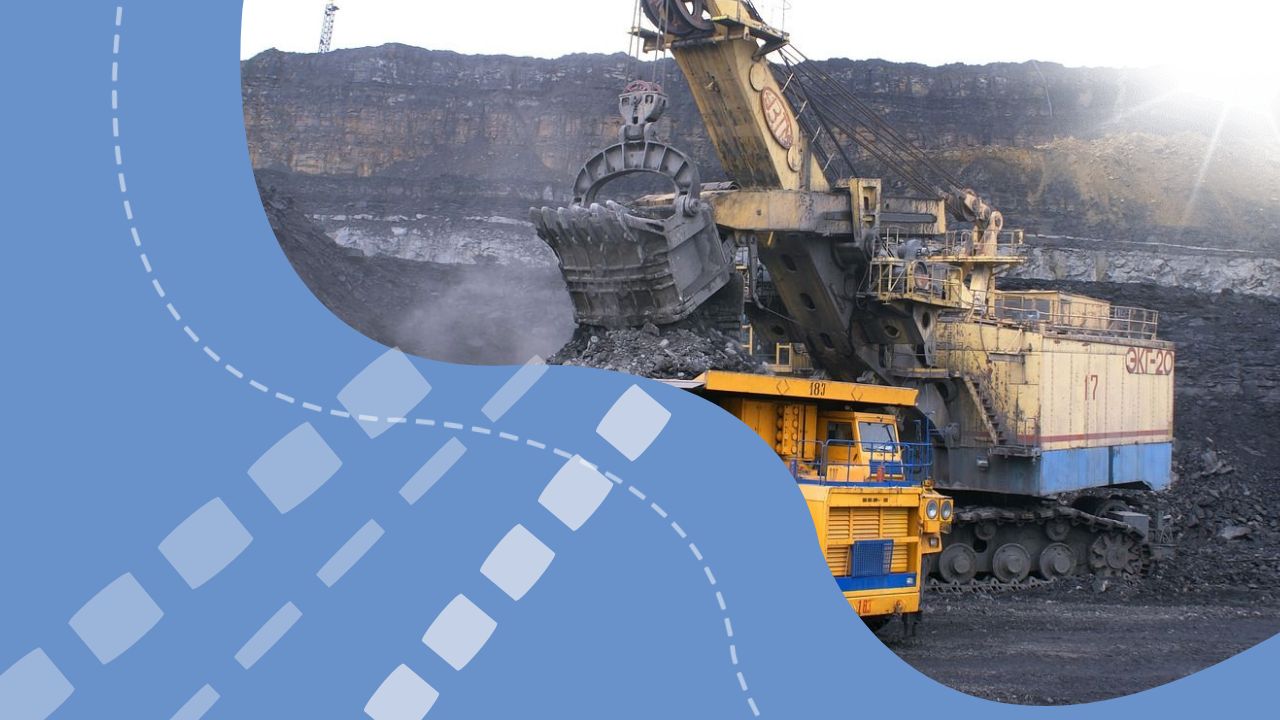
The final outstanding proposal for opencast coal mining in the United Kingdom has been refused, after Carmarthenshire Council rejected plans by Bryn Bach Coal Ltd to extend the Glan Lash mine near Llandybie in south Wales, citing unacceptable impacts on protected woodland, peatland and an endangered butterfly population.
The council’s head of place and sustainability, Rhodri Griffiths, said the proposals conflicted with multiple policies on biodiversity and the environment. The scheme would have adversely affected protected woodland and hedgerows and caused what he described as “the unacceptable disturbance, degradation and loss” of irreplaceable peatland. The application also raised concerns for a local population of marsh fritillary — one of the UK’s most threatened butterfly species.
Bryn Bach Coal had sought to extend the site over 10.3 hectares, promising extraction of 85,000 tonnes of coal and 11 jobs. The company had revised its application after councillors rejected an earlier version in 2023, arguing it had developed a niche non-thermal market for premium anthracite with demand from water filtration, battery production and green steelmaking industries. It has six months to appeal the decision.
The rejection means there are now no live applications for new coal mines anywhere in the UK. Coal Action Network described the decision as reflecting “a clear, strategic commitment to climate leadership, rare habitat protection, and safeguarding the health of surrounding communities,” while Friends of the Earth Cymru called it “great news” that brought to a close years of campaigning and ended Wales’ last opencast coal mine.
The Glan Lash mine opened in 2012 under a licence permitting extraction of 92,500 tonnes of coal over four and a half years before closing in 2019. The UK’s largest opencast coalmine, Ffos-y-Fran above Merthyr Tydfil, closed in 2023 after its extension application was similarly refused. Wales retains one deep mine, at Aberpergwm in Neath Port Talbot.
Central Asia and Mongolia will remain resilient to geopolitical shocks and record the highest growth rates of the EBRD countries of operation in 2026 and 2027, according to the latest Regional Economic Prospects report published on 3 June 2026, by the European Bank for Reconstruction and Development (EBRD). The combined economies of Kazakhstan, the Kyrgyz Republic, Mongolia, Tajikistan, Turkmenistan, and Uzbekistan are projected to grow by 5.6% in 2026 and 5.3% in 2027.
These are compelling headline figures. Yet beneath them lies a more consequential story—one that the OECD’s March 2026 report, Advancing Security and Transparency for the Governance of Critical Raw Materials in Central Asia, articulates with rare precision: the region is not merely growing; it is repositioning itself at the very heart of the global critical raw materials race.
The mining sector is no longer a background variable in Central Asia’s development story. It is the plot itself.
MINEX Asia 2026 is where it gets real. Join EBRD and OECD peers presenting on Kazakhstan’s scale, Tajikistan’s green pivot, Uzbekistan’s processing ambitions—and the governance gaps that determine success.
The Regional Narrative: Resilience With Structural Depth
Growth prospects remain robust but are increasingly dependent on the pace of domestic reforms and efforts to strengthen resilience to external shocks. Strong domestic consumption, rising real wages, and robust capital investment are real. But so are the fault lines: downside risks include energy price volatility, supply-chain disruptions, economic sanctions, and slower growth in the region’s largest trading and economic partners, Russia and China.
The OECD note adds a structural dimension that the growth forecasts alone cannot convey. Central Asia’s substantial yet untapped resource base, combined with its location between major markets in Europe and Asia, raises the region’s relevance in CRM geopolitics and efforts to diversify global supply chains. This is a geostrategic statement. The region holds extraordinary assets: Kazakhstan, already the world’s largest producer of uranium, produces and processes around twenty of the 34 CRMs included on the European Union’s official list. The Kyrgyz Republic and Tajikistan both host some of the world’s largest antimony reserves. Uzbekistan possesses some of the largest copper reserves globally and is advancing lithium and molybdenum production.
Taken together, these endowments amount to a critical minerals portfolio of exceptional strategic depth. Whether the region can translate that portfolio into durable prosperity is the central question of the coming decade.
Country by Country: Where the Headlines Don’t Tell the Full Story
Tajikistan: Gold and Strategic Minerals
Tajikistan: Gold and Strategic Minerals
Tajikistan’s economic performance continues to confound those who underestimate it. In March 2026, Moody’s upgraded Tajikistan’s sovereign credit rating to B2 with a stable outlook, citing the country’s continued economic resilience. The EBRD projects growth easing to 7.9 per cent in 2026 — still remarkable for a landlocked, remittance-dependent economy navigating elevated regional volatility.
The mining dimension is crucial. Gold remains the cornerstone of export revenue and fiscal stability, and Tajikistan’s antimony sector is poised for a structural step-change. Tajikistan possesses the world’s second largest antimony reserves, and China’s effective ban on antimony exports to the US and EU provides a significant window of opportunity. Together, France and Belgium accounted for 77% of Tajikistan’s antimony exports in 2024. With TALCO nearing completion of a new antimony metallurgical plant, Dushanbe is finally beginning to capture processing value rather than simply shipping raw material.
But what I find most intriguing about Tajikistan’s trajectory is the emerging convergence of green energy and artificial intelligence with its mining ambitions. The Rogun Hydropower Project — set to have an annual capacity of over 3,600 megawatts once fully operational — would cover most of Tajikistan’s domestic consumption and create the conditions for green aluminium production, with approximately 70 per cent of output earmarked for export to Kazakhstan and Uzbekistan. Cheap, clean electricity is not merely an industrial asset — it is the foundation for competitive mining, smelting, and increasingly, data infrastructure.
Tajikistan has initiated groundbreaking infrastructure projects, including the launch of “Area AI” — the world’s first dedicated AI Zone — a technopark and cluster designed to serve as a hub for research, development, and application of AI technologies. The country has forged partnerships with international tech firms including Perplexity AI, Google DeepMind, Yotta and Presight to accelerate technology transfer and innovation. The government has declared 2025–2030 the “Years of Digital Economy and Innovation Development.” Taken alongside the Rogun-powered industrial ambitions, this is Tajikistan’s bid to become not just a minerals supplier but a genuinely integrated green industrial economy — using AI and clean energy together to escape the extractive trap.
The key vulnerability remains Tajikistan’s dependence on Russia, where a slowdown would depress the remittance inflows that underpin household incomes. That risk is real and should not be minimised. But the strategic direction of travel is clear — and it is more ambitious than most Western observers appreciate.
Kyrgyzstan: The Kumtor Imperative and Exploration Needs
Kyrgyzstan remains the region’s most dramatic case study in resource-dependent growth. Kumtor Gold Company — nationalised in 2022 after nearly three decades of Canadian stewardship — generated net profit exceeding USD 706 million in 2025, contributes 10–15 per cent of GDP, and represents nearly two-thirds of the country’s mineral exports. The March 2025 discovery of an additional 147 tonnes of gold reserves extended the mine’s productive life to at least another 17 years.
Underground mining operations, launched in August 2025, are transformative. At current gold prices hovering above USD 4,500 per ounce, Kumtor’s economics are exceptional — and the government’s plan to process tailings estimated to contain over 100 tonnes of gold adds further upside. Fixed capital investment rose by 25.5 per cent year on year thanks to strong investment in infrastructure, energy and housing.
Yet the near-term outlook has darkened. The European Union’s 20th sanctions package, announced in late April, restricts exports of dual-use goods to Kyrgyzstan and tightens controls on its financial and logistics sectors. The EBRD has revised its 2026 growth forecast down to 8.7 per cent as a result. This is a significant geopolitical constraint on what would otherwise be an exceptionally strong growth story — and it underscores the OECD’s broader finding that regulatory unpredictability and governance gaps impose real costs on the region’s investment attractiveness.
The OECD note also flags a structural vulnerability that sits beneath the Kumtor euphoria: limited exploration since independence means that the Kumtor mine, accounting for 90% of the Kyrgyz gold exports, is set to close in 2031 due to reserves depletion — and the lack of exploration since independence will make it harder to offset this decline quickly. The reserve discovery of 2025 has bought time but not resolved the underlying fragility.
Kazakhstan: Scale, Strategy, and Industrial Output
Kazakhstan’s mining profile is defined by scale and global strategic significance. The country holds the world’s largest chromium reserves, accounts for roughly 40 per cent of global uranium output, and produces massive quantities of refined copper, largely exported to major industrial buyers like China and Türkiye.
Graphite is a high-potential sector for Kazakhstan. With the exploitation of its Sarytogan deposit — added to the EU’s list of strategic raw material projects and reported to contain 30% of the world’s graphite reserves — Kazakhstan is expecting to become a crucial player on the world graphite market.
The tungsten story is equally striking. Kazakhstan holds roughly 2 million tonnes of tungsten resources out of approximately 3.6 million tonnes of global reserves. A joint venture between Kazakhstan’s Tau-Ken Samruk and US-based Cove Kaz Capital Group has been formed to develop the Severniy Katpar tungsten project, with the US International Development Finance Corporation issuing Letters of Interest for up to USD 700 million in potential financing — marking Washington’s most significant entry yet into the region’s critical minerals sector.
Yet the near-term picture carries a real cautionary note. In Kazakhstan, the extractive industry contracted by 11.4 per cent year on year in Q1 2026 following disruptions to the Caspian Pipeline Consortium pipeline and an incident at the Tengiz oil field. The EBRD projects Kazakhstan’s GDP growth moderating to 4.7 per cent in 2026 and 4.5 per cent in 2027 — the lowest in the region, reflecting the inherent vulnerability of commodity-led economies to infrastructure and logistics shocks.
Uzbekistan: The Ambitious Reformer
Uzbekistan’s ambitions deserve particular attention. The country is the world’s fifth-largest uranium supplier, a top-ten gold producer, and is rapidly positioning itself as a critical minerals investment destination. Uzbekistan has actively signed Memorandums of Understanding with Western partners, including the United States, for securing supply chains in the mining and processing of Critical Minerals and Rare Earths. The government has also launched massive industrial initiatives to bolster its critical minerals sector.
The Almalyk Mining and Metallurgical Complex (AMMC) and its specialised subsidiaries targeting tungsten, molybdenum, rhenium, lithium, and graphite signal a genuine strategic shift from raw extraction towards value-added processing. Whether governance and transparency standards keep pace with ambition will be the decisive variable.
The Structural Challenge: From Resource Extraction to Value Creation
Both the EBRD and the OECD converge on a single, uncomfortable truth: Central Asia’s growth is impressive, but its mining sectors remain structurally exposed. The OECD note identifies several systemic vulnerabilities that macro-growth figures obscure.
On reserves reporting: Most countries still operate on Soviet-era GKZ classification systems that differ fundamentally from international CRIRSCO standards — creating information asymmetries that deter sophisticated investors and complicate due diligence. Kazakhstan has made progress through its KAZRC system; other regional peers have barely started.
On foreign investment dynamics: Foreign actors, predominantly Chinese, actively invest in Central Asia’s mining industry. China has been a primary investor in the mining sectors of the Kyrgyz Republic and Tajikistan, and is increasing its presence in Kazakhstan and Uzbekistan, not only by investing in extraction facilities but also by supporting the development of initial processing capabilities. This creates a strong strategic dependency that the region’s governments are increasingly aware of — and that Western partners, including the EU, UK, and US, are now actively looking to balance through alternative commercial partnerships.
On the Trans-Caspian International Transport Route (TITR): Traffic along the corridor (the Middle Corridor) has increased dramatically as exporters seek reliable East–West trade alternatives. Kazakhstan in particular has long relied on the corridor for its mineral, chemical, and agricultural exports, with a substantial portion of its uranium exports to Western markets utilising this bypass route. This corridor is central to the region’s ability to diversify export markets.
On ESG and governance: The OECD is frank: mining in the region is still heavily influenced by large state-owned enterprises with overlapping regulatory and commercial roles, needing stronger occupational health and safety oversight and remediation of legacy environmental risks. These are not peripheral concerns — they are the conditions on which Western investment and international supply chain partnerships will ultimately be conditioned.
The Strategic Opportunity
The OECD projects global demand for many critical raw materials to increase multifold over the coming decades to meet the needs of the green and digital transitions. Central Asia sits atop a significant share of the reserves that will need to come online to meet that demand. The region holds massive global shares of manganese ore, chromium, lead, zinc, titanium, aluminium, copper, cobalt, and molybdenum.
That is an extraordinary endowment. Translating it into durable prosperity requires three things that remain in genuinely short supply across the region: transparent governance, world-class ESG practice, and the institutional capacity to negotiate from strength with both regional and global partners.
This is precisely why platforms like the MINEX Forum matter. The conversation between producers, investors, policymakers, and development finance institutions that happens at these gatherings is not peripheral to the critical minerals agenda. It is where the terms of engagement are shaped.
Conclusion: Cautious Optimism, Clear Conditions
The EBRD’s projection of robust regional growth is credible. The OECD’s assessment of the region’s critical minerals potential is genuinely exciting. But both institutions are equally clear-eyed about the conditions that must be met for that potential to be realised responsibly.
Central Asia’s mining sectors are not simply economic contributors. They are strategic assets in the most consequential industrial transformation of our era. Their management — balancing extraction with environmental stewardship, concentrating revenue into productive capital formation, building institutional capacity, and securing diversified partnerships — will determine whether current growth translates into sustainable prosperity or rehearses the resource curse that has constrained other commodity-rich regions.
The next chapter will be written in mining offices, government ministries, and international forums across Dushanbe, Bishkek, Astana, Tashkent, and Ulaanbaatar. We should be not merely watching — we should be in the room.
References:
Central Asia and Mongolia to see highest economic growth in the EBRD regions
Arthur Poliakov is the Managing Director of the United Kingdom-based company Advantix Ltd and the Executive Chairman and founder of the MINEX Forum. He has over 30 years of experience in international business communications, event management, and natural resource markets.
He is currently organising the upcoming 12th MINEX Asia Forum (24–25 June 2026, Ankara, Turkey), the 10th MINEX Europe Forum (28–30 October 2026, Trim, Ireland), and the 14th MINEX Eurasia Conference (30 November 2026, London, United Kingdom).
The European Union’s Carbon Border Adjustment Mechanism (CBAM), which came into force in 2026, is creating new compliance challenges for Kazakh металлургical exporters supplying the European market.
CBAM is designed to account for carbon dioxide emissions generated during the production of imported goods and serves as an environmental standard for both European and foreign manufacturers. Kazakh exporters are now required to maintain detailed carbon reporting in order to preserve access to EU markets.
More than half of Kazakhstan’s aluminum exports are destined for the European Union. In addition to the aluminum sector, the new rules also apply to ferrous metallurgy products.
Kazakhstan’s Ministry of Trade and Integration, the International Trade Centre (ITC) and QazTrade conducted an assessment of CBAM’s impact on local businesses and prepared practical recommendations for metallurgical companies adapting to the new framework.
According to the study, exporters of raw aluminum, ferrochrome, steel bars and rods could face annual CBAM-related costs of around €114 million if export volumes remain at 2025 levels.
QazTrade Deputy Chairman Nurlan Kulbatyrov said Kazakh industrial exporters have already begun adapting to the new EU requirements. Support measures are being introduced to help companies reduce financial pressure and maintain the competitiveness of Kazakh products in the European market.
During a June 3 seminar, representatives of business, government and international organizations discussed methods for monitoring and verifying emissions, as well as opportunities linked to greener industrial production.
One of the report’s authors, ITC expert Joost Pauwelyn, noted that Kazakhstan exports more than €600 million worth of steel and aluminum products to the EU annually. He warned that European greenhouse gas regulations could increase annual costs for Kazakh exporters by more than €100 million. Approximately 90% of the additional burden is expected to fall on steel bars and rods. In some cases, CBAM-related expenses could exceed the value of the exported product itself.
Pauwelyn outlined several measures that could significantly reduce the financial impact on producers, including:
Monitoring and declaring actual emissions rather than relying on default values
Accrediting Kazakh verification bodies
Reducing greenhouse gas emissions at production facilities
Developing domestic carbon pricing mechanisms in Kazakhstan
Mongolia has failed to identify a suitable investor for the development of the Borteeg section of the Tavantolgoi coal deposit group after none of the bids submitted in an international tender met government requirements.
The Mongolian government has now decided that the project will be managed by state-owned coal producer Erdenes Tavantolgoi. According to Minister of Economy and Development Jadamyn Enkhbayar, coal production and exports at the site will proceed with the participation of domestic companies, local media outlet Montsame reported.
The open tender, announced in February, invited both Mongolian and foreign companies to invest in the development of the Borteeg deposit and participate in exploiting its reserves.
Under the tender conditions, the winning bidder was expected to finance and construct all required infrastructure for coal extraction, processing, sales and transportation. A key condition imposed by the government required Mongolia to receive at least 51% of total sales revenue throughout the life of the project.
According to the Ministry of Economy and Development, seven companies from Mongolia and abroad submitted proposals. A working group evaluated the bids based on financial and economic returns, experience in implementing similar projects and the existence of a comprehensive development plan.
However, none of the proposals scored highly enough to proceed to the negotiation stage, ministry officials stated.
The Borteeg section is estimated to contain 424.2 million tonnes of coal reserves. Annual production capacity could reach up to 15 million tonnes.
Specialists from Kazakhstan’s National Center for Integrated Processing of Mineral Raw Materials have developed and successfully tested an advanced technology for processing complex polymetallic ores from the Shalkiya and Zhairem deposits.
According to Kazakhstan’s Ministry of Industry and Construction, traditional mineral processing methods remain highly inefficient, with up to 90–95% of processed material ending up as waste while valuable components are lost. The newly developed technology is designed to maximize raw material utilization and significantly reduce tailings volumes.
The key innovation lies in the carbothermic processing of lead-zinc ores with high silicon content using ore-thermal furnaces. Under conventional processing schemes, silica is discarded into tailings storage facilities. The new method instead converts silica into marketable ferroalloys, while lead and zinc transition into the gas phase for subsequent concentration and extraction.
Pilot-industrial testing was conducted using furnaces with capacities ranging from 80 to 630 kVA. The process produced:
Ferrosilicon grades FS45, FS65 and FS75
Ferrosilicoaluminum
Aluminosilicomanganese
New calcium- and magnesium-containing ferroalloys
Researchers also focused on processing lead-zinc sublimates. As a result, they obtained:
High-purity zinc (grade TsV0)
Magnesium compounds
Tribasic lead sulfate
Advanced composite electrochemical coatings with high corrosion resistance
The developers describe the project’s main achievement as the creation of an almost waste-free processing scheme. Unlike conventional methods, where silicon is entirely lost in enrichment tailings, the new technology converts it into commercial products. More than 99% of lead and zinc are transferred into concentrated form.
The research team has secured more than 10 patents covering the new solutions for difficult-to-process ores. Technical specifications have also been prepared for designing ferroalloy production facilities and complexes for processing sublimates. Preliminary calculations indicate that product value generated per unit of cost could more than double compared with existing processing technologies.
American startup Atana Elements is targeting lithium exploration beneath industrial areas in Germany and Poland where Volkswagen and BMW operate manufacturing facilities, in a project backed by Chilean mining major Antofagasta that aims to reduce Europe’s dependence on Chinese critical mineral imports.
The company has secured exploration licences covering approximately 1.5 million acres across regions around Salzgitter in Germany and Wrocław in Poland, according to the Financial Times. The fact that the exploration areas lie beneath facilities already consuming lithium in battery production is described as coincidental rather than by design.
Atana Elements is combining historical geological data with artificial intelligence technologies to identify promising lithium deposits, working in cooperation with Antofagasta. The company estimates it could extract up to 26 million tonnes of lithium across the two sites over the next 20 years — a figure that, if realised, would represent a significant addition to European domestic critical mineral supply. However, analysts cited by the Financial Times cautioned that the project remains at an early stage and that any assessment of actual production volumes is premature.
The initiative reflects growing interest in unconventional domestic lithium sources across Europe as governments and industries seek to reduce exposure to Chinese-dominated supply chains for battery materials essential to the electric vehicle transition.
Terra Balcanica Resources has secured a new mineral exploration licence for the Viogor polymetallic project in eastern Bosnia and Herzegovina, consolidating three previously drilled targets into a single 49 square kilometre tenure within the historically significant Srebrenica mining district.
The licence, issued on 20 May 2026 by the Republic of Srpska Ministry of Energy and Mines to Terra’s wholly owned subsidiary Energetski minerali doo Banja Luka, is valid for three years with two potential two-year extensions providing up to seven years of continuous exploration tenure. It covers the Čumavići polymetallic corridor, the Kiseli Potok molybdenum porphyry and the two Brežani discoveries — all defined during Terra’s exploration work between 2020 and 2022.
The Čumavići corridor is the flagship target, hosting a series of high-grade intermediate sulphidation epithermal silver-antimony-zinc-lead-gold vein systems across more than 7.2 kilometres of strike length. The Čumavići Ridge system has been tested across more than 28 drill holes along 180 metres of strike, returning an average grade of 485 grams per tonne silver equivalent over 4.0 metres. The mineralisation is characterised by sphalerite, stibnite and galena with silver-rich sulphosalts — making antimony, a metal subject to Chinese export controls since September 2024, a key strategic commodity within the project.
The Brežani discovery hosts a large multidomain magmatic-hydrothermal system including a 650 by 400 metre gold-bearing skarn and a structurally controlled base metal epithermal zone at depth. A discovery hole intersected approximately 20 metres of fault-breccia hosted silver-antimony-zinc mineralisation at 480 metres depth grading above 436 grams per tonne silver equivalent. An electromagnetic conductor interpreted as the antimony-silver-zinc mineralisation extends 1.2 kilometres in length and up to 600 metres in width, offering potential for a large tonnage ore body.
The project is strategically located approximately 80 kilometres east-northeast of Dundee Precious Metals’ Vareš silver-zinc mine and adjacent to the Mineco Sase mine, which produces approximately 330,000 tonnes of lead-zinc-silver-gold concentrate per year using processing infrastructure genetically compatible with Terra’s mineralised targets.
Terra CEO Dr. Aleksandar Mišković said securing the licence removes tenure uncertainty and paves the way for a preliminary resource estimate in 2027, positioning the company as a potential supplier of critical metals — notably antimony — to neighbouring European markets.