Inspections of 55 mines and quarries in Kazakhstan have revealed that ten facilities operated by eight companies have yet to install worker positioning systems, the Ministry of Industry and Construction has disclosed, as authorities push to close safety gaps across the extractive sector following a series of industrial accidents.
Industry and Construction Minister Yersaiyn Nagassayev told a government meeting that three of the non-compliant facilities have committed funding for the installation of positioning systems, while technical solutions are being developed for five others. The remaining sites require equipment modernisation to bring safety standards up to the required level. The Ministry of Industry and the Ministry of Emergency Situations are jointly working on strengthening industrial safety requirements across mining enterprises.
The inspections form part of a broader safety and modernisation drive initiated at presidential level, which identified 50 leading enterprises in the mining and metallurgical complex as priority targets for technical re-equipment and modernisation. Since the programme began, companies in the sector have directed more than 530 billion tenge toward capacity upgrades, equipment maintenance and production expansion.
Nagassayev highlighted the role of digital and AI-based technologies in preventing accidents before they occur. Neural network algorithms and machine vision solutions are being deployed to automatically identify risk factors and anomalies, while real-time process monitoring through digital platforms allows problems to be detected and resolved before they escalate into incidents.
Cornish Tin & Lithium — formerly Cornish Tin Limited — has announced significant Phase 3 drilling results from its Tregonning project in west Cornwall, confirming that a lithium-bearing rock formation extends 3.27 kilometres from Tregonning North to Tregonning South while simultaneously intersecting a new high-grade tin mineralisation system containing ten lodes identified to date.
The Phase 3 programme, conducted between September 2025 and January 2026, was primarily designed to test lithium-enriched aplite-pegmatite sheets in the newly identified Tregonning South extension area. Results confirmed that the Newall Formation — a lithium-bearing geological unit first identified at Tregonning North, where earlier drilling returned intervals including 0.3 metres grading 1.33% lithium oxide with a peak grade of 1.42% — extends continuously across the full 3.27 kilometre strike length. Multiple lithium-bearing layers at different depths across the project area suggest the total resource potential may be larger than previously assessed.
The tin discovery at Tregonning South adds a second commodity dimension of significant scale. High-grade intersections include 2.69% tin in the Norcross No.1 Lode, 1.68% tin in Rib South Lode and 1.26% tin in Rib North Lode, alongside an associated sheeted vein system extending across the area.
To reflect the project’s dual-commodity evolution, the company has rebranded as Cornish Tin & Lithium. CEO and founder Sally Norcross-Webb said the name change underscored the company’s potential to become a leading domestic source of responsibly produced tin and lithium for electric vehicles, renewable energy systems and advanced electronics. “Tregonning South clearly has spectacular potential. Never before explored systematically, as a combined mining operation, our project areas in West Cornwall could make a very significant and positive contribution to Cornwall’s economy and the critical minerals resilience of the UK and Europe,” she said.
The Ukrainian Embassy in Ireland has issued a formal statement expressing serious concern over continuing exports of alumina from the Aughinish Alumina plant in Limerick to Russia, as the Irish government conducts an investigation and the European Commission declines to include the facility in its latest sanctions package.
Ukraine’s embassy said the exports — which it claims are extensively used by Russia’s military-industrial complex — have grown significantly since the full-scale invasion of Ukraine in February 2022, rising from €196 million in 2021 to €318 million in 2025 and making Russia the largest single destination for Irish alumina exports. The embassy linked the material directly to Russian weapons production, naming Iskander-M ballistic missiles, Tsirkon hypersonic missiles, Kh-101 and Kalibr cruise missiles and Shahed-136 attack drones as systems that use aluminium derived from processed alumina.
The Aughinish plant, Europe’s largest alumina refinery, has been owned since 2007 by Rusal — the Russian aluminium giant founded by Oleg Deripaska, a close associate of President Vladimir Putin who has himself been subject to repeated Western sanctions. The company operating the plant says it complies fully with all applicable EU laws, sanctions and export controls, and has implemented a robust sanctions compliance framework across its supply chain.
The controversy deepened after an investigation by the Organised Crime and Corruption Reporting Project — a collective that includes The Irish Times — found that alumina from Aughinish was processed into aluminium and sold through a Moscow-based trader to clients including more than 40 EU-sanctioned Russian arms manufacturers. The European Commission nonetheless decided against including the plant in a recent sanctions package despite calls from nearly 40 MEPs.
An accuracy dispute over the scale of Russian exports has also emerged. Ireland’s Central Statistics Office received data from the operating company indicating more than 80% of Aughinish exports went to Russia, a figure the company now says should be closer to 45% and is being corrected. Minister for Enterprise Peter Burke said the discrepancy in data supplied to the CSO was now being rectified.
Minister of State Niall Collins defended the government’s approach, saying the Department of Enterprise review would be completed and furnished to the European Commission before any collective EU decision was taken. He also criticised some media reporting on the issue, though his remarks appeared directed at sources beyond the OCCRP, which has a long track record of award-winning investigations into corporate and financial data.
The plant employs 475 staff directly and supports several hundred more indirect jobs, complicating any decision to restrict its operations.
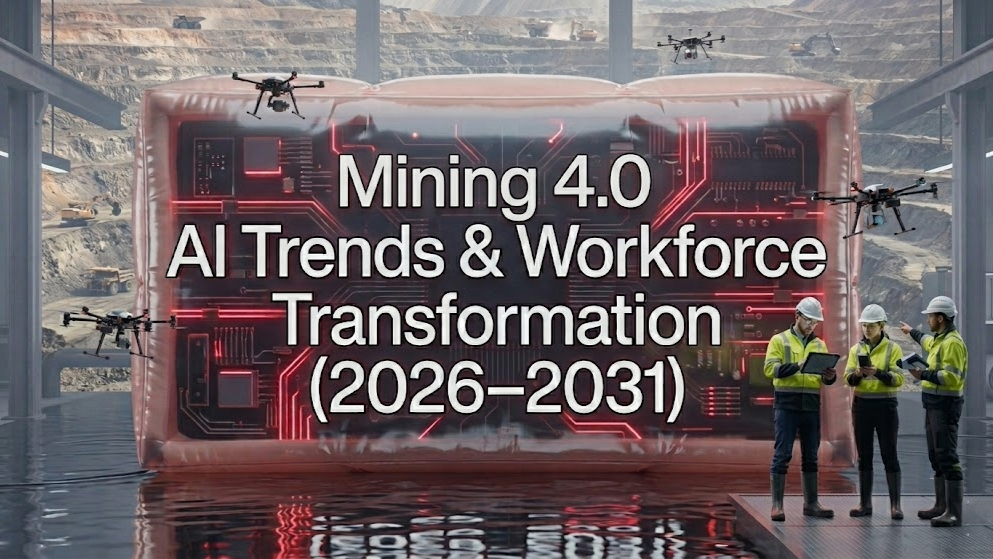
This research is dedicated to a fundamental technological, economic, and workforce shift in the global mining industry over the horizon of 2026–2031. The sector’s transition from isolated digital experiments to end-to-end deployment of agentic artificial intelligence (AI), multimodal neural networks, and edge computing is driven by severe macroeconomic pressures: depletion of high-grade deposits, increasingly complex geological conditions, and stringent ESG regulatory frameworks.
Drawing on case study examples, this paper analyses the impact of AI across the entire value chain — from processing exploration data to open-pit automation and mineral processing plant optimisation. Based on mathematical models of labour productivity change, a financial and workforce forecast is presented: the economic mechanisms of production cost reduction are described, alongside a transformation of the cost structure (OPEX/CAPEX), the top 10 professions of the future, and the radically altered role of HR departments. The research draws on leading practice from macro-regions (Central Asia, Europe, the USA, and China) and data from authoritative academic and analytical sources.
Discover how agentic AI, edge computing, and neural networks are tackling the industry’s biggest macroeconomic pressures and transforming the workforce (2026–2031).
Join the discussion across Europe, the Middle East, and Central Asia🌍
In 2026, the global mining industry is operating under unprecedented pressure. The global transition to a low-carbon economy demands a significant increase in the extraction of critical metals (lithium, cobalt, copper, and nickel). At the same time, the average grade of ore in active mines has fallen by 25–30% over the past two decades, and newly discovered ore bodies are found at ever greater depths. According to industry analysis, the probability of commercial success in exploration projects without the use of advanced predictive analysis methods has fallen to a critical 5% (for brownfield projects in previously developed areas; for greenfield exploration in untouched areas — just 0.3–0.5%).
Historically associated with heavy physical labour, significant health risks, and substantial environmental impact, the industry is undergoing tectonic shifts. Artificial intelligence has evolved from a category of advanced IT add-ons into the core of operational and managerial activity at enterprises. As experts note at the international Resourcing Tomorrow forum in London, the key competitive advantage for companies is no longer simply the physical volume of ore extracted, but the depth and speed of data processing. Investors directly factor in an asset’s digital maturity index and its ability to verify environmental indicators using transparent AI algorithms when assessing the value of assets.
The volume of the global AI market in mining is estimated differently by various analytical agencies: Grand View Research valued the market at $29.94 billion in 2024, with growth to approximately $41.77 billion in 2025 and a forecast of $685.61 billion by 2033 (CAGR 41.87%); SNS Insider valued it at $28.91 billion in 2024 with a forecast of $478.29 billion by 2032 (CAGR 42.15%). The variation in forecasts is explained by differences in methodology and market coverage. The figure of $1,384 billion by 2035, which appeared in a previous version, has not been confirmed by any verified source and has been removed from the text. The primary drivers of this phenomenal growth are deep machine learning technologies and the rapidly growing computer vision segment.
2. Global Technological Trends of AI in Mining
The technological architecture of a modern enterprise is based on a transition from centralised cloud computing to hybrid edge systems. The remoteness of most mines from major cities and the instability of communication channels have led to critical data processing being moved directly onto the onboard computers of heavy machinery and local enterprise servers. Data transmission latency in cloud AI systems ranges from 50 to 500 milliseconds, which is unacceptable for industrial safety systems, whereas edge computing performs transactions in fractions of a millisecond.
Core cross-cutting technologies:
• Multimodal Agentic Systems: Autonomous software agents capable of simultaneously analysing unstructured text reports, geophysical logs, satellite imagery, and financial documents for comprehensive decision-making support.
• AI-Powered Digital Twins: Dynamic three-dimensional models of processing plants and open pits that not only display the current state of objects but also simulate scenarios of how the situation develops when external physical or economic parameters change.
• Intelligent Optical Ore Sorting: Integration of hyperspectral cameras and neural networks on conveyor belts for the instant rejection of waste rock prior to the energy-intensive crushing stage.
3. The Impact of AI on the Value Chain
3.1. Exploration and Surveying
The traditional process of collecting and interpreting geological data took months of manual labour. Generative models transform terabytes of historical unstructured reports, old maps, and field journals into standardised digital datasets within a few hours.
Next-generation platforms use algorithms to identify hidden patterns and weak signals in large arrays of geophysical and geochemical data. Neural networks construct probabilistic 3D block models of metal grade distribution, optimising the planning of exploration drilling. In doing so, the concept of the ‘geologist in the control loop’ (Human-in-the-Loop) is realised: AI does not replace the human, but removes up to 80% of the routine data-cleansing work, allowing the specialist to test many times more hypotheses.
3.2. Mining Operations
In open-pit mining, automated flow management systems have become the industry standard. Software-defined autonomy platforms allow dump trucks to travel without drivers, optimising fuel consumption by 10–15% and reducing wear on large-diameter tyres.
The scale of global deployment is impressive: according to GlobalData, by July 2025, 3,832 autonomous dump trucks were in operation at open-pit mines worldwide. China leads with 2,090 vehicles (53% of the global fleet), followed by Australia, Canada, and Chile. In April 2026, Komatsu commissioned its 1,000th ultra-class autonomous haul truck fitted with the FrontRunner system, becoming the first original equipment manufacturer (OEM) to reach this milestone. Caterpillar, for its part, has set a target of bringing over 2,000 autonomous vehicles into its fleet by 2030, including actively expanding the use of the technology at smaller-scale quarries and open pits.
In underground conditions, where there is no GPS signal, AI solves navigation tasks using simultaneous localisation and mapping (SLAM) technology based on LiDAR. Autonomous drilling rigs and load-haul-dump (LHD) machines operate in high-hazard zones, while operators are located in comfortable remote operations centres hundreds of kilometres from the face.
3.3. Mineral Processing and Beneficiation
A processing plant is an extraordinarily complex system with hundreds of variables. Machine learning algorithms continuously analyse the particle size distribution of ore on the conveyor using computer vision. If material that is too coarse or too hard arrives at the mill, the AI pre-emptively adjusts the feed rate and water pressure.
In flotation processes, neural networks analyse the colour, size, and movement speed of froth bubbles on the surface of flotation cells, automatically regulating reagent consumption. This makes it possible to increase recovery of the valuable component by even 0.5%, which at the scale of a large processing facility generates millions of dollars of additional profit per year whilst minimising the environmental footprint.
4. Regional Analysis
4.1. Central Asia: Kazakhstan as a Regional AI Hub
The Republic of Kazakhstan officially declared 2026 the Year of Digitalisation and Artificial Intelligence. As part of the national strategy, the country has established a Ministry of Artificial Intelligence and Digital Development, created the national AI centre Alem.AI (located on the EXPO site in Astana; opened in October 2025), and commissioned the Alem.Cloud supercomputing cluster — the largest supercomputing cluster in Central Asia, which has entered the global TOP500 ranking. Presight AI (a subsidiary of G42, UAE) is participating in the situational centre project at Alem.AI and in the implementation of the Astana Smart City initiative, but is not a partner in the supercomputing infrastructure.
The flagship of industrial AI deployment in the region is the international mining and metallurgical group Eurasian Resources Group (ERG). The economic effect from deploying proprietary digital tools and AI solutions at ERG’s enterprises in Kazakhstan for the full year 2025 exceeded $111 million USD. Systems development is carried out by the group’s dedicated IT arm — BTS (Business & Technology Services) — which has deployed technologies across three areas:
• Computer Vision: A real-time video analytics system monitors conveyor loading levels, assesses the quality of finished products, and tracks personnel health and safety compliance. At the Aksu Ferroalloy Plant, an upgraded operations control centre uses a full-scale digital twin of Smelting Shop No. 4, allowing engineers to conduct virtual walkthroughs and instantly identify deviations.
• Robotic and Autonomous Equipment: AI is used for precise calculation of the cost of individual production stages, energy consumption optimisation, and end-to-end mine planning.
• Corporate Integration Platforms: All maintenance and operational processes are digitised within a unified qollab ecosystem, where AI assigns work orders, creates loading schedules for maintenance crews, and forecasts equipment failures based on predictive analysis.
The flagship project in the autonomous haulage segment has been the Vostochny coal open pit: ERG’s driverless dump trucks had transported over 2 million tonnes of rock by the beginning of 2026, completing 17,000 trips and covering over 68,000 km, operated via a private 5G network provided by Kazakhstani operator Kcell. ERG became the first company in Kazakhstan to deploy driverless trucks in commercial operation; by 2027, the group plans to scale up the volume of material moved by autonomous vehicles to 115 million tonnes.
4.2. Western and Northern Europe: Sustainable Development and Monitoring
In the European Union, the focus has shifted towards maximum environmental sustainability, safety, and deep geosphere data analytics. A prime example is the deployment of comprehensive wireless monitoring ecosystems (developed by companies such as Senceive and the European SensAI Mining initiative).
These systems use distributed sensor networks with edge computing elements:
• Open-Pit Slope Stability Monitoring: InfraGuard-class instruments record micro-movements in the ground, filter out false environmental noise, and send early warnings of landslide risks.
• Tailings Facility Monitoring: AI analyses pore water pressure and the structural integrity of dams, preventing breaches and minimising the risks of environmental disasters.
• Intelligent Underground Monitoring: Deformation and convergence sensors in mine workings allow roof collapses to be predicted well before any visual signs appear.
In parallel, the market for specialist software is developing rapidly in Europe. Approximately 90% of mergers and acquisitions (M&A) in the mining technology sector involve companies specialising in sensors and software with embedded machine learning.
5. AI Government Regulation and Its Impact on the Workforce (EU, USA, China)
The period 2026–2031 marks a transition to an era of strict sovereign AI regulation, which is directly transforming the map of scarce professions.
5.1. European Union: A Stringent Compliance Model
The EU Artificial Intelligence Act (EU AI Act), being phased in from August 2024, has created the world’s most stringent regulatory environment. An important clarification: in May 2026, the EU reached a preliminary political agreement to postpone the full compliance deadline for high-risk AI systems (Annex III, including HR applications) from 2 August 2026 to 2 December 2027, as part of the ‘Digital Omnibus’ package. Requirements relating to prohibited practices (emotional recognition in the workplace, etc.) came into force in February 2025.
• Regulatory Context: Any AI systems used for personnel management (CV screening, KPI assessment), as well as systems for monitoring worker behaviour at hazardous sites, are classified as ‘High-Risk’.
• Workforce Impact: Explosive demand has emerged for AI Model Auditors and Compliance Engineers. Traditional HR directors are now required to have a level of AI Literacy and an understanding of the principles of explainable AI (XAI) in order to legitimately defend algorithm-driven decisions before trade unions.
5.2. USA: Critical Infrastructure Cybersecurity and Critical Supply Chains
The US strategy is built around protecting critical information infrastructure (CII) and accelerating the extraction of critical minerals.
• Regulatory Context: Under White House executive orders and NIST directives, AI solutions in the extractive sector are viewed through the lens of national security. Particular attention is paid to protecting against cyberattacks on geographic information systems and autonomous transport.
• Workforce Impact: Mine Cyber-Physical Security Architects and Edge Computing Security Engineers have become critically sought after. Chief Information Officers (CIOs) are required to have a deep knowledge of cyber-resilience standards such as the NIST AI Risk Management Framework.
5.3. China: Sovereign Algorithm Control and End-to-End Robotisation
China is demonstrating a model of total state control combined with rigorous directive planning for industrial modernisation.
• Regulatory Context: The Cyberspace Administration of China (CAC) requires mandatory state registration of all industrial algorithms. A five-year plan is in place for the full automation of coal and iron ore mines. The use of foreign ML libraries within the perimeter of strategic enterprises is prohibited.
• Workforce Impact: A vast domestic market has been created for Geoinformation Agent Developers and Digital Twin Engineers working exclusively on the Chinese technology stack (Baidu Ernie, Huawei Pangu). The training of engineering personnel is strictly standardised under the concept of ‘Smart Mines’.
6. The Economics of Transformation: Reducing Labour and Production Costs
The deployment of artificial intelligence is changing the traditional structure of human resource costs through three key economic mechanisms:
1. Skill Compression
The integration of multimodal AI assistants reduces the time required for complex engineering tasks by 15–50%. AI narrows the gap between junior specialists and experts. Less experienced employees, supported by AI agents, begin to perform senior-level tasks without any loss of quality. This sharply reduces the ‘talent premium for scarce experience’ that companies are forced to pay in an overheated labour market.
1. Geographical Arbitrage and the Elimination of Rotational Costs
Relocating management functions to remote operations centres (DCOs/ROCs) allows personnel to be hired on standard urban terms. Companies fully eliminate or reduce by 35–40% the associated costs: maintaining rotational camps, helicopter logistics, enhanced medical insurance, and statutory allowances for working in extreme climatic conditions.
1. Elimination of Operational Micro-Downtime
The human factor causes cyclical losses (shift changes, meal breaks, reduced concentration). Autonomous complexes under AI control operate 24/7, which increases equipment utilisation by 10–15%. The per-unit cost of human labour embedded in each tonne of rock moved falls in proportion to the rise in continuous equipment productivity.
Transformation of OPEX to CAPEX and Reduction in AISC
The payroll (labour costs), which at traditional mines accounts for up to 30–40% of operating expenditure (OPEX), will fall to 18–22% by 2031. These costs will partially shift into the category of technological OPEX (licence payments) and CAPEX (procurement of edge servers and robotic complexes). Digital infrastructure, unlike people, is not subject to wage inflation and social risks.
Through the end-to-end application of AI agents, the All-In Sustaining Costs (AISC) per ounce or tonne of finished metal will fall by an average of 15–22% by 2031, allowing high margins to be maintained even when processing low-grade ores.
7. Forecast of Workforce Structure and Requirements (2026–2031)
7.1. Mathematical Basis for the Employment Transformation
To assess changes in the structure of working hours for engineering and technical personnel (T_total), a model is applied that separates time spent on routine operations (T_routine) and expert activity (T_expert):
T_total = T_routine + T_expert
The deployment of multimodal AI agents leads to an exponential reduction in the time spent on routine operations, described by the automation coefficient α, which depends on the digital maturity of the enterprise:
T_routine(t) = T_routine(0) × e^(−αt)
The freed-up time is redirected towards expert analysis. To decide whether to replace human labour with AI systems, financial departments evaluate the economic efficiency coefficient of automation (E_auto):
E_auto = (C_human × P_human) / (C_AI + C_verify)
Where:
• C_human — the total cost of employing a person per unit of time (payroll, logistics, health and safety).
• P_human — the index of baseline human productivity, accounting for downtime.
• C_AI — the cost of operating AI infrastructure (hardware depreciation, licences).
• C_verify — the cost of the expert auditor’s labour in exercising oversight of AI decisions (Human-in-the-Loop).
By 2031, due to falling computing costs, C_AI will decrease by an average of 12–15% per year, making automation economically advantageous (E_auto > 1) even in regions with historically cheap labour.
7.2. Top 10 Professions of the Future (2026–2031)
2. Data Geologist: A specialist at the intersection of classical geology and Big Data. Responsible for preparing and structuring geological information for ML models.
3. Geoenvironment Digital Twin Engineer: An operator of dynamic AI models of ore deposits, linking sensor data from open pits with a 3D mine model.
4. Autonomous Transport Systems Controller: An operations centre specialist coordinating the operation of driverless dump trucks, drilling rigs, and drones.
5. Edge AI Engineer: An IT engineer who maintains models directly on the onboard computers of heavy machinery.
6. Intelligent Ore Sorting Systems Operator: A processing engineer who manages the parameters of neural networks that recognise ore on conveyor belts using spectral characteristics.
7. AI Model and Algorithm Auditor: An expert who verifies decisions for ‘hallucinations’ and compliance with physical and geological reality.
8. Environmental AI Monitoring Engineer: A specialist who manages systems for monitoring carbon footprint, emissions, and the condition of tailings facilities using machine learning.
9. Geoinformation Agent Developer: An IT specialist who configures LLM and multimodal models to the specifics of particular deposit types.
10. Remote Underground Machine Operator: A new type of skilled worker who operates underground loaders and continuous miners from a remote urban office.
11. Mine Cyber-Physical Security Architect: A specialist in protecting automated control systems and the enterprise’s edge networks from external attacks.
7.3. Disappearing and Transforming Professions by 2031
• Cartographic Technicians and Draughtspeople: Fully replaced by generative AI.
• Dump Truck Drivers and Drillers at Open Pits: Numbers will fall by 70–80% due to the transition to driverless fleets.
• Mine Surveyors (Ground-Based): Will transition to the role of unmanned aerial vehicle (UAV) and laser scanner operators.
• Manual Sample Control Laboratory Technicians: Will give way to in-stream express analysis embedded in the processing plant’s production flow.
8. Impact on HR Departments
The transformation of HR departments is radical in character. The main changes include:
• Use of Specialist AI Platforms: To find rare interdisciplinary specialists, HR is transitioning to specialist platforms. Algorithms automatically match an applicant’s specific skill set to the vacancy profile, carrying out automatic data import and predictive scoring.
• Managing the Lifelong Learning Concept: The primary task is no longer dismissing old employees, but reskilling them (retraining). HR departments are creating internal digital academies to improve the digital literacy of workers and engineers.
• Transition to T-Shaped Competency Matrices: Assessment is shifting towards identifying skills where the horizontal bar represents broad interdisciplinary knowledge and soft skills, and the vertical bar represents deep expertise in a core discipline.
9. Practical Recommendations for Stakeholders
9.1. T-Shaped Competency Matrix for Professionals
To remain in demand, mining professionals must build a balanced skills portfolio:
Core Engineering Skills (Hard Skills)
Digital Competencies (AI Skills)
Soft Skills
Geology, processing, mine surveying
Understanding the principles of ML and Edge AI
Systems and critical thinking (verifying AI conclusions)
Knowledge of the physical and mechanical properties of rock
Working with digital twins and GIS
Cross-functional communication
Understanding industrial safety requirements
AI Literacy and basic data analysis
Adaptability and capacity for rapid retraining
9.2. Strategy for Mining Companies
• Data Standardisation: Before beginning AI deployment, a comprehensive data audit must be carried out, eliminating information silos.
• Economically Justified Pilots: Launch AI projects with a clearly measurable economic effect (ROI).
• Reskilling Budget: When procuring new digital software, budget no less than 30% of funds directly for personnel training and adaptation. If internal training lags behind the rate of automation, a technology gap emerges, leading to inefficient use of expensive IT infrastructure alongside falling production metrics.
9.3. Transformation of the Academic Sector
Mining universities and colleges must urgently revise their curricula, embedding compulsory modules in machine learning, big data analysis, unmanned systems management, and the fundamentals of cybersecurity for cyber-physical systems within traditional degree programmes.
10. Conclusion
Artificial intelligence will definitively transform the mining industry between 2026 and 2031 from a manual, heavy industry into a high-technology cyber-physical sector. The total headcount at large holding companies will fall by an average of 20–25% by 2031; however, expenditure on the remaining highly qualified personnel will rise. AI will also lower the barrier to market entry for junior and service companies: small teams of 10–15 specialists, armed with AI agents, will be able to carry out volumes of work that previously required entire institutes. The winners in this technological race will be those companies that are able to build a synergy between advanced AI algorithms and the unique expert experience of their human capital.
11. Sources and Primary References
12. Recent Advances and Future Perspectives of AI-Based Mineral Exploration — MDPI Minerals
13. Machine Learning Approaches for Real-Time Mineral Classification and Educational Applications — MDPI Applied Sciences
14. Digital Twins and Enabling Technology Applications in Mining — IEEE Xplore
15. Time-Space-Quantity-Energy Coupling in Intelligent Caving Mines — MDPI Minerals
16. The Evolution of Machine Learning in Large-Scale Mineral Prospectivity Prediction — MDPI Minerals
17. Integration of machine learning with complex industrial mining systems for reduced energy consumption — PMC/Nature
18. Mine Management Optimisation in the Era of AI and Advanced Analytics — MDPI Mining Special Issue
19. Computer Vision and Machine Learning in Mining Technology — MDPI Applied Sciences Special Issue
20. New machine learning tools uncover hidden mineral resources in complex terrains — European Commission CORDIS (MultiMiner Project)
21. Digital Twins for Mine Safety and Infrastructure Monitoring — PMC open access research
22. Artificial Intelligence (AI) in Mining Market Report: Trends and Forecasts — SNS Insider Market Research
23. Copper in the Age of AI: Strategic Implications for Global Supply Chains — S&P Global Special Report (January 2026)
24. Machine learning applications in minerals processing: A review — GlobalData — Development of Autonomous Trucks in Mining (2025)
25. AI in Mining Market Report 2024-2032 — SNS Insider
26. Stanford AI Index Report 2026 — Stanford Institute for Human-Centered AI (hai.stanford.edu)
27. Tracking the Trends: The top 10 issues shaping the future of mining and metals — Deloitte Insights
28. Rock Solid AI: How Digital Tools Are Unearthing a New Era of Mining Exploration — Cleantech Group (2025)
29. Development of Autonomous Trucks in the Global Mining Sector (2025) — GlobalData Mining Intelligence (2025)
30. Artificial Intelligence in Mining Market Size, Share & Industry Analysis — Grand View Research (grandviewresearch.com)
31. Mining’s top ten ESG trends for 2026: Verification and Transparency — Mining.com (2026)
32. ERG heralds ‘Year of Digitalisation and AI’ as new programmes start paying off — International Mining (February 2026)
33. Komatsu becomes first OEM to commission 1,000 ultra-class autonomous haul trucks — IVT International (April 2026)
34. EU AI Act Update: Timeline Relief, Targeted Simplification, and New Prohibitions (Digital Omnibus, May 2026) — Inside Privacy / Gibson Dunn (2026)
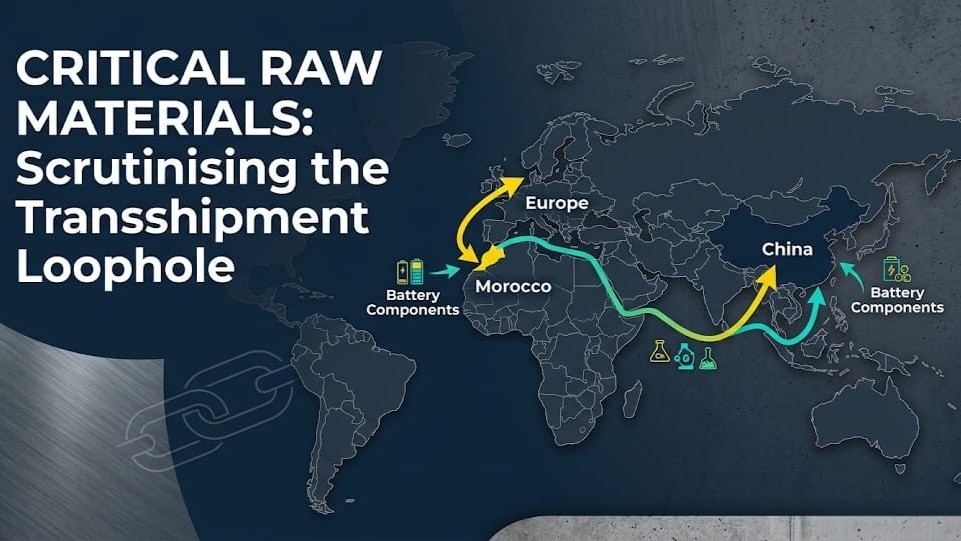
The European Union faces a multi-billion-dollar geopolitical dilemma that cuts to the very core of its economic security.
EU Trade Commissioner Maroš Šefčovič recently issued a stark warning regarding a massive surge in Chinese industrial investment in Morocco. The fear? Beijing is utilising “transshipment” to offshore its domestic industrial overcapacity and bypass mounting Western tariffs.
With over $6 billion in Chinese capital flooding into Morocco’s green energy and automotive sectors, the North African nation is rapidly morphing into Africa’s premier EV hub.
🔍 The Scale of the Pivot
Major projects are reshaping the supply chain:
Gotion High-Tech is constructing a $1.3 billion battery gigafactory in Kenitra.
Industrial giants like CNGR, Shinzoom, and BTR New Material Group are establishing massive cathode, anode, and copper processing facilities.
⛓️ From Raw Materials to Consumer Products: The Resilience Crisis
This isn’t just about final vehicle assembly; it is an encroachment across the entire vertical supply chain. To build truly resilient European supply chains, the block needs secure access to everything from critical raw materials up to the final consumer product.
However, China already possesses the capability to dominate key components of Morocco’s industrial ecosystem, including the processing facilities and logistics infrastructure right up to the shipping ports. By dominating these upstream segments, foreign entities effectively lock in dependencies long before a battery component ever reaches a European consumer showroom. Under frameworks like the EU’s Critical Raw Materials Act (CRMA), Brussels has set ambitious targets to reduce reliance on dominant single nations—yet this investment pattern actively challenges those resilience goals.
🇺🇸 vs 🇪🇺 Market Protection: Carrots vs. Sticks
The Morocco-China nexus highlights a profound asymmetry in how the US and the EU protect their domestic markets and enforce economic resilience:
The US “Carrot” Model (Inflation Reduction Act): The US takes a highly transactional, aggressive approach to friendshoring. The IRA relies on massive tax incentives and localised demand signals (like the $7,500 EV consumer credit). Crucially, it deploys strict Foreign Entity of Concern (FEOC) restrictions that explicitly bar subsidies if battery components or critical minerals are sourced from Chinese entities—even if they are processed in an FTA partner nation. It explicitly redirects the flow of capital via financial reward.
The EU “Stick” Model (Regulatory & Compliance): Conversely, the EU relies on complex legal enforcement, strict “Rules of Origin” audits, and retrospective anti-subsidy tariffs. Without an equivalent pool of centralised cash or explicit bans on foreign entities operating in neighbouring free-trade zones, the EU has a much less efficient mechanism for preventing circumvention. Brussels must rely on tedious bureaucratic investigations to prove a product wasn’t “significantly transformed” locally—a process that is slow, easily litigated, and reactive.
⚖️ Brussels’ Policy Gridlock
Retaliation isn’t simple. The European Commission is caught between economic defence and its own climate targets:
Supply Chain Disruption: European automotive giants like Renault and Stellantis have massive, long-standing manufacturing operations in Morocco. Punishing Moroccan exports directly penalises European corporate bottom lines.
The 2035 EV Mandate: Roughly 85% of Morocco’s automotive output is bound for Europe. The EU fundamentally relies on these close, cost-effective supply routes to meet its legally mandated 2035 ban on new fossil-fuel vehicles.
The Local Content Battle: Moroccan trade officials strongly reject allegations of corporate camouflage, noting that Chinese firms must achieve strict, legal thresholds of “significant local transformation” to qualify for tariff-free EU access.
The EU has previously penalised specific Moroccan exports (like aluminium wheels) after finding evidence of unfair state aid. But scaling up enforcement to cover the entire battery ecosystem could spark a massive trade dispute or tank Europe’s own EV transition.
🌐 Join the Discussion Across Europe, the Middle East, and Central Asia!
These complex cross-border value chains, regulatory shifts, and mineral security strategies will be at the very center of our upcoming regional forums. Connect with industry leaders, policymakers, and midstream operators to debate the future of critical raw materials:
👇 To the supply chain, trade policy, and automotive experts in my network:
Is the EU’s regulatory approach robust enough to prevent this kind of economic circumvention, or does Europe need to adopt a US-style, incentive-backed “FEOC” policy to truly protect its clean-tech sector?
Kazakhstan’s Minister of Science and Higher Education Sayasat Nurbek has issued a pointed challenge to the European Union, arguing that Brussels’ €12 billion Global Gateway package for Central Asia contains a fundamental strategic blind spot: every euro is directed at what can be extracted from or moved across the region, with nothing allocated to what can be created with it.
Writing in an opinion piece, Nurbek welcomed the EU’s most ambitious opening to Central Asia in a generation — the Samarkand summit, the critical raw materials declaration, the Middle Corridor investment — but argued that treating Kazakhstan purely as a deposit and transit route risks replicating in the research domain exactly the dependency trap the EU says it wants to escape in critical minerals. “A partnership that imports Kazakh lithium while ignoring Kazakh laboratories repeats, in the research domain, exactly the dependency trap the EU says it wants to escape,” he writes.
The minister argues Kazakhstan brings more to the table than Brussels currently assumes. The country has overhauled its research infrastructure over three years with a new Law on Science and Technological Policy, digitalised competitive research funding, expanded open science, and a legally binding commitment to raise R&D spending to 1% of GDP by 2029. Nearly half of Kazakhstan’s researchers are under 40 — a demographic profile most EU research systems cannot match. Approximately 40 foreign university partnerships now operate on Kazakhstani soil, including Cardiff University, Heriot-Watt, and European institutions from France, Italy and Germany.
On artificial intelligence, Nurbek says the gap between perception and reality is widest. Kazakhstan’s national supercomputer Alem.cloud runs on NVIDIA H200 GPUs and is the largest computing cluster in Central Asia, supporting a nationally trained large language model and one of the world’s largest sovereign ChatGPT Edu agreements. “This is sovereign compute of a kind most EU member states do not possess,” he writes.
The minister frames Kazakhstan’s active research priorities — green transition, critical raw materials, water security, climate adaptation, AI and life sciences — as directly aligned with the EU’s own agenda, pursued from a geography offering field conditions and data Europe cannot reproduce: the Caspian, the steppe and the glaciers of the Tien Shan. He also points to Kazakhstan’s track record operating the International Science and Technology Centre in Astana under governance standards comparable to Horizon Europe requirements.
The specific ask is concrete: association to Horizon Europe and its successor framework — the same structured route already available to the UK, Canada and New Zealand — alongside two-way researcher mobility, shared research infrastructure access, functioning technology transfer mechanisms and a seat in joint agenda-setting.
“Research association is not a soft add-on to the Global Gateway,” Nurbek concludes. “It is what turns a supply deal into a development partnership.”
Military Metals Corp has suffered a potentially devastating setback at its flagship European asset after Slovakia’s Ministry of the Environment revoked the exploration licence for the Trojarova antimony-gold project near Bratislava without providing clear justification — a decision that sent the company’s shares sliding by up to 60% to a 52-week low on Friday.
The revocation is particularly striking given its timing and context. The ministry’s decision came just weeks after Military Metals filed the NI 43-101 technical report supporting a maiden inferred mineral resource estimate of 6.5 million tonnes grading 1.02% antimony and 1.06 grams per tonne gold, containing 67,000 tonnes of antimony and 222,000 ounces of gold. The MRE had been published on 8 April, with analyst Christopher Ecclestone of Hallgarten & Company highlighting its strategic importance for Europe’s critical minerals needs and the value of the project’s existing Soviet-era underground infrastructure. The licence revocation also came despite Trojarova having been listed in Slovakia’s own National Program for the Exploration of Critical Mineral Raw Materials.
Military Metals has announced it will appeal the decision within the 15-day statutory window and pursue all available legal options. The company described the revocation as inconsistent with Europe’s stated goals for secure critical mineral supply chains — a pointed observation given that antimony has been subject to Chinese export controls since September 2024, causing prices to double and exposing Western defence and semiconductor supply chains to acute vulnerability.
Trojarova’s strategic case rests on antimony’s role in hardening lead for ammunition, flame retardants in military equipment, infrared detectors, semiconductors and next-generation batteries. The project’s location near Bratislava and its extensive historical workings were seen as advantages that could accelerate development and reduce costs relative to greenfield projects.
While the legal battle proceeds in Slovakia, Military Metals is continuing exploration at its North American assets — the Last Chance antimony property in Nye County, Nevada, with a history of production, and the West Gore antimony-gold property in Nova Scotia, which produced during the First World War.
The Future of Green Steelmaking in Europe (Part I)
Steel might not always make the list of “critical raw materials,” but it’s absolutely critical to Europe’s future – supporting everything from wind turbines to transport infrastructure. Without steel, no civilisation! In this Special Raw Matters Episode on “The future of green steelmaking in Europe”, the speakers unpack why decarbonising steel matters so much, and what it will take to get there.
The conversation features Adolfo Aiello, Deputy Director General at The European Steel Association (EUROFER), alongside Raw Matters regular co-host Peter Tom Jones and guest co-host Prof. Bart Blanpain (SIM² KU Leuven & expert in steelmaking).
The episode explores the different routes towards climate-neutral steelmaking, while also discussing the business case for green steel in today’s world of Fortresses, where state subsidies and export dumping are common place. Will CBAM and ETS save Europe?
“Minerals, Missiles and Megawatts: Europe’s Strategic Vulnerability”. A new Raw Matters podcast with Alberic Mongrenier, Julia Poliscanova and Peter Tom Jones, on the Mineral Security Trap and why Europe can’t afford naivety.
SUMMARY
In Episode #6 of RAW MATTERS, hosts Julia Poliscanova and Peter Tom Jones speak with Albéric Mongrenier, Executive Director of the European Initiative for Energy Security (EIES). Together, they explore how critical raw materials, energy security, cybersecurity, and military demand are becoming tightly interlinked in today’s unstable geopolitical landscape.
The conversation examines how CRMs underpin both the clean‑energy transition – from wind turbines and batteries to electrolysers – and the defence sector, including F‑35 fighter jets, drones and missile systems. Albéric also highlights a growing blind spot in Europe: the cybersecurity risks created by widespread dependence on Chinese inverters and digital components in solar panels, wind turbines, EVs and grid infrastructure. This reliance gives external actors potential leverage over Europe’s electricity systems, from data harvesting to the theoretical ability to trigger grid‑level disruptions. As Albéric notes, Europe remains surprisingly naïve about these vulnerabilities.
The episode further contrasts the strategic responses of the US and EU, from the Trump-led (aggressive) top-down mineral partnerships and state capitalist measures to Europe’s (timid) efforts to strengthen its energy, digital and military resilience.
Albéric Mongrenier
Albéric serves as Executive Director of EIES, the European Initiative for Energy Security, where he develops and builds support for national and supra-national policies that drive energy and national security across the European continent. Albéric is an energy policy expert with over a dozen years of experience at the intersection of energy and security.
RAW MATTERS is your podcast about the critical minerals that determine our common future. Hosted by Peter Tom Jones (Director SIM2 KU Leuven) and Julia Poliscanova (she/her) (Senior Director at T&E) and directed by Stijn van Baarle, the podcast brings together leading voices from around the world.
Global commodity trading and energy group Mercuria has officially opened a regional office in Astana, establishing a permanent platform for its expanding cooperation with Kazakhmys, Kazakhstan’s largest copper producer, with a focus on production modernisation, technology transfer and workforce development.
The opening ceremony was attended by Kazakhmys Supervisory Board Chairman Nurmukhambet Abdibekov, Mercuria co-founder and CEO Marco Dunand, Head of Central Asia and the Caspian Region Timur Suleimenov, and Head of Kazakhstan Aktan Abdykerim.
Abdibekov described the permanent Astana presence as a significant boost to long-term cooperation, noting that Kazakhmys is actively pursuing production modernisation and the introduction of environmentally friendly technologies. “Partnership with Mercuria will allow us to attract advanced global expertise to improve the efficiency of our enterprises and, equally importantly, create new opportunities for the professional development of our employees,” he said.
Dunand said Mercuria’s goal was to invest in technology transfer and human capital development. “Mercuria is ready to share our global experience in order to help the region unlock its industrial potential based on the principles of sustainable development,” he said.
The cooperation spans operational efficiency improvements, advanced technological solutions, production digitalisation and the enhancement of environmental and industrial standards. A particular emphasis has been placed on knowledge transfer programmes through which Kazakhstani specialists and young professionals will receive training in areas currently in short supply domestically, including global risk management, compliance, complex supply chain management and project financing in the industrial sector.
The two companies also plan to expand social investment in the mining regions and single-industry towns where Kazakhmys operates, with joint initiatives targeting the modernisation of local educational infrastructure, technical education for young people and financing of socially significant projects.

![“Is there still a future for green steel in Europe?” [Jones, Blanpain, Aiello, RM #2]](https://minexforum.com/wp-content/uploads/2026/06/podcast1.jpg)