Website: Eurasia.com

  • Ukraine’s Strategic Mineral Reserves Key to US-Ukraine Military and Economic Collaboration

    Ukraine’s Strategic Mineral Reserves Key to US-Ukraine Military and Economic Collaboration

    Ukraine’s vast reserves of critical minerals are becoming a cornerstone of its growing partnership with the United States. Recently, former US President Donald Trump initiated discussions to secure Ukraine’s access to these minerals in exchange for US military aid amid the ongoing conflict with Russia. The initiative aligns with Ukraine’s “Victory Plan,” spearheaded by President Volodymyr Zelensky, which aims to attract international investors to develop the nation’s mineral-rich deposits.

    Ukraine holds 23 of the 50 minerals identified as critical by the US and 26 out of 34 deemed vital by the European Union. Notable minerals include titanium, graphite, lithium, beryllium, and rare earth elements (REEs). Although partially developed, these resources remain largely untapped for high-value manufacturing purposes. The Ukrainian government has already issued 30 licenses for mineral exploration and holds numerous unlicensed deposits with vast potential.

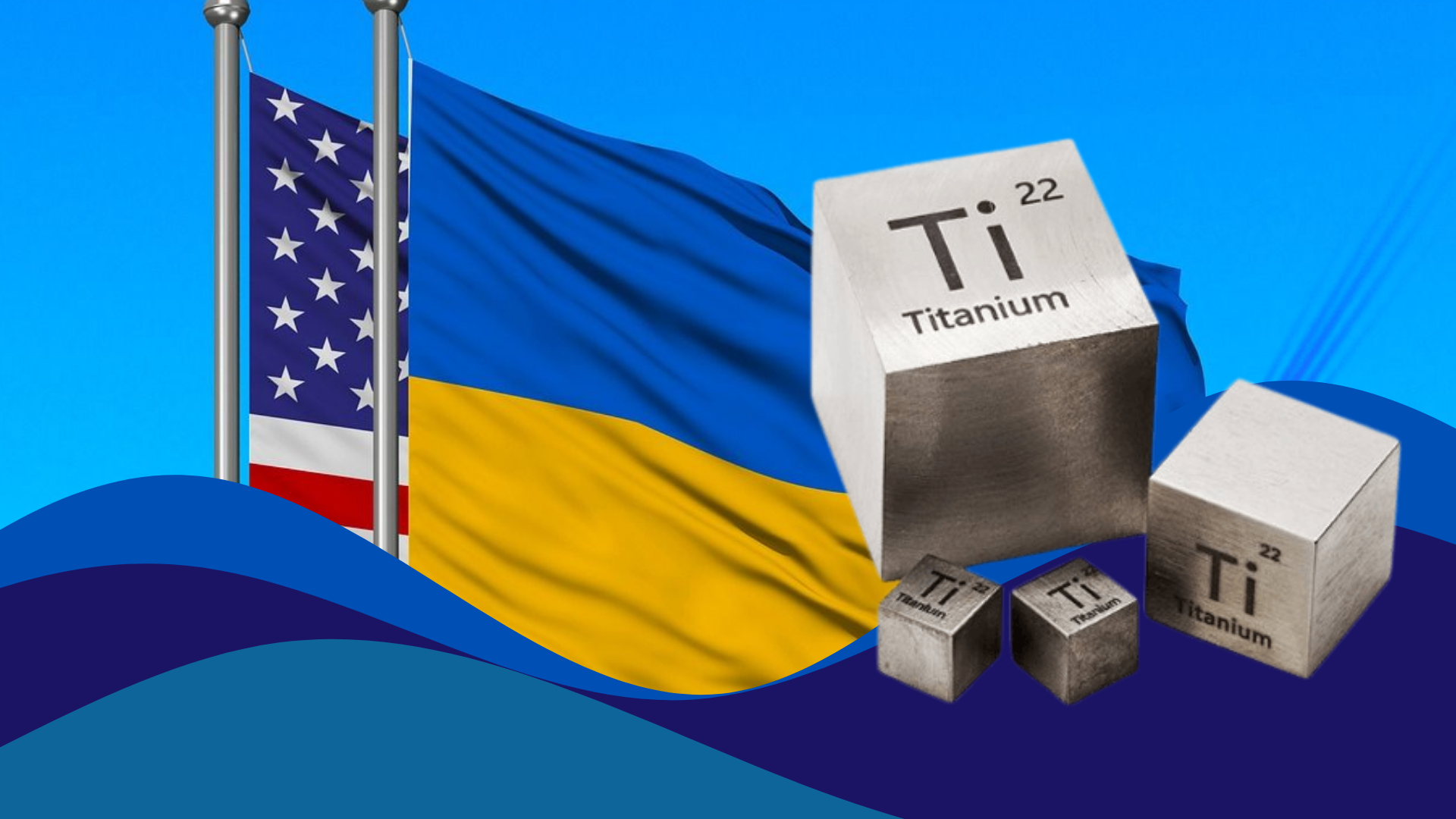
    Titanium and beryllium, essential for the aerospace and defense industries, are especially critical. Ukraine boasts the largest titanium reserves in Europe, capable of meeting US and EU demand for more than 25 years. Developing these resources is vital to reducing Western dependence on China and Russia, which dominate the global titanium supply chain. Additionally, Ukraine has significant potential in beryllium mining, with one key deposit discovered and licensed for private development.

    In the energy storage sector, Ukraine is well-positioned to supply lithium and graphite for battery manufacturing. Despite its relatively small global lithium reserves, Ukraine has the potential to play a key role in Europe’s battery supply chain. Several graphite deposits are already in operation, with the necessary investment estimated at $650 million to modernize and expand production facilities.

    Ukraine’s rare earth metal reserves also hold promise for semiconductor manufacturing. However, many key deposits remain in Russian-occupied regions. Efforts are underway to revitalize germanium and gallium production, which previously flourished during Soviet times. Ukraine also aims to restart silicon production to supply global semiconductor markets.

    For Ukraine to fully harness its mineral wealth, significant foreign investment is needed. The government has been working to create a favorable regulatory environment to attract foreign partners. Several international firms, including Australian Volt Resources and Turkish Onur Group, have already secured mining rights. The strategic partnership between Ukraine and the US is poised to drive further investment and innovation in high-tech sectors, solidifying Ukraine’s role in global supply chains.

  • Kazatomprom Organizes Press Tour to Inkai Uranium Deposit: Safety, Technology, and Social Responsibility

    Kazatomprom Organizes Press Tour to Inkai Uranium Deposit: Safety, Technology, and Social Responsibility

    Kazatomprom JSC held a press tour at the Inkai uranium deposit, operated by Inkai LLP, located in the Turkestan region. Journalists were shown the company’s uranium extraction and processing technologies, as well as its environmental safety measures and social responsibility initiatives.

    Kazakhstan remains the world’s leader in uranium production, supplying about 40% of the global nuclear energy market. Inkai is one of the country’s key deposits, known for its low extraction costs. Kazatomprom owns 60% of the joint venture’s shares, while Canada’s Cameco holds the remaining 40%.

    Technology and Safety
    Stepan Tretyakov, Head of Mining, highlighted the use of in-situ recovery (ISR) technology, which is considered the safest and most environmentally friendly method of uranium extraction. “We conduct a five-year monitoring program after extraction is complete, ensuring the ore horizons return to their natural state,” he explained.

    At the “Satellite-2” processing facility, Aybek Aidymbekov, Head of Processing, outlined the uranium processing stages, including clarification, sorption using special resin, extraction, and packaging into barrels. Annually, 30 million cubic meters of solution are processed, producing over 11,000 barrels of uranium peroxide.

    Operator Beksyltan Ilyas emphasized the importance of radiation protection and automated monitoring at all stages. Meanwhile, Evgeniy Madzhara, Head of the Laboratory, noted that 24/7 quality control ensures no deviations from the technology and guarantees product quality.

    Social Support and Employee Comfort
    The company is actively investing in regional development, allocating 475.4 million tenge in 2024 for social needs in the Turkestan region. Acting Akim Bolat Esenkabyl shared that the company has lit streets, built sports fields, supported schools, and provided internet access in the village of Taykonur.

    Comfortable conditions have been created for employees in the rotational camp, including a multifunctional sports complex, gym facilities, and recreational zones with entertainment options like billiards, table tennis, and PlayStation consoles.

    Environmental Initiatives
    The press tour concluded with an elm tree planting initiative. Inkai actively supports environmental projects and provides assistance to veterans, children, and low-income families.

    The press tour demonstrated that Kazakhstan’s uranium industry is a high-tech, safe, and socially responsible sector.

  • Kazakh Scientists Develop Innovative Technology for Processing Polymetallic Ore

    Kazakh Scientists Develop Innovative Technology for Processing Polymetallic Ore

    Scientists from the Kazmekhanobr Research and Production Enterprise, a branch of the National Center for Complex Processing of Mineral Raw Materials of Kazakhstan, have developed an innovative technology for processing polymetallic ore from the Chinasyl-Sai deposit. The breakthrough was reported by El.kz, citing the Ministry of Industry and Construction of Kazakhstan.

    The primary challenge in processing such ores lies in their complex composition. The Chinasyl-Sai deposit contains gold, silver, lead, zinc, and pyrite, requiring a method to efficiently extract valuable components while minimizing costs.

    A key achievement of the new technology is the elimination of cyanide reagents, making the process safer and more environmentally friendly. The researchers have perfected a gravity-flotation method that allows ore enrichment without additional grinding of the industrial product.

    The innovative process yields three types of concentrates:

    • A gravity concentrate enriched with gold and silver;
    • A lead flotation concentrate;
    • A zinc flotation concentrate.

    All these products meet the requirements for further production of valuable metals. Moreover, the technology is adaptable for processing similar ores from other deposits, opening new opportunities for the development of Kazakhstan’s mining industry.

  • Metinvest Announces 2024 Operational Results: Steel and Mining Performance Highlights

    Metinvest Announces 2024 Operational Results: Steel and Mining Performance Highlights

    Metinvest B.V., the parent company of a leading international vertically integrated group of steel and mining companies, has released its operational results for the fourth quarter and the full year ending 31 December 2024.

    In the fourth quarter of 2024, the Group produced 489 thousand tons (kt) of crude steel, reflecting a 14% decrease compared to the previous quarter’s output of 568 kt. Despite this quarterly decline, the annual crude steel production for 2024 reached 2,099 kt, marking a 4% increase from the 2,025 ktproduced in 2023.

    The Group’s iron ore concentrate production showed a positive trend, with 3,493 kt produced in the fourth quarter, a 4% rise from the third quarter’s 3,347 kt. For the full year, iron ore concentrate output surged to 15,733 kt, a significant 42% increase compared to 11,092 kt in 2023.

    However, coking coal concentrate production experienced a decline, with 1,057 kt produced in the fourth quarter, down 7% from the previous quarter’s 1,135 kt. Annually, coking coal concentrate output fell to 4,277 kt, a 22% decrease from 5,455 kt in 2023.

    These results highlight the Group’s resilience in iron ore production despite challenges in steel and coking coal output. Metinvest continues to play a pivotal role in the global steel and mining sectors, adapting to market dynamics and maintaining a strong operational presence.

  • Ukraine’s Zavallivsky Graphite Mine Eyes Expansion Amid Investment Challenges

    Ukraine’s Zavallivsky Graphite Mine Eyes Expansion Amid Investment Challenges

    At the 90-year-old Zavallivsky graphite mine in central Ukraine, CEO Ostap Kostyuk envisions producing graphite pure enough for lithium batteries—a task he compares to building a Rolls-Royce in a garage due to chronic underinvestment.

    With U.S. President Donald Trump pushing for a major deal on Ukraine’s rare earths and critical minerals in exchange for continued Washington support, operators like Kostyuk see an opportunity. However, they acknowledge that profits will take time for any American investors.

    “It’s a long-term investment,” said Kostyuk, as he led a Reuters team through the sprawling Kirovohrad facility, where aging Soviet-era machinery still runs amid a fine layer of graphite dust.

    As part of a strategic proposal to Trump, Ukrainian President Volodymyr Zelenskiy highlighted a map of Ukraine’s mineral wealth, including lithium, graphite, titanium, and rare earths—critical for high-performance magnets, electric motors, and consumer electronics. He emphasized that less than 20% of these resources were under Russian control, stressing the need to safeguard the rest.

    Despite trillions of dollars in untapped mineral wealth, experts warn that it could take years for investors to see significant returns due to war-related disruptions and chronic underfunding. Ksenia Orynchak, head of Kyiv’s National Extractive Industries Association, noted that Ukraine’s mining sector has faced a decade of stagnationdue to a lack of financial inflows and outdated mineral classification systems.

    The Zavallivsky mine, last modernized in 1965, illustrates the scale of the challenge. Despite being far from the front lines, it has struggled since Russia’s 2022 invasion caused an Australian partner to withdraw financing. Many of Kostyuk’s workers have also either joined the military or lost their lives in the war.

    Still, the facility is already producing graphite pure enough to be refined into battery-grade spherical graphite (SPG). Ukraine holds 20% of the world’s graphite reserves, a crucial component for electric vehicle batteries and nuclear reactors. While new mining projects could take five to seven years to become operational, Kostyuk remains optimistic.

    “We are ready for this technology,” he said, adding that his goal is to eventually produce SPG in-house. In the meantime, Ukraine is prepared to supply U.S. markets with natural flake graphite, establishing a Ukrainian presence in the global supply chain.

    “Our factory needs upgrades, but our workforce has the expertise to advance if given the resources,” Kostyuk said. “I believe in this factory. I believe in these people. Everyone here wants to work.

  • Kazakhstan’s Modern Coal Power Plants May Require Trillions in Investments

    Kazakhstan’s Modern Coal Power Plants May Require Trillions in Investments

    Kazakhstan’s plans to construct modern coal-fired power plants could demand billions of dollars or trillions of tenge, according to Zhakyb Khairushev, Managing Director of the Atameken National Chamber of Entrepreneurs.

    Speaking with LS, Khairushev assessed President Kassym-Jomart Tokayev’s directive to build innovative coal power plants in the country. He emphasized that these efforts aim to bolster energy security, ensure sustainable development, and integrate advanced technologies.

    While these modern stations could enhance fuel efficiency and reduce emissions, they remain among the most carbon-intensive forms of electricity generation. According to Khairushev’s Telegram channel, Haırýshev energy, this complicates Kazakhstan’s ability to meet climate goals.

    Additionally, these projects could lead to higher electricity costs, factoring in environmental payments and renovation expenses. Given the global shift toward decarbonization, Khairushev stressed the importance of evaluating both the economic feasibility and environmental impact of such projects.

    The implementation of “green coal” technologies, including supercritical and ultra-supercritical (USC) steam systems with carbon capture, utilization, and storage (CCUS), could mitigate emissions. However, their construction is highly expensive. Initial investments in such advanced units could be 40-60% higher than traditional coal plants, with costs potentially reaching hundreds of millions or even billions of dollars for 500-1000 MW energy blocks.

    Operating costs would also rise due to emission control systems, as well as CO2 transport and storage under CCUS, making electricity 30-50% more expensive compared to standard coal plants. Khairushev noted that state support and preferential financing mechanisms would be crucial for economic viability.

    Replacing aging coal plants is a long-term process, taking 4-7 years per station and up to 20 years for full-scale replacement. However, Kazakhstan is already working on implementing USC technology at Ekibastuz GRES-2 and planning for GRES-3.

    To accelerate modernization, Kazakhstan must develop a national energy infrastructure plan, attract investors, and localize equipment production. If executed efficiently, the first modernized coal plants could be operational within 5-7 years, with full coal sector modernization projected by 2040.

    Khairushev highlighted the multiplier effect of clean coal projects, stimulating domestic engineering, attracting foreign technology partners, and creating regional jobs. The initiative could also reduce technological lag, foster local expertise, and strengthen Kazakhstan’s eco-technology market presence.

    International development institutions and private investors could be drawn to such high-potential projects, increasing access to long-term financing. Additionally, reducing power outages would stabilize industrial production, lowering maintenance costs and improving Kazakhstan’s global competitiveness.

  • Ivanhoe Mines Expands Kazakhstani Footprint with Exploration for Sediment-Hosted Copper

    Ivanhoe Mines Expands Kazakhstani Footprint with Exploration for Sediment-Hosted Copper

    On 12 February 2025 Ivanhoe Mines announced the commencement of exploration activities for sediment-hosted copper in Central Kazakhstan. The company has formed a joint venture with UK-based Pallas Resources to explore the Chu-Sarysu Copper Basin, which is the world’s third-largest sedimentary copper district.

    The exploration license covers an extensive area of up to 16,000 square kilometers, making it the largest land-holding position in the region. Ivanhoe Mines has committed an initial investment of C$18.7 million ($13 million) for exploration activities over the next two years. The company has the option to increase its stake in the joint venture up to 80% over time.

    Ivanhoe Mines aims to leverage its expertise in discovering Tier-One sediment-hosted copper deposits, similar to its successful projects in the Democratic Republic of Congo. The Chu-Sarysu Basin is estimated to contain 27 million tonnes of known copper resources, with an additional 25 million tonnes of undiscovered copper.

    Robert Friedland, Ivanhoe Mines’ Executive Co-Chairman, expressed excitement about the project, stating, “We look forward to unlocking the significant geological potential of the Chu-Sarysu Basin and contributing to the global copper supply.” This strategic partnership marks a significant step for Ivanhoe Mines in expanding its global footprint and advancing its copper exploration portfolio.


    Who is Robert Friedland? 

    Robert Martin Friedland (August 18, 1950)[1] is an American-Canadian billionaire financier in the mining industry. Since the early 1980s, he has specialised in securing funding for the exploration and development of mineral and energy resources and technology ventures. He is the founder and chairman of his private, family-owned firm, Ivanhoe Capital Corporation, which is active in capital markets, focused on emerging markets. He is the founder and co-chairman of Ivanhoe Mines, a Canadian public company listed on the Toronto and OTCQX exchanges.

    Friedland’s involvement in Kazakhstan dates back to the 1990s when his company, Indochina Goldfields, entered into agreements with the Kazakh government and major shareholders of Bakyrchik Gold. This partnership marked the beginning of Friedland’s significant presence in the Kazakh mining sector. The Bakyrchik gold mine, located in northeastern Kazakhstan, was a key asset, providing gold-bearing flux to copper smelters since 1956.

    Another major project was the Vasilkovskoye mine in northern Kazakhstan, considered one of the world’s largest gold mines. Despite initial setbacks with the Kazakh government, Friedland’s companies maintained their holdings in the region, navigating the complex political and economic landscape.

    By 2010, Kazakhstan’s economy was booming due to massive oilfield discoveries, making it a strategic player in the global energy market. In addition to oil, Kazakhstan had substantial uranium reserves, further solidifying its importance in the energy sector.

    Friedland’s Ivanhoe Mines, in partnership with Altynalmas Gold, consolidated their interests in the Kyzyl Gold Project, which included the Bakyrchik and Bolshevik deposits. With an established infrastructure and promising gold recovery rates, the project was poised to become one of Central Asia’s leading gold producers.

    Friedland’s vision and strategic investments in Kazakhstan’s mining sector not only highlighted the nation’s mineral wealth but also positioned it as a key player in the global energy and mining industries.

    Read further

  • Kazakhstan Seeks Innovation With New “Science-Industry” Format

    Kazakhstan Seeks Innovation With New “Science-Industry” Format

    Kazakhstan is taking a bold step towards bridging the gap between academia and industry with a new format of “scientific-technical sessions” aimed at driving innovation in key sectors.

    The inaugural session, focusing on “Modern Methods of Leaching and Prospects for their Application in the Mining and Metallurgical Industry of Kazakhstan,” was held on 11 February at Karaganda Technical University. Organised with support from the Ministry of Science and Higher Education and leading mining corporation “Kazakhmys,” the event brought together scientists, experts, and industry representatives to explore cutting-edge technologies in hydrometallurgy.

    “These scientific-technical sessions represent a new paradigm for the interaction between science and industry,” emphasised Minister of Science and Higher Education, Sayasat Nurbek, during the opening ceremony.

    New Funding Models and Collaboration

    Besides promoting collaboration, the event signified a shift in how Kazakhstan finances its scientific research. Minister Nurbek highlighted this new approach, stating, “We are moving towards a model where our researchers, institutes, and universities work directly with large enterprises. The goal is to identify real-world problems and develop solutions that directly benefit these industries.”

    He cited several successful examples of this model in action, emphasizing its potential to propel Kazakhstan’s leading companies into a new technological era.

    The culmination of the event was the presentation of these prototypes and project solutions, demonstrating the tangible outcomes of this innovative approach to science-industry collaboration.

  • Arras Minerals Announces Encouraging Drilling Results at Elemes Project in Kazakhstan

    Arras Minerals Announces Encouraging Drilling Results at Elemes Project in Kazakhstan

    Arras Minerals Corp. (TSX-V: ARK, OTCQB: ARRKF) has announced the results from the final five drill holes of its initial Phase 1 program at the Berezski target on its Elemes project in Northeast Kazakhstan. The results confirm the presence of significant copper-gold porphyry and epithermal-style mineralization, further bolstering the project’s potential.

    The Elemes project is strategically located in the Bozshakol-Chingiz Magmatic arc, near Kaz Minerals’ Bozshakol Copper Mine, a major operation producing substantial amounts of copper and gold. Arras’s Phase 1 drilling program targeted geophysical and geochemical anomalies identified through extensive exploration work, including airborne magnetic surveys, ground IP surveys, and soil sampling.

    Key Highlights from the Final Drill Holes:

    • EL24005: A remarkable 547m intercept grading 0.70% copper equivalent (CuEq), including higher-grade sections up to 1.15% CuEq, starting near surface. The hole ended in strong mineralization, suggesting further potential at depth.
    • EL24006: 56m grading 0.68% CuEq, including a 20m section at 1.02% CuEq, indicating another porphyry center approximately 1km west of EL24005.
    • EL24010 & EL24011: While these holes returned lower grades, they provided valuable geological information, indicating the periphery of a porphyry system and helping guide future exploration.

    CEO’s Perspective:

    Tim Barry, CEO of Arras Minerals, expressed enthusiasm about the Phase 1 results. He highlighted the strong indications of another porphyry center at Berezski, particularly the high-grade intercepts in EL24005 and the discovery of porphyry-style mineralization in EL24006. Barry emphasized the significant exploration potential remaining at Berezski, with approximately 90% of the target still untested.

    Phase 2 Exploration Plans:

    Arras is already planning a Phase 2 program, subject to financing, which will include:

    • Ground magnetic surveys at Berezski and Aimandai.
    • Detailed analysis of soil samples.
    • Approximately 20,000m of drilling at Berezski.
    • Initial IP surveys and approximately 5,000m of drilling at the Aimandai target.

    President’s Commentary:

    Darren Klinck, President of Arras Minerals, echoed Barry’s excitement and highlighted the team’s successful exploration efforts. He noted the two high-priority target areas at Berezski and the potential for new discoveries within the large, prospective land package. Klinck also mentioned the planned exploration at the Aimandai target, a 14km copper-in-soil anomaly. He added that Arras is well positioned to have multiple drill rigs operating across its license package in the coming year.

  • NMMC Receives ESG Rating from Sustainable Fitch, Reinforcing Industry Leadership

    NMMC Receives ESG Rating from Sustainable Fitch, Reinforcing Industry Leadership

    Navoi Mining & Metallurgical Company (NMMC), the world’s fourth-largest gold producer, has received its first Environmental, Social, and Governance (ESG) rating from Sustainable Fitch. The company was assigned a rating of ‘3’ on a 1 to 5 scale (where 1 represents low risk and 5 represents high risk) and an overall ESG score of 51 out of 100.

    The rating reflects a detailed assessment of NMMC’s sustainability initiatives, corporate governance, environmental performance, and social responsibility programs. The company’s environmental and social performance received a ‘3’ rating, acknowledging strong policies on emissions and water management, absence of major environmental incidents, and a low gender pay gap. Meanwhile, its corporate governance scored a ‘2’, recognizing adherence to international financial reporting standards, systematic internal audits, and structured risk management.

    NMMC’s ESG rating is consistent with global mining industry peers, reflecting the sector’s inherent environmental challenges, including high energy and water consumption, greenhouse gas emissions, and industrial waste generation. Importantly, NMMC is the first company in Uzbekistan’s mining sector to receive a public ESG rating, highlighting its commitment to transparency and sustainability leadership.

    “Sustainability is a key pillar of our business strategy and crucial for long-term growth and investor confidence,” stated Eugene Antonov, First Deputy CEO and Head of Transformation at NMMC. He emphasized that the company’s ESG principles are central to its transformation program, aligning with Uzbekistan’s 2025 ‘Year of Environmental Protection and the Green Economy’ initiative and the national ‘Uzbekistan-2030’ strategy.

    Boris Samoylenko, Head of ESG at NMMC, reinforced that the rating validates NMMC’s ongoing sustainability efforts and serves as a benchmark for further improvements in line with global best practices.