Website: Eurasia.com

  • China Export Curbs Push European Bismuth Prices to Highest Since 2008

    China Export Curbs Push European Bismuth Prices to Highest Since 2008

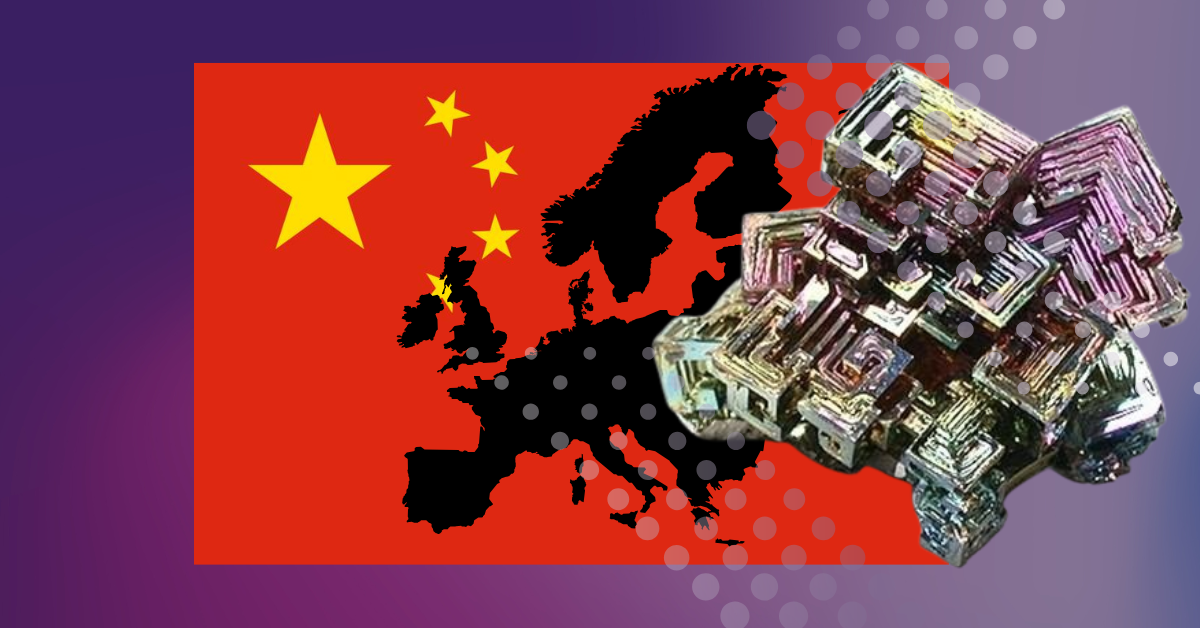
    European bismuth prices have surged to their highest levels since 2008, driven by concerns over impending export restrictions from China. The move, viewed as a retaliatory measure amidst escalating global trade tensions, has sparked fears of a significant supply crunch for the metal, which is crucial in pharmaceuticals, cosmetics, and nuclear research.

    Earlier this month, China announced its intention to impose export controls on five key metals: tungsten, tellurium, molybdenum, bismuth, and indium. This decision comes in response to recently implemented tariffs by the United States.

    The immediate impact on the European spot market has been dramatic. Bismuth prices, previously stable at around $6 per pound, have soared to between $12 and $18 this week. Market traders anticipate further price increases in the coming weeks.

    China’s dominance in the bismuth market is substantial. According to the United States Geological Survey (USGS), the nation accounted for over 80% of global bismuth production last year, producing approximately 13,000 tonnes. While other countries, including Japan, South Korea, and Laos, contribute to the remaining supply, traders highlight the limited availability of bismuth from these sources compared to China.

    “We have been inundated with enquiries from both our EU and US clients,” stated a European-based trader, emphasising the growing concern. They further noted that US consumers would be particularly vulnerable should the trade dispute between China and the US escalate.

    With global trade tensions on the rise, it is expected that China may further utilise its control over critical minerals as a strategic tool. The recent price surge in Europe signals the potential for significant market volatility and supply chain disruptions.

  • Kazatomprom Expands Global Presence with Swiss and Jordanian Partnerships

    Kazatomprom Expands Global Presence with Swiss and Jordanian Partnerships

    Kazakhstan’s national atomic company is strengthening its international partnerships by signing new agreements with Swiss and Jordanian enterprises. These contracts will allow Kazatomprom to expand its global market presence, according to official reports.

    The first agreement was signed with Axpo Power AG and Kernkraftwerk Leibstadt AG, a nuclear power plant in Switzerland. Under this deal, Kazatomprom will supply uranium to Western Europe’s nuclear reactors. Additionally, another Swiss nuclear power plant will start purchasing Kazakh uranium fuel.

    The second contract was signed with JUMCO, a Jordanian uranium mining company. The two sides plan to conduct joint geological exploration in Jordan, leveraging Kazakhstan’s expertise as a global uranium industry leader.

    Beyond exploration, the partners may collaborate on metal extraction, resource assessment, and optimizing the in-situ leaching technology. JUMCO emphasizes the need to prioritize environmental protection and industrial safety in their operations.

    Earlier this year, Kazatomprom expanded its exploration portfolio within Kazakhstan, securing a new license for a uranium deposit at the Inkai site.

  • Premiere of “Not In My Country: Serbia’s Lithium Dilemma” Sparks Engaging Debate in Ljubljana

    Premiere of “Not In My Country: Serbia’s Lithium Dilemma” Sparks Engaging Debate in Ljubljana

    (PTJ, 20-2-2025; Photos: MJ)

    On February 19, 2025, the documentary “Not In My Country: Serbia’s Lithium Dilemma” premiered in Ljubljana, Slovenia. The event, jointly organised by IRTC and CIRAN, featured a screening of the film followed by a panel debate with proponents and opponents of the controversial Jadar lithium project.

    The film, which explores the tensions surrounding Europe’s largest proposed lithium mine in Serbia’s Jadar Valley, was met with enthusiastic applause from the audience. Unlike the previous premiere at the European Parliament in Brussels, where discussions focused on the film’s funding and representation, the Ljubljana event delved into substantive issues surrounding the project.

    Key Discussion Points

    Key topics discussed during the panel debate included:

    1. Technical Comparisons: Jadarite extraction versus other lithium sources.

    2. Origin of “Toxic Claims”: Addressing misconceptions about environmental impacts.

    3. Demand-Side Management: The necessity for broader management strategies alongside mining.

    4. Rule of Law Challenges: Navigating project implementation in a country facing governance and media freedom issues.

    The film’s presenter challenged Rio Tinto to bring in a third-party auditor and aim for at least IRMA50 certification, which exceeds current EU standards.

    A significant point raised during the discussion was the controversy surrounding a July 2024 publication in Scientific Reports, which has fueled many fears about the project in Serbia. The presenter highlighted that an October 2024 “Author Correction” addressed numerous flaws in the original paper’s methodology and language.

  • NMMC Accelerates Green Transition with Major Renewable Energy Expansion

    NMMC Accelerates Green Transition with Major Renewable Energy Expansion

    As part of its ambitious strategy to reduce its environmental footprint, NMMC has made significant strides in expanding its renewable energy capacity. By the close of 2024, the company’s solar photovoltaic installations at its production facilities reached 7,250 kW—a fivefold increase from previous levels. In a notable achievement, all administrative buildings now operate entirely on solar power during the summer months (April to October).

    Looking ahead to the first quarter of 2025, NMMC aims to further boost its solar capacity to 9,550 kW, which is expected to generate approximately 17.5 million kWh annually.

    In addition to its solar advancements, NMMC is harnessing wind energy to power its operations. A 500 MW wind farm in Tamdy is currently supplying 12.6% of the company’s electricity needs, significantly contributing to emission reduction efforts. The region’s renewable portfolio is set to expand further with the upcoming launch of a 500 MW solar plant, projected to produce around 1 billion kWh of energy annually, accounting for 21% of the company’s energy demand.

    NMMC’s commitment to sustainability extends beyond electricity generation. The installation of 4,993 solar water heaters across its facilities now produces 724,000 liters of hot water daily, saving 1.7 million cubic meters of natural gas each year. This initiative alone is anticipated to cut CO₂ emissions by approximately 3,242 tons annually, underscoring NMMC’s proactive approach to reducing its environmental impact.

    As Uzbekistan embraces a greener future, NMMC positions itself at the forefront of the mining sector’s sustainability revolution. By integrating renewable energy solutions across its operations, the company is not only reducing its own carbon footprint but also setting a new benchmark for environmental responsibility in the industry.

    With these transformative steps, NMMC is powering its own future while significantly contributing to Uzbekistan’s broader environmental goals—a testament to what can be achieved when visionary leadership meets decisive action.

  • Fincraft Group Pivots to Green Energy and Critical Minerals in Kazakhstan

    Fincraft Group Pivots to Green Energy and Critical Minerals in Kazakhstan

    As the world transitions to cleaner energy sources, Kazakhstan is emerging as a key player in the global energy market. Fincraft Group’s President, Kenges Rakishev, joins Proactive to discuss the country’s promising region for energy and resource investments.

    Kazakhstan, strategically located between China, Europe, and Russia, boasts a rich hydrocarbon industry, but is also emerging as a significant supplier of critical minerals essential for the energy transition. The country is investing in the renewable sector, particularly wind and solar power, to complement its oil and gas sector and strengthen long-term energy security.

    Diversified Investments Shape the Local Energy Sector

    Fincraft’s strategic approach and diversified investments have helped shape the local energy sector. The company balances traditional energy, oil, and gas with next-generation resources like nickel, cobalt, and renewable energy, ensuring long-term resilience. Fincraft’s investments in infrastructure and technology to reduce emissions and increase efficiency are also key to Kazakhstan’s success.

    Investments and Strategies

    Rakishev highlights the company’s investments in Equus Petroleum and Tethys Petroleum as part of its energy transition strategy. Focusing on cleaner extraction and refining technology is essential to meet the growing global demand for locally produced carbon-hydrocarbon. Gas is a significant component of Fincraft’s strategy, with a major project under way to construct and finish a gas plant.

    The company has divested from ARK Petroleum and Nomad Oil and redirected capital to projects that align with global trends in critical minerals, low-carbon energy, and sustainable extraction.

    Global Resources Portfolio and Energy Security

    Fincraft’s resource portfolio includes lithium, nickel, and cobalt, essential for the renewable energy sector. The company plans to create a holding for oil and gas as well as resources like lithium, nickel, and cobalt. The development of Beineu Petroleum contributes to boosting both economic growth and energy security in Kazakhstan by securing domestic oil and gas supply while integrating with new energy infrastructure.

    Positioning Kazakhstan for Success

    Kazakhstan’s partnership with major players like China and the US will enable it to remain competitive and secure in the energy market. The country’s unique position allows it to bridge east and west, while maintaining energy independence. By investing in critical minerals and renewables, Kazakhstan is positioning itself as a future leader in the green energy supply chain.

    Future Opportunities and Trends

    As Kazakhstan embarks on a new step in the energy transition, carbon capture and low emission oil production will become priorities. The country will also focus on strengthening its pipeline energy export network to Europe and China as demand for stable non-Russia energy sources increases. Growing investment in critical minerals, rare earth materials, and grid storage will drive Kazakhstan’s development as a key player in the global shift towards electrification.

  • Hungary’s MOL Expands Oil and Gas Operations in Kazakhstan, Eyes Broader Energy Partnership

    Hungary’s MOL Expands Oil and Gas Operations in Kazakhstan, Eyes Broader Energy Partnership

    Hungarian energy company MOL has secured approval to expand its oil and gas extraction operations in western Kazakhstan, following a new agreement with the Kazakh government. To date, MOL has invested 80 billion forints in the region, producing 300 million cubic meters of gas from a field where it operates five wells. The agreement supports MOL’s participation in developing additional oil and gas fields, leveraging its advanced extraction technologies to tackle challenging reserves.

    Hungarian Foreign Minister Péter Szijjártó announced the deal at a press conference, highlighting the emergence of a broader Kazakh-Chinese-Hungarian strategic partnership. This collaboration could enable MOL to participate in the development of a large, technologically complex field, further boosting energy production.

    The partnership also opens doors for cooperation in nuclear energy. Szijjártó revealed that dry cooling technology, developed by Hungarian company MVM, is being considered for cooling future nuclear power plants in Kazakhstan. This follows a recent referendum in Kazakhstan approving the construction of such facilities.

    In addition, Hungarian firm Globalia has been approved to build solar power plants in several regions of Kazakhstan. Key initiatives under the partnership include the construction of a multimodal cargo terminal in Budapest, increased supplies of Kazakh oil to Hungary, and the transport of uranium and critical minerals.

    To support these projects, a joint investment fund will be established, strengthening energy and infrastructure ties between the two nations.

  • Zelenskyy Rejects US Proposal to Control 50% of Ukraine’s Critical Minerals

    Zelenskyy Rejects US Proposal to Control 50% of Ukraine’s Critical Minerals

    Ukrainian President Volodymyr Zelenskyy has reportedly rejected an initial proposal by the United States to secure 50% ownership of Ukraine’s critical minerals as part of a deal for continued military and economic aid in its ongoing war with Russia. According to three sources cited by Reuters, the US made the offer, which Zelenskyy did not outright dismiss but stated lacked the necessary security provisions required by Kyiv.

    Critical minerals, which include metals like cobalt, copper, lithium, and nickel, are essential for producing hi-tech products, green energy technologies, consumer electronics, artificial intelligence infrastructure, and weapons. These materials are in high demand due to the global push for energy transition and climate change mitigation. The International Energy Agency (IEA)estimates that the market for these minerals reached £320 billion in 2022, with demand expected to more than double by 2030 if countries meet their clean energy pledges.

    The term critical minerals is politically defined, with different countries prioritizing materials based on their national security, economic, and geopolitical goals. In 2022, the US Geological Survey (USGS) identified 50 minerals, including aluminium, zirconium, arsenic, beryllium, cobalt, lithium, graphite, indium, and tellurium, as vital for renewable energy, defense, and infrastructure development.

    The US proposal highlights the growing geopolitical competition for access to these resources, which are crucial for technological advancement and military capabilities.

  • China’s East Hope Group to Invest $12 Billion in Kazakhstan’s Non-Ferrous Metals Sector

    China’s East Hope Group to Invest $12 Billion in Kazakhstan’s Non-Ferrous Metals Sector

    China’s East Hope Group (EHG) has announced plans to build a vertically integrated non-ferrous metals production facility in Kazakhstan. The project, which includes an industrial park, a mining and processing plant, an electrolysis plant, and a power plant, is expected to attract over $12 billionin investment. The announcement was made during a meeting on February 17 between Kazakh First Deputy Prime Minister Roman Sklyar and EHG’s General Director Changjun Meng.

    According to the Prime Minister’s press service, the initiative will create approximately 10,000 jobs and focus on export-oriented production. EHG, which has previously developed a similar 20-square-kilometer project in China, discussed plans to finalize an investment agreement with Kazakh officials.

    On February 18, EHG signed an agreement to implement the project, which will establish new production facilities in two regions of Kazakhstan. The project will incorporate advanced metallurgical technologies, boost exports to international markets such as the European Union, Central Asia, and China, and include the construction of new electrical capacities. Both parties also agreed to finalize an investment agreement outlining specific cooperation terms, government support measures, and mutual obligations.

    EHG, a global leader in non-ferrous metals, semiconductor technologies, and industrial innovations, is known for its investments in low-carbon industrial complexes and international projects.

  • Glencore Considers Selling Its Assets in Kazakhstan

    Glencore Considers Selling Its Assets in Kazakhstan

    Glencore, the Swiss multinational with a 70% stake in Kazakhstan’s Kazzinc, is again exploring options to sell its assets in the country, according to Bizmedia.kz.

    The Financial Times reported that Glencore has held informal talks with potential buyers in recent weeks regarding the future of its assets in Kazakhstan.

    This news comes after a series of reports in June 2024 by Bloomberg that Glencore was planning to sell its stake in Kazzinc to Chinese investors, as well as considering the sale of the Vasilkovskoye gold mine, which is operated by Kazzinc. However, in July 2024, Bloomberg reported that the company had abandoned the deal.

    It remains to be seen whether Glencore will be able to reach an agreement this time. The company has not commented publicly on the reports.

    If Glencore does sell its assets in Kazakhstan, it would be a major shake-up for the country’s mining industry. Kazzinc is one of the largest zinc producers in the world, and the Vasilkovskoye gold mine is a significant gold producer. A sale of these assets would likely lead to significant changes in the ownership and operation of these mines.

    Glencore has been under pressure from investors to streamline its operations and focus on its core business. The sale of its assets in Kazakhstan would be in line with this strategy.

  • Kazakhstan Mining Sector Seeks New Financing Solutions Amidst Global Energy Transition

    Kazakhstan Mining Sector Seeks New Financing Solutions Amidst Global Energy Transition

    Ainur Kapparova, Executive Director Business Relations, AIFC (Astana International Financial Centre) a financial expert with 18 years of experience at international companies such as HSBC, State Street Bank, and McKinsey & Company, shares insights on financing opportunities for Kazakhstan’s mining sector. Having worked in the US, Japan, and the UK, Ms Kapparova now focuses on financing solutions for the mining industry in Kazakhstan.

    A New Phase for Mining Amid Global Energy Transition

    “The Kazakhstan mining sector is entering a new phase of development amid the global energy transition,” states Kapparova. “In this context, access to efficient financing instruments is becoming a key factor.”

    Working with leading global financial players, Kapparova and her colleague Temirlan Mukhanbetzhanov have conducted an in-depth analysis of available financing mechanisms at every stage of a mining project’s lifecycle.

    “We’ve identified solutions for financing early exploration stages, streaming mechanisms that allow capital attraction without diluting shareholder stake or creating debt burden, as well as instruments for junior companies to access IPOs in Kazakhstan and abroad,” explains Kapparova.

    Early-Stage Exploration Financing

    When a project is at its earliest stage—with only a land plot and a few test wells—significant investments are needed to develop the deposit to the level of confirmed reserves and obtain an internationally recognized JORC report or equivalent.

    “This is the riskiest phase, so private investment and government support play crucial roles,” notes Kapparova. “Currently, four private companies in Kazakhstan are planning to launch specialized funds for financing such projects.”

    According to Kapparova, the Astana International Financial Centre (AIFC) offers the most convenient platform for structuring these funds, allowing for flexible LP/GP models adapted for the mining sector. Private junior companies, including foreign players, are also active in the country. Some attract financing from global mining companies, but this requires either preliminary confirmation of reserves or an excellent international reputation.

    Financial Solutions for Companies with Confirmed Reserves

    For companies that have already invested in deposit studies and can obtain a JORC report or equivalent, more financing options become available.

    “One such instrument is an IPO on the Astana International Exchange (AIX), which operates a special listing program for juniors,” Kapparova explains. “Additionally, Kazakhstani companies can access foreign exchanges such as the Toronto Stock Exchange (TSX) through SPACs.”

    Kapparova reveals that discussions with several SPACs trading on the TSX have confirmed interest in quality Kazakhstani projects. The Toronto Stock Exchange and its venture platform (TSX Venture Exchange) are leading global venues for capital raising in the mining industry, providing 36% of global equity capital attracted in the mineral extraction sector from 2019 to 2023.

    Financial Instruments for Pre-Feasibility, Feasibility, and Production Stages

    “At the pre-feasibility, feasibility, and production stages, streaming and royalty instruments become available,” says Kapparova. “These allow financing in exchange for a share of future metal supplies or revenue, without diluting equity or creating debt burden before production begins.”

    While this mechanism is currently used on a limited basis in Kazakhstan, Kapparova believes it could become widespread given its flexibility and adaptability to specific projects. Traditional capital raising methods—equity and debt financing—also remain available, with growing interest from both local and foreign investors.

    Comprehensive Approach to Mining Project Financing

    Kapparova emphasises that financing mining projects requires a comprehensive approach involving government, private, and international investments.

    “We’ve identified effective instruments for each stage—from exploration to extraction and processing,” she concludes. “Kazakhstan’s mining sector has enormous growth potential, and the application of modern financial solutions will help companies minimize risks and achieve sustainable development.”