Website: Eurasia.com

  • Daugyztau Mine Modernises with State-of-the-Art Crushing & Conveyor System

    Daugyztau Mine Modernises with State-of-the-Art Crushing & Conveyor System

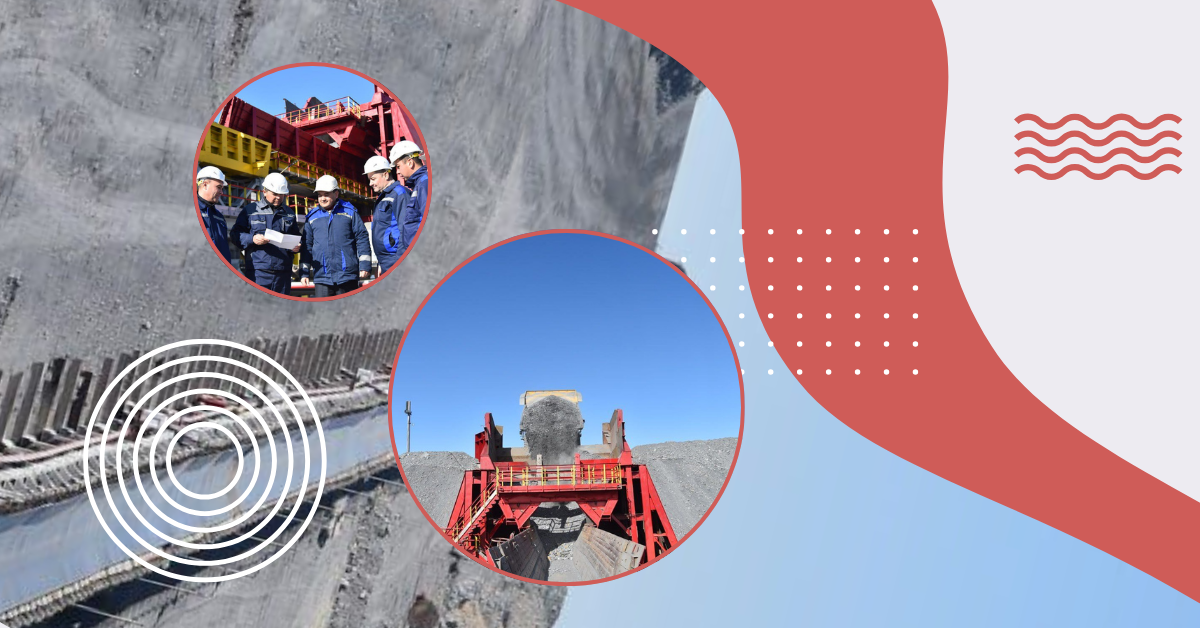
    Navoi Mining and Metallurgical Company (NMMC) has unveiled a groundbreaking 1,900-meter crusher and conveyor complex at its Daugyztau mine, marking a significant technological advancement in its operations.

    The innovative system delivers multiple operational benefits, including shortened rock mass transportation routes, reduced fuel consumption, and enhanced workforce efficiency. This upgrade comes at a crucial time, as the mine has seen its production capacity expand by 250% in recent years.

    Constructed using 5,000 tons of metal structures, this substantial infrastructure investment positions Daugyztau for improved operational performance and increased production output. The modern complex represents NMMC’s commitment to technological advancement and operational excellence in mining.

    The project underscores NMMC’s dedication to modernizing its mining operations through strategic infrastructure investments, paving the way for sustainable growth and improved efficiency at the Daugyztau site.

  • Pallas Resources partners with Ivanhoe Mines to explore Kazakhstan’s untapped copper potential

    Pallas Resources partners with Ivanhoe Mines to explore Kazakhstan’s untapped copper potential

    Pallas Resources Limited, a Central Asian explorer, has announced a strategic alliance and joint venture agreement with Ivanhoe Mines, a leading global copper explorer and producer, to explore the vast copper potential within Kazakhstan’s Chu-Sarysu Basin.

    This significant partnership aims to unlock the potential of one of the world’s largest and most promising sediment-hosted copper basins, which boasts an estimated 27 million tonnes of known copper with an additional 25 million tonnes remaining undiscovered.

    Key Highlights:

    • Dominant Land Holding: The alliance controls over 16,000 square kilometers of highly prospective land within the basin, making it the largest landholding position in the region.
    • Strategic Funding: Ivanhoe Mines will initially sole-fund $18.7 million over two years, with an option to invest up to $115 million over four years to earn a 51% stake in the joint ventures.
    • Focused Exploration: The partnership will focus on large-scale geophysics, reconnaissance mapping, and geochemical campaigns to identify high-potential targets.
    • World-Class Expertise: The alliance combines Pallas’ extensive datasets and local knowledge with Ivanhoe Mines’ world-renowned expertise in sediment-hosted copper exploration, demonstrated by their discovery of the Kamoa-Kakula complex – now the third largest copper mine globally.

    Strong Belief in Kazakhstan’s Potential:

    Simon Cooper, CEO of Pallas Resources, expressed confidence in Kazakhstan’s mineral potential: “This partnership represents a significant commitment to greenfields exploration at a time when the sector remains hesitant to take such bold steps. We are convinced that Kazakhstan holds the potential for multiple major new mineral discoveries.”

    Robert Friedland, Co-Chairman of Ivanhoe Mines, emphasized the strategic significance of the venture: “This partnership marks an exceptional opportunity for Ivanhoe to leverage our expertise in one of the world’s most prospective sedimentary copper basins.” He added, “With our unwavering commitment to sustainable development, we aim to create lasting economic opportunities for Kazakhstan and its communities.”

    Next Steps:

    Pallas and Ivanhoe Mines are actively preparing for the 2025 field season, with detailed information on specific project areas to be released shortly.

    About Pallas Resources:

    Pallas Resources is a Central Asian explorer specializing in identifying large-scale mineral systems in underexplored regions of Central Asia, primarily Kazakhstan.

    About Ivanhoe Mines:

    Ivanhoe Mines is a Canadian mining company focused on developing its sophisticated copper, nickel, palladium and zinc projects in Southern Africa.

  • Leviathan Gold Acquires Foca Metals Corp. to Expand Silver and Base Metal Exploration in Bosnia

    Leviathan Gold Acquires Foca Metals Corp. to Expand Silver and Base Metal Exploration in Bosnia

    Leviathan Gold Ltd. (LVX – TSXV, 0GP – Germany) has acquired Foca Metals Corp. (formerly LS Lithium Corp.) through a share exchange agreement dated November 22, 2024. This acquisition secures Leviathan a 100% indirect interest in the Foča Project, a promising exploration site located in Republika Srpska, Bosnia and Herzegovina.

    The Foča Project spans 100.7 square kilometers across three active exploration licenses in a region geologically similar to Adriatic Metals’ Vareš Project. Vareš has reported significant Indicated and Inferred Mineral Resources, highlighting the area’s rich mineral potential within the Central Dinaride metallogenic zone of the Western Tethyan Belt.

    Leviathan’s exploration targets at Foča include:

    • Vrela Prospect: Historical drilling from the 1960s indicated an average thickness of 15 meters of mineralization grading 13.25% Pb+Zn. Recent soil and rock chip sampling confirmed high-grade mineralization extending over 2 kilometers northeast of historic drill sites.
    • Barice Prospect: Recent exploration identified massive sulphide mineralization with rock chip assays of up to 4.48% Cu, 110 g/t Ag, 30.2% Pb, and 6.45% Zn. A coherent Pb, Zn, and Cu soil anomaly was also mapped over a 500-meter strike.

    Leviathan plans to deploy trenching and Induced Polarization geophysical surveys at both prospects to define high-grade and bulk-tonnage drilling targets.

    CEO Luke Norman expressed enthusiasm about the acquisition, highlighting Bosnia’s favorable regulatory environment and the largely underexplored nature of the Central Dinaride Zone. “Despite Adriatic Metals’ success at Vareš and the historic Trepča complex in Kosovo, much of the region remains untouched by modern exploration, creating a significant discovery opportunity,” Norman said.

    Leviathan’s Balkan operating experience, combined with recent legal changes in Republika Srpska, offers a unique first-mover advantage in this promising region. With ongoing government and local support, Leviathan is well-positioned to advance the Foča Project and explore its potential for significant silver and base metal discoveries.

  • Harnessing Nature’s Elements: Magnesium’s Role in Planetary Restoration and Sustainable Investing

    Harnessing Nature’s Elements: Magnesium’s Role in Planetary Restoration and Sustainable Investing

    Amid the global climate crisis—marked by rising temperatures, ocean acidification, pollution, and land degradation—nature itself may hold solutions to address these challenges. Minerals like magnesium play a crucial role in planetary restoration efforts, offering potential benefits across ecosystems, agriculture, oceans, and human health.

    Magnesium, a cornerstone of photosynthesis, is vital for agriculture and forest health. It enhances plant nutrient uptake, bolsters soil fertility, and strengthens plant immunity. In oceans, magnesium hydroxide may help mitigate ocean acidification, preserving marine ecosystems like coral reefs. Magnesium is also essential for over 300 enzymatic processes in humans, supporting bone strength, nerve function, and cardiovascular health.

    Beyond magnesium, minerals such as olivine, lithium, cobalt, nickel, copper, and rare earth elements play pivotal roles in advancing sustainability. Olivine’s ability to sequester carbon when spread across beaches and exposed to ocean waves exemplifies nature’s potential to mitigate greenhouse gas emissions. Meanwhile, critical minerals fuel clean energy innovations like electric vehicles and renewable energy storage, which are essential for reducing carbon emissions.

    However, mineral extraction poses significant challenges, from environmental degradation to water contamination and CO2 emissions. Investors must consider not only a mineral’s quality and location but also environmental safeguards, geopolitical risks, regulatory frameworks, and local community relations. Collaboration across multiple sectors is key to responsible mining practices that prioritize both profits and planetary health.

    Strategic mineral investments represent an opportunity not only for financial returns but also for contributing to sustainable solutions for global challenges. With careful planning, investors can help shape a future where natural resources drive positive environmental change.

  • US Treasury Secretary to Visit Ukraine Amid Resource and Security Discussions

    US Treasury Secretary to Visit Ukraine Amid Resource and Security Discussions

    US Treasury Secretary Scott Bessent will travel to Ukraine this week, marking the first cabinet-level visit from former President Donald Trump’s administration to the war-torn country. The visit aims to negotiate US access to Ukraine’s rare earth minerals, energy resources, and key state-owned enterprises as part of a broader effort to end the Russia-Ukraine war and strengthen American resource security.

    According to an anonymous source, discussions will cover the possibility of a resource-sharing pact, under which the US would gain access to Ukrainian rare earths in exchange for ongoing support against Russian aggression. Trump and Ukrainian President Volodymyr Zelenskiy have expressed mutual interest in such an arrangement.

    US National Security Adviser Mike Waltz further emphasized on Sunday that the US aims to recoup its war-related expenditures by partnering with Ukraine on energy and natural resource projects, including oil and gas.

    A high-profile US delegation, including Secretary of State Marco Rubio, Vice President JD Vance, Defense Secretary Pete Hegseth, and Special Envoy for Ukraine Keith Kellogg, will also hold talks with European allies and Ukrainian officials this week.

    The Trump administration is reportedly pressuring European nations to purchase more American weapons for Ukraine, a move aimed at strengthening Kyiv’s defenses ahead of potential peace negotiations with Moscow.

  • Central Asia in Focus: U.S. Senators Call for Increased Engagement

    Central Asia in Focus: U.S. Senators Call for Increased Engagement

    In a move that could redefine U.S. relations with Central Asia, the Trump administration is signaling readiness to repeal the decades-old Jackson-Vanik Amendment, a Cold War-era trade restriction that has long hindered stronger economic ties with the region. The potential policy shift, highlighted during the recent Senate confirmation hearing for then-designate Secretary of State Marco Rubio, could pave the way for expanded cooperation on trade, energy, critical minerals, and counterterrorism efforts in a strategically vital part of the world.

    A Long-Overdue Repeal

    The Jackson-Vanik Amendment, originally enacted in 1974, was designed to pressure nonmarket economies—primarily the Soviet Union—to allow freedom of emigration by imposing trade barriers. While most former Soviet republics have since been exempted from its provisions, five Central Asian nations—Kazakhstan, Uzbekistan, Tajikistan, Turkmenistan, and Azerbaijan—remain subject to its restrictions. Critics argue that the amendment is an outdated relic with no relevance to today’s geopolitical realities.

    During his confirmation hearing, Senator Steve Daines (R-MT) pressed Rubio on the need to repeal Jackson-Vanik, emphasizing its negative impact on U.S.-Central Asia relations. Rubio appeared to agree, calling the amendment “an absurd relic of the past.” This bipartisan acknowledgment signals growing momentum for legislative action, particularly as lawmakers like Senators Chris Murphy (D-CT) and Todd Young (R-IN), along with Representative Jimmy Panetta (D-CA), have already introduced bills aimed at granting permanent normal trade relations (PNTR) to key Central Asian states.

    Repealing Jackson-Vanik would not only remove unnecessary trade barriers but also position the United States as a more attractive partner for investment and collaboration in a region increasingly dominated by Russia and China.

    Strategic Opportunities Abound

    Central Asia, home to resource-rich nations like Kazakhstan and Uzbekistan, offers immense untapped potential for U.S. businesses and strategic interests. Kazakhstan, the region’s largest economy, is spearheading the development of the Trans-Caspian International Transport Route, or “Middle Corridor,” which aims to connect Europe and Asia via rail and maritime links while bypassing Russia. Strengthening U.S. involvement in this initiative could bolster European energy security and reduce Moscow’s influence over global markets.

    Kazakhstan also holds significant reserves of rare earth elements—critical components for green energy technologies and advanced electronics. Currently, China dominates global production and processing of these materials, controlling over 85% of the supply chain. By establishing PNTR and fostering closer trade ties with Kazakhstan, the United States could diversify its sources of critical minerals and reduce reliance on Beijing.

    Similarly, Uzbekistan, under President Shavkat Mirziyoyev’s reformist leadership, is opening its doors to foreign investors and seeking to modernize its rapidly growing economy. Tashkent recently signed an agreement with Washington to support its bid to join the World Trade Organization (WTO). With PNTR status, Uzbekistan could emerge as a competitive hub for IT exports, rivaling Eastern Europe and India.

    Countering Russian and Chinese Influence

    Beyond economics, deeper engagement with Central Asia aligns with broader U.S. goals of countering Russian and Chinese dominance in the region. Beijing’s Belt and Road Initiative (BRI) has financed infrastructure projects across Central Asia, often saddling countries with unsustainable debt. For instance, Kyrgyzstan owes nearly 37% of its external liabilities to China’s Export-Import Bank. By offering high-quality alternatives through public-private partnerships and financing mechanisms like the U.S. International Development Finance Corporation (DFC), Washington can provide Central Asian nations with viable alternatives to predatory lending practices.

    Energy diplomacy presents another avenue for U.S. influence. Supporting projects such as an undersea gas pipeline from Turkmenistan to Azerbaijan could unlock new routes for hydrocarbon exports to Europe, driving down energy prices and aiding industrial revitalization. Such initiatives align with President Trump’s vision of reducing Russia’s stranglehold on European energy markets.

    A Historic Presidential Visit?

    Looking ahead, experts suggest that President Trump should consider making a landmark visit to Central Asia—the first by a sitting U.S. president. Such a trip could yield tangible outcomes, including deals on energy cooperation, mining rights for critical minerals, and enhanced trade agreements. Given Kazakhstan’s vast reserves of rare earth elements, a bilateral agreement on mineral extraction could serve as a major diplomatic win.

    Counterterrorism Collaboration

    Finally, Central Asia remains a crucial front in the fight against terrorism, especially given its proximity to Afghanistan. With U.S. troops having withdrawn from Afghanistan in 2021, regional partners are essential for intelligence sharing, border security, and counter-radicalization efforts. Facilitating regional cooperation among Central Asian states on counterterrorism initiatives would further stabilize the area and protect U.S. national security interests.

    A Policy Shift Long Overdue

    As the Trump administration contemplates its approach to Central Asia, repealing the Jackson-Vanik Amendment represents a practical and symbolic starting point. By removing outdated barriers and embracing opportunities for collaboration, the United States can strengthen its presence in a region where it has historically lagged behind competitors like Russia and China.

    For Central Asian leaders eager to diversify their international partnerships, the prospect of closer ties with Washington offers hope for economic growth and greater geopolitical balance. And for the United States, engaging more deeply with Central Asia promises both immediate economic benefits and long-term strategic advantages.

  • Greenland Unveils New Mineral Resources Strategy Focused on Sustainability and Investment

    Greenland Unveils New Mineral Resources Strategy Focused on Sustainability and Investment

    Nuuk, Greenland – February 11, 2025 – The Government of Greenland has launched its Mineral Resources Strategy for 2025-2029, outlining a vision for a sustainable and prosperous future driven by responsible development of its mineral wealth. The strategy, which replaces the 2020-2024 plan, emphasizes sustainability, attracting investment, and capitalizing on critical mineral resources.

    Naaja H. Nathanielsen, Minister of Business, Trade, Mineral Resources, Justice, and Gender Equality, underscored the importance of the mining sector for global development and Greenland’s economic future. “The mineral resource industry is a necessary prerequisite for the continued development of the global community,” stated Nathanielsen in the strategy’s preface. “The global need for minerals can create jobs and growth locally and nationally, contributing to a more sustainable and robust economic development for us all.”

    The strategy identifies four key focus areas:

    Sustainability and Society: This area prioritizes public engagement, environmental responsibility, and social equity within the mining sector. Initiatives include public surveys on attitudes toward the industry, campaigns promoting education and job opportunities, and the development of gender equality guidelines for companies.

    Attractive Investment Frameworks: Greenland aims to reduce investor risk and stimulate economic growth through targeted tax agreements, streamlined administrative processes via digitalization, and strengthened infrastructure. The strategy also includes ongoing assessments of Greenland’s tax and royalty model to ensure competitiveness.

    Critical Minerals: Recognizing the growing global demand for critical minerals, Greenland will focus on strengthening international partnerships, particularly with the EU and the US, to secure markets for its resources.

    Geological Mapping and Geodata: To improve the attractiveness for exploration and investment, the strategy calls for continued geological mapping, scientific projects to generate new knowledge, and expanded availability of geoscientific data. Focus will also be on preventing natural disasters like landslides.

    The strategy emphasizes a holistic approach to sustainability, encompassing social, environmental, and economic dimensions. It recognizes the importance of balancing resource development with the needs of traditional industries like fishing and hunting, as well as protecting Greenland’s unique natural and cultural heritage.

    The plan outlines numerous concrete initiatives, including marketing efforts at international conventions, increased cooperation with export-import banks to support project financing, and the establishment of a certification system for small-scale licensees. The government also plans to facilitate meetings between investment funds and the mineral resources industry, as well as host an annual investment conference for global investors.

  • Illegal Mining Operation Uncovered in Kostanay Region

    Illegal Mining Operation Uncovered in Kostanay Region

    Authorities in Kostanay Region’s Zhitikara District have halted an illegal precious metal mining operation on agricultural land, according to inbusiness.kz, citing Kazakhstan’s Ministry of Agriculture.

    Investigations revealed that a local LLP had acquired the land rights under the designation “for agricultural production.” However, instead of farming, the company illegally extracted precious metals by washing soil.

    Regulatory and law enforcement agencies discovered prospectors, along with specialized machinery, metal detectors, and other mining tools, actively engaged in the unauthorized extraction of minerals.

    Additionally, authorities recorded the destruction of fertile soil layers. As a result, the Department for Land Resources Management of Kostanay Region imposed a fine of 2.6 million tenge on the violators. The company has also been ordered to restore the damaged soil caused by its illegal activities.

  • Kazakhstan’s Unified Subsoil Use Platform Processes 506 Applications

    Kazakhstan’s Unified Subsoil Use Platform Processes 506 Applications

    Since the launch of minerals.e-qazyna.kz, authorities have processed 506 applications from subsoil users for geological exploration, mining, and other state services. This was announced during an expanded meeting of the Ministry of Industry and Construction of Kazakhstan.

    According to Vice Minister of Industry Zhanat Dubirova, by 2025, the Unified Subsoil Use Platform (USP) will offer a seamless process, from application submission to auction participation and license issuance for exploration or extraction.

    The official noted that the full launch of the USP in early 2024 was the result of extensive work since July 2024. Developers analyzed international geological portals from Canada, the UK, Finland, and the UAE, redesigned business processes, and restructured the platform’s architecture.

    Currently, the website provides 22 state services in geology and subsoil use. To facilitate transactions, an “electronic wallet” service has been introduced, allowing companies to pay subscription bonuses directly on the platform.

    The National Geological Service has digitized and uploaded approximately 56,200 secondary geological reports. Additionally, the monitoring of contractual obligations for solid mineral deposits and the submission of annual reports by exploration and mining companies has been automated.

    In January 2024, the USP auctioned 26 subsoil plots, with investors acquiring 21, generating 20.69 billion tenge in revenue.

  • EU Awaits Clarification on Trump’s Proposed Metals Tariffs Before Responding

    EU Awaits Clarification on Trump’s Proposed Metals Tariffs Before Responding

    The European Commission announced on Monday that it will take action to protect EU interests following former U.S. President Donald Trump’s declaration of new 25% tariffs on steel and aluminum imports. However, the EU will wait for official clarification before responding.

    Trump’s statement, made on Sunday, signals a significant escalation in trade tensions. The Commission emphasized that it had not yet received formal notification of the tariffs and would not react based on broad announcements. In a statement, the EU reiterated that it sees “no justification” for such tariffs and will take necessary measures to safeguard European businesses, workers, and consumers.

    If confirmed, these tariffs would mirror Trump’s 2018 trade policies, which saw 25% duties on steel and 10% on aluminum, impacting €6.4 billion ($6.6 billion) worth of EU exports. The EU previously retaliated with tariffs on U.S. goods, but a suspension was negotiated under President Joe Biden.

    A key concern for European steel producers is that U.S. import restrictions could redirect 15 million tons of steel originally destined for the U.S. into the EU market, potentially destabilizing the industry. One EU diplomat indicated that if Trump’s policies mirror his first term, the EU’s response is likely to be similar as well.