Website: Eurasia.com

  • Chinese East Hope Group to Implement Major Non-Ferrous Metals Project in Kazakhstan

    Chinese East Hope Group to Implement Major Non-Ferrous Metals Project in Kazakhstan

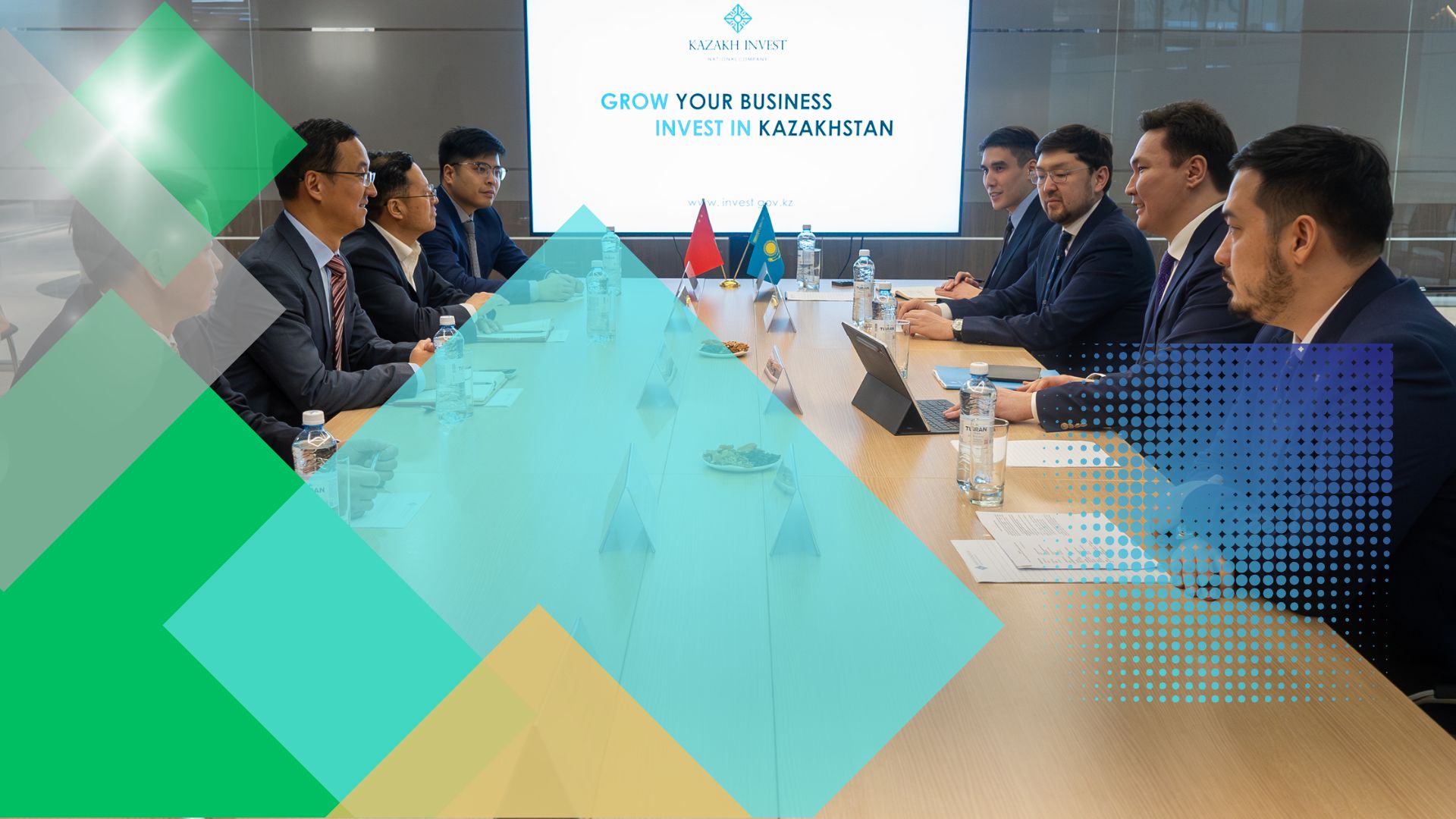
    East Hope Group, a leading Chinese company in non-ferrous metals production, has launched a major investment project in Kazakhstan. Chairman of the Board of JSC “NC” KAZAKH INVEST, Erzhan Elekeev, met with East Hope Group’s CEO Changjun Meng to discuss the prospects of collaboration in the production and advanced processing of non-ferrous metals.

    As part of this investment project, East Hope Group plans to build a large industrial park in Kazakhstan, introducing cutting-edge technologies in the field of non-ferrous metallurgy for deep processing and production of finished products. The project’s cost is expected to exceed $12 billion, with the company planning to supply products to the European Union, Central Asia, and China. The project aims to create up to 10,000 new jobs at various stages of implementation.

    Changjun Meng mentioned that the company has registered a subsidiary in Kazakhstan, which will serve as the main operational center for the project, coordinating further steps for its implementation. Preliminary geodetic and hydrogeological surveys of land plots in several regions have already been conducted, and the company plans to start more detailed studies soon. Erzhan Elekeev emphasized the project’s importance for the development of Kazakhstan’s processing industry and highlighted that its implementation would be a significant step in strengthening economic ties with international partners. “Attracting major strategic investors like East Hope Group opens new perspectives for Kazakhstan. We view this project not only in terms of investment volumes but also in the context of introducing advanced technologies, creating new jobs, and localizing production. The project’s implementation will allow Kazakhstan to occupy a key position in the global non-ferrous metals supply chain and significantly expand the export of finished products.

    We are ready to provide comprehensive support and create favorable conditions for the successful implementation of investments,” stressed Erzhan Elekeev. The parties also discussed the prospect of signing an investment agreement, which would outline the main conditions of cooperation and secure the parties’ commitments. In particular, East Hope Group expressed its readiness to sign a tripartite framework agreement with the Ministry of Foreign Affairs and the Ministry of Industry and Construction of Kazakhstan, marking an important milestone in the project’s development. Following the meeting, Erzhan Elekeev and Changjun Meng expressed confidence in the successful implementation of the initiative and noted Kazakhstan’s high potential as an industrial hub for non-ferrous metals production and deep processing.

    Background Information

    East Hope Group is one of the world’s largest producers in the field of metallurgy and technological innovations. The company has invested approximately $10 billion in the construction of low-carbon industrial complexes in China and continues to expand its international presence. As of 2022, East Hope Group ranked 39th among China’s top 500 private enterprises and 24th in the ranking of China’s top 500 private manufacturing enterprises. The group comprises over 300 subsidiaries. Its main assets are concentrated in mainland China (mainly in Shanghai, Beijing, Xinjiang, Ningxia, Inner Mongolia, Jiangsu, and Hubei), with subsidiaries operating in Vietnam, Cambodia, Singapore, Indonesia, the UAE, and other countries. East Hope Group’s commercial and residential real estate projects are located in Shanghai and Chengdu. Its alumina processing facilities are in Henan province, aluminum production facilities in Baotou and Xinjiang, silicon production facilities in Fukang, and feed and additive production facilities in Xinjiang, Jiangsu, Hubei, Shanghai, and Beijing. —


  • Uzbekistan to Ban New Polluting Factories in Major Cities

    Uzbekistan to Ban New Polluting Factories in Major Cities

    Uzbekistan will prohibit the construction of new industrial facilities that negatively impact the environment in Tashkent and other major cities. The new regulations, outlined in a presidential decree, will take effect in May 2025, according to Gazeta.uz.

    Authorities will stop issuing environmental permits for hazardous industrial enterprises. The measure aims to improve air quality in Tashkent, Nukus, and regional centers.

    The ban specifically targets ferrous and non-ferrous metal production, cement, asbestos, slag and sludge processing, and waste incineration plants handling Class I and II hazardous materials. Additionally, any coal-burning facilitieswithout high-efficiency dust and gas filtration systems will be restricted.

    By autumn 2024, the government will review plans to relocate existing polluting industries outside major urban areas. This includes high-energy-consuming enterprises, with 168 industrial sites identified for potential relocation.

    Before moving these factories, the government must develop new infrastructure, including roads, water, gas, and electricity networks in designated areas.

    In 2023, Uzbekistan’s 7,000+ industrial enterprises generated 125.6 million tons of waste and released 800,000 tons of emissions, accounting for 43% of total pollution in the country.

  • Ivanhoe Mines and Pallas Resources Launch Major Copper Exploration in Kazakhstan

    Ivanhoe Mines and Pallas Resources Launch Major Copper Exploration in Kazakhstan

    Canadian mining company Ivanhoe Mines and UK-based Pallas Resources have announced a joint venture for geological exploration in the Chu-Sarysu Copper Basin in Kazakhstan, according to Interfax-Kazakhstan.

    The Chu-Sarysu Basin is the third-largest sedimentary-hosted copper basin in the world. Experts predict that this project could lead to one of the biggest copper discoveries in Central Asia in recent decades.

    The companies have secured the largest exploration license package in Kazakhstan, covering 16,000 square kilometers—a scale comparable to Ivanhoe Mines’ past exploration projects in Mongolia and the Democratic Republic of Congo.

    According to Robert Friedland, founder of Ivanhoe Mines, Kazakhstan has the potential to become a global hub for copper production. The U.S. Geological Survey estimates that the Chu-Sarysu Basin holds up to 25 million tons of copper resources.

    While the exact start date for exploration has not been disclosed, the companies plan to invest $18.7 million in the first two years. The project will utilize advanced airborne geophysical technologies and digital data analysis, elevating Kazakhstan’s geological exploration to a new level.

  • Kazchrome Implements Advanced Ore Analysis System

    Kazchrome Implements Advanced Ore Analysis System

    Kazchrome, a subsidiary of ERG, has installed a state-of-the-art system for real-time elemental analysis at its Donskoy Mining and Processing Plant. This innovation marks the first of its kind in Kazakhstan’s mining and metallurgical industry, enabling instantaneous quality checks of the extracted ore. Traditionally, determining the elemental composition of raw materials on conveyor belts required taking samples and conducting chemical analysis, a process that took several hours. At Donskoy MPP, this process has been fully automated. Last year, the plant’s Crushing and Processing Plant No. 1 installed a “Sample Tower” system, eliminating the need for manual sampling. This has reduced the need for specialists to carry heavy samples and increased conveyor productivity by removing the need for frequent stops. The newly installed Geoscan-M system further simplifies raw material processing, providing real-time analysis of ore composition and moisture content directly on the conveyor belt. “The system is fully automated and all data is immediately transferred to the enterprise’s information system. Technologists, miners, and other specialists can instantly see the chromium content in the ore and adjust the enrichment processes accordingly. Besides minimizing technological errors, the system also enhances inventory accuracy,” said Project Manager Alexey Ganyushkin. The new analysis system can determine the content of five chemical elements and moisture in the ore (chromium, iron, calcium, silicon, and aluminum) in real-time, with a measurement error of no more than 1%. The analyzer can process up to 1,200 tons of ore per hour at conveyor belt speeds of up to 2 meters per second.

  • Scythian Mining Group Advances London Stock Listing Plans

    Scythian Mining Group Advances London Stock Listing Plans

    Scythian Mining Group Ltd has reaffirmed its commitment to pursuing a listing on the London Stock Exchange’s AIM market. Despite facing challenges in 2023-2024, the mining company is moving forward with its plans to go public. Previously, the company struggled with a lack of funds, which hindered its progress on its flagship gold project in Kazakhstan. As a result, drilling operations planned for the year did not take place, as the expected funding from Canadian investors failed to materialise. The company had initially announced its intention to list on the London Stock Exchange’s AIM market in late 2023. Following this announcement, updates were scarce until now. Scythian Mining has now appointed London-based brokerage firm, Tavira Securities, to assist in planning a pre-IPO fundraising of up to $10 million. This staged funding will cover drilling, exploration, and other costs before the Initial Public Offering (IPO). The company remains optimistic about its chances of going public on the London Stock Exchange’s AIM market.

    In late 2023, Scythian discovered a significant copper-gold (Cu-Au) porphyry system in Kazakhstan. Subsequently, Scythian negotiated a 50/50 joint venture with the US-based company IG Global. The joint venture has applied for two new exploration licenses in the region. Under the terms of the agreement, IG Global will finance and conduct exploration activities for the first two years. This arrangement allows Scythian to concentrate on exploring and developing the Kokkus project and preparing for its IPO. To manage its interest in the project, Scythian has established a new wholly-owned subsidiary, Scythian Copper Ltd.

  • Inkai Uranium Production Falls Short of Target in 2024 Amid Supply Challenges

    Inkai Uranium Production Falls Short of Target in 2024 Amid Supply Challenges

    The Inkai joint venture, a partnership between Kazatomprom (60%) and Canada’s Cameco (40%), produced approximately 3,000 tons of uranium in 2024, according to its CEO, Birzhan Zhylkaidarov. This figure falls short of the 3,200-ton annual target stipulated in the company’s subsoil use contract. Final production data for 2024 will be released later, but preliminary estimates indicate a decline compared to the 3,201 tons produced in 2023.

    The contract allows for a 20% deviation from the annual target of 4,000 tons, meaning production between 3,200 and 4,800 tons is acceptable. However, if the final 2024 output remains below 3,200 tons, it would constitute a breach of contractual obligations. While regulators typically issue a warning for first-time violations, repeated failures could result in fines or contract termination.

    Zhylkaidarov attributed the shortfall to supply chain disruptions, particularly irregular deliveries of sulfuric acid, a critical reagent used in the in-situ leaching (ISL) method of uranium extraction. The ISL process, which involves injecting a solution of sulfuric acid and water into underground uranium deposits, is highly sensitive to reagent availability. Delays in acid deliveries from mid-April to mid-May 2024 disrupted production schedules, leading to a 20% drop in output compared to contractual targets.

    The Inkai venture sources sulfuric acid from KAP Logistics, a subsidiary of Kazatomprom, which transports the reagent from domestic producers like KAZ Minerals, Kazzinc, and Kazphosphate. However, operational halts at supplier plants, including a week-long stoppage at Kazphosphate last fall, exacerbated the challenges.

    Looking ahead, Inkai plans to produce 3,200 tons of uranium in 2025. The company is also exploring long-term solutions, including the construction of a sulfuric acid plant in Taykonur, expected to launch in 2027. This facility, with an annual capacity of 800,000 tons, could fully meet Inkai’s sulfuric acid needs.

    Since commencing operations in 2002, Inkai has extracted 39,476.2 tons of uranium from the Inkai-1deposit, one of Kazakhstan’s richest uranium reserves. The venture’s final product, yellowcake, is processed into uranium oxide (U3O8), which is sold to shareholders Kazatomprom and Cameco for distribution to global markets, including France, a leading consumer of nuclear energy in Europe.

  • Ferrexpo Shares Plunge Amid $3.8 Billion Civil Claim in Ukraine

    Ferrexpo Shares Plunge Amid $3.8 Billion Civil Claim in Ukraine

    Shares of Ferrexpo PLC, a London-listed iron ore producer, dropped as much as 51% following the announcement of a $3.8 billion civil claim filed against its Ukrainian subsidiary, Ferrexpo Poltava Mining. The claim, issued by Ukrainian authorities, accuses the company of illegal mining and environmental damage.

    After experiencing its largest intraday decline on record, Ferrexpo pared its losses to a 23% drop. The company issued a statement denying the allegations, noting that the current accusations have “transformed” from prior claims of illegal waste product sales. Ferrexpo confirmed that its Ukrainian subsidiary intends to vigorously defend its position in court.

    In January, the company addressed earlier accusations made by Ukraine’s Prosecutor General’s Office against four senior managers concerning the sale of waste products. Ferrexpo argued that these materials were not a separate mineral resource and had been sold for years under state inspections until September 2021.

    Ferrexpo’s Poltava mine, located in central Ukraine, is its largest operation and critical to its business. Before the Russian invasion in 2022, Ferrexpo ranked as the world’s third-largest exporter of iron ore pellets.

    The legal battle in Ukraine, coupled with the ongoing war, presents significant challenges for Ferrexpo as it works to defend its largest subsidiary and stabilize investor confidence.

  • Kazakhstan’s Investment Strategy Amid Geopolitical Shifts: Challenges and Opportunities

    Kazakhstan’s Investment Strategy Amid Geopolitical Shifts: Challenges and Opportunities

    Amid the ongoing war in Ukraine and geopolitical tensions, Kazakhstan is positioning itself to attract $150 billion in foreign direct investment (FDI) by 2029. The conflict has provided Central Asian nations, including Kazakhstan, opportunities to strengthen economic ties with the West. In 2022-2023, the Netherlands emerged as the leading investor, contributing over $12 billion to Kazakhstan’s economy, followed by the US and Switzerland.

    However, despite its ambitious goals, Kazakhstan faces challenges. In 2023, FDI inflows dropped by 32.3%, reflecting a lack of comprehensive development strategies for industries and regions. To counteract this, the government has introduced initiatives inspired by British and UAE models, notably through the Astana International Financial Center, which is modeled after Dubai’s financial hub. These measures aim to attract global investors by offering tax breaks, reduced bureaucracy, and a regulatory framework based on British Common Law principles.

    Kazakhstan is also focusing on long-term agreements with foreign companies, particularly in its oil and gas sector. President Kassym-Jomart Tokayev acknowledged that renegotiating production-sharing agreements on favorable terms is essential for securing large investments. However, some companies view these moves as signs of “resource nationalism.”

    Further strategies include initiatives like the Digital Nomad visa to attract remote workers and businesses relocating from Russia. Kazakhstan has already attracted 41 foreign companies worth over $1.5 billion and is in talks with Chinese firms such as Xiaomi and TCL to move production facilities.

    The geopolitical realignment caused by sanctions on Russia has also funneled trade through Central Asia, benefiting Kazakhstan’s economy. The government is investing in developing the Trans-Caspian International Transport Route to strengthen its trade links with Europe and Asia.

    Despite inflation and economic stability challenges, Kazakhstan’s prospects remain strong. The country is now ranked among the world’s top 35 most competitive nations, with the Asian Development Bank projecting 5.1% economic growth by 2025. Kazakhstan’s strategic location, trade agreements, and ongoing reforms position it well to become a regional economic leader.

  • Ukraine’s Rare Earth “Deal” with the US: More Political Theater than Economic Reality

    Ukraine’s Rare Earth “Deal” with the US: More Political Theater than Economic Reality

    As US Treasury Secretary Scott Bessent toured Ukraine this week, President Volodymyr Zelenskyy put forward a proposal for potential rare earth mining deals—reminiscent of the legendary “Potemkin villages.” This maneuver appears designed to court former President Donald Trump, who has suggested Ukraine’s rare earths could secure continued US military support.

    While a formal agreement may be announced during the Munich security conference, the reality of such a deal is tenuous at best. Ukraine does not currently produce rare earths, has no proven reserves, and is unlikely to become a significant player in the global market. Developing a rare earth mine would require either massive US funding or tax incentives, with little financial return.

    The numbers further undermine the proposal. The US annually imports just $200 million worth of rare earths, while Trump has speculated about securing $500 billion worth. Even the only major non-Chinese rare earth producer, Lynas, posted revenues of just $293 million last year.

    Moreover, despite their strategic-sounding name, rare earths are largely used in mundane manufacturing applications—fridge magnets and lighter flints account for more consumption than defense-related uses like missiles and lasers. The US’s relatively small manufacturing sector cannot absorb a significant share of global supply, even with optimistic projections.

    Some commentators have suggested the US may actually be eyeing Ukraine’s lithium or mineral sands. However, Ukraine’s lithium resources are modest at best, dwarfed by US reserves. Similarly, its ilmenite reserves are just 1% of the global total.

    Ultimately, while a rare earth agreement may bolster political ties and diplomatic optics, it is unlikely to reshape global minerals markets or offer tangible benefits for either side. The true advantage seems to lie in the political theater rather than economic substance.

  • TALCO’s Electricity Debt Reaches $52.6 Million Amid Legal Dispute

    TALCO’s Electricity Debt Reaches $52.6 Million Amid Legal Dispute

    The Tajik Aluminum Company (TALCO) has accumulated a significant electricity debt of 571.5 million somonis (US$52.6 million) as of January 1, 2025, marking a 62% increase from the previous year’s debt. The figures were revealed during a February 11 press conference by Muhammad Ghulomzoda, a representative of OJSC Distribution Electric Networks. This debt includes both accumulated liabilities and current monthly payments of around 25 million somonis (US$2.3 million). However, no details were provided on TALCO’s total payments for 2024.

    TALCO’s electricity consumption is substantial, averaging 5.7 million kWh per day—equivalent to 10% of Tajikistan’s total electricity production. In August 2024, TALCO had reportedly paid 90 million somonis after negotiations, agreeing to a monthly payment of 35 million somonis.

    The company is also embroiled in a legal dispute with Barqi Tojik, Tajikistan’s state-run electricity provider, over a US$37 million debt allegedly accumulated in 2020. TALCO has disputed the full amount, claiming calculation errors. The representative of Distribution Electric Networks declined to provide an update on the lawsuit’s status during the recent press conference.

    The debt dispute between Barqi Tojik and TALCO dates back to 2020. That year, Barqi Tojik claimed TALCO owed 415 million somonis (US$39.2 million), which TALCO denied, asserting that it had overpaid for electricity. As of January 2024, TALCO’s debt stood at over 351.7 million somonis (US$32.2 million).

    TALCO benefits from preferential electricity rates—18.6 dirams per kWh—compared to 70.35 dirams for other industrial enterprises and 30.75 dirams for residential customers.