Website: Eurasia.com

  • Poland May Extend Copper Output Tax Reduction Beyond 2027

    Poland May Extend Copper Output Tax Reduction Beyond 2027

    Poland’s Finance Minister, Andrzej Domański, announced on Monday that a planned reduction in the copper output tax could be extended beyond 2027. The government is considering prolonging tax relief measures to support the industry amid economic challenges.

    Earlier in the day, Domański confirmed that the tax cuts would lower government revenues by approximately 500 million zlotys ($123.4 million) in 2026 and 700 million zlotys in 2027. The move aims to provide financial relief to copper producers, ensuring competitiveness in the global market.

    The Polish government’s decision on whether to extend the tax reduction beyond 2027 will depend on economic conditions and industry performance in the coming years.

  • 12 Gold Mining Companies Acquire 31 Gold-Bearing sites in Navoi

    12 Gold Mining Companies Acquire 31 Gold-Bearing sites in Navoi

    A fierce competition for gold-bearing land unfolded on 4th February as 12 companies participated in an electronic auction for 31 sites in the Navoi region of Uzbekistan. The auction, held on the E-auksion platform, saw intense bidding, with one lot’s price skyrocketing 110 times its initial value after a 10-hour battle.

    Initially, the plots were listed at prices ranging from 26.3 million UZS ($2,190) to 52.5 million UZS ($4,375). Due to fierce competition, prices rose sharply, and the 31 plots were sold for a total of 25.1 billion UZS ($2.09 million), which is 23 times their combined starting value.

    The most expensive plot sold was the Sop-10/24 site in the Nurota district. After more than 10 hours of bidding, Xinlong Mining Drilling won the lot for 3.6 billion UZS ($300,000), 110 times higher than the initial price. This company also acquired the second most expensive gold plot, Sop-14/24, for 1.9 billion UZS ($158,333) after 183 bidding rounds. In total, Xinlong Mining Drilling secured rights to eight gold sites for 9.1 billion UZS ($758,333).

    Other notable purchases include:

    • Neo Gold Mining: 4 plots for 2.7 billion UZS ($225,000)
    • Zhonghuitong Mining Group: 4 sites for 1.13 billion UZS ($94,167)
    • Golden Diggers: 3 plots for 3.24 billion UZS ($270,000)

    Several companies won two lots each: Ipotekaon, King of Gold Mining, Samnurgold, and YVN Gold. AAA Human, Golden SPV One, Kamron Mir Gold, and Orom Medical Center each secured one plot.

    The auctions were highly competitive, with some lots seeing over 200 bidding rounds. Winners have gained rights to extract gold from these areas using artisanal mining methods, as required by current legislation.

    This auction highlights the growing interest in Uzbekistan’s gold mining sector and the potential for significant investments in the Navoi region’s mineral resources.

  • Uzbekistan’s Gold and Currency Reserves Increase in January 2025

    Uzbekistan’s Gold and Currency Reserves Increase in January 2025

    In January 2025, Uzbekistan’s foreign exchange reserves experienced growth, as reported by the Central Bank. According to the data, the total value of assets in reserves reached $42.9 billion by February 1st, which is a $1.72 billion (4.17%) increase compared to the previous month. The value of gold rose by $3.02 billion, reaching $35.06 billion. This increase is attributed to the rise in global prices for the precious metal, with the price per troy ounce approaching $2900. Additionally, the physical volume of gold reserves also increased from 382.57 tons (12.3 million troy ounces) to 391.9 tons (12.6 million troy ounces). However, the country’s foreign currency reserves decreased by $1.29 billion, falling below $7.3 billion. Of these, $442.3 million are held in accounts with other central banks and the International Monetary Fund, while $6.75 billion are in foreign commercial banks.

  • Euro Sun Mining’s Rovina Valley Project: A Comprehensive Evaluation

    Euro Sun Mining’s Rovina Valley Project: A Comprehensive Evaluation

    Euro Sun Mining’s Rovina Valley Project is set to be evaluated on multiple critical factors. This assessment will consider how its copper contributes to Europe’s energy transition, the number of local jobs created, the success of regional gentrification, and the improvement of infrastructure in Hunedoara County. Equally important is the project’s environmental stewardship and its relationship with the natural ecosystem.

    Environmental Baseline Data Collection: An Integral Component

    For Euro Sun Mining, environmental baseline data collection remains key at every stage of the project—from exploration and development to full-scale operations. Establishing a reference point for existing environmental conditions ensures compliance with regulatory requirements and helps minimize future ecological and social impacts.

    Key Elements of Environmental Baseline Data Collection

    1. Physical Environment

    Climate & Meteorology: For over a decade, Euro Sun Mining has measured and recorded temperature, precipitation, humidity, and wind patterns using weather stations throughout the mining concession.

    Geology & Soil: Extensive mining drill programs have provided critical environmental data on soil composition, stability, erosion potential, and possible contamination.

    Hydrology & Hydrogeology: Monitoring surface water bodies, groundwater levels, flow rates, flow direction, and overall water quality is crucial in mine planning. Data is verified by independent experts. Monthly flow charts of streams provide a baseline of water hydrology around the site.

    Air Quality: Baseline air quality measurements include dust, gases (CO₂, NOx, SO₂), and heavy metals.

    2. Biological Environment

    Flora: The concession area contains indigenous vegetation that regenerates quickly. Satellite imagery and ground-truthing techniques are used to map this vegetation. For every tree removed, Euro Sun Mining commits to planting three trees.

    Fauna: The project’s relatively small footprint minimizes impact on wildlife. Livestock grazing and hunting activities will be curtailed during the life-of-mine.

    Aquatic Life & Water Quality: Baseline sampling of rivers and groundwater establishes data for metals, pH, turbidity, and nutrients. Although a small stream may require diversion, fish populations, water biodiversity, and overall ecosystem health will remain unaffected.

    3. Socio-Economic & Cultural Environment

    Land Use & Zoning: Current land use data has been mapped, and future development plans are available for public review.

    Population & Demographics: In collaboration with local governments, Euro Sun Mining tracks population trends in Criscior and Brad, analyzing household livelihoods and employment patterns.

    Indigenous & Cultural Heritage: While no cultural heritage sites exist within the mining area, nearby sacred sites are designated for restoration and preservation once mining operations begin.

    Public Health & Safety: Euro Sun Mining ensures baseline health and safety conditions are integrated into the mine plan, working within European legislation and alongside local governments.

    Data Collection Methods

    Field Surveys & Sampling: Includes soil and rock testing, water sampling, and air quality monitoring.

    Remote Sensing & GIS Mapping: Utilizes satellite imagery and drone surveys to analyze terrain, vegetation cover, and water bodies.

  • Euro Sun Mining Closes Third Tranche of Private Placement Financing

    Euro Sun Mining Closes Third Tranche of Private Placement Financing

    February 07, 2025
    Toronto, ON – Euro Sun Mining Inc. (TSX: ESM) (“Euro Sun” or the “Company”) has successfully closed the third tranche (the “Third Tranche”) of its previously announced non-brokered private placement financing of units (the “Offering”), raising gross proceeds of C$285,045.

    Under the Third Tranche, Euro Sun issued 5,700,900 units (each a “Unit”) at a price of C$0.05 per Unit. Each Unit consists of one common share (each a “Common Share”) and one common share purchase warrant (each a “Warrant”). Each Warrant grants the holder the right to acquire an additional Common Share at an exercise price of C$0.05 for a period of two years from the issue date.

    In connection with the closing of the Third Tranche, the Company paid $3,500 in cash commissions and issued 170,000 broker warrants (“Broker Warrants”) to finders. Each Broker Warrant enables the holder to purchase one Common Share at a price of C$0.05 for a period of 24 months from the closing date of the Third Tranche.

    The net proceeds from the Offering will be directed towards the advancement of the Company’s flagship Rovina Valley Project in Romania and for general corporate purposes.

    All securities issued under the Third Tranche are subject to a statutory hold period, expiring four months plus one day from the date of issuance. Additionally, the Company has secured conditional approval from the Toronto Stock Exchange (TSX) to extend the closing date of the Offering until February 13, 2025.

    About Euro Sun Mining Inc.

    Euro Sun Mining Inc. is a Toronto-based mining company focused on the exploration and development of its 100%-owned Rovina Valley Project, one of Europe’s largest undeveloped gold-copper projects. The Company is committed to responsible mining and sustainable development in the region.

    For further information, please visit www.eurosunmining.com or contact:

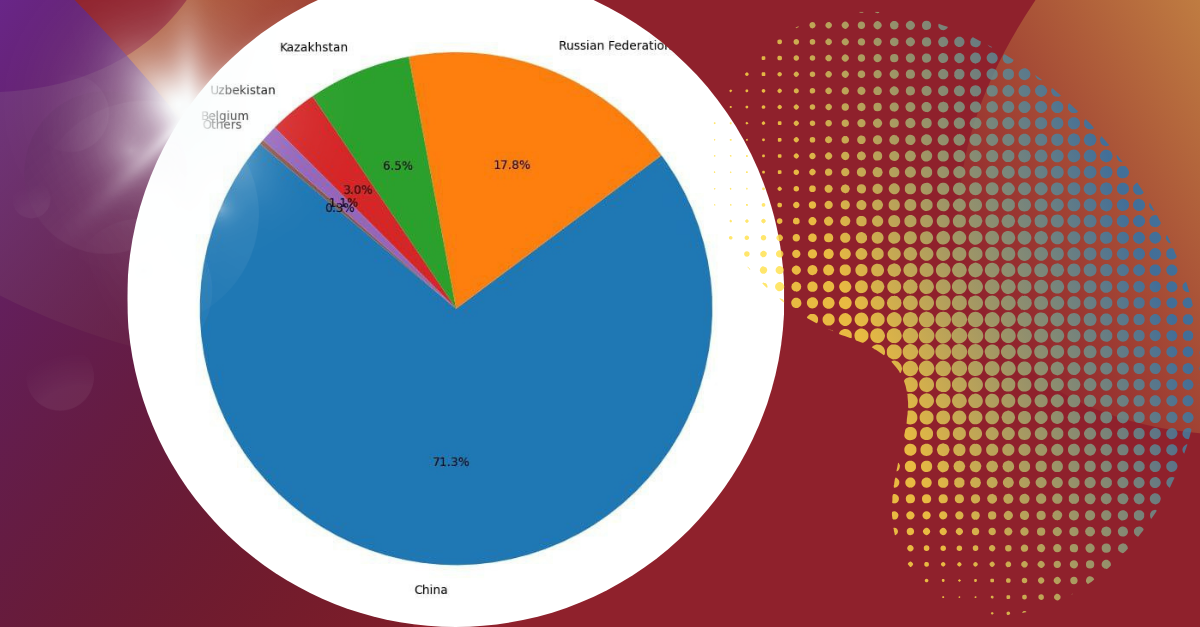
  • China Imports Up to 70% of Critical Metals from Central Asia

    China Imports Up to 70% of Critical Metals from Central Asia

    Despite the lack of official data on the export of rare earth metals by Central Asian countries, an analysis of ore, slag, and ash exports reveals interesting trends. These exports often include critical resources highly sought after by leading global powers, particularly metals such as molybdenum, titanium, and vanadium.

    According to Trademap.org data from 2019 to 2023, Central Asian countries exported a wide range of ores and concentrates, including copper, iron, precious metals, zinc, lead, molybdenum, chromium, and niche metals such as niobium and tantalum.

    In recent years, the market has also seen the introduction of products such as tin, tungsten, and titanium ores. For example, copper ore exports showed stable growth—from approximately $1.17 million in 2019 to around $3.15 million in 2023. Iron ore peaked at $1.6 million in 2021 before experiencing a decline in export volumes in subsequent years.

    One notable trend is the significant increase in molybdenum ore exports, which surged from about $4 million in 2019 to approximately $144 million in 2023. This is a clear reflection of increased global demand and investment.

    An analysis of trade with the European Union under the category “26 Ores, Slags, and Ash” shows that molybdenum stands out: its exports increased from around $11 million in 2021 to nearly $60 million in 2023. In this segment, Kazakhstan holds a dominant position, providing nearly the entire cumulative export value, while contributions from other Central Asian countries remain significantly lower.

    Central Asian countries’ export portfolios reveal a trend towards transitioning from traditional raw materials such as copper and iron to more valuable niche ores, especially molybdenum. This trend is evident both in the global market and in trade with the European Union, where Kazakhstan acts as a key supplier.

    Will the European Union be able to position itself as a key importer of critical metals from Central Asia? The future will tell.

  • Kazzinc Raises Employee Salaries Across All Divisions

    Kazzinc Raises Employee Salaries Across All Divisions

    Kazakhstan’s largest mining and metallurgical company Kazzinc has announced salary increases for its employees. After discussions with shareholders, the company’s management approved an average 8.5% wage hike starting from January 2025.

    This follows two salary increases in 2024 – in March and October – which totaled approximately 10%.

    “It’s no secret that inflation doesn’t stand still and the cost of essential goods is rising. The salary level directly affects the well-being of Kazzinc employees. It’s extremely important for us to maintain it, taking into account market changes,” said Zhanat Zhanbotin, CEO of Kazzinc. “We approached shareholders with a proposal to consider raising Kazzinc employees’ wages at the beginning of this year and they supported us. January salaries have been increased by an average of 8.5%.”

    The raise applies to workers across all divisions of Kazzinc, which is the largest company in East Kazakhstan.

    This move aims to help employees keep pace with inflation and rising costs of living. It demonstrates Kazzinc’s commitment to supporting its workforce’s financial well-being amid changing economic conditions.

  • Metinvest’s Kamet-Steel Plant Announces Major Investment Program for 2025

    Metinvest’s Kamet-Steel Plant Announces Major Investment Program for 2025

    Kamet-Steel, a subsidiary of Metinvest Group, has unveiled an ambitious investment program for 2025 with a total planned budget exceeding 2.5 billion hryvnias (approximately $59.8 million). This significant investment comes as the company continues its systematic work towards construction and reconstruction to improve production reliability and efficiency, despite the ongoing challenging wartime conditions.

    Key highlights of the investment program include:

    1. Major overhaul of Blast Furnace No. 9, which will receive nearly one-third of the program’s budget.
    2. A pilot project to construct an alternative power station using solar panels, marking Metinvest’s first venture into this type of renewable energy project.
    3. Implementation of 114 investment projects of varying scales throughout the year.
    4. Capital repairs of key equipment in main production shops.
    5. Modernization of the energy infrastructure, with a focus on constructing new water pipelines.
    6. Initiation of the first launch complex for a large-scale project to build a new blast furnace gas collector.
    7. Modernisation of the drive control system for continuous casting machine No. 1.

    Mikhail Koptev, Director of Capital Construction and Investments at Kamet-Steel, emphasized that this year’s investment budget is the largest in recent years. He stated that a significant portion of the funds will be directed towards supporting and upgrading core production equipment, which will serve as a springboard for further development and modernization of the enterprise.

    The company expects that the restoration of production capabilities will allow Kametstal to renew its presence in existing markets and expand into new ones, thereby generating additional profit.

    This investment program demonstrates Metinvest’s commitment to maintaining and improving its production facilities, even in the face of ongoing challenges. It also aligns with the company’s broader strategy of expanding its market presence and investing in green steel technology, as evidenced by its recent focus on North Africa and Turkey for future growth.

  • KGHM Launches Cost Optimisation Plan to Boost Profitability

    KGHM Launches Cost Optimisation Plan to Boost Profitability

    KGHM Polska Miedź SA, Europe’s leading copper producer, is launching a comprehensive Cost Optimisation Plan aimed at strengthening its investment capabilities for future growth. The initiative focuses on enhancing operational efficiency across the company’s core business processes.

    “As the Management Board, we are obliged to constantly seek opportunities for both efficiency and cost optimization. Current macroeconomic conditions, copper price levels and ongoing talks on a possible change to the copper tax formula create favorable conditions for intensifying investment activities. Our goal is to increase the resource base of domestic assets, which are the future of KGHM, in the long term,” said Andrzej Szydło, President of the Management Board of KGHM Polska Miedź SA. “In terms of employment, we will focus primarily on increasing work efficiency, and not on cost issues that are currently resolved,” he added.

    The optimisation program will initially target several key areas including procurement, technological processes, waste management, and water systems, with additional focus areas to be identified during the review process.

    As Europe’s largest copper producer, KGHM plays a vital role in both Poland’s economy and the European Union’s strategic raw materials sector, contributing approximately half of the EU’s copper mining output.

  • Metinvest’s Northern GOK Increases Product Output to Meet Orders from European Metallurgists

    Metinvest’s Northern GOK Increases Product Output to Meet Orders from European Metallurgists

    Northern GOK, part of Metinvest Group, has ramped up production of commercial products to fulfill orders from European steel manufacturers. The plant has launched a second pelletising machine to handle additional order volumes for European partners. Currently, both LURGI 552 A and LURGI 552 B machines are engaged in pellet production.

    The Pelletizing Plant #2 team prepared in advance for the increased production plans approved for the beginning of the year. To ensure equipment reliability, a complex of repair works was carried out on both pelletizing machines in the fall. The LURGI 552 B underwent equipment inspection and quarterly maintenance, including standard procedures to maintain key components. This improved machine reliability, ensured quality indicators were met, and allowed for higher loading today. Repair works were also completed on machine A in the fall, along with a major overhaul of the rotary reclaimer used for finished product loading.

    To fulfill European steel makers’ orders on time, the plant decided to launch both pelletizing machines simultaneously, rather than alternating their use as usual. Additional shifts for key workers on weekends and nights were organized to prepare and launch the second machine. This operating mode requires non-standard approaches and significant resources, as both machines need servicing, which is challenging in cold weather and with personnel shortages.

    The machines A and B are currently operating at productivities of 463 and 460 tons of high-quality pellets per hour respectively.

    Dmitry Malykh, Director of Production and Planning for Metinvest’s GOKs, noted: “The market dictates its rules, and we must maintain the company’s reputation and strengthen its competitiveness. It will be more challenging for Northern GOK teams, especially Pelletizing Plant #2, due to the changed regime. But our people meet such challenges with dignity, aware of their responsibility for the overall result. More production means more earnings and more taxes for the state to direct towards critically important areas during wartime.”