Website: Eurasia.com

  • Uzbekistan and Turkic Business Delegation Discuss Mining Cooperation and Investment Prospects

    Uzbekistan and Turkic Business Delegation Discuss Mining Cooperation and Investment Prospects

    On 26 May 2025, First Deputy Minister of Mining Industry and Geology of Uzbekistan, O. Nasritdinhodjaev, met with a delegation led by Adem Kula, Secretary General of the Union of Chambers of Commerce and Industry of Turkic States. The meeting served as a platform to strengthen cooperation in the mining sector and promote new investment opportunities.

    During the session, representatives from various foreign companies presented their initiatives and expressed interest in participating in Uzbekistan’s rapidly evolving mineral and geological industries. The Uzbek side welcomed the growing engagement of Turkic state partners and emphasized the government’s commitment to transparent and investor-friendly reforms.

    The delegation’s visit includes follow-up meetings with senior officials from major national mining companies—JSC “Navoi Mining and Metallurgical Company” (NMMC) and JSC “Almalyk Mining and Metallurgical Company” (AMMC). Both companies play a central role in Uzbekistan’s mining sector, particularly in the extraction of gold, copper, and other critical minerals.

    The talks reaffirmed the productive nature of ongoing cooperation between Uzbekistan and its Turkic partners, with both sides expressing readiness to deepen economic and technical collaboration.

  • Uzbekistan and China’s Henan Investment Group Discuss Expansion of Mining and Metallurgy Projects

    Uzbekistan and China’s Henan Investment Group Discuss Expansion of Mining and Metallurgy Projects

    On 27 May 2025, Minister of Mining Industry and Geology of Uzbekistan B. Islamov and senior ministry officials met with a delegation led by Zhu Hongbing, General Director of Henan Investment Group Co., Ltd. The meeting focused on the progress and future prospects of projects being implemented by the Chinese company in Uzbekistan’s mining sector.

    Key topics included the attraction of foreign investment into Uzbekistan’s geology and mining industries. Both sides emphasized the strategic importance of expanding cooperation in geological exploration and metallurgy.

    Representatives of Henan Investment Group highlighted Uzbekistan’s growing investment appeal and underscored the potential for joint ventures, particularly in untapped mineral-rich regions. The Chinese delegation expressed readiness to deepen collaboration and further develop long-term initiatives in the country.

    The Uzbek side reaffirmed its commitment to supporting foreign investors and ensuring transparency in mining-related procedures, including through mechanisms like open auctions for subsoil rights.

  • Uzbekistan and Turkey’s Aydeniz Group Explore New Mining Investment Opportunities

    Uzbekistan and Turkey’s Aydeniz Group Explore New Mining Investment Opportunities

    The Ministry of Mining Industry and Geology of Uzbekistan hosted a meeting between Deputy Minister Ulugbek Yusupov and representatives of Turkish company Aydeniz Group to discuss expanding investment cooperation in the country’s mining sector.

    During the talks, the Uzbek side highlighted the government’s ongoing efforts to foster a favorable investment environment. These include regulatory reforms, improved infrastructure, and investor protections aimed at attracting both local and international partners to participate in mineral exploration and development.

    Particular focus was placed on the transparent allocation of subsoil plots, with officials emphasizing that promising mining areas are now made available through open electronic auctions. This system, accessible to both domestic and foreign investors, is designed to increase fairness, visibility, and competition in the sector.

    The Aydeniz Group expressed strong interest in exploring potential projects and praised Uzbekistan’s commitment to openness and investor-friendly reforms.

  • Ukraine Eyes Mineral Revival with U.S. Deal Amid War and Reconstruction Hopes

    Ukraine Eyes Mineral Revival with U.S. Deal Amid War and Reconstruction Hopes

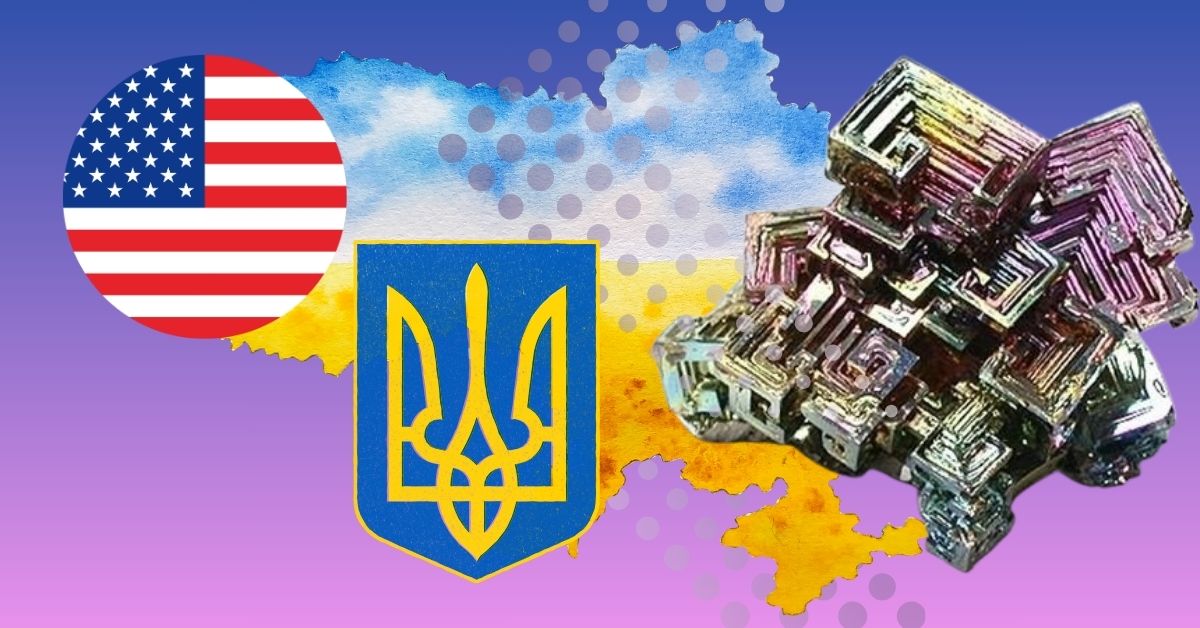
    Ukraine is revamping its long-neglected minerals sector in an effort to attract billions in foreign investment and secure a critical role in global resource supply chains. The move follows a landmark minerals partnership with the United States, launched on 23 May through a dedicated fund that will channel revenues from new mining licenses into developing strategic resource projects.

    Ecology Minister Svitlana Hrynchuk told Reuters that the deal, heavily promoted by former U.S. President Donald Trump, could unlock vast untapped potential in Ukraine’s natural resources sector. While the country currently derives just 4% of its GDP from natural resources, the minister sees significant room for growth—particularly in the extraction of critical minerals for defence, green energy, and high-tech industries.

    Ukraine boasts deposits of 22 out of 34 critical minerals listed by the European Union. However, much of this potential remains underdeveloped, hampered by Soviet-era bureaucracy and a chronic lack of investment. The war has only worsened the situation, with an estimated 70 trillion hryvnias ($1.7 trillion) in sector losses due to Russian occupation and conflict along a 1,000 km frontline.

    Despite this, Ukraine continues to push forward. A new national strategy is focused on digitising up to 80% of Soviet-era geological data—currently 40% complete—while also reviewing 3,000 mining licenses to identify dormant or underutilised assets. Last year, auctions for mining rights raised 2.4 billion hryvnias, and similar revenue is expected in 2025.

    The U.S. deal, described by Treasury Secretary Scott Bessent as a “full economic partnership,” gives Washington preferential access to new Ukrainian mineral projects. The agreement is also seen as a key step in Ukraine’s EU accession ambitions, with Brussels and the European Bank for Reconstruction and Development supporting modernization efforts.

    Although investor interest is currently dominated by domestic players, growing foreign participation is anticipated—especially in high-demand minerals like titanium, graphite, manganese, and traditional hydrocarbons.

  • Uzbekistan and Türkiye Reaffirm Strategic Partnership in Geology and Mining

    Uzbekistan and Türkiye Reaffirm Strategic Partnership in Geology and Mining

    On 26 May 2025, Uzbekistan’s Deputy Minister of Mining Industry and Geology, Rakhim Yusupov, held official talks with a Turkish delegation headed by Ramazan Sarı, Deputy Director of Türkiye’s General Directorate of Mineral Research and Exploration (MTA). The meeting underscored the enduring and productive cooperation between the two nations in the fields of geology and mining.

    Both sides praised the strength and strategic nature of their bilateral relations and expressed a shared commitment to deepening collaboration further. The discussions highlighted Uzbekistan’s ongoing sectoral reforms, which aim to modernize geological research and attract foreign investment to the mining industry.

    A key focus of the talks was Uzbekistan’s “E-auksion” electronic platform—an open-access system designed to provide entrepreneurs and investors with transparent opportunities to explore and develop newly identified mineral-rich sites. The initiative aligns with the government’s broader goals of enhancing transparency, boosting investor confidence, and unlocking the country’s geological potential.

    The meeting concluded with a mutual interest in expanding technical exchange, knowledge-sharing, and joint exploration projects between the two countries.

  • Uzbekistan and Austria Deepen Ties with Focus on Energy, Digitalization, and Infrastructure

    Uzbekistan and Austria Deepen Ties with Focus on Energy, Digitalization, and Infrastructure

    On 20 May, the Ministry of Economy and Finance of Uzbekistan held high-level talks with an Austrian delegation led by Andreas Reichhardt, Deputy Minister of Finance and Director General for Telecommunications, Postal Services, and the Mining Industry of Austria. The meeting underscored a mutual commitment to expanding economic cooperation and advancing practical joint initiatives.

    Representatives from both nations discussed the implementation of priority bilateral projects, focusing on enhancing energy efficiency, modernizing heating systems, and applying innovative technologies across key sectors of Uzbekistan’s economy. The sides agreed to prepare and sign a memorandum of cooperation in the energy sector.

    The Austrian delegation proposed closer collaboration in the digitalization of small and medium-sized enterprises (SMEs), aiming to support sustainable business growth. Additionally, detailed discussions were held on the modernization of tax audit and administration systems, with a goal to boost transparency, oversight, and digital governance.

    Cybersecurity, legal reforms, and institutional strengthening in the area of information security were also on the agenda, reflecting a shared interest in digital resilience. The Uzbek side expressed keen interest in leveraging Austria’s experience with energy-saving technologies and smart urban infrastructure as part of the country’s broader development strategy.

    This dialogue marks a pivotal step toward deepening economic and technological ties between Uzbekistan and Austria, aligning both countries around shared goals of innovation, efficiency, and sustainable growth.

  • IEA Warns of Growing Global Supply Risks in Critical Mineral Markets

    IEA Warns of Growing Global Supply Risks in Critical Mineral Markets

    The International Energy Agency (IEA) has raised concerns over the increasing concentration of critical mineral supplies and the growing use of export restrictions, warning that these trends heighten the risk of severe disruptions to global markets. In the latest edition of its Global Critical Minerals Outlook, the agency provides a detailed analysis of supply chains, demand, investment, and policy trends across vital energy-related minerals, including lithium, copper, cobalt, graphite, and rare earth elements (REEs).

    According to the report, the global supply of critical minerals has become more concentrated, particularly in refining and processing. In 2024, the average market share held by the top three producers rose to 86%, up from 82% in 2020. China remains the dominant player in most mineral supply chains, while Indonesia leads in nickel.

    While demand, especially for battery metals like lithium, continues to grow—lithium demand jumped by nearly 30% in 2024—investment momentum has slowed. Capital spending on critical minerals rose just 5% this year, a sharp decline from 14% in 2023. Exploration activity has also plateaued, signaling a pause in growth and increasing long-term supply risk.

    The IEA projects that even under current policy settings, supply diversification will advance slowly over the next decade. This raises alarm for markets like copper, where a looming supply shortfall of up to 30% by 2035 is expected due to insufficient mine development.

    Additionally, the report reveals that over half of strategic energy minerals are now subject to some form of export control. China holds an average 70% market share in the refining of 19 out of the 20 critical minerals analyzed and remains central to processing technologies for emerging battery chemistries like lithium-iron-phosphate and sodium-ion.

    IEA Executive Director Dr. Fatih Birol warned that critical minerals have become “a frontline issue” in global energy and economic security. The report urges countries to accelerate efforts to diversify supply chains, boost investment, and build resilience to geopolitical and trade-related shocks.

  • Uzbekistan and EU Discuss Deeper Economic Cooperation Under Global Gateway Strategy

    Uzbekistan and EU Discuss Deeper Economic Cooperation Under Global Gateway Strategy

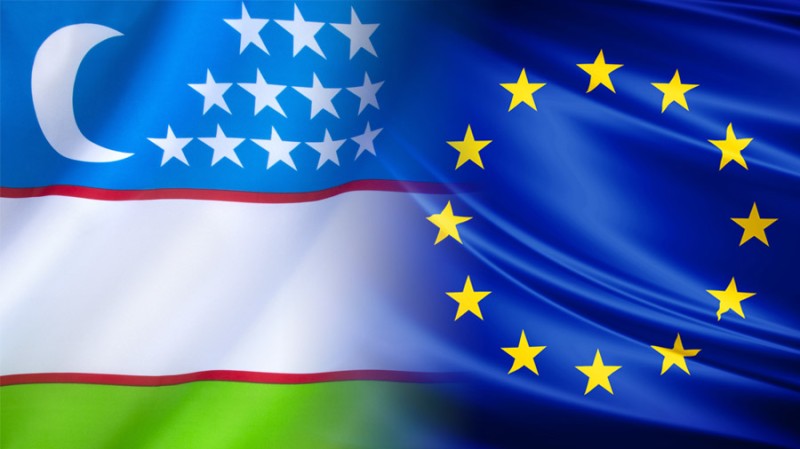
    The Ministry of Investment, Industry, and Trade of Uzbekistan hosted a high-level meeting with a European Commission delegation led by Pēteris Ustubs, Director for International Partnerships for the Middle East, Asia, and the Pacific. The talks focused on advancing joint initiatives and reinforcing bilateral cooperation under the EU’s Global Gateway strategy for 2017–2027, Trend reports.

    Key areas of discussion included joint projects in digital transformation, transport and logistics, and green energy development in Uzbekistan. Both sides reaffirmed their commitment to enhancing economic collaboration through strategic, sustainable investments.

    The meeting also addressed logistical and organizational preparations for two major upcoming events: the Third European Union – Central Asia Economic Forum and the Tashkent International Investment Forum. These forums, to be hosted in Uzbekistan later this year, will gather participants from countries along the Trans-Caspian Corridor and aim to boost regional economic integration and development.

  • Uzbekistan Participates in Second C5+1 Critical Minerals Dialogue with the United States

    Uzbekistan Participates in Second C5+1 Critical Minerals Dialogue with the United States

    The latest round of the C5+1 Critical Minerals Dialogue—bringing together Central Asian countries and the United States—was recently held in an online format for the second time. The initiative is aimed at deepening cooperation in the field of critical minerals vital to industrial development.

    Representing Uzbekistan were officials from the Ministry of Mining and Geology, led by Deputy Minister R. Yusupov, along with representatives of the Uzbek State Enterprise for Technological Metals. During the session, the Central Asian states put forward several proposals to strengthen ties with the U.S. regarding the exploration, development, and supply of critical minerals.

    Participants also presented new investment projects aimed at fostering greater economic and strategic collaboration in the resource sector. The dialogue highlighted the region’s potential as a future supplier of key minerals crucial to the global transition toward clean energy and advanced technologies.

  • Europe’s Lithium Paradox: New Documentary Explores EU’s Critical Mineral Dilemma

    Europe’s Lithium Paradox: New Documentary Explores EU’s Critical Mineral Dilemma

    A new documentary, Europe’s Lithium Paradox, produced by Storyrunner and SIM² KU Leuven and distributed by Journeyman Pictures, delves into the European Union’s struggle to secure a sustainable and self-sufficient supply of lithium—a metal essential for electric vehicle batteries and renewable energy storage.

    Despite possessing significant lithium reserves, Europe lacks operational mines and remains heavily dependent on imports, particularly from China. The film investigates the challenges hindering the development of domestic lithium mining, including slow permitting processes and opposition from environmental groups.

    Featuring insights from policymakers, industry experts, and civil society representatives, the documentary examines key projects across the continent, such as Serbia’s Jadar mine and Portugal’s Mina do Barroso. It also addresses the broader implications of Europe’s reliance on external sources for critical raw materials and explores potential pathways toward a more resilient and environmentally conscious supply chain.