Website: Eurasia.com

  • Vast Resources Signs MoU with Tajik Ministry at UK-Tajikistan Mining Forum

    Vast Resources Signs MoU with Tajik Ministry at UK-Tajikistan Mining Forum

    Vast Resources plc, an AIM-listed mining company, announced its active participation in the Tajikistan-UK Mining Forum held yesterday at the London Stock Exchange. The event served as a platform to reinforce bilateral ties between the United Kingdom and Tajikistan while spotlighting the investment potential within Tajikistan’s mining sector.

    During the forum, Vast Resources signed a non-binding Memorandum of Understanding (MoU) with the Ministry of Industry and New Technologies of the Republic of Tajikistan. The agreement outlines a framework for cooperation aimed at identifying both historical and greenfield exploration opportunities for non-ferrous and strategic mineral deposits.

    A notable element of the MoU includes plans to jointly develop a “Tajik Mineral Investment Fund” to facilitate growth in Tajikistan’s mining industry. The agreement remains in effect until 19 May 2026. Vast Resources confirmed that any material developments arising from the MoU will be disclosed as they occur.

  • Tajikistan-UK Mining Forum: Keynotes at the London Stock Exchange

    Tajikistan-UK Mining Forum: Keynotes at the London Stock Exchange

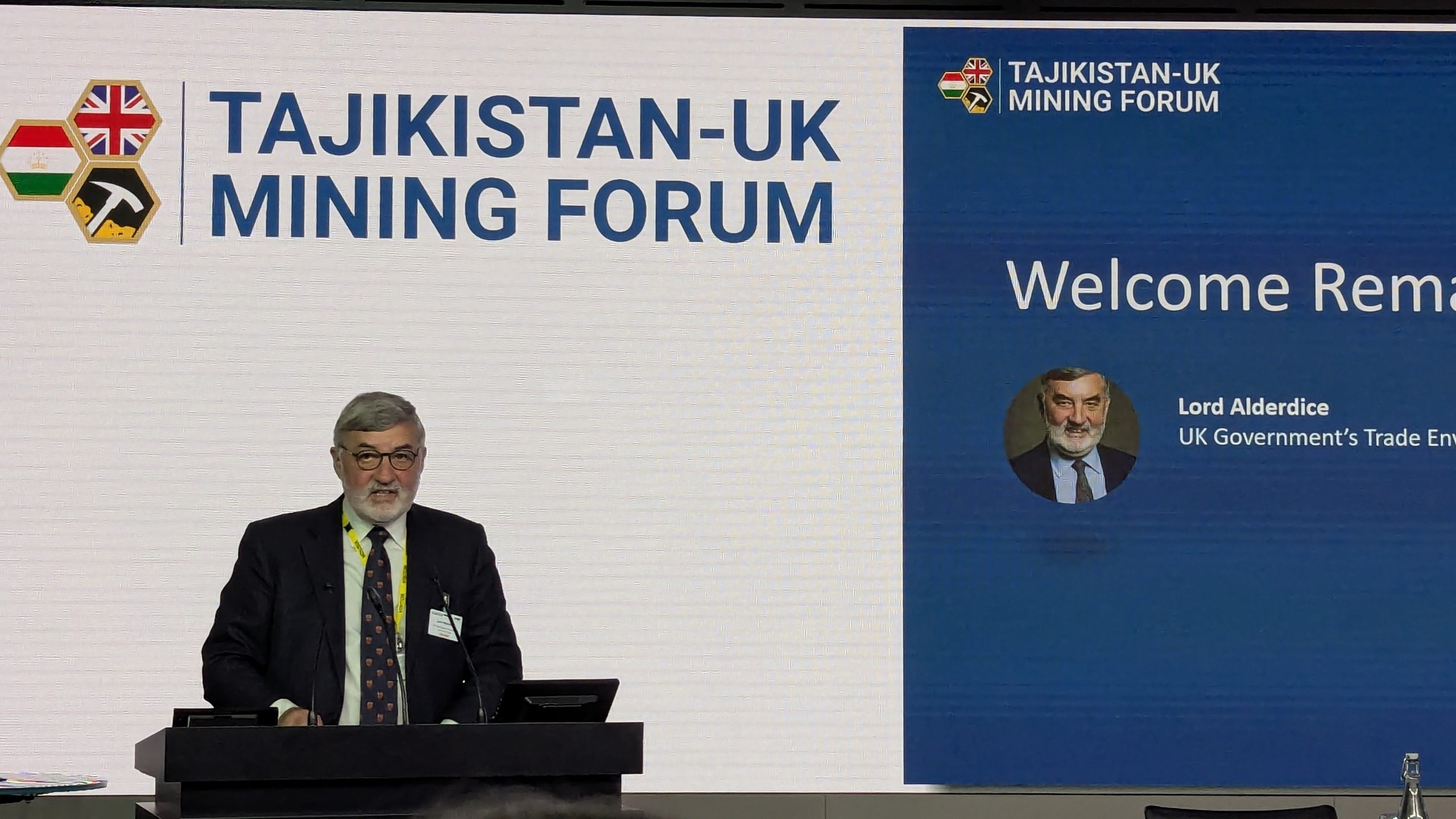
    The Tajikistan-UK Mining Forum, held at the London Stock Exchange on 19th May, brought together key figures to discuss the immense potential of Tajikistan’s mining sector and foster stronger bilateral ties with the UK. The event featured insightful keynote speeches from high-ranking officials, highlighting opportunities for investment, sustainable development, and collaborative partnerships.

    Ambassador H.E. Mrs. Rukhshona Emomali: A Vision for Growth

    H.E. Mrs. Rukhshona Emomali, Ambassador Extraordinary and Plenipotentiary of Tajikistan to the UK, opened the keynote session, emphasising Tajikistan’s rich, largely untapped mineral wealth. She highlighted the nation’s significant reserves of gold, silver, antimony, lead, and other valuable minerals, positioning Tajikistan as a potential key player in the global mining landscape.

    Under the leadership of its President Emomali Rahmon, the Tajik government is committed to the sustainable development of its mining sector. This includes modernising its regulatory framework and creating a favourable investment climate, with transparency, environmental responsibility, and innovation at the core of its approach. The Ambassador stressed that Tajikistan is seeking not just investment, but committed partners to help build a modern, responsible, and competitive mining industry for the benefit of its people and the international community.

    Lord Alderdice: UK’s Commitment to Responsible Mining

    Lord Alderdice, the UK Government’s Trade Envoy to Azerbaijan and Central Asia, spoke on behalf of the UK government, expressing his delight at the burgeoning partnership with Tajikistan. As the newly appointed UK Trade Envoy to Tajikistan, he underscored the vital importance of the mining sector in the bilateral relationship, recognising the significant scope for further collaboration.

    Lord Alderdice highlighted the UK’s outstanding capabilities across the entire mining and minerals value chain, from exploration and mapping to environmental management, engineering consultancy, and mining operations. Crucially, he emphasised the UK’s reputation as a leader in responsible mining, with fairness and transparency at the heart of its industry ethos. This commitment extends to engaging local communities, minimising environmental impacts, and protecting human rights. He noted that the London Stock Exchange, a gracious host for the forum, lists some of the world’s largest mining companies, solidifying the City of London’s role as a global centre for mining finance. He also pointed to the UK’s strength in research and development, spearheaded by universities like the Camborne School of Mines at the University of Exeter, the University of Birmingham, and the University of Manchester, all contributing cutting-edge expertise to the sector.

    Dr. Maggy Heintz: Geoscience for Sustainable Futures

    Dr. Maggy Heintz, Director of International Geoscience at the British Geological Survey (BGS), offered insights into the crucial role of geoscience in unlocking Tajikistan’s mineral potential responsibly. She highlighted Tajikistan’s rich geological diversity and strategic resources, including those critical for the global energy transition.

    Dr. Heintz stressed that unlocking this potential requires more than just extraction; it demands sustainable practices, science and data-driven decision-making, and robust international cooperation. As the world’s oldest geological survey organisation, BGS has a long history of sharing knowledge and strengthening capacity in geological science and data management worldwide. She expressed BGS’s commitment to listening, learning, and exploring ways to contribute to a sustainable, resilient, and economically inclusive future for Tajikistan’s mining sector.

    A significant development announced by Dr. Heintz was the renewal of a partnership between the British Geological Survey and the Tajik Main Department of Geology through a new Memorandum of Understanding (MoU). This MoU will build on previous successful collaborations, focusing on globally important geological challenges and ensuring the long-term sustainability of geological knowledge and data management within Tajikistan.

    The keynotes collectively painted a compelling picture of a promising future for the Tajikistan-UK mining partnership, founded on shared goals of economic growth, innovation, and sustainable development.

  • Tajikistan’s Minister Showcases Nation’s Mining Potential at London Stock Exchange Forum

    Tajikistan’s Minister Showcases Nation’s Mining Potential at London Stock Exchange Forum

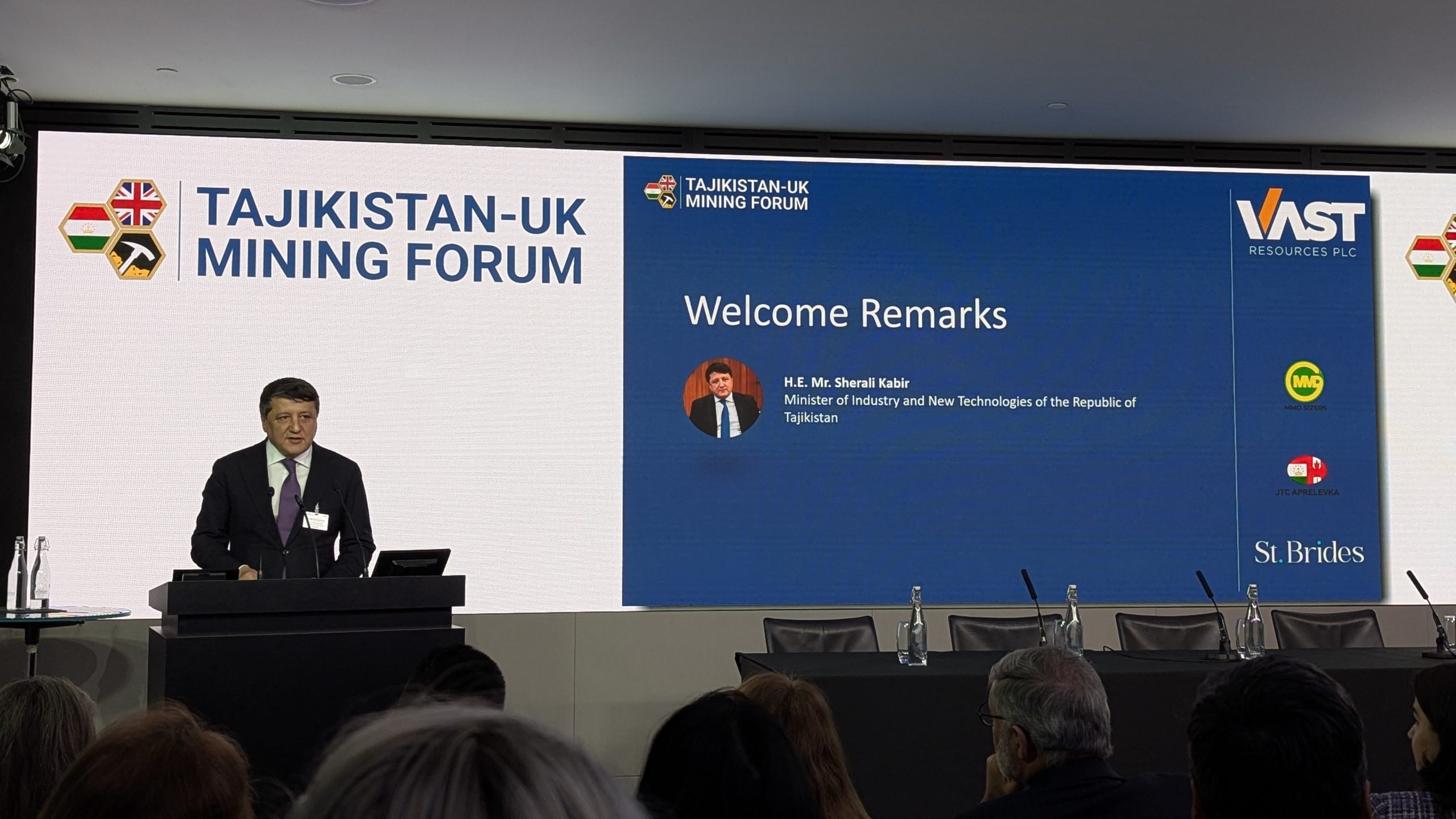
    His Excellency Sherali Kabir, Minister of Industry and New Technologies of the Republic of Tajikistan, delivered a compelling presentation at the Tajikistan-UK Mining Forum held yesterday at the London Stock Exchange. The high-profile event, which took place on 19 May 2025, highlighted the significant investment opportunities within Tajikistan’s rapidly developing mining sector.

    Mineral Wealth and Strategic Resources

    In his address, Minister Kabir emphasised Tajikistan’s extensive mineral resources, noting that the country currently extracts over fifty types of raw materials from explored deposits. These include gold, silver, lead, antimony, tungsten, rare and scattered elements, precious and semi-precious stones, and rock salt.

    The Minister highlighted that Tajikistan possesses ten different types of strategic metals and minerals that feature on the critical resources lists of China, the European Union, the United States, and the United Kingdom. These include copper, aluminium, lithium, zinc, antimony, chlorite, graphite, nickel, tungsten, and rare earth metals.

    “Dependence on critical raw materials may soon replace dependence on oil and gas,” Minister Kabir stated, emphasising the growing global demand for these resources due to international economic competition, industrialisation in developing countries, and ongoing transformations in the global economic order.

    Future Market Prospects

    Minister Kabir presented a strategic outlook for the critical minerals market, predicting substantial price increases for rare earth metals—potentially up to 1,000 percent by 2035—driven largely by the projected production of 140 million electric vehicles worldwide. Despite the current global market for rare earth metals being valued at only $15 billion annually, Tajikistan is positioning itself to become an integral part of new supply chains.

    “We are a country that possesses unique resources, and we believe we can be part of new supply chains. We will certainly use this opportunity,” the Minister asserted.

    Investment Framework and Government Support

    The Tajik government has established a robust investment framework that guarantees stability for mining projects. Minister Kabir explained that investment agreements include provisions ensuring that legislative changes will not affect approved projects during their operational period, thus mitigating fiscal risks for investors.

    “The task of our government is to ensure foreign investors feel comfortable in Tajikistan,” Minister Kabir stated, emphasising the government’s commitment to supporting international partners through active engagement and advocacy.

    Value-Added Production Strategy

    Looking ahead, Minister Kabir revealed that Tajikistan is moving away from the direct sale of raw mineral concentrates. The government has implemented a five-year programme using tariff regulation to encourage domestic processing of metals, aiming to create higher value-added products within the country.

    This strategic shift coincides with Tajikistan’s impressive economic growth, with an overall growth rate of approximately 8.5% and industrial sector expansion of 25% this year, following last year’s 20% increase.

    International Cooperation

    The forum also saw the signing of a non-binding Memorandum of Understanding between Vast Resources PLC, an AIM-quoted mining company that sponsored the event, and the Ministry of Industry and New Technologies of Tajikistan. The MoU establishes a framework for cooperation in identifying new exploration and exploitation targets for non-ferrous and strategic mineral deposits, as well as developing a “Tajik Mineral Investment Fund”.

    The Tajikistan-UK Mining Forum marked an important milestone in strengthening bilateral relations and showcasing the Central Asian nation’s growing significance in the global critical minerals supply chain.
  • Firing the Starting Gun: Turning Insight into Action in the Race to 2030

    Firing the Starting Gun: Turning Insight into Action in the Race to 2030

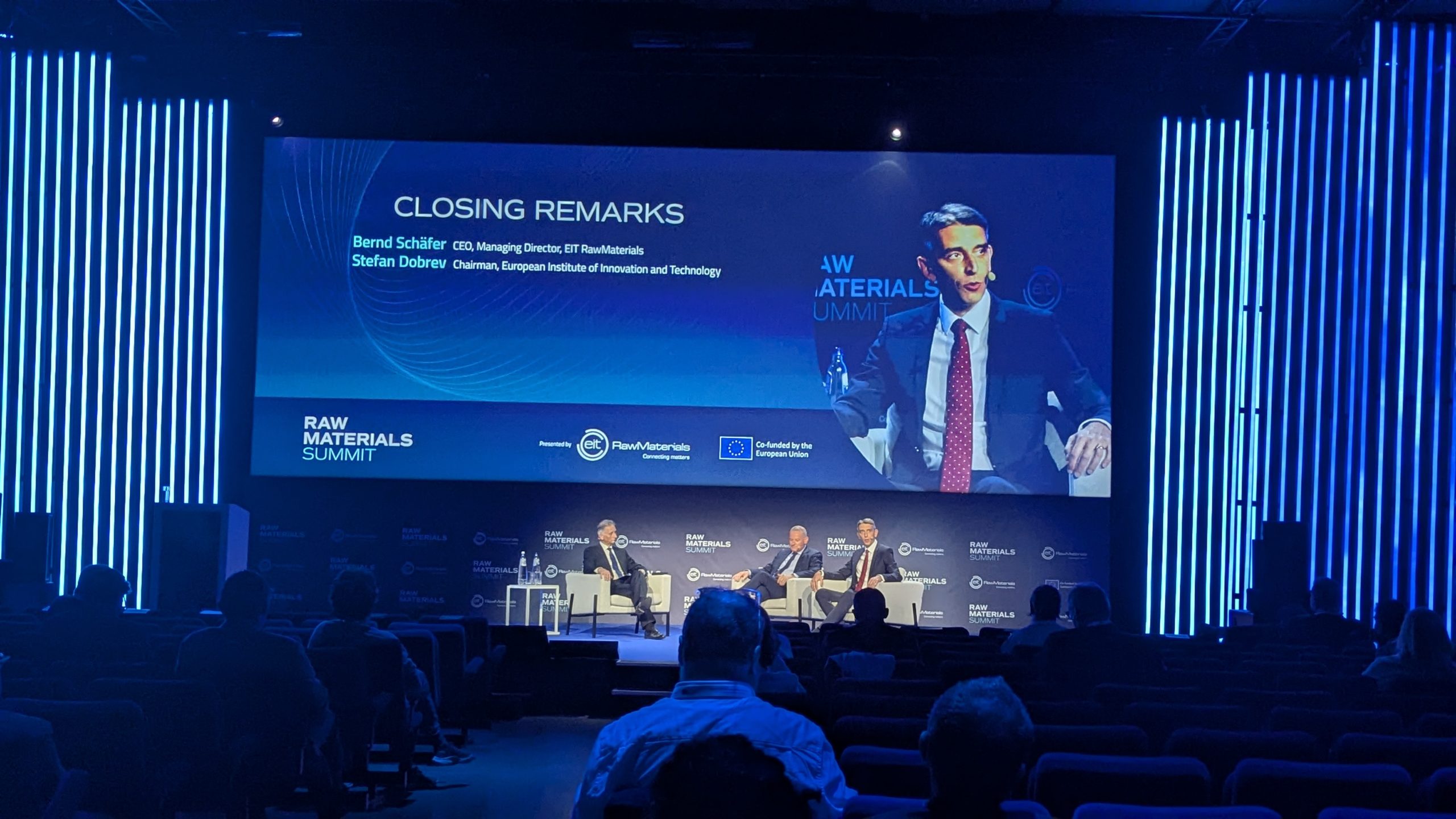
    As the seventh edition of the Critical Raw Materials Summit drew to a close in Brussels, a closing session posed a series of compelling questions to the audience—questions that go beyond policy declarations and dig deep into how Europe must act to secure its raw materials future.

    Moderated with thoughtfulness and energy by Peter Handley, the final panel brought together Stefan Dobrev (Chair, EIT Governing Board) and Bernd Schäfer (CEO, EIT RawMaterials) for a sharp and candid reflection. Here are some of the critical questions and takeaways that framed the conversation:

    -How do we turn knowledge into impact?
    Not just reports or roadmaps, but tangible benefits for citizens, companies, and Europe’s industrial resilience—transforming innovation into products, battery life, and economic value.

    -It’s time to rethink security not just in terms of weapons, but as a question of access—access to critical materials, supply chains, talent, and technology.

    -From cross-border partnerships to internal collaboration among stakeholders, building strong and flexible ecosystems emerged as a cornerstone for success.

    -Acting on foresight—rather than waiting for mandates—was framed as a key responsibility for innovation communities and industrial clusters.

    -Transparency, analytical rigour, and courage to act—especially when outcomes are uncertain—were named as critical success factors.

    -Redesigning supply chains, forging new international partnerships, and ensuring circularity demand risk-taking and creativity.

    Throughout the Summit sessions, a recurring theme was the call for courage—the courage to innovate, to collaborate, and to confront challenges with proactive solutions. Europe, it was said, must not wake up too late to the risks ahead. Strategic autonomy, competitiveness, and sustainability all depend on moving from insight to action.

    A few final reflections from the session:

    The Summit saw a stronger-than-ever presence from international partners and DGs across the European Commission. The CEO Roundtable with BloombergNEF marked a promising new format for high-level engagement on circularity.


  • Crossing the Valley of Death: Europe’s Raw Materials Start-up Ecosystem

    Crossing the Valley of Death: Europe’s Raw Materials Start-up Ecosystem

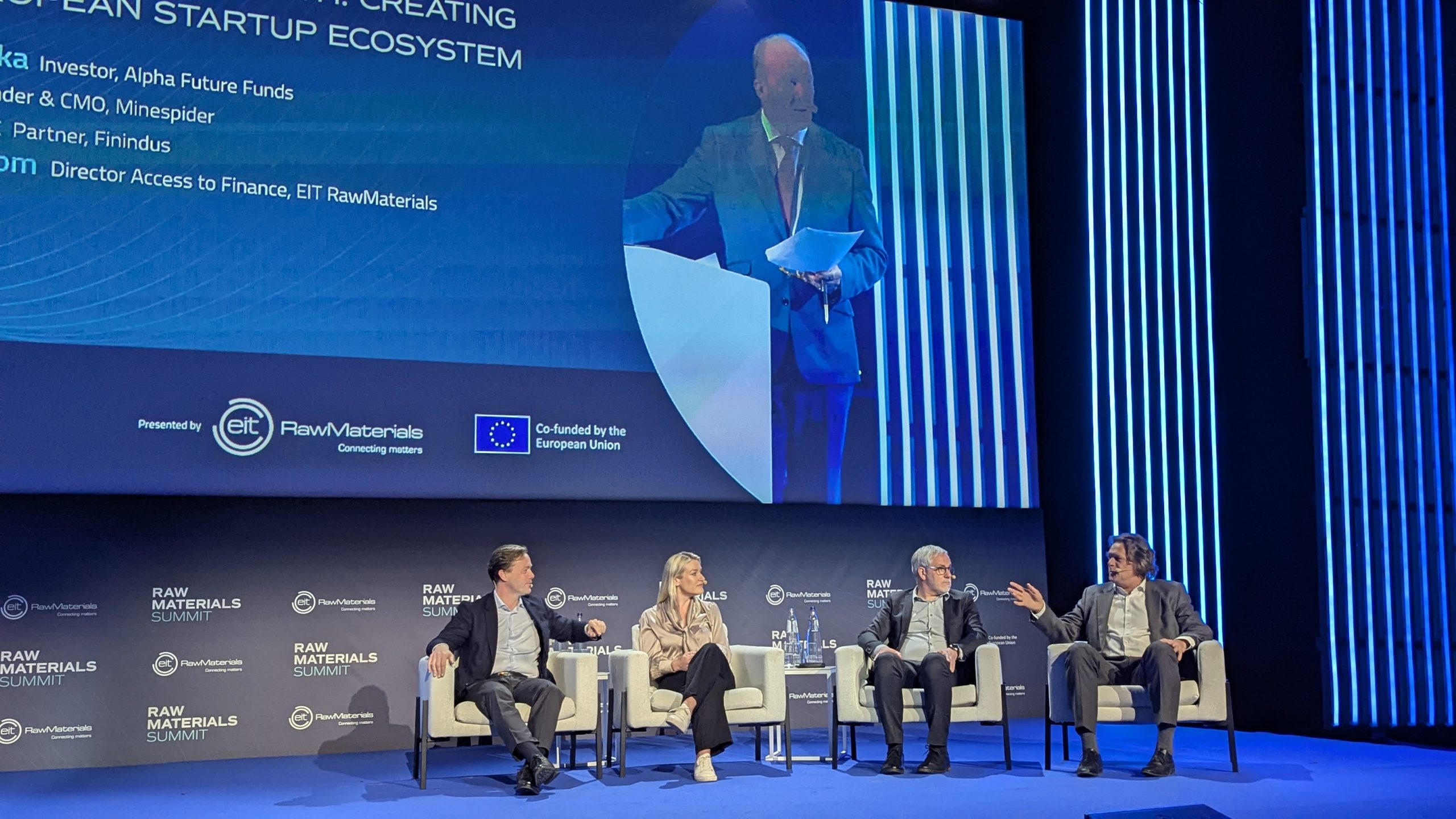
    At the EIT Critical Raw Materials Summit in Brussels on May 15, industry experts discussed the challenges facing Europe’s raw materials start-ups. The panel featured Antony Slotboom (EIT RawMaterials), Benedikt Sobotka (Alpha Future Funds), and Ella Cullen (Minespider), with David Eades moderating.

    Key insights included:

    – Europe has sufficient capital but lacks focus on the crucial development stage where start-ups are too small for banks but need more funding than typical VCs provide

    – The notorious “Valley of Death” affects many promising innovations that struggle to transition from early-stage development to market-ready solutions

    – Cultural differences with the US: European investors are more cautious, while US investors take bigger risks with larger funding tickets – “In the US, you might see a $27 million ticket from a family office – that’s not unusual”

    – Corporate partnerships are vital but challenging to secure: “It’s easier to get a cheque from a VC than a purchase order from a major corporate”

    – European start-ups must think globally from day one, seeking customers and investors internationally

    – The raw materials market is inherently global, with downstream clients often in Europe due to regulations, but upstream clients across Australia, Latin America, and Africa

    – Europe’s strength lies in collaboration networks between start-ups, corporates, and research institutions, but support must extend beyond initial phases

    Cullen shared Minespider’s experience: “We were fortunate to get Horizon 2020 and EIT RawMaterials funding, but the real challenge is scaling – building a fully functional solution and getting it to market.”

    Sobotka concluded: “We need to move beyond the mindset that every junior mining company must become a major. Sometimes, it’s about building a portfolio and accepting that not every venture will succeed – but the ones that do can pay for the rest.”

    The panel called for a more risk-tolerant investment culture and greater ecosystem collaboration to help European raw materials start-ups compete globally.

    hashtagEITSummit hashtagRawMaterials hashtagInnovation hashtagStartups hashtagVentureCapital hashtagSustainability

  • Europe’s Critical Raw Materials Race: 20 Years Behind, But Not Too Late.

    Europe’s Critical Raw Materials Race: 20 Years Behind, But Not Too Late.

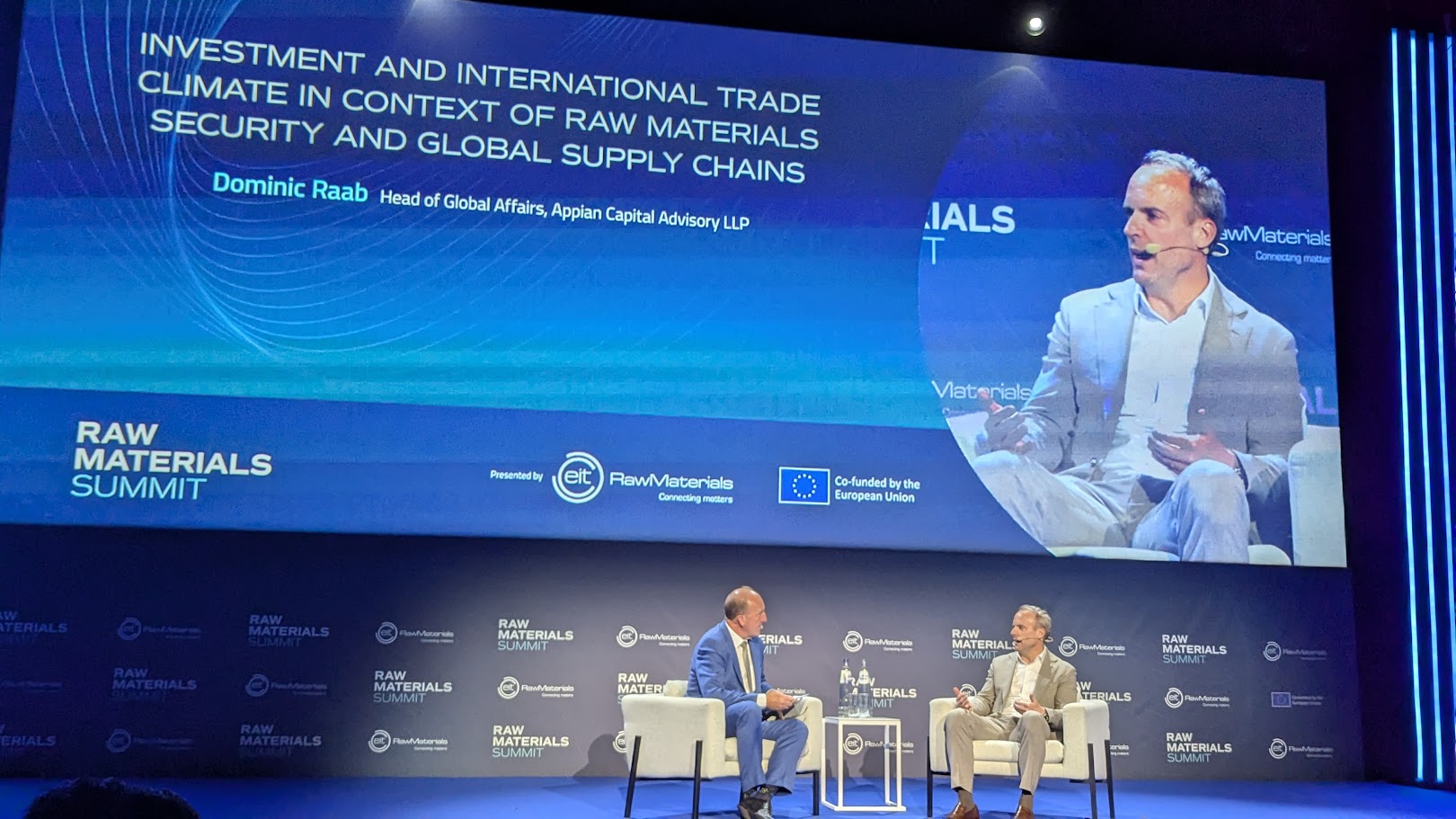
    On 14 May, MINEX Forum had an opportunity to attend a fireside chat with the Right Honourable Dominic Raab—former UK Foreign Secretary and Deputy Prime Minister—at the EIT Critical Raw Materials Summit in Brussels.

    Raab offered a frank and sobering assessment: Europe is two decades behind China in industrial strategy and supply chain resilience when it comes to critical raw materials.

    He pointed to China’s head start and dominant position in the critical minerals market—not only in extraction but across the entire value chain including processing, refining, and end-product manufacturing. In stark contrast, Europe remains highly fragmented, slow-moving, and unclear in governance when it comes to critical materials strategy.

    What stood out most? His call for “friendshoring.”

    Raab emphasised that the West—particularly Europe—must look beyond its borders and proactively build strategic partnerships with non-EU countries across Africa, South America, the Middle East, and Asia. These partnerships should not only secure access to raw materials, but also enable co-investment in local processing and infrastructure—an offer that goes beyond extraction and addresses shared economic development.

    He noted: “We’ve got to start making better offers. Because China already is.”

    Key takeaways from the session:

    The urgency is real. We are not only in a resource competition but a geopolitical one.

    Friendshoring isn’t charity—it’s smart economics and strategic security.

    Europe must move from policy poetry to delivery prose. Governance, coordination, and speed are now strategic assets.

    Creating clear points of contact and leadership across member states is essential to attracting investment and building trust with global partners.

    This is not a race we can afford to lose—and catching up demands bold, collaborative moves.

  • Uzbekistan Explores Cooperation with Utah in Mining and Geological Sectors

    Uzbekistan Explores Cooperation with Utah in Mining and Geological Sectors

    On May 16, 2025, First Deputy Minister of Mining Industry and Geology, O. Nasritdinhojaev, along with representatives from the Ministry, met with delegation from the U.S. state of Utah.

    During the meeting, the parties discussed the ongoing reforms in Uzbekistan’s mining sector, the investment opportunities being created, and explored prospects for cooperation in investments, advanced technologies, and scientific research, considering Utah’s economic potential and its advanced expertise in the mining and geological fields.

    Additionally, both sides exchanged views on improving the qualifications of lecturers and students of the University of Geological Sciences under the Ministry of Mining Industry and Geology. Discussions also included the possibility of opening branches of Utah-based universities specializing in geology and mining—such as the University of Utah and Utah State University—in Uzbekistan.

  • Kazakhstan Faces Geologist Shortage Due to Gap in Specialist Training

    Kazakhstan Faces Geologist Shortage Due to Gap in Specialist Training

    Kazakhstan is experiencing a severe shortage of geologists due to a long pause in the development of the profession. This was reported by Margulan Baibatyrov, Deputy Chairman of the Committee of Geology at the Ministry of Industry and Construction, according to Kazinform News Agency.

    According to him, despite the high salaries and the prestige of the profession, there was a period in Kazakhstan’s geological exploration history when the work of geologists was not in demand. This led to a significant gap of about 30 years between generations of specialists.

    The exact number of geologists currently needed in the country was not specified, but Baibatyrov noted that all graduates from universities specializing in this field are successfully employed.

    The issue of the shortage of qualified geologists was previously raised by Rashid Zhaksylykov, Chairman of the Board of the Association of Legal Entities “Union of Oilfield Service Companies of Kazakhstan.” In an interview with Kazinform in March 2025, he emphasized the need to intensify the training of specialists in this area.

  • Anglo Asian Mining Begins Production at Gilar Underground Mine in Azerbaijan

    Anglo Asian Mining Begins Production at Gilar Underground Mine in Azerbaijan

    Anglo Asian Mining PLC (AIM: AAZ) has commenced production at its Gilar underground mine, situated within the Gedabek site in Azerbaijan. The company targets an output of approximately 2,000 tonnes of ore per day, with expectations to ramp up to a monthly production rate of 50,000 to 60,000 tonnes.

    A maiden JORC mineral resource estimate released on December 11, 2023, revealed that the Gilar deposit holds 6.10 million tonnes of mineralisation. The average grades include 0.88% copper—equating to nearly 54,000 tonnes of copper—and 1.30 grams of gold per tonne, totaling over 255,000 ounces of gold.

    Following the announcement, shares of Anglo Asian Mining rose by 7% in London, bringing the company’s market value to £169.9 million ($226.9 million).

    In 2024, Anglo Asian produced 16,760 gold-equivalent ounces, although production faced disruptions due to a partial environmental shutdown. Operations resumed by the end of the year.

    The company plans to evolve into a multi-asset, mid-tier copper and gold producer by 2029, with copper becoming its primary product. As part of its growth strategy, Anglo Asian intends to bring four new mines into production between 2025 and 2029: Gilar, Zafar, Xarxar, and Garadag.

  • Navoi Mining Secures $500M Eurobond Placement Ahead of IPO

    Navoi Mining Secures $500M Eurobond Placement Ahead of IPO

    Navoi Mining & Metallurgical Company (NMMC) has successfully completed a $500 million corporate bond placement in London, marking a significant step in its financial strategy as it prepares for a stock listing.

    The Uzbekistan state-owned enterprise, ranked as the fourth-largest gold producer globally, operates its vast resources primarily from the Muruntau deposit in the Kyzylkum Desert, which holds an estimated 150 million ounces of gold.

    The newly issued bonds, backed by favourable capital market conditions, carry a five-year tenor with an annual coupon rate of 6.75%. The offering was made available under Regulation S and Rule 144A of the US Securities Act, ensuring broader investor participation.

    Leading financial institutions, including Citi, JP Morgan, Société Générale, and MUFG, acted as joint bookrunners and lead managers for the transaction. Demand for the notes was robust, peaking at over $2.3 billion, making the issue more than 4.6 times oversubscribed.

    “The success of this bond placement reflects strong investor confidence in Uzbekistan’s economic reforms and NMMC’s sustainable growth prospects,” the company said in a statement.

    The proceeds will be directed towards optimising and diversifying NMMC’s credit portfolio under improved terms, as it moves towards its planned initial public offering (IPO) later this year. The Uzbek government has proposed selling up to 5% of the company in the IPO, positioning NMMC for further expansion in international markets.