Website: Asia.com

  • Kazakhstan Development Bank Launches $1 Billion Program to Finance Rare and Critical Minerals Projects

    Kazakhstan Development Bank Launches $1 Billion Program to Finance Rare and Critical Minerals Projects

    The Development Bank of Kazakhstan (DBK), a subsidiary of the national holding Baiterek, has announced a new $1 billion financing program to support projects in the extraction and processing of rare, rare earth, and critical materials for the period 2025–2030.

    The initiative is designed to become a key financial instrument for advancing high-tech industries in the country’s mining and metallurgical sector, in line with the strategic course set by Kazakhstan’s President to boost domestic value-added production.

    The program aims to support medium and large enterprises implementing investment projects in sectors deemed strategically important to Kazakhstan’s economy.

    Among its main features are a minimum loan threshold of 5 billion tenge (in any currency — dollars, euros, yuan, etc.), loan terms of up to 20 years, the abolition of financing arrangement and modification fees, and the inclusion of grace periods for borrowers.

    DBK emphasized that the program’s relevance stems from the strategic role of rare and critical materials in diversifying Kazakhstan’s industrial base and integrating the nation into global value and trade chains. It also contributes to the objectives of the Comprehensive Development Plan for the Rare and Rare Earth Metals Industry (2024–2028).

    The launch of this program reflects the Bank’s strategic focus on supporting new growth drivers in the economy,” said Marat Yelibayev, Chairman of the Management Board of the Development Bank of Kazakhstan. “We are creating conditions for Kazakhstan to become a producer of high value-added products. This will help build new technological chains, enhance the competitiveness of domestic industry, and strengthen the country’s position in the global critical materials market.”

    Financing will target projects within the metallurgical industry, including mining and metallurgical complexes with processing capacity. Borrowers must confirm mineral reserves under the JORC international code. Eligible materials include rare earth elements (lanthanides, scandium, yttrium) and critical materials such as lithium, cobalt, tungsten, germanium, gallium, and graphite, all essential for high-tech industries, green energy, and electronics.

    The program is expected to stimulate technological and industrial development, expand DBK’s portfolio of long-term projects in high-tech sectors, and enhance the sustainability of financial flows. For Kazakhstan’s economy, it promises to create new jobs, increase exports of value-added products, promote domestic raw material processing, and consolidate the country’s role as a reliable global supplier of rare and critical materials.
  • Kazakhstan’s Untapped Tungsten Reserves Draw U.S. Interest in Strategic Mining Deal

    Kazakhstan’s Untapped Tungsten Reserves Draw U.S. Interest in Strategic Mining Deal

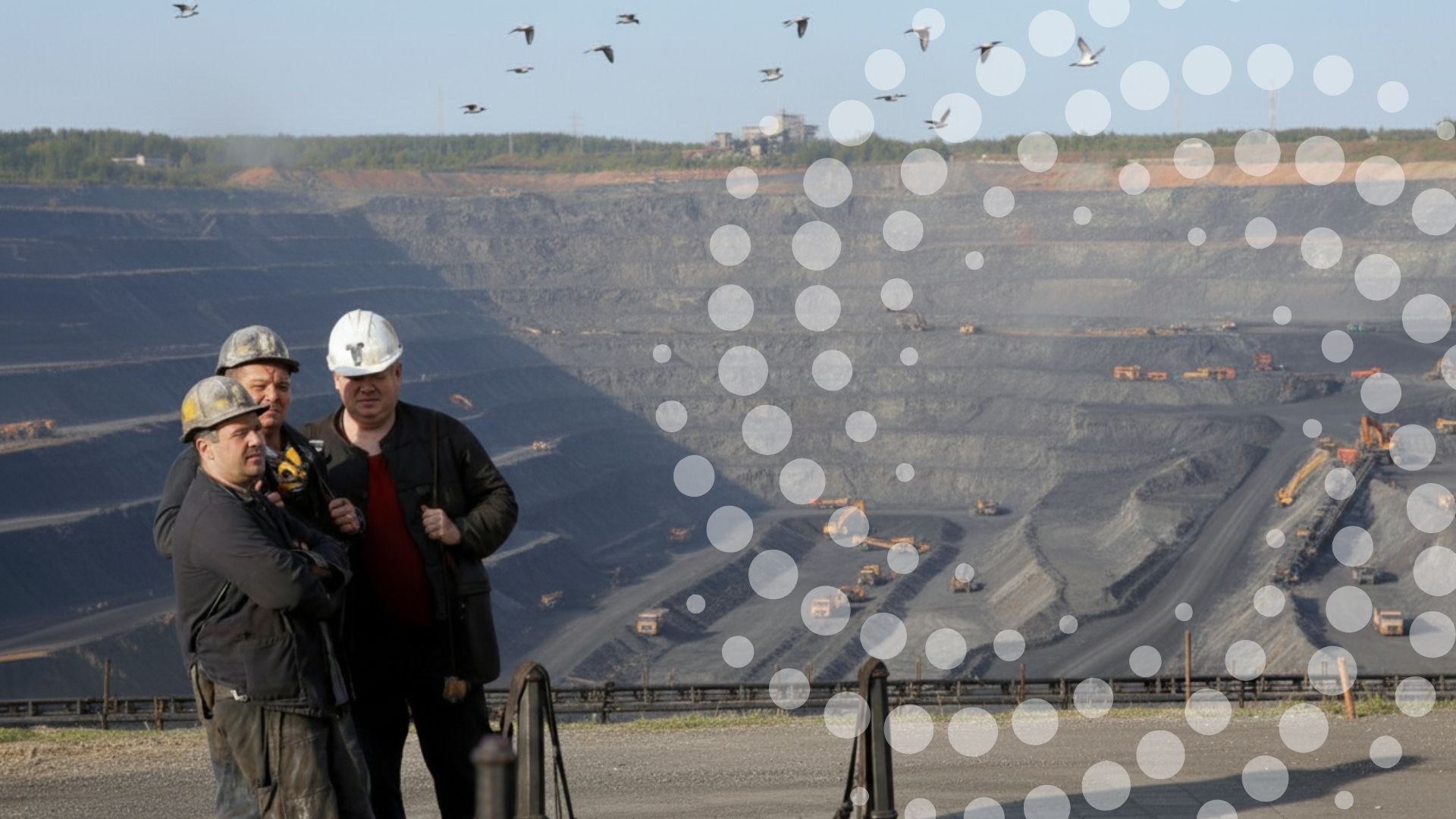
    Kazakhstan’s sweeping steppes may soon become the focal point of a global shift in critical mineral supply chains. With an estimated 2 million tons of untapped tungsten reserves, the Central Asian nation is emerging as a potential powerhouse in a market vital to defense, clean energy, and advanced manufacturing. Ongoing negotiations between Washington and Astana could lead to the first large-scale, U.S.-backed tungsten mining operation in the region, underscoring Western efforts to reduce dependence on Chinese-controlled supply chains.

    Kazakhstan’s Tungsten Wealth: A Strategic Resource Reawakens

    Two massive deposits — Upper Kairaktinskoye and North Katpar in the Karaganda region — anchor Kazakhstan’s tungsten potential. Industry insiders estimate the sites are worth billions of dollars and could sustain production for up to four decades. While the U.S. Geological Survey (USGS) does not list Kazakhstan among the top tungsten holders, the country’s own geological data points to reserves exceeding 2 million tons, suggesting international underreporting of Central Asia’s mineral wealth.

    Kazakhstan’s sovereign wealth fund, Samruk-Kazyna, has described these sites as the world’s most desirable undeveloped tungsten deposits and is actively soliciting bids from foreign investors.

    From Dormancy to Development

    Tungsten mining in Kazakhstan halted more than 30 years ago following the Soviet Union’s collapse, as infrastructure decay, capital flight, and regulatory uncertainty halted operations. That long pause has left enormous reserves untouched — a rare opportunity for new investment at a time when global tungsten demand continues to climb.

    Strategic Importance of Tungsten

    Tungsten’s exceptional hardness, density, and heat resistance make it irreplaceable in defense and high-tech industries. It is a critical component in ammunition, projectiles, armor-piercing shells, and advanced weapon systems, earning a place on the U.S. Geological Survey’s list of critical minerals. The Pentagon’s Defense Logistics Agency identifies tungsten as a material of strategic importance, with supply disruptions posing potential risks to U.S. defense manufacturing and economic stability.

    Key Players in a High-Stakes Negotiation

    The leading U.S. contender, Cove Kaz Capital Group LLC, has positioned itself at the center of the negotiations. Building on its 2025 partnership with Kazakhstan’s JSC Qazgeology on rare earth exploration, Cove Kaz Capital aims to establish majority control of the tungsten venture while ensuring Kazakhstan retains a significant profit share.

    The company’s responsibilities would include mine development, local processing infrastructure, and export logistics, with a commitment to technology transfer and workforce development within Kazakhstan.

    For Samruk-Kazyna, the deal aligns with national goals of diversifying the economy, modernizing the mining sector, and expanding export markets beyond traditional partners like Russia and China. The fund’s competitive tendering process has attracted multiple international bidders, ensuring Kazakhstan maximizes both revenue and strategic leverage.

    U.S. Government’s Direct Role

    The unusual direct involvement of U.S. Commerce Secretary Howard Lutnick in the negotiations underscores the project’s geopolitical weight. Washington views the partnership as part of a wider strategy to secure critical mineral supply chains and implement former President Trump’s executive order prioritizing access to strategic materials such as tungsten.

    For the U.S., success in Kazakhstan could represent a decisive step toward reducing vulnerability to supply shocks and strengthening control over critical materials vital to both defense and green technologies.

  • EU Sounds Alarm Over China’s Rare Earth Export Controls, Prepares New ReSourceEU Plan

    EU Sounds Alarm Over China’s Rare Earth Export Controls, Prepares New ReSourceEU Plan

    Brussels and Washington have been put on high alert following China’s announcement of new restrictions on rare earth exports and related technologies — a move that threatens to disrupt the global supply of critical raw materials essential for clean energy and advanced industries. Although a recent tariff deal between Donald Trump and Xi Jinping reportedly delayed the implementation of those restrictions by a year, European leaders are bracing for potential economic shockwaves.

    Speaking at the Berlin Global Dialogue on October 25, European Commission President Ursula von der Leyen warned that the EU “is ready to use all of the instruments in our toolbox to respond if needed.” The Commission’s immediate priority remains finding “solutions with our Chinese counterparts,” she said, but von der Leyen made clear that Brussels will not hesitate to take coercive countermeasures if Europe’s industrial security is threatened.

    Von der Leyen compared Beijing’s export restrictions to Moscow’s former energy leverage, describing China’s dominance in rare earth supply chains as a “significant risk” and a “threat to the stability of global industries.” More than 90% of Europe’s consumption of rare earth magnets — critical for sectors from automotive and defense to AI and aerospace — comes from China.

    To defend against possible coercion, the EU may invoke its so-called anti-coercion instrument, dubbed the European “bazooka,” which came into force in December 2023 but has yet to be used. The mechanism would allow Brussels to impose retaliatory tariffs, restrict trade in services and intellectual property, and limit access to European investment and procurement markets in response to deliberate economic pressure from foreign powers.

    At the same time, the European Commission is finalizing a new initiative — ReSourceEU — modeled on the 2022 RePowerEU energy plan. Its goal is to secure stable access to critical raw materials in the short, medium, and long term by boosting recycling, promoting collective purchasing, creating strategic reserves, and developing new partnerships with resource-rich countries including Ukraine, Australia, Canada, Kazakhstan, Uzbekistan, Chile, and Greenland.

    Just a day earlier, the EU signed an enhanced partnership agreement with Uzbekistan, expanding cooperation on resource security and trade.

    Meanwhile, European Council President Antonio Costa raised the issue directly with Chinese Premier Li Qiang during a bilateral meeting at the ASEAN summit in Kuala Lumpur. Costa stressed “the importance of constructive and stable relations with China” while expressing “strong concern” over Beijing’s export controls. He urged China to “restore smooth, reliable, and predictable supply chains as soon as possible.”

    The escalating tensions underscore Europe’s growing vulnerability in the global competition for raw materials — and the delicate balancing act Brussels must perform between economic pragmatism and strategic autonomy.

  • Kazakhstan Tightens Mining Code to Combat Illegal Extraction and Strengthen Investor Accountability

    Kazakhstan Tightens Mining Code to Combat Illegal Extraction and Strengthen Investor Accountability

    Kazakhstan is introducing stricter rules on subsoil use as part of an updated version of its Mining and Subsoil Code, aiming to increase accountability for financial obligations and curb illegal mineral extraction. The new draft, presented to the Mazhilis by Deputy Minister of Industry and Construction Iran Sharkhan, proposes several key reforms, LS reports.

    Under the revised Code, auction winners will be required to pay signing bonuses before receiving their mining licenses. Failure to do so will result in a five-year ban on both the company and its beneficiaries, preventing them from applying for new subsoil rights or acquiring such rights from third parties. According to Sharkhan, this measure is intended to eliminate abuse and make investor participation more transparent.

    The amendments also introduce tough penalties for covert mineral extraction disguised as pilot industrial mining. Any such violations will now result in the immediate revocation of exploration licenses. To improve oversight, the government plans to impose strict operational thresholds — for instance, removing or relocating more than 1,000 cubic meters of soil or rock will only be permitted if clearly justified by project needs.

    Additionally, the separation of industrial-innovation projects from subsoil operations will be prohibited to prevent the misuse of exploration licenses for commercial mining activities.

    Sharkhan noted that in 2025–2026, authorities plan to inspect 440 sites for signs of illegal extraction. To date, 300 areas have already been reviewed, revealing seven cases where unauthorized mining was detected.

    Another key aspect of the reform is the transition to electronic documentation. Applications for mining licenses will now be submitted via a unified digital platform that includes an interactive map of exploration sites available for development — part of a broader effort to streamline administration and boost transparency in Kazakhstan’s extractive sector.

  • Tajikistan and South Korea to Create Joint Tungsten Supply Chain

    Tajikistan and South Korea to Create Joint Tungsten Supply Chain

    A memorandum of understanding (MoU) was signed in Dushanbe between Tajikistan’s Ministry of Industry and New Technologies and South Korean company GB Innovation (GBI) to establish a joint tungsten supply chain — a strategically important mineral for high-tech industries. The document provides for the joint development of the Maikhura tungsten deposit and the creation of a full production cycle, from raw material extraction to finished products. The signing took place during the Dushanbe Investment Forum, in a ceremony overseen by Tajik President Emomali Rahmon.

    Minister of Industry and New Technologies Sherali Kabir stated that the Maikhura project would become a model of mutually beneficial cooperation, promoting Tajikistan’s industrialization and strengthening economic ties with South Korea. Under the agreement, GB Innovation and the state-owned company TALCO plan to reach an annual output of 4,000 tons of tungsten concentrate within three to four years. The concentrate will be processed locally into tungsten oxide and tungsten carbide for use in domestic industries.

    Tungsten is a key component in high-tech sectors such as semiconductor production, defense, rechargeable batteries, automotive manufacturing, and aerospace. Establishing a stable tungsten supply chain is of strategic importance to South Korea, which aims to secure self-sufficiency in this critical mineral. The Maikhura mine stands out for its high tungsten content—1.0%, five times the global average of 0.2%. Combined with production from South Korea’s Uljin Ssangjeon mine, the total output will reach about 5,000 tons per year, nearly covering South Korea’s annual domestic demand of 3,400 tons.

    GB Innovation President Kim Young-woo emphasized the importance of stable supply chains for strategic minerals and expressed readiness to expand cooperation to other resources, including rare earth elements and lithium. Minister Kabir highlighted that the Maikhura project represents a key step toward Tajikistan’s industrialization and the establishment of sustainable supply chains for strategic resources.

    Investment Commissioner Rahim Joda announced that the government would provide over 200 investment and tax incentives to ensure the project’s success. The initiative aims to build a full-cycle local value chain—from mining to processing and production—within Central Asia, enhancing competitiveness and ensuring supply stability in the global market.

    Tajikistan currently accounts for around 20% of global antimony production and possesses significant reserves of rare earth elements and lithium, solidifying its role as an emerging resource hub in Central Asia.

  • Tajikistan Aims to Become a Key Producer of Critical Metals for the Green Transition

    Tajikistan Aims to Become a Key Producer of Critical Metals for the Green Transition

    Tajikistan holds reserves of ten out of twelve metals essential for the global green transition and is actively developing their production, Minister of Industry and New Technologies Sherali Kabir announced on October 14 at the Dushanbe – 2025 International Investment Forum. According to the minister, six of these critical metals are already being produced domestically, with plans to further expand operations and integrate into the new global supply chain of rare earth elements.

    Critical metals, such as those used in solar and wind power systems as well as electric vehicles, are vital to green technologies. Kabir highlighted that during the Soviet era, only three plants in the entire USSR produced rare earth metals—two of them located in Tajikistan and one in Russia. Negotiations are currently underway with several international companies to modernize these facilities. “I am confident that in the near future we will see very good results,” Kabir said.

    Special focus has been placed on elements like antimony and stibnite, which play an important role in the green transition. “Tajikistan ranks second in the world in terms of antimony reserves,” Kabir noted, adding that four antimony plants are currently under development, ranging from feasibility studies to active construction stages.

    The minister also reported that Tajikistan has launched copper production—a key metal for the green economy—and plans to significantly increase output by attracting investment. Gold production is growing at around 20% annually, while the country also possesses large reserves of nickel and lithium. “We will be the first country in the CIS to produce lithium,” Kabir declared.

    Enterprises such as Azot and TALCO Gold are being positioned not only as regional leaders but as integral players in the global critical metals market. State programs are already in place to develop the mining sector, with Kabir expressing confidence that Tajikistan will soon secure a prominent place in the international market for metals vital to the green transition.

    He emphasized that international cooperation remains the main driver of growth for the metallurgical industry and that establishing new supply chains for rare earth and critical metals is essential to stabilizing global markets. The country’s president has made rapid industrialization a national priority—an approach that has already doubled Tajikistan’s industrial output over the past five years.

  • Trump Team Pushes for U.S. Access to Major Tungsten Deposits in Kazakhstan

    Trump Team Pushes for U.S. Access to Major Tungsten Deposits in Kazakhstan

    According to Bloomberg, former U.S. President Donald Trump’s team is seeking to secure mining rights in Kazakhstan for Cove Capital, an American company aiming to develop some of the world’s largest untapped tungsten deposits. The negotiations involve the Kazakh-American joint venture Cove Kaz Capital and Kazakhstan’s sovereign wealth fund Samruk-Kazyna, with U.S. Commerce Secretary Howard Lutnick reportedly taking part in the talks.

    The project may receive financial backing from the U.S. International Development Finance Corporation (DFC) and the Export-Import Bank of the United States (Exim Bank). Sources indicate that Washington is particularly interested in developing the Verkhne-Kairaktinskoye and Severo-Katparskoye deposits located in Kazakhstan’s Karaganda region—assets valued at several billion dollars.

    Cove Kaz Capital has been in discussions with Samruk-Kazyna for several months, Bloomberg reports. However, the American firm faces competition from a Chinese state-owned company that has offered a price exceeding the market value for the same assets.

    The United States classifies tungsten as a critical mineral essential for national security and industrial applications. Under the proposed plan, Cove Kaz Capital and Samruk-Kazyna would jointly extract the ore in Kazakhstan, process it locally, and then export the finished metal to the U.S. for use in both defense and civilian industries. While Kazakhstan would receive a share of the joint venture’s profits, Cove Kaz Capital is expected to remain the main beneficiary.

  • Kazakhstan and Finland Sign Cooperation Agreement on Nuclear Energy

    Kazakhstan and Finland Sign Cooperation Agreement on Nuclear Energy

    During Finnish President Alexander Stubb’s official visit to Astana, Kazakhstan and Finland signed an agreement establishing cooperation between the nuclear energy regulators of both countries. The document outlines plans for experience exchange, joint research, and potential uranium fuel supply deals. The Finnish government will also consider the possibility of regular imports of nuclear fuel raw materials from Kazakhstan.

    According to Almassadam Satkaliyev, head of Kazakhstan’s Atomic Energy Agency, the agreement creates a foundation for more detailed discussions on future volumes and conditions of uranium supplies to Finnish nuclear power plants. He emphasized that Finland holds a leading position in the field of peaceful nuclear energy, boasting significant achievements in operating nuclear technologies and conducting scientific and technical research.

    Finland’s legislation is among the strictest in the world when it comes to regulating the extraction, management, and operation of nuclear facilities. Kazakhstan plans to adopt Finland’s best practices and conduct a joint audit of its own regulatory framework to align national standards with global benchmarks, Satkaliyev added.

  • Bishkek Forum Highlights Transparency and Investment as Keys to Kyrgyzstan’s Mining Future

    Bishkek Forum Highlights Transparency and Investment as Keys to Kyrgyzstan’s Mining Future

    Government officials, business leaders, civil society representatives, and international experts gathered in the Kyrgyz capital for the “Dialogue on the Extractive Industry: Investment, Transparency, Development” forum, aimed at fostering an open exchange on the future of Kyrgyzstan’s mining sector.

    The event, organized by the Ministry of Natural Resources, Ecology and Technical Supervision of Kyrgyzstan with the support of the World Bank, the Extractive Industries Transparency Initiative (EITI), and consulting firm Data Lab, focused on advancing reforms to make the country a competitive and sustainable hub for critical mineral investment.

    According to the ministry, the forum’s main goal was to build a framework for cooperation grounded in transparency, accountability, and sustainability — principles vital for developing industries tied to the global energy transition.

    World Bank representative Brian Land emphasized that Kyrgyzstan needs deep and sustained reforms to attract exploration and mining investments, while Arkady Rogalsky, a data consultant for the Bank, noted that the EITI standard remains essential for building trust between government, business, and citizens by promoting openness, anti-corruption measures, and equal rules for all participants.

    At the conclusion of the discussions, participants adopted a resolution outlining future priorities:

    • The government was urged to continue reforms and strengthen coordination in preparation for the EITI 2027 validation.

    • The private sector was encouraged to enhance corporate responsibility and environmental transparency while promoting equal opportunities.

    • Civil society was called to engage more actively in public oversight and dialogue.

    • International partners were invited to support Kyrgyzstan in advancing transparency and sustainable growth.

    Deputy Director of the Kyrgyz Geological Service Ruslan Kalilov stressed that citizen participation and transparency are the cornerstones of trust, adding that the mining industry can become a driver not only of economic growth but also of social development.

    A dedicated session addressed gender inclusion in transparency practices. Data Lab presented a gender analysis of EITI implementation, highlighting the importance of women’s participation in decision-making and leadership roles. Gulnura Toralieva, head of Data Lab, noted that the goal is to foster a “culture of transparency” based on respect and openness, not merely to produce compliance reports.

    The forum concluded with a joint commitment to prepare Kyrgyzstan for the 2027 EITI validation and to continue collaborative efforts to strengthen trust and sustainable development within the extractive industry. As participants agreed, when government, business, and civil society work in concert — the whole country benefits.

  • U.S.–China Trade Escalation Puts Spotlight on Kazakhstan’s Rare Earth Potential

    U.S.–China Trade Escalation Puts Spotlight on Kazakhstan’s Rare Earth Potential

    Global markets endured one of their most volatile days since the early stages of the U.S.–China trade war, after China expanded export controls on rare earth elements and U.S. President Donald J. Trump announced sweeping new tariffs and export restrictions in response.

    In a series of social media posts, Trump first suggested there was “no reason” to meet Chinese President Xi Jinping at the upcoming APEC Summit, before declaring that China would impose “large-scale export controls” on nearly all its products starting November 1. The White House later confirmed that the U.S. would respond with 100% tariffs on Chinese imports and new export restrictions on critical software “on or before November 1.”

    The escalation has injected new urgency into the global scramble for rare-earth supply chains, pushing attention beyond East Asia to Central Asia, particularly Kazakhstan — one of the few countries outside China with verified rare-earth reserves and a functioning mining sector.

    Kazakhstan’s Rising Role in Supply Diversification
    Kazakhstan’s mineral wealth is rooted in Soviet-era geological mapping, with modern surveys confirming vast deposits of neodymium, praseodymium, dysprosium, terbium, and samarium — all essential for electric vehicles, wind turbines, and advanced defense systems. The Zhana Kazakhstan deposit in the Karagandy region could become one of the largest rare-earth reserves globally, pending validation of resource estimates.

    According to U.S. defense classifications, these are “critical defense materials.” Both the Pentagon and the Defense Logistics Agency have begun building stockpiles and identifying non-Chinese refining partners, but the challenge lies not in geology — Kazakhstan’s resources are proven — but in processing and commercialization.

    Existing facilities such as the Stepnogorsk Chemical Plant and Ulba Metallurgical Plant could be adapted for rare-earth processing, while the SARECO joint venture has already demonstrated the recovery of magnet-critical elements from uranium residues. The Kuirektykol deposit, rich in neodymium and dysprosium, further strengthens Kazakhstan’s feedstock base. However, infrastructure remains tailored to uranium and base metals, not the precise requirements of rare-earth refining.

    Legal Reforms and Foreign Partnerships
    Kazakhstan’s Unified Code on Subsoil Use (2018) has made the country more attractive to Western investors by clarifying ownership and capital entry rules. Since then, over $40 billion in new foreign mining investment has entered the sector. European and Japanese firms are now exploring partnerships in refining, metallurgy, and supply-chain development.

    The government’s focus is shifting from raw extraction toward value-added production, aligning with global efforts to reduce dependence on Chinese processing. Still, sustained investment will depend on policy consistency, financing mechanisms, and export infrastructure.

    Strategic Context: Central Asia’s Balancing Act
    Kazakhstan’s push to develop its rare-earth potential reflects a regional strategy to manage interdependence with China while courting Western partnerships. While China remains a dominant trading partner, Kazakhstan’s access to the Caspian Sea and international capital markets gives it greater flexibility than most of its neighbors.

    Recent trade volatility and increased Chinese port fees have added pressure to diversify trade routes, not by abandoning China, but by building redundant corridors and risk-mitigated financing.

    The United States, meanwhile, views Kazakhstan not as a substitute for China but as a strategic component in a diversified supply network. The U.S. International Development Finance Corporation (DFC) is assessing refining feasibility studies under strict governance and environmental standards.

    At the C5+1 meeting in Dushanbe on September 4, U.S. and Central Asian officials discussed rare-earth cooperation as part of broader economic diversification efforts — signaling a shift from diplomatic rhetoric to working-level engagement.

    Outlook
    As export controls and tariffs deepen supply chain instability, Kazakhstan is emerging as a key analytical focus for policymakers and investors seeking long-term alternatives. Its rare-earth deposits and industrial base give it potential leverage in the global realignment of strategic materials — but realizing that potential will depend on its ability to scale processing, secure investment, and build reliable transport routes.

    Rather than serving as a replacement for China, Kazakhstan illustrates how mid-sized economies are positioning themselves as essential nodes in a fragmented, multipolar supply chain system.