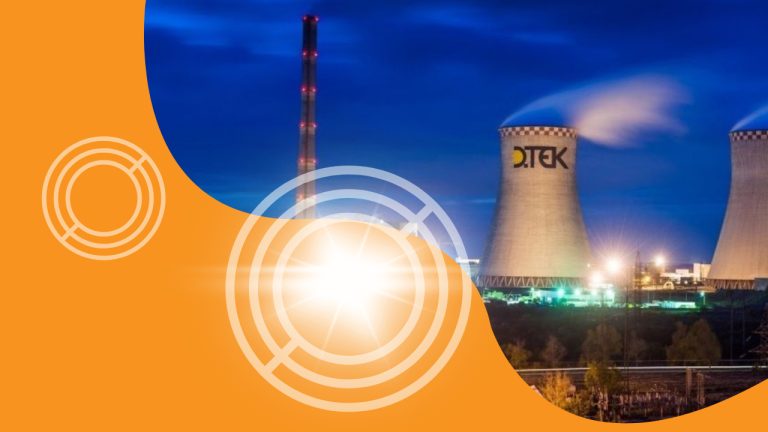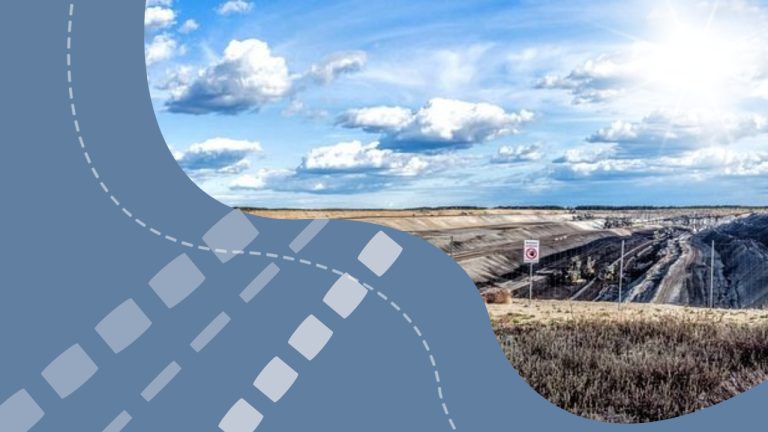
In response to a recent setback, Poland’s prominent utility company, PGE, pledged on Monday to undertake all necessary measures to sustain the operations of its Turow lignite mine and power plant situated near the Czech border. CEO Dariusz Marzec emphasized the company’s commitment to rectifying past shortcomings, prioritizing ecological considerations, and safeguarding the region’s safety. The announcement follows a local court’s decision on March 13, which annulled an environmental permit issued in 2022 for the Turow project but permitted the continuation of mining activities for the time being. Environmental advocacy groups have consistently raised concerns about the mine’s detrimental environmental impact, particularly on the adjacent power plant, prompting legal challenges against the operating license extending until 2044. PGE disclosed that it is presently awaiting a formal rationale for the court’s ruling and intends to pursue legal recourse accordingly to defend the continuity of the mine and power complex. Marzec expressed optimism regarding a favorable resolution of the matter.
Region: Poland
-

Court Decision Allows Polish Coal Mine to Continue Operations Amidst Environmental Concerns
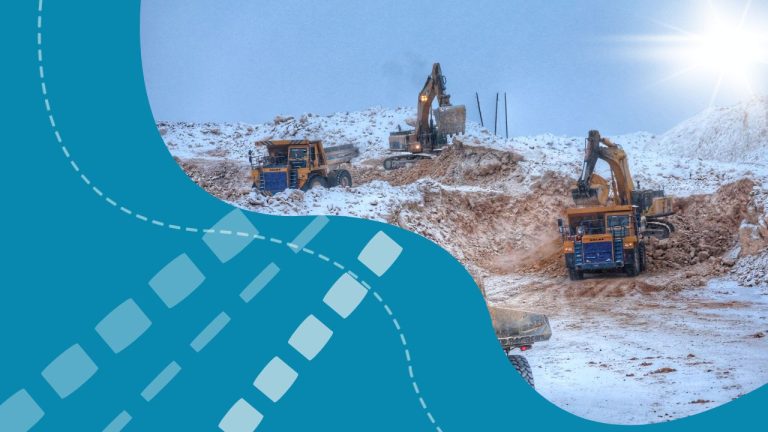
In a recent development amidst a series of conflicting court verdicts, a Polish coal mine near the Czech border, the Turów mine, has been granted permission to continue its operations, albeit temporarily. This decision comes after a prolonged legal battle between the mine and environmentalists, highlighting the ongoing tensions between industrial interests and ecological concerns. The Voivodship Administrative Court’s ruling provides a reprieve for the mine, allowing it to operate under a temporary concession despite environmentalists’ objections.
Andra Apanasionek, the press officer for PGE GiEK S.A., emphasized that the court’s decision does not imply a halt to the energy supply from the Turow complex. Apanasionek pointed out that the mine is diligently adhering to its environmental obligations as stipulated by the General Director for Environmental Protection. Measures are being undertaken to implement various investments and environmental initiatives aimed at mitigating the mine’s impact on its surroundings.
Amidst these legal and environmental debates, miners at the Turów mine are contemplating their future job prospects. Some are proactively seeking training in alternative professions, particularly in the green energy sector and wind farms. Marcin Potempa, one such miner undergoing retraining, expressed his motivation to secure an alternative career path to ensure a smooth transition in case the mine shuts down. He highlighted the similarities between his current work in the mines and potential roles in the renewable energy industry, albeit acknowledging the challenges, particularly the dangers associated with working at heights in wind energy installations.
-

Poland Requests Extension of EU Coal Plant Subsidies Until 2028 Amid Transition to Nuclear Energy
Poland, in a bid to facilitate its transition to nuclear energy by the next decade, is seeking an extension of EU rules permitting coal plant subsidies until 2028. Maciej Bando, the deputy climate minister responsible for strategic energy infrastructure, emphasized the necessity of coal power generation until nuclear facilities become operational. With coal currently contributing 60% of electricity output and serving as a backup for intermittent renewable sources, Warsaw aims to have its first large-scale nuclear plant operational by 2033. Bando highlighted the potential collaboration among EU nations seeking support for their energy assets, citing Germany’s pursuit of EU approval for gas plant subsidies. Despite plans for a floating liquefied natural gas terminal in Gdansk, Bando suggested its expansion might not be necessary until after 2030 due to lower demand projections.
-

Poland’s Turów Coal Mine Closure Sparks Debate on Environmental Policy and Economic Stability
Poland finds itself at a critical juncture as it grapples with the impending closure of the Turów coal mine, a decision fraught with implications for both environmental sustainability and economic prosperity. Prominent Members of the European Parliament from Poland’s Law and Justice party, Anna Zalewska and Dominik Tarczyński, have vehemently opposed a recent court ruling mandating the mine’s closure, attributing it to the stringent environmental regulations of the European Green Deal. This development has ignited a heated debate, highlighting the intricate balance between judicial decisions, environmental policy, and economic interests.
Unveiling the Controversy: Turów Mine’s Closure The closure order stems from a court decision that invalidated the environmental permit for the Turów coal mine in Poland’s Dolnośląskie region. Central to the ruling was the absence of a Polish-Czech agreement within the permit, raising concerns over the potential influence of political agendas on judicial proceedings. This decision not only raises doubts about Poland’s energy security but also triggers discussions on the judiciary’s role in shaping environmental policy amidst the backdrop of the European Green Deal’s demands.
Political Rhetoric vs. Action: A Closer Look at the Opposition The Law and Justice party’s opposition extends beyond the mine’s closure, accusing opposition parties of hypocrisy regarding environmental concerns. They criticize what they perceive as a gap between public statements advocating for Polish farmers and energy security and actions taken in the European Parliament, particularly concerning trade policies with Ukraine. This exposes the complexities of domestic politics conflicting with international obligations, further complicating discussions surrounding the European Green Deal’s implications for Poland.
Energy Security and Economic Interests at Stake Amidst these challenges, Zalewska and Tarczyński call for urgent measures to safeguard Poland’s energy security and economic stability. Their demands resonate with a considerable portion of the population and industry stakeholders who fear the economic fallout of stringent environmental regulations. The ongoing debate underscores the uncertainty surrounding Poland’s energy policy and its alignment with environmental sustainability objectives, posing critical questions about balancing economic growth with environmental protection.
-

Landmark Court Decision Reverberates Through Poland’s Energy Landscape
In a groundbreaking decision with far-reaching implications for Poland’s energy sector, the Voivodeship Administrative Court (WSA) in Warsaw has overturned an environmental ruling concerning the Turów lignite coal mine, operated by PGE GiEK. While the ruling doesn’t immediately halt mine operations, it underscores the delicate balance between energy demands and environmental preservation, prompting state-owned power company PGE GiEK to contemplate future strategies.
Background and Court Ruling: The court’s ruling follows a lawsuit challenging the environmental impacts of the Turów mine, situated near the Polish-Czech border. Criticizing the lack of consideration for a bilateral agreement with the Czech Republic addressing cross-border mining effects, the WSA’s decision resonates beyond legal realms. Despite the verdict, Turów’s operations, vital for Poland’s electricity supply, remain unaffected. PGE GiEK vows compliance with environmental standards and continues investing in mitigating measures.
Environmental Measures and Investments: PGE GiEK’s substantial investments target minimizing Turów mine’s environmental footprint. Initiatives include constructing an underground anti-filtration screen to safeguard Czech water resources and implementing various ecological and noise-reduction endeavors. These efforts underscore Poland’s struggle to balance energy demands with environmental obligations, shaping the nation’s energy transition trajectory.
Implications for Future Energy Policy: Although subject to further legal proceedings, the court ruling prompts reflection on Poland’s coal mining future and its broader energy policy. Amidst efforts to diversify energy sources and reduce coal dependency, the Turów case epitomizes the challenges of transitioning towards sustainable energy while ensuring energy security. Beyond Turów, the discourse resonates with Poland’s energy direction and environmental legacy considerations.
-

PM Fiala Vows To Review Impact of Polish Turow Lignite Mine
Prime Minister Petr Fiala (ODS) promised during a visit to Jablonec nad Nisou yesterday that he would review the impact of mining in the Turow lignite mine in Poland, situated near the Czech border.
He was reacting to a court decision in Warsaw that invalidated the environmental impact assessment (EIA) of the Turow mine, which had allowed the operation of the mine to be extended.
The current Czech-Polish treaty is not working, said Milan Starec of the Uhelna association, who asked the prime minister before the cabinet meeting to reopen the issue during the talks with his Polish counterpart.
Residents on the Czech side are mainly worried about groundwater loss.
“We who live in the immediate vicinity know that the agreement is not working,” said Starec. “There will definitely have to be one. We have never said that the mine should be closed overnight, but there definitely has to be a final agreement. It should be on the basis of some compromises over timing and territory, not that the Polish government will just send some money and mining will continue indefinitely.”
At the same time, he handed the prime minister a document detailing the fate of people living close to the mine on the Czech, Polish and German sides of the border.
The agreement on measures responding to the impact of lignite mining in the Turow mine was signed by the prime ministers of the Czech Republic and Poland in February 2022. Poland and PGE, which owns the mine and the neighbouring power plant, then paid 45 million euros (roughly CZK 1.14 billion) in compensation for the damage, of which 35 million euros went into the transparent account of the Turow Fund, managed by the Liberec Region. This account currently contains over CZK 917 million after interest.
According to Fiala, all expert opinions indicated that the agreement was desirable, which is why he did everything he could to unblock negotiations with Poland after taking office. “We agree that the deal is correct. If the court rules so, we will look at the results and continue to discuss it,” Fiala promised.
According to Liberec Region Governor Martin Puta (Mayors for Liberec), the court ruled on a lawsuit filed by the German town of Zittau claiming the Polish side did not take their comments into account when preparing the assessment.
“I welcome the decision, I think that in such a sensitive place, where the mining does not concern only one state, but the inhabitants of three countries, it is important to address the legitimate objections that have been raised,” Puta said.
The Turow mine near the Czech-Polish border supplies coal mainly to the neighbouring power plant. PGE Group, which owns the mine and the power plant, plans to mine there until 2044. The mine is to be gradually expanded to 30 square kilometres along the road from Zittau to Bogatynia.
Residents on the Czech side of the border are particularly worried about the loss of groundwater and increased dust and subsidence.
Starec, who lives in the settlement closest to the mine, welcomed the court’s decision to cancel the EIA. “The court has de facto given us the benefit of the doubt,” he said.
However, the Polish administrative court also said its decision was not a reason to stop mining, the PAP Polish news agency reported.
-

Polish Coal Mine Near Czech Border to Continue Operating Amid Legal Uncertainty
A Polish coal mine situated near the Czech border has received temporary reprieve and will continue its operations for the time being, as per a report by the state news agency PAP on Wednesday. This decision follows a series of contradictory court rulings that have left the mine’s fate uncertain.
Under the previous nationalist Law and Justice (PiS) government, efforts led by environmental activists to close the Turow mine were staunchly resisted. The mine, which supplies lignite to a nearby power plant contributing to 8% of Poland’s energy, has been a focal point of contention.
According to PAP’s report, a recent court ruling overturned a decision from 2022 that permitted the mine to continue operating. However, the court refrained from passing judgment on policy matters, allowing the mine to remain operational despite the ruling.
The primary case concerning the Turow mine is still pending in a Warsaw administrative court, which will decide on a government directive issued in February 2023. This directive granted permission for Turow to continue its mining activities until 2044.
The court’s statement, as cited by PAP, clarified that the ruling pertaining to environmental concerns does not immediately halt the mine’s operations, and it did not evaluate the state’s energy policy.
Environmental organizations have long criticized the environmental impact of the Turow open-pit mine and have filed multiple lawsuits aimed at ceasing its activities.
In response to the latest developments, the state-controlled utility PGE unit, which owns the Turow mine and the adjacent power plant, stated that it is awaiting the written justification of the court’s decision and is assessing its next steps in this ongoing legal battle.
The current government, elected in October, has expressed its commitm
-

Kalisz, Poland, Secures PLN 14 Million Funding for Geothermal Drilling Project
The City of Kalisz in Poland is poised to embark on an exploratory geothermal drilling initiative, thanks to PLN 14 million (approx. USD 3.5 million) in funding from the National Fund for Environmental Protection and Water Management (NFOSiGW). The financial support, granted based on Kalisz’s application, aims to subsidize the drilling of a vertical borehole, reaching a depth of 1700 meters at a designated site near the Aquapark swimming pool complex within the 2024-2025 timeframe. Kalisz Mayor Krystian Kinastowski expressed satisfaction, emphasizing the city’s long-standing efforts in project development and analysis. The geothermal well is expected to provide insights into the resource, aiding decisions on potential applications for heating or recreational purposes. Professor Jacek Zimny highlights the region’s geothermal potential, particularly along the Poznan–Konin-Kalisz-Sieradz line, deemed the “valley of warm,” with a relatively shallow reservoir at about two kilometers. Encouragement also stems from the successful utilization of geothermal heat in the nearby town of Uniejow. Geotermia Uniejow’s co-generation plant has been operational since the early 1990s, utilizing geothermal, biomass, and oil sources. Geothermal wells in Uniejow, reaching depths of approximately 2000 meters, serve as a promising precedent. The NFOSiGW’s commitment to geothermal development in Poland is evident, having allocated PLN 530 million in subsidies to 18 localities for geothermal research and appraisal well drilling by the end of 2023. Progress is already underway in Gniezno, Otwock, and Zyrardow.
-

Poland Emerges as Silver Giant: Implications and Challenges
Recent weeks have witnessed a surge of headlines in Poland, revealing a stunning revelation: the country harbors vast silver resources estimated at half a trillion zloty. This development has catapulted Poland into the spotlight as a global leader in silver reserves, a distinction confirmed by the latest report from the U.S. Geological Survey (USGS) titled “Mineral Commodity Summaries 2024.”
According to the USGS report, Poland boasts an impressive silver reserve of 170,000 tons, surpassing other silver-rich nations by a significant margin. Peru, the second-largest holder, lags behind by 60,000 tons. Despite its recent emergence, Poland has swiftly risen to become the fifth-largest global producer, generating 1,300 tons of silver in 2023.
This substantial update in reserves, from the previously reported 65,000 tons to the current 170,000 tons, is based on data from Poland’s Geological Service. Earlier indications of this wealth were hinted at in a 2023 report, which highlighted substantial copper and silver deposits across regions like the Fore-Sudetic Monocline and the North Sudetic Basin, particularly in areas surrounding Lubin, Polkowice, and Głogów.
At current market prices, Poland’s silver reserves are valued at approximately $127 billion, exceeding half a trillion PLN, a sum capable of potentially covering the country’s budget deficit twice over.
However, despite the economic promise, challenges loom in the realm of silver mining. Adam Stroniawski from the Mint of Poland underscores the importance of these reserves while acknowledging the time-consuming process of accessing, mining, and refining them. He emphasizes the necessity for advanced technology, robust infrastructure, and the scattered distribution of silver deposits.
Moreover, silver’s significance in various industrial sectors cannot be overlooked, from medicine to electronics and renewable energy. Yet, Stroniawski cautions that while silver remains undervalued and accessible, its exploitation demands careful consideration of environmental impacts and sustainable mining practices.
The environmental implications of silver mining in Poland are significant, requiring stringent environmental protections and substantial investments in infrastructure, technology, and skills. Developing these resources sustainably is vital for meeting the growing demand for silver in critical sectors such as renewable energy.
Poland’s ascent as a silver giant signals a pivotal moment in the global market, with potential implications for prices and industrial applications. Nonetheless, navigating the challenges inherent in silver mining demands innovative solutions and international cooperation to ensure that Poland’s newfound wealth benefits both the nation and the global community.
-

Financial support for Poland from the EU could revive the Central European steel market
Last year, the European Commission reached an agreement on a recovery and resilience plan worth approximately 60 billion euros with Poland’s previous government, led by the nationalist Law and Justice (PiS) party. However, access to these funds, part of the EU budget for 2021-2027, was initially blocked due to concerns about changes made to Poland’s legal system. Following the election of a new government led by pro-European Prime Minister Donald Tusk in December, the first installment of around €5 billion of previously blocked EU funding was received. Additionally, an additional €6.9 billion has been applied for, with potential reforms paving the way for access to more funds. This injection of funds could significantly benefit the region’s steel mills. Poland’s recovery and resilience plan aims to use its multibillion-dollar funding to enhance residential housing for improved energy efficiency. Moreover, the Offshore Wind Fund seeks to catalyze private investment in large-scale renewable energy projects. While these developments may take time to materialize, they offer hope for a market revival. However, economic pressure persists. Steel market participants in Poland and neighboring Czech Republic have reported weak demand, particularly from key sectors like construction and automotive, largely due to reduced exports to Germany. In 2023, the German economy contracted by 0.3%, with indicators like the Hamburg Commercial Bank (HCOB) German construction sector PMI and manufacturing PMI reflecting ongoing challenges, despite some improvement in recent months. Although the steel sector in Poland and the Czech Republic remains fragile, signs of greater economic stability are emerging. Inflation rates have decreased in both countries, potentially paving the way for lower interest rates across Europe, stimulating construction and retail activity. However, an impasse between cautious purchasing behavior from buyers and the need for factories to maintain prices due to higher raw material costs has been observed. Limited domestic supply, exacerbated by production issues at Liberty Steel plants, has contributed to recent price increases. Overall, suppressed demand is expected to persist in the European steel sector in the near term. Nevertheless, the potential EU funding for Poland, coupled with hopes of lower interest rates, has improved sentiment regarding the market outlook.