Region: Poland

  • Poland’s JSW Targets Higher Coal Production in 2025, Not Eyeing New Acquisitions

    Poland’s JSW Targets Higher Coal Production in 2025, Not Eyeing New Acquisitions

    Poland’s largest coking coal producer, JSW, announced that it is not currently considering acquiring any mining assets from Polska Grupa Gornicza (PGG). Adam Rozmus, JSW’s vice-president for technical matters, made the statement during a press conference on Monday, confirming that the company is focused on its own operations rather than new acquisitions.

    Rozmus also reiterated JSW’s coal production target for 2024, set at 12.45 million tonnes. He added that production in 2025 is expected to significantly surpass the 12 to 13 million tonne range, although specific figures were not provided.

    Ryszard Janta, JSW’s CEO, addressed questions about the company’s ongoing restructuring efforts, stating that detailed analyses are underway across all of JSW’s operations. He emphasized that simply returning to annual production levels of 14 to 15 million tonnes would not be sufficient to meet the company’s future goals. Janta also noted that the group is closely examining labor costs as part of its broader strategy.

  • Poland’s PGE to Phase Out Coal-Fired Power Units by 2025

    Poland’s PGE to Phase Out Coal-Fired Power Units by 2025

    Poland’s largest power utility, PGE, plans to cease electricity production at its four remaining coal-fired units at the Rybnik power plant by the end of 2025, according to a report from the Polish Press Agency. The units, which collectively generate 900 megawatts (MW), have capacity market contracts running until this deadline. While coalcontinues to dominate Poland’s electricity generation, profitability is declining as state-controlled utilities like PGE shift towards renewable energy. Additionally, banks are increasingly reluctant to finance coal-based operations.

    PGE has already phased out four coal-fired units at the Rybnik plant and is preparing to replace them with an 882 MW gas-fired unit, scheduled for commissioning by the end of 2026. The company reiterated that the decision to end coal production was made in 2020. The timeline for ending heat production at the coal-fired units has been extended to August 31, 2026.

  • Poland to Revise Coal Asset Spin-off Plans Amid Energy Transition Struggles

    Poland to Revise Coal Asset Spin-off Plans Amid Energy Transition Struggles

    Poland, the European Union’s most coal-dependent nation, is looking to revise its plans to separate coal assets from state utilities, according to Jakub Jaworowski, the Minister of State Assets. The country’s energy transition has faced challenges, with the previous government failing to finalize the creation of a new entity, known as NABE, to handle coal assets. Jaworowski described the NABE plan as a “nuclear option” and hinted at the possibility of alternative approaches without specifying details.

    Last week, shares of major utilities like PGE SA, Tauron Polska Energia SA, and Enea SA fell by as much as 7%following Finance Minister Andrzej Domanski’s statement that the next year’s budget has no provisions for the NABE spin-off. However, Jaworowski stressed that resolving the issue remains a priority for the current administration. He emphasized the need for a well-thought-out plan rather than rushing the process.

    Poland’s energy transition, estimated to cost over $300 billion, is reliant on external financing, but environmental concerns are making banks hesitant to participate. With more than 60% of Poland’s electricity coming from coal-fired plants, the government faces the challenge of balancing power demand, costs, environmental considerations, and the needs of affected communities and workers. Jaworowski acknowledged that coal plants will eventually be phased out but stressed the importance of finding the right timeline.

  • Poland’s Top Coal Producer Bogdanka Takes $305 Million Hit as Renewables Rise

    Poland’s Top Coal Producer Bogdanka Takes $305 Million Hit as Renewables Rise

    Poland’s most profitable coal producer, Lubelski Węgiel Bogdanka SA, announced a significant write-off of $305 million from the value of its assets due to the increasing influence of wind and solar power in the energy market. The company, which is under the control of state-run utility Enea SA, attributed the 1.17 billion zloty ($305 million) provision to “dynamic changes” in the domestic coal market, highlighting a “clear trend” toward growing renewable energy capacity.

    Last year, Bogdanka’s profit surged to a record 687 million zloty due to high coal prices. However, analysts predict a significant decrease in profit for 2024, even before considering the recent write-off. Despite Poland’s new government promoting clean energy, an official energy policy with specific targets for the upcoming decades has yet to be published. Nevertheless, coal’s share in the country’s electricity mix has already dropped to 66% last year, down from over 70% the previous year, as investments in photovoltaic and wind energy increase.

    The pressure on coal is expected to intensify with the introduction of the first offshore wind turbines and the completion of gas-fired power units in the coming years. Additionally, Poland plans to inaugurate its first nuclear power plant next decade, aligning with the European Union’s climate neutrality goal by mid-century. Bogdanka, listed on the Warsaw Stock Exchange, plans to revise its strategy by the end of 2024 in response to these changes. The company’s shares have dropped 27% this year, resulting in a market valuation of 846 million zloty, while the WIG20 Index has risen by 1.4%during the same period.

  • Poland’s Top Coal Producer Bogdanka Faces $305 Million Write-Off Amid Renewable Energy Surge

    Poland’s Top Coal Producer Bogdanka Faces $305 Million Write-Off Amid Renewable Energy Surge

    Poland’s leading coal producer, Lubelski Wegiel Bogdanka SA, has announced a substantial $305 million write-offfrom the value of its assets, as the rise of wind and solar energy accelerates the decline of coal in the market. Bogdanka, which is controlled by state-run utility Enea SA, cited “dynamic changes” in the domestic coal market and the increasing capacity of renewable energy sources as the primary reasons for this financial adjustment.

    The company’s profits had nearly tripled last year, reaching a record 687 million zloty, largely due to high coal prices. However, analysts predict a significant reduction in profits for 2024, even before accounting for the recent write-off.

    While Poland’s new government has been promoting clean energy, it has yet to release a formal energy policy with specific targets for the coming decade. Nonetheless, coal’s share in Poland’s electricity mix has already dropped to 66%last year, down from over 70% the previous year, as investments in photovoltaic and wind farms increase. The pressure on coal is expected to intensify as offshore wind turbines and gas-fired units become operational, and Poland looks towards establishing its first nuclear power plant in the next decade to align with the European Union’s climate neutrality goals.

    Bogdanka plans to revise its strategy in response to these new market conditions by the end of 2024. The company’s shares have dropped 27% this year, reducing its market valuation to 846 million zloty, while the WIG20 Index rose by 1.4% during the same period.

  • Polish Miner Found Alive After Being Trapped Underground for Two Days

    Polish Miner Found Alive After Being Trapped Underground for Two Days

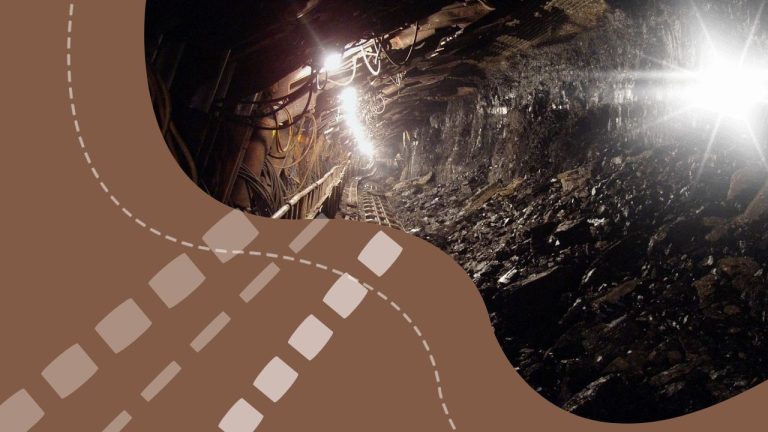
    A Polish coal miner who had been trapped underground since Thursday was found alive by rescuers on Saturday, according to local media reports. The Rydultowy mine in southern Poland, operated by the state-controlled group PGG, experienced a tremor at around 06:00 GMT on Thursday, approximately 1,200 metres (3,960 feet) below ground.

    The tremor resulted in the death of one miner, while around 76 miners were brought to the surface alive by rescuers on Thursday, with 17 taken to hospital. The state-run news channel TVP Info reported that the miner was conscious when rescuers reached him. The private broadcaster RMF FM mentioned that a helicopter was at the mine to transport him to the hospital.

    Most of the miners who were hospitalized have since been discharged, as reported by TVP Info.

  • Efforts Resume to Rescue 15 Trapped Miners in Poland Amid Grim Conditions

    Efforts Resume to Rescue 15 Trapped Miners in Poland Amid Grim Conditions

    Rescue workers are set to resume their efforts early Thursday to reach 15 miners trapped underground in a Polish coal mine, though local media reports suggest it may be too late to save them. The rescue operation had been suspended on Wednesday due to dangerous conditions. The miners have been trapped since Tuesday following a methane explosionthat killed at least eight miners. The incident occurred in a shaft over 1 km underground in the Halemba mine, located in the town of Ruda Slaska, 300 km southwest of Warsaw.

    “The level of the gas has fallen low enough to allow us to renew the rescue effort,” stated Zbigniew Madej, spokesman for the state-owned company Polish Coal Co, to the IAR news agency. Initial indications suggest it may take as little as two to three hours to reach the remaining miners.

    Poland’s President Lech Kaczynski expressed his concerns for the trapped men during a news conference on Wednesday after visiting the site. “Even though we should never lose hope, I will not hide the fact that the situation is very, very grim,” he said. Officials noted that the blast seemed to have damaged an underground water pump, leading to flooding and leaving little hope of finding anyone alive.

    Family members are waiting patiently at the site for news of their loved ones and are being offered counseling by local doctors. “I was once a miner myself. When I heard the news, my first thought was that my son is dead,” said Michal Wasowski, 55, whose son is among the missing. “A methane explosion is one of the most horrible things that can happen underground and this time it happened to my son.”

    The Halemba mine, one of the oldest in Poland, has been operational since 1957. Situated in the heart of the Silesia region’s industrial belt, it has witnessed several disasters, including a gas explosion in 1990 that killed 19 miners. Poland’s state-run mining industry, established before the fall of communism in 1989 and lacking investment for years, has seen hundreds of deaths over the decades. The president announced there would be a public inquiry into the cause of the disaster, noting indications that some of the miners were inexperienced and not sufficiently qualified.

  • ArcelorMittal Reduces Emissions Significantly Through Environmental Investments in Poland

    ArcelorMittal Reduces Emissions Significantly Through Environmental Investments in Poland

    The global steel company ArcelorMittal has invested more than PLN 10.5 billion ($2.6 billion) in its Polish assets over the past 20 years, with a significant portion allocated to environmental projects. According to a press release from ArcelorMittal Poland, these investments have resulted in a 90% reduction in dust emissions and a 42% reduction in carbon dioxide emissions compared to 2004 levels.

    The company’s Polish division has undergone numerous changes in the past two decades, implementing new technologies in compliance with increasingly strict EU directives, decommissioning outdated installations, and modifying many production processes to minimize environmental impact. ArcelorMittal aims to achieve climate neutrality by 2050, with an interim goal of reducing CO2 emissions by 35% at its European plants by 2030 compared to 2018.

    Decarbonization is a huge challenge for the steel industry across Europe,” commented Sanjay Samaddar, President of the Board of ArcelorMittal Poland. “To make it successful, several conditions must be met, including access to large-scale, renewable energy at competitive prices. We know the transformation will be a long-term process, so we are already working intensively to limit our impact on the environment in our current processes.”

    In recent years, ArcelorMittal has invested about PLN 700 million in green projects at the Dąbrowa Górnicza plant. Modernization efforts have also been made at plants in Sosnowiec, Zdzieszowice (PLN 205 million), and Kraków (PLN 100 million), among others. ArcelorMittal Poland plans to invest an additional PLN 165 million ($40.9 million) in modernizing the coke plant in Zdzieszowice, with all work expected to be completed by 2026.

    As reported by GMK Center, in 2023, ArcelorMittal Poland invested PLN 1.5 billion ($363 million) in modernization and growth projects at three facilities to improve product quality, energy efficiency, and plant efficiency, with the largest investment directed towards modernizing the blast furnace in Dąbrowa Górnicza.

  • Polish Parliament Speaker Szymon Holownia Visits Budryk Mine

    Polish Parliament Speaker Szymon Holownia Visits Budryk Mine

    The Speaker of the lower house of the Polish Parliament, Szymon Holownia, recently met with miners working at the Budryk mine – part of Jastrzebska Spólka Weglowa (JSW). During his visit, Speaker Holownia learned about the operations of the mine and the entire JSW, which produces coking coal – a raw material on the EU’s list of critical raw materials necessary for steel smelting.

    Before visiting the mine, the Speaker underwent the necessary training to authorize him to go underground. He was then accompanied by Ryszard Janta, President of the JSW Management Board, Adam Rozmus, Vice-President of the JSW Management Board for Technical and Operational Matters, Krzysztof Baranowski, Director of the Budryk mine, and Wieslaw Chylek, Technical Director of the mine. Together, they descended to the 1290 m level via shaft VI, the deepest level in coal mines in Poland, where the temperature of the rock mass reaches almost 50°C.

    From the shaft, the group proceeded by suspended cable cars to the area of the Bw-3 longwall, the main purpose of the visit. After a 300 m walk from the passenger station, the Speaker of the Sejm and his attendants stood at the entrance of the Bw-3 longwall. It took several minutes to walk along the 200 m longwall, where mining was underway, followed by a march to the 1000 level and a trip to the surface.

    “What I saw today made a huge impression on me and will definitely stay with me. Visits such as this one teach respect and humility towards people who do a difficult and responsible job, who go down and up five days a week for 25 years. I hope that you will always be accompanied by luck and God’s protection,” said Szymon Holownia immediately after leaving the mine.

    “I did not come here to present plans or to spin a vision. I came to listen, to see the mining reality. What I learned from you today will be helpful in my work. Thank you for allowing me to spend this time with you. I hope this is not our last meeting. I have already heard tentative invitations related to Miners’ Day. If they are upheld, we will of course see each other again,” the Speaker added.

  • Poland Ordered to Pay €68 Million in Fines Over Turow Coal Mine

    Poland Ordered to Pay €68 Million in Fines Over Turow Coal Mine

    Poland will have to pay €68 million in EU fines for the continued operation of the Turow coal mine despite court orders to cease operations, according to a ruling by the EU’s lower court on Wednesday, May 29.

    In 2021, the European Commission mandated the closure of the controversial Turow open-cast coal mine, located in the German-Czech-Polish border region, due to concerns that it was endangering Czech groundwater levels. When the Polish government failed to comply, the EU executive began imposing fines of €500,000 per day, deducting the amount from EU funds designated for Poland.

    Although Warsaw and Prague settled the case in February 2022, Poland attempted to retroactively cancel the fines, which had accumulated to €68.5 million, by seeking annulment in the EU’s lower chamber court. However, the court emphasized in a press release that “the removal of the case from the register does not relieve Poland of the obligation to settle the amount payable.”

    Despite the Czechs withdrawing their lawsuit, the court found that fines accrued prior to this could not be annulled to maintain their deterrent effect. The judgement was welcomed in Prague, with Czech news agency CTK quoting Petra Pinter, a lawyer involved in the case, who stated the court “has shown that European law applies equally to all states, and Poland must meet its obligation to pay the sanctions.”

    Germany’s Anna Cavazzini, a Green EU lawmaker from the region, also supported the decision, highlighting Turow’s lack of an environmental impact assessment for continued coal mining, which is planned to run until 2024, as she told public broadcaster mdr.

    Poland may appeal the judgement, potentially escalating the matter to the EU’s highest court of justice. Online platform Money.pl reports that Warsaw has already taken that step.