Region: Poland

  • PGE accelerates the transformation of Poland’s energy sector – zero-carbon company by 2040

    PGE accelerates the transformation of Poland’s energy sector – zero-carbon company by 2040

    The Polish economy’s competitiveness hinges on a transition to clean, safe, and sustainable energy. The updated strategy of the PGE Group is a direct response to the evolving geopolitical and economic landscape in Europe, as well as the shifting role of electricity, now recognized as the fuel of the future and a pivotal component in the security and sovereignty of European nations.

    Wojciech Dąbrowski serves as the President of the Management Board of PGE Polska Grupa Energetyczna.

    PGE’s revised strategy is a carefully considered, rational, and responsible blueprint for advancing Poland’s energy sector through modern solutions. Our commitment to environmental responsibility and sustainable development positions us as the first energy company in Poland to achieve climate neutrality by 2040, a decade earlier than originally planned.

    The successful execution of this strategy owes much to the proactive measures of the Polish government, including the establishment of the National Energy Security Agency, tasked with overseeing Poland’s coal-fired generation sources. This decision, endorsed by rating agencies like Fitch and Moody’s, accelerates our transformation efforts. It enhances our capacity to secure funding for new investment projects while ensuring the systematic decarbonization of an energy sector currently reliant on coal (70%). Importantly, it safeguards the stability of our electricity system and supports jobs in existing conventional generation units, mines, and the communities around them, all while preserving Poland’s energy security.

    PGE’s emerging energy mix will pivot towards renewable sources, with a prominent focus on offshore wind farms in the Baltic Sea, where we stand as Poland’s largest investor with a potential capacity exceeding 7 GW. Ensuring optimal utilization of renewable energy capacity, we will deploy energy storage facilities that also play a stabilizing role in a digitally managed distribution network. The renewable energy segment will be complemented by an ongoing nuclear power plant project in collaboration with our Polish and Korean partners, along with gas-fired power plants where hydrogen and biomethane will replace gaseous fuel after 2030. Customers remain a vital part of Poland’s energy transition, and we continue to expand our offerings, including photovoltaics, heat pumps, and home energy storage solutions, to support their energy independence.

    Implementing PGE’s strategy requires unprecedented investments in Poland’s energy sector. By 2030 alone, we will invest more than EUR 27 billion. This substantial commitment will serve as a catalyst for job creation and the development of industries centered around modern energy in Poland. The green transition will significantly enhance Poland’s overall economic competitiveness on the global stage, driven by green energy.

  • Poland keeps coal exit target as top utility seeks quicker carbon neutrality

    Poland keeps coal exit target as top utility seeks quicker carbon neutrality

    Poland is not planning a quicker end to using coal, the government said on Wednesday, criticising state-controlled utility PGE (PGE.WA) for bringing forward its carbon neutrality target by a decade to 2040.

    Under a pact the government signed with trade unions, Poland plans to keep mining coal until 2049.

    PGE, Poland’s biggest power utility, said on Tuesday it is seeking a faster exit as it bets on renewable energy.

    While coal generates some 70% of Poland’s electricity, experts say using the fuel in power generation is not sustainable in the long run amid rising costs and the European Union’s green climate policies.

    “The Polish government’s energy policy implemented by the Ministry of State Assets does not assume acceleration of the coal phase-out,” the ministry said in a statement, commenting on PGE’s strategy update. PGE will have to shoulder 26 billion zloty ($6.4 billion) of carbon emission costs this year and needs to speed up its transformation to reduce the burden and remain competitive, Chief Executive Wojciech Dabrowski told Polish public radio on Wednesday.

    “The Ministry of State Assets expects that the assumptions of the government’s energy policy will be implemented in practice by all energy companies with State Treasury shareholding, which will also be reflected in their strategies and investment activities,” the ministry said.

    ($1 = 4.0875 zlotys)

  • KGHM Polska Mied has entered into long-term agreement with NKT

    KGHM Polska Mied has entered into long-term agreement with NKT

    “The continuation of cooperation in such a demanding market environment is a mark of effectiveness and attests to the quality of our products. We are efficient and trustworthy. We ensure the security of supplies of metals which are critical for the global energy transformation. We are satisfied with our cooperation with NKT, our wire rod is going to one of the leaders of the European wire and cable marketplace, which provides key solutions for the European energy transformation,” said Tomasz Zdzikot, President & CEO of KGHM.

    “We are pleased to strengthen our long-term collaboration with KGHM by entering into this frame agreement for the supply of copper rod for the coming years. And even more so, that we are able to source copper close to where it is needed, which supports our efforts to reduce the environmental impact of our operations,” says President & CEO of NKT, Claes Westerlind.

    Responsible production

    KGHM consistently strengthens its status as a preferred supplier. Company’s products and services meet the highest market standards, while its stability in delivering raw materials, rapid reaction time to customer needs and its “just in time” logistics distinguish the Company on the European wire rod market.

    The metallurgical plants of KGHM produce metals responsibly and in accordance with the highest standards. KGHM’s Głogów and Legnica Copper Smelters/Refineries and Cedynia Wire Rod Plant are Copper Mark certified, which is a testimony to responsible operating practices with regards to the environment, employees, local communities and governance.

    The Company ensures the safe supply of metals which are critical for the global energy transformation through its access to primary copper deposits. At the same time the goals of the Circular Economy are being developed whilst the possibilities of utilizing recycled materials are growing. In response to the global challenge associated with sustainable development, the Company adopted an ambitious Climate Policy, in which it declared the intention of achieving climate neutrality by the year 2050. KGHM has published the results of its analysis of the environmental and carbon footprint of its products: cathodes, wire rod and Cu-OFE rod. The carbon footprint of its copper wire rod at the level of 2.3 tonnes of CO2 equivalent per tonne of copper is significantly lower than the global average of such indicators.

    Highest quality

    8 mm copper wire rod is one of KGHM’s main products. It is manufactured through the Contirod® continuous process of melting, casting and drawing, and is mainly produced from cathodes manufactured by KGHM Polska Miedź S.A. The Cedynia Wire Rod Plant produces wire rod in five classes of quality, depending on the needs of the customer. The product is primarily used in the wire and cable, electromechanical and electrotechnical industries. The wire rod market, due to its specific nature, is highly competitive and demanding.

    In 2022 KGHM Polska Miedź S.A. produced 284.8 thousand tonnes of wire rod and OFE rod, nearly 11% of European production. This result makes the Company one of Europe’s leading producers of these copper semi-products.

    About NKT

    NKT connects a greener world with high-quality power cable technology and takes centre stage as the world moves towards green energy. NKT designs, manufactures and installs low-, medium- and high-voltage power cable solutions enabling sustainable energy transmission. Since 1891, NKT has innovated the power cable technology building the infrastructure for the first light bulbs to the megawatts created by renewable energy today. NKT is headquartered in Denmark and employs 4,500 people. NKT is listed on Nasdaq Copenhagen and realised a revenue of EUR 2.1 billion in 2022.

    NKT – We connect a greener world. www.NKT.com.

    Disclaimer

    KGHM Polska Miedz SA published this content on 22 August 2023 and is solely responsible for the information contained therein. Distributed by Public, unedited and unaltered, on 22 August 2023 07:05:06 UTC.

  • Can Poland dismantle the EU Green Deal with legal challenges?

    Can Poland dismantle the EU Green Deal with legal challenges?

    For years, Poland’s right-wing government has been threatening to legally challenge the EU’s climate policy, and this summer it delivered on that threat. Climate and Environment Minister Anna Moskwa announced on 8 August the country has petitioned the European Court of Justice to strike down the recent revision to the EU’s Emissions Trading System (ETS) and the Carbon Border Adjustment Mechanism (CBAM), which is set to start levying a fee on climate-unfriendly imports on 1 October. Both are key components of the Fit for 55 package, the legislative toolbox designed to deliver on the goals of European Commission President Ursula von der Leyen’s Green Deal.

    “The introduction of CBAM fees will translate into an increase in the cost of imported products and electricity, as well as products manufactured in Poland for the end user,” Moskwa said in a statement. Regarding the ETS, Moskwa said Poland objects to the increase in allowances that will keep the price of carbon high, which “may reduce the level of energy security” of EU countries at a time when that security is being threatened by Russia.

    The substance of the laws was decided by majority votes of EU countries earlier this year, in which opposition by Poland and Hungary was overcome. Poland is not only challenging the substance of the laws based on their effects, but also the way the laws were adopted. Because the laws will affect the economy, they are “primarily of a fiscal nature”, Moskwa said, and therefore the ordinary voting system should not have been used but rather a special legislative procedure which requires unanimous approval by all EU member states. Were the EU’s high court to agree, the laws could be invalidated and sent back to the Council for another vote, at which time Poland and Hungary would veto them.

    Poland already challenged four other pillars of Fit for 55 earlier this summer: the ban on combustion engine car sales by 2035; the reduction of free allowances in the ETS; increased EU forest management; and the overall increase of the EU’s greenhouse gas emissions reduction target. Poland’s heavy use of coal and energy security concerns have made it the chief opponent of EU climate policy for two decades. They have tried and failed in the past to challenge EU climate policy with the high court. In 2016 they took the European Council and European Parliament to court for passing a law establishing a market stability reserve in the ETS to raise the price of carbon, which was drastically too low to be effective. They used the same argument – that the law needed to be decided by unanimity. This argument was rejected by the European Court of Justice.

    Uphill battle

    Legal experts say Poland’s chance of success at the European Court of Justice this time around is also not high – but there is a big question mark hovering over the CBAM legislation. “Such a justification, i.e. the protection of state interests presented as in the Polish government’s complaints, will not work – as confirmed by the court’s well-established previous jurisprudence in similar cases,” says Robert Grzeszczak, a professor of European law at the University of Warsaw.

    “Besides, it’s a double-edged weapon. If Poland managed to challenge EU law on the grounds of its state interests, so could any other state challenge any other arbitrary act, precisely on the grounds of protecting national interests. This is not sufficient on its own, specific infringements must be demonstrated which would cause the act to be annulled by the court.” He adds that Poland’s argument that the wrong voting method was used is also unlikely to hold water with the court since it is specifically taxation that needs unanimity votes, not all fiscal policy.


    Keep up with Energy Monitor: Subscribe to our weekly newsletter


    This is precisely why the Commission has been so insistent on not calling the levy a “carbon border tax” and rather using the cumbersome formulation of CBAM. A “tax” would have required unanimous approval, and the EU executive likely expected Poland to veto the proposal. That is what makes CBAM perhaps the most vulnerable of all the pieces of legislation challenged. If the high court were to rule it is in fact a tax and not an “adjustment mechanism”, it would be sent back to the Council, where Poland would kill it. Given that companies are already preparing for the start of the mechanism on 1 October, this could cause major disruption – especially if the court makes a ruling after CBAM has taken effect. A ruling before 1 October, or even by the end of the year, is unlikely.

    “Based on similar actions, it can take two years or more for a judgment to be rendered and the contested rules are generally not suspended during that period,” consultancy Ernst & Young said in a note to clients. “The action could have significant impact on CBAM and the EU’s Green Deal in the medium-term. Withdrawal of the CBAM Regulation, in full or part, could jeopardise the EU Commission’s plans for the EU economic zone’s competitiveness among industries that are subject to ETS regulations.”

    “Given the fast-approaching 31 January 2024 deadline for submitting the first CBAM report covering Q4 2023, businesses need to continue their efforts to prepare for their CBAM compliance obligations,” it added.

    Climate of hostility

    Although they do not believe Poland’s legal challenge will be successful, NGOs are warning that were the court to rule in Warsaw’s favour on CBAM, or the other pieces of legislation, it could cause the overall framework of the EU’s climate efforts to collapse. They say Poland is playing a dangerous political game.

    “Warsaw’s blanket opposition towards major Fit for 55 regulations should be mainly understood in the context of the quickly approaching parliamentary elections [in Poland],” says Michał Smoleń, head of the energy and climate programme at the NGO Instrat. “Hostility towards more ambitious EU climate policies have unfortunately become just another topic for the competition between different right-wing factions, both inside and outside the ruling coalition.”


    Read more from this author: Dave Keating


    This exploitation of anti-climate-laws sentiment is not limited to Poland’s far-right government. Europe’s centre-right has also been flirting with such populist messages ahead of the EU and UK elections next year. And this comes while the EU this week lost its green champion, Executive Vice President Frans Timmermans. On Tuesday, Timmermans officially resigned his post to run to become prime minister of the Netherlands in the upcoming Dutch election. He will be replaced by Maroš Šefčovič, the EU commissioner from Slovakia.

    Šefčovič, in charge of interinstitutional relations, has been a master at the art of compromise – the opposite of Timmermans’ sometimes hard-headed approach. Timmermans has been loathed by the Polish and Hungarian governments, and their domestic media, because of his actions against them for rule of law violations during the previous commission term of 2015–2019.

    The more compromise-minded Šefčovič, a neighbour of Poland and Hungary, could find a way to defuse the situation and convince Poland to drop its legal challenges – perhaps after the Polish election is over. But some worry that, with Timmermans gone and President von der Leyen looking ahead to her prospects of re-appointment next year, the Commission is now more likely to back down and weaken the remaining elements of the Fit for 55 package amid pressure from Europe’s right.

    It may be that Poland can succeed in at least partially dismantling the EU’s Green Deal without winning any of its legal challenges, simply by intimidating the EU executive against proposing and further ambitious legislation. Either way, these legal moves could have a major effect on the future of EU energy policy.

  • PEJ Submits Location Decision Application For First Nuclear Power Plant

    PEJ Submits Location Decision Application For First Nuclear Power Plant

    Polskie Elektrownie Jądrowe (PEJ) has submitted an application to the government of the northern Pomerania province seeking a location decision for Poland’s first nuclear power plant.

    The company said the move is “one of the most important steps” in the administrative process preceding the construction of a nuclear power plant. The proposed site lies within the Choczewo municipality in Pomerania.

    The decision will give PEJ the rights to acquire necessary land both onshore and offshore for the project’s construction, the company said.

    It will also outline the real estate to be covered by the investment and set forth conditions for implementation, including technical, environmental, conservation, and fire protection considerations.

    In November 2022, Warsaw chose US-based Westinghouse Electric to supply its AP1000 reactor technology for a three-unit nuclear power station at the Lubiatowo-Kopalino site in the municipality of Choczewo near the Baltic coast of Pomerania.

    The first AP1000 unit is expected online in 2033 with others planned to follow into the 2040s.

    Several other crucial administrative requirements have already been completed, including a decision-in-principle from the ministry of climate and environment affirming the project’s alignment with state energy policies, and a general opinion confirming the validity of safety analysis verification conducted by the national atomic energy agency. The process to obtain a decision on environmental conditions is also at an advanced stage.

    Nuclear new-build plans are a central part of Poland’s drive to fundamentally realign its energy sector by 2040. The venture is one of Poland’s most significant public works projects ever and will provide both energy security and support for a growing economy.
  • Polish Briefing: Poland’s quest for rare minerals I Bogdanka mine wants to go green

    Polish Briefing: Poland’s quest for rare minerals I Bogdanka mine wants to go green

    Poland is looking for a substitute for lithium and other rare earth metals
    Poland is exploring the possibility of using a substitute for lithium and other rare earth metals. “The raw materials policy defines those raw materials that are used today. Today it is apparent that the energy transition makes it necessary to develop economic areas, which we should launch in our country. If we define the areas that we will launch in Poland, then we can adjust the needs for raw materials. Perhaps some of these needs are met, so we will open a discussion and try to introduce the point of view that not only critical raw materials are necessary, but they can also be replaced by other generally available raw materials, such as rare earth metals, lithium,” said Deputy Minister of Climate and Environment Piotr Dziadzio, Chief Geologist of the Country.

    “We should look for substitutions for raw materials and that is what we are doing. I do not want to reveal the details now, but in the coming weeks there may be additional information on this subject,” added minister Dziadzio.

    Lithium is used for the production of electric car batteries, among others. Rare earth metals are used to make semiconductors, which are an essential element of electronics, military equipment or vehicles. They are also needed for the energy transition.

    Wojciech Jakóbik / Jedrzej Stachura

    Bogdanka’s new strategy to turn the mine green

    Bogdanka Lubelski Węgiel presented a development strategy that involves more coal mining until the mine is closed in Poland, and in the meantime investments in renewables, their components and recycling.

    “The average level of coal production in 2023-2025 will be approx. 9.1 million tonnes, in the years 2026-2030 approx. 10.1 million tonnes, and in 2031-2040 approx. 9.1 million tons,” the new Bogdanka strategy announced in Lublin on May 17 said. Bogdanka intends to maintain more than half of the market share of coal.

    One of the priorities is to “guarantee production by 2049 by starting production from the K-6 and K-7 resource base in 2024 and preparing for the availability of a vertical Ostrów field, which after 2038 will guarantee the flexibility and energy security of the state in the energy transition.” The social contract with Polish miners provides for the pahse-out of mines by 2049.

    The company also declares “support for Ukraine’s energy recovery through the use of Bogdanka’s competencies and resources, which can actively support the reconstruction of critical infrastructure in Ukraine after the war.”

    Bogdanka is also expected to develop multi-resource mining based on the exploration and commercial extraction of a number of minerals crucial for sustainable transformation and attractive to the market. The aim is also to produce res components, i.e. foundation baskets for wind farms and structures for the installation of PV panels. The mine also wants to scale up RES installations to diversify Bogdanka’s revenue stream by adding 500MW RES installations and selling the energy produced by them, as well as trading batteries and PV waste.

    LW Bogdanka / Wojciech Jakóbik

  • KGHM has entered into long-term agreement with NKT. The Company will sell copper wire rod with a total value up to PLN 14.2 billion

    KGHM has entered into long-term agreement with NKT. The Company will sell copper wire rod with a total value up to PLN 14.2 billion

    KGHM Polska Miedź S.A. has signed another long-term sales agreement with NKT. Polska Miedź will supply entities belonging to NKT with copper wire rod in the years 2023-2027. The value of the transaction is in a range of PLN 9.6 billion to 14.2 billion, depending on additional options regarding the amount and lifetime of the agreement.
    „The continuation of cooperation in such a demanding market environment is a mark of effectiveness and attests to the quality of our products. We are efficient and trustworthy. We ensure the security of supplies of metals which are critical for the global energy transformation.  We are satisfied with our cooperation with NKT, our wire rod is going to one of the leaders of the European wire and cable marketplace, which provides key solutions for the European energy transformation,” said Tomasz Zdzikot, President & CEO of KGHM.

    “We are pleased to strengthen our long-term collaboration with KGHM by entering into this frame agreement for the supply of copper rod for the coming years. And even more so, that we are able to source copper close to where it is needed, which supports our efforts to reduce the environmental impact of our operations,” says President & CEO of NKT, Claes Westerlind.

    Responsible production  

    KGHM consistently strengthens its status as a preferred supplier. Company’s products and services meet the highest market standards, while its stability in delivering raw materials, rapid reaction time to customer needs and its „just in time” logistics distinguish the Company on the European wire rod market.

    The metallurgical plants of KGHM produce metals responsibly and in accordance with the highest standards. KGHM’s Głogów and Legnica Copper Smelters/Refineries and Cedynia Wire Rod Plant are Copper Mark certified, which is a testimony to responsible operating practices with regards to the environment, employees, local communities and governance.

    The Company ensures the safe supply of metals which are critical for the global energy transformation through its access to primary copper deposits. At the same time the goals of the Circular Economy are being developed whilst the possibilities of utilizing recycled materials are growing. In response to the global challenge associated with sustainable development, the Company adopted an ambitious Climate Policy, in which it declared the intention of achieving climate neutrality by the year 2050. KGHM has published the results of its analysis of the environmental and carbon footprint of its products: cathodes, wire rod and Cu-OFE rod. The carbon footprint of its copper wire rod at the level of 2.3 tonnes of CO2 equivalent per tonne of copper is significantly lower than the global average of such indicators.

    Highest quality

    8 mm copper wire rod is one of KGHM’s main products. It is manufactured through the Contirod® continuous process of melting, casting and drawing, and is mainly produced from cathodes manufactured by KGHM Polska Miedź S.A. The Cedynia Wire Rod Plant produces wire rod in five classes of quality, depending on the needs of the customer. The product is primarily used in the wire and cable, electromechanical and electrotechnical industries. The wire rod market, due to its specific nature, is highly competitive and demanding.

    In 2022 KGHM Polska Miedź S.A. produced 284.8 thousand tonnes of wire rod and OFE rod, nearly 11% of European production. This result makes the Company one of Europe’s leading producers of these copper semi-products.

    About NKT

    NKT connects a greener world with high-quality power cable technology and takes centre stage as the world moves towards green energy. NKT designs, manufactures and installs low-, medium- and high-voltage power cable solutions enabling sustainable energy transmission. Since 1891, NKT has innovated the power cable technology building the infrastructure for the first light bulbs to the megawatts created by renewable energy today. NKT is headquartered in Denmark and employs 4,500 people. NKT is listed on Nasdaq Copenhagen and realised a revenue of EUR 2.1 billion in 2022.

  • Poland’s industrial production and producer prices fall sharply in July

    Poland’s industrial production and producer prices fall sharply in July

    July industrial production fell by 2.7% year-on-year, well below the consensus forecast of 0.6%. There were yearly declines in all four major commodity groups, double-digit drops in mining and quarrying of 10.2%, and in manufacturing by 2.4%. Producer price deflation was deeper than expected, with July PPI falling 1.7% YoY against a consensus of -1.2%

    Poland’s industry saw a surprisingly weak start to the third quarter, although this coincided with dismal industrial PMI readings in Poland (43.5pts in July) and Germany (below 40pts in July).

    Year-on-year declines in industrial production in July were recorded in 24 of 34 industrial production divisions, the deepest in coal and lignite mining (by 27.7%), chemical products (9.6%), wood products (15.5%), paper (11.5%), metals (10.4%), and other non-metallic products (8.8%). The 10 divisions that saw an increase in production were led by machinery and equipment repair (up 20.7%), motor vehicles (15.0%), other transport equipment (8.1%) and machinery and equipment (4.9%). Production’s positive growth was driven by pro-export sectors.

    The deep fall in PPI producer prices was largely due to the statistical base effect and clearly lower energy prices than a year ago, but also reflected weakness in demand. A similar picture emerged from Germany’s July PPI reading. On a monthly basis, Polish manufacturing prices have been falling since November, and we expect PPI deflation to continue at least until the end of the year, which should facilitate further CPI disinflation.

    Available leading indicators (PMIs, new orders data) do not suggest a rapid recovery in manufacturing, although the most acute phase of inventory reduction by Polish companies seems to have passed. This week the preliminary August PMIs for the eurozone and Germany will be published; our forecasts do not assume a significant improvement compared to July. The economy of Poland’s largest trading partner is balancing between stagnation and recession.

    We expect that industrial production in Poland will remain low in the third quarter and experience a more visible rebound in the fourth quarter.

    Poland’s industrial production, YoY changes, in %

    Source: ING based on CSO data.
    ING based on CSO data.
  • NKT signs long-term contract with European copper producer

    NKT signs long-term contract with European copper producer

    To secure the supply of copper in the coming years for its production of power cables, NKT has signed a long-term agreement with Polish copper supplier KGHM.
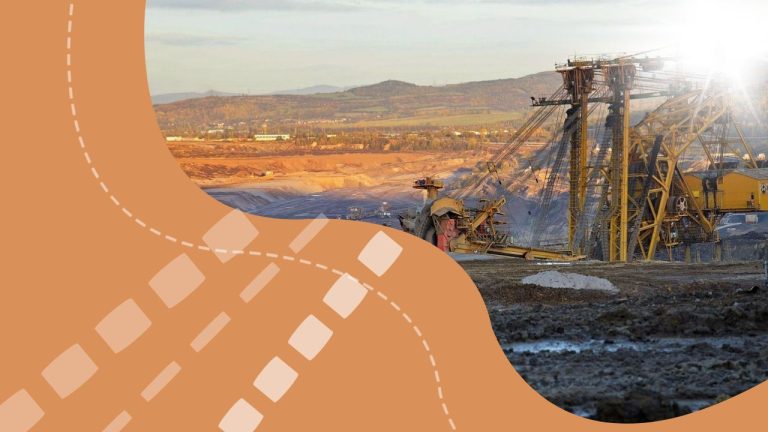
    KGHM will supply NKT with a minimum of 52,500 tons of copper wire rod annually in the years 2023-2027 with an option to expand quantities and extend the contractual period. The copper will cover a substantial part of NKT’s required supply. KGHM is an integrated copper producer with its own mineral resources, mines, smelters and copper rod production facilities in Europe.

  • Joint Venture Submits Application For Decision-In-Principle On New Nuclear At Patnow Coal Site

    Joint Venture Submits Application For Decision-In-Principle On New Nuclear At Patnow Coal Site

    A Polish joint venture company has submitted an application for a decision-in-principle on the construction of a nuclear power plant consisting of at least two South Korean-supplied APR1400 reactors with a target date for commercial operation of 2035.

    PGE Pak Energia Jadrowa, a joint venture between state energy group PGE and private energy company Ze Pak, said the application was submitted to the Ministry of Climate and Environment for a nuclear power station at a coal site in the Patnow-Konin region of the Wielkopolska province in central Poland.

    PGE Pak Energia Jadrowa was formed earlier this year to be responsible for all aspects of the project to build at least two South Korean APR-1400 pressurised water reactor units at the Patnow coal plant site, including an initial feasibility study, site surveys, an environmental impact assessment, licensing procedures and securing of financing.

    In January, a Korea Hydro & Nuclear Power (KHNP) official said it would be feasible to deploy up to four of the company’s APR-1400s at Patnow.

    The site has two coal-fired power plants in commercial operation with a combined output of about 1,100 MW, which makes it one of Poland’s largest energy facilities.

    Ze Pak, which owns the Patnow site, has been looking at nuclear energy as an option to decarbonise its generation portfolio. The company operates four power plants in Poland and has interests in lignite mining.

    In October 2022, Ze Pak and PGE signed a letter of intent with KHNP for eventual deployment of APR1400 plants at Patnow.

    PGE said two reactors could provide Polish homes and businesses with about 22 TWh of energy, or about 12% of today’s energy consumption in Poland.

    Crucial Step In Planning Process

    The company said obtaining a decision-in-principle is crucial for starting further works related to the location, environmental studies and finally applying for a permit to build a nuclear power station.

    Jakub Rybicki, president of PGE Pak Energia Jądrowa, said: “We are starting negotiations with our Korean partner regarding the feasibility study, agreements on financing our project and the creation of a Polish-Korean company that will directly lead this process.”

    Poland is bullish on nuclear and a number of projects have begun to develop large-scale plants and small modular reactors.

    In July the climate ministry approved plans for the country’s first commercial nuclear power station, which will be built in Pomerania in the north of the country with for Westinghouse-supplied AP1000 plants.

    The ministry has also issued a decision-in-principle for copper and silver producer KGHM Polska Miedz’s plan to build a NuScale Voygr SMR plant with a capacity of 462 MW.

    KGHM wants to explore the deployment of SMR technology to repurpose or replace existing coal-fired power plants and provide electricity and heat for its industrial processes.

    KGHM said that by 2030, it wants 50% of the electricity it uses to come from its own sources.