Region: Kazakhstan

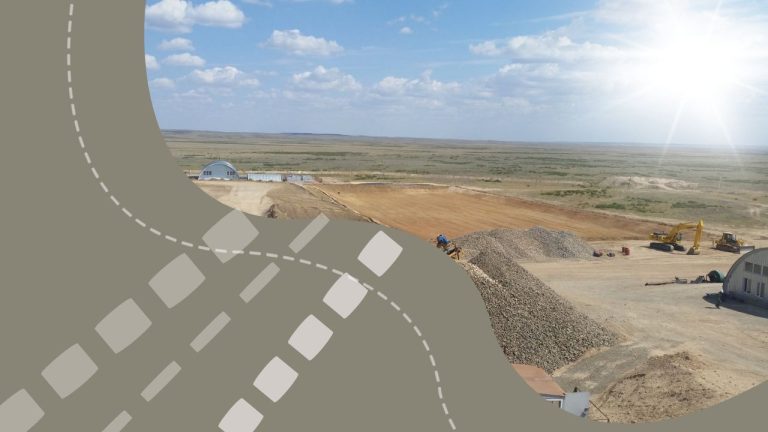
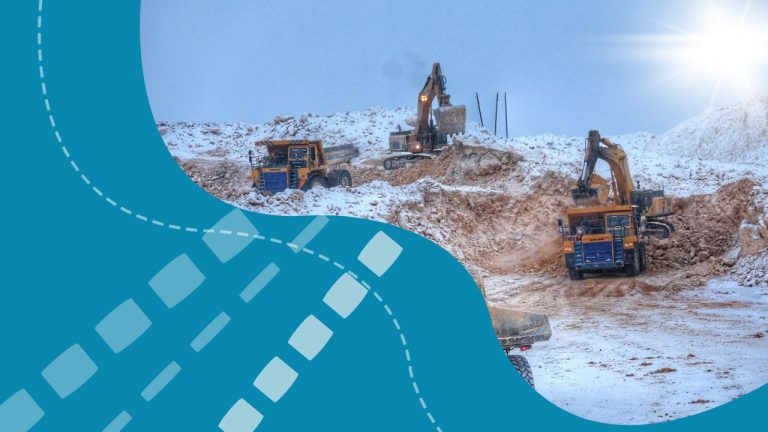
  • In Kazakhstan, there is a proposal to allow the development of mining waste within populated areas.

    In Kazakhstan, there is a proposal to allow the development of mining waste within populated areas.

    The proposal to allow the extraction of technogenic mineral formations (TMF) located within populated areas and within 1 km of them is stated in an advisory document on regulatory policy for the draft law of the Republic of Kazakhstan “On Amendments and Additions to Some Legislative Acts of the Republic of Kazakhstan on Subsoil Use to Improve the Investment Climate.”

    In Kazakhstan, there is a proposal to allow the development of mining waste within populated areas.”The prohibition established by Article 25 (Subsoil Code, which prohibits subsoil use operations on lands within populated areas and within 1 km of them – italicized) prevents obtaining subsoil use rights for TMF located in populated areas. At the same time, underground extraction of TMF is not possible as the objects are located on the surface of the land. In turn, granting the right to extract solid minerals (TPM) from TMF within populated areas will free up land, improve the environmental situation (through the removal of ore or tailings), and create jobs,” the published document states.

    Developers note that a significant portion of TMF resulting from mining activities is currently located within populated areas or within a 1 km protective zone: terricones in the East Kazakhstan region, Balhash, Kentau tailing ponds, and so on. According to established practice, subsoil users have had to buy land and houses from local residents, compensating for their relocation to other populated areas. Now, this practice is effectively being proposed to be discontinued.

    However, developers believe that the extraction of minerals from such TMF should be aimed at exporting the TPM from the extraction site without processing them on-site, as such activities would exacerbate the environmental situation. Therefore, the document emphasizes that when signing agreements to support the local population and coordinating environmental impact assessments (EIA), requirements for preserving the environmental situation will take precedence.

    In addition, the document proposes to ease the conditions for artisanal miners. According to the code, applicants for an artisanal miner’s license must own a cargo truck with a capacity of no more than 10 tons, drilling equipment, as well as an excavator or bulldozer with a total bucket volume of no more than half a cubic meter. However, for artisanal miners, acquiring an excavator and bulldozer for stripping and reclamation work is costly and impractical expenditure, so the use of equipment on a rental basis is proposed to solve this problem.

    The developers also suggest regulating, following the example of foreign legislation, the amounts to be paid by subsoil users for using land plots for geological exploration within the framework of private or public servitude (limited right to use someone else’s land). When establishing private servitude, a fee for servitude and compensation for damages are provided. However, because the parties cannot reach an agreement on this matter, the subsoil user cannot start geological exploration. The document notes that the absence of regulation on the amount often leads to unjustified overestimation of expectations regarding the amounts from landowners’ side.

  • Kazakhstan and the European Union are expanding opportunities for the development of the critical raw minerals sector

    Kazakhstan and the European Union are expanding opportunities for the development of the critical raw minerals sector

    From October 25 to 26, 2023, Vice Minister of Industry and Construction of the Republic of Kazakhstan Iran Sharkhan and Chairman of the National Geological Survey JSC Erlan Galiyev took part in the Global Gateway forum in Brussels (Belgium).

    The event, which focused on green energy, education and research, critical raw materials, transport corridors, healthcare manufacturing and digital infrastructure, was opened by European Commission President Ursula von der Leyen.

    During the visit, the Kazakh delegation took part in a panel session dedicated to the problem of rare earth metals and discussed issues of joint cooperation with the parties. Also, I. Sharkhan and E. Galiyev held a number of bilateral meetings with the heads of European organizations.

  • Kazakhstan proposes to allow the development of mining waste in populated areas

    Kazakhstan proposes to allow the development of mining waste in populated areas

    It is proposed to allow mining of reserves of technogenic mineral formations (TMF) located on the territory of populated areas and within 1 thousand m from them, as reported in the regulatory policy advisory document of the draft law of the Republic of Kazakhstan “On introducing amendments and additions to certain legislative acts of the Republic of Kazakhstan on issues subsoil use in order to improve the investment climate.”

    “The ban established by Article 25 (of the Subsoil Code, which prohibits subsoil use operations on the lands of populated areas and up to 1 thousand meters from them – “Italics”), does not allow obtaining the right to subsoil use for solid waste located in populated areas. At the same time, the extraction of solid waste by the underground method is impossible, since the objects are located on the surface of the earth. In turn, granting the right to extract solid minerals (solid minerals – “Italics”) from solid waste within a populated area will free up occupied land, improve the environmental situation (by removing ore or tailings), and create jobs,” says the text of the published document. .

  • Tax authorities of Kazakhstan are putting pressure on mining and metallurgical companies and have increased the mineral extraction tax to 30-50% – specialized association

    Tax authorities of Kazakhstan are putting pressure on mining and metallurgical companies and have increased the mineral extraction tax to 30-50% – specialized association

    Tax officials are putting pressure on the mining and metallurgical complex (MMC) and have increased the mineral extraction tax (MET) from the beginning of 2023 to 30-50%, said Maxim Kononov, first deputy executive director of the Republican Association of Mining and Mining and Metallurgical Enterprises.

  • The ban on the export of coal by road transport in Kazakhstan will be extended

    The ban on the export of coal by road transport in Kazakhstan will be extended

    The Ministry of Industry and Construction of the Republic of Kazakhstan plans to extend the current ban on the export of coal by road from the territory of the Republic of Kazakhstan.

    The ban is being extended in order to avoid a shortage of coal for the population during the heating season.

    The ban is extended from November 26 this year. for a period of six months.
    In particular on:

    — hard coal, pulverized or non-pulverized, but not agglomerated (HS code 2701);

    — lignite, or brown coal, agglomerated or non-agglomerated, except jet (HS code 2702).

    The feasibility of establishing a ban on the export of coal by road from the territory of the Republic of Kazakhstan was considered and supported at a meeting of the Interdepartmental Commission on Foreign Trade Policy and Participation in International Economic Organizations (IEC) on September 20, 2023.

    Press service of the Ministry of Industry and Construction of the Republic of Kazakhstan

  • The Kazakhstan Chamber of Mines did not agree with the resolution of five geologists

    The Kazakhstan Chamber of Mines did not agree with the resolution of five geologists

    The document stated the need to review the subsoil use reform.

    The Kazakhstan Mining Association KazNedra (Kazakh Chamber of Mines) opposed the resolution, which was presented by a small group of geologists after the capital’s congress of geological industry participants in September. This is stated in her letter to the president of the country, the leadership of parliament and government, received by inbusiness.kz.

    “On September 15, 2023, a congress of geologists of Kazakhstan (hereinafter referred to as the congress) was held in Astana, organized by the Geology Committee of the Ministry of Industry and Construction of the Republic of Kazakhstan (hereinafter referred to as the MPS). Members of the association also took part in the congress. Continuing the congress, a group of five geologists independently adopted a congress resolution and an appeal to the leadership of the Republic of Kazakhstan on the need to review the subsoil use reform, restore previously abolished regulatory mechanisms inherited from Soviet times, and introduce other non-market obligations. The Association states that the said resolution and appeal were not discussed at the congress and the delegates of the congress did not ask, assign or grant authority to the said geologists to draw up a resolution and appeal on behalf of the delegates of the congress,” the letter from the Chamber of Mines notes.

    She did not agree with the proposals voiced in the above-mentioned resolution and appeal, since they contradict the spirit of the current Subsoil Code.

    “The Association is firmly against these initiatives in the resolution and this appeal. The initiatives in the resolution and appeal undermine and sabotage the reform of the mining sector within the framework of the Subsoil Code, which was introduced in June 2018. The adoption of the initiatives set out in the resolution and appeal, contrary to the instructions, statements and promises of the leadership of the Republic of Kazakhstan and the practice adopted in the leading OECD countries, will radically reduce investments or make it impossible to further invest in geological exploration and production in the Republic of Kazakhstan,” the message states.

    The Kazakhstan Chamber of Mines was established in March 2023 to represent the interests of mineral explorers, developers and producers in Kazakhstan. It unites national and foreign companies in the mining sector of Kazakhstan that emerged, entered or expanded their investments in connection with the adoption of the Subsoil and Subsoil Use Code, such as Sarytogan Graphite Ltd., Rio Tinto Exploration Kazakhstan, IG Kazakhstan Ltd., Aurora Minerals Group, Scythian Mining Group, Arras Minerals.

    Let us recall that in mid-September inbusiness.kz covered the congress of geologists, which was held in Astana.

    The document available to the editors of inbusiness.kz, entitled “resolution of the first congress of geologists of Kazakhstan,” was signed allegedly on behalf of the delegates by Daukeev S. Zh., Kuandykov B. M., Zholtaev G. Zh., Uzhenov B. S., Saiduakasov M.A. It says that the main reason for the stagnation in the discovery of new significant deposits is the inadequate volumes of the state geological study of subsoil (GGIN). As you know, such research is financed from the budget.

    “Private investors come only to promising subsoil areas already identified at the GGIN stage. GGIN is the main initial stage of serious government investment in the regional geological study of subsoil for their further preparation for exploration and production itself. GGIN is the foundation of all geological exploration. Without adequate funding, the discovery of new deposits, attraction of private investment in geological exploration and replenishment of the mineral resource base is impossible,” the resolution states.

    This document, in particular, proposes to increase state funding for GGIN to at least $40 per 1 sq. m. km and increase the volume of areas studied at the expense of the budget to 2.2 million square meters. km by 2026. In addition, it talks about the need to oblige subsoil users to invest 3% of the operating costs of production in geological exploration of their own areas to increase reserves. Moreover, the resolution voices proposals to radically revise and simplify the Subsoil Code, as well as maintain the status of the state commission on reserves.

  • The unprofitable “Bast” requested a loan from the Development Bank of Kazakhstan

    The unprofitable “Bast” requested a loan from the Development Bank of Kazakhstan

    The company “Bast,” engaged in the development of the Maxut deposit in the Abay region, has approached the Development Bank of Kazakhstan for debt financing for its project, as reported by inbusiness.kz. This loan was requested for the “expansion of the ore processing plant for the production of copper and nickel concentrates.” Currently, an “indicative analysis” of the project is being conducted, as indicated in the “projects under consideration” section on the BRK website.

    The primary shareholder of “Bast” is the businessman Timur Turlov, who owns 74.18% of the company’s shares, with an additional 8.14% belonging to the affiliated Freedom Finance Global Plc, as stated on the Kazakhstan Stock Exchange website. As of the end of the previous year, Turlov controlled 75.4% of “Bast” shares, while the share held by Freedom Finance Global Plc was minimal, with just 1 share, according to annual reports. Additionally, at the end of 2022, the liquidation commission of Bank Astana retained a noticeable stake in the company, amounting to 5.26%. It’s possible that this share has been reduced at the beginning of this year, as information about it is no longer published in stock summaries.

    The initial public offering of “Bast” shares on the Kazakhstan Stock Exchange took place in 2014, as stated on the company’s website. In 2018, an ore processing plant was put into operation at the Maxut deposit for the production of copper and nickel concentrate. Despite this, “Bast” remained unprofitable over the last two years. According to the financial report for the past year, during that period, the company’s losses exceeded 494 million tenge, despite revenue of 6.3 billion tenge. However, this is half the losses recorded in 2021, which were 1.2 billion tenge.

    Over the past five years, the company attracted small loans from Turlov and other individuals, mainly of a short-term nature. Interestingly, “Bast” also received $2 million as an advance payment from the trader Trafigura for the delivery of copper concentrate, to be repaid by the end of July this year. It’s worth noting that the company had no revenue from the sale of nickel concentrate with a discount last year.

    In 2021, the company was involved in a legal dispute with TO “Service Company “Semey” regarding the recognition, acceptance of work performed, and the recovery of a debt in favor of TO “Service Company “Semey” in the amount of 66,573 thousand tenge. The company had its bank account in AO DB “Sberbank Kazakhstan” frozen in the amount of $156,780 USD (equivalent in tenge as of December 31, 2021 – 67,677 thousand tenge) as part of the execution of a decision by the specialized interdistrict economic court of Almaty. The company filed an appellate complaint for a review of the first-instance decision. In June 2022, the court ruled to uphold the decision of the specialized interdistrict economic court of Almaty and dismissed the company’s appeal. As of December 31, 2022, the company’s obligation has been fully settled through repayment. There were no frozen funds on the company’s account as of December 31, 2022, as noted in the 2022 annual report.

    In total, there were reserves of 112 thousand tons of copper and 79 thousand tons of nickel at Maxut, with the potential for an increase, as mentioned in the financial report. The subsoil use contract for “Bast” was extended last December until May 2042. From 2028, the company will begin using a new metal extraction technology that will reduce operational costs by 25%, as stated in the financial documentation.

    It’s worth noting that the expansion of “Bast” is not the only project involving Timur Turlov that has recently come to the attention of BRK. According to the “projects under consideration” section, the public company AKASHI Data Center PLC has applied for bank financing for the project “Construction of a Tier IV data center with 4,000 racks,” which is currently at the “business proposal” stage.

    Additionally, TO “Production Company “Cement Plant Semey” expressed its desire to attract borrowed funds from BRK for pre-export financing in the amount of 1.2 billion tenge. This application, with Timur Turlov listed as one of the beneficiaries, is currently in the “bank expertise” stage.

  • The geological industry needs a new impetus – Tokayev

    The geological industry needs a new impetus – Tokayev

    President of Kazakhstan Kassym-Jomart Tokayev received veterans of the geological industry, BaigeNews.kz reports with reference to Akorda.

    Head of State Kassym-Jomart Tokayev met with honored figures of the country’s geological industry – academician of the National Academy of Sciences Serikbek Daukeev, president of Meridian Petroleum LLP Baltabek Kuandykov, director of the Institute of Geological Sciences named after K.I. Satpayev Hero Zholtaev and the president of the public association “Academy of Mineral Resources” Bulat Uzhkenov.

    The President noted that the geological industry is the basis for the progressive development of all subsoil use and an important component of the country’s economy.

    According to the Head of State, geology needs a new impetus, especially in terms of exploration and comprehensive study of subsoil. Therefore, the government was tasked with bringing the area of geological and geophysical exploration to 2.2 million square kilometers by 2026.

    According to Kassym-Jomart Tokayev, comprehensive measures are being taken in order to attract foreign investors, capital and modern technologies to geological exploration. At the same time, it is important to maintain a balance between the openness of the geological sphere for investment and ensuring the interests of the state.

    Also at the meeting, current issues of the geological industry and proposals for its stimulation were discussed.

    At the end of the meeting, Kassym-Jomart Tokayev expressed gratitude to the veterans for their significant contribution to the development of domestic geology.

  • ERG has entered into a five-year agreement for the supply of cobalt with EVelution Energy.

    ERG has entered into a five-year agreement for the supply of cobalt with EVelution Energy.

    Eurasian Resources Group (ERG), a leading diversified group in the extraction and processing of natural resources, has entered into a preliminary five-year agreement with EVelution Energy (EVelution), an American company specializing in battery material processing for electric vehicles. The agreement entails the supply of cobalt hydroxide produced by ERG to EVelution’s cobalt processing plant in the United States, which the company plans to begin constructing in 2024. ERG’s cobalt will satisfy nearly half of EVelution’s annual raw material requirements.

    The announcement of the agreement was made during the London Metal Week, an annual conference attended by representatives of the global metallurgical industry. The collaboration between ERG and EVelution will provide an impetus for the development of the mineral production industry in the United States. It will also contribute to sustainable development goals by creating new jobs in the manufacturing sector and supporting global climate change mitigation efforts.

    Furthermore, the partnership between the two companies marks a significant milestone in the development of cobalt processing capabilities in the United States. Currently, there are no industrial-scale cobalt processing facilities in the country, while over 70% of global cobalt sulfate production is concentrated in China.

    Benedikt Sobotka, CEO of ERG, emphasized, “We are pleased to reach this agreement for the supply of cobalt hydroxide with EVelution Energy. This collaboration supports the transition to clean energy and will help meet the pressing needs of the American market in developing cobalt processing capacity.”

    Navaid Alam, President and CEO of EVelution Energy, stated, “We are delighted to establish a long-term partnership with ERG for the supply of cobalt hydroxide. This agreement, along with potential partnerships we are exploring with other suppliers, will ensure a sustainable cobalt hydroxide supply to meet the growing demand of our customers in North America for domestically produced zero-carbon cobalt sulfate, in compliance with the Inflation Reduction Act (IRA).” Cobalt sulfate is a material required for the production of electric vehicle batteries.

    The cobalt hydroxide will be supplied from ERG’s flagship facility, Metalkol, located in the Democratic Republic of Congo, which is one of the world’s leading cobalt producers.

    The EVelution plant is scheduled to commence operations by 2026. The company has announced plans to install its own solar battery-based power source at the facility, with surplus clean electricity being supplied to local farmers. Additionally, the plant will reuse approximately 70% of the water it consumes.

  • Polymetal did not find enough gold in the Shekara area

    Polymetal did not find enough gold in the Shekara area

    The mineral exploration activities in the Shekara area of the Kostanay region in Kazakhstan have yielded disappointing results, according to a written response from Polymetal, a gold mining company registered with the Ministry of Finance and Economy of Kazakhstan. The company has determined that the area does not contain economically viable reserves for large-scale development. As a result, the contract territory is being returned to the state, and the accumulated geological data will be transferred to the state geological fund.

    Polymetal had been conducting work in the Shekara area, as mentioned in their earlier press service statements. However, it appears that a decision to halt these activities has been made in recent months. The exploration work in the area began several years ago, with Kazgeology conducting aerogeophysical surveys at the request of Polymetal to assess the potential for gold-silver and copper deposits. A joint venture named “Shekara” was established, with the national geology company holding a 25% stake. Polymetal’s subsidiary, the Kostanay company “Varvarinskoye,” also held shares in the project.

    In March 2021, the national company transferred the mining rights in Shekara to the joint venture. Geological exploration for gold, copper, and polymetallic ores covered an area of 213 square kilometers. The state invested 602 million tenge from 2017 to 2019 for geological exploration, and an additional 21 million tenge was spent from 2018 to 2021, according to Kazgeology’s report.

    It is worth noting that Polymetal is now focusing on assessing reserves in the promising Bakys area in the North Kazakhstan region. The company recently increased its stake to 75% in this gold-copper project, with “Kazgeology” holding the remaining share. Polymetal is evaluating the reserves and plans to consider production in the area after placing them on the state balance sheet. The company’s CEO, Vitaliy Nesis, mentioned the possibility of buying out the junior partner’s stake in the project in a recent interview.

    Active geological exploration in Kazakhstan is crucial for Polymetal, as their Komarovsky gold deposit in the Kostanay region is expected to be depleted by 2028. The ore extracted from Komarovsky is processed at Polymetal’s Varvarinskoye hub, which will continue operating at its current volume. The company is preparing to exploit a new deposit to sustain production as mining operations decline at Komarovsky.

    Furthermore, Polymetal is collaborating with a junior partner in the Northern Balkhash region to search for copper and polymetallic deposits. These projects in Central Kazakhstan aim to establish another processing center and involve exploration in various areas.

    Overall, Polymetal’s exploration efforts in Kazakhstan are focused on identifying new deposits to ensure continuous production and maintain their presence in the region’s mining industry.
    Meanwhile, on the tender page of LLC “TD Polymetal” on the website b2b-center.ru, it is indicated that in 2021, the company solicited proposals for tunnelling works on five licensed areas in Northern Balkhash for the requirements of TOO “Zhana Mys.” It is noteworthy that the latter was among the subsoil users who recently surrendered their license. As per the subsoil users register published in June, this company held nine licenses issued by the Ministry of Industry. Its sole founder is K.M. Dosmukametov, presumably referring to Kanat Dosmukametov, the CEO of “Polymetal Eurasia.”

    As it is known, Polymetal’s primary mining project in Kazakhstan is currently the Kyzyl project in the Abai region, which encompasses the development of the Bakyrchik deposit. It can be considered the largest gold mine in the country in terms of reserves. According to the company’s website, at the time of assessment, its reserves amounted to 9.8 million ounces in gold equivalent, exceeding 304 tons according to inbusiness.kz estimates. In comparison, the once largest Vasilkovskoye deposit in the Akmola region, known as Kaztsink, experienced a decline in reserves and resources from approximately 370 tons to 74-86 tons over the years, as reported by our publication. It is highly likely that with the complete depletion of Vasilkovskoye in the coming years, Polymetal will surpass it as the leading gold miner in the country.

    As previously reported, due to the National Bank’s priority purchase of domestically refined gold, Polymetal refrains from selling the gold it produces abroad, except for a small quantity of refractory gold in high-carbon concentrate from Kyzyl. The low-carbon concentrate from the project is transported to the company’s autoclave plant in Amursk and then returned to Kazakhstan in a processed form. Recently, Polymetal has encountered logistical challenges in delivering gold-bearing raw materials from Kyzyl to the Far Eastern ports.

    “The delivery of concentrate to the Far Eastern ports is currently facing difficulties. Russian railways are not approving applications for transporting concentrate there via covered wagons. There are no transportation issues to Amursk. Hence, we are compelled to transport the concentrate by rail to Amursk and then deliver it to the ports by road for further shipment to China. While we had a one-time experience of shipping concentrate from Kyzyl to the ports by road, it is more efficient to transport it by rail,” confirmed the company.

    Polymetal also provided comments regarding CEO Vitaliy Nesis’s recent statement to Bloomberg regarding the possibility of relisting the gold miner’s shares in London after selling its Russian division. Previously, the company’s CEO stated in a comment to inbusiness.kz that they planned to work closely over the next two years to enhance the liquidity of their shares on the AIX exchange in Astana. This decision came after the re-registration in the Ministry of Finance and Economy of the Republic of Kazakhstan, subsequent to their departure from the Jersey jurisdiction.

    “Unlocking potential on AIX and returning to LSE are not contradictory. AIX will continue to serve as the primary trading platform, while LSE can provide additional liquidity, but only after the sale of Russian assets,” clarified Polymetal.