Region: Kazakhstan

  • Orano names start date for uranium mining at new plot in Kazakhstan

    Orano names start date for uranium mining at new plot in Kazakhstan

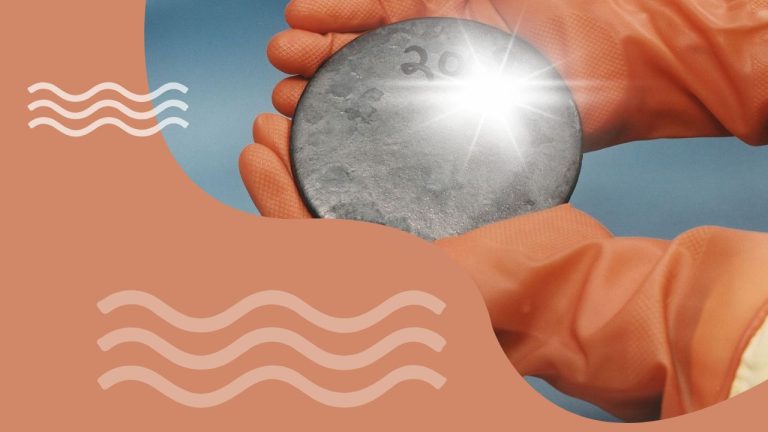
    BAKU, Azerbaijan, November 12. Uranium mining at the Kazakhstan’s South Tortkuduk plot by the KATCO, the joint venture between French Orano Mining and Kazatomprom (Kazakhstan’s national nuclear company), will begin at the end of 2023, a source at Orano told Trend.

    “Kazakhstan is the world’s largest uranium producer.” Orano is present in the country through KATCO, a joint venture created in 1996 by Orano Mining (51 percent) and Kazatomprom (49 percent) to develop and utilize the uranium resources of Muyunkum and Tortkuduk in the Turkestan region, about 300 kilometers north of Shymkent,” according to the source.

    According to the corporation, it now employs over 1,200 people and operates an ISR mine with an annual capacity of approximately 4,000 tons of uranium. Over the last 20 years, KATCO has produced more than 40,000 tons of uranium from the two deposits.

    “In August 2022, KATCO and the Ministry of Energy in the Republic of Kazakhstan signed an amendment to the existing subsoil utilization contract to exploit the South Tortkuduk plot. Exploitation of this new plot should guarantee KATCO production for around fifteen years. Production from the new deposit is due to begin towards the end of 2023,” the source said.

    The source pointed out that Orano Mining and the Kazakh National Company Kazatomprom signed a memorandum of cooperation on November 29, 2022.

    “Through this memorandum, Orano Mining and Kazatomprom state their intention to maintain and strengthen their cooperation in the uranium mining industry, building on their existing successful partnership,” the company added.

    As the chief operating officer of the Orano group previously stated at a meeting with the management of Kazakhstan’s Samruk-Kazyna JSC (Sovereign Wealth Fund), French Orano S.A. intends to expand areas of cooperation with Kazakhstan, including the implementation of joint strategic projects outside the country.

    On September 29, 2023, Kazakhstan’s Kazatomprom presented its strategy for uranium production for 2025. The Board of Directors of Kazatomprom approved the company’s strategy to increase uranium production volumes in 2025 to 100 percent of the level planned under subsoil use contracts.

    Kazakhstan ranks second in the world in terms of proven reserves of natural uranium. About 14 percent of all proven world reserves are concentrated in the depths of the Republic of Kazakhstan. The country’s total proven reserves are estimated at more than 700,000 tons of uranium.

    In 2009, Kazakhstan took first place in uranium production in the world and continues to maintain a leading position in the world market. Kazakhstan produces about 40 percent of the world’s uranium production. In 2021, the volume of uranium production amounted to 21,800 tons, according to the results of 2022 – 21,300 tons.

  • Kyrgyzstan’s black coal import from Kazakhstan drops

    Kyrgyzstan’s black coal import from Kazakhstan drops

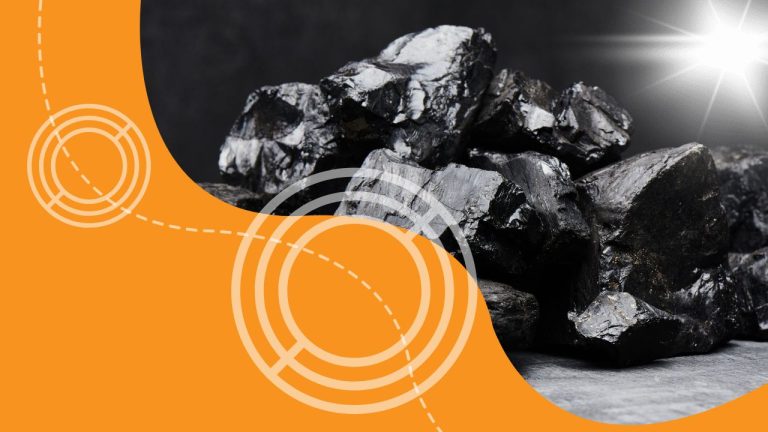
    BISHKEK, Kyrgyzstan, November 13. Kyrgyzstan imported 303,292 tons of black coal from Kazakhstan from January through August 2023, Trend reports.

    Data from the National Statistical Committee shows that the figure was 1.4 percent less than in the same period of 2022 (307,672 tons). The value of the imports amounted to $12.858 million, reflecting an 18 percent decline compared to the same period in 2022 ($15.622 million).

    The majority of coal in Kyrgyzstan was primarily imported from Kazakhstan, with an additional 11 tons from Russia, costing $600.

    Meanwhile, the volume of imports from Russia decreased by 95.9 percent compared to 275.4 tons imported from January through August 2022, and the value decreased by 99.2 percent compared to $76,000 recorded in the eight months of 2022.

    At the same time, a total of 801,013 tons of black coal were exported from Kyrgyzstan from January through August 2023, which is 71.8 percent more than in the same period of 2022 (466,207 tons)

    Kyrgyzstan’s imports from Kazakhstan totaled $546.152 million in the first eight months of the current year, which is a 12-percent decrease year-on-year.

  • The Sarybulak copper deposit will be developed in the Abay region

    The Sarybulak copper deposit will be developed in the Abay region

    Stellar mining plans to put into industrial circulation the Sarybulak copper ore deposit, located in the Ayagoz district of the Abay region. Mining will be carried out by open-pit mining within the contours of one quarry. The plan for future mining operations was posted on the Unified Environmental Portal for approval by experts and the public.

    They want to start developing the field, discovered back in the Soviet years, next year. The total operating life of the quarry will be six years, and the maximum design productivity will be 256 thousand tons of ore per year.

    The last time the mineral resource base of Sarybulak was assessed was this year. According to the Stellar mining plan, identified reserves amount to 572.6 thousand tons of copper ore (14.9 thousand tons of metal with an average content of 2.60%), estimated reserves – 601.6 thousand tons of ore (12.3 thousand . tons of metal with an average content of 2.04%).

    Another project of the company, the Nurbay copper ore deposit, is also noted on the official Stellar mining portal. Both mining sites are located 90–100 km from the Balkhash-Sayak-Aktogay-Dostyk-Alashankol railway, which connects the largest copper deposits of the Northern Balkhash region with the Balkhash MMC. Most likely, Sarybulak ore will be processed there.

  • Appointments to the Kazakhstan chamber of mines

    Appointments to the Kazakhstan chamber of mines

     The Kazakhstan Chamber of Mines announces the appointment of Mr. Ruslan Baimishev as President of the organization.

           The appointment, which came into force on November 7, 2023, was approved by all directors of the Chamber. Mr. Baimishev ,  with his extensive experience and education in the fields of law and geology, as well as an MBA   with a concentration in mining management, represents the ideal candidate for the role of President. During his career, he held important leadership positions, including leading the development of the geological sector in Central Asia at the National Center for Geological Information and Natural Resources.

    Mr. Baimishev also successfully served as the National Coordinator and  Head of the Secretariat for the Extractive Industries Transparency Initiative (EITI) in Kazakhstan and held key positions in the Ministry of Investment and Development. From 2019 to 2022, he successfully fulfilled the duties of Vice-Minister for Industry and Infrastructure Development of the Republic of Kazakhstan.

           The role of Chamber President provides certain privileges, including active participation in Chamber activities and representation of the Chamber in government and international organizations on behalf of Chamber directors or the CEO.

            The Kazakhstan Chamber of Mines is confident that Mr. Baimishev will actively contribute to the development and promotion of the interests of the mining industry in the region.

    When using information, a link to the information and analytical portal of subsoil use of Kazakhstan ( www.infonedra.kz ) is required

  • Kazatomprom agreed to export uranium to China

    Kazatomprom agreed to export uranium to China

    Kazatomprom has entered into a long-term contract for the supply of uranium with China National Uranium Corporation Limited, Kazatomprom reported.

    “National Atomic Company Kazatomprom has signed a contract for the supply of Kazakh natural uranium concentrate with China National Uranium Corporation Limited – CNUC (a subsidiary of China National Nuclear Corporation – CNNC),” the published statement says.

    According to Kazatomprom, entering into a contract with a major Chinese energy company will help meet China’s growing need for clean, carbon-free electricity and strengthen the historically long-standing nuclear relationship between the two countries.

    “Kazatomprom’s market-oriented strategy is aimed at producing, processing and selling natural uranium concentrates with the aim of creating long-term value for all stakeholders. Close cooperation with one of the large Chinese energy companies, like CNUC, testifies to Kazatomprom’s strong reputation as a reliable and preferred supplier in the global nuclear fuel market,” said Seitzhan Zhanybekov, Managing Director for Strategy and Marketing of Kazatomprom, after the signing .

    The signing of a long-term contract with CNUC took place at the China International Import Expo 2023 in Shanghai as part of a previously approved transaction at the annual general meeting of shareholders in May 2023. Kazatomprom does not disclose the volume and commercial terms of the contract with CNUC, calling them confidential and commercially sensitive.

    It is worth noting that at the general meeting in May, 91.91% of shareholders approved the deal with CNNC (7.75% of shareholders voted against, 0.34% abstained). Shareholder approval was required because the transaction involved the acquisition or disposal of property valued at more than 50% of the total book value of the company’s assets. As of April 1, Kazatomprom’s total assets amounted to 2.3 trillion tenge. Thus, the cost of the transaction amounted to more than 1.15 trillion tenge or over $2.5 billion at the National Bank exchange rate as of April 1.

    According to reports for the first half of the year, Kazatomprom’s key consumer was China, which purchased 218.6 billion tenge of uranium during this period, compared to 97.5 billion tenge in the first half of 2022.

    The group also made sales to the following countries: USA – 118 billion tenge (60.3 billion tenge), Russia – 72 billion tenge (30.7 billion tenge), Kazakhstan – 55.5 billion tenge (60.7 billion tenge), France – 51.8 billion tenge (28.7 billion tenge), the Netherlands – 48.4 billion tenge (0), Canada – 30.7 billion tenge (64.9 billion tenge), Great Britain – 4.6 billion tenge (116, 2 billion tenge), other countries – 19.1 billion tenge (35.1 billion tenge). Total revenue amounted to 618.7 billion and 493.7 billion tenge, respectively.

    The Kazatomprom company plans to produce uranium in 2025 in 100% volume under subsoil use contracts, compared to minus 10% of contract volumes in 2024 (5.5-6.5 thousand tons of uranium, respectively), the company reported at the end of September. Kazatomprom Chief Commercial Officer  Dastan Kosherbaev  recalled that for seven consecutive years the company maintained uranium production 20% below the volumes planned in subsoil use contracts.

    According to the company, the decision to return to 100% production levels under subsoil use contracts is due to the fact that Kazatomprom continues to successfully conclude medium- and long-term contracts with both new and existing clients against the backdrop of improving uranium market conditions. Additional production volumes in 2025 will be used to fulfill the company’s contractual delivery obligations in 2025 and beyond.

    It is expected that the implementation of this decision will lead to an increase in the estimated level of global primary uranium production to 6 thousand tons in 2025 compared to the company’s planned production volumes for 2024. Kazatomprom’s production volume in 2025 is therefore expected to be 30.5–31.5 thousand tons of uranium (on a 100% basis), reaching 100% of the total production volume under subsoil use contracts for 2025.

    The main part of the significant increase in production volumes from 2024 to 2025, the company notes, is reserved under medium- and long-term contracts. In this regard, Kazatomprom is beginning to work with joint venture partners and uranium mining subsidiaries to prepare budgets and production plans for 2024, taking into account the expected growth in production volumes in 2025. However, a decision regarding production plans and production volumes after 2025 has not yet been made.

    Kazatomprom expects to increase uranium sales in 2023, the company’s chairman of the board,  Yerzhan Mukanov , said on August 25 .

    “We expect sales to increase from previous guidance due to additional requests from customers to change annual supply volumes under current contracts, some new long-term contracts for delivery through 2023,” he said at a news conference.

    The consolidated volume of product sales will increase to 17.5–18 thousand tons compared to the previous forecast of 15.4–15.9 thousand tons. At the same time, Kazatomprom lowered its forecast for the average annual exchange rate to 460 tenge per US dollar from 470 tenge previously. Total revenue will increase to 1.27–1.31 trillion tenge from 1.08–1.09 trillion previously.

    In accordance with the company’s strategy, and taking into account restrictions on field development and production, production volumes in 2024 are expected to remain at minus 10% of the total level of subsoil use contracts, which is approximately 25 thousand tons of uranium. Kazatomprom planned to report production plans for 2025 before the end of the current quarter.

    Kazatomprom reported an increase in net profit for the first half of the year to 222.3 billion tenge, which is 33% more than in the same period in 2022. The profit growth was mainly due to rising uranium prices and increased sales volumes. The cost of sales increased by 10% – to 320.5 billion tenge. General and administrative expenses increased to 32.2 billion tenge from 18.8 billion tenge a year earlier. Kazatomprom’s net debt as of June 30 amounted to 176.7 billion tenge (at the end of 2022 it was 170.5 billion tenge, as of June 30, 2022 – 282.4 billion tenge).

    U3O8 uranium production increased in the first half of the year to 10,225 tons from 10,070 tons a year earlier (+2%). Sales volume amounted to 9,527 tons (9,017 tons a year earlier, or +6%). The average selling price was 55,257 tenge, or $47.04, per pound in the first half, compared with 47,807 tenge and $40.88 a year earlier, respectively, or 16% and 15% higher, respectively. Cash cost as of June 30 was $12.18 per pound, compared to $9.77 per pound a year earlier (+22%). Consolidated inventories of finished U3O8 products as of June 30 amounted to 7,644 tons, which is 18% lower than a year earlier. 

  • The head of Polymetal commented on ArcelorMittal’s departure from Kazakhstan

    The head of Polymetal commented on ArcelorMittal’s departure from Kazakhstan

    Gold mining company Polymetal has made a firm commitment to sell its Russian assets, which are subject to U.S. sanctions, no later than the first quarter of next year. The CEO of the company, Vitaly Nesis, informed investors about this during a conference call on the production results for the third quarter last week.

    “When we relocated to Kazakhstan in August, we signed an official commitment stating that the company will sell its sanctioned Russian subsidiary, which is listed on the Specially Designated Nationals and Blocked Persons List, within nine months. This document serves as a preliminary condition for changing jurisdiction. While we cannot be excluded from the Moscow Exchange, we believe that this commitment represents a contractual obligation for us. Violating this obligation would have serious consequences for the company,” said Nesis.

    In September, Nesis predicted that the Russian division of Polymetal International would be sold within the next 6-9 months.

    Nesis also highlighted that if the deal is not completed within the required timeframe, there may be significant consequences.

    “If we fail to meet the deadline, we will lose a substantial amount of political capital in Kazakhstan. Political capital is crucial in the mining sector. I don’t want to draw any inappropriate parallels, but it’s worth considering what happened to ArcelorMittal in Kazakhstan after multiple security failures. While we hope to avoid such a scenario, it is evident that managing potential problems arising from the loss of political reputation is of utmost importance,” he noted in response to a question about the potential issues that may arise if the company’s Russian assets are not sold within the promised period.

    According to Nesis, obtaining official approval from Russian authorities for the planned deal is unlikely to be necessary. However, repatriating the proceeds from the sale to Kazakhstan may face challenges due to currency restrictions imposed in Russia. This is particularly relevant as some of the current shareholders of Polymetal, who may benefit from the sale through dividends, are residents of countries considered unfriendly by the Russian government. The decision on dividend payments for this year will depend on the progress of the sale of Russian assets. If the deal with the Russian subsidiary cannot be completed, the company may consider the previously discussed option of establishing a separate entity in Kazakhstan, although this could have tax implications.

    One of the conditions for finalizing the deal, as discussed with potential buyers, is Polymetal’s requirement for strong assurances that toll processing of low-carbon concentrate from the Bakyrchik deposit in Kazakhstan at the Amursk hydrometallurgical plant will continue. The matter of preserving these supplies from the Kazakh mine is still under discussion with the Office for Foreign Assets Control (OFAC) of the U.S. Treasury’s Foreign Assets Control.

  • Canadian Cameco will increase uranium production next year

    Canadian Cameco will increase uranium production next year

    Its production share in the Kazakh joint venture “Inkai” remains highly profitable.

    Canadian uranium company Cameco plans to increase uranium production next year. This information is stated in its third-quarter report posted on the corporate website, as reported by inbusiness.kz.

    “Thanks to market improvements, new long-term contracts we have signed, and negotiation progress on contracts, we are maintaining our plans to increase uranium production to 36 million pounds (approximately 13.8 thousand tons) with 22.4 million pounds being our share (about 8.6 thousand tons), starting in 2024,” the report states.

    Recently, inbusiness.kz reported that more countries are ready to increase uranium production in the near future. It is also expected that in 2024, “Kazatomprom” will produce 10% below the planned parameters set in mining agreements with the government, compared to the previous target of 20% below. In September, the company’s board of directors approved an increase in production volumes in 2025 to 100% of the level stipulated in non-proliferation contracts, at around 30.5-31.5 thousand tons, an increase of 6 thousand tons from the previous year.

    According to “Vedomosti,” global uranium production increased by 6% to 50.4 thousand tons in 2022, with nuclear power plant demand at 63.5 thousand tons, and with commercial and strategic stockpiles, the total demand reached 74.3 thousand tons.

    By the way, speculative uranium funds increased their warehouse holdings. For example, Sprott Physical Uranium Trust (SPUT) increased its stocks by 5% to 62.2 million pounds (23.9 thousand tons) since the beginning of the year – it recently purchased 2.74 million pounds (about 1053 tons) on the spot market. Yellow Cake’s physical uranium volumes reached 20.16 million pounds (7.7 thousand tons), mainly purchased at a discount from “Kazatomprom.” In the first half of next year, Yellow Cake expects delivery of another 1.53 million pounds (587 tons) from the national uranium company at a price of $65.5 per pound, increasing its stocks to 21.68 million pounds (approximately 8.3 thousand tons). Currently, the spot price of uranium has approached $74 per pound, according to the UxC agency.

    By the way, in September, Cameco lowered its planned overall production targets for this year from 33 million pounds (12.7 thousand tons) of uranium with its share being 20.3 million pounds (7.8 thousand tons) to 30.3 million pounds (11.6 thousand tons) with a share of 18.7 million pounds (7.2 thousand tons).

    Meanwhile, the company’s production share in the third quarter at its key Canadian mines – Cigar Lake (54.5% stake) and McArthur River (70% stake)/Key Lake (83% stake) – increased to 3 million pounds (1154 tons) of uranium concentrate, which is 50% more than the 2 million pounds (769 tons) in the same period last year. In total, in the first nine months of this year, it produced 11.9 million pounds (4.6 thousand tons) in its share of these Canadian assets, an 80% increase compared to 6.6 million pounds (2.5 thousand tons) in January-September 2022.

    According to Cameco’s reports, the production of the Kazakh joint venture “Inkai,” in which the company is involved on a 100% basis, was 2 million pounds (769 tons) of uranium for the quarter and 6.3 million pounds (2.4 thousand tons) for the first nine months of this year. Last year, these indicators for the same periods were at the level of 2.3 million pounds (884 tons) and 5.8 million pounds (2.2 thousand tons), respectively. With the changes made to the 2016 agreement on “Inkai,” the company is entitled to purchase 4.2 million pounds (1.6 thousand tons), or 50% of the planned production volume of the joint venture of 8.3 million pounds (3.2 thousand tons) for this year. In this joint venture, Cameco controls 40% of the shares, and “Kazatomprom” – 60%.

    Last year, our publication reported that the Canadian nuclear company switched to trans-Caspian transit for its uranium, bypassing Russian territory. Recently, inbusiness.kz reported that this year, 228 containers of uranium concentrate were shipped from Aktau to the Baku port of Alyat, destined for the Georgian port of Poti via the Caspian, likely including volumes from Cameco in addition to Kazatomprom batches. Another hundred containers were expected to be shipped by the end of the year.

    “The first shipment, containing approximately two-thirds of our share in Inkai’s production in 2023, is currently on its way. We expect the batch to arrive by the end of 2023. The second batch with the remaining volume of our share of production in 2023 is expected to be shipped by the end of the year and arrive in early 2024,” Cameco’s report clarifies.

    The return on equity from “Inkai” in the third quarter was $35 million compared to $9 million for the same period last year. For the nine months, the company’s share income reached $100 million, exceeding $78 million for the first three quarters of 2022, according to the report. Judging by the financial indicators, the “Inkai” joint venture remains a highly profitable company. Thus, its profit for the third quarter was $49 million, and for the first nine months of this year, it reached $160 million.

  • ERG enters into an EPC contract with the Chinese company BGRIMM

    ERG enters into an EPC contract with the Chinese company BGRIMM

    The plant is scheduled to be operational by the end of 2024; the total investment in the project will be US$250 million.

    Eurasian Resources Group (ERG), a leading diversified natural resources group headquartered in Luxembourg, has entered into an agreement with China’s BGRIMM Technology Group, one of the world’s leading mining and metals companies. The agreement concerns a high-quality cobalt processing plant that ERG is beginning to build in the DRC. This production facility is planned to be commissioned by the end of 2024. The cobalt hydroxide will be supplied by Metalkol, a DRC-based ERG enterprise that is one of the world’s largest producers of materials for the battery industry and one of the leading suppliers of cobalt to China. The agreement with BGRIMM was concluded on October 17 in Beijing within the framework of the III High-Level Forum on International Cooperation “One Belt, One Road”.

    ERG continues to develop its portfolio of assets in the DRC and other countries around the world to produce high-quality materials for the lithium-ion battery sector. Over the past four years, the Group has increased the production capacity of Metalkol, ERG’s flagship plant, tenfold. ERG is also developing another key asset in the DRC, COMIDE, which has some of the world’s largest proven copper and cobalt reserves.

    In this context, the cobalt concentrator that ERG will build in collaboration with BGRIMM will be an important addition to ERG’s portfolio of assets producing key battery materials, as the facility will supply high purity cobalt hydroxide to the battery market. It will also further strengthen the Group’s position as a strategic supplier of materials for the electric vehicle sector, produced in a transparent manner across the entire value chain.

    Benedikt Sobotka, Chief Executive Officer of ERG, said: “Since the Belt and Road Forum was established, ERG has participated in this event every year because we know that important decisions for global industry are regularly made here. This Forum is no exception: the agreement between ERG and BGRIMM to build a high-quality cobalt concentrator further supports the extraction and processing of key minerals needed for the clean energy transition.”

    “We are pleased to contribute to the growth of overall investment in cobalt processing in the DRC. It will also further improve infrastructure and create numerous benefits for the local population in this country, which is one of the most important centers of the mining and metals industry and plays a key role in the global cobalt industry,” added Mr. Sobotka.

  • Fire at ArcelorMittal’s coal mine in Kazakhstan kills 45 people

    Fire at ArcelorMittal’s coal mine in Kazakhstan kills 45 people

    Afire at the Kostenko coal mine in the Karaganda region of Kazakhstan has killed 45 people.

    The incident took place on 28 October at the mine, which is operated by ArcelorMittal Temirtau, the local unit of steelmaker ArcelorMittal.

    It is believed there was a methane blast. At the time of the incident, 206 of 252 people at the mine were evacuated safely.

    Kazakhstan’s emergency services said on social media: “As of 3pm (09:00 GMT), the bodies of 42 people were found. The search for four miners continues.”

    Although the authorities recovered bodies of other three miners, a rescue operation is under way for the last missing miner.

    ArcelorMittal also halted operation of coal unit mines for 24 hours to undertake gas protection checks.

  • Kazakhstan becomes an attractive ‘nuclear’ player

    Kazakhstan becomes an attractive ‘nuclear’ player

    Kazakhstan will hold a referendum in the near future to decide whether to build its first nuclear power plant, President Kassym-Jomart Tokayev said in his annual address to the Kazakh people in September.

    The government of Kazakhstan, which is the vastest and resource-richest Central Asian nation, has long discussed the idea, citing the need to diversify its power generation capacity, and has even identified a proposed site for the plant in the south-eastern Almaty region.

    “We have the technology, we have the resources and we have the will to develop nuclear power generation, provided that the people of Kazakhstan vote in favour of such a move in the national referendum”, Kazakhstan’s deputy Foreign Minister Roman Vassilenko told a press conference in Astana, attended by Euractiv. 

    He added that a precise date had not yet been set but would be announced “in due course.”

    According to Astana-based expert Issatay Minuarov, the referendum is likely to yield a positive answer, and open the way to the construction of the first nuclear power plant. 

    “In general, people are not against the idea,” he said, adding that some fears remain due to the country’s history with nuclear power. He referred to the nuclear test site of Semipalatinsk in northeast Kazakhstan, where the USSR conducted 456 nuclear tests from 1949 until 1989 with little regard for their effect on the local people or environment.

    Reservations on nuclear despite huge potential

    Today’s Kazakhstan is an undisputed leader in uranium mining, accounting for 42% of world production, with the Kazatomprom National Atomic Company accounting for 22%, the state fund Samruk Kazyna reported on 29 August.

    Kazatomprom is therefore the world’s largest uranium producer, with its subsidiaries, affiliates and joint ventures developing 26 deposits grouped into 14 uranium mining companies.

    But in spite of these riches, Kazakhstan abandoned nuclear energy after the Soviet era due to environmental and proliferation concerns and a desire to project a new image as a responsible and peace-loving country.

    Despite inheriting a large stockpile of nuclear weapons from the Soviet Union, Kazakhstan gave up this arsenal and joined the Nuclear Non-Proliferation Treaty (NPT) to reduce the risk of nuclear proliferation.

    “On 29 August, the world observed the UN International Day against Nuclear Tests, the same day Kazakhstan closed the Semipalatinsk nuclear test site in 1991 and voluntarily relinquished the world’s fourth-largest nuclear arsenal, inherited from the Soviet Union,” Vassilenko said during the press conference.

    “This action underscores our unwavering commitment to global stability and a nuclear-weapon-free world,” he added.

    Nuclear balancing act

    But the race towards strategically important minerals led the country to envision a change in its energy mix and include more nuclear in a bid to reach its carbon neutrality goals it set for 2060. 

    Today, Kazakhstan’s main source of electricity is coal, which accounts for around 70% of the country’s power generation and is among the cheapest in the world to produce. Adding nuclear power to the mix seems a logical step, but not without some delicate geopolitical considerations.

    “We’re now considering France, South Korea, Russia, and China as countries to work with us on this nuclear plant,” said expert Issatay Minuarov, adding that it will require a certain amount of political tact and balance to manage the expectations of these different actors.

    A source close to the issue confirmed to Euractiv that building the nuclear power plant is a geopolitical conundrum for Astana. 

    “On the one hand, the Kazakhs cannot risk being sanctioned by the EU, their main trading partner, by joining forces with Russia. On the other, aligning only with an EU country like France would send a very unpleasant signal to Moscow,” the source said. 

    The source recalled that the Kremlin used the perceived threat of a nuclear-capable Ukraine as one of the justifications for its invasion of the country in 2022.

    “We’re not crazy enough to develop nuclear weapons,” Minuarov said, adding that Astana’s strong opposition to nuclear weapons and diplomatic efforts in this direction speak for themselves.

    Renewed international interest

    Kazakhstan’s reserves of uranium and other strategic minerals are now being eagerly courted by other international players, as evidenced by French President Emmanuel Macron’s visit to Astana on 1-2 November.

    “I do not underestimate the geopolitical difficulties, the pressures and sometimes the jostling to which you may be subjected. France looks to you with great consideration, respect and friendship”, Macron declared in Astana.

    France is the fifth largest foreign investor in Kazakhstan, ahead of China, thanks in particular to the presence of the oil group TotalEnergies, which jointly operates the large Kachagan field in the Caspian Sea. Bilateral trade amounted to €5.3 billion in 2022, mainly in hydrocarbons, and Kazakhstan also supplies France with almost 40% of its uranium.

    Following Macron’s diplomatic trip, several contracts and declarations were signed, including a joint declaration of intent between France and Kazakhstan on cooperation in the field of strategic raw materials.

    “Do we really have a choice?” commented a source close to the matter. “With the fiasco of French policy in Africa, and Niger in particular, Central Asia is going to take on more and more importance in the minds of Europeans.”

    “But we are not the only ones looking in that direction”, the source said, as China and Turkey in particular are seeking to carve out a place for themselves in Central Asia.