Region: Kazakhstan

  • Japan and Kazakhstan Launch EAGLE-4 Fast Reactor Safety Programme as Tokyo Advances Generation IV Nuclear Development Towards 2050

    Japan and Kazakhstan Launch EAGLE-4 Fast Reactor Safety Programme as Tokyo Advances Generation IV Nuclear Development Towards 2050

    Japan’s Atomic Energy Agency and Kazakhstan’s National Nuclear Centre have signed a memorandum of cooperation to undertake a fourth phase of the EAGLE project — a long-running joint research programme on core safety experiments for sodium-cooled fast reactors — marking a new chapter in nuclear technology collaboration between the two countries.

    NNC RK Director General Erlan Batyrbekov and JAEA President Masanori Koguchi signed the agreement, which initiates the EAGLE-4 project covering several in-pile experiments at NNC RK’s IGR research reactor, twelve out-of-pile experiments at the EAGLE test bench, and a series of small-scale tests. The main objectives are to test fuel assemblies for advanced Japanese Generation IV reactors, conduct research at NNC RK facilities, and provide a scientific basis for safety assessment of advanced nuclear technologies. NNC RK is in discussions with JAEA on extending the project through to 2031.

    The EAGLE programme began in the early 2000s and has now completed three phases. Across those phases, approximately 200 preparatory tests, two intermediate-scale and nine full-scale reactor experiments, and more than 65 out-of-pile tests were carried out, collectively confirming that molten fuel is promptly discharged from a reactor core in the event of a severe accident — a key safety finding for the development of next-generation sodium-cooled fast reactor technology.

    The programme sits within Japan’s broader strategic effort to revive fast reactor development after a prolonged pause. Japan’s government decommissioned the Monju sodium-cooled fast reactor in 2016 following a series of technical problems, including a sodium coolant leak in 1995. A strategic roadmap adopted by the Cabinet in 2018 and revised in 2022 selected sodium-cooled fast reactors as the target for a demonstration reactor conceptual design, with a demonstration fast reactor planned for operation by 2050.

    Fast neutron reactors offer substantially more efficient use of uranium resources than conventional power reactors and can burn actinides — characteristics that make them attractive for long-term energy security and waste management. For Kazakhstan, the EAGLE collaboration provides both scientific engagement and a demonstration of the country’s growing role as a partner in advanced nuclear research, complementing its dominant position as the world’s largest uranium producer.

  • Kazakhstan Emerges as Central Asia’s Critical Minerals Powerhouse as Uranium, Tungsten and Rare Earths Drive Global Investor Interest

    Kazakhstan is undergoing a fundamental repositioning in global resource markets, moving from a country primarily associated with oil, gas and bulk commodities to one increasingly recognised as a strategic supplier of uranium, rare earth elements, tungsten and other critical minerals essential to advanced manufacturing, defence systems and the energy transition.

    Three themes dominated Central Asian mining capital markets over the past week: strategic developments at Kazatomprom, shifting ownership dynamics at Eurasian Resources Group, and US government-backed financing for Kazakhstan’s tungsten projects.

    Kazatomprom, the world’s largest uranium producer, reinforced investor confidence by announcing the partial redemption of $100 million in long-term bonds — a signal of balance sheet strength during one of the strongest uranium markets in decades. The company’s market value has grown to approximately $19 billion, more than six times its IPO valuation, as nuclear energy regains strategic favour across Europe, North America and Asia. Management expects production growth in 2026 while maintaining a disciplined approach that prioritises value creation over aggressive volume expansion. State ownership through Samruk-Kazyna remains an important factor for investors assessing long-term strategic direction.

    ERG, one of the world’s largest producers of ferroalloys, iron ore, aluminium, copper and cobalt, attracted attention following ownership changes involving a significant stake. Investors interpreted the development as part of a broader trend toward greater government influence over strategically important mining assets — a pattern that extends beyond corporate governance given ERG’s critical minerals portfolio. The group previously accounted for approximately 20% of global gallium production, a metal classified as strategic by both the US and EU for its applications in semiconductors, telecommunications equipment and advanced electronics. ERG’s growing importance to global resource security has elevated it from a traditional mining group to a company viewed as critical infrastructure within global supply chains.

    On the tungsten front, a company developing the Northern Katpar and Upper Kairakty deposits — among the largest tungsten developments outside China — has reportedly sought an additional $400 million in US government-backed financing, supplementing previous expressions of interest valued at up to $1.6 billion. The scale of international backing reflects how strategic mineral projects are increasingly evaluated through a national security lens rather than as conventional commodity investments.

    Both Kazakhstan and Uzbekistan are pursuing policies designed to move beyond raw material exports, attracting investment in processing, refining and downstream industrial operations to capture a greater share of the value chain domestically. This strategic shift mirrors approaches seen in other resource-rich regions seeking long-term economic resilience, and creates new investment opportunities across multiple segments of the mining and industrial ecosystem.

  • C5+1 Critical Minerals Dialogue Convenes in Astana Ahead of AMM-2026 Congress as Kazakhstan Highlights 9,500-Deposit Resource Base

    C5+1 Critical Minerals Dialogue Convenes in Astana Ahead of AMM-2026 Congress as Kazakhstan Highlights 9,500-Deposit Resource Base

    A C5+1 Critical Minerals Dialogue was held in Astana on the eve of the 16th Astana Mining and Metallurgy Congress, co-chaired by Kazakhstan’s Minister of Industry and Construction Yersaiyn Nagassayev and US Special Envoy for South and Central Asia Sergio Gor, bringing together government representatives from Kyrgyzstan, Tajikistan, Turkmenistan and Uzbekistan alongside the United States.

    Discussions focused on priority areas of cooperation between Central Asian states and the US across the full critical minerals value chain — geological exploration, extraction, processing and supply to global markets. Participants identified long-term cooperation directions including the development of high-technology processing industries, creation of industrial clusters, technology transfer, workforce training and strengthened scientific and technical cooperation. Logistics and supply chain reliability for delivering products to world markets also featured prominently in the agenda.

    Minister Nagassayev emphasised Kazakhstan’s position at the centre of the format’s mineral security agenda. “President Tokayev particularly underscores the important role of the C5+1 platform as a new format of interaction between Central Asia and the United States. The C5+1 Critical Minerals Dialogue is aimed at deepening cooperation in sustainable strategic raw material supply, developing technological interaction and building reliable global supply chains,” he said. He described Kazakhstan’s critical minerals sector as one of the country’s industrial policy priorities, noting that the country’s resource base encompasses more than 9,500 deposits, over 100 of which contain rare and rare earth metals. Digitalisation measures and the adoption of international standards have driven a significant increase in investment, attracting major global companies including Rio Tinto, Barrick Gold, First Quantum, Ivanhoe, Teck, Fortescue and Cove Capital.

    All parties confirmed their interest in developing multilateral cooperation and implementing joint industrial and infrastructure projects.

  • Rasta Resources to Begin Gold-Silver Exploration Across Six Licence Areas in Kazakhstan’s Karaganda Region

    Rasta Resources to Begin Gold-Silver Exploration Across Six Licence Areas in Kazakhstan’s Karaganda Region

    Rasta Resources has announced plans to conduct geological exploration for gold and silver across six licence areas in the Aktogay District of Karaganda Region, with work scheduled to begin in the second quarter of 2026 and conclude in the fourth quarter of 2031.

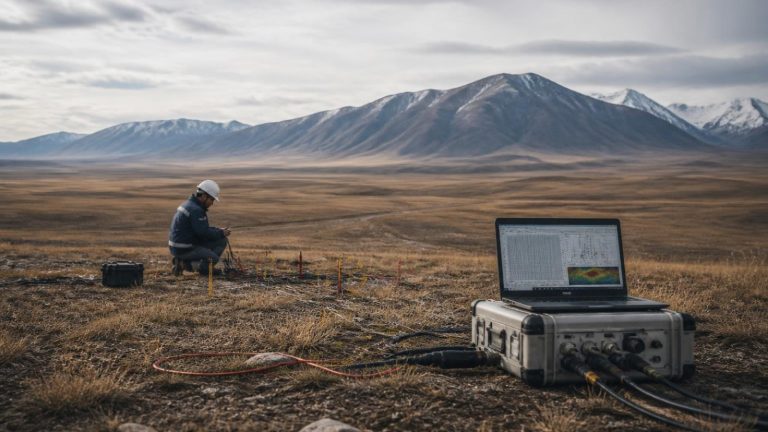
    The company received its exploration licence on 4 October 2025. The total licensed area covers 12 square kilometres, with the nearest inhabited settlement — the village of Koshkar — located more than 14 kilometres to the southeast. The exploration programme includes 21.4 linear kilometres of geological survey routes, topographic work across 1.69 square kilometres, and geophysical electrical survey work over two square kilometres. Mining works will involve the excavation of 2,000 cubic metres of trenches and the drilling of 30 exploration boreholes totalling 3,000 linear metres. Some 5,000 samples will be collected for gold analysis and other laboratory work, with the programme concluding in a geological report and reserve calculation under C1 and C2 categories.

    Rasta Resources is registered in Almaty and is owned by AIFC-registered private company SD Resources Group Ltd and Almas Rakhymbayev. SD Resources Group is co-owned by Danagul Adamyshina and Suzanna Toktabayeva. Public registry data shows that Adamyshina is listed as director of at least seven companies registered at the same Almaty address, including White Peak, Metanor Resources, Noctung Resources, Quantum Minerals, Altynkol Resources and Terrasouth Resources.

    The ownership structure carries notable background. Ten years ago, Adamyshina headed the subsoil use analysis and development department at Kazakhstan’s Ministry of Investment and Development — the predecessor to the current Ministry of Industry and Construction — and was actively involved in drafting the future Subsoil Code. Her co-owner Suzanna Toktabayeva shares a surname with Timur Toktabayev, who served as director of the subsoil use department and later as deputy minister at the same ministry before being convicted in 2023 and sentenced to seven years in prison. The director of OTSD Group Ltd, another company in the network, is listed as Olzhas Toktabayev.

  • Kazakh Exporters Face Rising Costs Under EU Carbon Border Mechanism

    Kazakh Exporters Face Rising Costs Under EU Carbon Border Mechanism

    The European Union’s Carbon Border Adjustment Mechanism (CBAM), which came into force in 2026, is creating new compliance challenges for Kazakh металлургical exporters supplying the European market.

    CBAM is designed to account for carbon dioxide emissions generated during the production of imported goods and serves as an environmental standard for both European and foreign manufacturers. Kazakh exporters are now required to maintain detailed carbon reporting in order to preserve access to EU markets.

    More than half of Kazakhstan’s aluminum exports are destined for the European Union. In addition to the aluminum sector, the new rules also apply to ferrous metallurgy products.

    Kazakhstan’s Ministry of Trade and Integration, the International Trade Centre (ITC) and QazTrade conducted an assessment of CBAM’s impact on local businesses and prepared practical recommendations for metallurgical companies adapting to the new framework.

    According to the study, exporters of raw aluminum, ferrochrome, steel bars and rods could face annual CBAM-related costs of around €114 million if export volumes remain at 2025 levels.

    QazTrade Deputy Chairman Nurlan Kulbatyrov said Kazakh industrial exporters have already begun adapting to the new EU requirements. Support measures are being introduced to help companies reduce financial pressure and maintain the competitiveness of Kazakh products in the European market.

    During a June 3 seminar, representatives of business, government and international organizations discussed methods for monitoring and verifying emissions, as well as opportunities linked to greener industrial production.

    One of the report’s authors, ITC expert Joost Pauwelyn, noted that Kazakhstan exports more than €600 million worth of steel and aluminum products to the EU annually. He warned that European greenhouse gas regulations could increase annual costs for Kazakh exporters by more than €100 million. Approximately 90% of the additional burden is expected to fall on steel bars and rods. In some cases, CBAM-related expenses could exceed the value of the exported product itself.

    Pauwelyn outlined several measures that could significantly reduce the financial impact on producers, including:

    • Monitoring and declaring actual emissions rather than relying on default values
    • Accrediting Kazakh verification bodies
    • Reducing greenhouse gas emissions at production facilities
    • Developing domestic carbon pricing mechanisms in Kazakhstan
  • Mongolia Fails to Select Investor for Borteeg Coal Project

    Mongolia Fails to Select Investor for Borteeg Coal Project

    Mongolia has failed to identify a suitable investor for the development of the Borteeg section of the Tavantolgoi coal deposit group after none of the bids submitted in an international tender met government requirements.

    The Mongolian government has now decided that the project will be managed by state-owned coal producer Erdenes Tavantolgoi. According to Minister of Economy and Development Jadamyn Enkhbayar, coal production and exports at the site will proceed with the participation of domestic companies, local media outlet Montsame reported.

    The open tender, announced in February, invited both Mongolian and foreign companies to invest in the development of the Borteeg deposit and participate in exploiting its reserves.

    Under the tender conditions, the winning bidder was expected to finance and construct all required infrastructure for coal extraction, processing, sales and transportation. A key condition imposed by the government required Mongolia to receive at least 51% of total sales revenue throughout the life of the project.

    According to the Ministry of Economy and Development, seven companies from Mongolia and abroad submitted proposals. A working group evaluated the bids based on financial and economic returns, experience in implementing similar projects and the existence of a comprehensive development plan.

    However, none of the proposals scored highly enough to proceed to the negotiation stage, ministry officials stated.

    The Borteeg section is estimated to contain 424.2 million tonnes of coal reserves. Annual production capacity could reach up to 15 million tonnes.

  • Kazakh Scientists Develop Near Zero-Waste Technology for Processing Complex Polymetallic Ores

    Kazakh Scientists Develop Near Zero-Waste Technology for Processing Complex Polymetallic Ores

    Specialists from Kazakhstan’s National Center for Integrated Processing of Mineral Raw Materials have developed and successfully tested an advanced technology for processing complex polymetallic ores from the Shalkiya and Zhairem deposits.

    According to Kazakhstan’s Ministry of Industry and Construction, traditional mineral processing methods remain highly inefficient, with up to 90–95% of processed material ending up as waste while valuable components are lost. The newly developed technology is designed to maximize raw material utilization and significantly reduce tailings volumes.

    The key innovation lies in the carbothermic processing of lead-zinc ores with high silicon content using ore-thermal furnaces. Under conventional processing schemes, silica is discarded into tailings storage facilities. The new method instead converts silica into marketable ferroalloys, while lead and zinc transition into the gas phase for subsequent concentration and extraction.

    Pilot-industrial testing was conducted using furnaces with capacities ranging from 80 to 630 kVA. The process produced:

    • Ferrosilicon grades FS45, FS65 and FS75

    • Ferrosilicoaluminum

    • Aluminosilicomanganese

    • New calcium- and magnesium-containing ferroalloys

    Researchers also focused on processing lead-zinc sublimates. As a result, they obtained:

    • High-purity zinc (grade TsV0)

    • Magnesium compounds

    • Tribasic lead sulfate

    • Advanced composite electrochemical coatings with high corrosion resistance

    The developers describe the project’s main achievement as the creation of an almost waste-free processing scheme. Unlike conventional methods, where silicon is entirely lost in enrichment tailings, the new technology converts it into commercial products. More than 99% of lead and zinc are transferred into concentrated form.

    The research team has secured more than 10 patents covering the new solutions for difficult-to-process ores. Technical specifications have also been prepared for designing ferroalloy production facilities and complexes for processing sublimates. Preliminary calculations indicate that product value generated per unit of cost could more than double compared with existing processing technologies.

  • Kazakhstan’s Revised Subsoil Code Threatens CGN Mining’s Uranium Stakes as Contract Renewals Loom

    Kazakhstan’s Revised Subsoil Code Threatens CGN Mining’s Uranium Stakes as Contract Renewals Loom

    Chinese uranium company CGN Mining is closely studying amendments to Kazakhstan’s Subsoil and Subsoil Use Code adopted in December 2025, which could significantly alter the ownership structure of its joint ventures with Kazatomprom when existing licences come up for renewal — potentially stripping the company of a substantial portion of its uranium resource base within four to five years.

    Under the updated Code, Kazatomprom can claim up to a 90% stake in uranium projects at the point of contract renewal, unless the foreign joint venture partner applies an option to transfer uranium conversion and enrichment technology. The Chinese side possesses such technology, which provides a theoretical negotiating lever. The legislation also increased Kazatomprom’s mandatory participation in new uranium ventures transitioning from exploration to production from 50% to 75%.

    CGN Mining holds 49% stakes in two joint ventures with Kazatomprom. In Semizbay-U — acquired for $133 million in 2014 — the company holds subsoil rights to the Semizbay deposit in Akmola Region, with a licence valid until 2031, and the Irkol mine in Kyzylorda Region, valid until 2030. JORC-compliant reserves and resources at year-end 2025 stood at 4,600 tonnes at Semizbay and 1,800 tonnes at Irkol. In 2025, the joint venture produced 862 tonnes of uranium against a plan of 861 tonnes — 397 tonnes from Semizbay at a production cost of $37 per pound U3O8 and 465 tonnes from Irkol at $31 per pound. CGN received nearly $33 million in after-tax dividends from Semizbay-U in 2025.

    At current extraction rates, the Semizbay deposit’s reserves would take more than ten years to exhaust — well beyond the contract’s expiry. This creates a clear risk: upon renewal, Kazatomprom could claim 90% of the project, leaving CGN with a dramatically reduced position. Irkol’s reserves may be depletable before contract expiry, but additional resources estimated under Kazakhstan’s State Reserve Commission standard leave uncertainty.

    The second asset, Ortalyk — acquired for $435 million in 2021 — operates two mines in Turkestan Region: the Central Mynkuduk block with a licence until 2033 and Zhalpak until 2042. Combined reserves and resources stood at approximately 30,000 tonnes of uranium at end-2025. Ortalyk produced 1,834 tonnes of uranium in 2025 after processing losses, generating $64.7 million in after-tax dividends for CGN. At current rates, the Central Mynkuduk block cannot be fully depleted before its 2033 contract expiry — requiring approximately ten years at current output — meaning a portion of its resources could transition to Kazatomprom upon renewal. Zhalpak, with its 2042 deadline, offers a realistic chance of full utilisation if annual output increases to around 1,000 tonnes.

    The broader context involves significant mutual dependence. China typically accounts for approximately half of all Kazatomprom’s uranium sales, making Kazakhstan an indispensable supplier for China’s expanding nuclear power programme. In May, Kazakhstan’s Senate ratified a bilateral investment protection agreement with China, and Chinese officials pointed to extensive international arbitration opportunities in Hong Kong for Kazakhstani companies — signals that both sides are laying legal groundwork ahead of what may be complex renegotiations.

  • Central Asia Metals Acquires Canada’s Cygnus Metals for $166 Million to Add Quebec Copper-Gold Project to Kazakhstan and North Macedonia Portfolio

    Central Asia Metals Acquires Canada’s Cygnus Metals for $166 Million to Add Quebec Copper-Gold Project to Kazakhstan and North Macedonia Portfolio

    London-listed Central Asia Metals has agreed to acquire Canadian explorer Cygnus Metals for approximately A$232 million ($166 million) in an all-share deal, adding the Chibougamau copper-gold project in Quebec to a portfolio that already includes producing operations in Kazakhstan and North Macedonia.

    Under the terms of the agreement, CAML will issue 0.06 new shares for each Cygnus share, valuing each Cygnus share at A$0.176 — a 60% premium to the last closing price and a 40% premium to the 20-day volume-weighted average. Following completion, existing CAML shareholders will retain approximately 70% of the combined company, with Cygnus shareholders holding the remaining 30%. A Cygnus shareholder vote requiring 75% approval is expected in September, and CAML will hold its own shareholder meeting to approve the share issuance. CAML also intends to seek a listing on the Toronto Stock Exchange or TSX Venture Exchange to broaden its North American investor base.

    Chibougamau, located in central Quebec approximately 480 kilometres from Montreal and acquired by Cygnus in 2024, hosts indicated resources of approximately 149,000 tonnes of copper and 167,000 ounces of gold, alongside inferred resources of 182,000 tonnes of copper and 454,000 ounces of gold, based on a 2022 preliminary economic assessment by previous owner Doré Copper Mining. The site includes existing infrastructure and a historic copper processing plant with 900,000 tonne per year capacity. CAML plans to advance a full feasibility study using its own underground mining expertise.

    CAML’s existing operations — the Sasa zinc-lead underground mine in North Macedonia and the Kounrad copper heap leach operation in central Kazakhstan — are expected to produce 12,000 to 13,000 tonnes of copper cathode, 18,000 to 20,000 tonnes of zinc concentrate and 26,000 to 28,000 tonnes of lead concentrate in 2026. The Chibougamau acquisition follows CAML’s unsuccessful attempt last year to acquire Australia’s New World Resources and its Arizona copper project.

    Non-executive chairman Nick Clarke described Chibougamau as a high-quality copper-gold asset that fits well alongside CAML’s existing operations and provides a clear path to near-term growth. Cygnus also holds lithium exploration assets in Quebec’s world-class James Bay region and rare earth and base metal projects in Western Australia.

  • Kazakhstan Finds Safety Gaps at 10 Mining Sites as Authorities Push for Worker Positioning Systems Across the Sector

    Kazakhstan Finds Safety Gaps at 10 Mining Sites as Authorities Push for Worker Positioning Systems Across the Sector

    Inspections of 55 mines and quarries in Kazakhstan have revealed that ten facilities operated by eight companies have yet to install worker positioning systems, the Ministry of Industry and Construction has disclosed, as authorities push to close safety gaps across the extractive sector following a series of industrial accidents.

    Industry and Construction Minister Yersaiyn Nagassayev told a government meeting that three of the non-compliant facilities have committed funding for the installation of positioning systems, while technical solutions are being developed for five others. The remaining sites require equipment modernisation to bring safety standards up to the required level. The Ministry of Industry and the Ministry of Emergency Situations are jointly working on strengthening industrial safety requirements across mining enterprises.

    The inspections form part of a broader safety and modernisation drive initiated at presidential level, which identified 50 leading enterprises in the mining and metallurgical complex as priority targets for technical re-equipment and modernisation. Since the programme began, companies in the sector have directed more than 530 billion tenge toward capacity upgrades, equipment maintenance and production expansion.

    Nagassayev highlighted the role of digital and AI-based technologies in preventing accidents before they occur. Neural network algorithms and machine vision solutions are being deployed to automatically identify risk factors and anomalies, while real-time process monitoring through digital platforms allows problems to be detected and resolved before they escalate into incidents.