Region: Kazakhstan

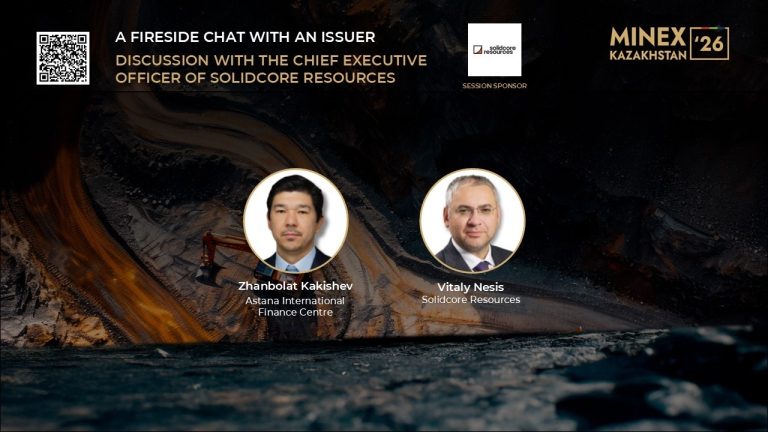
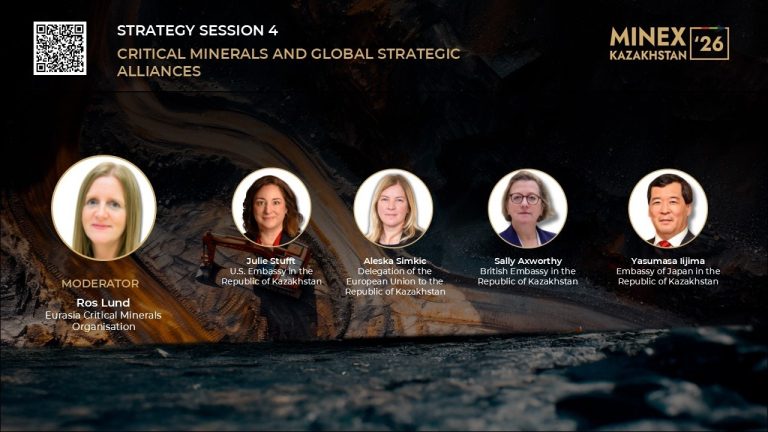
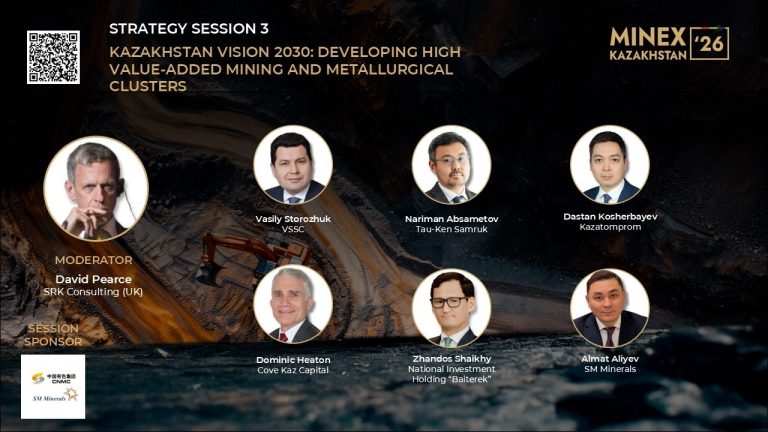
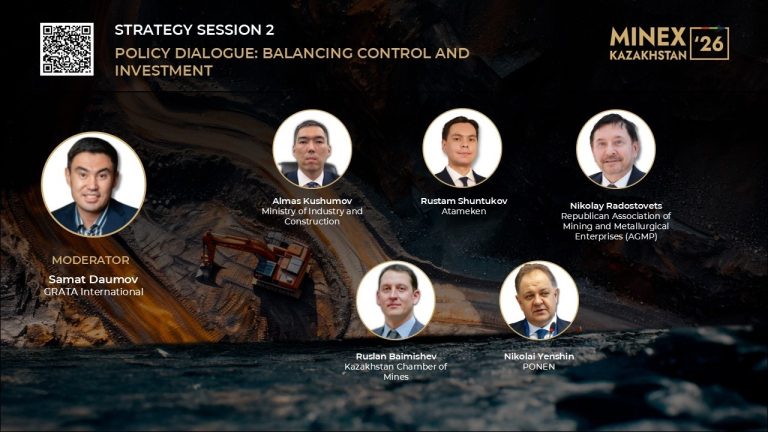
  • Международный горнодобывающий форум с участием 30 стран открылся в Астане

    Международный горнодобывающий форум с участием 30 стран открылся в Астане

    В столице Казахстана открылся международный форум по горнодобывающей отрасли, объединивший представителей из 30 стран. Казахстан намерен повысить эффективность освоения минеральных ресурсов, нарастить уровень переработки и привлечь новые иностранные инвестиции.

    В рамках форума приоритет отдаётся презентации передовых технологий и выстраиванию долгосрочного инвестиционного партнёрства. По мнению экспертов, совершенствование системы цифровизации и лицензирования будет способствовать укреплению инвестиционной привлекательности страны, открывая новый этап промышленного роста, ориентированного на устойчивое развитие.

    Тулеген Муканов, советник исполнительного директора Республиканской ассоциации горнодобывающих и горно-металлургических предприятий, обратил внимание на широкий спектр технологий, представленных на выставке: «Посмотрите, сколько компаний выставились в рамках конгресса — демонстрируют свои технологии. Горнодобывающую технику мы сами не производим. Всё наше оборудование — иностранное: шведское, японское, американское, китайское. Но я заметил ряд новых компаний, которые только начинают. В Караганде начали выпускать запасные части для крупной горной техники — что-то вроде реновации».

    Форум проходит на фоне активных усилий Казахстана по позиционированию себя в качестве приоритетного направления для инвестиций в критические минералы — с опорой на реформы в сфере недропользования, запуск единого портала лицензирования и десятикратное увеличение государственного финансирования геологоразведки, объявленное ранее в этом году.

  • International Mining Forum Unites 30 Nations in Astana as Kazakhstan Targets Investment and Industrial Upgrade

    International Mining Forum Unites 30 Nations in Astana as Kazakhstan Targets Investment and Industrial Upgrade

    An international mining forum bringing together representatives from 30 countries has opened in Kazakhstan’s capital Astana, with the Kazakhstani government signalling its ambitions to improve the efficiency of mineral resource development, increase processing capacity and attract greater foreign investment.

    The gathering has placed particular emphasis on the presentation of advanced technologies and the establishment of long-term investment partnerships. Experts attending the forum said that ongoing improvements to the country’s digitalisation agenda and licensing system would strengthen Kazakhstan’s appeal to international investors, marking the beginning of a new phase of industrial growth oriented toward sustainable development.

    Tulegyen Mukanov, adviser to the executive director of the Republican Association of Mining and Metallurgical Enterprises, highlighted the breadth of technology on display. “Look at how many companies are exhibiting at this congress — showcasing their technologies,” he said. “We don’t manufacture mining equipment ourselves. All our machinery comes from abroad — Sweden, Japan, America, China. But I’ve noticed some new companies starting up. In Karaganda, they have begun producing spare parts for heavy mining equipment — a kind of renovation sector is emerging.”

    The forum comes as Kazakhstan continues to position itself as a priority destination for critical minerals investment, backed by recent subsoil use reforms, the launch of a unified licensing portal and a tenfold increase in state geological exploration funding announced earlier this year.

  • Kazakhstan’s Junior Mining Sector Poised for Growth but Held Back by Red Tape, Industry Forum Hears

    Kazakhstan’s Junior Mining Sector Poised for Growth but Held Back by Red Tape, Industry Forum Hears

    Kazakhstan’s junior exploration sector has the geological foundations and regulatory momentum to become a significant driver of new mineral discoveries, but excessive bureaucracy, inadequate targeted support and a one-size-fits-all regulatory framework continue to constrain smaller companies, according to participants at a roundtable held on the sidelines of the Geoscience and Exploration Central Asia 2026 forum in Astana.

    The roundtable — titled “Junior Companies: New Discoveries and the Investment Potential of Central Asia” — brought together investors, junior exploration firms and senior industry experts to assess both the opportunities and the obstacles facing early-stage explorers in Kazakhstan. Presentations were delivered by the chief executives of East Star Resources, QazAurum, Palace Resources, Kogodai and Elementa, as well as the chief geologist of Aurora Minerals Group.

    Opening the session, Kazakhstan Mining Chamber president Ruslan Baimishev said that the subsoil use reforms launched in 2018 had created more favourable conditions for new market entrants, and that junior companies — willing to operate at the earliest, riskiest stages of exploration — were uniquely positioned to generate the new discoveries the country and the global market urgently needed. He noted that a global shortage of major new mineral finds was increasingly directing attention toward the junior sector as the primary source of future resource growth.

    Kogodai CEO Bolat Kabaziyev offered a frank assessment of the structural challenges. Junior companies, he said, differ fundamentally from large producers: they hold no operating assets, are almost entirely dependent on external financing, and typically spend years moving a prospect from initial identification through risk reduction and resource confirmation before it can attract institutional capital. Yet in Kazakhstan, small explorers are largely subject to the same regulatory requirements as major mining companies, despite operating at a fraction of the scale. He argued that commercial success among junior explorers remains rare precisely because access to financing, data quality and decision-making flexibility — the three critical enablers — remain insufficiently developed.

    Participants acknowledged a number of genuine improvements in Kazakhstan’s investment environment: updated legislation, broader access to geological information, simplified licensing procedures and rising investor interest in early-stage exploration. The country’s substantial archive of Soviet-era geological data was highlighted as a strategic asset that, if made more practically accessible, could serve as a foundation for new project generation and foreign investment attraction.

    At the same time, the roundtable identified persistent barriers. Lengthy approval and permitting processes, complexity around land use and environmental requirements, and the absence of dedicated support mechanisms for small exploration companies were all cited as structural weaknesses. Participants called for continued legislative refinement, purpose-built support frameworks for junior operators, and a better-calibrated balance between state oversight and the commercial conditions needed to attract risk capital.

    The consensus was clear: Kazakhstan’s combination of geological endowment, reform momentum and technical expertise creates genuine conditions for junior sector growth — but realising that potential will require the state to treat small explorers as a distinct category deserving tailored policy rather than a scaled-down version of a major mining company.

  • Kazakhstan Junior Qaz Aurum Targets Antimony, Copper and Bonanza-Grade Gold Across Three Projects as It Seeks Investors

    Kazakhstan Junior Qaz Aurum Targets Antimony, Copper and Bonanza-Grade Gold Across Three Projects as It Seeks Investors

    Kazakhstani junior exploration company Qaz Aurum is advancing a diverse portfolio of antimony, copper and gold projects across several regions of the country, driven in part by geopolitical shifts that have dramatically elevated the strategic value of the minerals it is chasing, the company’s director Takhir Kaliyev told the Geoscience and Exploration Central Asia forum in Astana.

    At the Karasuk antimony project in Aktobe Region, historic data points to high-quality mineralisation averaging 6.5% antimony, with peak grades reaching as high as 31% at individual occurrences. The project hosts two mineral showings separated by a tectonic fault which the company believes could host additional resources. All preparatory work has been completed, geophysical surveys and prospecting traverses are planned, and Qaz Aurum says it is ready to begin drilling at Karasuk this year. Antimony — a metalloid that hardens alloys and has critical applications in defence, flame retardants and battery technology — has surged in strategic importance following China’s export restrictions on the material.

    On copper, the company is active at the Egemen porphyry copper project near the settlement of Shortandy in Akmola Region, which benefits from well-developed existing infrastructure. Of 17 drill holes completed to date, 16 have intersected ore-grade mineralisation. The mineralised strike extends approximately two kilometres with widths of up to 300 metres, and the deposit also contains molybdenum. Historical surveys conducted in the 1970s estimated copper potential at 10 million tonnes across the broader area, while Qaz Aurum has so far delineated 370,000 tonnes of copper equivalent in resources. Drilling and metallurgical testing are planned over the next two years, and the company is actively seeking investors to support the programme given current funding constraints.

    The most advanced project in the portfolio is the Ungyrtas gold deposit, located 70 kilometres from Almaty. Qaz Aurum describes it as a high-grade, bonanza-style system — sample grades have exceeded 100 grams of gold per tonne in multiple instances, with a peak assay of 789 grams per tonne. A preliminary resource block modelled in Micromine returned an average grade of 19 grams per tonne over a 50-metre intersection. Metallurgical testwork using gravity separation and cyanidation has achieved gold recovery of 85.6%. The company has already reached an agreement with a processing plant located 70 kilometres away, allowing ore to be delivered without the need for capital-intensive on-site processing infrastructure. Drilling is planned for this year, with a resource estimate to follow, and the company intends to apply for a mining licence in 2026 with production targeted to begin the following year. Investor discussions are also underway for Ungyrtas.

    In addition, Qaz Aurum is in the process of securing fresh exploration licences in the northern Pribalkhashye region, targeting copper and gold mineralisation. Following the forum, company geologists were set to travel to the area on a week-long field expedition to verify mineralisation described in historic geological reports, ahead of planned geophysical, geochemical and drilling programmes.

  • Kazakhstan Plans 11% Rise in Coal Output to 128.9 Million Tonnes in 2026 as Investment Surges and New Licences Come to Market

    Kazakhstan Plans 11% Rise in Coal Output to 128.9 Million Tonnes in 2026 as Investment Surges and New Licences Come to Market

    Kazakhstan’s mining operators plan to increase coal production by 11% in 2026, targeting output of 128.9 million tonnes against the 115.9 million tonnes extracted in 2025 — itself a 7% increase on the prior year — according to Energy Minister Yerlan Akkenzhenov, speaking at a government session.

    The accelerating production trajectory is backed by a significant uplift in sector investment. Approximately 553.5 billion tenge is earmarked for the coal industry in 2026, nearly doubling the 305 billion tenge invested in 2025 according to data drawn from mining contract work programmes. Before the end of the year, the Ministry of Energy also plans to hold an auction offering subsoil use rights across approximately ten coal deposits, signalling continued confidence in the sector’s expansion.

    Kazakhstan holds the world’s tenth-largest coal reserves, with 33.6 billion tonnes of the fossil fuel contained within its subsoil — sufficient to sustain extraction at current rates for more than 300 years. The country’s coal base underpins both its domestic energy system and a growing export trade.

    Of the 115.9 million tonnes produced in 2025, 85.9 million tonnes were directed to domestic consumption, serving the municipal heating sector, power generation and industrial users. A further 30 million tonnes were exported, with Russia, Poland, Uzbekistan, Turkey, India and Malaysia among the principal destination markets.

  • Caspian Sunrise Expands into Mining with $25–45 Million Acquisition in Kazakhstan

    Caspian Sunrise Expands into Mining with $25–45 Million Acquisition in Kazakhstan

    UK-based oil and gas company Caspian Sunrise plc is moving to diversify its portfolio through the acquisition of mining assets in Kazakhstan, with a deal valued between 25 and 45 million dollars.

    Under the agreement, the company will acquire 100 percent of Kazikhan Limited, which holds stakes in several entities licensed to explore and develop deposits of manganese, gold, silver, copper, and molybdenum.

    Among the key assets, GRK Borly LLP holds a production licence for manganese with confirmed reserves of approximately 8 million tonnes, while Zhambas PV controls exploration licences for gold and copper, including an estimated 700 kilograms of gold.

    The transaction reflects Caspian Sunrise’s strategic shift toward mining, aimed at increasing profitability while reducing reliance on Kazakhstan’s oil and gas sector. Company leadership views mining projects as requiring lower upfront capital and offering greater resilience to regulatory pressures and commodity price volatility.

    Kazikhan is owned by private shareholders linked to the Oraziman Family Concert Party, which collectively holds a controlling stake in Caspian Sunrise, highlighting a close alignment between the entities involved in the transaction.

    Caspian Sunrise’s core operations remain centred on its BNG contract area in western Kazakhstan, where it is engaged in crude oil exploration and production, alongside oilfield services. However, the latest acquisition follows an earlier move in December, when the company announced the purchase of another Kazakhstan-based asset containing titanium, zirconium, gold, and rare earth elements located near Ekibastuz.

    The expansion signals a broader strategy to build a diversified resource portfolio, positioning the company to benefit from both traditional hydrocarbons and the growing demand for critical and industrial minerals.

  • Kazakhstan Shifts Focus to Critical Minerals as Exploration Accelerates

    Kazakhstan Shifts Focus to Critical Minerals as Exploration Accelerates

    Kazakhstan is intensifying its geological exploration efforts as it adapts to shifting global demand and prepares for a gradual decline in oil production. While the country has long relied on its vast natural resources, current priorities are increasingly focused on rare and critical minerals, which are emerging as key drivers of future economic growth.

    Over the past year alone, 17 new deposits have been discovered, underscoring the continued potential of the country’s subsoil. Exploration activity has expanded significantly, with geological survey coverage reaching more than 2 million square kilometres. Authorities plan to extend mapping across an additional 100 thousand square kilometres this year, supported by 20 approved project initiatives involving national and industry stakeholders.

    Kazakhstan’s mineral base remains substantial, with approximately 10 thousand deposits identified across the country. Proven reserves include gold, silver, copper, and phosphorites, while total reserves across major resources exceed 2369 tonnes of gold, 4.3 billion tonnes of oil, 3.8 trillion cubic metres of gas, 33.5 billion tonnes of coal, and 26.7 billion tonnes of iron ore.

    A key development is the creation of a certified laboratory complex under the National Geological Service, scheduled for completion by 2028. The facility, valued at 14 billion tenge, will enhance analytical capabilities and support more precise geological data processing.

    According to officials, rising global demand for copper, gold, and rare earth elements is driving a strategic shift in the sector. Greater emphasis is now being placed on improving data accuracy, increasing transparency, and strengthening the investment climate. Over the next three years, the government plans to allocate approximately 240 billion tenge to geological exploration, while also preparing to auction new перспективные участки starting in 2027.

    This renewed focus is partly driven by declining oil output in certain regions, where production has dropped significantly due to resource depletion. In response, exploration is expanding into underexplored sedimentary basins such as the Aral and Syrdarya regions.

    Kazakhstan is also attracting growing private investment, with around 280 billion tenge injected into exploration over the past three years. Rare earth and rare metals are becoming central to this strategy, including deposits such as Kuyryktikol, discovered in 2025, which contains significant reserves of cerium, neodymium, and yttrium.

    More than 100 known deposits across the country contain critical minerals such as tungsten, molybdenum, lithium, beryllium, niobium, tantalum, germanium, and gallium. These materials are essential for high-tech industries, including electric vehicles, electronics, and energy systems, further boosting Kazakhstan’s export potential.

    The evolving structure of the mining sector reflects a broader transformation. Unlike in the past, when extraction often focused on individual elements, modern development requires integrated approaches and advanced technologies. This shift is increasing the sector’s reliance on innovation and international collaboration, as Kazakhstan positions itself as a key supplier in the global critical minerals market.

  • Altyndara Advances Development of Koktaszhal and Kyzylshoki Deposits in Kazakhstan

    Altyndara Advances Development of Koktaszhal and Kyzylshoki Deposits in Kazakhstan

    A new phase of development has begun at the Koktaszhal and Kyzylshoki deposits in Kazakhstan’s Karaganda region, following the transfer of the project to Altyndara. The company is preparing to expand geological exploration and gradually scale up production across both sites.

    As part of its development strategy, the investor has outlined plans to increase mining activity and construct a processing plant at the Kyzylshoki site. Total investment in the project is expected to exceed 500 million dollars, reflecting a long-term commitment to unlocking the resource base.

    The initiative is projected to create more than 800 jobs and generate broader economic benefits for the region, including growth in supporting services and infrastructure development.

    Preliminary estimates indicate that ore resources at the deposits exceed 50 million tonnes, with confirmed copper reserves surpassing 500 thousand tonnes. The project was previously held by Altai Polymetally before transitioning to its current operator.

    The expansion underscores ongoing efforts to strengthen Kazakhstan’s mining sector by advancing resource development, attracting investment, and increasing domestic production capacity.

  • Fujian Hengwang to Invest $1.2 Billion in Steel Plant in Kazakhstan

    Fujian Hengwang to Invest $1.2 Billion in Steel Plant in Kazakhstan

    Chinese metallurgical company is set to build a major steel plant in Kazakhstan with an annual production capacity of up to 3 million tonnes. The project, valued at 1.2 billion dollars, is expected to create around 2500 jobs and supply both domestic and export markets.

    The initiative was discussed during a visit by Kazakhstan’s Minister of Trade,  to China’s Fujian province, according to official sources. The project had previously been outlined in February 2025 following talks between Prime Minister  and company chairman Zeng Zhaoqiang.

    Construction of the metallurgical complex is planned in the Zhambyl region, with initial works originally scheduled to begin in April 2025. The first phase, expected to be completed by 2027, will deliver an annual output of 1 million tonnes of steel. Full production capacity of 3 million tonnes per year is targeted by 2029.

    The plant will rely on locally sourced raw materials, including iron ore from deposits in the Ulytau, Karaganda, and Kostanay regions, as well as natural gas and lime.

  • Central Asia Advances Geological Reforms to Boost Investment and Resource Development

    Central Asia Advances Geological Reforms to Boost Investment and Resource Development

    Central Asian countries are intensifying efforts to modernise their geology and subsoil use sectors, positioning natural resources as a key driver of economic growth, technological development, and regional cooperation.

    In Kazakhstan, large-scale reforms are being implemented under the direction of President , aimed at improving investment conditions, increasing transparency, and accelerating digital transformation across the sector. Authorities have introduced a Unified Subsoil Use Portal, enabling streamlined access to licensing and geological data, while also aligning reporting standards with international frameworks.

    The country continues to expand its geological exploration coverage, which has now reached over 2 million square kilometres. Funding for geological research has increased significantly and is expected to total around 500 million dollars over the next three years. Kazakhstan’s mineral base remains substantial, with approximately 10 thousand deposits and large reserves of gold, hydrocarbons, coal, and iron, alongside growing attention to rare earth elements.

    Minister of Industry and Construction  noted that the sector is undergoing a structural shift as global demand evolves and resources become more difficult to access. In response, the government is prioritising advanced exploration technologies, including remote sensing, geophysical surveys, and geochemical analysis, as well as deeper institutional reforms to strengthen governance and efficiency.

    Digitalisation is also emerging as a central pillar. A unified platform now supports a full digital cycle from application to licence issuance, integrating electronic auctions and online payment systems. These measures are designed to improve transparency and create a more attractive environment for investors.

    Beyond Kazakhstan, similar reforms are underway across the region. In Uzbekistan, Deputy Minister  highlighted a shift toward investor-led exploration models, supported by legislative updates, tax incentives, and simplified licensing procedures. The country is also prioritising the development of critical minerals, including lithium, tungsten, and rare earth elements, with major investment programmes planned through 2028.

    Tajikistan is likewise advancing its geological strategy, focusing on expanding exploration, increasing resource efficiency, and attracting foreign investment. According to Ilkhomjon Oymuhammadzoda, the country has identified over 70 elements and is preparing hundreds of deposits for industrial development, while promoting joint ventures and domestic processing capabilities.

    Across Central Asia, governments are increasingly viewing geology not only as a source of raw materials but as a foundation for broader economic and technological transformation. Emphasis is shifting toward sustainable resource management, deeper exploration, and regional coordination, including shared geological data, joint studies of cross-border structures, and the development of integrated digital platforms.

    This coordinated approach reflects a wider recognition that future competitiveness in the global minerals market will depend on both resource availability and the ability to manage those resources efficiently, sustainably, and collaboratively.