Region: Europe

  • Coal imports from Colombia rise as Germany bolsters supply substitutes for Russia

    Coal imports from Colombia rise as Germany bolsters supply substitutes for Russia

    Clean Energy Wire
    Colombia has become an important supplier of hard coal to Germany, substituting for Russia, the government has said in an answer to a parliamentary inquiry by the Left Party. Between January and May, the South American country’s share in imports rose to 15.6 percent, making it one of the most important suppliers together with the U.S. and South Africa. In total, Germany imported some 2.6 million tonnes of coal from Colombia in the first five months of 2023. Already in 2022, imports had tripled compared to the previous year, reaching around 5.7 million tonnes. Imports from Russia previously accounted for about half of hard coal supplies to the country but were abruptly ended due to sanctions imposed following Russia’s invasion of Ukraine.

    The Left Party criticised imports from Colombia on grounds of allegations against operators of the El Cerrejon mine. This mine that is key to the country’s hard coal exports and is owned by Swiss-based Glencore has been accused of severe environmental damage and human rights violations, said the Left Party.

    Amid the war in Ukraine, Germany re-started some of its old coal-fired power plants to maintain supply security after the loss of Russian fossil fuel imports, particularly gas. The country is still heavily dependent on imported fossil fuels, and ceased mining its own hard coal in 2018. Offically, the country aims to exit coal by 2038 at the latest, although the current government has said it aims to already do so by 2030.

  • Immersive coal mine experience set to terrify visitors this Halloween

    Immersive coal mine experience set to terrify visitors this Halloween

    An immersive event set in an eerie coal mine will terrify visitors at Zip World this spooky season with the return of the Monsters of the Mine experience.

    Not just any old scare-fest; the horde of underworld monsters and the petrifying, unique adventures in the dark make this an event visitors won’t forget in a hurry

    Set in a former coal mine, visitors will be scared stiff by the monsters prowling the area with the event predicted to be one of the most terrifying experiences in south Wales this Halloween.

  • Plans to excavate 95,000 tonnes of coal turned down by councillors

    Plans to excavate 95,000 tonnes of coal turned down by councillors

    Controversial plans to extract 95,000 tonnes of coal in close proximity to Ammanford have been unequivocally rejected by the esteemed councillors of Carmarthenshire. The council’s planning committee, in a unanimous decision, wholeheartedly endorsed the officers’ recommendation of refusal, evoking a round of applause from the individuals present in the gallery at County Hall, Carmarthen.

    During the committee hearing, it came to light that a staggering 826 objections were raised against the proposal, whereas only a minuscule number of letters offered support, including those from clients of Bryn Bach Coal, the company behind the application to expand its Glan Lash operation, submitted nearly four years ago. The proposed extension, spanning 10 hectares, would have resulted in the loss of fields, hedgerows, and a “wet woodland.”

    However, a planning officer clarified that only 6.5 hectares would be excavated, a reduction from the initial proposal, with a maximum depth of 52 meters. The applicant stated that the excavated anthracite would be used for industrial purposes such as water filtration, brick coloring, and brushes for electric cars, but not for energy generation. Nevertheless, a portion of the coal would have been supplied to companies involved in the steel industry.

    If granted approval, the extraction of 95,038 tonnes of coal would have taken place over a period of just over six years, simultaneously creating seven additional job opportunities in addition to the existing four at the site’s washery. A restoration plan was submitted, encompassing the creation of streams, a diverse range of habitats, marshy grasslands, broadleaf trees, and additional areas for tree planting, subject to a post-care period of up to 10 years.

    Council planning officer Tom Boothroyd succinctly summarized a comprehensive report that meticulously evaluated the project against the Welsh Government’s coal policy statement and the overarching planning policy of the nation, among other pertinent factors. The recommendation for refusal was primarily grounded in the insufficiency of information provided regarding the restoration’s ability to safeguard or enhance priority habitats, specifically the purple moor grassland and the wet woodland, which the council is duty-bound to protect.

    Speaking on behalf of Bryn Bach Coal, planning consultant Rob Chichester expressed his client’s patience, considering that the application had been submitted in December 2019. He conveyed surprise and disappointment upon learning that the application was brought before the committee on September 14, as Bryn Bach Coal’s team was diligently preparing a detailed response to address the ecological and habitat concerns raised by the council, which would have been ready in early October.

    Mr. Chichester contended that the council was aware of this circumstance and accused it of reneging on an agreement. He earnestly implored the committee to defer their decision and cautioned against the potential for an appeal should the application be rejected.

    Magnus Gallie, a planning specialist representing Friends of the Earth, spoke against the proposal, positing that the excavation of coal would inevitably result in the emission of carbon dioxide and methane into the atmosphere. He proposed the utilization of alternative materials, such as sand and gravel, in the water filtration industry, which would yield less harm. Mr. Gallie also voiced concerns over the absence of a legal agreement preventing Bryn Bach Coal from selling its product to any entity, including those involved in the combustion of coal.

    Councillor Peter Cooper emphasized that the local community had endured the consequences of opencast mining for far too long. He staunchly believed that “taking a step backwards” was not a prudent course of action and that people should not be subjected to such circumstances once again. He asserted that progress had been made and it was high time to forge ahead.

    Councillor Gareth Thomas acknowledged the balanced nature of the planning report and approached the meeting with an open mind. His concern lay in the observation that restored mine sites did not support substantial growth. He expressed the regrettable reality that the land never fully recuperated its original state.

    Environmental campaigners had previously called upon the council to oppose the mining plans. Haf Elgar, the director of Friends of the Earth Cymru, commended the Carmarthenshire councillors for their momentous decision to prioritize nature and the climate. She expressed heartfelt gratitude for rejecting further coal extraction at Glan Lash, the last opencast mine in Wales, as it symbolized the ultimate cessation of such practices in the country. Elgar underscored the importance of redirecting focus towards cleaner, greener energy sources and the creation of sustainable green employment opportunities in Carmarthenshire and across Wales, rather than relying on coal, which may be an integral part of the nation’s heritage, but not its future.

  • EU moves to cut dependency on China for battery and solar panel materials

    EU moves to cut dependency on China for battery and solar panel materials

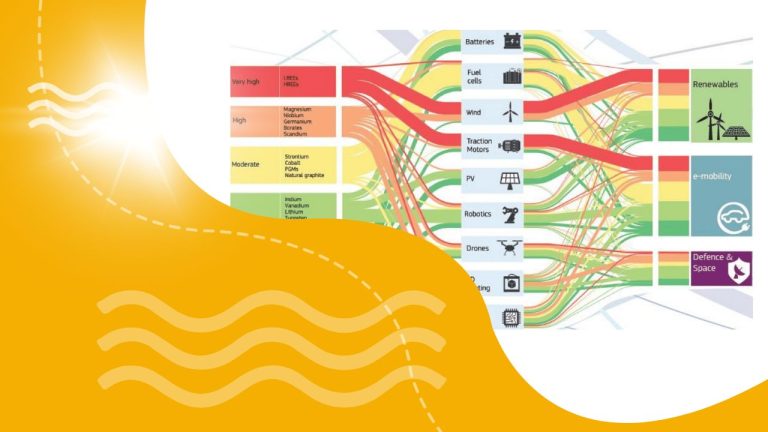
    The European Parliament, in a significant move, has voted to reduce regulatory burdens and diversify the sources of critical raw materials like lithium and silicon. This plan aims to secure a steady supply of these materials, which are essential for the production of solar panels, electric vehicle batteries, and other crucial elements of the EU’s green transition.

    By approving this act with an overwhelming majority of 515 votes in favor and 34 against, the European Parliament seeks to decrease its reliance on a single country for more than 65% of any strategic raw material by 2030. The details of this act will now undergo negotiations between the parliament and the council.

    Nicola Beer, a German MEP from the liberal Renew Europe group, who was responsible for the proposal, expressed that the European Parliament has taken a clear stance on the security of supply, emphasizing the path towards European sovereignty and competitiveness. The EU’s shift towards clean energy necessitates access to critical raw materials like lithium and silicon, as they are vital for electric vehicle batteries and solar panel semiconductors. Presently, the EU depends on a small number of countries, including China, as suppliers.

    Hildegard Bentele, a German MEP from the center-right European People’s Party, stressed the importance of increasing the supply of reliable sources for raw materials, stating that electric mobility cannot thrive without batteries, and batteries cannot be produced without an adequate supply of lithium. She emphasized the need for a credible and strategic raw materials policy to achieve this goal.

    The newly proposed plan establishes targets for the extraction, processing, and recycling of critical raw materials. By 2030, the EU aims to have the capacity to extract at least 10% of its demand and process 50% of its demand for these materials. The plan also includes provisions allowing for up to 20% of new processing capacity to come from partnerships with emerging markets. Furthermore, the recycling capacity is expected to reach 45% for the collection, sorting, and processing of strategic materials from waste.

    Mohammed Chahim, a Dutch MEP from the center-left Socialists and Democrats, highlighted the potential to reduce import demand through improved material efficiency and recycling. He noted that the revised plan expands the scope of national circularity plans to encompass more reuse, refurbishment, and recycling, in comparison to the original proposal put forth by the European Commission.

    According to the International Energy Agency’s net-zero emissions scenario, global demand for key critical minerals, including nickel, cobalt, lithium, copper, and neodymium, is projected to grow by 1.5 to seven times by the end of the decade. This underscores the urgency for the EU to diversify its sources of these materials.

    Since the conflict between Russia and Ukraine exposed the EU’s overreliance on Russian gas imports, European politicians and businesses have been actively seeking alternative suppliers for key minerals. Markus Beyrer, the head of the industry lobby group BusinessEurope, acknowledged the European Parliament’s recognition of the importance of securing and diversifying the supply of critical raw materials. He particularly welcomed the support for streamlined permitting processes, reduced bureaucratic obstacles, and the focus on strengthening partnerships with trading partners.

    However, some environmentalists have raised concerns regarding the act, fearing that it may lead to poorly regulated mines in countries like Finland, which is rich in critical minerals, thereby posing risks to the environment. They have criticized the proposal for expediting the issuance of permits without adequately raising the environmental standards that mining companies must adhere to.

    Satu Jaatinen, a board member of MiningWatch Finland, an environmental nonprofit organization, emphasized that mines and the battery industry can be made sustainable by adopting existing technologies. She expressed disappointment that the industry is unwilling to make the additional investments required for sustainability, asserting that mines should reflect their true costs.

    The negotiations and implementation of this act will play a significant role in shaping the EU’s approach to securing critical raw materials while balancing environmental concerns and sustainability.

  • Ukraine: DMZ coke output up in August 2023

    Ukraine: DMZ coke output up in August 2023

    In August, Dniprovskiy Iron and Steel Works decreased rolled metal output by 67.4% MoM, to 4.4 thousand tons. Coke manufacture dropped by 15.3%, to 25.8 thousand tons. Compared with August 2022, rolled metal production decreased by 64.7%, while that of coke grew 2-fold. The decrease was due to the repairs of the main machinery. In January-August, DMZ produced 74.1 thousand tons of rolled metal, up by 80.8% YoY, and 198.1 thousand tons of coke, up by 34%. (Ukrainian metal)

  • EU to launch first phase of world-first carbon dioxide border tax

    EU to launch first phase of world-first carbon dioxide border tax

    The European Union (EU) is set to commence the initial phase of its groundbreaking plan for the world’s first carbon border tax next month. Under this plan, importers will be required to disclose the carbon dioxide (CO2) emissions associated with products sold into Europe, such as steel and cement. Failure to comply may result in financial penalties. The primary objective of this new regime is to safeguard domestic EU industries from being undermined by foreign competitors that have higher levels of pollution. The EU aims to achieve this while simultaneously encouraging investment in emission reduction. By 2026, when the plan is fully implemented, imports into the EU will be subject to a CO2 fee equivalent to what European companies already pay in Europe’s carbon market.

    Turkey, Ukraine, China, and Russia are expected to be the countries with the largest exports affected by the CO2 tax, although EU trade with Russia has significantly declined since the Ukraine conflict. Industries in Europe, Ukraine, and Britain have expressed minimal concerns about the initial impact but have cautioned against potential significant repercussions once the full CO2 levy is introduced in 2026.

    Starting in October, the trial phase of the CO2 levy will mandate companies importing steel, cement, aluminum, electricity, fertilizers, and hydrogen into the EU to disclose the emissions associated with the production of these goods. Failure to report may lead to penalties of up to 50 euros per tonne of CO2. From 2026 onwards, a CO2 fee will be imposed on goods imported into the EU.

    A spokesperson from UK Steel has mentioned that they do not anticipate a significant impact during the initial reporting phase. Similarly, a representative from ArcelorMittal Kryvyi Rih, the Ukrainian subsidiary of steelmaker ArcelorMittal, has stated that they have almost all the necessary data to comply with the reporting requirements. However, concerns have been raised about the cost of adaptation and the competitiveness of Ukrainian products in 2026, as companies have limited resources to invest in decarbonization during times of conflict.

    It is worth noting that the border fee will not be applicable to imports from countries that have a CO2 price equivalent to that of the EU. This provision could prove advantageous for Ukraine, as it aligns its climate policies with those of the EU in its bid to join the bloc. Additionally, the EU levy includes exemptions for countries facing unprovoked situations that result in infrastructure destruction. The effectiveness of this clause in addressing Ukraine’s exceptional circumstances will be assessed in due time, according to a European Commission official.

    Brussels hopes that the border levy will utilize Europe’s market influence to encourage foreign companies to reduce emissions and avoid the CO2 fee. However, foreign companies, including those from China, have expressed concerns about potential consequences. The Secretary General of the China Iron and Steel Association, Jiang Wei, stated that the policy could increase the price of Chinese steel exports to the EU by 4-6%. Chinese steelmaker Baowu Steel Group also described the EU levy as a significant challenge, highlighting the capital-intensive and time-consuming nature of modifying technological processes in the steel industry.

    Initially, importers can utilize default values to calculate the CO2 footprint of goods if suppliers do not provide precise data. The first reports are due in January. European industries have urged Brussels to ensure that this leniency is only temporary. Industry experts have emphasized that the use of real emissions data is crucial to effectively penalize power generators with the highest carbon intensity. They have called for the transitional phase to be utilized to close loopholes and establish more robust rules to combat circumvention. Concerns about circumvention are expected to heighten as the full launch of the levy approaches in 2026, coupled with Brussels’ gradual phasing out of the free CO2 permits currently granted to European companies to reduce their carbon footprint.

  • Ukraine: titanium ore exports down in January-August 2023

    Ukraine: titanium ore exports down in January-August 2023

    In January-August, Ukraine decreased exports of titanium-containing ore and concentrate by 96.4% YoY, to 7.83 million tons. Revenue fell by 84.8%, to $13.14 million. According to the State Customs Service, the main customers were Turkey (33.81% in monetary terms), Japan (24.43%) and India (7.76%). Ukraine did not import the products in the period. (Ukrainian metal)

  • Polish main opposition seeks green push after October election

    Polish main opposition seeks green push after October election

    Poland’s largest opposition party, Civic Platform (PO), harbors ambitious plans to expedite the country’s departure from coal if it emerges victorious in the fiercely contested upcoming election. At present, Poland heavily relies on coal for electricity generation, resulting in exorbitant power prices within Europe and a substantial carbon footprint. Such circumstances could impede the nation’s ability to attract environmentally friendly projects and export energy-intensive goods, such as steel. PO envisions a radical transformation, aiming to transition from coal to wind and solar as the primary sources of Polish electricity by the decade’s end.

    Grzegorz Onichimowski, a former CEO of the Polish power exchange and a member of the team shaping PO’s energy program, emphasizes the urgency of establishing renewable energy sources as the bedrock of Poland’s energy system. The party sets its sights on achieving between 65% and 70% of the country’s energy production from renewable sources by 2030.

    At present, coal accounts for roughly 70% of Poland’s electricity generation. PO’s energy plan, with the support of potential coalition partners from smaller left-wing and centrist groups, entails measures like unbundling state-controlled power utilities to facilitate grid access for renewable capacity. Furthermore, the party plans to loosen regulations for constructing new onshore wind farms, thereby bolstering capacity and replacing outdated turbines with more efficient ones.

    PO opposes the current government’s strategy of establishing a new state-owned company for coal-fired power plants, instead favoring the utilization of coal plants with the shortest lifespan and lowest profitability as a reserve pool for the power grid.

    While polls generally indicate that the ruling Law and Justice party (PiS) and its allies maintain a lead in the election race, the margin is narrow enough that PO, in collaboration with smaller parties, could potentially form a majority coalition. However, the implementation of its energy policy would require overcoming resistance from influential trade unions and potential presidential vetoes from PiS-aligned President Andrzej Duda.

    Although renewable energy garners broad support among the Polish populace, the election’s primary focus remains on economic concerns, encompassing double-digit inflation and escalating energy prices. Nevertheless, the opposition may capitalize on the argument that transitioning to renewables can alleviate the cost of living.

    Poland’s coal industry employs nearly 76,000 individuals, and the government has committed to sustaining coal mining until 2049. However, coal production is dwindling, leading to increased costs and reduced power generation. Embracing renewables could not only reduce energy bills but also yield savings in fuel and emission expenses.

    Moreover, Poland’s competitiveness in attracting foreign industrial investments may be at stake. As companies increasingly prioritize environmental, social, and corporate governance (ESG) criteria, the availability of renewable power for production facilities is emerging as a pivotal factor. Therefore, Poland’s commitment to a more sustainable energy transition may prove indispensable in securing investments from companies seeking cleaner energy sources.

  • Poland has no plans to quickly cease hard coal production: Minister of State Assets

    Poland has no plans to quickly cease hard coal production: Minister of State Assets

    Both the Polish government and the ruling Law and Justice (PiS) party have confirmed that they do not intend to accelerate the phase-out of hard coal production in Poland, according to Jacek Sasin, the Polish state assets minister. Sasin emphasized that there is a social agreement in place, outlining the gradual reduction of coal mining by 2049. He also stated that there are no plans to expedite the country’s transition away from coal.

    Sasin’s remarks came after a meeting with a group of signatories of the social contract related to the future of hard coal in Poland. He clarified that the government is committed to fully implementing the social agreement and aims to address any doubts or questions that have arisen.

    Poland remains heavily reliant on fossil fuels, particularly coal, and is opposed to accelerating the EU’s green agenda. The country argues that it needs more time to transition to green energy sources due to the legacies of the pre-1989 communist regime, which promoted coal mining and coal-fired power plants.

    In April, the European Parliament approved key legislation as part of the Fit for 55 in 2030 package, aiming to reduce greenhouse gas emissions by at least 55 percent by 2030 compared to 1990 levels and achieve climate neutrality by 2050.

    The Polish coal mining industry employs approximately 75,000 people, and powerful mining unions exert significant influence on energy policy in the country.

    Additionally, Poland’s development minister, Waldemar Buda, expressed hope that the current lower house of parliament would address a bill to establish a new state-owned company that would take ownership of coal-fired assets from energy firms after the upcoming general election. This new state agency, the National Energy Security Agency (NABE), is intended to free energy companies from their polluting assets, making them more attractive to investors. The country is set to hold elections on October 15, and Buda hoped that the lower house could overrule an upper house veto on state guarantees for NABE before the new post-election parliament convenes.

    On September 7, the Senate, the upper house, voted against a bill related to state guarantees for NABE.

  • Zijin Mining to invest further $3.8 bln in Serbia copper project

    Zijin Mining to invest further $3.8 bln in Serbia copper project

    On September 11th, China’s Zijin Mining Group announced a substantial investment of $3.8 billion (3.5 billion euros) in the development of the Cukaru Peki Lower Zone mine within the Timok copper-gold project, situated in eastern Serbia, as disclosed by the government.

    Furthermore, a separate agreement has been finalized for a 300 MW solar power plant project, aimed at fulfilling the company’s energy requirements. This solar power plant investment stands at $200 million and will facilitate the integration of renewable energy sources into mining operations.

    Zijin had previously injected $678 million into the development of the Cukaru Peki mine, which commenced operations in 2021.

    These investments are expected to establish Serbia as a significant copper producer in Europe and a notable gold producer, while also creating opportunities for additional investments, as emphasized by the government.

    The Timok project comprises both the Cukaru Peki Upper Zone and Lower Zone and is strategically located within the central zone of the Timok Magmatic Complex (TMC) in the Serbian portion of the East European Carpathian-Balkan Arc. The TMC boasts one of the highest concentrations of copper enrichment within the Tethyan Belt.