Kazakhstan has signed a package of strategic agreements with leading Belgian universities and European innovation bodies during President Kassym-Jomart Tokayev’s official visit to Belgium, establishing new research partnerships in critical materials, sustainable metallurgy, artificial intelligence and computational engineering.
The most significant agreement brings together D. Serikbayev East Kazakhstan Technical University, KU Leuven and the SIM² KU Leuven Institute for Sustainable Metals and Minerals, along with Astana Hub. The partnership will enable Kazakhstani students, researchers and PhD candidates to collaborate with European scientists on critical materials science, sustainable metallurgy, industrial digitalisation and AI applications in manufacturing — a combination directly relevant to Kazakhstan’s strategic goal of developing value-added industries around its substantial critical raw material reserves rather than remaining a raw material exporter.
A separate agreement with Ghent University will establish a mirror research laboratory in Kazakhstan focused on mathematics, artificial intelligence, mathematical modelling and computational engineering. Based at the Alem.ai Foundation in Astana, the laboratory will support joint research, academic exchanges, scientific publications and international collaboration.
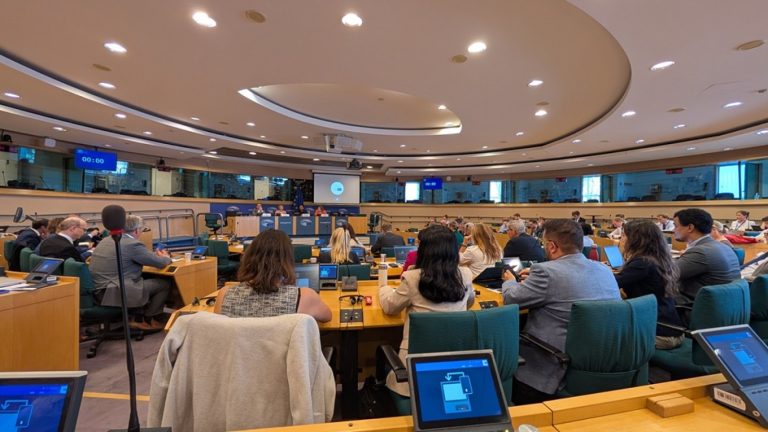
Meetings with the European Commission’s Directorate-General for Research and Innovation and the European Innovation Council also covered Kazakhstan’s further integration into Horizon Europe — the EU’s €93.5 billion flagship research and innovation programme — advancing the case that Science Minister Sayasat Nurbek has been making publicly for Kazakhstan to be treated as a research partner rather than simply a mineral supplier.
The agreements mark a concrete step in Kazakhstan’s broader effort to position itself as a trusted international partner in research, innovation and artificial intelligence, building institutional connections with European science alongside the diplomatic and commercial relationships being advanced through critical minerals dialogues.