Mehmed Uves — European Bank for Reconstruction and Development (EBRD)
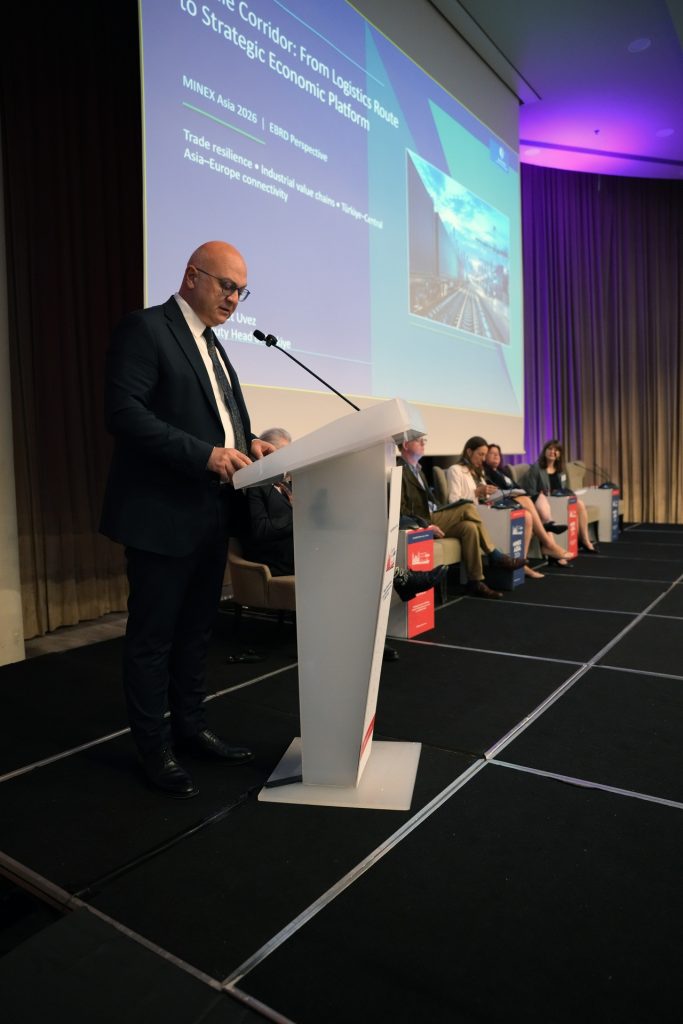
Uves argues connectivity is no longer just about moving goods faster — it’s about securing and diversifying the supply chains underpinning industrial transformation. He positions the Middle Corridor as the emerging physical backbone linking Central Asian and Caucasus minerals to Turkish and European markets, and makes three points: (1) the corridor must evolve from proving its relevance to working at scale — improving capacity, cross-border interoperability, and commercial viability, while supporting full value chains rather than just transit; (2) Turkey plays a pivotal role, not merely as a transit segment but as an industrial base positioned to anchor processing and manufacturing closer to end markets; (3) EBRD backs this through substantial financing — roughly €2.5–3 billion invested annually in Turkey (90% private sector), including over €1.5 billion across 30 transport and logistics projects. He cites the North Istanbul rail crossing project (up to €500 million in EBRD sovereign financing, alongside other multilateral development banks) as a flagship example. He closes by framing the corridor as a strategic economic platform rather than a simple alternative route.
#MiddleCorridor #TethyanBelt #CriticalRawMaterials #SupplyChainSecurity #EBRD #Turkey #CentralAsia