Month: June 2024

  • Tailing Dams in Lori Region Unaffected by Debed River Flooding

    Tailing Dams in Lori Region Unaffected by Debed River Flooding

    Sona Harutyunyan, the press secretary of the Ministry of Territorial Administration and Infrastructure, informed that the tailing dams in the Lori region were not affected by the natural disaster – the Debed River flooding. The dams remain undamaged, and no problems have arisen.

    “Continuous monitoring is being conducted. There is no damage or threat from the tailing dams,” emphasized Harutyunyan. Lori is the second region in Armenia with the highest number of tailing dams, following Syunik, with nine dams in total. We inquired about the current state of the tailing dams, which operate alongside metallic mines, from the leaders of the mining companies and the regional administration.

    Teghut CJSC operates the Teghut mine and its associated ore processing plant. The company’s general director, Vladimir Nalayvayko, stated that the disaster had no impact on the tailing dam. However, he mentioned that ore extraction and processing activities have been suspended. During the flood, tailing dam workers undertook urgent measures to prevent water flow towards the dam. The dam is currently reinforced with additional rocky soil, and the strengthening work, which began two years ago, is still ongoing.

    International experts have previously expressed mixed opinions on the strength and reliability of the Teghut tailing dam. Last year, the mine’s operations were halted to ensure its stability and resumed only in July of the previous year.

    Mher Melkonyan, the administrative head of the Teghut community, also assured that the tailing dam is in good condition. Furthermore, he stated that despite the high water levels, the village of Teghut was not affected by the disaster.

    The activities of Multi Group Concern LLC, owned by Prosperous Armenia party leader Gagik Tsarukyan, have been halted. The company, which operates the Mghart gold mine, has three tailing dams. Vrej Kazaryan, the administrative head of the Mghart village in the Alaverdi community, reported after speaking with tailing dam workers that the situation is stable.

    In the village of Armanis in the Stepanavan community, the Sagamar CJSC operates a gold mine, a processing plant, and tailing dams. The mine has been inactive since 2015. Although the tailings near the village have dried up, there have been continuous reports of discolored water flowing from the tailing dam into the Chknakh tributary of the Dzoraget River. Samvel Antonyan, the administrative head of Armanis, personally inspected the area and found no issues with the tailing dams. Despite the proximity of the Armanis tailing dam to the Dzoraget River tributary, it is situated on an elevated area.
  • Polish Parliament Speaker Szymon Holownia Visits Budryk Mine

    Polish Parliament Speaker Szymon Holownia Visits Budryk Mine

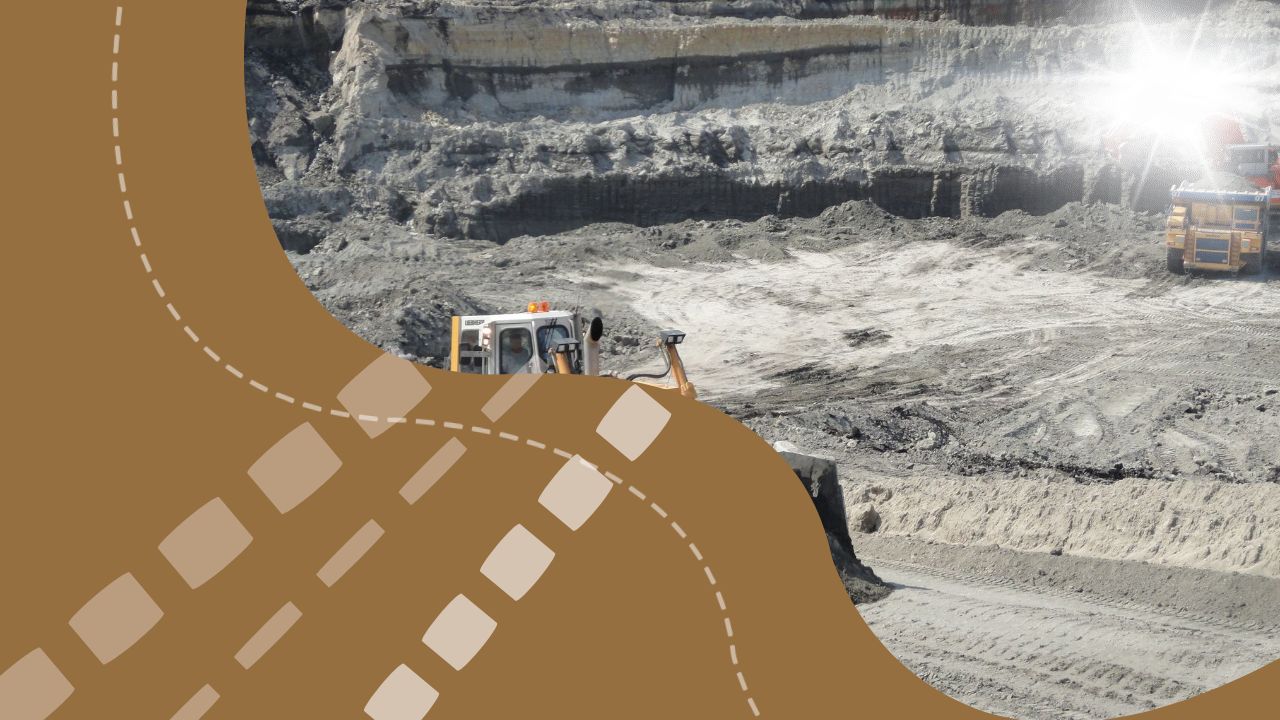
    The Speaker of the lower house of the Polish Parliament, Szymon Holownia, recently met with miners working at the Budryk mine – part of Jastrzebska Spólka Weglowa (JSW). During his visit, Speaker Holownia learned about the operations of the mine and the entire JSW, which produces coking coal – a raw material on the EU’s list of critical raw materials necessary for steel smelting.

    Before visiting the mine, the Speaker underwent the necessary training to authorize him to go underground. He was then accompanied by Ryszard Janta, President of the JSW Management Board, Adam Rozmus, Vice-President of the JSW Management Board for Technical and Operational Matters, Krzysztof Baranowski, Director of the Budryk mine, and Wieslaw Chylek, Technical Director of the mine. Together, they descended to the 1290 m level via shaft VI, the deepest level in coal mines in Poland, where the temperature of the rock mass reaches almost 50°C.

    From the shaft, the group proceeded by suspended cable cars to the area of the Bw-3 longwall, the main purpose of the visit. After a 300 m walk from the passenger station, the Speaker of the Sejm and his attendants stood at the entrance of the Bw-3 longwall. It took several minutes to walk along the 200 m longwall, where mining was underway, followed by a march to the 1000 level and a trip to the surface.

    “What I saw today made a huge impression on me and will definitely stay with me. Visits such as this one teach respect and humility towards people who do a difficult and responsible job, who go down and up five days a week for 25 years. I hope that you will always be accompanied by luck and God’s protection,” said Szymon Holownia immediately after leaving the mine.

    “I did not come here to present plans or to spin a vision. I came to listen, to see the mining reality. What I learned from you today will be helpful in my work. Thank you for allowing me to spend this time with you. I hope this is not our last meeting. I have already heard tentative invitations related to Miners’ Day. If they are upheld, we will of course see each other again,” the Speaker added.

  • EU Requests Profit-Based Backstop for Germany’s €1.75 Billion Coal Shutdown Payout

    EU Requests Profit-Based Backstop for Germany’s €1.75 Billion Coal Shutdown Payout

    The EU is urging Germany to include a profit-based backstop in its €1.75 billion ($1.9017 billion) payout for the early shutdown of the operations of its second-largest coal miner. A state payment of up to €1.2 billion to an entity of Czech billionaire Daniel Kretinsky’s EPH Group AG has been preliminarily approved by the European Commission, according to Germany’s economy ministry. The remainder of the payout will depend on the future profitability of the assets.

    The approved sum, as reported by Bloomberg on May 31, is intended to cover costs for mine rehabilitations, closures, and the impact on jobs. To prevent overcompensation, Lausitz Energie Bergbau AG (LEAG) will be required to provide proof of future costs and will be compensated from the remaining sum of €550 million, according to a letter from the EU’s Competition Commissioner Margrethe Vestager.

    Germany is working to accelerate the phaseout of coal in its power generation mix after failing to meet its emissions reduction targets. In 2020, the government agreed to pay billions of euros in compensation to LEAG and RWE AG to shut down coal-fired power plants by 2038. Now, to cut carbon emissions faster, the state is negotiating to advance the coal exit by eight years.

    In 2022, RWE agreed to a 2030 phaseout and will receive €2.6 billion in state payments. LEAG is still negotiating, aiming to continue burning coal beyond the end of the decade. Fossil fuel plants have to pay for carbon permits, and rising costs could squeeze coal profits. The backstop measure is designed to address this—if LEAG shuts down plants early due to unprofitability, the subsidy would be reduced. LEAG maintains that coal will remain profitable until 2038, the current legal exit date.

    “This is a bet on the future,” economy minister Robert Habeck said at a press conference in Berlin, noting the difficulty in calculating foregone profits for 2038. The European Commission still needs to give its final decision on the payment.

  • Vulcan Energy Resources Secures €40m for Zero Carbon Lithium Project

    Vulcan Energy Resources Secures €40m for Zero Carbon Lithium Project

    Vulcan Energy Resources has successfully secured a total of €40m ($43m) through a private placement to support the construction work for its phase one integrated Zero Carbon Lithium Project in Germany. Under the terms of the private placement, Vulcan issued ten million shares to CIMIC Group for €25m, five million shares to Hancock Prospecting for €12.5m, and one million shares to Victor Smorgon Group for €2.5m.

    The new shares, priced at €2.50 each, were offered at a 9% discount to Vulcan’s 30-day volume-weighted average price and will rank equally with existing ordinary shares.

    These strategic investments are crucial for funding pre-execution activities during the final stage of project financing and for maintaining the deterministic execution schedule of the project. CIMIC’s €25m investment will establish the company as a substantial shareholder in Vulcan, holding a 6% stake in the outstanding share capital.

  • Chromium Leads Albania’s Mining Sector in Production and Permits

    Chromium Leads Albania’s Mining Sector in Production and Permits

    Chromium continues to be the mineral with the greatest weight in Albania in terms of the number of permits granted for exploitation, as well as the quantity produced. The annual publication by the National Agency of Natural Resourcesreveals that a total of 920 thousand tons of chrome were produced in 2023, primarily for export.

    Albania is known for its significant potential in chrome ore compared to other Mediterranean and Balkan countries,” the report states. As of December 31, 2023, there were 236 active exploitation licenses in the chrome mining sector. Production activities are concentrated in the Bulqiza district, with around 120 active permits, followed by Kukës, Tropoja, and Hasi.

    By the end of 2023, 920,769.98 tons of chrome ore were produced, mainly for export. The main chromium deposits are located in the Ophiolites of the Eastern Belt area, stretching from Tropoja and Kukës to Bulqizë, Shebenik, and Pogradec. Lesser development has been identified in the ophiolites of the western belt.

    Geologically, chrome ore in Albania is found in three main regions:

    • Northeast Region (Ultrabasic Massif of Tropoja and Kukës);
    • Central Region (Ultrabasic Massif of Bulqiza and Lura, which is the most important);
    • Southeast Region (Shebenik-Pogradec Ultrabasic Massif).

    The publication also notes that in 2023, there were 552 active usage permits, mainly in Bulqiza, Krujë, Berat, Tirana, or Librazhd. Besides chrome, which holds the majority of active permits, limestone ranks second with 137 permits, according to the National Agency of Natural Resources.

  • «Алюминий Казахстана» может получить новые лицензии на геологоразведку

    «Алюминий Казахстана» может получить новые лицензии на геологоразведку

    Компания «Алюминий Казахстана», входящая в состав ERG, может скоро получить лицензии на проведение геологоразведочных работ на двух участках в Костанайской области. Общая площадь этих потенциальных участков для геологоразведки превышает 800 гектаров, сообщает «Курсив».

    Один из участков расположен в пределах города Лисаковск. Согласно изданию, городские власти намерены разрешить «Алюминию Казахстана» искать алюминиевые руды до 23 мая 2027 года. Заместитель главы города будет следить за исполнением обязательств.

    Запасы руды, содержащей алюминий, планируется найти и на другом, меньшем по площади участке. Этот участок охватывает территорию в 271,7 гектара и находится в границах поселка Октябрьский. Районные власти также установили публичный сервитут для компании на разведку недр и возложили ответственность за исполнение решения на главу населенного пункта.

    Окончательное решение по обоим проектам должно быть объявлено до 19 июня. Следует отметить, что компания ежегодно производит около 1,4 миллиона тонн глинозема, сырья для производства алюминия. Кроме того, компания является одним из крупнейших работодателей в Павлодарской области.

  • “Aluminium of Kazakhstan” May Receive New Exploration Licenses

    “Aluminium of Kazakhstan” May Receive New Exploration Licenses

    The company “Aluminium of Kazakhstan”, a part of ERG, may soon receive licenses to conduct geological exploration on two sites in the Kostanay region. The total area of these potential geological exploration sites exceeds 800 hectares, according to “Kursiv”.

    One of the sites is located within the city of Lisakovsk. According to the publication, city authorities intend to allow “Aluminium of Kazakhstan” to search for aluminum ores until May 23, 2027. The deputy mayor will oversee the fulfillment of obligations.

    Reserves of aluminum-containing ore are also expected to be found on another, smaller site. This site covers an area of 271.7 hectares and is located within the boundaries of Oktyabrsky. The district authorities have also granted the company public easement for mineral exploration and assigned responsibility for overseeing the decision to the head of the locality.

    The final verdict on both projects is expected to be announced by June 19. It should be noted that the company annually produces around 1.4 million tons of alumina, the raw material for aluminum. Additionally, the company is one of the largest employers in the Pavlodar region.


  • Kyrgyz Parliament Lifts Ban on Uranium and Thorium Mining, Focusing on Economic Benefits

    Kyrgyz Parliament Lifts Ban on Uranium and Thorium Mining, Focusing on Economic Benefits

    Deputies of the Kyrgyz Parliament have voted in favor of a bill to lift the ban on mining uranium and thorium, with 69 votes in favor and three against. The parliamentarians are confident that these legislative changes will bring substantial economic dividends to the country.

    The ban on uranium and thorium mining was initially imposed in 2019 when authorities sought to sell a development license for a deposit. However, local residents expressed concerns about potential environmental damage and harm to the water table, leading to a complete ban across the Republic.

    Over the past century, the Issyk-Kul region of Kyrgyzstan alone has accumulated 150,000 cubic meters of radioactive waste from uranium mining. The country currently has 92 burial sites containing 23 tailing dumps with uranium elements, resulting in a total volume of 2.9 million cubic meters of poisonous and hazardous substances.

    The new bill emphasizes the need for alternative sources of income due to severe economic impacts in recent years. However, it also highlights the importance of strict compliance with environmental norms and standards in uranium and thorium mining.

    Minister of Natural Resources, Environment, and Technical Supervision, Melis Turganbayev, assured the deputies that the passage of the bill would not harm the environment or the health of Kyrgyz citizens. Turganbayev explained that the focus is not solely on uranium but also on associated metals. The plan is to mine titanomagnetite, which contains uranium and thorium. The extracted uranium will be sold to other states, while thorium will be stored. Processing will take place at the Kara-Balta Combine in Chui Oblast.

    While three deputies voted against the bill, citing environmental concerns, Doctor of Geological and Mineral Sciences, academician Rozalia Jenchuraeva, described the 2019 ban as a “big folly.” She highlighted the need to address the harmful waste and contamination of soil and water caused by hazardous materials lying just 20 meters below the surface. Jenchuraeva believes that mining these elements will clean up the land and create opportunities for the Kara-Balta Combine.

    President Japarov, who met with residents near the Kyzyl-Ompol deposit, expressed optimism about the development. He stated that it would create over a thousand jobs and become a significant resource similar to the Kumtor gold deposit. The aim is to boost the local budget and improve the living standards of the people.

    Kyzyl-Ompol, a uranium-thorionite placer deposit discovered in 1951, is one of the five areas in Kyrgyzstan where these minerals are found. It has been extensively explored by the Kyrgyz Institute of Geology.

  • Germany’s Climate Change Targets at Risk, Urgent Action Needed

    Germany’s Climate Change Targets at Risk, Urgent Action Needed

    Germany’s climate advisory body has issued a call for immediate policy measures to address the country’s escalating greenhouse gas emissions, cautioning that it is on track to miss its 2030 climate change targets. In a report released on Monday, the Council of Experts on Climate Change, an independent body appointed by the government, emphasized that Germany is unlikely to achieve its goal of reducing emissions by 65% by the end of the decade compared to 1990 levels.

    The council highlighted sectors such as transport and construction as particularly problematic in terms of decarbonization efforts. These sectors are facing significant challenges in transitioning to cleaner energy sources and reducing their carbon footprint. The findings directly contradict statements made by German Climate Protection Minister and Vice Chancellor Robert Habeck, who had previously claimed that emissions were decreasing and the country would meet its targets based on projections from the Federal Environment Agency (UBA).

    According to the Council of Experts on Climate Change, the UBA’s estimates were overly optimistic, and the emissions from the energy, building, and transport sectors had been underestimated. This indicates a pressing need for additional action and stronger measures to be taken to curb emissions effectively.

    Under the Climate Protection Act, if the council’s findings are confirmed in its next annual report in 2025, the government will be required to implement further measures to meet its 2030 targets. However, the council’s chairman, Hans-Martin Henning, advised against waiting for the targets to be missed again and instead recommended prompt examination and implementation of additional measures.

    The council also warned that Germany may face challenges in meeting future targets, including its aim to reduce emissions by 88% by 2040 compared to 1990 levels and achieve climate neutrality by 2045. The transition away from burning fossil fuels is considered crucial in addressing the global warming threat and reducing emissions.

    The release of the council’s report coincides with ongoing government negotiations in Bonn, Germany, where officials are laying the groundwork for the upcoming COP29 climate summit in Baku, Azerbaijan, scheduled for the end of the year. The discussions are expected to focus on the contentious issue of funding the escalating costs associated with climate change.

  • Record Numbers of Retrainees in Project Supporting Nitra Region’s Transition from Coal Mining

    Record Numbers of Retrainees in Project Supporting Nitra Region’s Transition from Coal Mining

    The national project connected to the Trenčín self-governing region, aimed at assisting the people of the Nitra region affected by the planned termination of coal mining, has achieved remarkable success with a record number of individuals participating in retraining programs. This initiative has provided a lifeline to employees of the Nováky power plant, who are now actively seeking new employment opportunities.

    Towards the end of last year, the miners of Horní Nitra extracted the final tonne of brown coal in Slovakia. Simultaneously, the Nováky power plant ceased all coal-based electricity and heat production. This abrupt shift resulted in the loss of hundreds of jobs. However, many affected individuals seized the opportunity to explore new career paths through retraining programs.

    The increasing enrollment in the Employability Support in the Horní Nitra Region project can be attributed to the efforts of experienced tutors operating from the newly established premises of the Business Academy in Prievidza. Previously stationed at their field office in Nováky, the tutors now have access to additional office and conference spaces. These facilities can accommodate up to four competence balance groups simultaneously, along with smaller groups and individual meetings.

    Jaroslav Baška, the president of the Trenčín self-governing region, expressed satisfaction with the project’s progress, stating, “We currently have 722 participants in the project, including 45 employees from the Nováky power plant. We aim to further increase the number of participants based on the Horná Nitra Prievidza mining company’s request for an additional 180 spots. The project, valued at 12 million euros, will continue until the end of this year.” Baška emphasized that the region secures funding for the project from the Just Transformation Fund.