Month: April 2024

  • Vulcan Energy Initiates Local Lithium Production in Germany

    Vulcan Energy Initiates Local Lithium Production in Germany

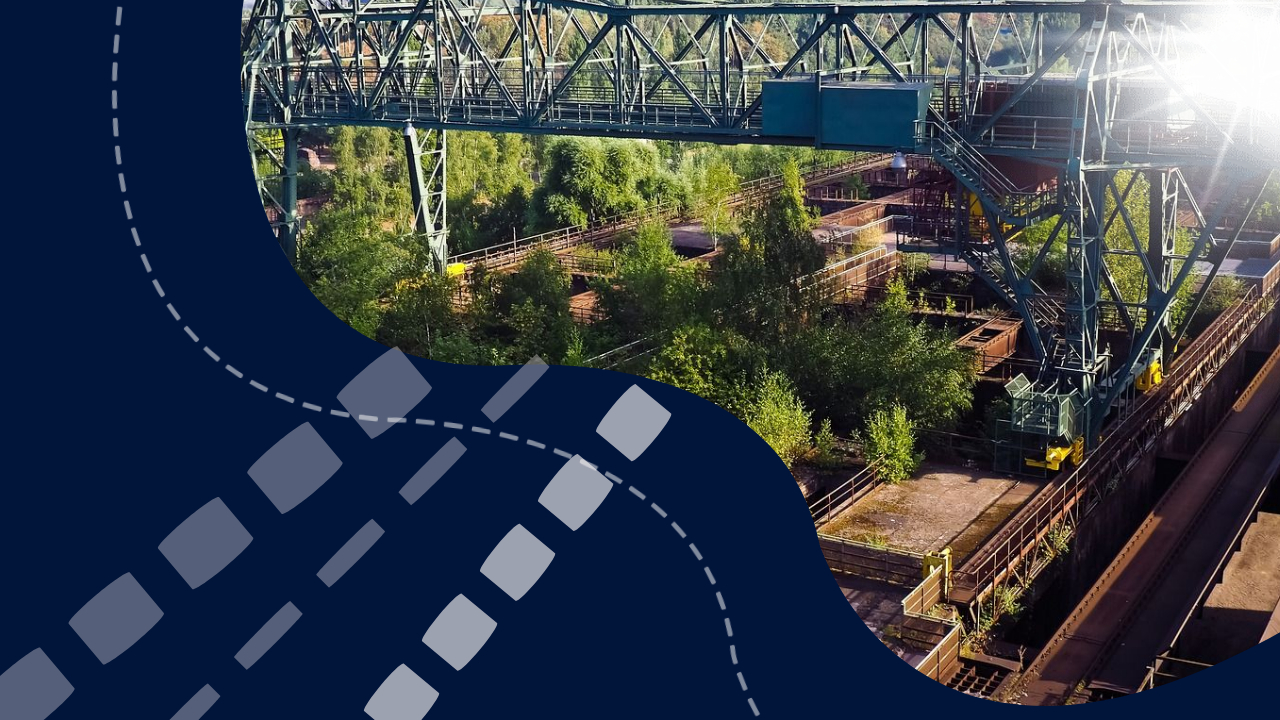
    Vulcan Energy, a lithium supplier, has commenced the production of lithium chloride at its extraction plant in Germany, marking a significant milestone in producing battery-grade lithium hydroxide. The CEO, Cris Moreno, highlighted the historic achievement, emphasizing that it is the first locally produced lithium resource in Germany.

    With licenses covering over 1,000 kilometers of land in Germany’s Upper Rhine Valley region, Vulcan Energy is tapping into super-hot lithium-rich brine from underground reservoirs, utilizing geothermal energy to extract lithium. This innovative approach aligns with the European Union’s targets for sourcing critical metals needed for its green transition.

    Acknowledging the importance of securing access to critical raw materials, the German government has established a 1.1 billion-euro investment fund, reinforcing the nation’s commitment to high-tech and green projects, as announced by Vulcan Energy in February.

    Vulcan Energy, with offtake agreements with major automakers like Volkswagen, Stellantis, and Renault, has seen promising results from its lithium extraction optimization plant in Landau, Germany. The company is now gearing up for the conversion of lithium chloride into battery-grade lithium hydroxide at its new plant in Frankfurt.

    Looking ahead, Vulcan Energy aims to commission its first large-scale industrial plant by the end of 2026, with an expected annual output capable of powering 500,000 electric vehicles. Moreno expressed optimism about closing the financing for this ambitious project in the coming months.

    In February, Vulcan Energy received preliminary approval from the European Investment Bank (EIB) for debt financing of up to 500 million euros, signaling further support for its endeavors in the lithium production sector.
  • Uranium Exploration in Albania: Challenges and Consequences

    Uranium Exploration in Albania: Challenges and Consequences

    Collaborating with Chinese experts, research endeavors commenced in Nimçë, Kukës, and Muhur, Dibra. Despite encountering low exploitation prospects and challenging ore conditions, workers successfully reached their goal. Periodic reports detailing the research findings were submitted to the prime minister.

    “The results were reported to the Prime Minister by the expedition leaders… We aimed to establish the presence of such mineralization in Albania, which we achieved,” stated Gezim Shima, a geologist.

    “In Albania, we have Nimçen with industrial conditions but with very low reserves… we also have uranium in the phosphorite of Fushë Vardë and in the phosphorite of Guzmar,” revealed Qerim Ismeni, a metallurgist and environmentalist.

    Special devices were employed for the search, detecting radiation in the area, a clear indication of uranium presence, according to experts.

    “In all uranium-related facilities, discoveries are made by measuring radiation and through chemical analysis,” explained Qerim Ismeni.

    While the exploration met its objective of locating ore, the conditions were challenging, with few reserves. After an extensive research period, operations ceased. Today, the surviving mine workers can be counted on one hand, with irreparable health consequences.

    “The number of Nimçe workers still alive is almost… unfortunately, many have passed away at the age of 55,” lamented Qerim Ismeni.

  • Kyrgyzstan Allocates 1 Billion Som for Geological Industry Development

    Kyrgyzstan Allocates 1 Billion Som for Geological Industry Development

    For the first time in Kyrgyzstan’s history, 1 billion som has been allocated for the development of the geological sector, stated in the president’s congratulatory message on Geologist Day. According to Sadyr Japarov, these funds will be used for the discovery of new deposits, conducting geological research, purchasing specialized equipment, exploration, assessment of mineral resources, and specialist training.

    Today, large deposits of state significance are allocated to enterprises with a hundred percent state share. Licenses have been issued to Kyrgyzaltyn JSC, state enterprises Kyrgyzkomur and Kyrgyzgeology, the president noted.

  • 10th MINEX Central Asia Mining and Geological Forum to be Held in Bishkek

    10th MINEX Central Asia Mining and Geological Forum to be Held in Bishkek

    Bishkek is set to host the 10th Mining and Geological Forum, MINEX Central Asia, on June 19-20, 2024. The forum is organized under the theme “Prospects and Scenarios for Sustainable Development of the Mining Industry in Central Asian Countries.” The previous MINEX forum in this format was held in Kazakhstan in 2018.

    The forum offers a platform for presentations and discussions on attracting investments and technologies for the development of mineral resources, the promotion of green energy, and the modernization of industrial infrastructure.

    The Ministry of Natural Resources, Ecology, and Technical Supervision of the Kyrgyz Republic is the general regional partner of the forum. The Prime Minister of the Kyrgyz Republic, A. Japarov, is expected to participate in the forum.

    The forum is anticipated to draw participation from companies and organizations from 30 countries across Central Asia, Europe, China, North America, and the Middle East.

  • Joint Venture “Kogodai” Plans to Resume Copper Exploration in Eastern Kazakhstan

    Joint Venture “Kogodai” Plans to Resume Copper Exploration in Eastern Kazakhstan

    The joint venture “Kogodai,” holding a license since 2013 for the exploration of copper and associated metals in the Kogodai area of the Kurchum district of the East Kazakhstan region, intends to resume copper exploration in the region. Between 2014 and 2023, the company conducted geological exploration, resulting in the estimation of mineral resources categorized as inferred. Now, “Kogodai” plans to conduct geological exploration in all previously established and assumed 10 mineralization zones of the Kogodai site, the Lotoshnoye site, two geophysical anomalies, and continue the exploration of the Kogodai deposit. This information was disclosed in materials for public hearings scheduled in the Maraldy village of the Kurchum district on April 12.

    The geological exploration area covers 52.2 square kilometers. Search routes on foot will be executed within the contractual territory. Drilling is planned to be carried out using mobile drilling rigs of the SKB-5/LF-90 type with the use of Boart Longyear drill bits, which will require 59.6 thousand liters of diesel fuel in 2024.

    For the power supply of the field camp, three gasoline generators FPG 9800E FORZA will be used. The fuel consumption of one generator will be 2.78 tons per year.

    Coring drilling of exploration wells is envisaged for exploring ore bodies at depth. Most of the planned wells will be drilled to a depth of 200-250 meters. The total volume of coring drilling will include 20 wells with a total volume of 3000 linear meters.

    Cores extracted from core barrels (samples in the form of cylindrical columns) will be washed and placed in core boxes. As the wells progress, a label indicating the depth will be attached after each run.

    The participants of the JV “Kogodai” are the social entrepreneurship corporation “Yertis” (belongs to the financial management of the akimat of the East Kazakhstan region) and the company “Orsu Metals Kazakhstan,” a subsidiary of Harrsin Management B.V., whose ultimate beneficiaries are not disclosed.

    In the 2010s, the copper projects Kogodai and Karchiga in the East Kazakhstan region were developed by the British company Orsu Metals, registered on AIM (one of the platforms of the London Stock Exchange). The company faced difficulties in financing projects and delisted its shares from AIM in 2016.

    Earlier this year, Citibank forecasted that an increase in green energy targets would increase copper demand by an additional 4.2 million tons by the end of the decade. In this case, copper prices could reach $15,000 per ton by 2025, which is 75% higher than the price of copper at the beginning of January. On April 9th, investment bank analysts noted that the price of copper on the London Metal Exchange approached $9,500 per ton, trading near 15-month highs.

    Last summer, the village of Maraldy was often mentioned in the headlines due to the dissatisfaction of the local population with the plans of the company “VSAM Production” to build a gold mining plant for 250 thousand tons of ore per year. Near the village, geological exploration companies Maralicha and Maralicha-Gold were searching for gold. Gold mining was planned to be conducted by open-pit mining – local residents feared the contamination of springs and the river by harmful substances, as well as other possible issues due to mining activities.

  • In Pit Crushing & Conveying (IPCC) and material handling system contract for TAKRAF in Guinea

    In Pit Crushing & Conveying (IPCC) and material handling system contract for TAKRAF in Guinea

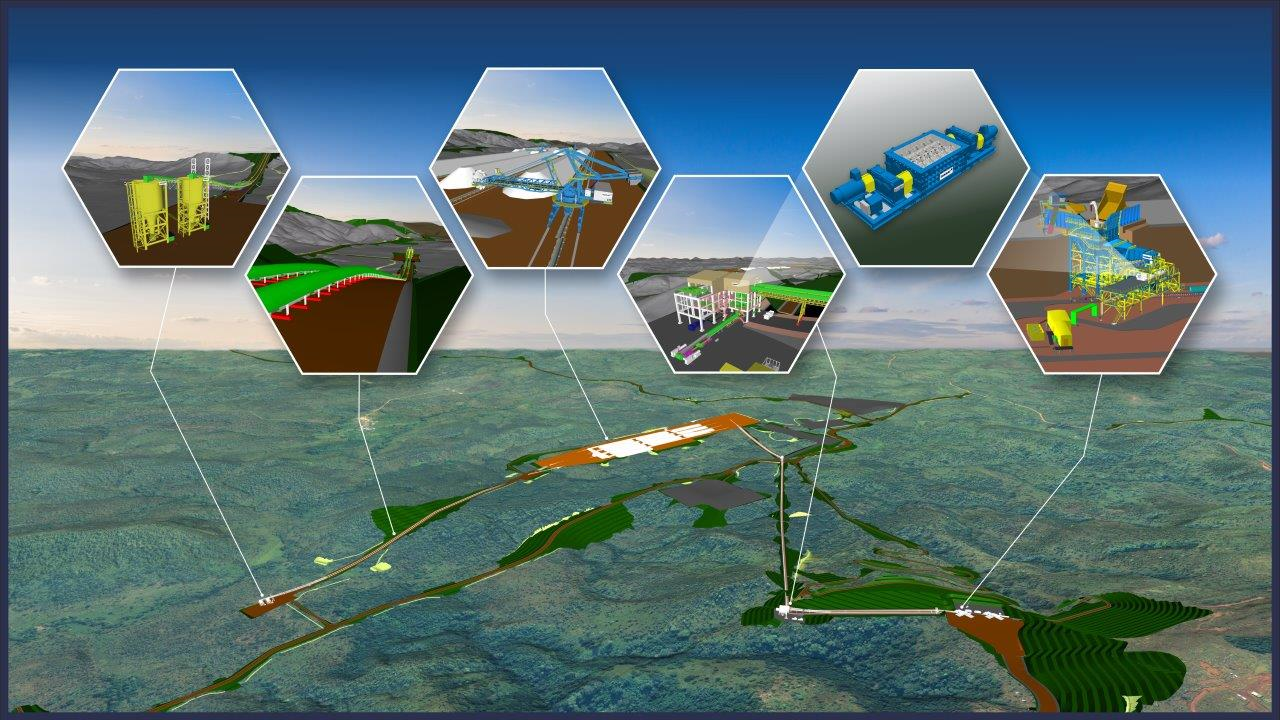
    The Simandou iron ore project is one of the largest unexploited high-grade iron ore deposits in the world. With the project’s development reaching an important milestone in March this year, the project’s partners have been able to kick off with development work, including support from the government of Guinea with defined requirements for the start of production.

    The contract entails the design, fabrication and delivery of an advanced and integrated IPCC and material handling system.

    Highlights include:

    • Two primary IPCC systems incorporating two TAKRAF X-TREME class sizers to crush extracted ore received by truck
    • A secondary In Pit Secondary Crushing & Conveying (IPSCC) system incorporating four TAKRAF sizers for further ore processing
    • Two rail mounted stackers for ore stockpiling
    • Two rail mounted reclaimers for ore reclaiming
    • Two wagon loading stations with buffer silos
    • A complex conveyor system with transfer stations for the above equipment, including a technically sophisticated long downhill conveyor between the secondary IPSCC system and the stockyard
    • Electrical and control equipment and stockyard auxiliaries

    In order to achieve the desired annual production rate the crushing system has been sized with a design capacity of up to 13,200 t/h. Please read more: In Pit Crushing & Conveying (IPCC) and material handling system contract for TAKRAF in Guinea – TAKRAF GmbH

  • Two DELKOR BQR flotation cell animation videos now on Youtube

    Two DELKOR BQR flotation cell animation videos now on Youtube

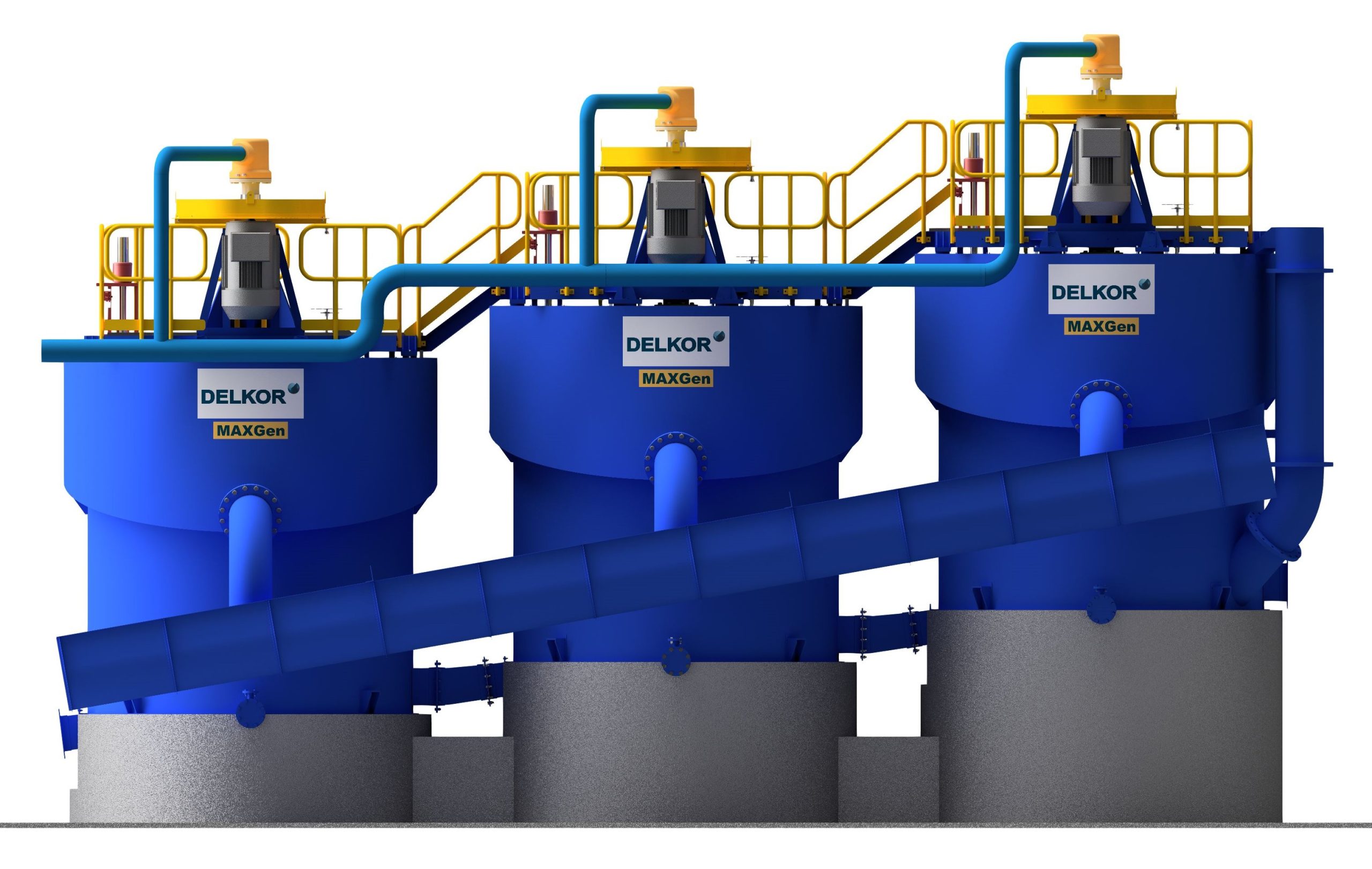
    DELKOR BQR flotation cells equipped with our proprietary MAXGen mechanism enable the user to achieve best-in-class metallurgical performance with maximized metal recovery, combined with greater ease of maintenance and lower Total Cost of Ownership (TCO), including reduced energy consumption.

    Two new BQR animation videos have been prepared with a view to assisting the viewer in understanding the myriad of advantages of DELKOR BQR flotation cells:

    • Improved metallurgical performance
    • Cell bypass ready provision for larger cells to facilitate quick, easy and safe cell maintenance
    • Cell bypass improves circuit flexibility to a great extent
    • Low downtime and increased ease of maintenance
    • Precise froth level controls
    • Internal or external dart valves with a strong focus on safety
    • Reduced specific power consumption
    • Low maintenance cost and total cost of ownership

    One video explains the principal parts of DELKOR BQR flotation cell, which now incorporates DELKOR proprietary MAXGen mechanism. The video also demonstrates how the BQR cell functions, as well as the process that takes place inside the cell whilst in operation.

    The second video demonstrates DELKOR BQR flotation cell’s bypass-ready provision and the manner in which any cell can be bypassed, in order to perform maintenance, whilst other cells in the bank remain in use and without completely stopping the flotation circuit.

  • TAKRAF Group secures major project award with SNIM for F´Derick iron ore project in Mauritania

    TAKRAF Group secures major project award with SNIM for F´Derick iron ore project in Mauritania

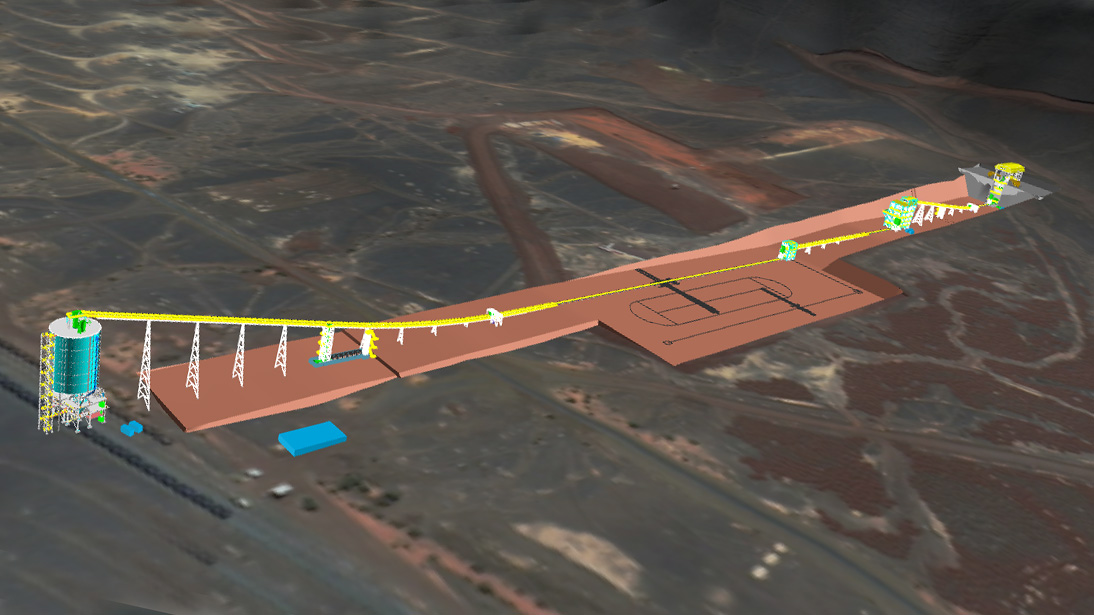
    TAKRAF Group, a world leader for innovative technological solutions for the mining and associated industries, is happy to announce the signing of a major contract with Societe Nationale Industrielle et Miniere (SNIM) for the supply of a complete iron ore crushing, screening, and material handling system, along with a train loading station for the F’Derick project in Mauritania.

    The F’Derick iron ore deposit is part of SNIM’s iron ore complex in Mauritania. With current production of approximately 12 million tons per annum, SNIM aims to increase this to 18 million tons through the development of the F’Derick project, thereby contributing to the country’s iron ore production.

    The contract, signed at the end of 2023, marks a key milestone as SNIM begins development work on site. An inauguration ceremony was held in the presence of Mauritanian President of State Mohamed Ould Ghazouani, underscoring the importance of this collaboration.

    Highlights of TAKRAF’s scope of supply include: 
    Lot 1

    • Primary crushing plant
    • Apron feeder
    • Belt conveyor CV-1
    • Secondary crushing plant with pre-screening
    • Belt conveyor CV-2 and transfer tower TT-1
    • Required auxiliary systems and accessories

    Lot 2

    • Belt conveyor CV-5
    • Train loading (loadout) station
    • Required auxiliary systems and accessories
  • Kazakhstan’s “Tau-Ken Samruk” Partners with US Investors for Rare Metals Exploration

    Kazakhstan’s “Tau-Ken Samruk” Partners with US Investors for Rare Metals Exploration

    In a significant development, Kazakhstan’s mining company “Tau-Ken Samruk” has entered into a collaboration agreement with Cove Capital, a US-based organization, aimed at exploring Rare Metals (RM) and Rare Earth Metals (RZM) within the Republic of Kazakhstan (RK). The partnership entails joint geological exploration activities, particularly in the Kostanay region, as disclosed in a Telegram channel of the “Samruk-Kazyna” fund. The exploration focus will center on the Akbulak deposit near Arkalyk, with Cove Capital committed to fully funding the exploration until the resources are officially registered. While detailed project information remains scarce, it’s notable that the foreign entity and Tau-Ken Samruk’s subsidiary, “Kazgeology,” will establish a joint venture for this endeavor. Previously, experts from Kazgeology had hinted at the potential richness of the Akbulak site in RM and RZM, including yttrium, cerium, thulium, zirconium, lutetium, tin, and others. The company’s attempt to attract investors for the development of these reserves dates back to 2019. Forecasts estimate the resources of this area to be around 380,000 tonnes. This collaboration follows the signing of documents between “Samruk-Kazyna” and Cove Capital last September, indicating a broader partnership in critical raw materials.

  • Vulcan Energy Commences Lithium Production Using Geothermal Energy in Germany

    Vulcan Energy Commences Lithium Production Using Geothermal Energy in Germany

    Vulcan Energy, a prominent lithium supplier, has heralded the initiation of lithium chloride production at its extraction facility in Germany, marking a significant milestone towards the creation of battery-grade lithium hydroxide. CEO Cris Moreno emphasized the groundbreaking nature of this endeavor, highlighting that it represents the first instance of locally sourced lithium in Germany, drawn from underground reservoirs in the country’s Upper Rhine Valley region. Vulcan Energy’s innovative approach harnesses geothermal energy to extract lithium-rich brine, aligning with the European Union’s objectives to secure essential metals for its green transition. In response to potential challenges such as financial constraints and opposition, the German government has established a substantial investment fund of 1.1 billion euros to bolster access to critical raw materials, underscoring the strategic significance of initiatives like Vulcan’s. The company, boasting of offtake agreements with major automakers, including Volkswagen and Renault, is progressing rapidly with its lithium extraction optimization plant in Landau, Germany, demonstrating promising results and operational efficiency. Vulcan’s lithium chloride output will serve as the precursor for battery-grade lithium hydroxide production at its forthcoming conversion plant in Frankfurt. Looking ahead, Vulcan aims to secure funding for its ambitious industrial plant, targeting an annual output of 24,000 tonnes of lithium hydroxide, equivalent to powering half a million electric vehicles, with financing discussions underway and preliminary approval from the European Investment Bank.